


6,39 €
Mehr erfahren.
- Herausgeber: Wildside Press
- Kategorie: Fantasy und Science-Fiction
- Sprache: Englisch
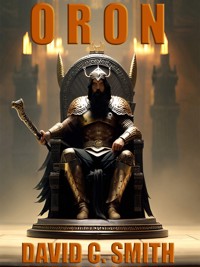
The Original Sword-and-Sorcery Epic in a New, Author-Approved Edition!
Oron the Wolf, a barbarian outlander, rises to become a commander in the army of General Amrik of Salasal. But the young fighter is meant for greatness far above military service. He is the Na-Kha, the legendary figure fated to confront an evil from the dawn of Time—the demon Kossuth.
The Wolf gains a throne when he rescues Princess Desdira, the rightful ruler of Neria, from armed nobles who have turned against her. But becoming a king means that Oron must confront the brutal Amrik. The general has earned a kingdom of his own and now wishes to conquer Neria with the aid of Kossuth, who is poisoning the land with plague and darkness. To face these enemies, Oron will accept his destiny and prepare for a confrontation with elemental evil that could throw the world into anarchy.
Available again for the first time since its original appearance nearly 50 years ago, this classic of the sword-and-sorcery genre comes to you in a text completely refreshed by the author.
“Mythological, cosmic, and epic!”
—Jason Ray Carney, PhD
Das E-Book können Sie in Legimi-Apps oder einer beliebigen App lesen, die das folgende Format unterstützen:
Seitenzahl: 522
Veröffentlichungsjahr: 2023
Ähnliche



















Table of Contents
ORON
DEDICATION
COPYRIGHT INFORMATION
MAP
OPENING QUOTATION
PROLOGUE
PART I: THE WARRIOR
CHAPTER 1
CHAPTER 2
CHAPTER 3
CHAPTER 4
CHAPTER 5
CHAPTER 6
CHAPTER 7
CHAPTER 8
PART II: THE KING
CHAPTER 9
CHAPTER 10
CHAPTER 11
CHAPTER 12
CHAPTER 13
CHAPTER 14
CHAPTER 15
CHAPTER 16
PART III: THE NA-KHA
CHAPTER 17
CHAPTER 18
CHAPTER 19
CHAPTER 20
CHAPTER 21
CHAPTER 22
CHAPTER 23
CHAPTER 24
EPILOGUE
ABOUT ORON
THE END?
PREVIEW OF SASSENDEN’S DREAM
ORON
DAVID C. SMITH
DEDICATION
This book is dedicated to
David Clement
COPYRIGHT INFORMATION
Revised edition copyright © 2023 by David C. Smith.
All rights reserved.
Published by Wildside Press LLC.
wildsidepress.com | bcmystery.com
MAP
OPENING QUOTATION
The clouds are breaking from the crystal ball,
Breaking and clearing: and I look to fall.
When the cold winds and airs of portent sweep,
My spirit may have sleep.
—Lionel Johnson
PROLOGUE
ATTLUMA
The history of Attluma, the ancient island-continent, predates that of any known cultural history of the world, yet it is here that the languages, societies, and civilizations of the historical world have their origins. The gods and goddesses, the demons and evils of Attluma are the ancestors of the mythic beings that populated humanity’s earliest recorded imagination; the social advances of the greatest Attluman nations were much later paralleled by the cultures of Mesopotamia, Egypt, and the Mediterranean societies; and the time-dimmed story of Attluma’s sinking into the sea has been passed down as the myth of Plato’s Atlantis.
The north of Attluma reached into frozen seas and was entirely uninhabitable. The northwest, a mountainous triangle, was the home of barbaric tribes, some nomadic, others agricultural. The barbaric folk were dark-haired and dark-eyed, although later cousins, roaming into isolated forests beyond the mountains to the northeast, were blond or red-haired. In their time—before the recorded history of Attluma—these barbarians of the northwest reached a height of advancement marked by iron weapons, bronze and copper jewelry, weaving, domestication of dogs, goats, and cattle, and farming. They lived in large huts that accommodated entire families and were constructed of timber, thatching, and hides. These people were constantly at war, however, not only against each other, but also against the mighty evil creatures that held Attluma in thrall.
For before the dominance of mankind, the island-continent was the home of the earliest gods and supernatural beings, as well as all forms of animal life and strange plant life, including the most primitive. The gods and elemental demons and monsters, however, warred among themselves continually; tradition held that the demons and monsters had themselves created the island-continent as their home and that the gods and human beings were intruders upon their lands. Eventually the gods, wearying of the struggle, removed themselves to the heavens, leaving Attluma to the demons and to the aspiring tribes of early humans. This was the age of the Dawn, and the dark things reigned supreme. Mankind—the pockets of tribes in the northwest and the mountain people in the west, the tribes of the deserts and, farther south, the dark-skinned peoples of the jungles and far southern coastline—lived in utter fear, at the mercy of these powerful supernatural beings: Kossuth, who reigned in the fetid southern tropics of Kiaq; Ibkarai, the creature of the deserts and the jungle, at his capital in Ibkarad; Surthuth, who dwelt in the frozen north at Salaseth; Belthal, in the southwestern swamps; and their armies and hosts of lesser evil things—Setet, Bith-irim, Somodor, and Keft, Yasdis, Arkatu, and Imro, Delthis, Yem-yur, and Omidom, beings of rock and fire, of iron and storms.
As the northern tribes increased in number and ability, rude government came into being under the hands of the Two Families of the barbaric northwest: the People of the Sword and the People of the Flame. It is from the lineage of the People of the Sword that the great heroes of Attluma had their descent. It was of their stock that the mightiest hero of the First Days was born—Taïsakul. A great myth-cycle revolved around this hero, but little was known of him. His birth was semidivine, yet even the identity of the goddess who mothered him was not known to any philosopher or scholar—although, of course, the votaries of every feminine deity claimed Taïsakul. What was believed was that this hero was given the Brand of the Gods and, in a career of wandering over the entire island-continent, defeated the agents of evil and darkness. Taïsakul was able to banish them but not utterly destroy them. He sent them to Hell, or entrapped them beneath the oceans, or enclosed them in mountaintop fortresses, or sent them beyond the far stars. Yet sorcery and magic still existed, for the land had been born evil, and minor demons and unhumans continued to live on the fringes of spreading civilization; and it was always possible for human men and women to make covenants with dark things.
At his death, Taïsakul was revered as the greatest mortal of human history and was called the Na-Kha—“world hero”; and with his dying vision he looked down upon the broad central plains of his world and named all the lands enclosed by the seas at-lu’ama—Attluma—”given to humans.”
The tribes that had grown up around Taïsakul—those of the northwest who had followed him, those of the central plains, the dark-skinned people of the deserts and jungles—now began to inhabit different portions of the land. The north central and central regions of the continent were laced with huge rivers, covered with thick forests, wide fields, and great deep lakes. Here were territories that were to become Salasal and Logne, although Salasal’s later history was one of continual annexation by, and separation from, Logne—so that many times in history Salasal disappeared altogether, and rebel states with the names of Otos or Themera or Illuë sometimes took its place. South of what was named the River Odek and the huge inland sea of Lake Croir was founded Setom. Farther south was Csith of the desert lands and Kheba in the southeast of jungles. Terehem and Loksim sprawled huge and flat, covered by desert, steppe, and more jungle. To the southwest, still unnamed, lay lands of swamp, while directly north began a steep ascent of rugged hills, great gorges, deep passes, and mighty waterfalls farther north where the Serir River met the sea. Here began a mountain range that reached to the River Nevga in the land of the northwest barbarians.
As time passed, the dynasties founded by the followers of Taïsakul shattered, new rulers came to power, and empires were created; and so within a thousand years these were the nations of the earth: Salasal, half-barbaric and half-civilized; Argalon, taken from the northern expanse of Logne; Logne of wild fields and great forests; Setom; Samdum, along the forested eastern seaboard; Csith; Kheba, taken from Samdum; Loksim; and Terehem. Great caravan routes were established, and the natural waterways were used both for shipping goods and for warfare. People from everywhere collected in cities—and yet, beyond the cities, the unconquered lands were so vast that most of the world at this time was still primitive and untouched.
Bossus, a traveler and scribe to a king of Logne, left a record delineating his journeys, and he commented upon the diffusion of peoples and cultures in Attluma during his time. He did not visit the barbaric northwest, but he knew by hearsay of the blond people north of Salasal. Salasal, he said, seemed to be composed mainly of folk from the rude northwest, although the influx of peoples from Argalon and Logne had created in Salasal a mixture of cultures. Salasal, however, was not as cosmopolitan as Bossus’ own Logne, where people from all over the continent met, conducted business, and made for a diverse and exciting atmosphere. Logne anticipated the cosmopolitan, highly civilized world of Neria, a later nation that would not reach its peak in more than a thousand years. Along the eastern seaboard, said Bossus, journeying south, the people became shorter in build, darker in color, and more fiercely independent. The peoples of the desert were dusky, tall, and jealously proud, while in the jungles lived the Black races and the copper-skinned folk who had little to do with the bourgeoning cities and empires to the north. In his travels, Bossus collected many artifacts, documented many cultural customs and habits, and observed a wealth of religious practices. His writings were deposited in the royal library of Logne at Istidrul and were copied and recopied by generations of scholars.
Some hundreds of years later, however, by the time King Selthis ruled in the deserts of Csith, Kossuth, the greatest of all the early evil entities, made bid against the gods and Fate and sought to rise again to the lands of earth. Early seers and prophets had predicted such a time; primitive shamans and civilized seers all knew that the heavens and the constellations merged in a cosmic joining every thousand years, and that then even the ancient power of Taïsakul’s magic could not bar Kossuth’s ascent from Hell. The evil conquered and held the southlands of Attluma; all that had been gained was lost; for a thousand years, human beings of all lands lived under immense skies of utter darkness, sunless. The dead rose to life; demons and unhumans marched the plains and swam the rivers; death, decay, and corruption of the soul flourished. Civilization collapsed under the immensity of a world governed by laws of darkness, shadow, and sorcery. Humankind’s precarious hold upon the lands seemed lost and irrecoverable. It was not until this dark millennium had passed that a second great hero, the Na-Kha Amrod, of the lineage of Taïsakul, was able to defeat Kossuth once more and return him to Hell.
Now the sundered nations began the painful task of rebuilding. The countries of Attluma became these: Salasal in the north; Argalon against the northeastern seaboard, and Logne, stretching from the Northeast Seas to the river valley of the sweeping Dnir; Neria, south of Logne, with its broad admixture of peoples from all countries of the continent; Setom, south of the River Odek and Lake Croir, a nation of bejeweled princes, civilized decadence, brilliant poetry, finely wrought art treasures, and the most beautiful women and handsomest men in the world; Samdum, carved from the north of Kheba, a mercantile nation first in shipping until young Khom usurped its position, whereafter Samdum settled into a lazy existence; Kheba, half-desert, half-jungle, still weak from its contact with the demon armies of the far southlands; Csith, now past its days of glory; Kostath-Khum, created from the western portion of huge Loksim, a shadowy land having little to do with of its neighbors, a province of swamps and rivers, deserts and dead winds; Terehem, a hot land, desert and jungle, exotic, and the refuge of human wizards, serpent people, the home of fiery lakes, haven for roving bands of desert marauders and pirates, its very atmosphere one of suffocating incenses and perfumes; Kustaka, most secretive of nations, protective of its idols and dark knowledge, its rulers said to be semi-demonic; and Ishdaris, a low nation that dealt in human sacrifice and worshipped living idols housed in jungle ruins, its shores populated by brigands and buccaneers who harried the lanes and islands offshore. These were the nations of Attluma at the beginning of the Middle Days, for now the First Days were past, the years that had lasted from the wanderings of Taïsakul to the end of the rule of Kossuth.
Cities expanded upon the most important riverways and along the overland trading routes: Shemsan, Sousos, Istidrul, Sum, Bakyon, Samrem, Cenre, Phros, Kabai, Kastakuk, Semneth, Ebra, Menth, Ishdor, Hakor, Endith-Enros. Governments were entirely in the hands of hereditary rulers, save for those few countries where change of government was not well administered and often led to bloodshed. Priests and priestesses, devoted to the early deities, held much power and prominence. There were also magicians and sorcerers who, rather than passively worship in temples and at festivals, secretly unearthed the languages, images, and magicks of the primal demons and the many supernatural agencies of the half-world. The city of Sorkendom, claimed as the site of Taïsakul’s death, became the capital of Neria, until a shifting population and continuing rise in commerce made Cenre, on Lake Croir, a more suitable locale. Sorkendum continued as a beacon for scholars, philosophers, and religious seers, as well as magicians and rebellious seekers of arcane talent.
The Middle Days was an era of increasingly large cities and metropolises, astonishing growth in business and trade, the dominance of very powerful nations and the fractioning and growth of other states: Ormos, Tol, Kormistor, Lusk, Amer, Miskor, and the loosely organized confederacies of the barbaric tribes of the north and northwest—tribes with an oral tradition of their great days before Taïsakul, the history of the distant Two Families. In the southlands, the peoples of the desert continued to live as they had for hundreds of years, despite their contact with civilized traders and explorers. In the jungle, lived societies still untouched by the growth of cities and business elsewhere. The extreme, inhospitable lands of the northern tip of the continent were named, for purposes of cartography, Arasnak and Kamish, but only in southern Kamish was endurance possible. Here—with their society stabilized by the guarding mountains north of Salasal—lived the descendants of the blond barbarians who had migrated south thousands of years before.
Newer gods arose to exist alongside older gods or to replace those gods societies failed any longer to trust: Tanish, goddess of divine love and erotic play, popular in the east and southeast; Isitis, the Great Mother, in earlier times the consort of the powerful storm god Yodor; Ordru; Ikribu, a violent war-god imported by military units from the southlands; Seru, an imp of fortune good and bad; Leigu, originally a deity of the deep-jungle river peoples; Daum, a swamp wraith wholly inimical to mankind and worshipped solely by apostates from other faiths or young sorcerers. Lavish temples were built to honor the most popular deities; and their servants, while no longer wielding the extreme power that had been theirs in more primitive times, were yet highly respected. However, it was not uncommon for temple and state—the latter ruled by hereditary (and usually military) kings—to conflict in their aspirations. Only once, however, did religious interests gain primacy over secular power during the Middle Days, and this was in Tol, a harsh desert land, where Prince Bitnu, violent apostle of the Creed of Amigor, overthrew his father and reigned uncertainly for ten years, until uncles retook the throne in a bloody coup. Otherwise, priests and acolytes acted as adjuncts to the thrones of every nation, wisely kept to their stations, and were well rewarded. Worship was primarily controlled by male priests, and this was the custom even in the worship of powerful feminine deities, except for the priestesses who commanded the temples of Tanish and those of Isitis, the Earth Mother, whose worship had continued since the First Days. Otherwise, the Middle Days was a period strongly male dominated—in contrast to the more primitive, tribal rule before Taïsakul, when gynarchies had not infrequently flourished.
The eastern seaboard from Argalon to northern Ishdaris flourished in the Middle Days with bustling ports, and the major caravan trails formed along the old routes toward the continental interior. Salasal and Argalon were known for their timber, minerals, and wool; Logne, for its ship building, copper, tin, and iron; Neria, for its grains, beers, ales, and wines—the finest in the world—as well as splendid fabrics, parchment, and dyes; Khom, for its ships, hemp, oils, and pottery; Setom, for its salt, sugar, and other spices, many incenses, ivory, silver, and gold; Ishdaris, for its spun textiles, ceramics, and animals; and the southern nations, Kustaka, Terehem, and Loksim, primarily for their continuous slave traffic, along with animals for exhibition, exotic plants and perfumes, and some timber. Csith exported cedarwoods, figs and dates, ornaments and spices, but largely could not compete with its eastern neighbors. The low countries of the far southwest—Kostath-Khum and Lusk—dealt little in trade; they were self-sufficient, produced almost no goods for export, and remained largely isolated in their swamplands and harsh terrain. The far western nations of the coast, as well, did not enter into trade; beyond the mountains as they were, their people raised livestock and fished for their sustenance, hunted, and traded usually with their own neighbors. They were not as primitive as their regressed neighbors in the Nevga River Valley, and they had built strong, fortress-like cities, but theirs was a harsh environment of long cold winters and short, damp summers, with mists from the sea and tall wooded mountains to block the sky, and they had no use for the almost-mythical nations beyond their rugged frontier.
The riverways of all nations, of course, hurried with commercial watercraft and the pleasure barges of a wealthy nobility. On summer nights, it was a common sight to find twin-masted galleys, draped with silk curtains and animal skins, crowded with noblemen and ladies, with the music of hired singers and the laughter of happy guests, carrying lamps past the shores where much poorer folk still cast their nets, long past midnight, hoping to store enough salted fish and oil for the coming winter. In most nations, a caste system defined the social scale—the division of their populaces into hereditary nobility and gentry, the military, holy religious orders and businesspeople, artisans and scholars, fishers and farmers, and then the slaves and human cast-offs. There was no true middle class, and little upward mobility, although the presence of businesspeople—importers and exporters, bankers, industrious fishermen and farmers, manufacturers—increased when, in such large nations as Argalon, Logne, Neria, Setom, and Khom, the governments became less involved in such ventures and concentrated more upon military and religious issues and jurisprudence.
The military in all nations managed the internal policing and border patrolling of their countries, overseen directly by the throne, or more commonly by the local governors or lords of their jurisdictions. State rule and government were more stable in the older nations, while thrones ruled by religious or more aggressive military potentates in younger nations were volatile. However, the large number of landed aristocrats in these countries, great or small, led to innumerable strifes and jealousies; very often, squabbles would erupt into local warfare. In times of economic instability, religious upheaval, or governmental injustice or uncertainty, such squabbles could fan into wars of national or international consequence. There were always scheming dukes and barons and lords of city-states more than eager to take advantage of aging or ill neighbors, or play son against father, or insinuate the devotee of Tanish against the worshipper of Arkatu. During the Middle Days, however, the size and preeminence of the oldest and most sizable nations ensured measures of peace and prosperity for their peoples for decades at a time.
The mighty nation of Neria offers a microcosmic view of the state of Attluma during this glorious Middle Period. By the time of Oron, the Middle Days had endured for a thousand years. The civilizing of Attluma was nearly at its peak, even as ancient prophecies predicted an eventual All-Night that would engulf the lands with the same horrors as had held the earth in its dark Dawn. Neria was at the height of its strength and in somewhat stable amity with its oldest neighbors—Argalon, Logne, Setom, and Khom. The military and the combined strengths of the temples and the aristocracy were kept in balance by a well-ordered administration of wealthy lords and the alumni of legal and religious training schools, who counseled the throne at all times. Cultural interests flourished in Neria, and for a period of some centuries, the throne was astonishingly lenient concerning the civil rights of its populace. This was the time of the great philosophers, natural scientists, physicians, poets, artisans, master builders, and religious leaders: Iao, the barbarian rhapsodist; Ezen of Sorkendum, the renowned physician; Shalasu of Phros; Sukhudi and Egir of Taszarad; Damar Eltek (“the Wise Woman”) of Sei; and Ubi the Ushbaran, founder of the colossal ImnuSher—the House of Thought—in Sorkendum,
Despite these advances, however, Neria—and all of Attluma—was still aware of the magic and sorcery, the wizards and sorcerers, the demons and demi-demons that dwelt on the fringes of civilization. And the threat of Kossuth was ever a memory in the minds of all; it was in the order of all humankind and the gods that the first of the dark demons, Kossuth, every thousand years might burst from his prisoning pit in Hell and attempt to gain rule of the earth. Dark acolytes worshipped Kossuth and followed the movements of the stars and read portents in ancient documents, listened to the rites and the vows and the praises of Kossuth. The ancient evil had not been raised to earth since the time of Amrod Na-Kha, potent son of King Selthis of Csith. And yet, as one in the prime of life is even more aware that someday they will weaken and die and go to the shadows, so too with the nation of Neria and the nations of Attluma. In the great days of their independence and growth and wealth and esteem, they were aware that someday—one day—Kossuth, the primal evil, would attempt to rise from Hell and gain dominance over the cities and waterways and thrones and fields of the world.
Like a dark memory, an insistent emotion that cannot be discouraged—
Kossuth.
Kossuth….
PART I: THE WARRIOR
CHAPTER 1
They lay everywhere, the dead and dying men, littering the landscape, groaning in the blood-soaked mud, howling as vultures hopped toward them to tear at them, helpless as they were. Flies and gnats gathered in swarms above raw wounds beneath broken armor of bronze and leather and fine steel chased with silver. Men caked with cruor, men stained with vomit and blood, prayed as they died, surrendering at last. From the low clouds, rain fell to choke fighters open to the sky. Rain ran in rivulets down stilled swords thrust into the earth. Rain washed the blood into widening lakes.
This was a lull in the battle, and Oron the Nevgan walked among the fallen, stabbing the dying through their hearts or slitting their throats. The familiar stench of slaughter and the howls of these men rose about him. He was perhaps of thirty summers, and his mien that of a slayer. His face was lined and scarred; his full beard was matted and coarse. The knotted hands gripping his steel were stained and calloused; his eyes under somber brows were shadowed with memories of a hundred crimson conflicts but still burned with an unshackled spirit and a wild vitality. His armor—Salasan armor, now—was worn and stained.
Oron heard the wails of Count Dugur’s men from beyond the small rise to the west of the field. He snorted and grinned. He had killed twenty of those men himself this morning, men whose names he would never know, men now meat of no memory. Oron reflected on Dugur’s madness—for madness it surely was for this nothing of a nobleman to dare revolt against King Numir of Salasal. So Dugur had sought to make a warlord of himself? Only fools bartered so much for so little. Amrik’s army was cutting Dugur’s troops into pieces.
To hell with that nobleman. So long as he could wield his blade and fill his purse with gold for wine and women, Oron told himself that he would be content. Still, he had lived through much for a man so young, and there were memories. He had led armies of his own before now and killed magicians and monsters, known wealth and women as well as great loss and emptiness, fought alongside Ormosans and Salasans, Khomis and Setomis. He recalled times in the Nevgan hills when he fought not for gold or women but only because he was Oron, the Wolf, a tracker and warrior. Now he was civilized; he fought for gold under a citied commander—Amrik, the Mad Bull.
He caught sight of General Amrik not far away, belly and muscles pushing against his black scale mail. He was walking among the soldiers, berating them or bellowing his pride, his great trailing beard fluttering in the wind. Oron knew this Mad Bull: a city soldier he might be, but always was Amrik ready to kill a man and laugh at the cruelty of it.
Soldiers of Oron’s company hailed him from a distance, and the Wolf waved to them. He stepped over a corpse clustered with flies and gnats, then turned about as he heard a deep groan. He saw an old man in splashed armor lying in the wet mud, shivering and dying.
“Padukos!” Oron came near and knelt alongside him.
“Who is that, hey? Is this—?”
“Oron, good Padukos. What dog of Dugur’s army speared you through the belly?”
“Ha! Ah, Oron, I’ll never know, though I’ll wager you’ve cut his throat already.”
“I hope I have, Padukos. You’re—badly wounded.”
“Wounded?” Padukos shivered, creaked his neck, and aligned his eyes. He had torn away his bossed leather corselet to show the wet tunic beneath. “I’m dying, lad. And without a chance to kill the bastard that tore my guts out.” His numbed fingers clutched his red tunic. “At least I’m dying on the field, Oron, though this is a slow, rotten sort of death. I’d rather have died on my feet, with a thousand men around me—” He coughed and gasped.
“You can die, good Padukos,” Oron said, “knowing that Dugur’s host is being slaughtered like cattle in the pens.”
“I’m glad for it, lad.” Padukos closed his eyes, sighed, cracked them open to squint at the slow drizzle. He coughed and shook further, and a gusher of black blood poured from between his lips and soaked through his beard. “I’ve fought many fights,” the old warrior whispered. “I’m ashamed my last one has been under this pig Amrik.”
Oron said nothing.
“He is more ambitious than he deserves, Oron. Kill him,” Padukos said. “You’re better than his sword.”
“I know it.”
“He’s no king. I fought under Prince Tor when he took back Ormos from his brother. Tor was a king. So are you.”
“Padukos, my ambitions are in the past. I am content to kill when I need to and go where I wish as I can.”
“You’re cheating yourself, son. The men love you. You win them with your battle tales at the fire.”
“I kill well, but I was in my youth then, Padukos. I’ve lived more life than I know how to manage.”
“You were born for greatness. I know it when I see it. I saw it in Tor. Did you truly kill your father?”
“I did.”
“Then you are a new kind of man. The gods know it.”
“All I wish to do now is fight. It empties my heart of things I carry with me.”
“Content your heart by killing Amrik. Kill him. His men will follow you onto every field on the earth. Don’t run from yourself. You have a gift.”
“So I have been told.”
“The rest of us…we have no destiny, Oron. I am no one. All of these dead…food for dogs. I am no one. You…you are someone.”
“Perhaps.”
“Be a king. Don’t waste yourself with Amrik and his killers. Rise.”
“Sleep well, Padukos.”
“I will watch you from the shadows, Oron. I will trouble your dreams until you do what you were born to do.”
Oron asked him, “Who is your god, Padukos?”
“Thes. He’ll show me his face and accept me. I have been honest with him. Do it now, son.”
Oron lifted his blade with both hands, lowered it, and placed its point on Padukos’ laboring chest.
Padukos worked up a breath and panted, “Drive it in, Oron. A warrior dies—with steel—in his heart. You’ll die—too—a warrior’s—death—”
Oron tightened and shoved the sword down hard. The straight steel slid in. Padukos, the tough old wolf, shuddered, relaxed, and stared unseeing at the gloomy skies, his new home.
Oron closed the killer’s eyes, rose, and walked toward his company. There the men were eating and drinking and detailing their exploits. Oron sat on a fallen log and pulled out his food-skin; he unrolled some dried beef and bread and began chewing.
“Who was the old fellow?” a young soldier asked him.
“Padukos. You knew him, Tion.”
“Aye.” Tion nodded, bowed his head, and made a sign to his god.
Others in the company nodded in assent; all had loved the old fighter and learned from him. Now one big, bearish man pointed toward the plain and growled, “The birds don’t think so highly of him.”
Oron turned to see a great black vulture descend on wide wings and begin picking at Padukos’ corpse.
“Heros, give me that,” Oron directed.
The big man passed Oron his bow and quiver. Oron notched a shaft and pulled back, measured, and let loose. The arrow struck the vulture full in its back. Mad squawks and a fluttering of wings brought roars of approving laughter from all the ranks.
“Even Amrik’s laughing,” nodded Tion.
Oron handed back the bow and quiver, silently finished his food, and washed it down with wine from the skin being passed around.
Tion sat rubbing his beard, then leaned forward and asked all around, “What do you think? Will Dugur give it up?”
“Hell, no,” Heros offered. “We’ve got him now. Better for him to die a soldier’s death here than be taken in chains by Amrik back to King Numir. He won’t give it up.”
A sudden strident horn blast blared over the encampment. They heard General Amrik shouting commands and an answering horn from within their own company. Soldiers and fighters rose and hurriedly jostled one another for their weapons and horses. Oron went to his horse and swung astride it, took up his bow from his quiver. He strung it, stretched it and tightened it, then cantered into line and winked at Tion beside him.
Horns sounded again, and Amrik galloped his horse along the front lines, waving his sword and calling out to his fighters. More horns blasted, and drums thundered. Swords hammered on shields. Company commanders raised their blades, lowered them, and the front lines lurched ahead.
From beyond the rise, other horns sounded, harsh and vibrant. Thunder crackled in the skies, and the clouds swept away to show a dull sun behind the rain. Dugur’s horde crested the rise in a spilling wave and dipped down into the crowded field in a howling chorus.
Archers and slingers of both armies poised at the forefront and let loose; bolts and shafts and rocks flew freely to spread panic among the lines. Then those men on foot drew their swords and spears and fell against each other.
The charioteers swung out from the wings and hit into Dugur’s flanks. The chariots rumbled awkwardly over fallen corpses, and Dugur’s men shrieked and scrambled as the mad horses broke into them. Quickly it was confusion for everyone. Riders scattered and circled, loosing arrows and casting spears. Yet the iron chariots sent bodies flying broken, and any men near them were cut and trampled into waste.
Oron’s company split and attacked in loose formation. Oron himself rode toward Dugur’s right flank, loosing arrows with deadly effect. Everywhere shrieks pierced the air, and blood and limbs jumped above the heads of the working warriors. Here was the slaughter of battle. Men collapsed, grabbing the thick intestines freed from their bellies. Open-mouthed heads, eyes full of surprise, fell sideways, the necks letting loose their blood. And through it all, Oron galloped fiercely, feathering men with sudden death.
And when his quiver was emptied and his bow useless, Oron reined his steed about, found a space, and took his time to judge the chaos of the field. Amrik’s chariots had decimated the wings and rear, and Dugur’s reserves were desperate. Slowly and painfully, the rearward soldiers were being pressed back into the western slopes; but before any man of them might reach those hills, Oron knew they’d all be killed.
Suddenly he was aware of hooves racing toward him. He stared around, kicked forward, and cursed himself; he had no time to grapple with his sword, had but an empty bow in his hands. Dugur’s horseman hastened to him. Oron tightly pulled on his horse and leaned to one side, swinging out with his bow. The rider’s sword cut air; Oron’s bow struck him in the head, and the horseman screamed as he fell.
The Wolf rode on. Behind him, the rider dropped to the field, his head torn open to the air.
Sword drawn, Oron was now galloping toward the rear of Dugur’s ranks, where the rebel nobleman was wholly surrounded by Amrik’s riders. Oron laughed as he saw the carnage, eager as he was to keep on with the fighting, his blood up, and swung his sword and plunged headlong into it.
As he disemboweled soldiers and cut away heads and hands, one man after another, Oron caught glimpses of General Amrik who, like the Mad Bull he was, was swording and slaying on every side, furiously trying to blade his way to Count Dugur.
Oron saw Dugur as he shouted an oath. In answer, trumpets brayed, and the rear lines fell against Amrik’s men, hedging to gain the western hills. Oron spied Dugur’s wan and sweating face between flashes of streaking silver and the blur of faces and corded arms. And he knew that Dugur’s ploy was impossible.
Amrik was still riding wildly like some devil up from Hell, his black beard now crimson and flowing on the wind. He was a demon, thwarted in his wrath. Amrik’s retainers held tight by him, warding away blows and sword strokes meant for their master. But even as the demon pressed on to gain against Dugur, Dugur fell back at equal length.
Oron was at the rear, and he saw Count Dugur quite clearly now, beyond a partition of thinning warriors. Then there was a loud cheering and yelling to Oron’s left. A crowd of Dugur’s men had forced free and were riding for the western slopes. Dugur saw them, and he and his retainers backed away and made for the breach.
Oron cut his way out of a crowd and rode after them. Some few Salasans had gained Dugur’s retainers and were swording it out with them, and Amrik and his men were now galloping at the count. Oron circled around, riding free and open, and made for Dugur. The count yelled as he saw him and dispatched a man at Oron. Oron met him, matched steel with him, cut him down. But Dugur was free.
The count was kneeing his horse to full speed, casting furtive, horrified glances behind him. Oron kicked his horse and followed. He heard yells from the last of Dugur’s dying retainers. Dugur looked behind again and grinned full into Oron’s face. Oron held out his sword. At the last possible moment, Dugur fumbled with his blade, tried to shy away his horse. But Oron swung, and Dugur cried out and fell from the saddle.
Oron jerked his reins and leapt to the ground. Dugur was in the mud, his sword far from him. He rose to his knees and growled as he saw Oron running at him, his own blood on the young warrior’s sword. The count got to his feet and, clutching his crushed shoulder, tried to run. But the Wolf had him. He knocked Dugur to the ground, held him there, and pushed his steel in Dugur’s heaving breast.
Oron held still, panting and sweating, seeing through his hanging hair Dugur’s last, frozen grimace, rich with pain. Slowly Oron pulled free his sword. He forced himself a look around, saw Salasan warriors riding toward him, their blades raised to him in salute.
“Hail, young soldier! You gain camp honors today!”
Oron smiled. Suddenly he felt his brain go empty and would have lost his senses, but he gasped for air and steadied himself.
“Ho! Oron!” Tion called. He had Oron’s horse and was trotting to him. “Well fought, Oron!”
“Are you hurt?” called one of Amrik’s retainers as those soldiers reached him. “No, you’ll live, I think.”
“Come on.” Tion held out the reins to Oron, and Oron mounted. The group of them rode to General Amrik, who was cursing volubly as a man wrapped a blood-stained cloth about his arm.
Amrik looked up and grinned through his red beard. “I should hold it against you, young fellow.” He laughed. “I meant to kill the bastard myself. What’s your name?”
“Oron.” He was still breathing hard.
“Well, Oron, you’re a man for me, I’ll tell you. Follow me to my tent and we’ll clean ourselves. I want to talk with you.”
Smiling and breathing, Oron rode after the Mad Bull in the company of his men. Tion nudged him and high-signed him with a broad grin and a wink.
* * * *
In his big tent, Amrik bade Oron have a seat on a low bench. The general of the southern armies of Salasal fell into a cushioned divan and began stripping off his armor, while servants entered with piled trays. Naked, General Amrik reached into a large golden bowl and splashed himself all over and washed and dried himself.
“Hell, I’ll have only one good wing for a while, eh?” He held out his right arm and showed the long red cut that creased its length. “Some bastard’s steel got me, after all. But—” he smiled hugely “—I slit his damned throat.”
A camp leech entered the general’s open tent to place ointment on the wound and wrap Amrik’s arm in cloth. As he did, a stout warrior opened the door flaps of the tent and walked in freely. From behind him, outside, came the continuous groans of dying men. The soldier snarled a grin and slapped his chest.
“Well, Sidoum?” Amrik asked him.
“They’re killing the wounded now, lord general, and roping up the prisoners.”
“How many?”
“Seven or eight hundred still alive. Most were slain, curse their bowels.”
“Numir will be pleased, Sidoum. Now see to our own men.”
Sidoum exited, and Amrik told Oron, “My first retainer. He’s been with me three years, and I’ve never been troubled by assassins or thieves since I bought him.”
As the leech finished dressing Amrik’s wound, the general growled at him. “All right, all right, that’s good. Now get out of here.”
The man bowed and left.
“Now, Oron—Oron, isn’t it?—wash yourself. You weren’t badly wounded?”
“Just scrapes and bruises, lord general.” Oron tore off steel and leather and bent over another bowl.
Amrik sighed heartily, sank into a divan, and pulled on a fresh pair of breeches. Then he poured a cup of wine with one hand and drank.
“That’ll take care of the bastards for a while. Ha! They should’ve known better!”
Oron wiped himself dry, rubbed his long hair and beard.
“You’re a young fellow, Oron,” Amrik said to him. “Where’d you come from? Tell me about yourself.”
Oron dropped into a chair and pulled on his breeches, then reached for the wine. “I’m originally from a tribe on the Nevga River.”
“I thought you were barbarian. You’re too dark and husky to be pure Salasan stock, and you fight like an animal.”
“Aye.” Oron nodded while pouring wine and began on a joint of beef.
“How’d you get into my army? I want to know about you.”
“When I was with my tribe, I killed my father and was banished.”
“Your own father?” Amrik repeated. The man knew every horror of the battlefield and all the tricks of desperate men, but this affected him.
Oron told him, “It was not my wish, but he confronted me. For ten winters—more than that—I’ve done what I could to stay alive.” He said nothing of his confrontations with mountain sorcerers, his leadership of bands and companies everywhere in the northwest and their endless skirmishes against other brigands, only his most recent history. “Lately I traveled south. I fought with some hill tribes, headed east, and outwitted a band of Ormosan slavers. I joined one of Salasal’s border forts and fought on the frontier until they were recalled to the capital. I signed under Captain Yetman a year ago.”
Amrik scratched his chest. “Yes, I’ve seen you on the practice fields.”
Oron nodded.
“You’re damned good with a sword and bow, aren’t you?”
“Aye.”
Amrik repositioned himself on the divan and patted his belly, then began on another tray of meat. “All right, then, Oron,” he said. “You sit back and listen because I’m going to tell you some things that I only tell men I take into my trust. You’re a warrior born, a fighter, and I can use you.
“I’m the most powerful soldier in the state. The others are weaklings; they bartered their way to King Numir’s side. I fought my way up. I know the way of things in this kingdom, and I know the way of things in the other countries of the world, and—mark me—they’re headed for a spill.
“The only thing ruling Salasal is the army—principally myarmy, and mysword arm.” Amrik looked down at his bandage and smiled. “Numir is weak and growing weaker. Yet not a man has yet come to stand up to him. Numir, I say, can string along some people with his shows and feasts and his treasury, but it takes muscle and steel to rule a country.
“Oron—” Amrik seemed to tense. “I’m going to build an empire, and I’m going to build it on the carcass of this state of Salasal. Count Dugur had the same idea. Do you see? I put down a rebellion—with Numir’s sanction—and knocked a competitor out of the way. I strengthened my own position. All in one stroke. And you helped me.
“I’m drawing men to me—young men with brains and muscle, men who can follow commands and do as I tell them. If you’re by me, then you’ll rule with me. You’ll be my right-hand man.”
Oron reflected. “You trust me, general?”
Amrik laughed. “Of course. I owe you a debt. I can use a man to whom I owe a debt, eh? Are you with me?”
Oron’s eyes brightened, and he grinned. “It’s more to my liking than growing old under Captain Yetman. Aye—I’m with you.”
Amrik smiled generously and scratched his beard. Then he sat forward and poured more wine into both their cups.
Oron eyed Amrik’s wounded arm.
“You’ll be my left-handman,” Amrik winked.
They raised goblets and drank. Sidoum entered the tent again and nodded to Amrik. Amrik stood.
“All right,” he said. “That’s all for now. And—” he raised a finger “—these words do not leave this tent. You understand?”
“Of course.” Oron went out.
When he’d gone, Amrik said to Sidoum, “Well, what of him?”
“The men all favor him,” Sidoum reported, pouring himself a goblet of wine. “He’s a Nevgan and fought with the hill—”
“I know that.”
“Rejoined Captain Ladusos’ border fort—”
“I know that, too.”
“Well, then,” said Sidoum wryly, “I’ll tell you that he was a warlord among the Nevgan hill tribes, that he was called the Wolf because of his ferocity and his tactics. And I’ve learned from a hill man under Captain Sodus that Oron fled the mountains only because his enemies set aside their differences and attacked him as a common threat.”
“This is true?”
“Aye, general.” Sidoum sipped.
“Let me see this man.”
“I cannot, Lord Amrik. He was wounded today, and I only just spoke with him before he died.”
“I see. Then I have a warlord and conspirator on my hands, eh?” Amrik smiled. “That’s all well,” he decided. “We know how to tame the wild beasts to our will. Fear not, Sidoum; this Oron is no threat to me. Should I take a weak man into my trust? No, I think this young Oron was meant to be my right hand, just as I am meant to ascend the throne of Salasal.”
* * * *
With the next morning’s dawn, the five thousand men of Amrik’s army headed north. Two thousand of them were left at various border outposts; and less than a month later, the remaining ranks went up the King’s Way toward the southern gate of Shemsan, the capital city of Salasal.
Shemsan sat on a plain before broad Lake Tekaros and was surrounded by a tall circuit of strong, fitted stone. Beyond the crenels and towers of the city walls showed the sunlit heights of decorated buildings with their pennants, the golden and silver domes of many temples, and monumental statues standing alone against the white clouds.
At the sight of the returning army, the watch on the walls lifted flags of victory and trumpeted horns and beat drums. The southern portals were swung open, and the dusty army entered. Amrik, riding at the fore with his arm yet bandaged, saluted and nodded to all. Women and children and old folk gathered to crowd their route.
At Amrik’s side rode Oron, in the company of Sidoum and the retainers. The young man gloried in his share of the saluting veterans and held himself erect. He smiled and waved at the romping young women and the loud, full-bosomed whores.
Amrik signaled a halt, ordered a captain to lead the men to the city barracks, and assigned a company to escort the prisoners to the tunnels beneath the palace. Then he cantered on proudly with Oron and his retainers, up to the broad white stairs of the capital palace in the central square. The general dismounted and saluted to the soldiers aligned on the steps. He handed his horse over to one of the bowing servants, then stood a while on the pavilioned stairs, watching the cheering crowds. Finally, he smacked Oron on the shoulder and told him to follow, and all marched up into the palace.
The royal guards slapped their chests for Amrik and his soldiers and opened the series of portals leading to the throne chamber. Oron held his breath as he marched through massive halls with great vaulted domes upheld by forests of colonnades. Two guards opened the Portal of Obeisance, and Amrik and his retainers tramped down the long scarlet carpet to the stairs of the dais of the throne of King Numir of Salasal. One by one, Amrik and Oron and Sidoum and Amrik’s officers halted and bowed before standing attentively. And for the first time in his life, Oron looked upon the monarch of the realm.
King Numir’s bulk crowded the seat of his throne. His corpulence was richly draped in varicolored robes, and a jeweled crown of a hundred-and-one precious gems rested on his head. Councilors, ministers, and sycophants reclined nearby on low divans or cushioned carpets amid the sweetened scent of incenses smoking in tripod braziers. Musicians sat along the walls, stringing and blowing melodious harmonies. Near King Numir stood a slender, nude slave girl, whose duty it was to hold a cup of wine to her monarch’s lips whenever he wished refreshment and then to wipe his wet mouth with her long black hair. She proudly lifted her head as she watched Oron, aware that, in this moment, she was of far more importance to the king than he.
Numir acknowledged his audience with a bow of his head and sipped wine while petting the slave’s soft hips. She daintily picked free a strand of her own hair from Numir’s lips. Carefully she also tucked his loose gray locks back under the rim of his crown. Then Numir spoke.
“General, I understand you have returned victorious from putting down the uprising in the south.”
Amrik bowed shortly. “Aye, my lord king. We slew two thousand of the rebels and killed Count Dugur himself. We return with eight hundred slaves.”
“I will see to these slaves this afternoon. Scribe—” Numir leaned toward a man seated with tablet and stylus in his lap “—mark you my intentions and notify my seneschals. But you were wounded, general?”
Amrik frowned lightly at his arm. “A sword stroke, lord king. I slew the dog who did it to me. King Numir, this man here, with his own hand, slew Dugur the traitor.”
Amrik patted Oron’s shoulder, and Oron bowed.
“Is this so?” King Numir seemed pleased. “You are a boon to me, young man, for doing so great a service to my realm.”
Oron and Amrik both bowed their heads. Scowls played across the features of other military commanders seated about the king.
“And, by your leave, my king,” continued Amrik, “I would take Oron under my charge so that I may train him as a true soldier of the state.”
“By all means,” consented Numir, and then, “We shall feast tonight, General Amrik, and talk more of these things then. Kissam!” He clapped his hands.
A bowing slave neared the king, crossed his breast with his arms.
“Instruct the chief steward to prepare a celebration for tonight.”
The slave left to do it.
“And you, general, with your men, will sit this evening at my table.”
“Sire.” Every one of them bowed.
“Now refresh yourselves and be relaxed.”
All bowed a last time and moved away from the king, guided by servants, out of the throne hall and down a corridor to the royal baths.
Amrik, ambition in his eyes, absently flexed his wounded arm and fisted and unfisted his heavy hand.
CHAPTER 2
Amrik sat that evening at the right hand of King Numir, and Oron sat at Amrik’s right hand. Seated all along the length of the king’s table were the generals and captains of the four armies of Salasal, and those noblemen and noblewomen and councilors and administrators who were ever-present at royal functions, fawning on the king.
Numir called for meats and fruits and wines, and great trays of rare dishes were brought steaming to the tables of the audience chamber. Slaves carved meat for the nobles and fed them bits of food and poured their wine for them. Numir relaxed on his raised throne chair and gobbled the delicacies pushed into his mouth by five slave girls.
As the day’s light dimmed, slaves in gilt loincloths and silvered sandals scurried about, lighting colored flambeaux. And when the meal was done, soldiers and aristocrats leaned over empty plates, sipping from wine cups and conversing in louder and more drunken tones. Some of the nobles told ribald jokes to win the king’s laughter.
But a darker mood hung over some there. Warriors pressed Amrik for an account of his skirmish against Dugur.
“The man was an insolent ass!” Amrik bellowed, draining his cup and banging for more. “I’ll tell you this: these are violent times, and petty, small men, it seems to me, are out for their own gain. King Numir is wise for putting down these self-serving jackals!”
Numir smiled and raised his jeweled goblet in Amrik’s direction. But General Folur’s brow creased with doubt.
“Yet why,” he queried openly, “would Dugur attempt so rash a move?”
“He’s a fool!” Amrik said.
“I’ve known Dugur for years,” interposed Captain Zodeis. “He was a man always content with his station, never one to make himself out to be what he wasn’t.”
Amrik leaned across the table and snarled squarely at Zodeis, “Dugur ruled a land grant from his king in one of the farthest corners of the realm. He saw about him only himself and his garrison of troops. He considered that there was no one to keep his aspirations in check. Across the border he saw the counts and nobles of Amer attempting the same thing against King Merides—and succeeding. A man lives only for himself unless he’s kept in rein. Who knows his private thoughts? Yet we see the result: scum who thought he’d win his own gain when no one was looking. But he was wrong.” Amrik smiled and sipped from his cup. “King Numir knew what he was doing all along. I knew, too. And Dugur paid the price of setting himself above his right lord.”
Everyone sat silent. Numir looked with earnest eyes upon his general of the South and tapped his fingers on the table.
“That is our duty,” said Amrik finally. “This kingdom can go the way of Amer and fall apart into warring factions, or it can unite under its monarch and maintain its strength. And, I might add, my lord—” Amrik cast a glance at King Numir “—that with events as they are in Amer, you might give serious thought to annexing portions of that state.”
“We will discuss this,” Numir agreed.
But the men of arms at the table still seemed far from satisfied with Amrik’s rationale. General Aris of the East asked him, “Are we to expect more uprisings, then, from our nobles?”
Amrik shrugged. “Who am I to say? But should anyone attempt it, let him face those of us who fight for the crown.”
Count Andros rubbed his brow. “You speak of strength, general. Dugur was the third noble to revolt this year. If this pattern were to continue, wouldn’t Salasal indeed grow weakerfrom these disruptions?”
“It is the weak who are revolting, my good count,” argued Amrik. “It takes the strong to override them. I repeat: the throne is the strength, and we only consolidate and assure our own power when we keep these rebels in check.”
Count Andros filled his wine cup, deliberating. “I have gained word from Count Noriostros in the eastern river valleys; he says that it’s difficult to maintain order in his territory and that he puts the blame on his predecessor—whom you so gratifyingly defeated three months ago, General Amrik.”
Amrik’s eyes narrowed and he made to answer, but Numir clapped his hands to forestall it. “All of this can be discussed in council. We are wasting our evening. I have full faith in allmy generals and administrators. Let us be on with the entertainment.”
Again, Numir clapped his hands, and the musicians in the audience chamber struck up a melodic rhythm. Slaves scurried about to douse certain flambeaux as naked dancers pranced into the room and began to strut and whirl in time to the music.
As the celebrants sat back in their chairs to appreciate the evening’s entertainment, Amrik nudged Oron’s arm with an elbow and smiled a knowing grin.
* * * *
“This kingdom will topple like an overweight pillar!” Amrik laughed as he said it, holding up one fist, clenched and trembling.
With him in his palace apartment sat Oron and, against one wall, standing still with corded arms crossed upon his chest, Sidoum, his scarred and malevolent visage giving no hint of emotion.
“There are nobles in this court who are itching for revolt and wish this crown to fall,” Amrik declared, wagging a finger at Oron. “And I know what they say among themselves. They say either, ‘We must join together and work ourselves to the best advantage we can,’ or ‘Amrik is the man for us; give him gold with which to buy men and arms, and we will share in his empire.’
“Now, the first are fools. They haven’t resources to do what they seek. They will not side with power but argue among themselves. They will be swept away by the tide. But the second—they are my allies. They fill my coffers with red gold so that I may buy men of the realm to my way of thinking and purchase the swords of mercenaries.”
He emptied a goblet, then sat back on his divan and entwined his fingers in the posture of a man deep in consideration. “And then there are those noblemen who are weak and can promise me nothing, but who wish to be counted in on the gain. Men like—Count Dugur!”
Oron started suddenly as the point struck home. He heard Sidoum snort a mean laugh.
“And there are otheruseless rulers of those worthless land grants,” Amrik said, “who’ll do the same when I paint for them my alluring visions.” He smiled. “I rise above the petty machinations of men tied to the throne and the spineless treachery of nobles who squabble among themselves. I am my own man. And you two are my limbs and eyes and will aid me.”
Oron nodded slowly, glanced at Sidoum.
“Who will not rejoice when I ascend the throne?” Amrik went on, standing and pacing his chamber. “All recognize the man of sureness and strength. The armies I’ve bought support me and swear oaths of allegiance to me. The dirty peasants on their farms are so overburdened with taxes that they will gladly welcome the revolution. Numir squanders their energies and bleeds them dry, and he takes their children for his harems and his soldiery. Half the slaves will rise at the call of rebellion, and the other half will join when they see it succeeding.” He sat again as his smile went. “Yet I fear that some suspect.”
Sidoum nodded gravely in the shadows. He moved forward and stood by Amrik’s divan as if his lord had commanded him. Oron looked from one to the other.
“I am especially wary of this Count Andros,” Amrik said.
“It is General Aris who disturbs me more so, lord,” Sidoum said.
“Aye, but I have little fear of him. I can wrangle with him in the War Council. But if Count Andros were to die, it would unnerve the others enough to stay their tempers.”
Sidoum nodded once more. Amrik eyed Oron.
“We are tightening our grip,” Amrik explained. “I told you I move quickly.”
Oron said, “This is what you accuse your enemies of doing, General Amrik. You do indeed need to move quickly. How will you kill Andros?”
“He will, unhappily, be robbed and slain. Sidoum?”
“Aye, general.” Sidoum looked at Oron.
Amrik caught his doubt. “Do not doubt Oron, here, Sidoum. He’ll learn our ways. I don’t forget what I owe you, Oron. But don’t forget what you owe me.”
Oron scratched his teeth with his tongue and closed his right hand into a fist and lifted it, a sign of agreement.
“Now let us drink,” coaxed Amrik. “Sidoum, wait a few nights, then take care of good Count Andros. And send word southward.”
Sidoum grunted and left Amrik’s chamber.
The general carefully glanced at Oron, who sat still, holding his wine cup to his lips. He looked straight ahead, deep in thought.
* * * *
While Amrik and Sidoum plotted, Oron spent time with the soldiers of the general’s army. He visited the taverns and whorehouses and talked with the men, and they soon saw that they were misled in thinking of him as being arrogant or prideful because of his sudden advancement to Amrik’s side. Oron remained one of them. He loved the contests on the practice fields outside Shemsan’s walls. He rode and shot bow with the best of the men, cast javelin and stone, wrestled and boxed with them. Few bested him, and when they did, Oron came back for more and gave them a good show. The old slaves and crusty veterans who sat around the fields talked in tones of admiration and swore that Oron was a man for them.
One afternoon, tired of Amrik’s continual boasting and ambitious talk, Oron walked onto the practice fields and was hailed by a group of young cavalrymen. Tion and Heros were there.
“We haven’t seen you for days,” they said to him.
Oron sat in the dust and squinted against the sun. “Amrik keeps me close. I’ve been inside so much, I feel like I’m one of the dead.”




