


9,99 €
Mehr erfahren.
- Herausgeber: Titan Books
- Kategorie: Fantasy und Science-Fiction
- Sprache: Englisch
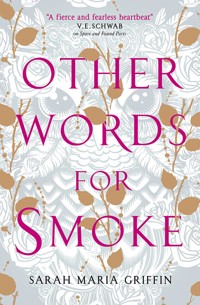
Voted Teen & YA Book of the Year at the 2019 Irish Book Awards. From the award-winning author of Spare and Found Parts comes a story of a haunted house, magic behind the wallpaper, and the strangest summer ever. The house at the end of the lane burned down, and Rita Frost and her teenage ward, Bevan, were never seen again. The townspeople never learned what happened. Only Mae and her brother Rossa know the truth; they spent two summers with Rita and Bevan, two of the strangest summers of their lives... Because nothing in that house was as it seemed: a cat who was more than a cat, and a dark power called Sweet James that lurked behind the wallpaper, enthralling Bevan with whispers of neon magic and escape. And in the summer heat, Mae became equally as enthralled with Bevan. Desperately in the grips of first love, she'd give the other girl anything. A dangerous offer when all that Sweet James desired was a taste of new flesh...
Das E-Book können Sie in Legimi-Apps oder einer beliebigen App lesen, die das folgende Format unterstützen:
Seitenzahl: 337
Veröffentlichungsjahr: 2019
Ähnliche

















Contents
Cover
Praise for Spare and Found Parts
Also by Sarah Maria Griffin and available from Titan Books
Title Page
Copyright
Dedication
Prologue
&
The First Summer
One
Two
Three
Four
Five
Six
Seven
Eight
Nine
Ten
Eleven
Twelve
Thirteen
Fourteen
Fifteen
Sixteen
&
Vignettes from Other Summers
Mae, One Summer Later
Forty-Something Summers Previously
Rossa, Two Summers Later
Forty-Something Summers Previously
Forty-Something Summers Previously/ A Number of Hours Later
Rossa and Mae, Three Summers Later
Bevan, Three Summers Later
&
The Second Summer
One
Two
Three
Four
Five
Six
Seven
Eight
Nine
Ten
Eleven
Twelve
Thirteen
Fourteen
Fifteen
What Rita Said to Mae
What Rita Said to Rossa
&
Epilogue
&
Acknowledgements
About the Author
Also Available from Titan Books
“A beautiful novel woven from magic that seeps into your blood and bones and lingers there…Sarah’s gorgeous prose will haunt you.” Christina Henry, author of Alice
“This is a fascinating coming-of-age story with magical elements that feel both grounded and properly mystifying…Griffin has a keen eye for the beautiful agony of adolescence, and that’s what makes this book such a compelling read.”
Charlie Jane Anders, author of All the Birds in the Sky
“To say this novel, dripping with pull and promise, is good, would be an understatement and an oversimplification. It’s the kind of good that is both wonderful and horrifying simultaneously, awful and wrong and gorgeous… As bright as magic and as dark as Ireland’s history, this book is a brilliant piece of feminine-powered complexity.” Matt Killeen, author of Orphan Monster Spy
“A sublime and sexy tale of temptation and belonging.This book latches onto you and won’t let go. I loved every minute of it!” Helen Marshall, award-winning author of Gifts for the One Who Came After and The Migration
“[This book] will crawl inside of you and linger there for months, quietly influencing your thoughts—much like the magical beings at the center of this story and the women who deal with them. Visceral prose and deep characterization make this book impossible to put down while you’re reading, and impossible to forget once you’re done.” Christine Lynne Herman, author of The Devouring Gray
PRAISE FOR SPARE AND FOUND PARTS
“A piece of mechanical poetry, an intricate machine with a fierce and fearless heartbeat.” V. E. Schwab, author of the Darker Shade of Magic series.
“A truly original creation: part magical realism, part steampunk, it’s a coming-of-age allegory that examines technological progress and an individual’s place in a stratified society.” Guardian
“A unique feminist coming-of-age novel… Clever, beautifully written and compelling. I loved it.” Marian Keyes, author of The Break
“A sweet and darkly hopeful tale of what it takes to build love.” Kiran Millwood Hargrave, author of The Girl of Ink & Stars
“The big dystopian talking point of 2018—the way The Power was for 2017.” The Pool
“This is a writer of such natural vivacity and spark, such eloquence and invention.” Kevin Barry, author of City of Bohane
“A dark and fierce thing, but one that also has much to say about hope and human ingenuity.” Joseph Fink, co-author of Welcome to Night Vale
“Griffin has a keen nose not just for the prescient but for the poetic, and her evocative prose makes Spare and Found Parts a sci-fi book with a keen literary bent.” Irish Independent
“A beautiful book, beautifully written, about beautiful things like love and life.” Tor.com
“This is the kind of novel you can sink into, and one you’ll resent having to climb back out of.” SciFi Now
“A punchy, compelling tale peopled with characters you’ll share your hopes and dreams with.” SFX
“Compelling, full of secrets… this poetic, Frankenstein-esque tale forms a page-turning whole.” Kirkus
Also by Sarah Maria Griffin and available from Titan Books
Spare and Found Parts
Other Words for Smoke
Print edition ISBN: 9781789090086
E-book edition ISBN: 9781789090093
Published by Titan Books
A division of Titan Publishing Group Ltd
144 Southwark Street, London SE1 0UP
www.titanbooks.com
First Titan edition: April 2019
10 9 8 7 6 5 4 3 2 1
Copyright © 2019 Sarah Maria Griffin. All rights reserved.
This is a work of fiction. All of the characters, organizations, and events portrayed in this novel are either products of the author’s imagination or are used fictitiously.
No part of this publication may be reproduced, stored in a retrieval system, or transmitted, in any form or by any means without the prior written permission of the publisher, nor be otherwise circulated in any form of binding or cover other than that in which it is published and without a similar condition being imposed on the subsequent purchaser.
A CIP catalogue record for this title is available from the British Library.
For Helena
“Concentrate, and ask again”
THE MAGIC 8 BALL
Prologue
NOBODY knew what made the three of them from Iona Crescent up and walk out of the world. The rumors were different, depending on who you spoke to. Accident, attack—nobody could say for sure, except for Mae Frost and her brother, Rossa. They were there when it all happened, but they were sworn to silence in the way so many survivors of horror are: their tongues held by something beyond their control. Mae wasn’t sure she’d ever be able to say any of it out loud, even if she was asked. That second summer, away up in the hinterlands where the suburbs kissed the mountains, had stolen the words from her. The language that matched her confession was lost.
Afterwards, when dear old Rita Frost and her ward, Bevan Mulholland, were gone, the national media descended on the twins. Microphones and cameras desperate to harvest their sorrow and turn it into headline ink. Lucky was what those headlines had called Mae and Rossa. Lucky, like spotting a bright penny on a pavement, lucky like two magpies seen together for joy. Lucky, like the twins’ escape had happened by chance.
Not a trace of Bevan or Rita was found. The twins were discovered by police and the fire brigade, sitting on the roadside at the end of Iona Crescent, holding each other. Streaked with soot, hands bloodied, but otherwise unharmed. Seventeen, the pair of them, wide-eyed and gaunt for months. They’d never be the same again, said the papers. It was a miracle, whispered the neighbors. Those lucky, lucky kids.
All they told the journalists was that they ran for their lives. They would cast each other looks, Rossa and Mae, as they said just about nothing at all under rapid-fire questioning. Shock was the disguise they wore, and it protected them from having to say much at all.
The only detail real Mae ever gave to the tall, coal-suited reporters as they grilled her was that she hoped Bobby the cat had managed to make it out into the mountains. They always liked that bit. Their eyes would come over sad; they would say she was so brave.
The neighbors on Iona had been far more forthcoming. Devastated, all: Rita Frost was such a sweet old lady. And young Bevan, tabloids were splashed with photographs of her, school headshots, the occasional clumsy selfie. A gorgeous, bright girl struck down before her life had really begun. Her former boyfriend, Gus, gave an impassioned missive to the national broadsheet about the strength of her character, her beauty. There never would be anyone quite like Bevan Mulholland again, he’d said.
Mae had agreed with him, when she’d read it. There wouldn’t be anyone like her again.
While the papers flooded with tributes, it seemed to Mae that nobody remembered that Bevan and Rita had kept themselves to themselves. That Bevan had few friends, if any—that she was a quiet girl with something hard in her eyes. That Rita had been little short of shunned by the parish for operating as a psychic medium from her living room.
No use in remembering the harder things, the stranger things. Rita was kind and Bevan was beautiful, and Audrey—well, what would anybody at all really know about Audrey? Audrey had been gone for years.
Rita was kind. Bevan was beautiful—this is what remained. This, and the smell. They talked about it for years, told stories of how the sky above Dorasbeg had looked tornado-gray; a disaster in the air. Great billows of it carried on the wind down over the village and the motorway: smoke, sweet and dark.
ONE
THE floor is tiles and sawdust, like dry, flaked snow. You shuffle your feet and make little heaps of the fine wood shavings, here and there. Your fruit gum tastes like nothing. You’re last in the line. When the gray-faced old man and the woman with the pram are gone, it’ll be just you and the butcher’s son, Gus.
You haven’t looked at him just yet; instead you inspect each cut of meat behind the glass counter. That’s what you must look like on the inside, you think, running your gaze over the crimson flanks, the pastel translucency of breasts, the redness of mince.
Gray old man leaves, paper bag under his arm. The bell on the door rings as he opens it, closes it. For a moment, the cool of the shop is disturbed by the hot summer air outside. The woman with the pram moves forward, leans over the counter, goes, “Will you do us up a chicken with stuffing and a spice rub? Cheers, now, Gus.”
Boring. You drag your fingertips over the glass, tap your nails against it. You blow a small bubble with your gum, it snaps. An impatient sound. Gus looks over at you, takes you in. “I’ll be with you in a moment, Bevan.”
You hum back to him. “Whatever.”
He tuts like he’s exasperated, but you know he likes you. That’s funny.
Gus snows the pimpled chicken skin with salt, pepper, something red from a canister. Stuffs it with bread crumbs and sage and onion and butter. Puts it in a little tin dish, wraps it in cling. Keeps flinging you looks while he works. The woman with the pram passes a fiver over the counter. His latex gloves are still covered in the rawness of the bird as he takes the green note. You lean back against the arc of the counter, the skin on your legs sticking to the glass. Chilly.
“What’ll it be, Bev?”
Gus’s voice is flat, like he’s not interested in helping you— rather, like he’s playing at not being interested in helping you.
“Bones again, if you have them.”
You slide your eyes up him, his bloodied apron, his denim shirt. This is his da’s shop. He’s still in school, only working for the summer. He’s got a pair of cheekbones you could sharpen a knife off. Starving green eyes. Cornfield-fair beard and woolen hat over tufts of straw hair. Safety hazard, that. His ma told Rita that he’s got notions of moving to London after school, getting out of the family trade, starting over. Wants to do tattoos for a living. You can see a couple of inky surprises peeking from under his cuffs.
“More bones?” He is incredulous. “Using them to pick your teeth?”
“Soup.” You flip out your phone, thumbing open the lock screen, posing indifference. “For Rita.”
“Give it over. You’re smudging the counter,” he snaps, hands on his hips.
“Make me,” you reply, popping another small bubble.
“What kind of bones?”
“Whatever you’ve got.” You don’t take your eyes off your digital feed, but you aren’t reading it, not really. He loves it, your indifference getting right under his skin.
He hisses and disappears behind thick plastic curtains to get you what you’re looking for. Good boy.
You start to sing along with the radio while he’s in there, loud enough given there’s nobody else around. It feels like the stations have only been playing four songs this summer, all of them bangers. You sway side to side along with the chorus, raise your arms above your head, kick the sawdust. Beat’s easy, words dark. Pay me what you owe me—you sort of lose yourself in it, synth overtaking your limbs a little. It’s cold in here to keep the meat fresh. The hairs on your arms rise.
Gus comes back, holding a blue plastic bag weighed down with bones. They’ll be wrapped in cling, then yesterday’s paper. You smile at him, still dancing. “Take a break? This is such a tune. . . .”
He shakes his head. “Christ, Bevan. Give it up, would you. Stop yourself.”
You lean over the counter and he passes you the blue bag. It rustles. “Never. Dance with me?”
You don’t really mean it or even want him to—you know he won’t—but hot red discomfort climbs his face. He sets his teeth, exhales through his nose. “Are you trying to be funny?”
You’re not trying. You’re hilarious.
“Suit yourself.”You shrug, kicking up the sawdust at your heels like glitter as you leave the shop. The bell rings as the door opens and closes on the summer tune and the flustered boy, lit up like a Christmas tree in June. You did that.
On the walk home you try as best you can to hold on to the rush you got from his eyes on you. You stick in your headphones, scuttle through the village quick as you can. The village is what your ma and Rita call it. But Dorasbeg isn’t much more than an intersection of a few busy roads. There’s a looming church, three chippers, a school, two pubs, a string of shops, a Supervalu, a butcher, and a barber. A credit union, a pharmacy, a newsagent. All clustered together like a clutch of old ladies at the hem of the looming Dublin Mountains. It’s nice here, sort of. Pleasant, but for the disquieting presence of the old Magdalene laundry1 by the river. You’d always thought that was an uncomfortable thing, for people to live in the shadow of such a sad place.
This one in particular put your village on the map. The workhouse for unmarried mothers was closed down after a scandal was leaked about a pregnant teenage girl who died after escaping it, decades ago. Now it just stands there, leering history.
But your ma always reminds you how fortunate you are to live in a place like Dorasbeg. You suppose you should believe her.
You power down past the river that runs under the church and take a sharp left into your housing estate. Rows and rows of semidetached houses, white with red roofs. Big ones, porches extended, tasteful gardens. Glamorous, or at least trying to be. Upper middle class and labyrinthine. You lope a few turns, then head down to the end of the last cul-de-sac, where your house sits. Well, Rita’s house. You just live in some of the rooms of the behemoth. Your ma used to, too.
Behind the house is the long garden. Behind the garden is a wall. Behind the wall is the forest, then the mountains begin to climb.
You let yourself in, same as always. It doesn’t feel that different now that ma is gone: for a moment you forget that her coat won’t hang on the banister again; instead it is somewhere far away. It has only been a few months. You check for postcards—none, just a couple of pizza menus.
The house is pristine, like in a catalogue—this side of the building so different from Rita’s. Your ma tried so hard to make it her own. You would have too, if you were her, but maybe not as cold as this, as orderly. Nobody really lives on this side, and it shows. Imelda kept nothing.
She was young, still. You’re her only souvenir. The daughter with the face of a musician who let her into his dressing room after a show, then up and left. Your ma had always said you were like him, but then she up and left too, so maybe the pair of them were alike and you were something else.
You’ve thought a lot about leaving. But not leaving the way she did. Not slipping away full of apologies and promises that the time would come when you could join her. Not the tears-in-an-airport kind of leaving. Something better than that. Less cowardly.
Away up the stairs and into your room. Your soft bed, the big window. Pastels. The leaning mirror. The wardrobe. The room is nearly empty, one whole wall of the room totally featureless—no furniture, no interference. Barely a sign of who you are anywhere—this could be a hotel. A space that any person or any thing just passes through. The wallpaper is white roses and tawny vines and leaves, a textured and endless pattern.
You sit on the rug, your butcher-shop bounty in your lap, legs crossed. You look up at the wall, pop your headphones out, slide your phone across the floor and away. You swallow your gum. At last you scoot nearer, so your knees graze the sideboard. You pull the plastic open, then the newsprint, then the cling. The bones are a nest, pink and raw and slivered white. They smell metallic.
You pluck out a slender wand of bone and twirl it between your fingers, then place it against the wall like a painter with a brush full of crimson. You press, and the surface gives way like wet sand. It eats the bone and his voice says, more.2 You take another and push it in among the pale roses, the delicate vines. They tremble. They begin to rearrange. good.
The paper garden begins to shift. A third bone. yes, he says.
“Yes?” you say.
And the owl arrives.
You are so glad to see him.
1 A Magdalene Laundry is not a building. It is a threat.
2 It is happening again.
TWO
ROSSA was carsick. His mam was driving, the radio murmuring news. His dad had his eyes closed, just listening, leaning against the window, and the heat was stifling, making his nausea roll, his palms sweaty. Mae was glued to her Nintendo, silent and hunched forward, headphones in her ears. Rossa found himself a little shamefully glad that she was being quiet for a moment. He wasn’t sure when he had started being grateful for his sister’s occasional silence, treasuring the moments when she wasn’t effusively gushing about something or other. It was recent. Their twinship, too, had become strange rather than comforting—the secret language between them had loosened at the seams. He blamed it on fourteen. He really wasn’t into being fourteen.
It didn’t help that Mae had half a foot in height on him, like she just woke up one day with her limbs mysteriously elongated without sending his a message to pick up the pace. The pair of them were made of the same stuff; surely that meant his bones owed him an explanation. He was three and a half minutes older, too, which had always felt like a winning argument before, but now was just another check on an ever increasing list of embarrassments about his body.
The car swung around a corner, his mother blindly pressing buttons on the ancient cassette player. Rossa jolted in his seat; Mae nearly dropped her game.
“Paul, put our Philo on there, I can’t see if the tape’s in and I don’t want to drive us into a tree!”
Dad tutted, as though Mam’s request was a burden. He shuffled through the glove compartment, tapes long older than the twins clacking, before stuffing the favorite into the mouth of the player. It took off midsong, and the rawness of Phil Lynott’s voice filled the car. Rossa’s nausea subsided a moment as a fanfare of trumpets cleared the tension. Mae didn’t react, thumbs twitching against the d-pad of her small console.
“Love this,” Mam half said and half sang. Her voice was metallic, pantomiming something she wasn’t feeling at all. Even Rossa could tell that.
Dad said nothing, returning to his window.
There was a reason they were being shipped off to their great-aunt Rita’s for the summer, though Rossa didn’t know what it was. He was pretty sure that Mae knew, but he didn’t want to ask her. Rossa looked out the window at the scrolling, dull landscape. Gray and moss green. Why Rita? She was practically a stranger. They’d only met her at their holy communion and confirmation, maybe one Christmas. Why this summer?
“Almost there now, babs!” Mam chirped, taking a sharp left into the affluent, cloistered housing estate where his great-aunt lived. The houses here were far, far bigger than the poky little terrace that they lived in. There were hardly any people around, Rossa noticed, just stately houses and manicured lawns. He closed his eyes for the next few turns, a lurching roller coaster, trying to focus on what the still air and steady ground would feel like when they got out. An hour of his mother’s driving—or more specifically, his mother in a terrible mood and unable to focus on her driving—and it was nothing short of a miracle that he hadn’t thrown up in his lap.
To Rossa’s sweeping relief, the car slowed. Mam parked at the end of a cul-de-sac. Rossa undid his belt and leapt out of the car with such speed it surprised even him. Mae exclaimed, “Jesus, Rossa, wait for me,” unpopping her headphones, emerging from her digital adventure. Her brother didn’t answer, just flopped down onto the path a moment, heaving great undignified gulps of air. The relief of it.
His mother and sister began unloading a summer’s worth of meticulously packed cases. Dad did not help, rather let himself out of his door and strode up to the house. He was pissed off at Mam and wasn’t even trying to hide it. Rossa couldn’t help but stare at him, marching ahead like the rest of them weren’t there.
Before Dad was halfway up the path, the hall door opened and Great-Aunt Rita stood there in the frame. She opened her arms wide at the door, a gray shawl draped over them, and her neat white hair in a knot at the crown of her head. Glasses circular, earrings pearl, long fingers stacked with rings. And an alarmingly large black-and-white cat at her feet. Dad picked up the pace, waved clumsily to her—a boy again in her long shadow.
“Paul, the state of you,” she laughed, embracing him. Rossa’s father buried his face a moment in his aunt’s shoulder.
Mae and Mam trekked towards the house.
“Rossa, you lazy bollix, get up and help us with the bags!”
“Don’t call your brother a bollix, Mae.”
“But he is one!”
“I know he is, but you’re not to be swearing!”
When Mam and Mae weren’t arguing, they were play-arguing. It was nice to see, but it gave Rossa an ugly pang of jealousy. Mae found it so easy to slip into a friendship with their mother when things were good. He begrudgingly pulled himself up off the pavement and went to heft his case from the back of the car. It was heavy, jammed with T-shirts and jeans and markers and paper and books.
“Rita has plenty of books!” Mam had scolded as he stacked his case.
“But she won’t have my books,” Rossa had grumbled in reply: his crisp, neat sketchbooks, his charity-shop salvaged old anthologies of nature magazines, his favorite issues of National Geographic—he never got bored of them. He wasn’t about to adjust his taste along with his whole dislocated summer: at least he’d have portals to the places he wanted to go with him. His little paper hideaways.
By the time he’d hauled himself up the driveway, his dad had detached himself from Rita, but she still clasped his hands in hers. Mae was making smooching noises at the cat, who had his eyes closed and was nuzzling into her hand.
Now that he was up close, Rossa could see that the cat was absolutely the size of a dog. It was unsettling—little fangs poking from the corner of its maw making it look more beast than pet. Rossa would not be getting as cozy with him as Mae was anytime soon.
“It’s good to see you again, Evelyn,” Rita was saying to Mam. “You look great.”
“Working on it, Rita. And you’ve barely aged a dot.”
They kissed each other on both cheeks, effortlessly sophisticated. Both acting. It was more than a little uncomfortable until Rita turned to Rossa and his sister. “Mae and Rossa, you’re only giants!” Her gaze was warm on the pair of them. “You pair and me and Bobby here will have a nice relaxing time while your folks are—”
“Off gallivanting!” Mam cut her off. “Absolutely dancing it around the south of France!”
Rossa despised the strange urgency on the edge of her tone: something was wrong. Why didn’t they just tell him? He was fourteen, not stupid.
And Bobby was a stupid, stupid name for a cat.1
Rita nodded enthusiastically, covering for herself. “Both of you be gone now. I’ve Bevan Mulholland from the other side of the house coming in to put the dinner on.”
“Little Bevan?” Mam cooed. “I haven’t seen her in years. I’d say she’s gone real tall!”
Rita smiled. “Lion of a girl. She’s mostly with me, now. Now away with ye, off to the sunshine. Make sure to drink lots of water and use factor fifty on your skin. I don’t want a pair of lobsters showing up here on my doorstep! Send us heaps of postcards!”
Mae sprang up and squeezed Mam. “I love you, I love you!”Then she ricocheted to Dad. “I love you, I love you!”
Rossa rolled his eyes. He hugged his mother, then his father—but for a moment longer. Dad’s eyes were wet, his mouth heavy in what was undeniably sorrow. His big hands rested briefly on Rossa’s back, and then he was gone.
The green car revved with a familiar clunk, and their parents were away. The twins and their great-aunt waved at the door; then Rita ushered them and their cases inside.
Something was cooking on the stove in the kitchen, and Rossa could smell it from the doorway. He was, quite suddenly, starving. His stomach had flipped nausea for hunger in that way a belly does when it realizes the world isn’t moving too fast for it anymore.
Rita’s hallway was familiar in the strange patchy way that so many of Rossa’s relatives’ homes were. He’d been here before, once, twice—but he’d never noticed the statues. All of them were the Virgin Mary: her blue robe, her white face, her lips too red. A cluster of them stood on the hallway table, a tall one by the stairs. All in a little line, sisters in blue on a shelf above the radiator next to a bowl of potpourri and a cone of incense spiraling dense tendrils of gray. Rossa’s house didn’t smell like this.
The carpet, sun-bleached maroon scattered with gold, was soft under his sneakers. The pattern looked like it had once been flowers, now abstract from age. There was a shabby grandeur about the house: a small glass chandelier presided over the hallway, reflecting scattered prisms here and there. Rossa was unsure he would ever be able to be comfortable in a place like this. Even though it was quiet and still, the place felt busy, somehow. Like there was no room for him.
Bags abandoned in the hall, the twins were ushered into the kitchen. It was a long, bright room, cupboards painted eggshell blue, renovated so the ceiling was almost all glass, facing up at a sky barely dappled with summer clouds. Two huge double doors were flung wide onto a patio facing the manicured back lawn, a green stretch.
“It’s more of a sunroom lately, isn’t it, Bev?”
The tall blond girl stirring a pot on the huge wrought-iron stove nodded. “I like it better this way. It was too dark before you had the roof put in.”
Rossa blinked at her. How were teenage girls so tall?
“Bevan lives in the other side of the house—ye’ve met before, though you were probably too young to remember. She helps me with odds and ends of the business. Her ma, Imelda, moved away, so we keep each other company, don’t we?”
Rita didn’t explain what “the business” was, or where Imelda went, or why. She pulled a spindly chair out at the table. The table felt almost too big for the room, a little too tall for the seats and wearing an oilcloth covering, patterned with prints of lavender and oranges. Rossa wasn’t sure how anyone could eat off something so ugly but supposed he’d better get used to it. He wanted to go home. He wanted to run out of the house and chase after the car and go to France with his parents and make them tell him what was wrong, why Dad was so heavy in the face, why his eyes were so red.
Rita produced a slim white cigarette case from under her shawl. She lit up and drew heavily, a satisfied breath.
Mae was on the floor, the immense purring cat in her arms. She stared up at her great-aunt a second. She blinked, then couldn’t contain herself.
“Are you sure you should be smoking, Rita?”
Rossa glared down at her—she could be so blunt. And she looked silly, still holding the cat. It was almost like the cat was holding her, the proportions all wrong.
Thankfully, their great-aunt did not seem to take the remark seriously, and laughed through a silver plume. “Let me have this, child. I’ve no vices left at all.”2
Mae shrugged. “Dad’s back on them again.”
Rita raised her penciled eyebrows and tapped some dead gray into a crystal ashtray, silent a moment. “They’re an impractical and dangerous cure for stress, but we take the small things while we can still get them.”
“You won’t let me have one,” quipped Bevan, her back still to the room, grinding black pepper into the huge, bubbling pot. “I’m stressed sometimes, I’d like to be cured.” The kitchen at home was all stainless steel and practicality. Bevan’s pot was burned orange and ceramic; it looked ancient. Rossa wondered if it was clean. It sat on top of a massive black stove: he’d never seen anything like it in real life, only in illustrations in books. In the core of the beast, a fire burned bright behind thick scorched glass. Was that safe? He shifted in his seat.
“Sure what have you to be stressed over? You’re not made for this poison.” Rita exhaled a cloud and Bevan gave a dismissive “Yeah, yeah . . .”
Rossa thumbed the sleeve of his hoodie. The two girls and old woman were at such automatic ease with each other. He thought about asking to be excused, or where the bathroom was, or could he go and unpack. He thought about texting his parents, promising that if they came back and took him along, they’d never even notice he was there.
But he didn’t. Instead he opted for politeness. It was rude just to leave so quickly after arriving. His opportunity would come along, he’d just have to wait. He let a numb swathe of boredom wash over him as his sister, aunt, and new neighbor, or housemate, or whatever Bevan was, chatted away to each other. This feeling of being slightly outside of things was what the summer was going to be. It filled him with a gentle sort of dread, and when the soup—bright squash and thyme—was placed in front of him with fat wedges of soda bread, he couldn’t even manage a single bite.
1 Bobby was not his name. That was the name Rita and Audrey decided on for him. Bobby Dear, the cat that came in the window. Neither girl knew what he was called before.
2 Besides. It reminded Rita of Audrey. With every single lit cigarette, Rita thought of her. That made it at least ten times a day.
THREE
WHEN you finally get away from the visiting children, you call upon him again and he comes quickly, almost without ceremony.
Ah, doesn’t your skin feel so much better for his presence, your bare legs folded on the floor, your hands resting on your knees, symmetrical? You didn’t even have to give him a feed tonight, just called his name soft, and out he came, coaxed easy from the paper.
Something like delight uncoils in your chest as he arranges himself amongst the fawn roses of the wallpaper. His beak, so white and sharp, seems more smiling today— if bone could smile. His feathers twitch and shift and he opens his eyes. They are huge, buttercup yellow with slit pupils like pure obsidian. Near your feet, at the sideboard, his marble claws protrude: they are teeth without a mouth. The air hums a little like sickness, a little like sex—but mostly like magic.1 He is a parliament of one.
You are scared.
He knows.
Your scalp feels tight, your eyelids too, and silently your corkscrews of mad yellow hair grow, become thicker. You laugh as the spirals twist low below your elbows—an inconvenient waterfall, a rush of curl.
“Stop!” You are playful, and he laughs, and the air is charged electric from the sound of him. A current runs through you, your fingertips thrum, and your nails grow an inch, sharpening before your eyes. You have never seen anything alive change so quickly before: this body doesn’t feel like your own. His laughter is a night animal and a man and a storm. Yours becomes distorted in the air.
“I’ll have to cut them, James,” you whisper, watching your fingertips extend, talonlike, curved.
what if you couldn’t cut them, he rumbles, and there’s pressure then, crushing heat, like trapping your hands in the steel door of an oven—heavier than that, even, trapping them under a brick, a whole building, a mountain. Your scream is caught in your throat as you stare. Your flesh glistens away into something else. Your nails are diamond, your fingers are diamond, long shining rocks—sharp and glinting and impossible and full of fractals, casting tiny prisms as the summer day pours iced-tea light into your room.
“Thank you!” you gasp.
again, he says.
“Thank you!”
good, he says, and you are relieved. You wish he would speak more, his voice so enormous, so great.
You sit there in the quiet for a while, watching the movement of his feathers and bones, glowing with your new gifts. He’ll turn your fingers back to normal soon, won’t he? Of course he will. You’ll have to cut your hair and burn it so no one notices it’s happened, but for now, you are magnificent and strong, a baby monster at his feet, growing from his power, the fear ebbing and flowing in you like a cosmic sea.
He pulses in the paper, blinks long and slow.
bevan, there are children in the house.
“Yes,” you reply. “Two.”
are they of the crone’s blood?
The crone. A terrible name for Rita. Rita loves you, doesn’t she? You love her too—or you think you do. But Sweet James can call her whatever he wishes. Rita who’s minded you since you can remember, who let you stay when your ma walked away. Rita, your other mother. Rita who teaches you how to read cards and how to listen to the strange static channel in your head that hears car accidents in the city an hour before they happen. But Sweet James, you are sure, is the one who gave you the coordinates to that frequency in the first place. Before he was huge, when he was just a strange rustling of leaves and petals on your wall. When you were a child, before he truly showed himself to you—he taught you how to listen. Rita just about raised you, but Sweet James made you whole. You owe him so much: this gorgeous nausea, this vertigo between fear and joy.
“They’re her great-niece and great-nephew. Twins,” you say.
your closeness to her does not please me.2
“But . . . but I live here. It’s her house. . . .” Your gut drops. You knew he didn’t like Rita, but hearing him say it is rotten fruit, is foaming mold.
it is my house. you know this, and yet you still tend the fire, and the fire keeps me from her.
You do. You stoked it minutes before you came up to your room. You raked over the flames, fed it turf and kindling, watched it swell and purr and crackle. You feel that pressure again in your hands and you look down— your nail beds still shine, but they are blackening. They sear and sing with pain and bright heat.
there are children in the house and i am hungry.
“I can get you all the bones you like. Gus—Gus likes me!”
i do not want bones. i want pieces of the children.
“I can’t do that!” Your hands, your arms, the ends of your hair, your eyelashes are in flames.
fire is a terrible thing, isn’t it?
You can’t speak.
this is how the fire in the crone’s kitchen makes me feel. i am so hungry, bevan. the fuller i am, the stronger you will become. the things i will show you . . . make me stronger. bring me pieces of the children.
The heat cools. Your arms and hands restore as if nothing ever happened and all those sensations had just been a too-tangible hallucination. Then the owl does something you have never seen before. You’ve seen him almost every single day since you were a little girl, and you thought you understood all the ways that he could scare you, bargain with you. But before your eyes, he shifts himself into a door. The physics of your bedroom defies itself, makes space for something new, and your eyes struggle with it for a second, like your optic nerves can’t translate what is happening before you. He is an owl no longer then, and a volt of fear runs through you as the wooden rectangular door unlocks itself and swings open wide, revealing a room that cannot be there.
You are shaking.
You step forward.
1 Magic is such a big word. Almost as big as “love.” Almost as big as “afraid.”
2 Sweet James had never really liked Rita. There had been someone else he’d preferred.
FOUR
NEON. That’s all you can take in at first, the ugly electric hum of something too gaudy for the indoors, too big. A fairground. A billboard off the motorway. You rub your eyes, knuckle white disturbances against your eyelids, and then look around, hard.
The room is empty and long. Twenty feet ahead of you there is a wall, and in the center of that wall there is another door. It is closed, though you can see it has a handle. The walls are pulsing with veins of that neon light, a galactic juxtaposition of star bright against void dark. The floor is glass, and just beneath, black water rushes below you. The air smells of it too, the water. Not salty or fresh, like being by the ocean. More like rain, like wet earth, though there’s not a trace of earth in sight. Maybe, you think, this room isn’t even attached to the planet. You’d played in caves by the sea once or twice as a child, waves rolling slow at your feet as you’d scoured rock pools for small, sharp animals to collect as souvenirs. This feels like that—like a mouth to someplace else.
You look over your shoulder, and the summer light of your bedroom, cream and clean and ordinary, is just a few steps behind you, framed in Sweet James’s door of paper and bone and owl and wrong. You take a few steps forward, your bare feet padding against the glass floor, which is uncannily warm. How is it so warm? Not warm like the sun, or like a fire. Warm like a body.




