


3,67 €
Mehr erfahren.
- Herausgeber: Proisle Publishing Services
- Kategorie: Poesie und Drama
- Sprache: Englisch
Melva Haggar Dye is a free-lance writer of both fiction and nonfiction. Her articles have appeared in numerous publications including Chicken Soup for the Unsinkable Soul. This is her second novel, the first being All That Remains. After living for many years in Houston, Texas, and Baton Rouge, Louisiana, she returned to her native Western North Carolina. She and her husband make their home in Lake Lure, NC.
Sie lesen das E-Book in den Legimi-Apps auf:
Seitenzahl: 673
Veröffentlichungsjahr: 2023
Ähnliche




















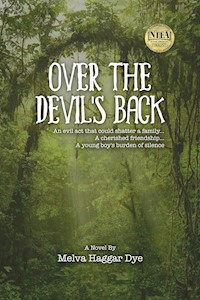
Over the Devil’s Back
An evil act that could shatter a family…
A cherished friendship…
A young boy’s burden of silence
A Novel By
Melva Haggar Dye
Over the Devil’s Back
Copyright © 2022 by Melva Haggar Dye
ISBN: 978-1-960224-25-5
All rights reserved. No part of this book may be reproduced or transmitted in any form or by any means, electronic or mechanical, including photocopying, recording, or by any information storage and retrieval system, without permission in writing from the copyright owner.
The views expressed in this work are solely those of the author and do not necessarily reflect the views of the publisher, and the publisher disclaims any responsibility for them.
To order additional copies of this book, contact:
Proisle Publishing Services LLC
39-67 58th 1st Floor Woodside
New York, NY 11377, USA
Phone: (+1 347-922-3779)
Dedicated to the memory of my aunt,
Martha Morgan Scruggs
and to all those who have been blessed with
One. True. Friend.
Acknowledgements
Special Recognition and Sincere Thanks
To my Editor, Krista Hill, L. Talbott Editorial
Her professional edit, constructive input and encouragement
were invaluable to me throughout the development of this novel.
To my husband, Charles Lewis Dye,
for the amazing life we share.
Introduction
“…And what’re you doin’ hanging ’round the house this fine sunshiny mornin’, anyways? You ought to be out playing with friends! ’Les, of course, you’d rather sit here and shell peas all day long,” Mosell cackled.
Her gnarled fingers stopped their work and lay still on her apron-covered lap. The rhythmic creaking of her rocking chair stopped as she looked directly into her grandson’s eyes and continued the one-sided conversation. “What’s the matter, boy? You ain’t said half a dozen words all week long. You got somethin’ you wanna talk about?”
The young boy took a deep breath before he answered her with a question of his own. “Moam, what did you mean when you talked about the devil’s back?”
“Huh? Oh, you mean las’ night when your daddy and me was talking. What I said was: ‘what goes over the devil’s back, is gonna come crawling under his belly.’ It’s what my pap always said. Now, what that means is that whatever you done, be it good or bad, it’s gonna come right back around to you for sure.
“You see, child, if you walk hand in hand with the Lord, then good things be coming your way. But if you play leap-frog with that ole devil,” she paused and lowered her voice to a whisper, as her eyes locked on those of the boy, “well, then, the bad you done gonna keep coming back to haunt you.”
Mosell shook her head sadly and wiped a tear off her cheek with the back of her hand. “And whoever done harm to that child—the devil gonna be coming back around to him for the rest of his days!”
Prologue
Creating illusions: that’s what people like us do best. At least, that’s what YOU do best. You delude the senses and you set the mind awhirl. You project an image different than it actually is. No, no, that’s not right; that is not what you do. You project an image as it SHOULD be.
Why, just look at yourself—the quintessential southern gentleman, which is exactly what you are. You’ve never looked better than you do tonight with your perfectly-knotted tie, perfectly-pressed pleated shirt; the diamond stickpin’s a nice touch.
Just how many men in the ballroom are clad in a custom-tailored tuxedo? Nothing rented or off-the-rack for you, no sir; you noticed. Hell, anybody who’d ever set foot outside of this rag-tag county noticed. The ones who hadn’t didn’t matter, anyway.
And self-control? You were perfect. Not a trace of second thoughts. Yeah, you really wowed ’em with that speech tonight, didn’t you? Of course, that was essentially accomplished years ago when you made your mark with the hayseeds around these parts. No social graces, none of ’em!
Anybody ought to know that you don’t talk business at a shindig like this. But how’re you supposed to answer the likes of: ‘What’s your stock pick this week?’ ‘I wonder if you’d mind taking a look at my portfolio.’ Or, ‘What do you reckon the Fed’s going do at their next meeting?’ Like they’d understand your answers anyway.
What you’d like to explain to the Bubbas of this town is that off-shore banking does not imply stuffing cash in a Thermos jug and anchoring it out in the Peedee River.
You don’t say that, though. Instead, you smile, look him in the eye, pat him on the back, compliment him on marrying the prettiest woman in the county and make him beg—yes, beg—you to let him deposit his money in your banks. Yeah, that’s what you do, and you do it so well. Calls to mind that old saying: ‘He who rules the gold, rules.’
You had ’em eating out of your hand tonight for sure. The old-fart has-beens that barely remembered what it felt like to be on top all the way down to the wet-behind-the-ears wanna-be’s were hanging on every fucking syllable that came rolling off your silver tongue.
And the women? Man, you still got your pick. You had ’em all twitching, even the old cronies, twittering and fanning their selves over every little smile you flashed in their direction. And just how many perfumed notes got tucked discreetly into your jacket pocket over the course of the evening by young, smooth, silvery-nailed hands? Of course, you’re not going to take any of them up on their offers; but still, those high tight asses wriggling themselves up onto that polished Louis XVI desk of yours—a man can dream.
Stop yawning. You’re not tired, you’re just trapped. Oh, but you’ve got the sure-fire keys to freedom. Just a pinch of this fine white ambrosia—there, now, just a thin line from the crystal vial balanced on your knife blade—voila! Your world changes back into the exciting, magical kingdom it should be with you in your rightful place as ruler.
Who would’ve thought it—goddamn sharecropper’s son!
Easy, now, chill; focus on what really matters. It’s show time. Check the mirror, touch up the Cartier cologne, a little breath freshener, and it’s back downstairs to give ’em more of what they want.
Yeah, baby, you da man!
C’mon, now, move; you need to get back to the party, back to your court, to your admirers. So, why’s it so hard to do it? Move your ass, you cowardly prick. All you gotta do is push the down button, step in the elevator, push ‘M’, get off on the mezzanine, and she’ll be right there waiting for you.
Or maybe she’s on her way up here to see what’s taking you so long. You wouldn’t want that, now would you? No, no, she can’t come up and see you standing here frozen in front of this goddamn mirror, sweating like a pig, crying like a freakin’ baby!
Shouldn’t have done that second line. One was just perfect; two’s bad, bad, bad! Big mistake hitting the hard stuff. And at your age, too. Folks saying that things get better with age is just a load of horse shit. What you’d give to go back to when you were young and do it all over again. And some things you’d never do at all. Speaking of that, what are you going to do about this letter? What possessed you to write such a thing in the first place? Ought to tear it up right now.
Whew! Man, you gotta get a grip, gotta get your golden ass back downstairs and mix and mingle. What is it you always say: act like you know what you’re doing, and you’ll get away with it?
That’s right.
Maybe a breath of fresh air is all you need before you head back down there to walk the walk, talk the talk. Yeah, just a minute out here on the rooftop.
Man, what a beautiful night, just look at the stars. You never notice the stars anymore. You used to look at them all the time—back in the day.
Brrr, it’s getting a mite chilly out here. You better get back downstairs; they’ll be looking for you. You can do it; you can go right back down there this minute.
See, it’s not that far down there, only four floors. Funny thing, this old building used to seem like the tallest building in the world. Just look down there; why, you can almost hear what the doormen are saying to each other, almost hear who they’re talking about.
Whoa, steady now; don’t get too close to the edge!
Close your eyes and breathe deep; that’s it. You can take just a minute longer out here in the dark, just a minute to silence the whispers. Goddamn those whispers! Why won’t they ever stop?
Shhh, relax, calm down and get your bearings. So, what if the whispers have gotten louder over the years, no one besides you ever hears them. And if anyone else did hear, who in their right mind would ever repeat such vile words—liar, rapist, murderer? Who would dare to even think pedophile?
“SHUT-UP!”
Sicko-loser words, dregs-of-humanity words, words never to be associated with you. Why? ’Cause you’re the best of the best, man!
Just look at ’em down there, scurrying around like a bunch of pissants. They don’t know how good they’ve got it, always having someone looking out for them, looking after their interests, telling them what to do. Hey, all you little people, look up here at who’s taking care of you, why don’t you? Look up here at your hero, your ruler, your god!
No one understands just how hard it is to be at the top, keeping it all together, never slipping, never giving in . . . well, almost never.
“I said SHUT-UP!”
Hush, now. It’s past time to go, and just look at you—you’re a mess.
Take another deep breath, now; steady yourself. You can pull this off, can’t you? Of course, you can. Hell, man, you can do anything.
You’re the Illusionist.
* * * * *
Deshaun Freeman sat behind his desk, drumming his fingers on the scarred surface. How he would conduct this morning’s interview was foremost in his mind.
He looked around his office at the clutter. He probably should have asked Keisha to file the stacks of case records that currently sat in precarious columns on the floor. And it would have been a good idea if the cleaning crew had done a little extra touch up yesterday.
Wait a minute—are you trying to make an impression instead of doing your job?
He decided that his office was just fine. It was a functional workspace, albeit jerry-rigged, comprising four glass walls extending from the floor all the way up to the twelve-foot ceiling. The heating and air-conditioning vents were already ensconced in the creaking, oiled-board floor. The glaring, outdated fluorescent lamp and decrepit ceiling fan hung where they always had; so, no complicated wiring had been needed.
Deshaun was proud of the simple design that he had come up with during his first week on the job. Simple indeed—his very own sixteen-by-sixteen-foot glass box, complete with the ancient walnut desk that dominated the center of the room, used by more predecessors than he could name. That desk served to remind him of the only design flaw in his first architectural undertaking: the door was too small to facilitate its removal.
He was not a man of expensive tastes. His chief of detectives, Omar Landry, must have recognized that fact when the young deputy, Keisha Jackson, had attempted to replace the split, cracked and squeaky desk chair with a slick new La-Z-Boy from Bowman’s Furniture. Wisely, Omar had complimented Keisha on her good taste and suggested that she keep the new chair for herself.
At the time, Deshaun had wondered what all the fuss was about. Why, the only thing that old chair of his had needed was a few more strips of duct tape to cover the new splits and it was good as new. So as not to cause hurt feelings, though, Keisha had been given a small allowance to cover the purchase of two chairs and a side table to make visitors comfortable. And the plants and throw rugs did add some color.
Deshaun never envisioned his workspace as a place of comfort, quite the contrary. He, himself, didn’t stay put long enough to warrant it; and the guests he entertained were as a rule not deserving of creature comforts and were usually whisked away in a timely manner to other locations within the hulking three-story City Hall building.
The Fish Tank, as the square glass enclosure had been dubbed, served a two-fold purpose. It gave him a heads-up on anyone entering the department, but more importantly, it conveyed an image of accessibility to his staff and to the townsfolk in general. That was the idealistic premise behind his actions. He was more than just a flash in the pan, and he needed the people he served to know that. He needed them to know there was more to Deshaun Freeman than merely being the first African-American Police Chief of Antioch, South Carolina.
Keisha poked her head in his office. “You know what time it is?”
Deshaun couldn’t help but smile at her rare display of enthusiasm. He answered, “Yes ma’am, Ms. Jackson, I got me a good view of that Coca-Cola clock on the wall yonder. That’s how come I made these walls glass. Why, I’ll even be able to see him when he comes through the front door.” Deshaun mocked her good-naturedly; he knew what sparked her animation this morning. “He’s not due ’til 10:30.”
“Oh, m’God! Oh, m’God, he’s here!” Sally Ann May’s shrill voice carried from the main room, proclaiming the arrival of the man who had occupied Deshaun’s thoughts for the past seventy-two hours.
“Do y’all know what he’s driving? A Mercedes SL, that’s what!” Sally Ann emphasized each word. “Hear me, people, an SL!”
Keisha had already made her way to the window to join her blond, boisterous counterpart. “Shucks, Sally Ann, he’s walking to the coffee shop across the street.”
“Yeah,” Sally Ann responded dreamily; “and would you just look at that walk.”
The two women giggled and whispered like teenagers, prompting some friendly chiding from Desk Sergeant Roy Kennedy. “Now, Sally Ann, don’t you think you might ought to leave Mr. Washington to Keisha? After all, ain’t he just a bit too young for you—not to mention a little too dark?”
Sally Ann rose to the bait, turning saucily and wiggling her plump backside. “A man too young or too dark? Why, Roy, honey, there ain’t no such animal.”
The guffaws and hand-clapping made Deshaun grin. He recognized every day how fortunate he had been to have assembled—through inheritance as well as good hiring practices—a team such as this. No acrimony lived here. No rivalries arose. His people could joke with each other about race, family skeletons, politics, sexual preferences, whatever, and still perform together to do their job of protecting the citizens of this small town.
He also knew the importance of allowing his staff a moment of lightheartedness after what they’d dealt with during the past days. Roy Kennedy especially had been shaken. After all, tragedy such as the one that occurred on Saturday night shouldn’t happen in Antioch.
Deshaun waited for the moment of merriment to subside before directing his crew back to the business at hand. “Let’s get back to work, ladies and gents. Mr. Washington’s got twenty more minutes before his appointment. I don’t ’spect he’ll be late.”
“Right, Chief. Believe I’ll turn the A/C on; it’s getting awful warm in here.” Sally Ann said, as she made her way to the far side of the office, fanning herself and relishing in the snickers of her fellow workers.
Deshaun turned his attention to Omar, whose meaty right hand had just descended into the Krispy Kreme box for another treat.
“Them things gonna kill you, man. Clog up your arteries, cause diabetes and all kinds of bad things.” Deshaun tried to act nonchalant, but he worried about the older man. Omar had no family to look out for him.
“Hmm, can’t see no arteries,” Omar replied. “And I don’t worry ’bout nothing I can’t see. I already got diabetes, so that takes care of that.”
He met Deshaun’s gaze levelly and continued speaking. “Now, I appreciate your concern, Chief; but the way I figure it is if them two bullets I took las’ year during that meth raid didn’t do me in, then I reckon it’s up to these here donuts, the fat-back in my beans and the fried catfish on Friday nights to take me out, ’cause I ain’t giving up none of ’em.”
Deshaun held up his hands and said, “Sorry, man; promise I’ll quit nagging.”
“Uh-huh, till next week when Sally Ann brings in the donuts.”
“Okay, till next week, then;” Deshaun said as he filled his coffee cup and headed back towards the tank.
“You think Washington can shed any light on this mess, Chief?” Omar asked.
“Can he? Or better yet, will he? I don’t know, Omar. Only thing I know is what I’ve got, and that’s a dead man and what faintly resembles a suicide letter written personally to Leander Washington. I sure hope that he can shed some light on it.”
“He ain’t been ’round these parts for quite a spell, now. I remember him as a boy, though.” Omar wiped his hands on a paper towel and limped back to his desk, his feet obviously hurting him.
“I remember him ’cause he was the smartest little kid I ever did see. Had manners, too; Carl Lee made sure of that. Yes, sir, all three of them Washington kids was real nice; but that Leander—smartest I ever did see,” he repeated.
Deshaun closed his office door. Oh, he remembered, alright; but some of his memories ran deep and were tough to wade through. Like Omar, he remembered Leander Washington as being smart. Actually, smart wasn’t a suitable adjective to describe the person who, by all rights, should have been named valedictorian of his high school graduating class. Deshaun chewed on that particular memory, finding it most difficult to swallow, even after twelve years.
Most of Deshaun’s freshman year had been spent practicing football plays, playing football or thinking about practicing and playing football. His talent as a running back was recognized early on and provided the perfect excuse for the miniscule amount of time he’d spent on academic endeavors. Less than passing grades on exams, missed classes and ‘lost’ assignments were forgiven by his teachers at Antioch High in eager anticipation of another 2-A state championship.
But even Deshaun’s intense passion for football did not overshadow the travesty carried off against that year’s senior class. It was bad enough to have the entire student body subjected to regular poetry readings by Principal Hadley’s insipid daughter, Amelia, at the weekly school assemblies; but to hear the announcement that she and Leander Washington were tied for class valedictorian was ludicrous.
The image had stayed in Deshaun’s memory over the years: old man Hadley, flanked by two members of the school board, standing in front of the student assembly, his nasal twang intoning short, contrived sentences like he was explaining some abstract theory to a bunch of morons.
“The selection of this year’s valedictorian is difficult. That is because the number of points earned is exactly the same for two students. These two students are Amelia Hadley (doting smile) and Leander Washington (polite hand-clapping). Now, the only fair thing to do is to administer a test, and the student with the highest score will be named valedictorian. This test will be held at 11 o’clock on Saturday morning. Good luck to both of you fine young people.”
Leander had not been able to take that test at the appointed time, as it conflicted with the funeral service for Mosell Washington. Moam, as she was known to her family had passed quietly, without realizing her dream of seeing her only grandson graduate from high school and go on to college. She doted on Leander and never missed an opportunity to brag on him.
“You jus’ watch,” she would say to anyone who would listen. “That boy’s gonna shed his rags one day.”
The contrived fiasco played out to Hadley’s liking. “We hate it for you, son, but I can’t see changing the test date. Teachers have made plans, and it’s hard to set something like this up and then start making changes. You understand, don’t you?”
Of course, Leander had understood. Everyone had. That’s the way things were done back then. Change had come grudgingly to Antioch. Understanding had not made it any easier to swallow, though, especially since Hadley and his cohorts were unable to hide their pleasure. The swaggering walks, the elbowing, back-slapping, and teary-eyed snickers barely suppressed behind pink, ham-like fists had set the tone for the final days of that school year.
The old guard had their way. Amelia’s name was announced the following Monday at assembly, to a modicum of applause, while the announcement of Leander as salutatorian received a standing ovation from the student body.
Things sure have a way of coming back around, though, Deshaun mused. Old man Hadley died a couple of years after that from liver disease, and the last he’d heard about Amelia was that she’d gotten knocked-up, dropped out of college and lived in a trailer park over near Greenville. Leander Washington, on the other hand, was a full partner in Remington Banking & Investments, LLC.
Deshaun’s thoughts immediately returned to the business at hand. He was a little unsure how he would go about questioning Leander this morning. They had both grown up in Antioch and had attended the same small schools, but three years’ difference in age seemed infinite when you were in your teens. Their friends and interests had been practically polar opposites. While sports enticed one, the other was rarely seen outside of the school library.
Added to the mix, too, was Leander’s closeness with Gabrielle Westin’s family, and that in itself cast the two boys in vastly different social venues.
He stood as Keisha approached the glass door, followed by a tall man with the same noble bearing and pleasant face that Deshaun remembered from years past.
“Chief, uh,” Keisha stammered, her posture ramrod straight, her dark eyes huge, “Chief, Mr. Washington’s here, sir.” She ducked her head and sidled back to her desk before Deshaun could respond.
“Come in, please.” Deshaun himself was six feet tall, but he had to look up to meet Leander’s gaze. The two men joined in a firm handshake. “Please have a seat,” Deshaun gestured.
“Thank you, Chief.” Leander said, but made no further attempt to converse. He removed his suit coat and casually draped it over one chair while settling into the other chair with cat-like grace. He waited.
Deshaun was impressed. Had the other man practiced the toss of his jacket so as to reveal the Armani label, or was it just a fluke? Mercedes automobile, Armani suits? I guess we finally overcame, but nobody told me!
“You probably don’t remember me, but we went to high school together—for one year, anyway. I was a freshman when you were a senior.” Deshaun opened the conversation.
Leander surprised him with his response. “As I recall, you were quite a football star at Antioch High. All-State Running Back, correct? Scholarship to Clemson, I believe.
“I’m flattered,” Deshaun said. “My career got cut short, though; blew out my left knee my sophomore year. After that, I actually studied some and managed to graduate with a degree in Criminal Law.
“After college I came back here, married Nikki Logan, and the rest is history. How ’bout you? I believe you go by Lee now, right? No point in us being so formal since we’re both hometown boys. Call me Deshaun.” He hoped he could put both of them at ease. “Can I get you some coffee, a donut, maybe?”
Leander studied the other man for a long moment before answering. “No, thank you, Chief Freeman. How can I be of help to you?”
So, that’s the way it’s gonna be. Deshaun tried once again to establish some rapport. He said, “I run into Gabrielle ever once in a while; she tells me you spend most of your time in the Cayman Islands. Must be nice.”
“The partners have offices there,” Leander responded. He crossed his legs and remained aloof.
Deshaun took a deep breath before he spoke. “Mr. Washington, I believe that you know why you’ve been asked to come here. First, though, allow me to express my deepest condolences. Please convey my sympathy to Gabrielle and the entire Remington-Westin family. I’m sure most everyone is still in shock.”
“Thank you.”
Deshaun realized that there was to be no rapport between the two of them. He fumbled with some papers on his desk and pressed on awkwardly.
“His blood alcohol level was 0.13 and,” he paused for emphasis, “he had cocaine in his system as well as on his person. Do you have any idea what prompted him to commit suicide?”
Leander’s eyebrows shot up. “Pardon me, Chief, but you seem to be contradicting yourself. First, you call attention to the fact that he was drunk and under the influence of drugs, not to mention the fact that he was wandering around on the rooftop of a building with no guard rail. This was obviously a horrible accident. Wherever did you get the idea it was a suicide?”
Well, now—just maybe I can get a rise out of him yet. Deshaun kept his voice flat. “Oh, maybe the suicide angle came to me from this.”
He reached into one of the file folders that lay atop his desk and removed a sheet of white paper sealed in plastic. The crumpled page looked as if it had been folded and unfolded many times before it had been smoothed out. Although the dark red stains partially blotted out some of the lettering, the message remained legible.
Deshaun studied Leander as he slid the plastic-encased sheet deliberately across his desk. He said, “The family members appeared sincerely shocked when I shared parts of this letter with them. How ’bout you?”
At first, Leander seemed to be afraid to touch the letter. After a moment, he picked it up. He looked at it for a long time—far longer than it should have taken to read the four short paragraphs.
Deshaun watched closely for some sign of emotion to cross the other man’s face. Surely, he’d catch a fleeting glimpse of shock, fear, sadness, or dread—nothing. “Well, Mr. Washington?”
Leander held his hands palms up and shook his head slightly as he responded. “Well, what, Chief Freeman? Look, I’ve been told about the letter, and it contains some troubling thoughts, to be sure; but suicide—hardly. More like alcohol and cocaine working together to fuel grief, conscience, whatever. Can we possibly go into the, uh, the past details another time? It wasn’t suicide, Chief, I am certain.” He said as if the matter had been resolved.
He checked the Rolex on his left wrist and prepared to stand. “If that’s all, I need to get going. As you can imagine, I have a ton of phone calls to make as well funeral arrangements to finalize.”
Deshaun was furious with himself. In the span of that few seconds, he had almost succumbed to the easy way out. He was so close to knuckling under to The Man.
It didn’t matter that they were both members of the same race and that both men had shared similar upbringing, they were worlds apart. Yes, sir, Mr. Harvard-educated rich man, ’course you’re right. No bad publicity for the partners, no sir. An unfortunate accident is just what it was.
Bull shit!
“Sit down, sir,” Deshaun spoke quietly but with authority. “The time to discuss the ‘past’, as you put it, is now. This letter alludes to an incident that occurred some twenty years ago.” He picked up the plastic-encased letter, all the while keeping his eyes locked on Leander’s. “And this incident, whatever it was, supposedly led to another death.
“Now, since this letter was written to you personally, Mr. Washington, I must assume that you know something of that incident. What about it?”
Leander’s facial expression remained unchanged. “We invite trouble when we begin to assume, Chief,” he said.
Deshaun bit his tongue. “All right then, let’s not assume anything. Why don’t you tell me what you know about the twenty-year-old crime mentioned in this letter?”
“Drugs and alcohol played an unfortunate part in his life. And as far as my name appearing at the top of the letter, I believe there’s an explanation for that.” Leander paused briefly.
“It’s common knowledge that he and I had our differences. I wanted Remington Investments to be more customer-friendly, I suppose you could say. I thought that we should invite input from all our investors, not just the top tier. He, on the other hand, had serious doubts as to the sharing of information and so on. We butted heads frequently, but that’s to be expected in any business environment.”
Leander stopped speaking momentarily, and Deshaun recognized his hesitation as a bit of mild embarrassment. He seemed to collect his thoughts, then continued.
“Chief, you probably also know that the banquet last Saturday night was held in my honor. I imagine that envy or jealousy—whatever, led him to direct his ramblings to me. I don’t see how I can be of any further help to you.”
“For starters,” Deshaun said, “why don’t you and I stop circling each other like a couple of junk-yard dogs. This is a police investigation, in case you haven’t noticed, and I am the police. So please stop wasting my time and start at the beginning.”
Leander’s expression turned to one of mild amusement. “The beginning? That’s quite a long time ago, wouldn’t you say so, Chief Freeman?”
Deshaun would not be mocked. His fist came down hard on the desktop—too hard. File folders stacked high slid in disarray, and Keisha’s vase of fresh-cut flowers wobbled unsteadily.
He was vaguely aware of the six people in the outer office jumping up from their chairs, only to freeze in anticipation of his next move. He held his hand up, signaling that all was well, and then riveted his gaze on the man before him. His voice was no longer amicable. He spoke forcefully and with barely contained disdain.
“You, sir, may answer to your entourage of multi-millionaire investors, but I answer to the people of this town. That’s my job, and I take it very seriously. I don’t have much to go on in this death, but let’s look at what I do have.” He paused.
“I’ve got one of the leading citizens of Antioch—hell, of the entire state of South Carolina—who, it appears, took a header off your bank building and ended up splattered all over the town square, right in front of the Confederate Soldier’s monument!”
Deshaun had begun to rise slowly from his chair. As he spoke, each word grew louder and more forceful, reverberating off the glass walls and turning the fish tank into an echo chamber. He placed his hands flat against the desk and stared daggers into the other man’s eyes.
“Now, that dead man that I’ve been talking about just happened to have in his pocket what looks like a suicide letter written to you. In that letter, he took to rambling on and on about another death. That’s the beginning I’m interested in, Mr. Washington, not the ‘In-the-beginning-God-created-beginning’, but that beginning!”
PART I
The Beginning
May 1999
1
“Eenie-meenie-minie-mo, catch a nigger by the toe. If he hollers—”
Whump!
The group of children froze in shocked silence as the chubby red-haired boy’s hands flew to his face. They watched his Adams’s apple bob up and down as he fought unsuccessfully against his tears. “Gabrielle Westin, you done broke my nose!”
“Oh, no I didn’t!” the young girl said. She took an intimidating step towards her wounded classmate and appeared to enjoy a moment of victory as he inched backward and away from her. “But, Eddie Crabtree, if you ever use that ugly, hateful word again, I just might break your nose. Anyways, I’ll whup you good you ever say it again!”
The boy had managed to swallow his sobs. He wiggled his red nose gingerly with his fingers as he looked around at the circle of eight other children who were gathered on the dusty playground of Antioch Elementary School. A couple of the girls giggled nervously, but the boys appeared to be as embarrassed as the injured one. Not Gabrielle, though; she stood defiantly before him with her hands on her hips, staring him down.
Eddie rubbed his nose again. “I didn’t mean nuthin’ by it, Gaby. It’s just a word, that’s all. Besides, everybody says it.”
“No, it is not just a word, and we don’t say it in my house!” She paused a moment and then continued with her lecture.
“It’s not just a word to Leander, it’s hurtful to him. He’s my best friend, so don’t let me hear you say it again.” A strand of honey gold hair had fallen across her face. She tucked it behind her ear and turned away from Eddie. “And,” she concluded, tossing one final insult at the boy, “only my friends call me Gaby; you will call me Gabrielle!”
She wasted no time in marshalling her classmates into a circle once more. “I’ll count off,” she announced. “Eenie-meenie-minie-mo, catch a piggy by the toe. If he hollers, let him go; eenie-meenie-minie-mo. I choose y-o-u, you old dirty dish-rag,YOU! Okay, Leander, you’re ‘it.’ Now remember, count to one hundred by fives; and no peeking. Ready, set, GO!”
Leander had remained quiet during his classmates’ confrontation. He was, in fact, self-conscious at being the catalyst for Gaby’s anger. But now that their game was on again, a more rational thought occurred to him: he was almost always it.
He had figured the odds of that happening, and it did not seem possible that he could be chosen as frequently as he was. Of course, he realized that the chance of him being chosen was greater when fewer children gathered to play hide-and-seek. But even on days like today, when the usual group of nine was all present, Leander was it three out of five times.
He had tried to discuss it with Mr. Woods, his third-grade teacher, after their math lesson one day. He had shown the man his calculations, as well. The teacher, however, just stared at him and walked off, mumbling that some kids were entirely too smart.
Oh well. Leander didn’t mind being the one hardly ever allowed to hide. In fact, he looked forward to being included in the daily games of this group of children, so much so that he would probably have agreed to be ‘it’ every time.
The boy had no misconception, though, that all the children liked him and wanted him to play with them. The fact that he was the only black child included in their games was, he knew, due to his friend’s intercession.
Gabrielle was spunky and a natural-born leader. She could also be bossy at times, which made her disliked by some of the girls in their class. Leander thought her unpopularity was probably due to jealousy on their parts.
Her dark blond hair hung in a smooth, straight cascade past her shoulders. In the summer, her skin would tan without a hint of freckles, to match the glossy gold of her hair. But it was her eyes, although slightly crossed, that garnered attention. They were amber in color and reminded Leander of the picture of the lion that hung in the school library. He had overheard some of the grown-ups in town remark that Gabrielle’s eyes kept her from being pretty. He disagreed.
He saw her as an angel, surrounded by a shiny, golden halo. She was his angel, anyway, and his dearest friend. He would die for her.
Gabrielle was also someone to be reckoned with. Leander snickered to himself as he thought about fat Eddie Crabtree and his bruised nose. Today was the last day of the school year, and he was sure going to miss these games.
“One hundred!” he called out loudly. “Ready or not, here I come!”
* * * * *
“That was fun,” Gabrielle proclaimed thirty minutes later as the children made their way from the dusty playground and back into the brick schoolhouse. “You found everybody ’cept me. Now, only two more hours, and we’re outta this place for the whole summer.”
“I’m going to miss it,” Leander said. “I love school.”
“That’s ’cause there ain’t nobody else as smart as you, not even the teachers,” Gabrielle said, praising her friend.
Leander stopped dead in his tracks, looking sternly at his friend. “There ain’tnobody else? Come on, Gaby! You know that’s terrible grammar. You should have said, ‘There isn’t anyone else’ or, no one else is as smart—”
“Yes, Professor,” she interrupted him, using the moniker his grandmother had bestowed on him a couple of years earlier when everyone began to notice the degree of his intelligence. “I don’t see what difference it makes. You understand what I’m saying even if it ain’t— isn’t― correct.”
“It makes a difference whether you get good grades or not. It will certainly make a difference when you want to go to college someday.”
Gabrielle shrugged. “Who cares about going to college? When I grow up all I want is to get married to somebody like my daddy who’s gonna take care of me and let me have babies. Besides,” she fell silent, and Leander thought she looked a little sad. “College is for smart people, like you.”
“You’re smart, too, Gaby, you just have to try harder. And, you should have a back-up plan,” he said as he winked at her and grinned. “You might not find anybody who even wants to marry you.”
Gabrielle punched his shoulder playfully as the two friends entered their classroom. “You better watch it, Leander Washington; I’ll whup you just like I done fat Eddie.”
“You mean, ‘just like I…’.” He stopped speaking, closed his eyes, and shook his head. “Never mind.”
Gabrielle giggled and skipped across the classroom to take her seat. Their teacher had discovered what his predecessors had: that the two children were practically inseparable and had to be parted to avoid whispering and note-passing in class. She turned suddenly and hurried back to Leander’s side of the classroom.
“Are we gonna do it this afternoon?” she asked.
“If you’re still sure that you want to,” Leander answered.
She took a deep breath. “I’m sure.”
2
“Free at last!” Gabrielle shouted as she turned a cartwheel off the schoolhouse’s front steps. She landed gracefully on her feet, brushed her hair back from her face and grinned at Leander. “Let’s race to the creek. Bet I can beat you,” she said as she got a head start on the boy.
“Of course, you can beat me! I’ve got all the books to carry!” Leander called out after her, referring to the six books he had borrowed from the school library for the summer months. The stern-faced librarian had smiled and congratulated him on wanting to read during his vacation.
“What in the world are you gonna do with them books, anyways?” Gabrielle asked him as he caught up with her.
“Those books,” he corrected her. “What do think I’m gonna do with them? I just might read them.”
“Whatever,” she said, shaking her head.
Leander recognized her expression as one of bewilderment where academia was concerned. The two of them had talked of little else for the past week except Dalton’s Creek’s deep swimming hole, rainbow trout to be caught and trees to be climbed.
She slowed her skipping pace to walk beside her friend. “So, did you bring the knife?” she asked him.
“I did,” he answered. “You’re still sure you want to do this?”
“I said I was sure, didn’t I?”
Leander could tell that she wasn’t sure, but she must know that he’d never allow her to be harmed.
The two children waved good-bye to friends as they left the school grounds and began walking down the two-lane gravel road toward their homes. The mile-long road was flanked by hundred-year-old live-oak trees, interspersed with huge camellia and azalea bushes, and dotted with perfectly tended beds of rose bushes and seasonal plants, coming to a picturesque end in the circular driveway of the Westin house.
In truth, it was never referred to as the “Westin” house, but rather the “Remington” house. Gabrielle’s grandfather, William Llewellyn Remington, had built the mansion forty years earlier and still resided there as the family’s powerful patriarch.
Leander’s family lived less than a mile from the big house in one of the estate’s modest frame rental houses. His father managed the farming and livestock breeding activities, which allowed Mr. Will to devote the necessary time to mold Remington Banking and Investments into a multi-million-dollar company.
In other words, Carl Lee Washington was a sharecropper: a modern-day overseer who looked after the interests of the master of the plantation. Of course, no one thought of Carl Lee’s position with the leading family in the county in such demeaning terms—no one except perhaps Mr. Will.
Taking the familiar path that took them away from the gravel road and through the bullrushes, the two friends soon arrived at their destination. “Here we are!” Gabrielle exclaimed as she dropped to the mossy ground and began pulling off her tennis shoes and socks. “I can’t wait to stick my feet in that cold water. You ever knowed a hotter day in May, Leander?”
“No, Gaby, I’ve never known a hotter day for this time of the year,” Leander answered on a mildly sarcastic note.
“Me, neither.” She grinned devilishly as she kicked water from the stream towards him. “Come on! Let’s wade over to that big rock yonder. We can do it there,” she said, boldly splashing farther out into the middle of the stream.
“This is serious business, Gaby;” Leander said a few minutes later when they were both seated on the large flat bolder.
He took the knife from his pocket and carefully pried the blade open. “When this is done, you and I will be blood brother and sister for all our lives.” He turned the knife over and over in his hand.
“I know. I’m ready,” Gabrielle responded as she wiped the palm of her left hand on the bottom of her tee shirt and held it gingerly toward Leander.
The small white hand lying in Leander’s equally small black one trembled slightly as the shiny blade traced a thin line along the curved contour of her palm.
A heartbeat later, he made an identical cut on his own palm. He laid the knife down on the rock and looked into her eyes.
“Okay, now, we have to press our hands together just right so that our blood mixes,” he instructed. “Like this.” They clasped their left hands together tightly.
“It stings,” Gabrielle whispered, “but not too bad, huh?”
“It’s okay. We’re supposed to say something, you know,” Leander prompted.
“I’m not good with words like you are. You say it.”
Leander nodded his head and spoke. “This makes us more than friends; we’re blood brother and sister now. We’ll look out for each other all our lives, and we’ll never have any secrets between us. If you ever need me for anything, you just call. No matter how far away I am, I’ll be there for you, Gaby. I won’t ever let you down. I so swear.”
“I so swear,” she whispered reverently.
Slowly, they pulled their hands apart. Leander bent forward to wash the smeared blood from his hand. Gabrielle followed his lead.
“So,” she began, looking at him quizzically, “our blood mixed together, right?”
“That’s right,” he answered as he pressed his hand on his shorts and checked to make sure no red remained.
“Does that mean that I might turn black?”
Leander turn to stare at her in disbelief.
“Of course not. What a ridiculous question!” Her giggling made him grin.
“I’m not that dumb,” she said. “Come on, you silly boy. Let’s wade back over to the bank. I got some cookies and Kool-Aid in my lunch box. We can have a picnic.”
The shady creek bank welcomed the two youngsters as they munched Oreos and took turns sipping lime Kool-Aid from Gabrielle’s Thermos cup.
“What’cha want to do tomorrow? I know,” she babbled on before he could respond. “Let’s come back down here and bring our fishing poles and some bait. I bet we could catch our supper.”
“I thought Remy was coming home today. Don’t you want to spend time with him tomorrow?”
“Yeah, he’s driving in this evening. But if I know him, he’ll stop by the Olsen’s house first and smooch with M’Lyn. Then he’ll probably sleep ’til noon tomorrow, him and Mason both. Mason’s spending the summer with us. I told you that, didn’t I?”
“Yes, you did. I guess he’ll be working with Remy down at the bank, huh?” Leander remarked idly. He liked Gaby’s big brother, but his best friend, Mason Carlisle, gave him the creeps.
“Probably. Anyhow, you want to go fishing tomorrow, or not?” Gabrielle asked as she sat upright and wiped perspiration from her forehead. “Damn, it’s hot!”
“Yes, I want to go fishing,” Leander answered firmly, “and do not cuss.”
“Sorry,” she said. “Hey, let’s jump in the deep part of the creek now. Come on.”
“We’ll get our clothes wet,” Leander objected.
“Not if we take our shorts and tee shirts off, we won’t. I got my undershirt on, so you can’t see my titties.” Gabrielle scrambled to her feet and began tugging off the navy-blue shorts and navy and white striped shirt that was their school’s warm weather uniform.
Leander looked up at her in amazement. “Girl,” he said, “you ain’t got no titties!”
In the blink of an eye, he knew the grave mistake he had made, as his friend whirled around, her face aglow with surprise and glee.
“What did I just hear?” she shrieked. “Did I just hear Leander-smartest-boy-in-the-whole-school-Washington say ‘ain’t’?
“Better yet,” she kept on teasing him as she skipped in circles delightedly, “did I just hear Leander-never-says-anything-wrong-Washington say ‘ain’t got no’?”
Her antics were contagious, and soon they were laughing uncontrollably. They collapsed on the mossy earth, holding their sides and losing their breath in merriment.
Weak from laughter, they began to roll down the sloping bank towards the swimming hole. Their lithe young bodies picked up bits of moss and leaves along the way, only to end up being washed clean in the cool, crystal waters of Dalton’s Creek.
And so it was that after a blissful afternoon spent with his dearest friend, nine-year-old Leander Washington would become caught in a web of chilling horror.
3
Gabe Westin strolled along Antioch’s Main Street. It was barely after nine in the morning, and only a few of the shops were open. Although several parking spaces stood empty in front of his destination, Gabe had chosen instead to park in the public lot at the far end of the street. He’d hoped the long walk would calm his nerves a bit. He nodded to several folks he recognized along the way and thought how nice it was to see life coming back to downtown.
He soon reached his destination and paused, still unsure of just what he would say to someone he hadn’t seen in close to twenty-five years—someone who had rarely been out of his thoughts in all that time.
The shop was one of several new businesses that had recently opened up in the block of long-vacant and disheveled brick buildings that lined Antioch’s town square.
Gabe turned the knob and opened the glass door of Tess’ Fine Lingerie to the merry sound of tinkling bells. He had to duck his head slightly as he entered. Folks sure must have been a lot shorter when these old doors were set nearly a hundred years ago, he thought.
He immediately took notice of the interior’s pointed contrast to the vintage façade of the building. The fresh wallpaper’s muted shades of pink and mauve served as a backdrop for the many racks of colorful gowns, robes, and kimonos.
Sleek, glass-topped tables stood on the polished oak floor and held neat stacks of all things frilly. The merchandise was illuminated by a dazzling crystal chandelier hanging from the recently painted, twelve-foot domed ceiling. The old brass wall sconces had been shined and put to good use with candles emitting a pleasant vanilla aroma,
Gabe heard sounds coming from beyond the curtain just the other side of the perfume counter. He cleared his throat to announce his presence.
A woman immediately entered through the curtain, smiling as she spoke: “I’m so sorry. I didn’t know anyone was here this early. I was in the storeroom and didn’t hear the bell. Welcome to—”
“Hello, Tess. Welcome home,” Gabe said, his voice shaking. “You must’ve been living somewhere in a time warp. You still look fifteen years old.” He could feel his eyes misting as he swallowed hard.
She took her time responding. Briefly, she closed her eyes, and when she opened them, it seemed to Gabe that the fleeting shadow of sadness he had just seen was gone. She smiled and shook her head as she spoke. “And you, Gabe Westin, are just as silver-tongued as you ever were. Come here and give me a hug.”
The two embraced awkwardly.
“I saw your cousin, Betsey Ledford, at the Stop ’N Go last month, and she told me you were moving back to Antioch and opening a store,” Gabe began the conversation in earnest, his voice steady again. “It’s hard to believe that you decided to move back here, Tess. I heard that your designs went over real big in Atlanta.”
“So, you’ve kept up with me, huh?” she said, grinning as she playfully poked a finger at his chest. “Actually, the decision to come back to Antioch was made for me. Maw-Maw Bradley is sick; she’s got lung cancer. Never smoked a cigarette in her life. Go figure. I’m all she’s got, and since she wouldn’t hear of coming to stay with me in Atlanta, here I am. Maw-Maw was always there for me.” She paused and shook her head thoughtfully. “What is it they say about the child one day becoming the parent?”
“Whatever happened to D’Andre? Can’t he help with your grandmother?”
Tess raised her eyebrows. “That no-good uncle of mine? He’s probably in jail somewhere. I haven’t even bothered to look for him. He wouldn’t be any help to us, anyway. He and my mother were just alike; all either one of them ever did was take money from Maw-Maw, break her heart, and then leave us.” She spat the words angrily, reminding Gabe of the other Tess.
The telephone rang, startling them both. Tess excused herself and walked back to the counter to answer it, giving Gabe a brief respite from the gaggle of emotions that being with her again evoked. He watched her and listened as she spoke professionally into the receiver.
“Yes, ma’am. We specialize in bridal showers, and we have a registry at the shop here as well as at the one in Atlanta. It’s worked so well for our clients. The bride can enter her wish list items. That way, everyone knows her tastes and there won’t be any duplication.”
She certainly knows her business, Gabe mused. He had never doubted for one minute that Tess Bradley would be a success at whatever she undertook. The uncertainty came from her. She never believed she was good enough or smart enough. She always fretted over what folks thought of her.
It was during those times of insecurity that the other Tess would come out—the one ruled by depression. She would close herself off for days, not even responding to Maw-Maw. And when she emerged from whatever dark place that had held her captive, the thin razor cuts along her arms would tell the horrible story of just how far into self-loathing she had sunk. Gabe hadn’t known how to help her back then; he’d been too young to know.
He succeeded in shaking off those bad memories as he watched her write down information from the telephone call. He hadn’t lied earlier: she did look as young as she had back in high school, and just as pretty, too. She had kept her dark hair short, accentuating the fine bone structure of her face and her long neck. He remembered the feel of her skin, like caramel-colored velvet beneath his trembling hands.
Stop it!
Tess ended her telephone call and turned to Gabe. “Well,” she announced triumphantly, “I’ve just booked my first bridal event of the Antioch social season. Elise Pettigrew is giving her daughter, Shelby, a lingerie shower next month.”
She seemed pleased, and that pleased Gabe. He said, “Back to what we were talking about before the phone rang—I’m so sorry to hear about your grandmother, Tess. Be sure and give her my regards. Let me know if I can do anything for her.”
Tess looked up at him thoughtfully. “Maw-Maw always liked you, Gabe. She used to refer to you as ‘that nice, polite white boy.’” Tess chuckled and then went on. “What she did not like one bit was you and me keeping company.”
Gabe joined in the liveliness of the moment. “I remember the very first evening I stopped by your house to ask if you’d go walking with me. When we were going down your porch steps—”
“Maw-Maw said, ‘Humph! Some folks don’t know where they supposed to stay!’ I didn’t know if she meant me or you.”
Their laughter melted into an uncomfortable silence. Gabe finally spoke. “I saw your ad in Cosmopolitan. You made it, Tess. I’m so happy for you.” He walked over to a rack of gowns and began to examine them. “These sure are pretty.”
“Well, I never made it to New York like I swore I would. But Atlanta wasn’t bad, I guess.” She fell silent for a moment or two. “I didn’t do it all on my own, Gabe. I had a…I had help.”
“You had talent. Don’t you ever sell yourself short,” he said emphatically.
She studied him, frowning. “Why are you here, Gabe?” Not allowing him time to answer, she continued speaking. “Now, don’t misunderstand me. I appreciate your welcome and your compliments. But if you’re here for a stroll down Memory Lane, you’d best know that road’s been closed a long, long time.”
Gabe waited, knowing that she had more to say. She walked behind the perfume counter and perched on a stool before she spoke again.
“When I said that I didn’t succeed all on my own, I was speaking of a man I met soon after I ran off to Atlanta. He was an older, very wealthy white man. A married man,” she added.
“Tess, you don’t have to explain.”
She held up her hand, silencing him. “You’re right, I don’t have to explain anything!” The other Tess spat the words angrily.
“I don’t have to do a damn thing, Gabe. You know why? I’ll tell you why. ’Cause that old, rich, white, married man picked up a raggedy-assed, scared-to-death, dirt-poor little colored gal from the boondocks of South Carolina at the Greyhound bus station in Atlanta! And do you know what that man did?”
Her voice trembled, but her eyes remained dry. She spread her arms wide and tried to smile, but it came across as a sneer. “That man took a sow’s ear and gave the fashion world a silk purse.”
Gabe knew that her self-effacing sermon was over. He also knew it was best if he didn’t comment. He pretended that the row of gowns on the rack in front of him had captured his attention. When she broke the silence, her voice was calm again.
“His name was Colonel Samuel Alexander, retired Army. He’d just dropped his aunt off at the bus station. Oh, I remember how alone I felt that night, standing out on the sidewalk, trying to figure out which way to start walking.
“I guess he could tell I didn’t have the vaguest idea of where to go or what to do when I got there. So, he says, ‘Young lady, may I offer you a ride downtown?’ I told him that I could walk downtown just fine on my own. Then he told me that it was gonna be a mighty long walk, ’cause I was headed in the wrong direction.”
Tess chuckled before continuing. “He took me to a motel, paid for the room, and told me he’d pick me up the next morning for breakfast. I didn’t know what to make of him, but I was ready the next morning. Breakfast lasted through lunch and dinner. When that day was over, I knew there would be many more.
“That man was something else! He was easy to talk to, and when I told him I wanted to be a fashion designer, he never stopped pushing me to do it. He made me read every fashion magazine that was ever printed. He even sent me to design school. When Sam died five years ago, my shop in Atlanta and my condo were paid for, and I had five hundred thousand dollars in the bank.
“And that’s the story of my success.” She was done talking about herself. “What about you, Gabe? Tell me about the last twenty-some years in the Remington dynasty.”
Her question brought him back to reality. She always did have a way of doing that—reminding him of the reality of his life, instead of the way he had wanted it to be.
“Vivian and I married right out of high school. After I graduated from Wharton, I went to work at the bank. Remington Investments has done well over the years. The partners own several banks and an insurance company as well. I’m the bank’s president, but don’t let that fool you—Will still calls the shots.”
“And family?”
“My son, Remy, is just finishing up his freshman year in Columbia. We had a dry spell, and then Gabrielle came along. She’s nine now.”
Tess walked around the counter and came close to him again. Their eyes met for a long time before she repeated her earlier question.
“Why are you here, Gabe?”
“Like I said before, to welcome you back to Antioch. And, I came to buy a birthday gift.”
“Oh, it’s Vivian’s birthday?”
“No, it’s Remy’s birthday. He’ll be home sometime this evening for the summer. Tomorrow’s his nineteenth birthday.” Gabe tried to act nonchalant and hide his amusement at her confused expression.
“And you’re shopping for him in my store?”
Gabe laughed heartily. “If you could see the look on your face!”
“Well, kindly explain to me just what you’re talking about,” she demanded.
“It’s like this: I’ve always bought Vivian a gift on Remy’s and Gabrielle’s birthdays,” he said. His voice was soft, almost apologetic. “It’s my way of thanking her for giving me the children.”
Tess didn’t comment. After a while, she straightened her shoulders and walked briskly to the opposite side of the shop and opened a mirrored armoire door.
“These are my newest designs. I believe this occasion calls for…” she stopped speaking for a moment and flipped through the armoire’s contents. “This one.”




