



6,99 €
Mehr erfahren.
- Herausgeber: No Exit Press
- Kategorie: Gesellschafts- und Liebesromane
- Sprache: Englisch
Longlisted for the Andrew Carnegie Medals for Excellence 2017 Profound and poignant, Perfume River is a masterful novel that examines family ties and the legacy of the Vietnam War through the portrait of a single North Florida family. Profound and poignant, Perfume River is a masterful novel that examines blood ties and the legacy of the Vietnam War through the portrait of a single North Florida family. Robert Quinlan and his wife Darla teach at Florida State University. Their marriage, forged in the fervour of anti-Vietnam-war protests, now bears the fractures of time, with the couple trapped in an existence of morning coffee, solitary jogging and separate offices. For Robert and Darla, the cracks remain below the surface, whereas the divisions in Robert's own family are more apparent: he has almost no relationship with his brother Jimmy, who became estranged from the family as the Vietnam War intensified. William Quinlan, Robert and Jimmy's father and a veteran of World War II, is coming to the end of his life, and aftershocks of war ripple across all their lives once again when Jimmy refuses to appear at his father's bedside. And a disturbed homeless man whom Robert at first takes to be a fellow Vietnam veteran turns out to have a devastating impact not just on Robert, but on his entire family.
Das E-Book können Sie in Legimi-Apps oder einer beliebigen App lesen, die das folgende Format unterstützen:
Veröffentlichungsjahr: 2016
Ähnliche













PERFUME RIVER
From one of America’s most important writers, Perfume River is a masterful novel that examines family ties and the legacy of the Vietnam War through the portrait of a single North Florida family.
Robert Quinlan and his wife Darla teach at Florida State University. Their marriage, forged in the fervor of anti-Vietnam-war protests, now bears the fractures of time, with the couple trapped in an existence of morning coffee and solitary jogging and separate offices. For Robert and Darla, the cracks remain below the surface, whereas the divisions in Robert’s own family are more apparent: he has almost no relationship with his brother Jimmy, who became estranged from the family as the Vietnam War intensified. William Quinlan, Robert and Jimmy’s father, a veteran of World War II, is coming to the end of his life, and aftershocks of war ripple across all their lives once again when Jimmy refuses to appear at his father’s bedside. And a disturbed homeless man whom Robert at first takes to be a fellow Vietnam veteran turns out to have a devastating impact not just on Robert, but on his entire family.
Profound and poignant, Perfume River is an examination of relationships, personal choice, and how war resonates down the generations. It is the finest novel yet from the Pulitzer Prize–winning author of A Good Scent from a Strange Mountain.
About the author
ROBERT OLEN BUTLERserved with the US Army in Vietnam as a Vietnamese linguist in 1971. He is the Pulitzer Prize-winning author ofA Good Scent from a Strange Mountain, five other short story collections, sixteen novels, and a book on the creative process,From Where You Dream. A recipient of a Guggenheim Fellowship in fiction, he also won the Richard and Hinda Rosenthal Foundation Award from the American Academy of Arts and Letters. He has twice won a National Magazine Award in Fiction and has received two Pushcart Prizes. Robert Olen Butler has also trained as an actor, worked as a reporter, and engaged in intelligence collection. In 2013 he won the F. Scott Fitzgerald Award for Outstanding Achievement in American Literature. He teaches creative writing at Florida State University.
www.roboertolenbutler.com
Praise for Robert Olen Butler
A Good Scent from a Strange Mountain
‘The book has attracted such acclaim not simply because it is beautifully and powerfully written, but because it convincingly pulls off an immense imaginative risk… Butler has not only entered the significant and ever-growing canon of Vietnam-related fiction (he has long been a member) he has changed its composition forever’– Claire Messud,Guardian
‘Deeply affecting… a brilliant collection of stories about storytellers whose recited folklore radiates as implicit prayer… One of the strongest collections I’ve read in ages’ –Ann Beattie
‘A Good Scent From a Strange Mountainis remarkable… for how beautifully it achieves its daring project of making the Vietnamese real’ –New York Times
‘Butler’s achievement is not only to reveal the inner lives of the Vietnamese, but to show, through their eyes, how the rest of us appear from an outside perspective’–Chicago Tribune
A Small Hotel
‘With mesmerizing detail, Butler excavates layers of memory and illuminates moments of both tenderness and alienation’ –New Yorker
‘Skillful… Absorbing… Wise and painfully realistic… A novel of ideas, an interrogation of the limitations and uses of language’ –New York Times Book Review
‘Intelligent, deeply moving… remarkably written…A Small Hotelis a masterful story that will remind readers once again why Robert Olen Butler has been called the best living American writer’ –Fort Worth Star Telegram
‘A sleek, erotic, and suspenseful drama about men who cannot say the word love and the women they harm… Butler executes a plot twist of profound proportions in this gorgeously controlled, unnerving, and beautifully revealing tale of the consequences of emotional withholding’ –Booklist(starred review)
‘A brief, intense portrayal of the collapse of a marriage… This may be the oldest story in the world, or at least in the monogamous world, but Butler… seeks to give it new life by anatomizing the feelings and perceptions of each of the principals… inA Small Hotelhe has performed an unusual and worthy feat. The puzzle may have only three pieces, but each of these has many facets, and the way they eventually fit together delivers a surprising charge’ –Washington Post
Christopher Marlowe ‘Kit’ Cobb series
‘a genuine and exhilarating success’–Times Literary Supplement
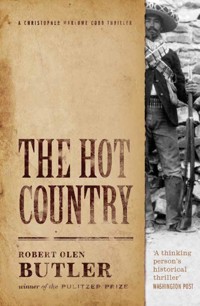
‘An exciting story…The Hot Countryis a thinking person’s thriller, the kind of exotic adventure that, in better days, would have been filmed by Sam Peckinpah’–Washington Post
‘a historical thriller of admirable depth and intelligence’–BBC History Magazine
‘high-spirited adventure… great writing’–New York Times
‘one hell of a read… an exhilarating and enjoyable read with plenty of drama and a very likeable leading man… I guarantee you will be eagerly awaiting the next instalment in this new series’–We Love This Book
‘Literate, funny, action-packed, vivid, and intriguing’–Historical Novel Society
‘A fine stylist, Butler renders the time and place in perfect detail’–Publishers Weekly
‘the novel is not only shot through with keen intelligence but couched in elegant prose’–crimetime.co.uk
For Kelly
PERFUME RIVER
What are Robert Quinlan and his wife feebly arguing about when the homeless man slips quietly in? Moments later Robert could hardly have said. ObamaCare or quinoa or their granddaughter’s new boyfriend. Something. He and Darla are sitting at a table in the dining area of the New Leaf Co-op. Her back is to the man. Robert is facing him. He notices him instantly, though the man is making eye contact with none of the scattered few of them, the health-conscious members of the co-op, dining by the pound from the hot buffet. It’s a chilly North Florida January twilight, but he’s still clearly overbundled, perhaps from the cold drilling deeper into his bones because of a life lived mostly outside. Or perhaps he simply needs to carry all his clothes around with him.
Robert takes him for a veteran.
The man’s shoulder-length hair is shrapnel gray. His face is deep-creased and umbered by street life. But in spite of the immediately apparent state of his present situation, he stands straight with his shoulders squared.
He sits down at a table beside the partition doorway, which gapes into the crosswise aisle between checkout counters and front entrance. He slumps forward ever so slightly and puts both his clenched fists on the tabletop. He stares at them.
‘You should’ve put your curry on it,’ Darla says to Robert. So it’s about quinoa, the argument.
‘Instead of rice,’ she says.
She has continued her insistent advocacy while his attention has drifted over her shoulder to the vet.
Robert brings his eyes back to her. He tries to remember if he has already cited the recent endorsement of white rice by some health journal or other.
‘All those famously healthy Japanese eat rice,’ he says. She huffs.
He looks at his tofu curry on the biodegradable paper plate. He looks back to the vet, who has opened one fist and is placing a small collection of coins on the table.
‘I’m just trying to keep you healthy,’ Darla says.
‘Which is why I am content to be here at all,’ Robert says, though he keeps his eyes on the vet.
The man opens the other fist and begins pushing the coins around. Sorting them. It is done in a small, quiet way. No show about it at all.
‘Thanks to their fish,’ she says.
Robert returns to Darla.
Her eyes are the cerulean blue of a Monet sky.
‘Fish?’ he asks. Uncomprehendingly.
‘Yes,’ she says. ‘That’s the factor…’
He leans toward her, perhaps a bit too abruptly. She stops her explanation and her blue eyes widen a little.
‘I should feed him,’ he says, low.
She blinks and gathers herself. ‘Who?’
He nods in the vet’s direction.
She peeks over her shoulder.
The man is still pushing his coins gently around.
She leans toward Robert, lowering her voice. ‘I didn’t see him.’
‘He just came in,’ Robert says.
‘Feed him quinoa,’ Darla says. She isn’t kidding.
‘Please,’ he says, rising.
She shrugs.
This isn’t a thing Robert often does. Never with money. He carries the reflex attitude, learned in childhood: You give a guy like this money and it will go for drink, which just perpetuates his problems; there are organizations he can find if he really wants to take care of himself.
Giving food is another matter, he figures, but to give food to somebody you encounter on the street, while rafting the momentum of your daily life – that’s usually an awkward thing to pull off. And so, in those rare cases when it wouldn’t be awkward, you can easily overlook the chance.
But here is a chance he’s noticed. And there’s something about this guy that continues to suggestveteran.
Which is to say aVietnamveteran.
Something. He is of an age. Of a certain bearing. Of a field radio frequency that you are always tuned to in your head.
Robert is a veteran.
He doesn’t go straight for the vet’s table. He heads toward the doorway, which would bring him immediately alongside him.
He draws near. The man has finished arranging his coins but continues to ponder them. He does not look up. Then Robert is beside him, as if about to pass through the doorway. The vet has to be aware of him now. Still he does not look. He has no game going in order to get something, this man of needs. It has truly been about sorting the coins.
He smells a little musty but not overpoweringly so. He’s taking care of himself pretty well, considering. Or has done so recently, at least.
Robert stops.
The vet’s hair, which was a cowl of gray from across the room, up close has a seam of coal black running from crown to collar.
Robert puts his hand on the man’s shoulder. He bends near him.
The man is turning, lifting his face, and Robert says, ‘Would you like some food?’
Their eyes meet.
The furrows of the vet’s face at brow and cheek and jaw retain much of their first impression: deeply defined, from hard times and a hard life in the body. But his eyes seem clear, and they crimp now at the outer edges. ‘Yes,’ he says. ‘Do you have some?’
‘I can get you some,’ Robert says.
‘That would be good,’ the man says. ‘Yes.’
‘What do you like? I think there was some chicken.’ Though he hasn’t invoked the preternaturally healthful quinoa, he catches himself trying to manage this guy’s nutrition, an impulse which feels uncomfortably familiar. He’s trying to get him healthy.
‘It needs to be soft,’ the man says. ‘I don’t have very many teeth.’
‘Why don’t you come with me,’ Robert says. ‘You can choose.’
The vet is quick to his feet. ‘Thank you,’ he says. He offers a closed-mouth smile.
Standing with him now, about to walk with him, Robert recognizes something he’s neglected: This act is still blatant charity, condescending in its anonymity. So he offers his hand. And though he almost always calls himself – and always thinks of himself – asRobert, he says, ‘Bob.’
The vet hesitates.
The name alone seems to have thrown him. Robert clarifies. ‘I’m Bob.’
The man takes Robert’s hand and smiles again, more broadly this time, but struggling to keep his toothlessness from showing. ‘I’m Bob,’ he says. And then, hastily, as if he’d be mistaken for simply, madly, parroting the name: ‘Too.’
The handshake goes on. The vet has a firm grip. He further clarifies. ‘I’malsoBob.’
‘It’s a good name,’ Robert says.
‘It’s okay.’
‘Not as common as it used to be.’
Bob looks at Robert for a moment, letting the handshake slow and stop. Robert senses a shifting of the man’s mind into a conversational gear that hasn’t been used in a while.
‘That’s true,’ Bob says.
Robert leads him through the doorway and along the partition, past the ten-items-only register, and into the buffet area. He stops at the soup warmers on the endcap, thinking of the man’s tooth problem, but Bob goes on ahead, and before Robert can make a suggestion, Bob says, ‘They have beans and rice. This is good.’
Robert steps beside him, and together they peer through the sneeze guard at a tub of pintos and a tub of brown rice. Good mess hall food, Robert thinks, though thinking of it that way jars with a reassessment going on in a corner of his mind.
Of no relevance to this present intention, however.
Bob declines any other food, and Robert piles one of the plastic dinner plates high with beans and rice while Bob finds a drink in the cooler. Robert waits for him and takes the bottle of lightly lemoned sparkling water from his hand and says, ‘Why don’t you go ahead and sit?’
Bob nods and slips away.
Robert steps to the nearby checkout station.
A young man, with a jugular sunburst tattoo and a silver ring pierced into his lip, totals up the food, and Robert lets his reassessment register in his mind: From the clues of age in face and hair, Robert realizes Bob is no Vietnam veteran. As old as the man is – perhaps fifty or fifty-five – he is still too young to have been in Vietnam. He missed it by a decade or so.
Robert pays.
The clerk gives him a small, understanding nod.
‘Do you know him?’ Robert asks.
‘He comes now and then,’ the young man says.
Beans and rice and fizzy lemon water in hand, Robert turns away.
He steps into the dining area and sets the plate and the can before Bob. The man has carefully laid out his napkin and plastic utensils and has put his coins away.
He squares around to look up at Robert.
He is not the man Robert first thought him to be. ‘Thank you,’ Bob says.
Robert knows nothing about him.
‘It’s a good meal,’ Bob says.
‘You bet,’ Robert says, and he moves off, thinking:It would have made no difference. I would have done this anyway.
He sits down before Darla.
She leans toward him and says softly, ‘I’m glad you did that.’ To her credit, she does not ask what he’s bought the man.
She sits back.
Her plate, once featuring the spicy Thai quinoa salad, is empty. He looks at his remaining tofu curry. He picks up his fork and begins pushing it around.
She says something he does not quite hear.
He stops pushing.
There are other voices in the dining area. Conversations. He thinks:Can it have been that long ago?
But of course it can. Even consciously thinking about it, Vietnam yields up no clear, individual memory. Images are there – faces and fields and a headquarters compound courtyard and a bar and a bed and a river – but they are like thumbnails of forgotten snaps on a cellphone screen.
‘More,’ Darla says. As part of other things she’s been saying, no doubt.
Robert looks at her.
She narrows her eyes at him.
‘It’s probably cold,’ she says, nodding at his food.
‘Probably,’ he says.
‘You can get some more,’ she says.
‘I don’t need anything,’ he says.
She shrugs. ‘Shall we go?’
‘Coffee,’ he says. The word is a nanosecond or so ahead of the conscious thought.
She cocks her head. He went back to the stuff a few months ago after she’d wrangled a year of abstinence from him. She was reconciled to it but the one-word announcement sounds like a taunt, he realizes.
‘Bob needs some coffee,’ he says.
‘Bob?’ She twists at the word in her snorty voice, assuming he’s referring to his coffee-seeking self in the third person. She occasionally calls himBobwhen she thinks he’s behaving badly.
He doesn’t explain. He rises. He approaches Bob. The man is hunched over his food, wolfing it in.
Robert is beside him before he looks up.
‘You a coffee drinker, Bob?’
‘I surely am,’ he says.
‘How do you take it?’
‘With a splash of milk.’
‘I’ll get you some.’
‘I appreciate it, Bob,’ Bob says.
Near the buffet, Robert begins to fill a cup from a percolator urn. Framed in the center of the urn is the bag art for today’s brew. An upsweep of mountains dense with tropical forest, the vista framed in coffee trees.
Somewhere along the highway to Dak To, they’d laid out the beans to dry. He is passing in a jeep, heading to an assignment that will quickly be changed, sending him upcountry. A pretty-faced girl in a conical hat, leaning on her coffee rake, lifts her face to him. And he sweeps on past.
The cup is nearly full.
He flips up the handle.
He splashes in some milk.
He returns to Bob.
The man thanks him again, briefly cupping both hands around the coffee, taking in its warmth before setting it down.
‘You a Floridian, Bob?’ Robert asks.
‘I’m from Charleston, West Virginia,’ he says.
‘Good thing you’re not up there for the winter.’
Bob nods a single, firm nod and looks away. ‘I have to go back,’ he says.
‘Perhaps when things warm up.’
‘No choice,’ he says. ‘I’ve got responsibilities.’ His face remains averted. He isn’t elaborating. His beans and rice are getting cold.
Robert still has the urge to make this encounter count for something beyond a minor act of charity. Learn a bit more about him. Offer some advice. Whatever. And this is all he can think to ask: ‘What sort of responsibilities, Bob?’
Bob doesn’t look at him.
He doesn’t eat.
He doesn’t drink.
Robert has made the man go absolutely still. But Robert sloughs off the niggle of guilt, thinking:He’s probably been asserting these responsibilities to himself for the whole, long slide to where he is now, knowing there’s nothing left where he came from, knowing he’ll never go back.
Robert puts his hand on Bob’s shoulder for a moment and then moves away.
He does not sit down at their table. Darla looks up. She glances at his empty hands. ‘No coffee?’
He shrugs.
She nods and smiles. ‘Finished with dinner?’
‘Yes,’ he says.
She gathers her things and they put on their coats. She leads the way across the floor. Darla may well glance at Bob as she passes, ready to offer him an encouraging smile. She would do that. But Bob looks up only after she’s gone by.
He fixes his eyes on Robert’s and upticks his chin. He says, ‘You know my old man, is that it?’
Robert takes the odd abruptness of the question in stride, answering a passing ‘No’ as he follows Darla out of the dining area.
And that is that.
~
Darla and Robert are finished in town, and he drives toward home on the parkway. The two of them do not speak. This is not uncommon after dining out.
They live east and south of the Tallahassee city limits, on an acre of garden and hardwood and a dozen more of softwood, and the quickest way carries them first along a commercial scroll of strip malls and chain eateries, lube joints and furniture stores, pharmacies and gas stations. Robert finds himself acutely aware of all this. He turns south at his first opportunity, and then, shortly, he turns east again, onto Old Saint Augustine Road.
Darla humphs, though for all their years together she has alternately used this dismissive sound as a sign of approval. It is up to him to know which humph is which.
Old Saint Augustine is easy to interpret. Canopied in live oaks and hiding its residences and smattering of service commerce behind sweet gums and hickories and tulip poplars, this is a road from the state’s past, a subject he occasionally teaches at the university and Darla occasionally is happy to hear him discourse upon. Though their silence persists tonight.
She switches on the university radio station.
This same ostinato of orchestral strings presses his face to a window on a TWA 707. The Rocky Mountains crawl beneath him. He is flying to Travis Air Force Base, north of San Francisco. From there he will go to war. And this music is playing in his head through a pneumatic headset. Beethoven’s Seventh Symphony. The first movement has tripped and stomped and danced, making things large, as Beethoven can do, but confidently so, almost lightly so. A little bit of the summer pastoral spilling over from the Sixth Symphony. And now, in the second movement, the largeness of things is rendered into reassuring repetitions. Can Robert believe this of what lies ahead of him, this grave contentment the music would have him feel?
He is not to be a shooting soldier. He will do order-of-battle work, rather like research, rather like the things he learned to love in his recent four years at Tulane. Wherever they put him, he will be bunkered in at the core of a headquarters compound. It would take an unlikely military cataclysm – or a fluke, a twist of very bad luck, a defiance of an actuarial reality of warfare that is obscured by Cronkite’s nightly report – for him to die.
He is young enough to feel confident in that reasoning. It is September of 1967. Four months before the military cataclysm of the coming Vietnamese New Year, Tet 1968. And if he does survive, he believes he will earn a thing he has long yearned to earn, foreshadowed only a few days ago in a bar on Magazine Street. His father shed tears over his tenth farewell Dixie, Robert’s fourth. Silent tears. William Quinlan has always been a quiet drunk. A quiet man, about feelings he could not command, feelings better felt by women. Robert still thinks, as he flies away to music his father could never understand, that he knows what the tears were about.
In the car, however, this ostinato issolemn and insistent. More than solemn. It aches. He feels nothing like contentment as he races through the corridor of oaks. It is forty-seven years later.
He glances at Darla.
Her face is pressed against the window.
~
Down a pea gravel drive they emerge from a grove of pine and cedar. They stop before the house they built in 1983 from early-twentieth-century Craftsman plans, with a shed- dormered gable roof, a first floor of brick, and two upper floors of veneered stucco and half-timber. For a decade Darla’s parents withheld every penny of their considerable resources from the struggling young academic couple, disapproving of the politics that brought the two of them together, and then, upon their deaths, they surprised their daughter with a will that split the parental wealth in half between her and a brother as conservative as they. She got the sprawling Queen Anne estate on Cayuga Lake and enough money to keep it up, along with the expressed hope – just short of a mandate – that their ‘daughter Darla and her family come home.’
The parents’ death itself surprised her. It was by late-night car crash on the Taconic Parkway, both of them apparently drunk. Darla immediately sold the Queen Anne and she and Robert built this new house, to their shared taste, having lately taken their places at Florida State University. At the time, their son Kevin was eleven. Their daughter Kimberly was five.
Tonight, with Robert’s Clinton-era S-Class Mercedes sitting next to Darla’s new Prius, they enter the house and put away their coats and go to the kitchen and putter about, she heating water for her herbal tea and he grinding his Ethiopian beans to brew his coffee, and for a long while they say nothing, not uncommon for this early-evening ritual, which occasionally feels, for both of them, comfortable.
Then, when their cups are full and they are about to go off to their separate places in the house to do some end-of-evening work, Darla touches Robert’s arm, very briefly, though only as if to get his attention, and she says, ‘What did you two talk about?’
‘Who?’ he says, though he knows who she means.
‘The homeless man,’ she says.
‘The weather,’ he says.
She nods. ‘Did he say how he copes?’
‘We didn’t get into that.’
‘I hate to shrug him off,’ she says, though in an intonation that mutes the ‘hate’ and stresses the ‘off.’ She therefore does not need to add ‘but we must.’
They say no more.
They are both on sabbatical this spring, and they go to what have been their separate studies ever since the house was finished.
Robert’s is on the third floor, where the Craftsman plans called for a gentleman’s billiard room. His desk faces the fireplace in the north gable, with its hammered copper hood. Dormers and window seats are to his right hand and his left. His books line the room in recessed shelves.
Early-twentieth-century American history is his specialty and he is writing a biography of a journalist, publisher, and agitator for pacifist and socialist causes, John Kenneth Turner. Tonight, he is working on a paper for a history conference. ‘The Prototype of the Twentieth-Century Antiwar Movement in the U.S.: John Kenneth Turner, Woodrow Wilson, and the Mexican Invasion.’ A mouthful of a title that he sits for a time now trying to simplify.
Darla’s study is off the first-floor hallway between the living room and the dining room. Her desk looks west through the casement windows, across the veranda, and out to the massive live oak behind their house. She teaches art theory. By certain scholarly adversaries at other schools, her research is considered to be interdisciplinary to a fault. She is known for her bookPublic Monuments as Found Art: A Semiotic Revisioning.Tonight she is trying to finish the rough draft of a paper, which, indeed, she will present at a semiotics conference. ‘Dead Soldiers and Sexual Longing: The Subtexts and Sculptural Tropes of the Daughters of the Confederacy Monuments.’ The title seems just right to her.
They are focused thinkers, Robert and Darla. They would, if pressed to consider the matter, attribute some of their focus to the mutual respect they have for each other’s work. They need give each other not a single thought once they are sitting in these long-familiar rooms.
But the last sip of Robert’s coffee is cold. And he thinks of Bob.
He wonders what the man is doing right now. There is some shelter or other in Tallahassee, surely. Bob is there. Perhaps he is thinking, still, of Charleston, thinking of whatever it is he feels responsible for. Or perhaps Robert was right about that sudden stillness in Bob. Perhaps the man is merely hunkered down for the night in this life he’s drifted to, trying to figure out how he got here.
~
After the man and his wife passed and vanished and Bob got reacquainted with the food and the coffee before him and after he ate and drank and sat for a while at the table, he has once again forgotten what he knows about what can set him to thinking, forgotten this to his severe detriment since he does not want to deal with the inside of his mind, with the thinking machine revved up, not ever, but especially not at the very same time as having to deal with finding a place to sleep, now that he’s missed the deadlines for the shelters and the missions and the lighthouses and the mercy houses and the promised lands and the heavenly refuges. But tonight he has forgotten what he knows aboutthe situation.
So as soon as he remembers, he stands and goes out of the New Leaf Market and it’s too late, the situation is upon him: It was light and now it’s dark. It happened while he wasn’t watching. It happened quickly.
It launches him along Apalachee Parkway. And for a long while he just focuses on pushing his body hard to get away. Push and push. That’s all there is. Too much. The ache in his legs and his back starts it all aching in his head again. He doesn’t know how far he’s come, how long he’s been walking. A couple of miles. Maybe more. Then a landmark tells him he’s making progress, even as it stirs up issues. Tillotson Funeral Home passes, its phony columns floodlit like the capitol building, its marquee making some dead body famous for being dead. Some stiff named Henry tonight. Henry something or other, the second name not even worth Bob noticing. This guy doesn’t matter. Some Henry who was breathing and then he wasn’t.
The dark continues to nag at Bob. Its suddenness happened early, this being the first week of January. It left a bad chill behind, which is why he’s been walking east as fast as he can. In January he cannot simply vanish into the urban woodlands of Tallahassee, follow a bike trail and then veer off into the woods and find his things in a place only he knows about, through a culvert and along a drain bed and up a bank to a mark on a tree here and a mark on a tree there and a few more marks and a fallen oak and a hollow beneath, a place that was good for him all autumn long and he could go there anytime no matter how his flailing mind was trying to fuck with him, and he could get his stuff and he could find a place to sleep in the woods.
All of this is rushing in Bob again, filling his head with words, but he never thinks it’s somebody else’s voice.
‘It’s me. It’s just me in here.’
He says this aloud.
He’s not crazy. He knows to look around right away to see if anybody heard him and nobody has. Bob’s doing fine, with only cars whisking past, no people, no one to hear. He even has the presence of mind to walk against the traffic in the stretches without sidewalks. He’s not crazy. He can even circle back to his previous thought, the one before the little digression that was worth mouthing.
‘I could always find my way in the woods,’ he says. ‘You were okay with me there. Not that you’d let on. But you didn’t fool me. I knew you were okay with me there.’
This he addresses to his father. But Bob’s not crazy. Bob doesn’t think the old man is there with him on Apalachee Parkway to hear. The old man is just a memory to him, maybe hiding out in Charleston and yellowing from his liver or maybe spotlighted this very night in front of some funeral home, but he’s nowhere nearby to hear. Nevertheless, because he’s not crazy, Bob shuts his trap and does his talking in his headwhere you always are, but when I’m strong – and I’m strong tonight, I know I am, in spite of the situation – I can make you behave, in my head I can take us into the woods, just you and me, and I can make it be the summer of ’71, a certain day in August and I’ve gone and turned twelve and that was when I learned about the thing you didn’t want me to know. That I was okay by you. Though it was only with the Mossberg .22 in the crook of my arm, that I was okay with the Mossberg going quick to my shoulder and I kill some animal or other that you didn’t even see and it makes you drop into a shooting crouch and lay out some covering fire and then you stop and you look me wild in the eyes and inside you’re goingWho the fuck are you?and then you focus and you answer your own question in your head, you don’t want me to see it but I do, I listen into your head and you go,You’re Bobby, you’re my son and you can shoot, by God, I been gone away a big chunk of your life to shoot in some big woods – in some fucking jungles in Vietnam – and I come back and by damn you can use a rifle just as good as any of the boys I been withthen you look where I shot and you throw a camouflage tarp over the crack that just opened and shut in your head, and you jump up, but you’re not talking, not saying a word, of course not, you’re not looking at me but I know what’s just passed between us, no matter how you try to camouflage it, I know this thing about the two of us.
‘Goddamn you, I know it,’ Bob says.
I know it here in the woods even though I will doubt it when we get back home tonight, you will have your way with my head when you’ve got us in our single-wide and you’re in your La-Z-Boy and you’ve got your bottle, and your silence is just your silence, and I better stay out of arm’s reach while you’re sitting there dealing with whatever it is you came home with a couple of years ago. Your situation.
Like Bob has a situation. Like now. Like this long, cold walk he’s on tonight, trying the one thing he knows to try, concerning a place to sleep. A church building along the parkway, maybe thirty minutes by foot east of Walmart, an hour and a half from New Leaf, and longer still from the Hardluckers’ center of town, and as he pushes on east, Bob can’t stay in the woods in his head with his father for all that time, in fact his mind has already grabbed him up and galloped into that trailer park along the Kanawha, out past the West Virginia State campus, out where he’s not okay with his father at all, and even if Bob summons up enough energy to at least drive his mind forward to when he’s older, to when he’s near as tall and rangy as his dad and he can easily fend off the old man when he wants to reach out and give his son a slap – it wasn’t about that really, those slaps were all open-handed, always, Bob knew all along there were worse fathers by far – even when Bob skips forward, his mind only roars louder, because his real fear had to do with whatever it was inside his father that only the old man could see, the things he never talked about. Bob was afraid those things were inside himself already, no matter if his father found them in a jungle halfway around the world, because the two of them were the same, father and son, they were stretched tall in body in the same way, they had the same hands and eyes, and they were the same by that shared thing in the woods, when they were okay together. And the okayness only made everything worse because that was never spoken about either, just like the Vietnam jungle stuff. The good things between them and the bad things that could come to men like the two of them were all one in the same unspeakable place. And so Bob tries to just walk. He just strides hard and lets the pain of the pavement pound through his joints and back and temples and gums and he focuses on what’s ahead.
A pastor out here at Blood of the Lamb Full Gospel leaves the outside door to the groundskeeper’s storage room unlocked on cold nights. They have a food pantry, but this far out of town they do hard-luck families mostly, not the individually lost. Out here, sheltered floor space next to a John Deere is a private little bit of charity by the good pastor that often goes unused, its being attractive only to a Hardlucker without a car. Which makes it a pretty good bet to be available to anyone ready to walk six or seven miles. Especially since the space is needed most when it’s the most daunting to walk, in the cold or the rain.
Two nights ago it was cold and Bob had the place to himself. It was a hard walk. Tonight it’s cold again, but at the moment, with some things talked over, he feels pretty good. Pretty damn good. He’s got today’s newspaper folded in his pocket, a full copy abandoned on a table, waiting for him as he finished his coffee tonight. There’s a light in the storage room to read by. He’s not afraid to read the news. The meal and the coffee are sitting well in him, so his thoughts turn to the man who gave them to him, the man with the same name as his, the rangy older man with the John Wayne jaw:You said it first, my name, and I thought for a second you somehow already knew I’m Bob and it turns outyou’reBob, and my father is Calvin, my father isn’t Bob, if you were my father I’d be Junior and I don’t know what I’d think about that, I think I wouldn’t like it, not at all, my father is Calvin, Cal, my mother is Marie, and what did you mean, Bob, about my having responsibilities in Charleston? Did you know me there? You another of my old man’s cronies are you? What do you want me to do about it?
‘I never met youbefore in my life,’ Bob says.
He stops walking.
He’s not feeling so good now.




