


111,99 €
Mehr erfahren.
- Herausgeber: John Wiley & Sons
- Kategorie: Wissenschaft und neue Technologien
- Sprache: Englisch
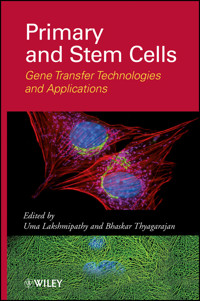
This book describes basic cell engineering methods, emphasizing stem cell applications, and use of the genetically modified stem cells in cell therapy and drug discovery. Together, the chapters introduce and offer insights on new techniques for engineering of stem cells and the delivery of transgenes into stem cells via various viral and non-viral systems. The book offers a guide to the types of manipulations currently available to create genetically engineered stem cells that suit any investigator's purpose, whether it's basic science investigation, creation of disease models and screens, or cells for therapeutic applications.
Sie lesen das E-Book in den Legimi-Apps auf:
Seitenzahl: 484
Veröffentlichungsjahr: 2011
Ähnliche



















Contents
Cover
Title Page
Copyright
Foreword
Preface
List of Contributors
Part I: Cloning and Gene Delivery
Chapter 1: DNA Assembly Technologies Based on Homologous Recombination
1.1 Introduction
1.2 Background
1.3 Protocol
1.4 Perspectives
Disclosure
References
Chapter 2: Multigene Assembly for Construction of Synthetic Operons: Creation and Delivery of an Optimized All-IN-One Expression Construct for Generating Mouse iPS Cells
2.1 Introduction
2.2 Background
2.3 Protocol for Cloning Multiple Genes for Somatic Reprogramming
2.4 Perspectives
Acknowledgments
References
Chapter 3: Strategies for the Delivery of Naked DNA
3.1 Introduction
3.2 Background
3.3 Electroporation Methods for Stem Cell Transfection
3.4 Perspectives
References
Part II: Nonintegrating Technologies
Chapter 4: Episomal Vectors
4.1 Introduction
4.2 Background
4.3 Episomal Reprogramming of Human Somatic Cells
4.4 Perspectives
References
Chapter 5: Nonintegrating DNA Virus
5.1 Introduction
5.2 Basic Description of Nonintegrating Technology
5.3 Protocols and General Guidelines: BacMam Transduction of Stem Cells and Normal Human Primary Cells
5.4 Perspectives
Acknowledgments
References
Chapter 6: Nonintegrating RNA Viruses
6.1 Introduction
6.2 Background
6.3 Generation of iPSC from Human Fibroblast Using Rna Virus
6.4 Perspectives
6.5 Acknowledgments
References
Chapter 7: Protein Delivery
7.1 Introduction
7.2 Background
7.3 Generation of iPS Cells by Protein Transduction
7.4 Perspectives
References
Part III: Integrating Technologies
Chapter 8: Sleeping Beauty Transposon-Mediated Stable Gene Delivery
8.1 Introduction
8.2 Background
8.3 Protocol for Using the SB Transposon System in Stem Cells
8.4 Perspectives
8.5 Acknowledgment
References
Chapter 9: Integrating Viral Vectors for Gene Modifications
9.1 Introduction
9.2 Background
9.3 Basic Protocol for Lenti Generation and Transduction
9.4 Perspectives
9.5 Applications
References
Chapter 10: Bacteriophage Integrases for Site-Specific Integration
10.1 Introduction
10.2 Background
10.3 Protocol
10.4 Perspectives
References
Chapter 11: Improving Gene Targeting Efficiency in Human Pluripotent Stem Cells
11.1 Introduction
11.2 Background
11.3 Perspectives
11.4 Method for Creating Modifed Stem Cells
Acknowledgments
References
Part IV: Applications
Chapter 12: Modified Stem Cells as Disease Models and in Toxicology Screening
12.1 Introduction
12.2 Background
12.3 Applications
12.4 Perspectives
References
Chapter 13: Screening and Drug Discovery
13.1 Introduction
13.2 Background: Basic Principles of Cell-Based Assay Development for Drug Discovery
13.3 Protocol: A General Work Flow for Developing Screening and Drug Discovery Assays
13.4 Perspectives
Acknowledgements
References
Index
Color Plates
Copyright © 2012 by John Wiley&Sons, Inc. All rights reserved
Published by John Wiley&Sons, Inc., Hoboken, New Jersey Published simultaneously in Canada
No part of this publication may be reproduced, stored in a retrieval system, or transmitted in any form or by any means, electronic, mechanical, photocopying, recording, scanning, or otherwise, except as permitted under Section 107 or 108 of the 1976 United States Copyright Act, without either the prior written permission of the Publisher, or authorization through payment of the appropriate per-copy fee to the Copyright Clearance Center, Inc., 222 Rosewood Drive, Danvers, MA 01923, (978) 750-8400, fax (978) 750-4470, or on the web at www.copyright.com. Requests to the Publisher for permission should be addressed to the Permissions Department, John Wiley&Sons, Inc., 111 River Street, Hoboken, NJ 07030, (201) 748-6011, fax (201) 748-6008, or online at http://www.wiley.com/go/permission.
Limit of Liability/Disclaimer of Warranty: While the publisher and author have used their best efforts in preparing this book, they make no representations or warranties with respect to the accuracy or completeness of the contents of this book and specifically disclaim any implied warranties of merchantability or fitness for a particular purpose. No warranty may be created or extended by sales representatives or written sales materials. The advice and strategies contained herein may not be suitable for your situation. You should consult with a professional where appropriate. Neither the publisher nor author shall be liable for any loss of profit or any other commercial damages, including but not limited to special, incidental, consequential, or other damages.
For general information on our other products and services or for technical support, please contact our Customer Care Department within the United States at (800) 762-2974, outside the United States at (317) 572-3993 or fax (317) 572-4002.
Wiley also publishes its books in a variety of electronic formats. Some content that appears in print may not be available in electronic formats. For more information about Wiley products, visit our web site at www.wiley.com.
Library of Congress Cataloging-in-Publication Data:
ISBN: 978-0-470-61074-9
oBook ISBN: 978-1-118-14717-7
ePDF ISBN: 978-1-118-14714-6
ePub ISBN: 978-1-118-14716-0
eMobi ISBN: 978-1-118-14715-3
Foreword
The growing importance of stem cells in biomedical research is more apparent every day. As additional researchers enter this area, the pace of discovery increases, as stem cells are employed to understand the basic science of developmental biology. Stem cells offer great promise, as well, for modeling diseases and for use in toxicological screening and drug discovery. Ultimately, stem cells are also likely to be beneficial as therapeutics for a wide range of disorders.
Toward all of these applications, the ability to engineer stem cells genetically adds great power to their utility and to the range of experiments that can be performed. For example, the revolutionary ability to reprogram somatic cells into induced pluripotent stem cells was based on a genetic engineering strategy to add the genes for four transcription factors stably to fibroblasts. Genetic engineering of stem cells also provides a route to add therapeutic genes, as in the case of stem cells derived from patients with genetic diseases. Addition of genes to enhance cellular functions, such as survival after engraftment, is also often beneficial. Furthermore, addition of genes to permit marking of cells, including tracking in vivo, will be critical for the development of stem cell therapies.
In order to carry out genetic engineering of stem cells rapidly and successfully, the stem cell field can benefit from prior years of experience in genetically engineering mammalian cells, particularly from within the gene therapy field. This field has pursued a plethora of approaches to alter the genetic material and/or protein content of target cells, and this expertise can readily be applied to the genetic engineering of stem cells of all types. General strategies that have been developed to manipulate genes and assemble almost any set of DNA fragments can be utilized to create the desired expression cassettes. For addition of genes without disrupting the genome, nonintegrating strategies are useful. These include episomal vectors, with and without replication and retention features. Furthermore, systems such as Sendai virus that provide large doses of RNA can bring about alteration of mammalian cells, including efficient reprogramming. Introduction of proteins can also effect such changes, without risk to the genome.
When gene addition is required, such as for permanent addition of therapeutic genes for genetic diseases, genomic integration provides the necessary stability and long-term expression. Fortunately, the science of transfection of eukaryotic cells is well developed, so that effective transfection methods now exist for most cell types. Transposases provide a relatively simple and efficient method to insert genes into the chromosomes. Moreover, by encapsulating the desired gene within the genome of a viral vector, an efficient delivery method for the gene is also provided.
In some cases, more precise positioning of incoming genes is desired. By using a phage integrase such as fC31 for integration, a smaller subset of potential integration sites is utilized, compared to randomly integrating vectors such as retroviruses and transposases. Sequential use of different phage integrases can also provide a platform for integration of further genes at known target sites. When greater precision is required, homologous recombination is appropriate. Such recombination, normally occurring at very low frequency, can be stimulated greatly by provision of a double-strand break at the desired target site. This type of strategy is suitable for making precise changes in a stem cell genome, such as correction of small mutations.
The present volume provides ready access to the details and applications of all of these approaches for the genetic modification of stem cells. As such, it provides a guide to the types of manipulations that are currently available to create genetically engineered stem cells that suit the investigator's purpose—for basic science investigation, creation of disease models and screens, or cells for therapeutic applications. This book will have served its purpose if it assists stem cell researchers by making this set of tools familiar and accessible to all.
Michele Calos
Professor of Genetics
Stanford School of Medicine
Preface
The interest in primary and stem cell research has increased dramatically in the recent past, and their potential as therapeutic agents and as screening tools for drug discovery is closer to realization. This increase is in part fuelled by the development of methods to induce the formation of pluripotent stem cells from somatic cells. Induced pluripotent stem cells have the potential to provide patient-specific and disease-specific cells that can be used for therapy and for dissecting the pathology of diseases. These cells can be used unmodified either in regenerative medicine or in the creation of disease models. However, genetically engineering these cells enables correction of a disease phenotype for use as an autologous cell therapy source or the creation of isogenic lines that are very useful for understanding basic pathology. One of the biggest challenges has been the availability of efficient methods to genetically alter stem cells. Although several technologies exist to modify cells, they need to be adapted for use in primary and stem cells. The convergence of the traditional cell engineering with stem cell biology has led to the development of exciting platforms that have great potential to revolutionize the cell therapy field. As more platforms are developed, it becomes challenging for dedicated stem cell researchers to identify the best choice for their application.
The idea for this book emerged from our struggles to find a resource that would bridge the concepts of genetic engineering with primary and stem cells. In this book, our objective is to provide an understanding of cell engineering principles and outline their applications in primary and stem cells. We have highlighted traditional methods that have existed for decades, as well as newer technologies that have emerged recently. Each chapter in this book highlights a technology and details its application in primary and stem cells. Better understanding of the tools required to create and modify cells for therapy is essential progress in this field, and our intent is to provide a resource that will inform and enable researchers engaged in this field.
We are sincerely thankful to all the contributors for sharing their pioneering work and scientific perspectives in this book. Our hope is that this book will be a useful resource for researchers entering the field as well as established stem cell scientists looking to expand their area of research.
Uma Lakshmipathy
Bhaskar Thyagarajan
List of Contributors
Robert S. Ames, GlaxoSmithKline, Biological Reagents and Assay Development, Collegeville, PA, USA
Taichi Andoh, Department of Molecular Biology, Research Institute for Microbial Diseases, Osaka University, Osaka, Japan
Jonathan D. Chesnut, Life Technologies Corporation, D&R, Carlsbad, CA, USA
Elizabeth A. Davenport, GlaxoSmithKline, Biological Reagents and Assay Development, Collegeville, PA, USA
Catharina Ellerström, Cellartis AB, Göteborg, Sweden
Noemi Fusaki, PRESTO, Japan Science and Technology Agency (JST), Saitama, Japan; DNAVEC Corporation, Ibaraki, Japan
Sangyoon Han, Center for Regenerative Medicine, The Scripps Research Institute, La Jolla, CA, USA
Xiao-Jian Han, Department of Physiology, Dentistry and Pharmaceutical Sciences, Okayama University Graduate School of Medicine, Okayama, Japan
Ronald P. Hart, Rutgers Stem Cell Research Center and Department of Cell Biology and Neuroscience, Rutgers, The State University of New Jersey, Nelson BioLabs, Piscataway, NJ, USA
Tony Ho, Life Technologies Corporation, Carlsbad, CA, USA; AMGEN, Thousand Oaks, CA, USA
Xin Huang, Center for Genome Engineering, University of Minnesota Medical School, Minneapolis, MN, USA; Center for Immunology, University of Minnesota Medical School, Minneapolis, MN, USA; Pediatric Blood and Marrow Transplantation, University of Minnesota Medical School, Minneapolis, MN, USA; Masonic Cancer Center, University of Minnesota Medical School, Minneapolis, MN, USA
Johan Hyllner, Cellartis AB, Göteborg, Sweden
Fumio Imamoto, Department of Molecular Biology, Research Institute for Microbial Diseases, Osaka University, Osaka, Japan
Federico Katzen, Life Technologies Corporation, Carlsbad, CA, USA
Dan S. Kaufman, Masonic Cancer Center, University of Minnesota Medical School, Minneapolis, MN, USA; Department of Medicine and Stem Cell Institute, University of Minnesota Medical School, Minneapolis, MN, USA
Chris Kemp, Kempbio, Inc., Frederick, MD, USA
Hiroe Kishine, Department of Molecular Biology, Research Institute for Microbial Diseases, Osaka University, Osaka, Japan
Wieslaw Kudlicki, Life Technologies Corporation, Carlsbad, CA, USA
David Kuninger, Life Technologies, Eugene, OR, USA
Louise C. Laurent, Center for Regenerative Medicine, The Scripps Research Institute, La Jolla, CA, USA; Department of Reproductive Medicine, University of California, San Diego, CA, USA
Ke Li, Life Technologies Corporation, Carlsbad, CA, USA
Xiquan Liang, Life Technologies Corporation, Carlsbad, CA, USA
Ying Liu, Center for Regenerative Medicine, The Scripps Research Institute, La Jolla, CA, USA; Department of Reproductive Medicine, University of California, San Diego, CA, USA
Jeanne F. Loring, Center for Regenerative Medicine, The Scripps Research Institute, La Jolla, CA, USA
Anna McCann, Center for Regenerative Medicine, The Scripps Research Institute, La Jolla, CA, USA; California Polytechnic State University, San Luis Obispo, CA, USA; California Institute for Regenerative Medicine Bridges Program, San Francisco, CA, USA
R. Scott McIvor, Center for Genome Engineering, University of Minnesota Medical School, Minneapolis, MN, USA; Gene Therapy Program, Institute of Human Genetics, University of Minnesota Medical School, Minneapolis, MN, USA; Department of Genetics, Cell Biology, and Development, University of Minnesota Medical School, Minneapolis, MN, USA; Masonic Cancer Center, University of Minnesota Medical School, Minneapolis, MN, USA
Gemma L. Mendel, Life Technologies, Carlsbad, CA, USA
Jennifer C. Moore, Rutgers Stem Cell Research Center and Department of Cell Biology and Neuroscience, Rutgers, The State University of New Jersey, Nelson BioLabs, Piscataway, NJ, USA
Brian Paszkiet, Life Technologies, Carlsbad, CA, USA
Lansha Peng, Life Technologies Corporation, Carlsbad, CA, USA
Todd Peterson, Life Technologies Corporation, Carlsbad, CA, USA
Jason Potter, Life Technologies Corporation, Carlsbad, CA, USA
Peter Sartipy, Cellartis AB, Göteborg, Sweden
Josh Shirley, Life Technologies Corporation, Carlsbad, CA, USA
Takefumi Sone, Department of Molecular Biology, Research Institute for Microbial Diseases, Osaka University, Osaka, Japan
Raimund Strehl, Cellartis AB, Göteborg, Sweden
Yoko Takata, Department of Molecular Biology, Research Institute for Microbial Diseases, Osaka University, Osaka, Japan
Bhaskar Thyagarajan, Life Technologies Corporation, Carlsbad, CA, USA
Kazuhito Tomizawa, Department of Molecular Physiology, Faculty of Life Sciences, Kumamoto University, Kumamoto, Japan; Department of Physiology, Dentistry and Pharmaceutical Sciences, Okayama University Graduate School of Medicine, Okayama, Japan
Billyana Tsvetanova, Life Technologies Corporation, Carlsbad, CA, USA
Andrew Wilber, Department of Surgery and Simmons Cancer Institute, Southern Illinois University School of Medicine, Springfield, IL, USA
Rafal P. Witek, Life Technologies, Carlsbad, CA, USA
Liewei Xu, Life Technologies Corporation, Carlsbad, CA, USA
Jian-Ping Yang, Life Technologies Corporation, Carlsbad, CA, USA
Junying Yu, Advanced Development Programs, Cellular Dynamics International, Inc., Madison, WI, USA
Xianzheng Zhou, Center for Genome Engineering; Center for Immunology; Pediatric Blood and Marrow Transplantation; Masonic Cancer Center, University of Minnesota Medical School, Minneapolis, MN, USA
Part I
Cloning and Gene Delivery
Chapter 1
DNA Assembly Technologies Based on Homologous Recombination
Billyana Tsvetanova,1 Lansha Peng,1 Xiquan Liang,1 Ke Li,1 Jian-Ping Yang,1 Tony Ho,1,2 Josh Shirley,1 Liewei Xu,1 Jason Potter,1 Wieslaw Kudlicki,1 Todd Peterson,1 and Federico Katzen1
1Life Technologies Corporation, Carlsbad, CA, USA
2AMGEN, Thousand Oaks, CA, USA
1.1 Introduction
The origins of the recombinant DNA technology can be traced back to the discovery of restriction enzymes and the generation of the first recombinant DNA molecule over 40 years ago (1–3). Since then, and with the emergence of PCR, scientists have generated a number of elegant cloning systems that enable the manipulation of DNA fragments in various ways (for recent reviews see Refs 4–7). Some remarkable examples include the poly-merase cycling assembly of oligonucleotides (8), thermostable ligation (9), topoisomerase-based cloning (10), Gateway cloning (11, 12), Golden Gate cloning (13), and Biobrick assembly (http://dspace.mit.edu/handle/1721.1/21168). Due to the value that these technologies have, many of them have turned into commercial products.
In the postgenomic era and with the advent of the emerging synthetic biology field, which uses complex combinations of genetic elements to design circuits with new properties, the manipulation and analyses of large set of genes becomes a crucial necessity. In this chapter we offer a review of DNA assembly strategies based on homologous recombination, which present important advantages over other methods.
1.2 Background
1.2.1 Homologous Recombination In Vitro
Homologous recombination is the exchange of genetic information between two similar or identical molecules of DNA. This exchange occurs in a precise, specific, and faithful manner, and thus presents an excellent tool for genetic engineering for seamless gene fusion. The mechanism requires the presence of homologous regions, DNA sequence stretches shared by the recombining fragments.
The term “homologous recombination in vitro” is commonly referred to the joining of two or more DNA fragments that share end-terminal homology. The reaction is driven by purified enzymes involved in the double-strand DNA break-repair mechanisms such as DNA polymerases, DNA ligases, exonucleases, and single-strand DNA binding proteins. In vitro recombination protocols take advantage of improved PCR techniques to introduce sequence identity at the ends of adjacent DNA fragments that otherwise do not share significant homology. A common element in the in vitro recombination methods is the generation of complementary single-strand overhangs in the DNA fragments to be joined. Different techniques employ different approaches to generating complementary overhangs.
1.2.2 Existing Cloning Methods Based on Homologous Recombination
A number of in vitro methods use digestion with exonucleases to generate long complementary overhangs, thereby allowing efficient base pairing between adjacent fragments. For example “ligation-independent cloning” (LIC), uses PCR primers that are designed in such a way that the first 12 bases at the 5′-end must lack one particular nucleotide. The (3′ → 5′) exonuclease activity of T4 DNA polymerase is used in combination with the corresponding dNTP to specifically remove 12 nucleotides from each 3′-end of the PCR fragments. Because of the complementarity of the ends that are generated, circularization can occur between vector and insert (14, 15). The technology is being commercialized by EMD under the name of Radiance. Disadvantages of this method include sequence constraints imposed on the overhangs.
Lesen Sie weiter in der vollständigen Ausgabe!
Lesen Sie weiter in der vollständigen Ausgabe!
Lesen Sie weiter in der vollständigen Ausgabe!
Lesen Sie weiter in der vollständigen Ausgabe!
Lesen Sie weiter in der vollständigen Ausgabe!
Lesen Sie weiter in der vollständigen Ausgabe!
Lesen Sie weiter in der vollständigen Ausgabe!
Lesen Sie weiter in der vollständigen Ausgabe!
Lesen Sie weiter in der vollständigen Ausgabe!
Lesen Sie weiter in der vollständigen Ausgabe!
Lesen Sie weiter in der vollständigen Ausgabe!
Lesen Sie weiter in der vollständigen Ausgabe!
Lesen Sie weiter in der vollständigen Ausgabe!
Lesen Sie weiter in der vollständigen Ausgabe!
Lesen Sie weiter in der vollständigen Ausgabe!
Lesen Sie weiter in der vollständigen Ausgabe!
Lesen Sie weiter in der vollständigen Ausgabe!




