



19,99 €
Mehr erfahren.
- Herausgeber: Editares
- Kategorie: Religion und Spiritualität
- Sprache: Englisch
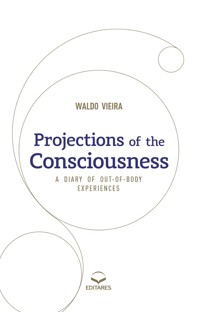
A comprehensive post-materialist treatise on the out-of-body experience and psychic phenomena. Projectiology is an authoritative, technical, and scholarly volume that provides definitive information on the out-of-body experience (OBE) and paranormal and psychic phenomena. It is a detailed work that orients the reader in their understanding and development of energetic self-control and psychic awareness. As such it is an invaluable source of information on the interaction between the physical and non-physical worlds.
Sie lesen das E-Book in den Legimi-Apps auf:
Seitenzahl: 3098
Veröffentlichungsjahr: 2023
Ähnliche


















PROJECTIOLOGY
A Panorama of Experiences of the Consciousness outside the Human Body
Electronic Edition
Translators:
Kevin de La Tour
Simone de La Tour
Foz do Iguaçu, PR– Brazil
2023
International Association EDITARES
General Coordination:
Cristina Ellwanger
Editorial Board:
Ana Claudia Prado
Carolina Ellwanger
Carlos Moreno
Cristina Bornia
Cristina Ellwanger
Ercília Monção
Felipe Junqueira
José Ricardo Gomes
Joseane Vezaro
Lane Galdino
Liege Trentin
Magda Stapf
Marcia Perrusi
Maria Angela Cestari
Meracilde Daroit
Nora Derrosso
Roberta Bouchardet
Technical Team:
Alex Ferreira
Alex Sarmento
Beatriz Helena Cestari
Blandina Monteiro
Cecilia Roma
Daniel Ronque
Fabiane Cattai
Flavio Camargo
Henrique Manoel Abreu
Leonardo Ribeiro
Liliana Roriz
Liliane Sakakima
Luciano Melo
Luís Ignácio Lopez
Lurdes Sousa
Marcus Dung
Raquel Vasconcelos
Rui Fernando Sousa
Sónia Luginger
Copyright © 2023
Pojectiology: A Panorama of Experiences of the Consciousness outside the Human Body
The copyright of this edition is the property of EDITARES.
Total or partial reproduction of this book, by any means or process, is strictly prohibited without the express authorisation of the authors and of the International Association EDITARES.
Copyright infringement charaterises a crime punished by law and civil sanctions are applicable.
Original title in Portuguese:
Projeciologia: Panorama das Experiências da Consciência Fora do Corpo Humano
Copyright © 2002 – International Association EDITARES
Author’s rights to this edition have been transferred by the author to Editares.
Printing History:
Portuguese
1ª Edition: (gratuitous) (1986)
5.000 copies
2ª Edition: (1989)
500 copies
3ª Edition (1990)
5.000 copies
4ª Edition (1999)
4.500 copies
5ª Edition Princips (1999)
500 copies
6ª Edition (2002)
1.500 copies
English
7ª Edition (2002)
4.500 copies
8ª Special Edition (2002)
500 copies
9ª Edition – Index in China and English (2005)
2.000 copies
Portuguese
10ª Edition (2008)
2.000 copies
11ª Edition (2019)
1.000 copies
27.000 copies
English
1ª Edição 2023
E-Book
Revised by:
Cristina Arakaki, Derrick Guy Phillips, Katia Arakaki,
Leonardo Firmato and Luis Minero.
Bibliography:
Cristiane Ferraro.
Photos and illustrations:
Brasílio Wille, Fernando Alberto Santos and Francisco Mauro.
Typesetting:
Epígrafe Editorial
Card Catalog Information
V 657p Vieira, Waldo, 1932-2015
Projectiology [E-Book]: a Panorama of experiences of the consciousness. Outside the human body / Waldo Vieira; translated by Kevin de La Tour and Simone de La Tour. – Foz do Iguaçu, Brazil: Editares, 2023.
18.705 Kb ; e-Pub
Includes illustrations, onosmatic and remissive index
Includes glossary.
ISBN: 978-65-86544-93-0
1. Projectiology 2. Conscientiology I. La Tour, Kevin de II. La Tour, Simone de III. Title
Associação Internacional EDITARES
Av. Felipe Wandscheer, no 6.200, sala 100D - Cognópolis
Foz do Iguaçu, PR – Brasil – CEP: 85856-850
Email: [email protected] – Website: www.editares.org.br
Table of Contents
INTRODUCTION
I – Scientific Foundations of Conscientiology
01. ESSENTIAL CONCEPTS OF SCIENCE
02. NEW CONSCIENTIAL PARADIGM
03. ESSENTIAL CONCEPTS IN CONSCIENTIOLOGY
04. SUBDISCIPLINES OF CONSCIENTIOLOGY
05. ESSENTIAL CONCEPTS IN PROJECTIOLOGY
06. PROJECTIOLOGY AND TERMINOLOGY
07. SCIENCES
08. HISTORY OF PROJECTIOLOGY
09. PERIODS OF PROJECTIOLOGY
10. ANCIENT PERIOD OF PROJECTIOLOGY
11. ESOTERIC PERIOD OF PROJECTIOLOGY
12. PRECOGNITIONS REGARDING PROJECTIOLOGY
13. EXOTERIC PERIOD OF PROJECTIOLOGY
14. LABORATORIAL PERIOD OF PROJECTIOLOGY
15. PIONEERISM IN PROJECTIOLOGY
16. CHRONOLOGY OF PROJECTIOLOGY
II – Relationships between Projectiology and Other Sciences
17. Projectiology and INTERDISCIPLINARity
18. projectiology and OTHER sciences
19. Projectiology and parapsychology
20. PROJECTIOLOGY and PSyChOLOGy
21. Projectiology and Biology
22. projectiology and Medicine
23. Projectiology and Anthropology
24. Projectiology and Sociology
25. Projectiology and physics
26. Projectiology and Astronomy
27. Projectiology and history
28. division of projectiology
29. LUCID PROJECTION AND THE HUMAN CONSCIOUSNESS
30. human LUCID PROJECTION
31. LUCID paraprojection
32. animal projection
33. PLANT projection
34. laws of projectiology
35. Paradoxes of Projectiology
36. projective limitations
III – Phenomena of Projectiology
37. CLASSIFICATION OF PROJECTIVE PHENOMENA
38. SUBJECTIVE PROJECTIVE PHENOMENA
39. CONSCIENTIAL SELF-BILOCATION
40. PROJECTIVE AUTOSCOPY
41. INTERNAL AUTOSCOPY
42. EXTERNAL AUTOSCOPY
43. COMPARISONS BETWEEN EXTERNAL AUTOSCOPY AND LUCID PROJECTION
44. PROJECTIVE CATALEPSY
45. EXTRAPHYSICAL CLAIRVOYANCE
46. CosmoconsciOUSNESS
47. PROJECTIVE DÉJÀ VU
48. NEAR-DEATH EXPERIENCE (NDE)
49. PRE-FINAL PROJECTION
50. RESUSCITATIVE PROJECTION
51. EXTRAPHYSICAL INTUITION
52. EXTRAPHYSICAL PRECOGNITION
53. EXTRAPHYSICAL PSYCHOMETRY
54. EXTRAPHYSICAL RETROCOGNITION
55. PROJECTIVE PANORAMIC VISION
56. AMBIFACETED PROJECTIVE PHENOMENA
57. SELF-PSYCHOPHONY
58. PHYSICAL BILOCATION
59. COMPARISONS BETWEEN LUCID PROJECTION AND PHYSICAL BILOCATION
60. TRAVELING CLAIRVOYANCE
61. LUCID PROJECTION AND TRAVELING CLAIRVOYANCE
62. COMPARISONS BETWEEN TRAVELING CLAIRVOYANCE AND LUCID PROJECTION
63. PROJECTIVE ECTOPLASMY
64. SEMIMaterializaTION
65. STATE OF SUSPENDED ANIMATION
66. EXTERIORIZATION OF MOTRICITY
67. EXTERIORIZATION OF SENSITIVITY
68. FalsE ARRIVAL
69. PROJECTIVE HETEROSCOPY
70. PHYSICAL MULTILOCATION
71. PROJECTIVE PARApyrogenesis
72. PROJECTIVE PNEUMATOPHONY
73. PROJECTIVE Poltergeist
74. FAREWELL conscienTial PROJECTION
75. PROJECTIVE PSYCHOPHONY
76. HUMAN PROJECTIVE PSYCHOPHONY
77. EXTRAPHYSICAL PROJECTIVE PSYCHOPHONY
78. PROJECTIVE PSYCHOGRAPHY
79. PROJECTIVE Raps
80. EXTRAPHYSICAL TELEKINESIS
81. EXTRAPHYSICAL TELEPATHY
82. HUMAN PARATELEPORTATION
83. PHENOMENA CONCOMITANT WITH LUCID PROJECTION
84. PRELIMINARY PHENOMENA
IV – Altered States of Consciousness
85. Xenophrenia
86. CLASSIFICATION OF XENOPHRENIC STATES
87. Mechanisms of LUCID projection
88. LUCID projection and daydreamS
89. COMPARISONS BETWEEN daydreamS and LUCID projectionS
90. LUCID projection and sleep
91. evolutionary vacuum theory
92. LUCID PROJECTION AND SOMNAMBULISM
93. LUCID projection and Dreams
94. oneiric images
95. comparisonS BETWEEN dreamS and LUCID projectionS
96. ordinary dreams about LUCID projection
97. semiLUCID PROJECTION
98. LUCID PROJECTION and nightmareS
99. COMPARISONS BETWEEN nightmareS and extraphysical intrusion
100. LUCID PROJECTION and hallucination
101. COMPARISONS BETWEEN hallucination and LUCID PROJECTION
V – Vehicles of Manifestation of the Consciousness
102. Ego
103. TYPES OF HOLOSOMATIC VEHICLES
104. prE-resoma
105. RESOMA
106. lucid projection and the human body
107. Pineal
108. ExtraPHYSICAL ExamINATION
109. HOLOSOMaTIC Coincidence
110. DISCOINCIDENCE OF THE VEHICLES OF ManifestaTION
111. Holochakra
112. Para-ANATOMY of the Holochakra
113. Paraphysiology of the Holochakra
114. looseness of the Holochakra
115. ParapatHologY OF THE HolochaKra
116. Human Aura
117. SILVER CORD
118. Para-AnatomY OF THE SILVER CORD
119. PARAPHYSIOLOGY OF THE SILVER CORD
120. SPHERES OF ACTION OF THE SILVER CORD
121. REDUCTION OF THE SILVER CORD
122. ParapatHologY OF THE SILVER CORD
123. EctoplasM AND THE SILVER CORD
124. COMPARISONS BETWEEN Ectoplasm AND THE SILVER CORD
125. PsYcHosoma
126. Para-AnatomY OF THE PsYcHosoma
127. ParapsYcHoPHYsiologY OF THE PsYcHosoma
128. ParapsYcHopatHologY OF THE PsYcHosoma
129. COMPARISONS BETWEEN THE SOMA AND THE PSYCHOSOMA
130. THEORY OF IRRUPTION OF THE PSYCHOSOMA
131. THE SOMA and consciential prioritization
132. ChaKras
133. Para-AnatomY OF THE ChaKras
134. Paraphysiology of the chakras
135. PARAPATHOLOGY OF THE HOLOCHAKRA AND VAMPIRISM
136. theory OF INTERCHAKRAL RELATIONSHIPS
137. LUCID PROJECTION AND THE GOLDEN CORD
138. Para-AnatomY OF THE GOLDEN CORD
139. ParaPHYsiologY OF THE GOLDEN CORD
140. COMPARISONS BETWEEN THE SILVER CORD AND THE GOLDEN CORD
141. lucid projection and the Mentalsoma
142. parapsychophysiology of the mentalsoma
143. RELATIVISTIC SPACE-TIME
144. ParapsychOpaTHOLOGY OF THE Mentalsoma
145. pREDOMINANCE OF A CONSCIENTIAL VEHICLE
146. Desoma
147. First Desoma
148. SECOND desoma
149. THIRD Desoma
150. THE THREE desomas
151. COMPARISONS BETWEEN OCCASIONAL AND FINAL PROJECTION
152. comparisonS between the psychosoma of the intraphysical and extraphysical consciousness
153. COMPARISONS BETWEEN THE PSYCHOSOMA AND THE Mentalsoma
154. COMPARISONS BETWEEN THE Mentalsoma OF THE INTRAPHYSICAL AND EXTRAPHYSICAL CONSCIOUSNESS
155. RELATIONSHIPS BETWEEN CONSCIENTIAL VEHICLES AND CONSCIENTIAL PHENOMENA
156. RELATIONSHIPS BETWEEN CHAKRAS AND CONSCIENTIAL PHENOMENA
VI – Philosophical Perspectives
157. Projectiology and Philosophy
158. THEORY OF PROJECTABILITY
159. THEORY OF THE leading-edge relative truths of projectiology
160. theory of the leading-edge relative truths of extraphysical conscientiology
161. CosmOETHICs
162. extraphysical code of ethicS
163. LUCID PROJECTION and materialism
164. Universalism
165. evidence of consciential maturity on earth
166. HoloMaturity
167. technique FOR ACQUIRING A universalistic sense
168. THEORY OF CONSCIENTIAL SELF-CONTROL
169. THEORY OF ESSENTIAL WISDOM
170. CONSCIENTIAL ERA
171. HOLOKARMIC ACCOUNTS
172. THEORICE OF HUMAN ASSISTENTIAL TASKS
173. SELF-CRITIQUE OF THE PROJECTOR
174. LUCID PROJECTION AND ABDOMINAL BRAINWASHING
VII – Pre-Projection Physical Waking State
175. chronological analysis of LUCID projection
176. STAGES of LUCID projection
177. doorways to LUCID projection
178. DatE OF THE projective experiment
179. meteorological conditions prior to LUCID projection
180. physical base OF the projector
181. Projectarium
182. ambient light
183. ambient Temperature
184. ambient noise
185. Intraphysical assistant
186. Physiological states prior to LUCID projection
187. Consciential states prior to LUCID projection
188. ordinary physical waking state
189. Physical position prior to LUCID projection
190. dorsal position
191. Conditions of the human body prior to LUCID projection
192. Objects OF THE projector
193. clothes OF the projector
194. causes of LUCID projection
195. LUCID projection and distance
196. starting time of the projective experiment
VIII – Lucid Projection Techniques
197. PREPARATION FOR LUCID PROJECTION
198. GENERALITIES ON PROJECTIVE TECHNIQUES
199. PROJECTIVE PSYCHOPHYSIOLOGICAL CRUTCHES
200. PSYCHOPHYSIOLOGICAL SELF-RELAXATION TECHNIQUE
201. MENTAL CONCENTRATION TECHNIQUE
202. RHYTHMIC RESPIRATION TECHNIQUE
203. IMAGINATIVE ESCAPES TECHNIQUE
204. PROJECTIVE VISUALIZATION TECHNIQUE
205. projective POSTURES TECHNIQUE
206. CLASSIFICATION OF LUCID PROJECTION TECHNIQUES
207. OPENING DOOR TECHNIQUE
208. PROJECTIVE SEX ACT TECHNIQUE
209. PROJECTIVE SELF-IMAGE TECHNIQUE
210. SELF-VISUALIZATION WITH OPEN EYEs TECHNIQUE
211. STEP COUNTING TECHNIQUE
212. CARBON DIOXIDE TECHNIQUE
213. PROJECTIVE FACTOR TECHNIQUE
214. PROJECTIVE HETERO-HYPNOSIS TECHNIQUE
215. PROJECTIVE SELF-HYPNOSIS TECHNIQUE
216. PROJECTIOGENIC IMAGES TECHNIQUE
217. LUCID PROJECTION THROUGH FASTING TECHNIQUE
218. PROJECTIVE MANTRAS TECHNIQUE
219. PROJECTIVE MASSAGE AND VISUALIZATION TECHNIQUE
220. PROJECTIVE MUSIC AND VISUALIZATION TECHNIQUE
221. TRIGGERING OBJECT-FACTOR TECHNIQUE
222. MUSICAL PHYSICAL AWAKENING TECHNIQUE
223. ASSISTED PROJECTION TECHNIQUE
224. LUCID PROJECTION through DREAM TECHNIQUE
225. fragmented LUCID PROJECTION technique
226. projection in the isolated mentalsoma technique
227. pineal projection technique
228. change in routine technique
229. projective repetition technique
230. rotation of the psychosoma technique
231. rotation of the human body technique
232. projective mental saturation technique
233. projection through thirst technique
234. transference OF THE consciousness technique
235. projective transmissibility technique
236. projective diagnosis technique
237. projectiotherapy
238. psychological conditioning techniques
IX – Exteriorization of the Consciousness Stage
239. signals precursory to LUCID PROJECTION
240. Projective Aura
241. Physical torpidity
242. Ballonnement
243. pre-takeoff
244. vibrational state
245. HYPNAGOGY
246. transitional state
247. double awareness
248. extraphysical double vision
249. Extraphysical bradykinesis
250. ParapsYCHOLEPSY
251. INTRACRANIAL sounds OF takeoff
252. takeoff
253. SINKING takeoff
254. instability of the psychosoma
255. trace of light
256. Respiration during takeoff
257. consciential hibernation
258. Extraphysical Opening
259. Extraphysical Elongation
260. Extraphysical Awakening
261. extraphysical self-awakening technique
X – Extraphysical Period of the Consciousness
262. EXTRAPHYSICAL SELF-AWARENESS
263. SCALE OF LUCIDITY OF THE PROJECTED CONSCIOUSNESS
264. CONSCIENTIAL LUCIDITY AND PERCEIVED TIME
265. ILLUMINATION OF THE EXTRAPHYSICAL ENVIRONMENT
266. VEHICLE OF MANIFESTATION IDENTIFICATION TECHNIQUE
267. EXPANSION OF THE PROJECTED CONSCIOUSNESS TECHNIQUE
268. ORIENTATION OF THE PROJECTED CONSCIOUSNESS
269. EXTRAPHYSICAL ENVIRONMENTS
270. TROPOSPHERIC ExtraPHYSICAL DIMENSION
271. EXTRAPHYSICAL COMMUNITIES
272. EXTRAPHYSICAL DIMENSION PER SE
273. MENTALSOMATIC DIMENSION
274. EXTRAPHYSICAL SPHERE OF ENERGY
275. hUMAN BRAIN
276. paraBRAIN
277. GENERAL EXTRAPHYSICAL PERCEPTIONS
278. EXTRAPHYSICAL VISION
279. EXTRAPHYSICAL ATTENTION
280. SCALE OF ObservaTION OF THE PROJECTED CONSCIOUSNESS
281. PERFORMANCE OF THE PROJECTED CONSCIOUSNESS
282. inabilities of the projected consciousness
283. extraphysical impossibilities
284. IMMANENT ENERGY
285. CONSCIENTIAL POWERS
286. Consciential energy
287. MOBILIZATION OF CONSCIENTIAL ENERGIES
288. closed circulation of energies TECHNIQUE
289. Reception of consciential energies technique
290. absorption of extraphysical energies technique
291. Exteriorization of consciential energies
292. Exteriorization of consciential energies TECHNIQUE
293. PENTA TECHNIQUE
294. THEORY OF ENERGETIC SYMPATHETIC ASSIMILATION
295. abuses in the use of consciential energies
296. THEORICE OF morPHoTHOsenes
297. comparisonS between lucid projection and MORPHOTHOSENES
298. MORPHOTHOSENE creation technique
299. SEXUAL FACTORS FAVORABLE TO LUCID PROJECTION
300. SEXUAL FACTORS UNFAVORABLE TO LUCID PROJECTION
301. extraphysical romances
302. CONGRESSUS SUBTILIS
303. EXTRAPHYSICAL SELF-LUMINOSITY
304. EXTRAPHYSICAL SELF-PERMEABILITY
305. EXTRAPHYSICAL ELASTICITY
306. EXTRAPHYSICAL IMPONDERABILITY
307. extraphysical inaudibility
308. EXTRAPHYSICAL invisibility
309. extraphysical invulnerability
310. extraphysical multiplicity
311. ExtraPHYSICAL TranslocaTION
312. mechanisms of extraphysical translocation
313. Speed of the projected projector
314. lucid volitation technique
315. extraphysical energy currents
316. extraphysical rain
317. extraphysical fire
318. general extraphysical emotions
319. extraphysical euphoria
320. extraphysical forms of the projected projector
321. extraphysical clothing
322. UNIFORM OF THE PROJECTED PROJECTOR
323. extraphysical self-transfiguration
324. ZOANTHROPY
325. Extraphysical Mutation
326. extraphysical MIMICRY technique
XI – Relationships of the Projected Consciousness
327. CONSCIENTIAL COMMUNICABILITY
328. INTERCONSCIENTIAL EXPERIENCES
329. ConscienTESE
330. EXTRAPHYSICAL COMMUNICABILITY TECHNIQUE
331. EXTRAPHYSICAL acquisition OF ORIGINAL IDEAS
332. HISTORICAL OriginaL IDEAS
333. CURRENT OriginaL IDEAS
334. AVOIDABLE EXTRAPHYSICAL IDEAS
335. PROJECTIVE MENTAL TARGETS
336. TECHNIQUES FOR REACHING THE Mental TARGET
337. PROHIBITED LOCATIONS
338. EXTRAPHYSICAL TELEKINESIS PRODUCTION TECHNIQUE
339. SCALE OF EXTRAPHYSICAL CONTACTS
340. THE PROJECTED INTRAPHYSICAL CONSCIOUSNESS AND THE HUMAN BODY
341. CONSCIENTIAL SELF-BILOCATION TECHNIQUE
342. THE PROJECTED CONSCIOUSNESS AND INTRAPHYSICAL BEINGS
343. the PROJECTED CONSCIOUSNESS AND EXTRAPHYSICAL BEINGS
344. THE PROJECTED CONSCIOUSNESS AND OTHER PROJECTED BEINGS
345. EXTRAPHYSICAL DISAPPEARANCES
346. EXTRAPHYSICAL APPROACH TECHNIQUE
347. EXTRAPHYSICAL Hetero-AWAKENING TECHNIQUE
348. UNAPPROACHABLE BEINGS
349. EXTRAPHYSICAL-PHYSICAL SELF-TOUCH TECHNIQUE
350. AURIC COUPLINGS
351. EXTRAPHYSICAL HELPERS
352. LUCID PROJECTION AND EvoCATION
353. CONSCIOUS EVOCATION TECHNIQUE
354. UNCONSCIOUS EVOCATIONS
355. EXTRAPHYSICAL MANIFESTATIONS OF THE SensitivE-ProjeCtor
356. PHYSICAL MANIFESTATIONS OF THE COMMUNICANT-PROJECTOR
357. ENERGIZATION BY THREE TECHNIQUE
358. inter vivos communication technique
359. inter vivos APPARITION
360. REACTIONS OF INTRAPHYSICAL CONSCIOUSNESSES TO THE APPARITION OF THE PROJECTOR
361. EXTRAPHYSICAL ATTACKS UPON THE ProjeCtor
362. SELF-DEFENSE TECHNIQUES OF THE PROJECTOR
363. EXTRAPHYSICAL INTRUDERS
364. POSSESSIVE conscienTial PROJECTION
365. DEINTRUSIVE conscienTial PROJECTION
366. DEINTRUSIVE PROJECTION TECHNIQUE
367. ASSISTENTIAL conscienTial PROJECTION
368. THE ProjeCtor AND desomantS
369. PROLONGED CONSCIENTIAL PROJECTION TECHNIQUE
370. EXTRAPHYSICAL Agenda
XII – Interiorization of the Consciousness Stage
371. return to the physical base
372. Interiorization of the projected intraphysical consciousness
373. SEMIdisCOINCIDENCE of the vehicles of manifestation
374. Post-Interiorization
375. Psychophysical repercussions
376. extraphysical repercussions during consciential projection
377. Physical repercussions during consciential projection
378. self-telekinesis
379. Intracranial souNds DURING interiorization
380. Hypnopompy
381. physical awakening
382. physical awakening technique
383. POST-PROJECTIVE ENERGETIC SHOWER
384. STATE OF WAKING DISCOINCIDENCE
XIII – Post-Projection Physical Waking State
385. THE physical mind
386. consciential projection recall
387. FragmentARY recall
388. EN BLOC recall
389. factors FAVORABLE to consciential projection recall
390. factors UNFAVORABLE to consciential projection recall
391. extraphysical event recall techniques
392. fragmentARY recall technique
393. quadruple memory
394. FINISHING TIME of the projective experiment
395. meteorological conditions after the LUCID PROJECTION
396. duration of the LUCID PROJECTION
397. Conscientiological state after the LUCID PROJECTION
398. Physiological state after the LUCID PROJECTION
399. period of loss of physical wakefulness
400. physical position after the LUCID PROJECTION
401. conditions of the human body after the LUCID PROJECTION
402. Projectiography
403. final REGISTER of the LUCID PROJECTION
404. diary OF THE Projector
405. Technical notes of the diary of the projector
406. confirmations after lucid consciential projections
407. factors unfavorable to post-projectiVE confirmationS
408. analysis of the paraperceptions of the projector
XIV – The Projector and Projections
409. TYPES OF ProjeCtor
410. DAZZLED PROJECTORS
411. TECHNIQUES FOR DEVELOPMENT OF THE PROJECTOR
412. PROJECTIVE RECESS
413. PROJECTIVE QUESTIONNAIRE
414. THE Ideal ProjeCtor
415. Animism
416. ParapSYCHism
417. COMPARISONS BETWEEN THE SENSITIVE AND THE PROJECTOR
418. COMPARISONS BETWEEN LUCID PROJECTION AND PARAPSYCHIC TRANCE
419. PARAPSYCHISM AND LUCID PROJECTION
420. GENERAL CLASSIFICATION OF CONSCIENTIAL PROJECTIONS
421. BASIC CATEGORIES OF LUCID PROJECTION
422. EXTRAPHYSICAL LUCIDITY-SUBSEQUENT RECALL BINOMIAL
423. FIRST LUCID PROJECTION
424. DOUBLE CONSCIENTIAL PROJECTION
425. EDUCATIONAL conscienTial PROJECTION
426. THEORY OF INTERMISSIVE COURSES
427. NATURAL conscienTial PROJECTION
428. FORCED LUCID CONSCIENTIAL PROJECTION
429. comparisonS between natural and forced consciential projection
430. ESCAPE-PROJECTION
431. INSTANTANEOUS conscienTial PROJECTION
432. CONSCIENTIAL PROJECTION OF THE COMPOUND DOUBLE
433. POST-NATAL, REGRESSIVE, SEMILUCID CONSCIENTIAL PROJECTION
434. SONOROUS ConscienTial PROJECTION
435. EXTRAPHYSICAL Visual PROJECTION
436. JOINT LUCID PROJECTIONS
437. COMPARISONS BETWEEN CONSCIENTIAL PROJECTION IN THE Mentalsoma AND IN THE PSYCHOSOMA
438. SERIATED LUCID CONSCIENTIAL PROJECTIONS
439. THE PROJECTED CONSCIOUSNESS AND CHRONOLOGICAL TIME
440. EXTRAPHYSICAL EVENTS
441. IMPACTFUL EXTRAPHYSICAL EVENTS
442. EXTRAPHYSICAL TRAUMAS
443. FACTORS FAVORABLE TO LUCID PROJECTION
444. PERSONAL USES OF LUCID PROJECTION
445. PROJECTIVE existenTial RECYCLING
446. PUBLIC USES OF LUCID PROJECTION
447. FACTORS UNFAVORABLE TO LUCID PROJECTION
448. LUCID PROJECTION AND FEAR
449. RELATIVE INHIBITING AGENTS TO LUCID CONSCIENTIAL PROJECTION
450. HARMS of lucid projection
XV – Relationships of Lucid Projection
451. LUCID PROJECTION AND AcCidents
452. LUCID PROJECTION AND CHILDREN
453. LUCID PROJECTION AND SUBHUMAN ANIMALS
454. LUCID PROJECTION AND INTERPERSONAL UNIONS
455. LUCID PROJECTION AND CHILDBIRTH
456. LUCID PROJECTION AND EreCTION
457. LUCID PROJECTION AND BLINDNESS
458. LUCID PROJECTION AND PHYSICAL PAIN
459. LUCID PROJECTION, THE HEART AND THE HEART RATE
460. LUCID PROJECTION AND ILLNESSES
461. LUCID PROJECTION AND PSYCHOPATHOLOGY
462. LUCID PROJECTION, SURGERY AND AnestHETICS
463. LUCID PROJECTION AND ParaSURGERY
464. LUCID PROJECTION AND THE MUTILATED PERSON
465. LUCID PROJECTION AND HEMIPLEGICS
466. LUCID PROJECTION AND DrUGS
467. COMPARISONS BETWEEN DRUGS AND HYPNOSIS
468. LUCID PROJECTION AND PSYCHOLOGICAL CONTAGION
469. LUCID PROJECTION AND Humor
470. LUCID PROJECTION AND Yoga
471. LUCID PROJECTION IN TOTAL InstituTIONS
472. LUCID PROJECTION AND PERSONAL MOVEMENT
473. LUCID PROJECTION AND SPORTS
474. LUCID PROJECTION AND WAR
475. LUCID PROJECTION, Espionage AND BUSINESS
476. LUCID PROJECTION AND Art IN GeNEral
477. LUCID PROJECTION AND EXTRAPHYSICAL MUSIC
478. LUCID PROJECTION AND THE THeatEr
479. LUCID PROJECTION AND CINEMATOGRAPHIC ART
480. LUCID PROJECTION AND NaphologY
481. LUCID PROJECTION AND THE Theta PHENOMENON
482. LUCID PROJECTION AND SUCCESSIVE INTRAPHYSICAL LIVES
483. EXISTENTIAL SERIES
484. PROJECTION WITH CONTINUOUS SELF-AWARENESS
485. STATE OF CONTINUOUS SELF-AWARENESS
486. SCALE OF THE STATE OF CONTINUOUS SELF-AWARENESS
487. FREE CONSCIOUSNESS
488. SELF-DESOMA
489. VOLUNTARY CardIac ARREST
490. VOLUNTARY SELF-COMBUSTION
491. PSYCHOPHYSIOLOGICAL ANCHOR
492. CONSCIENTIAL LOCATIONS
493. CONSCIENTIAL DISLOCATIONS
494. CONSCIENTIAL NOMADISM
XVI – Scientific Perspectives
495. laboratory Experiments with LUCID PROJECTION
496. seven minutes in eternity
497. BRAIN WAVE PATTERNS
498. EXTRAPHYSICAL IDENTIFICATION OF AWAKE PERSONS
499. VISION OUTSIDE THE HUMAN BODY
500. willful flight Experiment
501. ANIMAL-detectors of THE projected consciousness
502. Kinetic effects of the projected consciousness
503. PHYSIOLOGY OF THE PROJECTIVE STATE
504. individual Experiments with LUCID PROJECTION
505. Projective public opinion research
506. Cases of LUCID PROJECTION
507. Laboratory equipment IN Projectiology
508. Experimental Projects
509. General HYPOTHESeS in Projectiology
510. HYPOTHESIS OF THE IMAGINARY BODY
511. Hypothesis of the Objective BODY
512. LUCID PROJECTION and the UNCONSCIOUS
513. psychological theory
514. Information theory
515. Theory of rehearsal of biological death
516. working hypothesEs
517. harmonic series model
XVII – Open Letters
518. to the reader
519. to skeptics OF projectionS OF THE CONSCIOUSNESS
520. to aprioriSTS
521. to parapsychologists
522. to projectors
XVIII– International Bibliography ofProjectiology
523. clarificationS
524. COMPLEMENTARY SUBJECTS
525. INTERNATIONAL BIBLIOGRAPHY OF PROJECTIOLOGY
OTHER WORKS BY THE AUTHOR
GLOSSARY OF PROJECTIOLOGY
ABBREVIATIONS, ACRONYMS AND SYMBOLS
INDEX OF ILLUSTRATIONS
GEOGRAPHYCAL
INDEX ONOMASTIC
INDEX REMISSIVE
Conscientiocentric Institutions – CIs
COGNOPOLIS, THE CITY OF KNOWLEDGE
TITLES PUBLISHED BY EDITARES
1. RESEARCH AREA:
2. PRINCIPLE OF DISBELIEF:
INTRODUCTION
Information. This is a strictly technical work, the scope of which is to research a serious and specialized subject, as proposed and defined in the title and subtitle. Its objective is to share information with the scientific community and those interested in the topic.
Advice. The author, being practical in this technocentric era, recommends at the beginning of this book that those whose intention in consulting these pages is to pursue an objective other than the dispassionate and detailed study of its proposal – whether seeking a pastime, leisure, frivolity or pleasure – are best advised to abandon their efforts after this introductory topic. It will therefore not be worthwhile for them. It is better to stop reading, close the book, return it to the shelf and forget it, in order not to be disappointed, or waste time and consciential energy.
Experimentation. In spite of the relatively small amount of structured knowledge available on the projection of the consciousness from the human body, this book gathers the information that seems to be important for an understanding of the subject and individual, laboratory or group experimentation on the themes according to their complexity and ramifications, giving an overview as complete as circumstances allow.
Panorama. This work is an attempt to reveal an ample, integrative comprehensive charting of the proposed theme, or a panorama of contemporary projectiology and the secondary issues related to the main subject, which encompass an extensive field of investigation, as well as presenting hundreds of practical and useful procedures in the different stages of research and consciential projective exercises.
Sources. The massive amount of disparate, discordant and concordant data gathered here was obtained from 8 sources:
1. Projections. All types of spontaneous and provoked consciential projections experienced by the author since 1941 (at nine years of age) up until March 1985, totaling over 1,100 self-analyzed lucid projections.
Subsidies. This analysis was made as a theoretical and practical (theorical) researcher who is entirely independent, unencumbered and free, and has never been favored by official subsidies of any kind, whether municipal, state, national (federal) or international.
Accountability. Therefore, the author neither needs nor feels obligated to account for this work to any individuals or legal entities. This does not imply isolation in the research or a lack of technical updating (small science). It does, however, imply freedom of personal expression which, according to his retrocognitions, has never occurred in his holobiography.
2. Discussions. The gathering of ideas and experiences in analyses and round-table discussions at fortnightly meetings with the specialized non-professional team of lucid projectors from the Center for Continuous Consciousness (disbanded) in the city of Rio de Janeiro, Brazil and monthly meetings with the general public in the cities of São Paulo, Brazil and Ribeirão Preto, Brazil, as well as other locations.
3. Correspondence. Personal correspondence, letters, dissertations, e-mails and reports received with essays, descriptions and responses to detailed questionnaires on lucid projection sent in by hundreds of lucid consciential projectors of all levels from around the world. All this material is currently kept on file at the International Institute of Projectiology and Conscientiology (IIPC).
4. Intraphysical consciousnesses. Personal interviews with both visited and visiting intraphysical lucid consciential projectors residing close to and distant from the work performed in Rio de Janeiro, Brazil.
5. Extraphysical consciousnesses. Direct extraphysical contact with ex-human-lucid-consciential-projectors, authors and readers of the subject – all currently members of extraphysical societies in the intermissive period – through direct evocation and, more intensively, indirect, spontaneousevocation achieved through rapport established from researching their works, reading new or, more frequently, used books that were written or merely read or thumbed through by them in their most recent human existences (lifetimes).
6. Meetings. Repeated personal meetings and parapsychic field research conducted in Brazil and abroad, especially in the United States of America and Europe, with directors, editors, researchers and members of institutions, laboratories, studios, bookstores, as well as private and public university and institutional libraries.
7. Consultation. Consultation of technical works, erudite works (papers), encyclopedias, dictionaries, anthologies, treatises, manuals, biographies, magazines (journals), dailies (newspapers), periodicals, bulletins, reports, expositions, dissertations, proceedings and documents in general. The respective authors of these works are from various countries, according to the collection listed in the International Bibliography of Projectiology at the end of this book.
8.Additions. Enhancements, revisions and additions made to the first edition of this book account for over 40% of its current volume.
CHSC. Approximately 92% of the titles of the international bibliography currently (2002) make up part of the collection of artifacts of knowledge in the holotheca at the Center for Higher Studies of the Consciousness (CHSC) in Iguassu Falls, Brazil. It now also includes 52,000 volumes or items on these specialized subjects which are available for bibliographic consultation and research by those interested in Brazil and abroad.
Objectives. This book is organized with 6 clear objectives in mind:
1. Guide. It serves as an introductory guide for the reader who is not familiar with the subject.
2. Systematization. It helps in systematically organizing technical findings in the experimental field, as well as providing guidance for those who are interested in producing lucid consciential projection for the first time without any greater preconceptions and neophobia.
3. Responses. It provides answers to questions, as far as currently possible, from those who have already experienced the state of the consciousness projected with lucidity and wish to develop in this area with correlated knowledge and efficient applications.
4. Research. It proposes new and as yet unanswered questions for subsequent study and theoretical and experimental research (techniques). This can contribute to a desirable union among specialists who are thus far working independently and in isolation, performing their research unaware of the efforts of other researchers.
5. Data. It provides assistance and offers data and suggestions to studious individuals, teachers and academics of parapsychology universities, transpersonal psychology centers, institutions dedicated to lucid dream research, notably the centers of scientific investigation of the consciousness (conscientiology) and the current 22 offices of the IIPC, in spite of the inevitable inconvenience of this survey’s intentionally excessive bulkiness. For example: this massive book does not lend itself to be read in bed.
6. Bibliopoles. It cooperates – through bibliographic information – with bibliophiles, librarians, publishers, book salespersons, printers, encyclopedists, cybernauts and I.T. adepts, and even international book merchants of all types and origins (bibliopoles).
Amplification. Regarding this point, the reader is advised to consult the more current (1994) and expanded international bibliography of the book entitled “700 Conscientiology Experiments,” composed of 5,116 titles, of editions originally published in 20 languages, from 37 different countries, where the books listed in this volume are also included.
Phenomenology. In this book, the author accepts the hypothesis of the objective body as being valid. Through the entire overview of projectiology, he endeavors to demonstrate that it is the most adequate hypothesis for explaining a greater series of consciential phenomena (phenomenology) which are currently considered to be parapsychic. This is, perhaps, the crucial point (crux) of this volume.
Hypothesis. Developing this research hypothesis, the coadjutant and confluent facts are presented that engender a convergence of evidence based not only upon observations and personal experiences, but also on the work of lucid projectors, researchers, projector-researchers and international authors in the West, with their research of the external world of the human being, the macrocosm, as well as those in the East, with their research into the inner world, the microcosm or micro-universe of the consciousness.
Model. As a corollary, it was possible to point out the immediate practical ramifications of such evidence as well as the consequent current short-term and future long-term effects produced by and upon the intraphysical consciousness. Finally, a factual theoretical model of the consciousness is presented.
Reader. Out of respect for the reader – who demands quality and equanimity, who should not be underestimated and is always alert to any conscientiological slip indicating a lack of balance, discernment, precision or sensibility – an endeavor was made to perform impartial, non-factional research or that which is far from being automatic.
Avoidances. The author avoided taking undue liberties with any religion, group, corporation, individual, language or line of preconceptions, endeavoring to encompass the entire range of this research without concealing facts and even confronting the more delicate issues while maintaining an independent position. For this, a broad exposition of the basic theme was made and different opinions, whether in agreement or otherwise, have been pointed out.
Conditions. The author also endeavored to act as efficiently as possible and to report faithfully, even selecting the sources cited. He was concerned at all times with the best way to examine relative truth and how to describe it clearly, separating the role of researcher from that of participant in a specific event or experiment.
Treatment. So-called opinionated journalism was avoided by seeking out as scientific a treatment of the theme as possible or, in other words, an approach devoid of preconceptions, with an open mind and without ingenuousness but, instead, employing all possible consciential acuity.
Coherence. The following are two coherent illustrations of the effort made to maintain an honest, impartial and fair standpoint:
1. Distinction. The clear distinction established between information, opinion and personal experience, according to the specific subject.
2. Universalism. The furnishing of the detailed International Bibliography of Projectiology that is thoroughly democratic and universalistic, enabling the reader to research the subject by him/herself and form his/her own opinion, irrespective of that of the author.
Improvement. This “do-it-yourself” book also suggests ideas, concepts and possibilities at the end of each topic regarding many fields of thought, allowing the reader to judge, develop, improve, and adapt them to his/her personal research problems and hypotheses.
Opinion. In this way, the reader is offered the possibility of arriving at his/her own opinion about the theme presented in each chapter.
Volume. Besides the dozens of suggested research hypotheses throughout the text, there are chapters which, by themselves, can be technically explored, developed and enlarged upon, resulting in an entire book with a specialized bibliography already available, as well as various other technical components on the subject in question, serving as a point of departure for further research.
Student. The main intention here is that the novice student of lucid projection (existential inverter, existential recycler) should have his/her thoughts clarified and personal life enriched by the information in this book.
Transmitter. As observed in the first topics of this introduction, the author – as a transmitter of information – has no intention of emotionally imposing upon, convincing or converting anyone. With the exception of concepts and research hypotheses, he has nothing to sell.
Rationality. On the other hand, while constantly endeavoring to vehemently defend rational scientific analysis, the author does not harbor the illusion that this text is always antiseptic or, in other words: politically, morally or socially neutral.
Pre-serenissimus. The author is human, a pre-serenissimus and is not a Homo sapiens serenissimus. He has sought in this text to eliminate the influence of subconscious elaborations from personal preconceptions (apriorisms), or dogmatically affirm anything (peremptoriness).
Intention. If this has occurred in any passage, as a result of imprecise terminology, it was clearly not the author’s intention, as he was constantly striving to provide a unified perspective.
Values. An effort has been made to eliminate non-scientific data from scientific activity as far as possible.
Discussion. It is clear that projectiology constitutes an open theme for constructive discussion.
Proposal. The proposal of this book was elaborated over a period of 19 years (1966-1985) of specialized studies during which the author concentrated his efforts on rationalizing the phenomena of projectiology as far as possible. He has gathered as many definitions, equivalent expressions, hypotheses, theories, paradigms and existing classifications as possible through experiences, both personal and those of others, as well as through general reports and published works.
Ideas. The author once again suggests the plausibility of this compilation of ideas, reaffirming their basic premises now after more than 33 years (1966-1999) of full-time investigation, recognizing that they can be discussed and always fully admitting anyone’s right not to accept them.
Complexity. Each intraphysical consciousness is extremely complex, having multiform individual experiences and unique evolutionary opportunities.
Balance. A highly concerted effort has been made to achieve a fair balance of universal thought, of consensus in relation to the themes through the study, comparison (confrontation of thosenes) and contrast of ideas.
Continuity. The gathering of knowledge is a continuous process.
Questions. New information begets new questions.
Discoveries. Today, in this era of acceleration of human history, new discoveries follow hard on the heels of others at such an unprecedented rate and with such a torrential volume, intensity and accumulation that it is beyond our ability to keep up with them.
Specialization. The ocean of scientific information that each specialist must have a command of is so vast that, besides the learning period being insufficient, an entire intraphysical life (lifetime) can be too short. One resource used here is the cosmogram.
Ignorance. This is why the more one knows, the higher one’s level of ignorance, as questions arise faster than the amount of information processed and accumulated. With regard to this point, the number of questions will always be greater than the number of answers.
Truth. At his present level of literate ignorance, the author does not intend to give the final word, make definitive statements, or offer final truth, absolute truth, total truth and, much less, the truth about everything.
Search. The author merely submits himself to the purposes of science, which is not the act of discovering the truth but simply the obligation of searching for the truth, even though it be partial and temporary, and then disseminating it in the form of hypotheses in order to be analyzed, discussed and refuted.
Multidisciplinarity. Whenever possible, the problems of projectiology were examined from different standpoints, in a multidisciplinary (interdisciplinary, transdisciplinary) or universalistic manner. Aspects of lesser importance relative to the subject were also included, although a scientific approach was maintained through the strict observance of careful examination and ongoing research, in line with the language used on the eve of the twenty-first century.
Areas. The variety of fields that lucid projection touches on is astonishing.
Facts. An effort was made here to emphasize facts, observations and precise research, always intentionally isolating philosophical, theological or religious theories or placing them in a secondary position.
Database. After assembling an exhaustive, generalist and polyglot database on projectiology, an effort was made to interpret the data, rearrange and organize all the material into various categories – highlighting interrelationships, configurations, patterns and convergences of different perspectives – so as to clarify some of their implications which, if treated otherwise, would remain obscure.
Scope. The in-depth study of consciential projections in this book was undertaken with the aim of having as broad a scope as possible in order to clarify and help to structure data which would otherwise appear unrelated.
Self-Sufficiency. The purpose of gathering all the information in a single volume, including the International Bibliography of Projectiology, was to present the context of projectiology in a unified, massive, monobloc and self-sufficient text.
Priorities. The chapters were initially classified according to importance of subject such that the breakdown of details would reduce the complexity of the structural model.
Approach. The scientific approach here is based on the formal establishment of 14 aspects related to each parapsychic phenomenon in the projectiological field. Each aspect is analyzed by itself, in a separate chapter-analysis:
1. Definition (or definitions).
2. Synonymy (terminology, nomenclature).
3. Description (reports, scrupulous observations, case studies).
4. Causes (intraphysical somatic, extraphysical holosomatic).
5. Effects (consequences, derivations, results).
6. Mechanisms (physiology, paraphysiology).
7. Characteristics (particular specifications).
8. Types (categories, types).
9. Rational classification (systematization, codification, decoding).
10. Enumerations (enumerology lists).
11.Correlations (associations of ideas, panoramic vision of holomaturity).
12. Comparisons (confrontations, contrasts).
13. Technical scales (natural, logical, chronological, alphabetical or others).
14. Specific bibliography restricted to the International Bibliography of Projectiology (exhaustive).
Criterion. Using synthetic language eschewing oversimplification or overgeneralization, the expository criterion aims to clarify precisely the greater and lesser angles of the phenomena based on definitive norms defined by multiple technical processes in comparisons of similar characteristics, where possible.
Disparities. Disparities and discrepancies in conflicting themes were also pointed out. There is an inevitable overlapping of some subjects.
Remissive. The more exhaustive Remissive Index of Subjects permits rapid consultation of specific themes.
Text. The long and inquiring text, which is necessary for interfacing of the approaches, was kept uniform in order to facilitate its reading and, at the same time, to prevent subjects of lesser relevance being developed more than those with greater importance.
Sections. The text of this book is divided into 18 sections, or mini-books, which are entitled and numbered with roman numerals, and grouped into correlated themes.
Chapters. The sections divide the 525 chapters, treatises or booklets that define a specific subject and are entitled and numbered with arabic numerals. They are composed of thousands of limited topics, each one headed by a title-synthesis, like the ones on this page, in order to enrich computer databases.
Phases. The sections, chapters and topics develop coherently along the chronologically sequential stages of a hypothetical entire, lucid projection of the human consciousness.
Dictionary. The definitions and synonymies form a compilation of over 3,300 different terms and expressions that, by themselves, comprise a small dictionary of projectiology inserted into the text, beyond and independent from the various indexes and the Glossary of Projectiology.
Totals. The following are 3 examples of totals obtained through theoretical and practical, personal, laboratorial, group and bibliographical research:
1. Relations. Fifty-five chapter-analyses directly relate projectiology and lucid projection with fundamental topics for the human consciousness.
2. Energies. Forty-four chapters address consciential energetic manifestations.
3. Techniques. Sixty-six chapters exclusively address projective techniques.
Meaning. The compilation of over 300 working definitions – the first topic of all chapters that allow definitions – has the purpose of concisely expressing the precise meaning of the idea analyzed in the general context.
Didactic. It is common knowledge that there are never two perfect definitions for a single reality or thing. Nevertheless, all definitions which are not very similar in meaning among themselves were added for didactic purposes of consultation.
Standardization. The compilation of the more than 300 listed synonymies – the second item of the chapters with definitions – has the purpose of standardizing, as far as possible, equivalent concepts or interchangeable terms found in the extensive projectiological bibliography. They only differ in name and not in essence, and exist within the diverse schools of human thought regarding the material under analysis.
Terminology. These expressions, including technical terminology and ordinary words, many of which are considered unnecessary and undesirable, can have different shades of meaning and interpretation according to one’s cultural background. Consequently, the most adequate, or universally more accepted terms were chosen in order to avoid entropy, confusion, misinformation or misunderstanding.
Thesaurus. The Thesaurus of Projectiology is already available for private use by the researchers of the International Institute of Projectiology and Conscientiology. It was specifically created in order to standardize the use of the most accurate terminology.
Summary. The synonymies also aim to better clarify the theme at hand and to expand its definition through derivations, meanings and new angles, besides offering a summary of the subject heretofore.
Patterns. The extensive synonymy, by itself, shows the initial patterns of the phenomenic occurrence. One of the synonymies alone includes 184 terms.
References. The total of more than 400 lists of projectiological bibliographical references on specific themes that end many chapters, interconnected with the general list inserted at the end of the book, only show the first author and the first page of the subject under analysis.
Citations. These exhaustive bibliographies list precise citations and add up to a total of 5,388 references.
Translations. One of the reasons for indicating the number of chapters in the bibliography is to provide a comparison between the originals and the translations, as well as between different translations.
Selectivity. Each specific bibliography, which is subordinated to the theme under analysis, is selective. In other words, it is exclusively restricted to the works that make up the International Bibliography of Projectiology.
Evidence. The long projectiological bibliographies highlight the popularity of certain themes, although serving, by themselves, as significant indicators of the convergence of experimental and observational evidence for dozens of parapsychic phenomena and the achievement of the broadest possible consensus on the subject through the similarity of testimonials supplied by the works listed (association of ideas, panoramic vision, interconnection, cosmogram technique).
Specific. The specific bibliographies, listed together with the projectiological bibliographies, at the end of certain chapters, refer exclusively to the theme of that chapter and are not related to other chapters, nor do they refer to the International Bibliography of Projectiology. These specific bibliographies, which raise the cultural level of this book, add up to a total of several dozen works.
Works. One of the specific bibliographical lists alone includes 118 works, or 6.18% of the total number of projectiological works originally cited.
Concentration. The intention here was to gather relevant information from clippings, written reports, books, magazines, journals, index cards, databases, diskettes, CD-ROMs, libraries, archives and other sources of knowledge. They provide a maximum concentration of data, ideas, facts and experiences assembled in a single portable object, in the smallest possible format or, in other words, this book. If this goal was not completely achieved and put into practice, at least the intention behind the effort required to generate it is placed on record at this juncture.
Confirmations. Some specific bibliographies include an italicized number indicating their position in the international bibliography, showing the best work on that subject according to current consensus, as well as the citations that are most frequently encountered at an international level.
Convergence. The bulk of chapters with a reduced projectiological bibliography are the result of the author’s firsthand experiences and personal observations. They require ratification by experiences of other consciential projectors in order to reach a convergence of evidence through the universality of personal reports.
Flexibility. Various procedures have made the text adaptable to different purposes. The chapters can be viewed out of sequence and many can be entirely omitted without losing the technical panoramic vision. This flexibility with regard to the material was intentional.
Search. All chapters with reduced bibliographies, which may be considered by some readers as being excessively speculative or lacking in value, could have been excluded from this book. In case you are one of these readers, you should simply skip them.
Knowledge. The criterion adopted here is the principle that circumspect technical speculation is something that is always necessary in any field of investigation, and also within the scope of pure science. It is better to have such information than to ignore it.
Neophilia. It is far more intelligent to seek out leading-edge relative truth without respite rather than to remain indifferent – with arms crossed or withholding information, hypotheses and suggestions – to open-minded persons (neophiliacs). These chapters demand inquiry, impartial analysis and research, in the quest for rational support for the topics presented.
Pages. The International Bibliography of Projectiology was compiled only of works that always refer to the subject of “consciential experience outside the human body,” even if only on one of its pages.
Themes. On the other hand, each book in the specific bibliography of each chapter, while always being an integral part of the International Bibliography of Projectiology, evidently does not always refer to the chapters or pages referred to in the international bibliography, as the themes can vary.
Dates. Dates of resoma and desoma (birth and death) of persons mentioned are almost always found only in the first citation so as to avoid repetition.
Program. The first outlines of this book were already being used over a decade ago as an “educational program” (curriculum) in the periodic projectiology meetings held in the cities of Rio de Janeiro, and São Paulo, Brazil. Thus, in order to maintain an educational orientation, enumerations of analytical aspects were made in a logical, chronological or alphabetical order whenever possible in order to provide a comprehensive view of each theme.
Topics. The chapters are composed of over 6,500 limited topics, each being headed by a brief title-synopsis.
Location. The division of the text into topics within each chapter, despite making prolonged reading arduous due to the fragmentation of the subjects, greatly facilitates the search for and location of a specific item, which is a highly important consideration in a massive book such as this.
Enumeration. More than 200 larger enumerations have numbered topics.
Redundancies. There are redundant topics and references including texts from other chapters. These have been included intentionally in order to improve the processing of ideas within this bulky volume.
Questionnaires. The author again extends his acknowledgement to those correspondents who have responded in writing to the questionnaires on lucid projection that were recently distributed.
Catalog. The data provided currently constitutes an invaluable catalog and contributes decisively towards the achievement of 4 objectives:
1. Observation. Establishment of convergent points of observation.
2. Methodology. Improvement of the methodology used in the production of lucid consciousness projection.
3. Popularization. Popularization, without superstitions or excesses, of technical projectiological practices or those at rational (theorical) levels.
4. Science. The consequent development of projectiology as a science, a specialized area within the ample world of conscientiology.
Affirmations. The enlightened reader will readily note that this book includes personal affirmations, observations resulting from exhaustive experimentation, transitory conclusions from laboratorial research, as well as prevailing speculative theories. They are gathered from various sources, never assembled before, in search of consistent, working hypotheses albeit still lacking conclusive or assertive proof that comprise reliable paradigms and more enduring theories.
Field. Summing up: this volume is indicative of the shifting sands, or minefield, of pioneering frontline research that is still very open to unexpected surprise and alteration.
Recommendation. It is recommended that theoretical researchers of any scientific background who are impatient and impetuously studious individuals produce lucid consciential projection by themselves – avoiding, whenever possible, the use of drugs, which adulterate the intraphysical and extraphysical perceptions of the consciousness – and investigate extraphysical issues firsthand, inloco, de visu, as eyewitnesses, or firsthand witnesses of the extraphysical events. They will consequently be able to reach firm conclusions and make statements on their own and without apriorisms, thereby helping everyone.
Participation. Participatory research seems to be indispensable to projectiology. At the moment, there is no ideal process for researching consciousness projection that does not rely on the participation and the consistent use of the consciential paradigm.
Independence. It must also be borne in mind that experience confirmed by independent evidence is far more valuable than any amount of illustrations taken from the pages of history, however authenticated that information may be.
Experience. One grain of experience is worth one bushel of theory.
Perfection. The reader will be forced to agree that, strictly speaking, just as there is no perfect human being, neither does the perfect author, writer, reader, nor much less the perfect work (in this case a book), without lapses, exist.
Paradox. This observation is highly pertinent in a book as bulky as this one which, above all, is paradoxically a synthesis, constructed by selection and condensation of the elements of the general database of projectiology that have been gathered up until now.
Revision. That is why, in spite of the overwhelming desire to succeed, it is not possible to construct a truly definitive, correct, accurate or perfect work, regardless of the efforts the author makes, as deficiencies, omissions and mistakes inevitably occur.
Reedition. It is imperative to insist upon revision, collection of new data, and the continued improvement of any serious intellectual work. This is the reason for this edition, which has been revised, updated and enlarged to assume an ever more didactic format.
Inventory. From an academic standpoint, it would be ideal to periodically revise and update this inventory-book in a process of constant development, where it would be continually updated, not only with regard to textual accuracy, but also notably with respect to the addition of new terms, techniques, experiments and other bibliographical entries.
Update. For this reason, the author intends, when possible, to revise, correct, update, establish new connections between themes and continually improve the text, particularly that involving theoretical studies, experimental techniques and bibliographies.
Quality. This will pursue the objective of eliminating any gaps, and rectifying any factual error, misinterpretation, imprecision and imperfection, in an attempt to arrange this book in the most objective manner possible and concisely in line with its information and didactics.
Ombudsman. It is hoped that an independent, uncommon, unusual, more interested and dispassionate reader of this book will appear – a type of ombudsman, a general auditor, a defender of the reader, a (volunteer) provider of justice, a monitor of the author’s thoughts, a public attorney, a representative of the interests of the ordinary citizen, a bridge between reader and author, a critic who is attentive to everything published on these pages – noting each error in form or content, inaccuracy or false step (ethical or otherwise), representing other readers’ complaints and observations.
Critiques. In light of the above and, in advance, the author would also like to thank the helpful reader, student and researcher of good will who is willing to contribute to this end through heterocritiquing analyses, contrathosenes, suggestions or information which will not be in vain but, quite to the contrary, will be warmly welcomed and studied with interest in order to be utilized in a future edition.
Form. It is common knowledge that no book is ever definitive.
Immaturity. While working on it, we are aware of the extent to which it is incomplete at the time of going to press.
Finalization.This is the type of book that is never completed.
Self-experiences. In spite of the didactic style of the text, which may be considered excessively normative by the more demanding reader, the most rational approach is to question all statements made in this technical work and prove everything possible by yourself through personal experiences or self-experiences. The content is what matters most in confor.
Repercussion. From the repercussion of the first edition of this book, in Portuguese, the 5,000 copies of which were distributed free of charge to interested intraphysical consciousnesses, libraries and specialized institutions in Brazil and abroad, it was possible to found the International Institute of Projectiology and Conscientiology (IIPC) – which replaced the Center for Continuous Consciousness (long-since disbanded) – in Ipanema, Rio de Janeiro, Brazil, where the author formally proposed the sciences of projectiology and conscientiology.
IIPC. After 1 decade of intense activities already accomplished, the IIPC is active in 7 countries, besides Brazil, with a total of 22 active offices that promote studies, research and multiple, ample, educational activities. The IIPC has a mailing list of over 105,000 intraphysical consciousnesses.
Dedication. This didactic first edition in English, which is the translated version of the revised, updated and enlarged fourth edition in Portuguese, is dedicated to all veteran, new and anonymous volunteers with employment ties and/or consciential bonds with the Institute. Where possible, the topics in the current edition were listed or enumerated (enumerology), giving most chapters a form similar to a technical booklet. This was done in order to facilitate comprehension by younger students. The author hopes this work will prove of some benefit to all, and willingly accepts any other type of help or self-thosene that can assist in new research or future investigation in the fields of projectiology and conscientiology.
Waldo Vieira
PO Box 1.027
85851-000
Iguassu Falls – PR – Brazil
Rio de Janeiro, March 29, 2002.
I – Scientific Foundations of Conscientiology
01. ESSENTIAL CONCEPTS OF SCIENCE
Definitions. Science (Latin: scire, to know): organized set of knowledge related to a specific object, especially that obtained through observation, verification and experience relative to the facts and the method per se; system of rigorously demonstrated, constant, general propositions that are interconnected through subordinate relationships; knowledge that does not merely comprehend or register facts, but demonstrates them through their determinant or constituent causes.
Synonymy: organized set of knowledge; systematized knowledge.
Civilization. Civilization has existed on this planet for less than 100 centuries.
Infancy. Strictly speaking, science, as we know it, is a human creation of the last 4 centuries. It is therefore still in its infancy, as it has existed for only 4% of recorded human existence or terrestrial civilization.
Human. The person of science is, inevitably, a human being first and a scientist second. There are, for example, scientists who endeavor to deify science.
Geniuses. The greatest geniuses of science also become ill, can go insane, become senile, and even commit suicide. They are not immune from any defect or human weaktrait.
Immaturity. From this arises the fact of a predominance of immature scientists who still maintain an incomplete science – one that is immature with regard to the consciousness – dominating the scientific “world”.
Partiality. Incomplete science is that which restricts its research to the intraphysical dimension, being indefensibly partial or immature in the face of the holosomatic, multidimensional and multiexistential realities of the consciousness.
Limitations. As a human undertaking, equal to many others, scientific research, in its controlled observations, which are sometimes dry, monotonous, expensive and prolonged, depend upon availabilities and accidents. It is often limited by preconceptions, apriorities, stereotypes, conventions and prosaic human realities.
Theorice. There are researchers who are essentially practical, with anti-theoretical preconceptions (psychomyology or psychomotricity, the cerebellum, the predominance of endorphins, adrenaline and muscle fibers).
Neosynapses. There are theoretical researchers with anti-experimental preconceptions, lacking neosynapses (epistemology or the philosophy of science, a predominance of neurons and interneuronal networks).
Disciplines. Science establishes itself into numerous disciplines.
Categories. There are, among others, physical, chemical, biological, economic, historical, formal, factual, psychical and parapsychical sciences, generally speaking.
Opening. Distinct scientific disciplines, in turn, establish themselves into different schools of thought.
Oligarchies. Scientific schools, when incomplete, immature and oligarchic, are humanly similar to religious sects.
Scientificness. The level of scientificness varies from one science to another. The biologist, chemist and cosmologist see the same theory differently.
History. The history of science is not a linear one. It consistently shows 4 distinct results, upon which our accurate reflection is worthwhile:
1. Victories (intraphysical successes).
2. Progress (technological advances).
3. Failures (irrefutable defeats).
4. Mistakes (errors and omissions).
Experiments. The history of science includes useless experiments, data leading to errors, false theories, discrepancies, micro-hypotheses, controversy, counter-examples, disagreements, discontinuity or progress and setbacks.
Omniscience. The growth or progress of scientific knowledge is not an entirely logical, rational and continuous process. Not even this knowledge is omniscient.
Speculation. Many speculative and dislocated theories are capable of indicating the way toward new ideas, discoveries and inventions.
Hybridism. As beings who are naturally paradoxical, hybrid or two-sided, we are simultaneously two intraphysical realities:
1. Thighs. Cerebral-human-animals (biology; sexology; neurology), evolving between the thighs (belly-brain or abdominal sub-brain, sexochakra), when we still err more often than not.
2. Ears. Consciential-mental-animals (psychology; projectiology; conscientiology), evolving between the ears (brain, frontochakra, coronochakra), when we endeavor to make fewer errors.
Entanglement. Persons of science often become entangled with problems.
Chain. There are theories, for example, that explain 3 facts and contradict 2 facts having the same origin, order or nature, demanding another theory to explain these last facts, thereby forming a chain of events, experiments and an expenditure of time, health, consciential energy, finances, perseverance and a maximum of patience.
Considerations. From this, 2 facts arise which are also worthy of our consideration:
1. Fragmentation. There are more fragmentary theories than complete ones.
2. Errors. There are more erroneous theories than correct ones.
Career. The career scientist, logically, is careful to not expose his/her bad work.
Uncertainty. A cloud of uncertaintysurrounds most scientific generalizations.
Necessity. Science originates from the need to know and understand.
Questioning. Questioning is the essence of science.
Questioning. Questioning is necessary for the continued elaboration of original ideas.
Conformity. The scientist does not seek conformity.
Questionnaire. The following 4 classic, irreplaceable questions need to be constantly used by the scientist:
1. Who. Who said this?
2. Quid. Why?
3. Data. What data is available?
4. Proof. Where is the proof?
Desacralization. Neither technical rules, nor formulated principles or even the facts are sacralized (sanctified or sacrosanct) in science.
Degeneration. Science can reach a level of complete degeneration.
Program. A vast scientific research program can degenerate and ruin its promoters, persons and institutions.
School. Even an entire scientific school can degenerate to pseudoscience or to shameless commercialism.
Evaluation. There are defined attitudes that cannot be violated in research, because they allow the researcher to separate science from non-science and critically evaluate speculations, suppositions, information, data, conjecture, experiences, concepts, hypotheses and findings.
Attitudes. The following 4 technical attitudes are considered to be basic elements indispensable for the achievement of all scientific knowledge:
1. Empiricism. The necessity for observing phenomena before arriving at any conclusion regarding them (conditio sine qua non).
2. Probabilism. Accept as true the probabilistic determinism that, on earth as in the universe, order and functional relationships exist (“scientific dogma”).
3. Parsimony. Propose a complex or abstract scientific explanation only after all simpler explanations have been shown to be false or inadequate (“Occam’s razor”).
4. Manipulation. In the verification of two things that are assumed to be associated – either by a causal or merely accidental factor – the occurrence of one event must necessarily be altered or manipulated while observing what is occurring with the second.
Norms. Aside from the above-cited attitudes, 5 main norms are postulated in order to orient scientific activity:
1. Knowledge. The scientist must evaluate new knowledge critically and objectively.
2. Disinterest. The scientist must use the findings in a disinterested manner, from an economical-financial standpoint.
3. Merit. Scientific merit must be evaluated regardless of the scientist’s social or personal qualities.
4. Findings. The findings are not the scientist’s property, it being prohibited to keep them a secret.
5. Neutrality. Emotional neutrality with regard to the work is expected from the scientist.
Characteristics. Within science (which is still immature and insufficient), there are at least 18 characteristics of scientific knowledge, listed here in alphabetical order:
1. Accumulation.
2. Analysis (re-analysis).
3. Clarity.
4. Communicability.
5. Dependence upon methodical verification (exhaustibility).
6. Explicitness.
7. Factuality (reality).
8. Fallibility.
9. Generality.
10. Objectivity.
11. Openness.
12. Precision (in form and content).
13. Prediction (predictive science).
14. Rationality (logic, discernment, reason).
15. Systematization (coding, decoding, recoding).
16. Transcendence of the facts.
17. Utility (application, practicality, technology, technoscience).
18. Verifiability (reverifiability).
Cycle. Modern scientific method is based upon a sequence of 9 procedures, comprising the cycle of investigation, in the following natural or chronological order:
1. Problem. Discovery of the problem.
2. Positioning. Adequate positioning of the problem.
3. Search. Search for correlated knowledge.
4. Solution. Initial attempt at a solution.
5. Hypotheses. Hypotheses and speculation.
6. Improvement. Achievement of a better solution.
7. Analysis. Analysis of the consequences.
8. Proof. Proof of the solution.
9. Improvement. Improvement of the theory.
Steps. The scientific corpus is gradually composed through 6 steps:
1. Fact. The fact suggests the ideas.
2. Conjecture. Conjecture indicates experimentation.
3. Experiment. The experiment controls the hypothesis.
4. Modifications. The hypotheses and theories are gradually rejected, modified or confirmed.
5. Law. It is in this way that the goal of so-called natural law is arrived at.
6. Model. An advanced model (paradigm) is thereby established.
Contents. Data and hypotheses are the contents of science.
Methodolatry. Methodolatry is not allowed in science.
Attributes. Aside from the cold methodology within the scientific context, intuitive attributes, or trans-rational, parapsychic resources, are decisive in discoveries.
Concepts. There are two categories of concepts in science:
1. Concepts of postulation.
2. Concepts by intuition.
Accidentalism. The vigorous intellect does not underestimate the role played by accidentalism (serendipitia, serendipity) in scientific progress.
Evidence. The majority of scientific discoveries have been preceded by theories lacking the support of any solid evidence. This happens over the course of many exhaustive years of waiting and experimental research.
Reverification. Scientific work is performed on the basis of conjectures which, through successive verifications (reverification), undergo adjustments until they result in hypotheses or propositions. Finally, when verification is relatively complete, they arrive at consecrated theories.
Elimination. Science thus develops by way of hypotheses and consecrated theories which, in turn, eliminate and substitute each other.
Generations. Theories generate other hypotheses.
Derivations. Not all hypotheses are derived from theories.
Components. Among the components of science, 3 can be singled out:
1. Objective. The objective or concern in distinguishing the common characteristics or general laws which govern specific events.
2. Function. The function or improvement of the relationship of the consciousness with its existential dimension.
3. Object. The object, be it material, namely that which is to be researched; or formal, i.e. the special focus in the presence of diverse sciences having the same object.
Theory. A theory is a precise, detailed report of nature that is valid for one specific area.
Filling. All scientific theories serve to fill a gap.
Intolerance. Science is inherently intolerant in the sense that a new hypothesis excludes an older one if it is clearer, more adequate or far simpler.
Deduction. Therefined scientific theory consists of a rigorous, logical deduction, based upon the defined postulates of that which should be observed under specific conditions.
Veracity. No theory is completely true. Not even the leading theory (dominant paradigm).
Useful. To the extent that a theory is, in practice, more useful and has different possibilities, the more rapidly and completely it will be reviewed and retested (refutation, verification of the theory).
Refutation. A theory is a working model and should be put to the test. Therefore, all possible means are used to refute it – make note – not confirm it.
Revisions. Hypotheses are always submitted to tests, rejected, improved and subjected to continual revisions.
Megarefutation. It is reasonable, therefore, that the dominant scientific paradigm also be refuted – megarefutation – when necessary, being changed or substituted by a better available alternative (leading theory).
Affirmation. In science, it is permissible to affirm something without knowing everything.
Totality. Some scientists are of the opinion that working toward total knowledge, researching global equations, in the complete description of the forces that govern the universe, or in the manner of a unified field theory, may be a fundamental mistake. In this case, it would be a waste of effort, time and consciential energy, a position lacking scientific significance.
Option.




