


Erhalten Sie Zugang zu diesem und mehr als 300000 Büchern ab EUR 5,99 monatlich.
- Herausgeber: Dog Horn Publishing
- Kategorie: Fantasy und Science-Fiction
- Sprache: Englisch
Dorothy isn't the happiest of girls. Kansas is pretty damn boring, her aunt and uncle are hicks, and it seems she doesn't much belong. But when her shed gets picked up by a cyclone and dropped in Oz, things begin to get interesting. There's this broad called Glinda who's taken more than a bit of a liking to her, and perverted munchkins who run a tabloid newspaper full of green celebrity snatch. There's also Ozma, who runs Oz's only transgender helpline — and who is toe-curlingly hot by the way. Between silver shoes and matching purses, politics and dildos, lesbian witches and wizards with gambling debts, Dorothy must find her way home (wherever that might be) — and figure out who really makes her heels click.
Sie lesen das E-Book in den Legimi-Apps auf:
Seitenzahl: 367
Veröffentlichungsjahr: 2012
Das E-Book (TTS) können Sie hören im Abo „Legimi Premium” in Legimi-Apps auf:
Ähnliche




















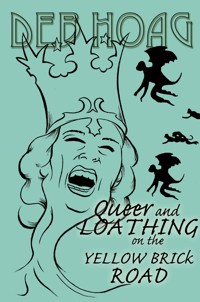
Queer and Loathing on the Yellow Brick Road
ByDeb Hoag
Queer and Loathing on the Yellow Brick Road
Deb HoagDog Horn Publishing (2012)
Rating: *****
Tags: fantasy
Queer and Loathing on the Yellow Brick Road
Published by Dog Horn Publishing at Smashwords
Copyright 2011 Deb Hoag
Table of Contents
Chapter One
Chapter Two
Chapter Three
Chapter Four
Chapter Five
Chapter Six
Chapter Seven
Chapter Eight
Chapter Nine
Chapter Ten
Chapter Eleven
Chapter Twelve
Chapter Thirteen
Chapter Fourteen
Chapter Fifteen
Chapter Sixteen
Chapter Seventeen
Chapter Eighteen
Chapter Nineteen
Chapter Twenty
Chapter Twenty-One
Chapter Twenty-Two
Chapter Twenty-Three
Chapter Twenty-Four
Chapter Twenty-Five
Chapter Twenty-Six
Chapter Twenty-Seven
Chapter Twenty-Eight
Chapter Twenty-Nine
Chapter Thirty
Chapter Thirty-One
Chapter Thirty-Two
Chapter One
Dorothy: The Meeting
I don’t know much, but I know this: magic is all around us, every day. It’s in the air we breath, the water we drink. Sometimes it’s wonderful, and sometimes it’s absolutely horrid. Magical things are happening to all of us, all the time, without rhyme or reason, without a care in the world about who deserves it or who doesn’t.
Magical things have happened to me. My name is Dorothy, and this is my story.
I met Frannie in the spring of 1890, the night I got thrown into the hoosegow for getting overly friendly with a couple of guys at the local saloon. I stomped into the cell and threw myself dramatically on the bunk, except it wasn’t the bunk I landed on—it was another woman. I hadn’t seen her there in the dim light leaking in from the booking room.
She made an ‘oofing’ noise and I jumped off the bed faster than I had jumped on, and the guard laughed. A small horde of adolescent jitterbugs that were prancing around on the ceiling giggled shrilly, but my mundane companions didn’t notice.
“Well,excuseme,” the woman said with a sniff, sitting up and putting a hand to a hairdo that had seen better days.
“Sorry, sister,” I replied, scooting over to the wall, where I slid down into a sitting position.
The jitterbugs went back to their endless, intricate mating dance, having approximately the same attention span as the gnats they so closely resembled.
The tiny flashing disco light was annoying, but I did my best to ignore it. I’d learned early that people who see things no one else does get a one-way ticket to the nearest loony bin. Even jail was better than that, which reminded me of exactly where I was. Jail.Fuck!
I thunked the back of my head against the concrete. It hurt like hell, so I did it a couple more times. Stupid, stupid, stupid getting caught like that! A few more dollars and I would have been on my way back to Kansas, chasing cyclones till I could find one that would take me back to Oz.
“Hey, honey, it can’t be that bad,” said the woman, eying me with alarm.
I stopped banging my head and sighed. “I was this close to going home, and I got picked up by some needle-dick copper for soliciting. Now I’m stuck here until I can see the judge, pay a fine, maybe a bribe, and then earn the money I’d saved all over again. And I’m on a deadline. I need to get back to Kansas before cyclone season hits.”
She laughed. “If you can make enough money out of these hayseeds to bribe a judge, you’re even better than you look. Most of these hicks would rather boink a sheep than pay money for a tumble with an actual woman.”
I sighed again. Completely true. I should have known two guys with cash money in a frontier town like Aberdeen, South Dakota were too much of a good thing.
“Look,” I said, “I didn’t mean to sit on you. I really didn’t know you were there. I’m Dorothy. I just blew into town a couple of weeks ago. Who are you?”
She shook her head sadly. “I’m Frannie, from right here. For the last few years, at least. I hale from back east, originally.”
“God, you actually live in this podunk town? You poor thing.”
We sat in companionable silence. Eventually, my thoughts brought me back around to what I’d been doing that landed me in jail, and from that to what my cellie had been doing that landedherin jail.
“So, what exactly gotyouthrown in here?”
Her face grew sulky. “I committed a lewd act in public.”
“Wow. What constitutes a lewd act around here?”
She shrugged and looked annoyed. “Looking cross-eyed on a Tuesday, if the constable is in a bad mood. It wasn’t really even in public. We were in a perfectly respectable alley. It just happened that the alley was behind the police chief’s house, and his wife picked that very moment to look out the bedroom window.”
“Gee, that sucks.”
“Yes, and so did I. That’s why I got arrested.”
I laughed out loud. Frannie started laughing too. Just like that, I knew we were going to be good friends.
When we stopped laughing, Frannie stretched on the narrow cot and stood up. “I’ve got an extra blanket,” she said. “It gets quite cold in here at night. You want it?”
“Sure,” I said, and she walked over to drape it around my shoulders.
When she stood up, the jitterbugs’ disco ball illuminated her face and figure. She had a square, short jaw, and lush, full lips.Her nose was a little large for her small face, but it lent humor to an otherwise serious visage and her eyes were beautiful and large, thickly lashed.In the dim light she was altogether pretty, and she had a grace of movement that gave her lithe frame an inviting wiggle when she moved, top-heavy the way men liked. The farmers probably ate her up. She looked closer to thirty than twenty, but I prefer older women, myself. She wore boots she must have sent all the way to New York for, and had the goodies wrapped up in a scarlet silk dress that suggested all kinds of mischief.
If I wasn’t heartbroken over Glinda, that wicked bitch, I might have eaten her right up myself.
I must have been staring, because she blushed, and reached up a hand to check her hair again. Her hands were large but well-shaped, with long, sensitive fingers. When she tucked the blanket around me, I smiled up at her, and noticed an unfortunate Adam’s apple, nearly as large as a ma--
Was that a wisp of mustache on her upper lip?
“Are you ... ah, you wouldn’t happen to be ... I know this sounds crazy, but are you a man?” I blurted out, watching as her painted cheek turned even rosier than it already was.
Frannie raised one of those large hands to tidy hair I realized now was a wig, askew on her head. I reached up and gave it a tug to set it straight.
She slid down to the floor and leaned against the wall a scant distance from me.
“You’ve found me out. Our guard doesn’t know that I sat next to him on a pew just last Sunday in a suit coat and tie. Are you going to tell him?”
“Your secret is safe with me. It’s no skin off my nose.”
Frannie blinked. “Really? That’s a refreshing attitude. You didn’t grow up around here, did you?”
“Well, I’m from Kansas, originally, but ....”
“I’ve been to Kansas. I didn’t realize they grew ‘em so liberal there.”
“Oh, Kansas isn’t really my home.”
“Then why do you want to get back there?”
“It’s a long story.”
She laughed. “Sister, time is one thing we both have plenty of, given the present circumstances.”
I had to agree.
I didn’t suppose for a second that she would believe a word I said, but I didn’t think she’d call the local loony bin about me, either.
I nestled in more comfortably to begin my tale.
“It all started in New Orleans . . . ”
Chapter Two
Dorothy’s Story: the Louisiana years
My mother was a small-town girl. She ran off from her parents’ Kansas farm with my father, a gambler passing through on his way from California, and she never looked back. “I had to get out of there before I turned as gray as everything else in Kansas, Dorothy,” she used to say. “You wouldn’t want to have some old, gray nanny goat for a mother, would you?” Then she’d laugh and sing a song, or recite some silly poem and twine ribbons in my hair, and we’d be off for another adventure. She never showed an ounce of regret for what she’d left behind.
My memories are of a pretty, laughing woman who never said ‘no’ to a good time. I think she was determined, in the second half of her life, to make up for everything she’d missed out on in the first half. My father was a rambler by nature, and while he did his best by my mother and I, he had itching feet and a suitcase that he never fully unpacked. Eventually, we heard that he met his death at the wrong end of a vengeful mark’s pistol, and my mother wept at his loss. But her grief didn’t stop her perpetual party for long, and her tears soon dried up.
If she continued to grieve for my father in the years that followed, she kept up a good front, because I never knew her as anything but happy, with a song and a smile for every situation. As a matter of fact, after my father died, that’s how she supported us, playing piano or guitar, singing and dancing in the clubs and saloons attached to Walnut Hall, one of New Orleans’ most opulent bordellos. I was usually with her, tucked quietly away in a corner watching my beautiful mother charm the crowds that came to drink and have a good time.
As she got older, my mom developed a fondness for patent pills and liquor that hastened her death, I’m sure. Mercifully, she had a quick end, and by the time the doctor we’d called for arrived, she’d already passed on. The elderly medic just shook his head. “That’s what comes from too much pills and liquor,” he observed, and I knew he was right, but still, she was the happiest corpse I’d ever seen.
When my mother died, Lilly Spanks, the madam at Walnut Hall, offered me a job singing in the saloon that was attached to the bordello, just like my mother had done, and I was seriously considering taking her up on her offer. There were worse ways to make a living, and I liked the Walnut Hall, with its swank furnishings, lively girls, closets full of pretty clothes, and rowdy clientele. Lilly herself was a goddess in perpetual white, with a pile of carefully coiffed auburn hair nearly a foot high on her head, and bracelets jingling all the way up her chubby forearms.
Have you ever been to a New Orleans funeral? There’s dancing, singing, loud music and a procession from the funeral home to the grave site that’s more like a parade than a death march. New Orleans funerals are so much fun you almost forget that someone died. Lilly paid for the whole thing, and there was a huge feast planned back at the bordello after the graveside ceremony concluded.
When the funeral was over, the rest of the girls were departing on a wave of expensive perfume, and Lilly was paying off the musicians, when I was approached by a rail-thin stranger in a dusty, ancient suit. As soon as I saw him, I got an uneasy feeling.
“Dorothy? Dorothy Gale?” said the man, and I got the impression he half-hoped I would deny it.
Instead, I gave him a curtsey and nodded. “I am. And who are you? I thought I knew all of my mother’s friends, but you are unfamiliar to me, sir.”
He sighed. “I’m not surprised. I’m your Uncle Henry, Dorothy—your mother Mary’s older brother. I’ve come to take you back to Kansas with me.”
I nearly laughed in his face. “There’s some mistake. I have never asked to be taken to Kansas. I have a job here, and am perfectly capable of taking care of myself. Thank you very much for your kind offer . . .Uncle, but I am not in need of your protection or your home.”
He frowned at me in the absent way people do when confronted by someone speaking a tongue entirely foreign to them.
“Dorothy, don’t be silly. Of course you’re going to come home with me. You’re a child, and an orphan. I’ve already gotten a paper from the court that says you belong with us now. You need to be taken care of. I’m the only kin you have left. Auntie Em has already had a bed put into the house just for you. And a little dresser for your clothes.”
I tapped a foot. What was this hick’s problem? Didn’t he hear what I was saying? I had no intention of going back to Kansas with him, and if he thought some stupid paper from a judge was going to change that, he wascrazy.
There was a noise behind me, and I heard Lilly’s voice. “Is there a problem here, sir?”
Uncle Henry slowly peeled his frowning gray glance away from me to look at Lilly.
“The girl’s my niece, and I’m taking her back to Kansas to live on the farm with me and my wife. I’ve got the court paper that says so.”
Lilly glanced at me, then back at Uncle Henry. “We were just getting ready to go back and have supper together, Mr...”
“Gale,” said Uncle Henry.
“Mr. Gale. Why don’t you join us? It will take a little while to get Dorothy’s things together anyways, and you might as well do it sitting down with a plate of good New Orleans food in your hand as standing up in the sun and heat.” She gave him a pretty smile.
“Well, I don’t know... was Dorothy staying with you?”
“She was,” said Lilly, linking her arm through Uncle Henry’s and leading him toward the cemetery gates. “Dorothy and Maria both.”
“Maria? You mean Mary—my sister Mary,” said Uncle Henry.
Lilly nodded. “She liked to be called Maria, after she arrived in New Orleans. She thought it sounded more exotic. I was her best friend here, and when she took ill, Dorothy and I nursed her together. Please come back with us? We’ll have a nice meal, and you can relax and wash some of that travel dust out of your throat, and Dorothy can get her things together.” As they walked, Lilly looked over her shoulder and gave me a wink. “We’ll get it all sorted out back at my place.”
Which is how Henry Gale, the original gray man, ended up at Walnut Hall, the finest little whorehouse in New Orleans.
From the outside, in the drenching heat of a New Orleans summer day, Walnut Hall looks quite impressive, with lush lawns and sprawling trees to shade the three-story brick mansion with its snowy trim work and wrought-iron fixtures. It’s in the middle of the notorious red-light district, but in the afternoon, even the streetwalkers are fagged by the mid-day heat and tucked away somewhere waiting for it to cool off enough to ply their trade.
In the front parlor, even, the facade of respectability is carefully maintained, with ornate furniture and heavy drapes to keep the sun at bay. There is elegant flocked wallpaper and velvet-covered furniture that sitson thick ornamental rugs. Which is exactly where Lilly installed Uncle Henry when we arrived. Catalina pulled off his jacket while Lilly fussed around and sent Paula for a nice cool drink of lemonade, “and some of that cherry cordial we put by, if you please. Oh, and chip off lots of ice for Mr. Gale’s lemonade!”
Once Uncle Henry was seated, Lilly insisted on making a plate for him herself, piling it high with fried chicken and sliced ham, cold salads and thick slices of bread with butter, all fresh made by the cook that morning. I noticed she skipped the jambalaya andfilegumbo and all the other spicy New Orleans specialties. As she passed me with his heaping plate, she muttered to me out of the corner of her mouth, “Keep an eye out for that court paper, kid. Check that jacket we just shucked him out of.”
I went to do her bidding as she took a seat next to Uncle Henry and began chattering brightly while he sipped lemonade and balanced his plate on his knee.
Dinah must have been in on the plan, because she kept that cordial glass topped up, and while I didn’t find the documents giving custody of me to the Gales in Uncle Henry’s jacket pocket, I had faith that with enough cordial and sweet-talk, the girls at Walnut Hall could talk him out of whatever other clothes we needed to go through as well.
I drifted closer to hear what Lilly and my uncle were talking about.
“You sure have a lot of young ladies here, Miz Lilly. They can’t all be your daughters. You run a school here or something?”
Amazingly, Lilly kept a straight face. “Oh, yes, Mr. Gale. A school for young ladies. We would so like to persuade you to let Dorothy stay here with us, in this familiar setting in her time of grief and loss. Moving her now would be so... difficult for her, don’t you think, away from everything she knows and cares about?”
It might have been the effects of the cordial, but Uncle Henry actually looked as if he were considering it.
Just then Felicity came running in, stopping when she got to Lilly. “Miz Lilly, there’s a . . . handyman . . . at the door—what did you want us to do about that?”
Lilly frowned at Felicity, then glanced meaningfully at Uncle Henry. “Please tell him we’ve company in today, and we’ll have to ask him to come back tomorrow.”
Uncle Henry shook his head. “Don’t stop the work on my account, Miz Lilly. You go right on about your business. I insist.”
Felicity gave Lilly a pleading look. “He’s my best . . . handyman. I hate to turn him away once he’s got here. And Mr. Gale wants us to go on about our business, the sweetie-pie. Please, Miz Lilly?”
Lilly frowned some more, but with Uncle Henry’s eyes on her, she finally gave a reluctant nod. “Alright. Take the . . .handymanaround the back, Felicity, and explain to him he’ll need to keep the noise down—we’re in mourning.”
“What kind of work you having done here, Miz Lilly?” asked my uncle in an interested tone.
“Just a little . . . woodwork. You know these old southern mansions. Always something to do.”
Felicity snickered, and Lilly shooed her out of the room.
“I’d be glad to take a look at it for you, if you like,” said Uncle Henry. “No offense, but those handymen will take advantage of a lady without blinkin’ an eye, if they think they can get away with it.” He made a move to shift his plate over the little pie crust table next to his chair, and stood up.
“Oh, oh, no, Mr. Gale,” said Lilly, pushing him back down into the chair. Uncle Henry looked at her with surprise. Lilly’s small, but she’s strong. “I mean, that is . . . you’re our guest, and you just lost your sister. I wouldn’t dream of having you do any such thing as work here today.”
“And the handyman isveryhandy,” purred Dinah.
Uncle Henry gave her an odd look, at the same time as I saw a scantily clad Felicity bounding down the hallway, closely pursued by her ‘handyman’—a middle-aged banker who was a regular customer, and who was clutching most of Felicity’s cast-off clothing in his hands.
I moved quickly to shut the door to the hallway, and Lilly topped off Uncle Henry’s cordial. “Oh, my, it’s awful warm in here, still, isn’t it now? Mr. Gale, why don’t you take off that vest and loosen up your tie? We’re not on ceremony here—Dorothy is just like one of my own girls, and that makes us practically relatives, don’t you think?”
Uncle Henry obligingly shrugged off his gray vest, and Lilly said, “Dorothy, why don’t you just go hang that up with your uncle’s jacket, now, like a good girl?” I moved to do as she bid, and quickly went through the pockets on my way, as Lilly continued. “Now, Mr. Gale, what a fine shirt that is! I would just love to get one made like that for one of my nephews. Does that have pockets in it?”
Half an hour later, Uncle Henry was slumped back in his chair, a pile of chicken bones on the plate at his side and most of a bottle of cherry cordial inside him. We still hadn’t found the damn court papers, but it looked as if he might start nodding off any second, and there wasn’t a girl in the joint who couldn’t roll a sleeping mark in one note.
Without warning, a heavy pounding started overhead.
“Huh? What’s that?” snorted Uncle Henry, sitting up straighter.
“It’s . . . ah . . . it’s that darn handyman, Uncle. I’ll go tell him to quiet down,” I said, knowing it was Felicity and her banker.
“There’s no cause for him to be bangin’ around like that,” said Uncle Henry indignantly. “He’ll bring this whole place down around your head, Miz Lilly! I’m gonna go give him a talking to!”
“No!” we both yelled in unison, sparking a look of alarm on poor old Uncle Henry’s face.
“I mean, no, Mr. Gale. You will not go supervise that careless handyman. You sit right here with your niece. Dinah, you go tell them to cut the noise, right now!” said Lilly.
From upstairs, I could hear Felicity start to moan with great enthusiasm.
“What the bejezus is that?” said my uncle, looking at the ceiling as if he could stare through it.
“Why . . . it’s pipes, Uncle Henry,” I said earnestly. “You know how these old houses are. Plumbing’s awful.”
“Wouldn’t know about that, Dorothy, as we don’t have indoor plumbin’ back on the farm.”
Lilly and I exchanged horrified looks, and Felicity moaned again.
“That is not pipes,” said Uncle Henry firmly. “What is the matter with you women? Somebody’s in pain up there. I can hear it plain as day. I’m going to take a look.”
And before we could stop him, he had bolted out the door and headed for the stairs.
Lilly threw herself in front of him. “Don’t you go up there, Henry Gale, I won’t have it! There’s nothing going on up there but some good old-fashioned woodworking. It’s just Felicity polishing up the knobs, that’s all. She likes to sing while she works, and she’s the worst singer you’ve ever heard. Isn’t she, Dorothy?”
I squinted at the ceiling, where Felicity was fast approaching a crescendo. The pounding was furious.
With one hand, Uncle Henry moved Lilly out of his way and headed up the stairs.
Helpless, we followed him to the second floor. I was right behind him when he flung open the door to Felicity’s room. She was holding a riding crop and sprawled naked across the banker, who had been tied hand and foot to the bedposts. Red welts decorated his thighs, and a satisfied look decorated his face. When the door flew open, Felicity looked up, sweaty and replete and gave Uncle Henry the prettiest, friendliest smile you can imagine. “Why, hello, Uncle Henry. I’ve tuckered this one out. Would you like to add a little Felicity toyourday, too?”
Uncle Henry turned bright red and started sputtering. I was in a buggy headed for Kansas before you could say “dust bowl.”
Chapter Three
Dorothy: In the Still of the Night
Even the jitterbugs were winding down, and I could hear the guard snoring loudly from his chair in the adjoining room. “I need a drink of water,” I said. “My throat’s getting dry from all this talking.”
Frannie stretched. “Me too. And I’m getting a little stiff from sitting here.”
I stood up and walked over to the pitcher to get some tepid water. It tasted like minerals and the tin cup I drank it out of.
“It must have been awful—having your mother die, and then having your uncle show up and take you away from everything and everyone you knew and loved.”
I nodded agreement. “It was horrible. Don’t get me wrong—Uncle Henry and Auntie Em weren’t bad people or anything. But going from a brothel in New Orleans to a farm in Kansas was like going to another planet as far as I was concerned. New Orleans is vibrant, lush, bursting with color and noise and people and music.”
“And Kansas?”
“Kansas is completely devoid of anything that makes life worth living. Even color. The farmhouse was gray weathered wood, the fields were gray, the dirt was gray, the sky was gray, even Uncle Henry and Auntie Em were gray. Nobody laughed, nobody sang, nobody danced or cracked jokes. I remember one day when one of the hired hands that worked on the farm was showing off, walking on top of the plank fence that kept the hogs in. He lost his balance and fell right into the pigs’ mud hole. You should have seen those hogs jumping and grunting! I couldn’t help myself—I started laughing so hard I thought I’d bust. Auntie Em shrieked and fainted. She thought some wild animal had gotten loose in the house. It was horrible. Can you imagine someone not recognizing the sound of laughter when they heard it?
Uncle Henry worked all day, from daybreak to sunset out in the fields, and Auntie Em did the same thing inside the house, canning, cleaning, cooking, washing. You name it, they did it. By hand. Over and over and over. Without ever turning a profit, or having a damn thing to show for it, except more wrinkles. Oh, and more dust.”
“Why didn’t they just pack it in and go somewhere else?”
“I have no idea. Some horribly misguided Norwegian protestant Bible-belt work ethic, I think.”
We were both silent for a moment, contemplating the horror that results when Christian morals and rural American work ethics collide in a stolid Norwegian brain.
“I’m tired of talking,” I said. “Why don’t you tell me a little bit about you? How’d a sophisticated urbanite like you end up in the ass-end of nowhere?”
Frannie leaned back against the wall and patted the floor next to her. I came and sat down and she put her arm around me. I snuggled against that lovely expanse of bosom. Her breasts might have been fake, but they sure were soft.
She cleared her throat and began. “I spent my childhood in upstate New York . . . ”
Chapter Four
Frannie: The Tin Man
I was born to a wealthy family in a small town. As you can imagine, we were the biggest frogs in our little pond, and from my earliest memories, the demands on me were excessive: to be a manly little man, to stand up straight, to take my punishments without flinching, to rule my toy box with an iron fist. All of it I rejected, of course, as any sensible and intelligent child would. I cried when I got switched, let my toys fall where they may, and slouched when I should have been standing at attention.
My father regarded me as an utter failure; my mother as her sensitive little angel. Between the two of them, I became the prize ceremonial object in their marital tug of war, the eternal contest between the 19thCentury ramrod Republican captain of industry and the soft-hearted, passive-aggressive flower of genteel society. From the moment they met, they were as doomed to conflict as they had been to marry in the first place. I merely gave them new and fertile fields over which to wage their battles.
What they were both equally incapable of perceiving was that, right from the first, I was my own person, not theirs. They schemed and (in the case of my mother) bribed and manipulated; they plotted and (in the case of my father) threatened and punished. But I pursued my own path, regardless, playing each of them as best I could to my own ends. By the time I was out of the nursery, I myself was quite adept at both manipulation and bullying, if I do say so myself.
As a very small child, I had a tendency toward febrile seizures—those sudden, cataclysmic, drooling, foaming personal earthquakes where the temperature spikes up for the least provocation and the victim is left writhing and pissing themselves until the episode passes—guaranteed to strike horror into any tender-hearted mother. By the time I was old enough to leave the nursery I rarely had them any longer, but I had so perfected their likeness that even my father was fooled. It was one of the best weapons in my defensive arsenal.
As most youths do, I blamed much of my confusion about my own identity and about life in general on my parents; as I grew older, however, I came to realize that the confusion I felt was much more fundamental than that of a sensitive, intelligent child caught up in parental conflict.
Inside, I was quite positive I was a girl, but the external evidence, and the testimony of everyone around me, assured me that I was a boy.
In my extreme youth, it was assumed that I simply didn’t understand what I was saying, when I kept insisting that I was a girl, not a boy. I’d get patted on the head and ignored, or someone would explain kindly that I was mistaken, as if I were too stupid to see the evidence in hand.
As I grew older, my assertions caused first consternation, and then whippings from my father, until I learned to hold my tongue. Occasionally, a maid would catch me trying on something of my mother’s and look at me askance, but I had learned to be as sneaky and as ruthless as the adults around me, and there were few in the household who dared to cross me that were not blood relatives.
I first heard of Greek love when a cousin, Tobias, told me a snickering story about an uncle who lived on the continent and was shunned by the rest of the family. He pranced around in woman’s clothing and accepted the physical love of other men with wanton abandon. With a shock, but also with an exhilarating sense of rightness, I realized that the love of one man for another was the ultimate, logical conclusion of my strange belief that I was indeed a woman in spirit if not in body—for if I were indeed a woman, would not the most natural thing in the world be to love a man as did all of the other women in the world?
I wished I could meet this uncle, talk with him, question him about this queer affliction we apparently shared, but he was thousands of miles and an ocean away. After having spent the first decade of my life completely isolated and alone with this feeling of differentness, surrounded by rough masculine figures such as my father for my role models, and total twits for maidenly companionship, I longed for a strong, powerful woman or a delicate, feminine man who could demonstrate for me a middle path to walk in which I could own both the powerful intellect and feminine grace which I felt pulsing inside of myself.
Alas! No such role model appeared, and I was forced to spend my tender years in a societal oubliette of shame and deception.
When I was about twelve, our Irish groom, a handsome young man named Nick, returned from the war. He had lost both an arm and a leg in battle, but managed to convince my father that his lack of limbs would be an advantage in the competitive world of Syracuse horse-racing, where every ounce a jockey weighed could help determine the outcome of a race.
My father had the finest prostheses possible made for him, fashioned out of a lightweight but durable tin, and with his racing colors on, Nick was still a fine figure of a man. His prosthetic hand was fashioned so that the reins could be looped tightly through the tin fingers. With gloves on, and a little misdirection, no one but us and the tinsmith realized the hand wasn’t real. My father was careful that Nick was only seen by those outside our own stable fully mounted, and few were aware of the extent of his injury, thinking his two stiffened limbs were merely damaged, not replaced entirely.
His missing limbs only added to his fascination as far as I was concerned, and I spent endless hours in the stable admiring his handsome visage and listening to his tales of glory on the battlefield. I found myself, against my conscious will, quite smitten. He was a friendly fellow, handsome and manly, dominating the other stable hands in a way that made me long to be under his hand myself. In spite of his commanding presence, he was barely taller than I was, but his forceful personality made him seem twice that size. Despite his rough masculinity, however, there was a grace about him—an indefinable sensitivity—which lurked beneath the surface and which made me wonder if at last I had found someone in the world besides myself and my absentee uncle who was attracted to other men.
Occasionally we would take a ride together out to one of the farther pastures, to check on the horses. On one such ride, I was embarrassed and aroused to observe a stallion attempting to mount a yearling. Nick watched with open interest and some amusement as the younger horse attempted to shift and deflect the stallion.
“‘Tis not that unusual in nature to find one fine beast attempting to mount another,” said Nick, watching me out of the corner of his eye.
I wasn’t sure if he had realized that the horse the stallion was attempting to mount was another male, and felt obliged to point this out.
“Most think that what he’s doing is unnatural in the extreme,” I said. “He’s trying to mount another male, not a female.”
“Do you think I don’t see his fine young member there between his legs?” laughed Nick. “What kind of horseman do you think me to be? And it would be hard to miss, considering the way it’s raising its handsome head, now, don’t you think?”
I looked again, and sure enough, the younger horse’s prick was becoming erect as the stallion continued trying to mount him.
“Now, I ask you, could it be so unnatural an act when nature itself thus supports it?”
I nodded, not sure what to say.
“And if a man himself had such urges, surely he could not be blamed for following them, if even the mighty stallion in the field occasionally indulges himself in such harmless pleasures?”
Now my eyes flew to Nick’s, as the impact of what he was saying struck home.
He smiled, a smile I felt all the way down to the toes of my fashionable leather boots, but before I could think of an adequate reply, one of the grooms thundered up and commanded me back to the house for luncheon.
Irritated and unsettled, but obedient nonetheless, I turned my horse and headed back to the house. Fear of my father’s wrath overcame even my extreme interest in Nick and his opinions about one male mounting another. But I determined we would continue the conversation at the next opportunity.
I developed a fervent new interest in riding, which surprised and delighted my father and quite puzzled my mother, who preferred a sedate carriage ride herself. I spent hours there every day, grooming the horses, polishing the fine leather saddles until they gleamed, feeling an unaccountable excitement whenever I came across Nick carrying a riding crop and tapping it smartly against one of our magnificent horses’ flanks. My father was preparing Nick to take up the mantle of first jockey in our stables, however, and the demands on his time were many. I was unable to find time alone with him, and remained frustrated (literally and figuratively) in my attempts to continue our talk.
The first several races of the new season went well, and despite the lack of two limbs, Nick’s proficiency as a jockey was apparently untrammeled.
At least, as long as the sun was shining.
It was an overcast Sunday morning when the fateful race took place. The spring sky was thickly coated with heavy gray clouds as the horses and jockeys took their places at the starting gate. When the starting bell rang, Nick looked a winner indeed in his silver and white racing threads, reins tightly looped through the curved fingers of his prosthetic hand, flesh leg and tin alike tucked snugly against Juniper Moon’s chestnut flanks, booted feet thrust through the stirrups drawn up high under the skirt of the fancy leather saddle.
Despite the threat of rain, the stands were jammed with fashionable spectators, and I remember cheering lustily for my hero, Nick, who was already in the lead on the first turn.
There was a peal of thunder, and the heavens let loose a rain so dense it seemed as if buckets of water were being poured directly onto our heads.
A shriek cut through the watered air.
I followed the pointing arm of a nearby matron to see Nick nearly unseated, bouncing painfully as Juniper Moon made the next turn. It was then that the true difficulty of jockeying with only one arm and one leg became apparent—as the polished leather saddle became slick with rain, Nick was unable to retain his balance on the slippery seat. I watched in horror as Nick fell from the saddle and rolled on the muddy ground, narrowly avoiding being trampled by the thundering hooves of the other horses as they raced by.
A chorus of new screams, these infused with a rising horror, assailed my ears. Right in front of me, a fat woman fainted, her large hat striking my cheek as she fell. Several of her compatriots immediately followed suit. I battled feathers out of the way to see what I thought would be Nick’s trampled corpse and saw instead that the people surrounding me were gaping at Juniper Moon, who had come to a stop, chest heaving, a tin arm dangling from his reins and a tin leg trailing from the right stirrup.
For those who didn’t know Nick was a double amputee, it must have appeared that the fall had yanked Nick’s flesh right from his body.
I bolted over the side of the stands to reach Nick’s side, and pounded him on the back as he coughed out mud and track dust. The left side of his face was scraped and raw, and he gave me a rueful look out of those handsome dark eyes.
“Well, boyo, looks like I’ve botched this race up good and proper.
Before I could reply, my father had reached us, face a coppery red even in the chilling rain. He hauled Nick up onto his one good leg and shook him like a terrier shakes a rat, screaming about how Nick had failed him. It took two track officials to force him to relinquish his grip on the defenseless jockey, who was half his size. Father was still threatening to use Nick’s own crop against him as they dragged him back to the owner’s box for several potent tots of whiskey.
By then, the artificial nature of Nick’s severed limbs had been ascertained, and a semblance of order restored to the shocked crowd.
While there was no rule, per say, against racing while wearing an artificial limb, the pains that father had gone to prevent Nick’s handicap from being public knowledge weighed heavily against him in public sentiment, and it was assured that Nick would no longer be racing on behalf of my father’s stables.
That evening, I heard from the upstairs maid that on the morrow, Nick was being given severance wages sufficient to buy him a one-way train ticket to family on the other side of the Niagara. I made my way with all haste to the stables to say my goodbyes.
Imagine my surprise when I found my hero slumped amongst a loose pile of hay, whiskey bottle clutched in his one remaining hand, obviously three sheets to the wind.
“Nick?” I said, somewhat shocked. I associated the drinking of whiskey with my father and his cronies, and didn’t know what to make of Nick’s obvious intoxication.
“Hello, there, boyo. Come to report back to your father how low I’ve sunk?”
“Nick!” I protested. “I like my father no better than you do. If I could stop him from discharging you, I would do so, gladly. But he listens to me no more than he does to the hounds and the geese.”
He sighed and nodded. “True words, lad. Forgive my bitterness. It’s the first time I’ve ever been sacked, and I’m not myself this night. Give me a hand up, so I may make myself presentable?”
I approached and slung his good arm around my shoulder, and heaved. We almost made it, but at the last minute, Nick’s leg gave out from under him and we both tipped back into the hay.
Nick blinked in surprise, and then gestured with the whiskey bottle, which had miraculously remained upright throughout our fall. “If a few sips of the Irish makes me lose my balance, maybe a few sips more will see me right again. What say you to that?”
“I . . . I don’t know. I’ve never heard that before.”
“Well, one way to find out. Will you join me, and have a drink to toast me on my way?”
Put like that, how could I refuse? I took the whiskey bottle and tipped some of the fiery liquid down my innocent throat. It burned on the way down, and detonated in my stomach like a Chinese firework, sending heat and sparks directly into my brain.
From my spot under Nick’s arm, my back cushioned by the sweet-smelling hay, I gave my drinking partner my most charming smile. Nick’s eyes met mine, and those beautifully sculpted lips curved up. Did his hand tighten slightly on my shoulder? Suddenly, the world was alive with possibilities.
We passed the bottle back and forth, and I persuaded him to show me his truncated left arm. I did not bother to turn away my avid gaze as he doffed his shirt. I looked my fill at the smooth white skin of his chest, the rippling muscle that chased itself across his fine form, before turning my gaze to the stump that ended a few inches below his shoulder. The skin was smooth and stretched tautly down until the area which had been ripped asunder, first by shrapnel from a cannon, and then by a surgeon’s blade. From there, the flesh irrupted red and gnarled, a miniature topography of tortured mountain and sulfurous valley.
One of the horses whickered sleepily, then lifted his head over the side of his stall for a closer look at our activity. Hesitant but compelled, I reached up a hand and ran my forefinger over the rough scarring, then placed my palm firmly against the torn flesh and rocked it there as I looked into Nick’s eyes. He put down the whiskey bottle and reached out with his good hand to stroke his fingers through my hair.
“And here I am the stallion, and you the yearling, now, unless I’m mistaken,” he said, in a soft voice. “Think you’re ready for your first ride?”
My throat went dry, but I nodded.
“Well, then,” he whispered, and slid his hand down to cup my cheek.




