


114,99 €
Mehr erfahren.
- Herausgeber: John Wiley & Sons
- Kategorie: Wissenschaft und neue Technologien
- Sprache: Englisch
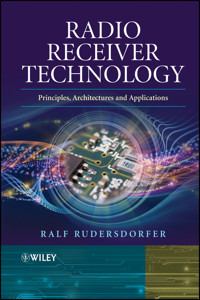
Written by an expert in the field, this book covers the principles, architectures, applications, specifications and characterizations of radio receivers
In this book, the author introduces the reader to the basic principles and theories of present-day communications receiver technology. The first section of the book presents realization concepts at the system level, taking into consideration the various types of users. Details of the circuitry are described providing the reader with an understanding of fully digitized radio receivers, offering an insight into the state-of-the-art.
The remaining sections address radio receivers, particularly as two-port devices. Furthermore, the author outlines the fields of applications (with sample calculations and with reference to practical work) and their features and considers also the specialty of high-quality radio receivers. As can be seen from the multitude of terrestrial applications described in Part II, they are typically used for radio surveillance, signal intelligence, modern radio bearing and at the classical radio services. Parts III and IV describe the entire range of parameters that are useful for the characterization of these receivers. The description starts from the physical effect, or the explanation of the individual parameter, and then proceeds to the measuring technique for determining the parameters, highlighting problems, followed by explanatory notes with applicatory relevance. The measuring procedures described are the result of experiences gained in extended laboratory work and practical testing. With the model shown in Part IV, used for the operational evaluation detailing the intrinsic small range of interpretation, the book covers untreated research in the field. The Appendix provides among others valuable information about the dimensioning of receiving systems and the mathematical derivation of non-linear effects and as well as a useful method for converting different level specifications.
Key Features:
- Introduces the basic principles and theories of present-day technology
- Discusses concepts at system level (aligned to the various types of users)
- Addresses (fully) digitized radio receivers focusing on the state-of-the-art
- Close contacts to the industry were utilized to show background information
- Enables the reader to comprehend and evaluate the characteristic features and the performance of such systems
- Examines the entire range of parameters that are characteristic of the technology including the physical effect and measuring techniques
- Includes results of experiences gained in extended laboratory work and practical testing with examples
- Provides a uniform and systematic approach for ease of understanding e.g. many didactic figures for the visual illustration have been newly created as well as complete real-world examples
This book will be an excellent resource to understand the principles of work, for professionals developing and testing radio receivers, for receiver users (e.g. at regulatory agencies, surveillance centers, secret services, classical radio communications services), technicians, engineers and technicians who work with RF-measurement instruments, postgraduate students studying in the field and university lecturers. Chartered radio amateurs and handlers/operators will also find this book insightful. Due to high level of detail, it also serves as a reference. By using the carefully edited alphabetical index with over 1,200 entries, the appropriate explanations can be found quickly in the text.
Sie lesen das E-Book in den Legimi-Apps auf:
Seitenzahl: 458
Veröffentlichungsjahr: 2013
Ähnliche


















Table of Contents
Title Page
Copyright
About the Author
Preface
Acknowledgements
Chapter I: Functional Principle of Radio Receivers
I.1 Some History to Start
I.2 Present-Day Concepts
I.3 Practical Example of an (All-)Digital Radio Receiver
I.4 Practical Example of a Portable Wideband Radio Receiver
References
Further Reading
Chapter II: Fields of Use and Applications of Radio Receivers
II.1 Prologue
II.2 Wireless Telecontrol
II.3 Non-Public Radio Services
II.4 Radio Intelligence, Radio Surveillance
II.5 Direction Finding and Radio Localization
II.6 Terrestrial Radio Broadcast Reception
II.7 Time Signal Reception
II.8 Modern Radio Frequency Usage and Frequency Economy
References
Further Reading
Chapter III: Receiver Characteristics and their Measurement
III.1 Objectives and Benefits
III.2 Preparations for Metrological Investigations
III.3 Receiver Input Matching and Input Impedance
III.4 Sensitivity
III.5 Spurious Reception
III.6 Near Selectivity
III.7 Reciprocal Mixing
III.8 Blocking
III.9 Intermodulation
III.10 Cross-Modulation
III.11 Quality Factor of Selective RF Preselectors under Operating Conditions
III.12 Large-Signal Behaviour in General
III.13 Audio Reproduction Properties
III.14 Behaviour of the Automatic Gain Control (AGC)
III.15 Long-Term Frequency Stability
III.16 Characteristics of the Noise Squelch
III.17 Receiver Stray Radiation
III.18 (Relative) Receive Signal Strength and S Units
III.19 AM Suppression in the F3E Receiving Path
III.20 Scanning Speed in Search Mode
References
Further Reading
Chapter IV: Practical Evaluation of Radio Receivers (A Model)
IV.1 Factual Situation
IV.2 Objective Evaluation of Characteristics in Practical Operation
IV.3 Information Gained in Practical Operation
IV.4 Interpretation (and Contents of the ‘Table of operational PRACTICE’)
IV.5 Specific Equipment Details
References
Further Reading
Chapter V: Concluding Information
V.1 Cascade of Noisy Two-Ports (Overall Noise Performance)
V.2 Cascade of Intermodulating Two-Ports (Overall Intermodulation Performance)
V.3 Mathematical Description of the Intermodulation Formation
V.4 Mixing and Derivation of Spurious Reception
V.5 Characteristics of Emission Classes According to the ITU RR
V.6 Geographic Division of the Earth by Region According to ITU RR
V.7 Conversion of dB… Levels
References
Further Reading
List of Tables
Index
This edition first published 2014
© 2014 Ralf Rudersdorfer
Authorised Translation in extended and international adapted form from the German language edition published by Elektor Verlag © 2010.
Registered office
John Wiley & Sons Ltd, The Atrium, Southern Gate, Chichester, West Sussex, PO19 8SQ, United Kingdom
For details of our global editorial offices, for customer services and for information about how to apply for permission to reuse the copyright material in this book please see our website at www.wiley.com.
The right of the author to be identified as the author of this work has been asserted in accordance with the Copyright, Designs and Patents Act 1988.
All rights reserved. No part of this publication may be reproduced, stored in a retrieval system, or transmitted, in any form or by any means, electronic, mechanical, photocopying, recording or otherwise, except as permitted by the UK Copyright, Designs and Patents Act 1988, without the prior permission of the publisher.
Wiley also publishes its books in a variety of electronic formats. Some content that appears in print may not be available in electronic books.
Designations used by companies to distinguish their products are often claimed as trademarks. All brand names and product names used in this book are trade names, service marks, trademarks or registered trademarks of their respective owners. The publisher is not associated with any product or vendor mentioned in this book. This publication is designed to provide accurate and authoritative information in regard to the subject matter covered. It is sold on the understanding that the publisher is not engaged in rendering professional services. If professional advice or other expert assistance is required, the services of a competent professional should be sought.
Library of Congress Cataloging-in-Publication Data
Rudersdorfer, Ralf.
[Funkempfängerkompendium. English]
Radio receiver technology : principles, architectures, and applications / Ralf Rudersdorfer, Ulrich Graf,
Hans Zahnd.
pages cm
Translation of: Funkempfängerkompendium.
Includes bibliographical references and index.
ISBN 978-1-118-50320-1 (hardback)
1. Radio–Receivers and reception. I. Graf, Ulrich, 1948- II. Zahnd, Hans. III. Title.
TK6563.R6813 2013
621.3841′8–dc23
2013008682
ISBN: 9781118503201
About the Author
Ralf Rudersdorfer, born in 1979, began his career at the Institute for Applied Physics. He then changed to the Institute for Communications Engineering and RF-Systems (formerly Institute for Communications and Information Engineering) of the Johannes Kepler University Linz, Austria, where he is head of Domain Labs and Technics. His activities included the setting up of a measuring station with attenuated reflection properties/antenna measuring lab and furnishing the electronic labs of the Mechatronics Department with new basic equipment.
He began publishing technical papers at the age of 21. In August 2002 he became a Guest Consultant for laboratory equipment and RF hardware and conducted practical training courses in ‘Electronic Circuit Engineering’ at the reactivated Institute for Electronics Engineering at the Friedrich Alexander University Erlangen-Nuremberg, Germany. In 2006 he applied for a patent covering the utilization of a specific antenna design for two widely deviating ranges of operating frequencies, which was granted within only 14 months without any prior objections. In the winter semesters 2008 to 2011 the Johannes Kepler University Linz, Austria, commissioned him with the execution of the practical training course on ‘Applied Electrical Engineering’.
Rudersdorfer is the author of numerous practice-oriented publications in the fields of radio transmitters and radio receivers, high-frequency technology, and general electronics. Furthermore, he was responsible for the preparation of more than 55 measuring protocols regarding the comprehensive testing of transmitting and receiving equipment of various designs and radio standards issued and published by a trade magazine. During this project alone he defined more than 550 intercept points at receivers. He has repeatedly been invited to present papers at conferences and specialized trade fairs. At the same time he is active in counseling various organizations like external cooperation partners of the university institute, public authorities, companies, associations, and editorial offices on wireless telecommunication, radio technology, antenna technology, and electronic measuring systems.
In the do-it-yourself competition at the VHF Convention Weinheim, Germany, in 2003 he received the Young Talent Special Award in the radio technology section. At the short-wave/VHF/UHF conference conducted in 2006 at the Munich University of Applied Sciences, Germany, he took first place in the measuring technology section. The argumentation for the present work in its original version received the EEEfCOM Innovation Award 2011 as a special recognition of achievements in Electrical and Electronic Engineering for Communication. Already at the age of 17 Ralf Rudersdorfer was active as a licensed radio amateur, which may be regarded as the cornerstone of his present interests.
Owing to his collaboration with industry and typical users of high-end radio receivers and to his work with students, the author is well acquainted with today's technical problems. His clear and illustrative presentation of the subject of radio receivers reflects his vast hands-on experience.
Preface
The wish to receive electromagnetic waves and recover the inherent message content is as old as radio engineering itself. The progress made in technical developments and circuit integration with regard to receiver systems enables us today to solve receiver technology problems with a high degree of flexibility. The increasing digitization, which shifts the analog/digital conversion interface ever closer to the receiving antenna, further enhances the innovative character. Therefore, the time has come to present a survey of professional and semi-professional receiver technologies.
The purpose of this book is to provide the users of radio receivers with the required knowledge of the basic mechanisms and principles of present-day receiver technology. Part I presents realization concepts on the system level (block diagrams) tailored to the needs of the different users. Circuit details are outlined only when required for comprehension. An exception is made for the latest state-of-the-art design, the (fully) digitized radio receiver. It is described in more detail, since today's literature contains little information about its practical realization in a compact form.
The subsequent sections of the book deal with radio receivers as basically two-port devices, showing the fields of application with their typical requirements. Also covered in detail are the areas of radio receiver usage which are continuously developed and perfected with great effort but rarely presented in publications. These are (besides modern radio direction finding and the classical radio services) predominantly sovereign radio surveillance and radio intelligence. At the same time, they represent areas where particularly sophisticated radio receivers are used. This is demonstrated by the many examples of terrestrial applications shown in Part II.
A particular challenge in the preparation of the book was the systematic presentation of all characteristic details in order to comprehend, understand and evaluate the respective equipment properties and behaviour. Parts 3 and 4, devoted to this task, for the first time list all receiver parameters in a comprehensive, but easy to grasp form. The description consistently follows the same sequence: Physical effect or explanation of the respective parameter, its acquisition by measuring techniques, and the problems that may occur during measurement. This is followed by comments about its actual practical importance. The measuring techniques described result from experience gained in extensive laboratory work and in practical tests. Entirely new territory in the professional literature is entered in Part IV with the model for an evaluation of practical operation and the related narrow margin of interpretation.
The Appendix contains valuable information on the dimensioning of receiving systems and the mathematical derivation of non-linear effects, as well as on signal mixing and secondary reception. Furthermore, the Concluding Information provides a useful method for converting different level specifications as often encountered in the field of radio receivers.
Easy comprehension and reproducibility in practice were the main objectives in the preparation of the book. Many pictorial presentations were newly conceived, and the equations introduced were supplemented with practical calculations.
In this way the present book was compiled over many years and introduces the reader with a basic knowledge of telecommunication to the complex matter. All technical terms used in the book are thoroughly explained and synonyms given that may be found in the relevant literature. Where specific terms reappear in different sections, a reference is made to the section containing the explanation. Due to the many details outlined in the text the book is well suited as a reference work, even for the specialist. This is reinforced by the index, with more than 1,200 entries, freely after the motto:
When the expert (developer) finds the answer to his story,
spirits rise in the laboratory,
and so one works right through the night
instead of only sleeping tight!
Acknowledgements
The professional and technically sound compilation of a specialized text always requires a broad basis of experience and knowledge and must be approached from various viewpoints. Comments from specialists with many years of practical work in the relevant field were therefore particularly helpful.
My special thanks go to the electrical engineers Harald Wickenhäuser of Rohde&Schwarz Munich, Germany, Hans Zahnd, of the Hans Zahnd engineering consultants in Emmenmatt, Switzerland, and Ulrich Graf, formerly with Thales Electron Devices, Ulm, Germany, for their many contributions, long hours of constructive discussions and readiness to review those parts of the manuscript that deal with their field of expertise. Furthermore, I wish to thank Dr. Markus Pichler, LCM Linz an der Donau, Austria, for his suggestions regarding mathematical expressions and notations which were characterized by his remarkable accuracy and willingness to share his knowledge. Thanks also go to Erwin Schimbäck, LCM Linz an der Donau, Austria, for unraveling the mysteries of sophisticated electronic data processing, and to former Court Counsellor Hans-Otto Modler, previously a member of the Austrian Federal Police Directorate in Vienna, Austria, for proofreading the entire initial German manuscript.
I want to thank the electrical engineer Gerhard K. Büsching, MEDI-translat, Neunkirchen, Germany, for his readiness to agree to many changes and his patience in incorporating these, his acceptance of the transfer of numerous contextual specifics, enabling an efficient collaboration in a cooperative translation on the way to the international edition of this book. My thanks are also due to Dr. John McMinn, TSCTRANS, Bamberg, Germany, for the critical review of the English manuscript from a linguistic point of view.
My particular gratitude shall be expressed to the mentors of my early beginnings: Official Councellor Eng. Alfred Nimmervoll and Professor Dr. Dr. h.c. Dieter Bäuerle, both of the Johannes Kepler University Linz, Austria, as well as to Professor Dr. Eng. Dr. Eng. habil. Robert Weigel of the Friedrich Alexander University Erlangen-Nuremberg, Germany, for their continued support and confidence and their guidance, which helped inspire my motivation and love for (radio) technology.
I wish to especially recognize all those persons in my environment, for whom I could not always find (enough) time during the compilation of the book.
Finally, not forgotten are the various companies, institutes and individuals who provided photographs to further illustrate the book.
May the users of the book derive the expected benefits and successes in their dedicated work. I hope they will make new discoveries and have many ‘aha’ moments while reading or consulting the book. I want to thank them in advance for possible suggestions, constructive notes and feedback.
Ralf Rudersdorfer Ennsdorf, autumn 2013
Chapter I
Functional Principle of Radio Receivers
I.1 Some History to Start
Around 1888 the physicist Heinrich Hertz experimentally verified the existence of electromagnetic waves and Maxwell's theory. At the time his transmitting system consisted of a spark oscillator serving as a high frequency generator to feed a dipole of metal plates. Hertz could recognize the energy emitted by the dipole in the form of sparks across a short spark gap connected to a circular receiving resonator that was located at some distance. However, this rather simple receiver system could not be used commercially.
I.1.1 Resonance Receivers, Fritters, Coherers, and Square-Law Detectors (Detector Receivers)
The road to commercial applications opened only after the Frenchman Branly was able to detect the received high-frequency signal by means of a coherer, also known as a fritter. His coherer consisted of a tube filled with iron filings and connected to two electrodes. The transfer resistance of this setup decreased with incoming high-frequency pulses, producing a crackling sound in the earphones. When this occurred the iron filings were rearranged in a low-resistance pattern and thus insensitive to further stimulation. To keep them active and maintain high resistance they needed to be subjected to a shaking movement. This mechanical shaking could be produced by a device called a Wagner hammer or knocker. A receiving system comprising of a dipole antenna, a coherer as a detector, a Wagner hammer with direct voltage source and a telephone handset formed the basis for Marconi to make radio technology successful world-wide in the 1890s.
The components of this receiver system had to be modified to meet the demands of wider transmission ranges and higher reliability. An increase in the range was achieved by replacing the simple resonator or dipole by the Marconi antenna. This featured a high vertical radiator as an isolated structure or an expanded fan- or basket-shaped antenna of individual wires with a ground connection. The connection to ground as a ‘return conductor’ had already been used in times of wire-based telegraphy.
The selectivity which, until then, was determined by the resonant length of the antenna, was optimized by oscillating circuits tuned by means of either variable coils or variable capacitors. At the beginning of the last century a discovery was made regarding the rectifying effect that occurs when scanning the surface of certain elements with a metal pin. This kind of detector often used a galena crystal and eventually replaced the coherer. For a long while it became an inherent part of the detector receiver used by our great-grandparents (Fig. I.1).
Figure I.1 Functional blocks of the detector receiver. The demodulator circuit shown separately represents the actual detector. With the usually weak signals received the kink in the characteristic curve of the demodulator diode is not very pronounced compared to the signal amplitude. The detector therefore has a nonlinear characteristic. It is also known as a square-law detector. (The choke blocks the remaining RF voltage. In the simplest versions it is omitted entirely.)
The rapid growth of wireless data transmission resulted in further development of receiving systems. Especially, the increase in number and in density of transmitting stations demanded efficient discriminatory power. This resulted in more sophisticated designs which determined the selectivity not only by low-attenuation matching of the circuitry to the antenna but also by including multi-circuit bandpass filters in the circuits which select the frequency. High circuit quality was achieved by the use of silk-braided wires wound on honeycomb-shaped bodies of suitable size or of rotary capacitors of suitable shape and adequate dielectric strength. This increased not only the selectivity but also the accuracy in frequency tuning for station selection.
Lesen Sie weiter in der vollständigen Ausgabe!
Lesen Sie weiter in der vollständigen Ausgabe!
Lesen Sie weiter in der vollständigen Ausgabe!
Lesen Sie weiter in der vollständigen Ausgabe!
Lesen Sie weiter in der vollständigen Ausgabe!
Lesen Sie weiter in der vollständigen Ausgabe!
Lesen Sie weiter in der vollständigen Ausgabe!




