


Erhalten Sie Zugang zu diesem und mehr als 300000 Büchern ab EUR 5,99 monatlich.
The goal of this book is to give a clear and fresh perspective on how the Book of Revelation fits together. With any book, one should move through the material step by step to grasp the whole. I believe it is the same with the Bible. This means that each part builds on the previous part, systematically creating a picture that fits together. Therefore, the Book of Revelation is built on a foundation. It is not an isolated unit; it can only be understood as it is set in the context of the whole Bible. Relevant passages in the first half of the Bible together with Matthew 24 and material from others parts of New Testament form an important map to guide us through the book of Revelation. Using this map I will show step by step how Revelation builds a clear and certain picture of the future.
Sie lesen das E-Book in den Legimi-Apps auf:
Seitenzahl: 115
Veröffentlichungsjahr: 2023
Das E-Book (TTS) können Sie hören im Abo „Legimi Premium” in Legimi-Apps auf:
Ähnliche











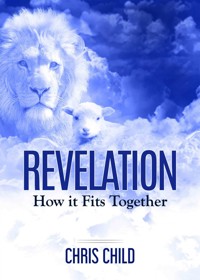
REVELATION
How It Fits Together
CHRIS CHILD
Copyright © 2023 by Chris Child
All rights reserved.
This book or any portion thereof may not be reproduced or used in any manner whatsoever without the express written permission of the publisher except for the use of brief quotations in a book review. Published in the United Kingdom.
TABLE OF CONTENTS
Introduction
Chapter One
Chapter Two
Chapter Three
Chapter Four
Chapter Five
Chapter Six
Chapter Seven
Chapter Eight
Chapter Nine
Chapter Ten
Conclusion
Introduction
The goal of this book is to give a clear and fresh perspective on how the Book of Revelation fits together. With any book, one should move through the material step by step to grasp the whole. I believe it is the same with the Bible. It is the unfolding of a real story. This means that each part builds on the previous part, systematically creating a picture that fits together. Therefore, the Book of Revelation is built on a foundation. It is not an isolated unit; it can only be understood as it is set in the context of the whole Bible. This book clearly has its roots in the Book of Genesis, with hints of the Second Coming in 1 & 2 Samuel. Also, there are further detailed references to it in Isaiah, Ezekiel, and Psalms, with another pointer in Job.
This theme appears again in the Minor Prophets, with a gathering together of the different streams concerning the Second Coming of the King in the Book of Zechariah. Zechariah then forms the foundation for studying Daniel, which in the Hebrew Bible comes after Zechariah. All this carefully gathered material becomes the foundation for Matthew 24, one of the most essential teachings on the Second Coming in the New Testament. Mark and Lukefurther enhance the teachings of Matthew’s gospel. We can then add the different passages on the Second Coming in the New Testament letters to Matthew 24. In this way, one can piece together the different parts of the picture and build a clear view that provides the key to unlocking the Book of Revelation. In other words, Matthew 24 (founded on the first half of the Bible) and specific passages from the New Testament letters form a vital map to guide one through the Book of Revelation.
Using this map, we will carefully work through Revelation, seeking to build step by step and connect a picture of what will happen in the future. The idea is to let the text speak for itself rather than develop theories of what it might mean based on the principle that Scripture is self-interpreting. In other words, all the answers we need to effectively understand the Bible are to be found within the Bible itself. This means that often, we will connect back to texts in other books of the Bible to support the truth we are discovering, but we will not run ahead.
One final principle of interpretation is that God often uses different prophetic pictures, but they talk about the same thing. An example of this are the dreams of Pharaoh—a dream of seven cows and another of seven heads of corn. Both dreams speak of the same event (Genesis 41:25-27), which is also true of other prophetic dreams and pictures in Daniel and Revelation.
First, a concise overview, as the main one, is at the end. Chapters 1-5 focus on the first century, except for chapter 1:7. Chapters 6-22 focus largely on the future, with some exceptions where it goes back to the birth of Jesus, the cross, and, at one point, near the beginning of creation. So, the central focus is on the future, particularly the future at the very end, leading to the new creation.
In this second section of Revelation, there are seven cycles. Each cycle finishes with the Second Coming and then goes back either to the ascension of Jesus (at one point, the birth of Jesus) or to some point after that event. Each forward and backward movement is designed to build up another layer of the picture, like a 3D printer. The final cycle finishes in chapter 19, and then the book sets a path leading to the goal of a new creation. Amid these cycles are two strategically placed interludes (chapters 7:1-17, 10:1-11:14) meant to give us vital information that will help us understand the big picture that is slowly emerging.
Now armed with this information, let’s go through the Book of Revelation step by step so that readers can easily check whether what is being said is indeed true. So, side by side with this book, you will need to read the Book of Revelation and other relevant passages.
CHAPTER ONE
R
evelation chapter 1:1-3. Revelation means unveiling or the removal of a curtain to show something that was previously hidden. Jesus received this revelation from the Father and has now sent an angel to show it to John. So, John was a witness to what God and Jesus said. Verse 3 says there is a blessing to those who read this book and obey its instructions because the time for its fulfilment is near. Hence, we need to be ready. It has now been almost two thousand years since this statement was made, so God clearly has a different perspective on time. This is also reflected in I John 2:18, where it tells us we are in the 'last hour', and the ‘last days’ is also mentioned in Acts 2:17. This view combines a sense of urgency with a need for patience, as things do not happen as fast as we think they should.
Verse 1 also informs us that this book is about 'things which must shortly take place'. This does not mean that Revelation is only about the future. We have already learnt that it deals with events concerning the 1st century. It also refers to the past as it refers to the fall of Satan and the birth of Christ in the second half of the book. It goes back to the past to enhance our understanding of the future. V4 says the Book of Revelation was written to the seven churches in Asia, now known as Turkey. Greetings are sent from God, the seven Spirits (The Holy Spirit), and Jesus Christ. In v5-6, Jesus is identified as the faithful witness, the firstborn from the dead, and the ruler of the kings of the earth.
This Jesus is the one who washed us from our sins in His own blood and made us kings and priests to His Father. Take note of these five key things. Then v7 goes straight into the Second Coming, giving four key points about this event, three of which have already been mentioned in Matthew 24. He will come with clouds, every eye will see Him, and all the tribes of the earth will mourn, but v7 adds that those that pierced Him will also see Him.
The Lord is the Alpha and Omega—the beginning and the end—and repeats what was said in verse 4, “Who is and who was and who is to come”. In v10-11, John hears a loud voice behind him, and it says, “I am Alpha and Omega, the first and the last”, and he turns to see who is speaking with him. Jesus has amazing ways of getting our attention. In v12-13, the first thing he sees are seven golden lampstands and then "one like the Son of Man". He is the same as the Lord as he too is Alpha and Omega, confirming His deity. At the very beginning, we clearly see that Jesus is God, and then we get a more detailed view of this Jesus. Now, what does He look like? V14-16—His hair is white like wool, His eyes like a flame of fire, His feet like fine brass burning in a furnace, and His voice sounds like many waters. In His mouth is a sharp two-edged sword. He has seven stars in His right hand, and His face is like the sun (seven things in all).
Now, carefully note the description above. It greatly reflects what Ezekiel 1:26-27, 8:2, Daniel 7:9, and 10:5-7 said. All this will reappear as we go through the Book of Revelation. John’s response is not to hug Jesus but to fall at His feet as dead, just like Ezekiel and Daniel testify that His burning appearance is overwhelming. He is standing before an infinite being, the creator of the universe!! Jesus repeats, “I am the first and the last, I am He who lives, and was dead, and behold, I am alive forever more and have the keys of Hades and death” (v17-18). It is so important that we clearly grasp who this Jesus really is before we get into this book.
When someone talks about ‘Jesus’, we need to ask the crucial question: which ‘Jesus’ are we talking about? Just because ‘Jesus’ is at the centre does not validate a theology. There are many Jesuses (2 Corinthians 11:4), so we need to make sure we are talking about the Jesus of the Bible and be clear as to what makes this Jesus distinct from all the other Jesuses. This Jesus of the Bible is not a ‘cosmic Christ’ or ‘New Age’ Christ. He has nothing to do with the ‘Christ consciousness’ that has become increasingly spoken of today. This Jesus has clearly declared to John who He is by word and visible revelation, and now, He has a message for the seven churches. These seven churches are symbolised by the lampstand—seven lamps joined together as they are connected to the main stand, which is Jesus. So, it is the Jesus of the Bible that joins true believers together. The focus is not on the connection to each other but on the connection to Jesus. A proper connection to the true Jesus leads to a true connection with each other without trying to create it.
Now, I do not want to focus on the seven churches except to say that judgement usually begins with the house of God and that this part of Revelation focused on the present first-century events. It is important to remember that Jesus speaks directly to His churches in Asia. What Jesus says to these seven churches provides lessons for believers in all succeeding generations. Before we can be ready for the end, all that is coming, and the return of the King, we need to be purified in the same way these churches needed purification. Please note that each church revealed a different aspect of Jesus and received a different reward for obedience. This is because they have different functions and different gifting. There is a pattern about five of the churches, with an absence of any encouragement for the church in Laodicea.
First, there is a focus on what is good, then correction, and a call to repentance(this Jesus calls for repentance). Also, there is a warning if there is no repentance. There is also a promise about the reward for obedience—they will be allowed to eat from the tree of life. They will not be hurt by the second death and will be able to eat of the hidden manna. They will also be given a white stone with a new name that nobody else knows. Jesus will give them power over the nations and the morning star (which is Jesus Himself), a white garment, and He will speak of you before the Father and His angels. Finally, He will make you a pillar in His temple and write on you the name of God, the name of the New Jerusalem, and the new name of Jesus. We see the heart of Jesus longing to bring restoration to His churches through repentance and give rewards as well, but we will see that things are different for those who do not repent.
Chapter 4:1-5. John sees an open door in heaven (John did not open it; God did), and he is taken up in the Spirit and stands before God’s throne. In verse 2, please note that John did not bring himself into the Spirit through a technique. This special experience that God Himself brought about is distinct from the walking in the Spirit mentioned in the New Testament letters. Every true believer is in the Spirit. They do not need to get into the Spirit, as Jesus put them there through the new birth. What is being spoken of here is a special experience given unexpectedly to pass on revelation to the Body of Christ on earth. These experiences could include trances, being caught up to the third heaven, dreams, and visions, all mentioned in the Bible. But these experiences occurred as believers got on with their ordinary lives. They did not look for or plan for them. Instead, they were sovereign interventions of God and did not occur regularly.
Now, back to the main theme: v3-5—the one who sat on the throne had the appearance of precious stones, and a rainbow formed a circle around the throne. The 24 elders were also seated and encircling the throne, and seven blazing lamps were before the throne. The seven lamps are a picture of the Holy Spirit. We know this from Zechariah chapter 4:2 and v10. The Holy Spirit is the lamp of God in heaven, and the Church is the lamp of God on earth. A sea of what looked like glass stretched out before the throne. This sea of glass will come up again. V6-9 shows us a description of the ‘living creatures’ that we also see in Ezekiel. The whole chapter focuses on this throne and the one sitting on it, as it is the headquarters of the universe, and everything that Revelation speaks of is being directed from this place. This is nothing less than the very centre of the book.
Chapter 5




