


Erhalten Sie Zugang zu diesem und mehr als 300000 Büchern ab EUR 5,99 monatlich.
- Herausgeber: Paraclete Press
- Kategorie: Poesie und Drama
- Sprache: Englisch
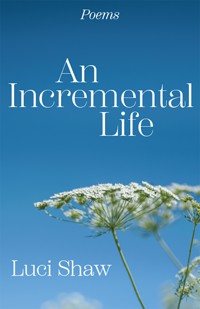
From the pen of beloved poet Luci Shaw comes a new collection that celebrates inspired creativity as an antidote to chaos. The poet's own words best describe the heart of this pinnacle collection of new work by beloved writer Luci Shaw: Entropy: A measure of the molecular disorder, or randomness, of a system, its lack of order or predictability, resulting in a gradual decline into disorder. Our universe, and the systems within it, constantly shift from their created states of order towards disorder, or chaos. The second law of thermodynamics asserts that entropy, or disorder, always increases with time. Creative human activities such as art, architecture, music, story or film are human efforts to halt and reverse this loss of meaning. Thus, smaller systems, like individual poems, become highly ordered as they receive energy from outside themselves, from the poet. They reverse entropy because they are moving from a state of disorder (all the random ideas, words and phrases available to the writer) into an orderly form designed by the writer to create meaningful images and concepts in the reader's mind (which is where the word "imag-ination" comes from.) This transfer of images, concepts and ideas into the mind of a reader is the task of poetry and the calling of the poet. Just as a composer of music gathers rhythms, notes, melodies, or harmony, organizing them into fugues or sonatas or concertos, so poets work and write to discover ways of arranging their responses to the world in words that introduce meaning and beauty in the mind of the reader. Which is what I've been trying to do for most of my life.
Sie lesen das E-Book in den Legimi-Apps auf:
Seitenzahl: 70
Veröffentlichungsjahr: 2024
Das E-Book (TTS) können Sie hören im Abo „Legimi Premium” in Legimi-Apps auf:
Ähnliche













Reversing Entropy
Poems
Luci Shaw
2024 First Printing
Reversing Entropy: Poems
Copyright © 2024 by Luci Shaw
ISBN 978-1-64060-870-2
The Iron Pen name and logo are trademarks of Paraclete Press.
Library of Congress Cataloging-in-Publication Data
Names: Shaw, Luci, author.
Title: Reversing entropy : poems / Luci Shaw.
Description: Brewster, Massachusetts : Iron Pen/Paraclete Press, [2024] | Summary: “Poems that are created in the face of entropy, because the Earth is so very beautiful and to be celebrated”— Provided by publisher.
Identifiers: LCCN 2023024898 (print) | LCCN 2023024899 (ebook) | ISBN 9781640608702 (trade paperback) | ISBN 9781640608719 (epub) | ISBN 9781640608726 (pdf)
Subjects: LCGFT: Poetry.
Classification: LCC PS3569.H384 R48 2024 (print) | LCC PS3569.H384 (ebook) | DDC 892.8--dc23/eng/20230526
LC record available at https://lccn.loc.gov/2023024898
LC ebook record available at https://lccn.loc.gov/2023024899
10 9 8 7 6 5 4 3 2 1
All rights reserved. No portion of this book may be reproduced, stored in an electronic retrieval system, or transmitted in any form or by any means—electronic, mechanical, photocopy, recording, or any other—except for brief quotations in printed reviews, without the prior permission of the publisher.
Published by Paraclete Press
Brewster, Massachusetts
www.paracletepress.com
Printed in the United States of America
My profound gratitude goes to
Karen Cooper,
who understands my undisciplined methods
of creation and composition,
cuts to the heart of a metaphor,
or helps me to clean up a disorderly line of verse.
Prologue
Reversing Entropy
(Definition and Description)
Entropy: A measure of the molecular disorder, or randomness, of a system, its lack of order or predictability, resulting in a gradual decline into disorder.
Our universe, and the systems within it, constantly shift from their created states of order towards disorder, or chaos. The second law of thermodynamics asserts that entropy, or disorder, always increases with time. Creative human activities such as art, architecture, music, story, or film are human efforts to halt and reverse this loss of meaning. Thus, smaller systems, like individual poems, become highly ordered as they receive energy from outside themselves, from the poet. They reverse entropy because they are moving from a state of disorder (all the random ideas, words, and phrases available to the writer) into an orderly form designed by the writer to create meaningful images and concepts in the reader’s mind (which is where the word “imag-ination” comes from.) This transfer of images, concepts, and ideas into the mind of a reader is the task of poetry and the calling of the poet. Just as a composer of music gathers rhythms, notes, melodies, or harmony, organizing them into fugues or sonatas or concertos, so poets work and write to discover ways of arranging their responses to the world in words that introduce meaning and beauty in the mind of the reader.
Which is what I’ve been trying to do for most of my life.
Foreword
by Paula Huston
Now 95, Luci Shaw has been and still is a powerful exemplar for countless younger people. Her wisdom has been hard-earned through unflinching attention to life’s challenges and insights, and in this latest collection, Reversing Entropy, she takes one of humanity’s unchanging questions, how and why do we go on creating art, knowing that dissolution and mortality are inevitable.
One compelling reason is that the earth, and all its creatures, is so incontrovertibly beautiful. A passionate lover of nature—herons, tulips, beach pebbles—she celebrates but never romanticizes the geological and biological miracles that surround her.
Like Mary Oliver she is a keen observer and recorder of nature, seeking the perfect handfuls of words to convey what she sees. In one poem, for example, she speaks of “a minor startle of white lilies rising from the valley of their green leaves.” In another, she captures the effect of wind on water: “Under a brief breeze, the little lake shivers.” Without anthropomorphizing she acknowledges our powerful human connection with water, stone, and sky: “How oceans love the generous energies of storms that surge them into frothy delirium.”
Another reason we create in the face of entropy, she believes, is because we can preserve with words what is otherwise ephemeral. Like Keats, she understands that there’s a poignant undertone to our delight in the loveliness of dew-covered grasses. In fact, our response is actually heightened by the fact that this beauty is fleeting. As she points out in one poem, “love and living move away, diminish. A breaking wave sweeps and cleanses the beach.” Our mortality urges us to take delight in whatever of beauty and meaning we can find, wherever we can find it. Sometimes what is achingly beautiful manifests and disappears within seconds: “The sky in the east breaks open, the fervent color of a pomegranate.” At other times we stand stunned in the face of beauty’s dissolution: “the chill of loss extends to the tips of the fingers. Sorrow’s breathing is a gulp of dark air with a hint of smoke.”
According to Luci, we continue to create in the face of entropy because, in spite of the reality of death, the earth is so very beautiful, and because this gift of delight in loveliness is ephemeral, to be celebrated while we have it.
Writing about it can become a way to preserve and cherish that fragile, mutable loveliness. How we do this requires what Simone Weil calls the spiritual discipline of “attention”—a reverent, ego-less gaze upon that which simply is. Luci uses Weil’s term in one of her poems, “Days like this, when the light is right, its glints dilate the pupil of my attention, I drink in the brightness like lemonade.” In other poems she attends to the smallest details: “… last night’s rain glitters in the drainage ditch roadside, a river of mirrors—a map of light.” And tulips “… thrust up their fierce, purple beaks.”
What happens when we attend to experience this way? Like the author of the fourteenth-century mystical treatise The Cloud of Unknowing, Luci intuits that what we experience in nature is meant to point us beyond—that there is a “world behind the world” to which we have brief access. Her poetry is thus often sacramental; what we see and touch are outward and visible signs of deeper realities. Sometimes she simply says this out loud: “a mist drifts like a spirit over the lake at evening.” Elsewhere she is more indirect: “with what calm and gentle grace last night’s fresh poem of snow was laid across the land.” On still other occasions, she boldly knocks at the door between the two worlds, asking to be let in. “Below, we listen deep, praying to be some drop in some wave, urged on by the strong winds of the Weather-Maker.”
What a felicitous gift Reversing Entropy turns out to be. May it bless others as it has already blessed me.
Paula Huston
Big Sur, September 20, 2022
CONTENTS
Prologue: Reversing Entropy
Foreword by Paula Huston
I
MY BRIGHT, PARTICULAR STAR
My Bright, Particular Star
Bird Words
Whisper
Lilies of the Valley
Moving the Dogwood
Scarlet
Just Add Water
Breeze
The Dance of the Lichens
Exuberance, Mt. Baker National Forest
Driving Through the Season
Crossing the Cascades
Look Up
Lake Light
The Apricot Tree
Waiting for the Ferry 1
Waiting for the Ferry 2
New Leaf Restaurant
Creek-side
Whale
In the Mist
Gingko Leaves
One Leaf, November
The Star in the Kitchen Window
How Lucky
Saturday Afternoon, Waiting for the Mail
Knitting in the Wild
In a Field
Above Taos Gorge
Universe
II
WEATHERING
Cicada Night
Fresh
Waiting for Words
How It Happens
Stones
Sudden
Laundry List
Woman in Blue
New Poem
So Much Depends
Sequoia
Weathering
December
III
THE FALL TO EARTH
Mary and the Angel
The Hope of Glory
Snow




