


Erhalten Sie Zugang zu diesem und mehr als 300000 Büchern ab EUR 5,99 monatlich.
- Herausgeber: Polygon
- Kategorie: Poesie und Drama
- Sprache: Englisch
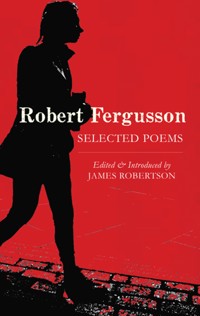
Originally published in 2000 by Polygon to mark the 250th anniversary of Fergusson's birth, this new edition contains all Fergusson's finest poems in both Scots and English, and features a new introductory essay, revised orthography, a substantial section of notes and a glossary. Acknowledged as a crucial influence on Burns, Robert Fergusson was a remarkable poet in his own right. All his work was produced during a few brief years, delighting readers with its vigour and power. Although he wrote much verse in the then fashionable style of Augustan English, it is his Scots verse which, in its great warmth, humanity, satire, and hilarious comedy, is his enduring legacy. His work covers the whole gamut of human emotions and experience and his subject matter ranges from drunken encounters with the notorious City Guard to quieter reflections on pastoral themes. Fergusson died in 1774 at the age of only 24.
Sie lesen das E-Book in den Legimi-Apps auf:
Seitenzahl: 265
Veröffentlichungsjahr: 2015
Das E-Book (TTS) können Sie hören im Abo „Legimi Premium” in Legimi-Apps auf:
Ähnliche














ROBERT FERGUSSON
Selected Poems
First published in Great Britain in 2000 by Birlinn Ltd.
This edition published in 2007 by Polygon, an imprint of Birlinn Ltd
West Newington House
10 Newington Road
Edinburgh
EH9 1QS
9 8 7 6 5 4 3 2 1
www.birlinn.co.uk
Introduction copyright © James Robertson, 2007
All rights reserved.
No part of this publication may be reproduced, stored, or transmitted in any form, or by any means, electronic, mechanical or photocopying, recording or otherwise, without the express written permission of the publisher.
ISBN 10: 1 84697 035 0
ISBN 13: 978 1 84697 035 1
eISBN 13: 978 0 85790 886 5
British Library Cataloguing-in-Publication Data
A catalogue record for this book is available on request from the British Library
The publisher acknowledges subsidy from
towards the publication of this volume.
Typesetting by Textural, Dundee
Printed and bound by Bell & Bain Ltd, Glasgow
CONTENTS
Acknowledgements
Introduction
A Note on the Text
Notes on the Illustrations
The Poems (in the order in which they were written)
Elegy, on the Death of Mr David Gregory, Late Professor of Mathematics in the University of St Andrews
The Daft-Days
Elegy, on the Death of Scots Music
The King’s Birth-Day in Edinburgh
Caller Oysters
Epistles Between J.S. and Robert Fergusson
To Mr Robert Fergusson*
Answer to Mr J.S.’s Epistle
Braid Claith
An Eclogue, to the Memory of Dr William Wilkie, Late Professor of Natural Philosophy in the University of St Andrews
An Eclogue
Hallow-Fair
The Lee-Rigg
To the Tron-Kirk Bell
Caller Water
Auld Reikie
Mutual Complaint of Plainstanes and Causey, in their Mother-tongue
The Rising of the Session
Ode to the Bee
The Farmer’s Ingle
The Ghaists: A Kirk-yard Eclogue
Epistles Between Andrew Gray and Robert Fergusson
To R. Fergusson*
To Andrew Gray
On Seeing a Butterfly in the Street
Hame Content: A Satire
Leith Races
Ode to the Gowdspink
To the Principal and Professors of the University of St Andrews, on their Superb Treat to Dr Samuel Johnson
The Election
Elegy on John Hogg, Late Porter to the University of St Andrews
Dumfries
The Sitting of the Session
A Drink Eclogue: Landlady, Brandy and Whisky
To My Auld Breeks
Rob. Fergusson’s Last Will†
Horace, Ode XI. Lib I
The Author’s Life†
On Night†
Job, Chapter III, Paraphrased†
Glossary
* Poems addressed to Fergusson
† Poems in English
Acknowledgements
In preparing this new edition (first published in 2000, revised in 2007) my biggest debt is to the scholars who have worked on Robert Fergusson previously. A brief bibliography of books consulted is given at the end of the Introduction, but my researches have extended far beyond those titles. The two-volume Scottish Text Society edition prepared by Matthew P. McDiarmid in the 1950s remains the most comprehensive and authoritative source of information on both poet and poems. Any modern selection of Fergusson’s work must take McDiarmid as its starting-point, and this one is no exception.
As part of the celebrations in 2000 of the 250th anniversary of Fergusson’s birth, the St Andrews Scottish Studies Institute at the University of St Andrews organised a series of seminars under the general title ‘Heaven-Taught Fergusson’. Useful information and ideas were gained from the talks given by Dr Matthew Simpson on Fergusson and St Andrews student culture, and by Andrew Macintosh on Fergusson and Robert Garioch, and also from discussions with Professor Robert Crawford.
Others to whom I am grateful for help, advice and information include Billy Kay, Annie Matheson, Alan Lawson, Liz Short and Hugh Andrew.
James Robertson
Newtyle, February 2007
Introduction
There is no escaping the tragedy of Robert Fergusson. Scotland has had its share of writers who died far too young: Robert Burns, of course, dead at thirty-seven; Robert Louis Stevenson at forty-four; Lewis Grassic Gibbon at thirty-four; George Douglas Brown, author of The House with the Green Shutters, at thirty-three; John MacDougall Hay, who wrote Gillespie, at thirty-eight; the novelist Mary Brunton at forty; Fergusson’s contemporary the poet Michael Bruce, killed by tuberculosis aged just twenty-one. But the loss of Fergusson at twenty-four seems somehow the most terrible of all. The bleakness of his last months – his descent into mental illness and destitution in the Edinburgh Bedlam – stands in such contrast to the brilliance of the previous two years, when his genius bloomed in a remarkable series of poems, that it almost obscures his achievement.
Certainly it is not difficult to see, in some of Fergusson’s lines and phrases, indications of what was to befall him. The riotous humour, the outrageous rhymes and cutting observation of his celebrations of Edinburgh life, are tempered by an awareness of human frailty and transience; “poortith” and sorrow are never far to seek, and behind every joyous drunken scene in inn or oyster-tavern lies a fear of “that dowie dismal house, the grave” (‘Ode to the Bee’). Then, too, given the richness of his output in so short a life, it is natural to speculate on what might have been, had he lived only another twelve or fifteen years. Might he have written more for his first love, the theatre? Would he have completed his long work ‘Auld Reikie’? At the very least, we may assume he would have met Burns, who would undoubtedly have sought out his “elder brother in the Muse” on arrival in Edinburgh in 1786. What might have resulted from that encounter? In the end, though, we are left with Fergusson’s crowning glory, the thirty-odd poems he composed in Scots, and it is for these, above all, that he deserves to be remembered.
Early Life
Robert Fergusson was born in Edinburgh on 5th September 1750 in Cap-and-Feather Close, which ran up to the High Street from the north side, opposite but slightly above Niddry’s Wynd (now Niddry Street). The close was demolished in the poet’s own lifetime to make way for construction of the North Bridge (1765–72). His parents were both from Aberdeenshire, and had settled in the capital only two years previously. William Fergusson was born in 1713 or 1714, and grew up in the parish of Tarland. In 1740 or 1741 he married Elizabeth Forbes, who was born in 1714. She was the daughter of a gentleman, John Forbes of Templeton, in the parish of Kildrummie. Before moving south, William and Elizabeth had three children, Hary (born 1742), Barbara (born 1744) and John (born 1746, who died in infancy).
Little is known of William Fergusson’s family background, which was humble compared with that of Elizabeth Forbes. It appears that he had moved to the city of Aberdeen for work, but some event, perhaps the death of his employer there, induced him to come to Edinburgh, where he worked as a clerk for various businesses. He lacked contacts, and the jobs he found were poorly paid and insecure: it was a struggle to keep his family even in basic necessities, especially after the birth, in 1753, of another daughter, Margaret. Nevertheless, he and his wife were aware of the advantages which education, in the absence of social influence, might give their children: a surviving letter shows that in 1751, when the family’s total annual income was less than £20, they managed to put £1 15s towards school fees.1
In 1756 William became clerk to Walter Fergusson, Writer to the Signet, a post he held for some six years. William may himself have had some literary talent, as he apparently wrote verses as a young man, but it was Elizabeth who taught young Rob, as he was known, to read. The boy was not strong, and perhaps for this reason attended, aged seven, a private school in Niddry’s Wynd, rather than the rowdier and more demanding High School; but the following year, presumably fitter, he did enrol at the High School. Even prior to this he was, according to his sister Barbara, fond of reading the Bible, and she told a story which indicates his impressionable nature: “One day he came running into his mother’s chamber all bathed in tears, calling to her in the most earnest manner imaginable to whip him. The good woman alarmed at this unusual behaviour of her boy, enquired the cause, when he told her with all the simplicity of innocence, ‘O mother! he that spareth the rod, hateth his child.’”2
Robert had four years at the High School, although his attendance was intermittent due to recurring ill health. Elementary Latin was the staple educational diet, and he would have gone on to read Virgil, Horace, Sallust and Livy. But when he was eleven, he was awarded (probably thanks to an approach by his mother’s elder brother John Forbes, who was by now a well-to-do farmer and factor to various landowners around Old Meldrum) a “mortification” or bursary which would take him away from Edinburgh. This bursary had been instituted in 1695 by David Fergusson, a minister of Angus, for the maintenance and education of two poor children bearing the Fergusson surname, at the Grammar School of Dundee. If Robert made good progress, at the age of fourteen the bursary could be extended for four years at the University of St Andrews.
The family’s financial situation also improved. In 1763 William Fergusson became managing clerk in the linen department of the British Linen Company (soon to become exclusively a bank, the British Linen Bank) in the Canongate. Meanwhile Robert’s brother Hary had been apprenticed to a trade, and in 1764 Barbara married. Within a couple of years the family would leave Cap-and-Feather Close and set up house in Warriston’s Close, opposite St Giles.
Dundee Grammar School had at least as good a reputation as the High School of Edinburgh, with a seven-year curriculum (although Fergusson, arriving at eleven, would be there for only two years). Almost nothing is known of his time at Dundee, but in due course he applied to the trustees of the Fergusson bursary to continue his studies at St Andrews, and in December 1764 his application was approved.
Shortly before this, in August, Robert and his mother travelled, mostly on foot, to his uncle John Forbes’s farm at Roundlichnot, near Old Meldrum. They spent the month there, and a letter sent by William to his wife reminds us that the thirteen-year-old boy was still not considered very strong: “It gives me no small satisfaction to find you have had so agreeable a meeting with your brother and sisters, and that Rob has held out the journey.”3 The next time Robert went to Old Meldrum, the visit would not end so happily.
St Andrews
On 9th December 1764, Robert took up residence at Scotland’s oldest university. St Andrews had then a population of about 2,000, but in most respects the town had seen better days. Fergusson’s editor and biographer Alexander Grosart describes it as a “sleepy and sordid” place in which “only ale-houses abounded”.4 Thomas Pennant, visiting in 1772, would deplore the fact that “the manufactures this city might in former times possess, are now reduced to one, that of golf balls; which, trifling as it may seem, maintains several people. The trade is commonly fatal to the artists, for the balls are made by stuffing a great quantity of feathers into a leather case, by help of an iron rod, with a wooden handle, pressed against the breast, which seldom fails to bring on a consumption.”5 The town had long ceased to be the centre of Scottish ecclesiastical life, and its university had no great reputation. Attended by barely a hundred students, it was expensive (for non-bursars) and both materially and intellectually crumbling. After his visit in 1773 Dr Samuel Johnson would lament its condition: “Had the university been destroyed two centuries ago, we would not have regretted it; but to see it pining in decay and struggling for life, fills the mind with mournful images and ineffectual wishes.”6
The most prestigious name on the academic staff was that of William Wilkie, Professor of Natural Philosophy, but, even though his poems such as the Epigoniad (1768) had led David Hume to describe him as “the Scottish Homer”, Wilkie’s reputation hardly compared with that of Hume, Adam Smith in Glasgow or the various intellectual heavyweights of Edinburgh University. However, his eccentricity, his kindness and his literary interests (apart from his Homeric efforts he wrote animal fables, the best of which, ‘The Hare and the Partan’, is in Scots) together made him a kind of mentor to the young Fergusson.
Greek, Latin, Mathematics, Logic, Moral Philosophy and Natural Philosophy were all part of the curriculum. Robert seems to have excelled at mathematics, and been at least competent in the classics, although “Virgil and Horace were the only Latin authors he would ever look at while he was at the University”, the younger Thomas Ruddiman reported.7 College life for bursars was austere – they received poorer food and had to perform more duties than their fee-paying fellow students, although they were compensated with “an extremely generous daily and nightly allowance of ale”8 – but Fergusson prospered in at least one department: he had a gift for writing witty verse. His friend Thomas Sommers later claimed that “at this time his poetical talents were beginning to appear… Every day produced something new, the offspring of his fertile pen, which was frequently employed in satyrizing the foibles of the professors, and of his fellow students”.9 “Every day” may be an exaggeration, and only one of these pieces survives, but it certainly gives an indication of his precocious ability.
The ‘Elegy, on the Death of Mr David Gregory, late Professor of Mathematics in the University of St Andrews’ was probably composed in the spring of 1765, just after Gregory’s death and when Fergusson was only fourteen. Fergusson reworked an established form, the mock-heroic elegy using the “Standard Habbie” stanza (so named by Allan Ramsay when he adopted it from Robert Sempill’s ‘The Life and Death of the Piper of Kilbarchan, or the Epitaph of Habbie Simson’), but by applying it to a “respectable” subject, rather than to a piper, greyhound, horse or innkeeper, he was doing something new. There is, one feels, genuine respect (from a poet who had never been taught by the Professor) in his catalogue of Gregory’s skills in algebra and architecture, and even warmth in noting his “eident care” and efforts at breaking up games of football, but every item of praise is balanced by the reductive and thumping refrain, “But now he’s deid”. If this early effort proved nothing else, it showed that Fergusson had a natural ability to use Scots creatively, to exploit both its comic potential and its economy of expression, as in the line “A ganging point compos’d a line”.
If Fergusson’s sense of humour and enjoyment of a drink made him popular with other students (though not with all of them – graffiti scribbled in the margins of university library books of the period refer to Fergusson as a “stinking fairy” and a “snake in human form”, “sprung from a dung-hill” whom God would “damn eternally”10), relations with the professors were sometimes less cordial. In March 1768, it was the intention of the fearsome Principal Thomas Tullidelph, the “Pauly Tam” of the ‘Elegy on John Hogg’, to “extrude” (that is, expel) Fergusson for his participation in a student “riot” – a doubtless high-spirited battle between the winners and losers of an essay-writing competition. More seriously, Robert had also “wantonly given up John Adamson’s name to be prayed for”. The story behind this second incident is worth retelling:
He was considered the best singer at the university; of consequence, he was oftener than he inclined, requested to officiate as clerk at morning and evening prayers. In order to get quit of this drudgery, he meditated the following scheme. It is usual, according to the Scottish mode of Presbyterian worship, to mention the names of persons, who are recommended in prayer; our poet, who, as usual, was in the precenter’s desk, rose up with great composure, and with an audible voice, as if reading from a paper he held in his hand, said “Remember in prayer a young man [John Adamson], (who was in the hall at the very instant) who, from the sudden effects of inebriety, there appears but small hope of recovery.” This, as might be expected, threw the whole students into a sudden fit of laughter. The professors wist not what to do, and the assembly broke up, and dismissed in peals of convulsive merriment.11
Professor Wilkie intervened to dissuade Tullidelph from expelling Fergusson, who would be leaving the University very soon anyway. Wilkie had befriended the student, and employed him over the summer months in writing out fair copies of his lectures. Robert spent days at the Professor’s farm, an experience which would later provide him with the pastoral setting for his ‘Eclogue’ in Wilkie’s memory. Possibly Wilkie also encouraged his proposed tragedy on the death of William Wallace, of which he completed two acts (like almost all his manuscripts, since lost). For a young man of unrelenting patriotic sentiments, Wallace would have been an irresistible subject.
In May 1768, Fergusson finished his studies. He did not graduate, but this was quite common, and carried no implication of failure. He stayed on for a while to work for Wilkie, but he was also needed at home in Edinburgh. His father had died the previous year, his mother had been forced to move to cheaper lodgings in Bell’s Wynd, and his brother Hary, after running up debts in a failed attempt to run a fencing-school, had joined the Navy and was currently on a warship in Orkney. Robert’s options were limited. A profession such as the ministry, medicine or law would require further years of study, and even if the family’s financial situation had allowed, Robert had no enthusiasm for a career in any of these. The theatre and literature were what attracted him. In the immediate term, however, what he needed was a paying job, preferably one that did not take up all his available time and so might allow him to write. The only person who was in a position to exert some influence on his behalf was his uncle John Forbes.
Early in 1769 Robert went back to the Roundlichnot farm, where he stayed for six months. Accounts vary as to what caused the final falling-out between uncle and nephew, but it is not hard to see that the artistic, unconventional and physically frail eighteen-year-old would not impress the comfortably off, hard-nosed farmer and factor. Perhaps Rob’s irresolution about a career exasperated Forbes; no doubt Forbes’s stuffy social conservatism offended the poet. In any case, they argued, Fergusson left the farm, and, refusing Forbes’s attempt at reconciliation, walked back to Edinburgh. He reached home in a weakened condition, having lost any chance of help from his uncle.
By September, he was well enough to take up a post as clerk and copyist in the Commissary Records Office. He was offered this work by the Deputy Commissary Clerk, Charles Abercrombie, whose father had been minister of Tarland in Aberdeenshire, William Fergusson’s native parish. The Commissary Office was the clerical arm of the Commissary Courts, and registered all deeds and bonds in the Lothians relating to marriage, divorce, legitimacy and wills. Fergusson’s task was to transcribe these dry and repetitive documents, at a rate of pay of about a penny per page.
Much has been made by some of Fergusson’s biographers of the tedium of this clerical work, and that it must have driven an imagination like his to distraction. Certainly it was dull and poorly rewarded, but he was only just nineteen, it was his first job, and he had no reason to believe he would be doing it for the rest of his working life. As it turned out, that would indeed be the case, but how was he to know this in 1769? The position gave him an income, easing the pressure on his mother (who had taken in lodgers), it was not taxing either physically or mentally, the hours allowed a full social life, and he still had time left to make excursions into the countryside and to write poetry. Furthermore, the Commissary Office was situated in Parliament Close, at Edinburgh’s legal, commercial and social heart. His employment may have been, as Grosart observes, “miserably inferior to Fergusson’s abilities and culture”,12 but, for someone who wrote so much from observation of the characters and events around him, it could not have been better located.
Edinburgh
For hundreds of years Edinburgh had been by far the most populous and the busiest of Scottish towns, and in spite of the Union of Parliaments in 1707 it remained a major political, legal, commercial and educational centre. In 1755 the country was still overwhelmingly rural, but Edinburgh (including Leith) boasted a population of 53,000 (swelled by numerous temporary inhabitants from other parts), about double that of its nearest rival Glasgow. (By the end of the century the two cities would be roughly equal in size, with about 80,000 people each.) Most of Edinburgh’s people were crammed into the warren of closes, wynds and “lands” which stretched from Castlehill to Holyrood. Robert Chambers wrote of it as “a picturesque, odorous, inconvenient, old-fashioned town”, and described how, in spite of the drawbacks of its crowded living-quarters and dark and filthy thoroughfares, a stranger would have found it a “funny, familiar, compact, and not unlikable place”:
Gentle and semple living within the compass of a single close, or even a single stair, knew and took an interest in each other. Acquaintances might not only be formed, Pyramus-and-Thisbe fashion, through party-walls, but from window to window across alleys, narrow enough in many cases to allow of hand coming to hand, and even lip to lip. There was little elegance, but a vast amount of cheap sociality. Provokingly comical clubs, founded each upon one joke, were abundant. The ladies had tea-drinkings at the primitive hour of six, from which they cruised home under the care of a lantern-bearing, patten-shod lass; or perhaps, if a bad night, in Saunders Macalpine’s sedan-chair. Every forenoon, for several hours, the only clear space which the town presented – that around the Cross – was crowded with loungers of all rank… The jostle and huddlement was extreme everywhere. Gentlemen and ladies paraded along in the stately attire of the period; tradesmen chatted in groups, often bareheaded, at their shop-doors; caddies whisked about, bearing messages, or attending to the affairs of strangers; children filled the kennel [gutter] with their noisy sports. Add to all this, corduroyed men from Gilmerton, bawling coals or yellow sand… fishwomen crying their caller haddies from Newhaven; whimsicals and idiots going along, each with his or her crowd of listeners and tormentors; sootymen with their bags; town-guardsmen with their antique Lochaber axes; water-carriers with their dripping barrels; barbers with their hair-dressing materials; and so forth – and our stranger would have been disposed to acknowledge that, though a coarse and confused, it was a perfectly unique scene, and one which, once contemplated, was not easily to be forgotten.13
Out of this confusion emerged two things. The first was the cultural, intellectual, literary, scientific, architectural and artistic explosion known as the Enlightenment, a Europe-wide phenomenon which blossomed with amazing vigour in Scotland, and especially in Edinburgh. Here, the municipal framework linking town and university, the presence of an educated population able to sustain and develop intellectual discourse in the form of clubs, societies and publications, and a distinctively Scottish awareness of history and civic tradition which nurtured the earliest forms of social science, meant that figures like David Hume, William Robertson, Joseph Black, James Hutton and Adam Ferguson existed not in isolation, but as the brightest stars in an entire galaxy of thinkers. “Here I stand at what is called the Cross of Edinburgh,” an English visitor famously remarked, “and can, in a few minutes, take fifty men of genius and learning by the hand.”14
The second thing that grew from the old, cheek-by-jowl Edinburgh was a need to find more space for the city to expand, and with the construction of the North Bridge and the decision to build the New Town on neoclassical lines in the late 1760s that process was begun. Ironically, it would lead to the separation of “gentle” from “semple” citizens, and thus to the destruction of the very social structure which, arguably, had provided the atmosphere of mutual interest and interaction in which enlightened thought grew. However, it is undeniable that a degree of social demarcation already existed in what would become known as the Old Town, and that the wealthier elements only tolerated living conditions there because they had no choice.
Robert Fergusson’s last years coincided with this crucial moment in Edinburgh’s history. Even if he had not been a great poet, his poems would be valuable today because they show us Edinburgh life as it was shortly before the gentry decamped across the Nor’ Loch. When we read his descriptions of drinking-dens and scrapes with the City Guard, it is tempting to see him as living on the wilder fringes of society. In fact, excessive drinking and eating, riotous living and even riots (the Edinburgh Mob, long a force to be reckoned with by the authorities, was at this period frequently called out to protest a plethora of causes, often under the direction of a notorious cobbler called “General” Joe Smith) were the norm. Partly because domestic arrangements tended to be so cramped, social life revolved around public meeting-places: the law-courts, the Cross, the coffee-houses, the theatre, and, above all, the taverns. The culture which Fergusson became part of in 1769, whatever else it was, was not a salon culture.
When the famed operatic singer Giusto Ferdinando Tenducci came to Edinburgh in the summer of 1769, Robert made his acquaintance. He was already interested in the theatre and music, and had a fine singing voice himself. At performances of Thomas Arne’s opera Artaxerxes at the Theatre Royal in the Canongate, Tenducci introduced three new songs set to popular Scottish airs, with lyrics by “Mr R. Fergusson, Edinburgh”. Not only was this Robert’s debut as a public author, it was the last work performed at the theatre, which by the end of the year had been replaced by a new one in Shakespeare Square, across the North Bridge. (Fergusson would later write a burlesque poem, ‘The Canongate Playhouse in Ruins’.) Tenducci left Edinburgh in November for London, but Fergusson’s other friends included the actor William Woods, the city’s Master of Music and principal singer at St Cecilia’s Hall Cornforth Gilson, the composer John Collet, and Robert Anderson, a medical student who would later edit British Poets. Through such contacts he developed a passionate interest in the theatre, attending as many plays as he could. Through his friendship with Woods he was usually admitted free of charge.
Perhaps because theatre in Scotland was so dependent on trends set in London, his attempts at poetry tended in the same direction. On 7th February 1771 Walter Ruddiman’s Weekly Magazine published “three Pastorals, under the titles of Morning, Noon and Night, written by a young gentleman of this place, the style of which appears as natural and picturesque as that of any of the modern ones hitherto published”. Modelled on the work of William Shenstone, these, his first published verses, are quite forgettable. More followed, a mixture of imitative sentimental and burlesque pieces, published presumably because they fulfilled all the criteria of what constituted fashionable verse – exhibiting tasteful delicacy, polite humour and touching sentiment. This was the year in which Henry Mackenzie published The Man of Feeling, a novel which would take Britain and then Europe by storm, and which extolled polite sensibility as one of the highest virtues. Fergusson undoubtedly read it, as did Burns, who wore out two copies. Mackenzie, who would champion Burns as “this Heaven-taught ploughman”, praising his English poems but seeing his class, education and Scots language as fatal barriers to fame and success, later passed harsh judgment on Fergusson’s character, effectively blaming him for being a bad role-model for Burns. It is ironic, therefore, that Fergusson was temporarily lured by the cult of feeling epitomised by Mackenzie, and, as Grosart puts it, that he “missed seeing for the time…the vein that he was destined to work”.15
However, it is a mistake to think of Fergusson as being faced with a straight choice between writing in English and writing in Scots, as if these were mutually incompatible. If the model of English poets like Shenstone, John Gay and Thomas Gray was available to him, so was the example of Allan Ramsay. Ramsay (1684–1758), originally from Lanarkshire, was a wigmaker turned bookseller, poet and editor, who settled in Edinburgh, founded the Easy Club (a political and literary debating society), opened a theatre, and articulated a fiercely Jacobite cultural nationalism while managing to avoid becoming entangled in either the ’Fifteen or the ’Forty-five. In his collections The Ever Green and The Tea-Table Miscellany he republished important Scottish texts, popularising work by the Renaissance makars William Dunbar, Robert Henryson and Gavin Douglas, as well as traditional songs and ballads and more contemporary Scots verse. He also wrote his own poetry, half of it in flowery Augustan English, half in a robust Scots. Poems such as the ‘Elegy on Maggy Johnston’, the ‘Elegy on Lucky Wood in the Canongate’ and ‘Lucky Spence’s Last Advice’, celebrated the raucous life of Edinburgh taverns and brothels, often using the Standard Habbie stanza. His hugely popular work, The Gentle Shepherd, was a pastoral romance, complete with songs, which set the then fashionable idea of a rustic idyll in the countryside near Edinburgh, and utilised both a lively Scots and more formal English. Fergusson would take up most of Ramsay’s ideas and develop them, and, like him, he saw no dilemma in writing in both languages. It is not surprising that, after his first four poems in Scots were published in The Weekly Magazine, he was addressed by an admirer in a verse epistle which began, “Is Allan risen frae the deid?”
Walter Ruddiman, the publisher of The Weekly Magazine, was the nephew of Thomas Ruddiman, who had published Ramsay’s work. The Magazine, which flourished from 1768 to 1784, was a compilation of news items, essays, articles and poetry, which achieved sales in the capital and throughout Scotland of up to 3,000 an issue. When, on 2nd January 1772, Ruddiman published Fergusson’s ‘The Daft-Days’, he was introducing a startlingly fresh voice, writing in a rich Scots that had not been seen in print since Ramsay. The paper’s readers responded with delight. The ‘Elegy on the Death of Scots Music’, ‘The King’s Birth-Day in Edinburgh’, ‘Caller Oysters’, ‘Braid Claith’, ‘Hallow-Fair’ and ‘To the Tron-Kirk Bell’ followed at intervals during the rest of the year. As a series, these poems provide a noisy, colourful picture of Edinburgh, focusing in particular on its street characters and taverns: they abound with tipplers and dandies; the gentry have their wigs set alight by fireworks or are flattened by flying dead cats during street parties which are more akin to riots; oysters are recommended as a cure for “plouky noses”; and citizens the worse for drink are regularly beaten up by Highland polismen. An actor friend Frederick Guion (later an acquaintance of Burns) wasted no time in referring to Fergusson as the “laureate” of the city. Such verse may not have presented the image of a sophisticated Edinburgh which some of the literati would have preferred, but Fergusson had found, simultaneously, his métier and his milieu.




