


2,99 €
Mehr erfahren.
- Herausgeber: Judith Deborah
- Kategorie: Gesellschafts- und Liebesromane
- Sprache: Englisch
There’s everyone else in the world. And then there is you.
World-class heart surgeon Dr. Peter Sutter runs his life with the instinctive precision of a master of the universe. But when he leaves the operating room, the only living thing waiting for him is a golden retriever. Then a chance encounter with an enigmatic woman changes everything.
Exploring the depths of Rosalind's intoxicating body and captivating spirit, Peter quickly falls under her spell. Miraculously, the feeling is mutual.
But fate is waiting just around the corner. And it might be carrying a lead pipe.
Rosalind is a sensual, witty, moving story about the joy of real love, the surprise and delight of unexpected passion, and the transcendent power of human connection.
Das E-Book können Sie in Legimi-Apps oder einer beliebigen App lesen, die das folgende Format unterstützen:
Veröffentlichungsjahr: 2019
Ähnliche




















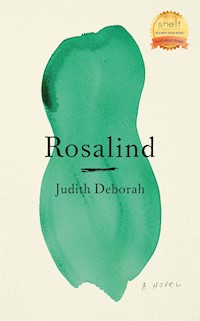
Rosalind
Judith Deborah
Plimsoll Press
In memory of my mother, Naomi Eckstein Wrubel
with boundless love
It is early morning and you have just awakened. You push yourself up into a sitting position. You shove your pillow behind the small of your back and lean against it, your head resting on the high curved headboard of the mahogany sleigh bed.
Your first wife, Laura, begged you for this bed. You and she were 26 then. And she was right; it is beautiful. A little short for you, perhaps, but all the more pleasing for that. When you are fully reclined, you are in contact with both ends of the bed, and achieve the reassuring sense of protective custody that must ease the rest of clams and turtles.
And there is more. When you turn onto your stomach and press the soles of your feet against the footboard, you are reminded of the leverage this bed has given you over the years. For all its womanly curves, this is a man’s bed: a bed designed to assist a man in enjoying his wife. A tall man, anyway.
You close your eyes. You think of your dog, Genevieve, the golden retriever puppy you gave Laura two-thirds of the way into your marriage, when you had learned the limits of your love for her but still hoped to reach her, to compensate her. Genevieve. There she is now: You hear the ticking of her nails on the wide pine floorboards as she approaches your bedroom door; you feel her smooth, soft fur under your hands as you give her the long head stroke and two-handed, behind-the-ears scratch you have given her every morning of her life since she was three months old. It occurs to you that of all the living creatures you have ever known or cared for, Genevieve is the only one you’ve truly loved. The only one except Rosalind, of course. But Rosalind is in a category all her own.
Chapter 1
My name is Peter Sutter, and I’m a doctor. This is a love story.
My name might be familiar to you, depending on the circles you run in. I’m chief of the Division of Cardiac Surgery at Westchester Memorial Hospital and Medical Center in Colville, New York, where I hold the Eleanor and Seymour Ahrens Chair in Cardiac Surgery. I pioneered the Sutter Procedure, a variant on a minimally invasive method of aortic valve repair, and have been principal investigator for a wide variety of national clinical device trials. I chaired two White House Commissions on Heart Disease and served on the National Heart Advisory Council of the NIH.
This story starts with a patient of mine, a woman named Vera Hill. Vera is a professor of contemporary art at Colville College, a small liberal arts institution about a half hour from the hospital. She was a chain smoker and, as was evident from her physique, an enthusiastic and long-term consumer of a diet of Eastern European cuisine: what my surgical mentor Melvyn Silver used to refer to as a kreplach-and-kishke case. As it turned out, Vera’s chest pain and shortness of breath were the products not of schmaltz-induced atherosclerosis but of bicuspid aortic valve disease, a congenital disorder.
Vera had just turned 60. Her mother died at 59 and her father at 62, so her birthday occasioned in her a sense of imminent doom. “I know it sounds silly, but what will I read after I’m dead?” she asked me in my consulting room.
Vera’s weight and defiantly anachronistic smoking habit made her a high-risk patient by definition, but I liked her. I booked her in and conducted her valve replacement early on a Monday morning. When I had completed the repair and it was time for Marcelo, my perfusionist, to take her off pump, I heard myself coaxing her heart to resume its beating. This isn’t all that unusual, really — I talk to hearts a lot — but this time, I asked the circulating nurse to turn down the lowbrow classical hum playing in the background, as though the quiet might make it easier for Vera’s heart to hear my voice.
The day after her procedure, after her drainage catheters and monitoring lines were removed, Vera was transferred to the cardiac recovery wing for a brief stay until her release. On the first day of that stay, while on my morning rounds, I found a woman I hadn’t met sitting by her bed.
She was a striking woman, narrowly built, with a long, straight torso: Vera’s genetic opposite. Her dark hair was pulled back into a loose, glossy ponytail at the nape of her neck, and she wore a bare minimum of makeup, or possibly none. I estimated her age somewhere in the early 40s. She wore a close-fitting, light green T-shirt, faded skinny jeans, and flat blue suede shoes, youthful clothes that wryly contradicted her rather aristocratic, womanly features. She was reading a book: How to Cook a Wolf by M.F.K. Fisher.
She was more than striking. She was beautiful, a Vermeer in jeans and a ponytail, sitting there by the window with her head bowed over her book in rapt concentration. Her shoulders were tilted on an axis about 20 degrees opposed to the angle of her hips, so that her fine long clavicles were angled slightly toward me.
She turned a page and became aware of me standing in the doorway. “Is anything wrong?” she asked, without preamble.
“No, not at all,” I said. “Are you a relative of Vera’s?”
She smiled a little, and the effect was that of a crack in an ice floe parting just enough to reveal cool waters, clear and blue and bracing and full of possibility. “I’m sorry,” she said. “I’m Rosalind Cortland. I’m a friend of hers.”
“I’m Dr.—”
“Yes, you were pointed out to me.”
I came around to her side of the bed, but she didn’t reach out to shake my hand. She did not rise from her seat. Her eyes had closed over again; the two halves of the ice floe sealed off the blue water.
I had intended, had Vera been awake, to have another glance at her incision. I decided to save it for a little while, in part because Vera was sleeping peacefully, but also because I would have had to ask Rosalind to leave the room. I turned to the screen of the workstation near the bed so I could check Vera’s outputs and vitals.
“You’ve sorted her out, then?” Rosalind asked.
I turned to her. She had rested How to Cook a Wolf on her knee, splayed open at the spine, and was looking up at me, her left hand resting on the book. I noticed she had a flat silver ring on the middle finger of that hand, a ring that contained a curious inscription, as I was later to discover.
The expression on her face was something I have seen many, many times over my years in hospital rooms: the friend or relative who is frightened for the patient but unaccountably wants to conceal it. This usually makes me a little impatient, but this time it made me warm to Rosalind. There was the hint of a tremulousness to her that softened her sharp edges just a little.
I walked Rosalind through Vera’s case: a Dick and Jane version of what was wrong with Vera’s heart and what I had done to fix it, with a quick explanation of what she should experience as she recovered and how long her recovery should take. Rosalind nodded soberly throughout. Visitors sometimes pepper me with questions, demanding details, showing off the fruits of their Google searches, but Rosalind stayed silent until I finished.
“I’ll just sit with her a little longer,” she said, and picked up her book. She bent her head, dismissing me. I continued on my rounds.
Three-quarters of an hour later, I was behind the wheel of my car following Rosalind in her apple-green Mazda.
I can’t explain what I thought I was doing. I had ducked out of the hospital to return home briefly (I live ten minutes away) and retrieve a battered interoffice envelope tied with red string from my dining room table. It was full of research notes requiring transcription by Grace, my secretary, and I was planning on reviewing some of them ahead of a meeting scheduled later in the day with Estes Ollevecchio, the Surgeon-in-Chief.
As I started up the Audi in the hospital lot, I spotted Rosalind getting into her car. An elegant, structured black purse was slung over her right shoulder, and she was carrying How to Cook a Wolf in the crook of her left arm. She unlocked the Mazda, tossed the purse and book onto the passenger seat, got in, and backed out of her space.
I watched her make her way into the line of cars slowly moving through the exit gate. I was in position to slip into line behind her, but didn’t. I allowed another car to get between us, then got into the line.
Rosalind turned left. I was already signaling right, which is how I get home.
I turned left.
I’d never followed anyone before, and had no idea why I was doing it now. It did not occur to me that I would probably see Rosalind again during visiting hours the next day or the day after and could easily talk to her then, which would have been a much easier, not to say saner, way of approaching her. I was not even sure I wanted to approach her. I just wanted to look at her.
Rosalind drove out of the hospital parking lot and into town, eventually pulling into the Colville Ridge Shopping Center, a small strip mall. I slipped into a space on the street while she parked in the lot and watched her emerge from her car.
She had a beautiful, long-limbed, straight-backed gait. Unlike the handful of people she passed, all of whom were staring down into the phones in their hands, her head was erect, swiveling back and forth in even passes like a laser sweep. I sank a little deeper into my seat.
She strode past the storefronts, pausing briefly at a display in the window of the Ticonderoga Books Café and then waving at someone inside the dank cavern of Manny’s Auto Body. When she reached the end of the strip, she went into Fred Wrigley’s, an old, reliably mediocre bakery that’s been under the same family’s management since the Carter administration and into whose founding patriarch I had implanted a cardioverter defibrillator early in the last decade. She came out a few minutes later with a covered cup of something hot in one hand and a gigantic muffin in the other. She took large, graceless bites, sprinkling crumbs in her wake, as she trotted back to her car.
Rosalind’s key ring was looped onto the middle finger of her left hand, the finger with the silver ring. She flipped the keys into her palm, pressed the remote to unlock the car, got in, and left the lot. I eased into traffic behind her, again allowing a single car between us.
Next, she pulled into the farmers’ market on Route 1, the long road that runs down the center of Colville and stretches northward through the countryside for a few miles on its way toward the Hutchinson River Parkway. This was awkward. I couldn’t follow her onto the dirt patch the market uses for parking without being spotted, and there was no street parking where I could wait for her. I took a gamble and continued on past the market, then took the next right into Oak Haven, a posh, wooded residential district. I took two more rights and circled back, returning to the market about five minutes later. Rosalind’s car was still there, so I went around again.
It took six go-rounds until I got lucky. I turned right from Cedar Bluff and saw her easing the Mazda back onto Route 1.
Rosalind then drove to the Texaco station, putting me into another quandary. There were only two other cars in there, one at the self-serve pumps and one at full service. Rosalind pulled into the self-serve lane and stepped out of the car. I slowed down, but couldn’t pause for long to think it over: the station is just around a rightward bend on Route 1, and a car could come around the curve at any moment. I turned into the station and headed straight past the pumps, eyes forward, expression blank. I parked alongside the air hose.
I got out and uncoiled the hose with my back to Rosalind. I crouched down, unscrewed the filthy rubber cap on the left rear hubcap, and raised myself up on my haunches just enough to see over the trunk of my car. Rosalind was having difficulty wrestling the nozzle of an unleaded pump into her gas tank, and a young man in a blue coverall and a Villanova cap walked over to help her. He took the nozzle from her and said something that made her laugh.
By the time the attendant walked away from Rosalind, my quadriceps were complaining and it occurred to me to worry about my shoes, my favorite cordovan leather wingtips, which I’d bought off San Marco’s Square in Venice two years before when I’d ducked out of the International Symposium on Cardiology. Crouching in this ridiculous position was going to ruin them. I tried to assume a kind of aboriginal squat, with my knees well clear of the ground and my feet flat. I lost my balance and my right knee hit the asphalt. I avoided toppling over like a ninepin, but now had a Madagascar-shaped grease spot on the knee of my gray trousers.
I stared down at the grease spot. I was so flooded with disgust at myself that I felt a little light-headed for a second. My rear sank down against my ankles. My knees ached. I rested my forehead against the flank of the car, just above the wheel well, and closed my eyes so I might more fully contemplate my ridiculousness. The air hose dangled pointlessly from my right hand.
When I opened my eyes a few seconds later, I realized to my horror that there were two legs in skinny jeans standing beside me to my right. They tapered to narrow, elegant feet clad in blue suede shoes.
“What the hell are you doing?” Rosalind asked.
I put a hand on the car, the little rubber cap still clenched between my thumb and forefinger, and eased myself up. My knees cracked and my back gave me an odd, nasty throb between my scapulas. On the way up, I saw that both my hands were liberally smeared with rich black grease.
I also observed, when fully upright, that Rosalind was only an inch or so shorter than I am, placing her just under six feet tall.
“Well, hello,” I said, trying pathetically to sound nonchalant.
“I take it nothing has happened to Vera,” Rosalind said. “You would presumably not skulk behind me for half an hour if there were serious news to report.”
Shit. I stood there, mute, hands at my sides. The air hose slipped from my hand, landing on the ground with a little clink.
Rosalind sighed with impatience. “Am I correct?” she said, over-enunciating the final consonants. “Has anything happened to Vera?”
“No,” I said. “Vera’s fine. I told you. She’ll be right as rain. No more smoking, of course, but—”
Rosalind’s eyes narrowed. She crossed her arms under her breasts.
“Then tell me what the fuck you think you’re doing,” she said.
I swallowed. “I’m filling the air in my tires,” I said, taking a desperate stab at wounded dignity. “You, on the other hand, are throwing around bizarre accusations and cursing in my face.”
Rosalind unfolded her arms and took a step closer. I instinctively stepped back. “I noticed you while I was in the farmers’ market,” she said, her voice ominously calm. “I saw you pass by in your car. And then I saw you pass again. And again. And again. And then, when I left, I saw you in my rear-view mirror. And here you are.”
I opened my mouth but nothing came out. Rosalind took another step forward, and this time I held my ground. Her face was a foot away from mine. I could smell coffee and blueberry muffin on her breath.
“This isn’t a French movie,” she said. “I don’t know what you had in mind. Maybe you wanted to ask me out for a milkshake, or maybe you wanted to fuck me against a wall at some down-market bed-and-breakfast off Route 1. I’m not interested in being a supporting character in your sorry old man’s fantasy life. Stay away from me.”
She turned and walked away, unhurried, the key ring jangling from her knuckle. She stopped and looked back at me.
“And Vera better come out of that hospital fucking bionic,” she said. Then she walked to her car, got in, and drove away.
Chapter 2
Naturally all I could think about for the rest of the day was fucking Rosalind against a wall at a down-market bed-and-breakfast off Route 1.
After she left me in a cloud of dust, I wiped my hands on my handkerchief and drove straight back to the hospital without going home for the envelope of notes I’d left for. It was a Tuesday, so I was scheduled to attend a weekly thoracic tumor conference; I got there five minutes late and managed to get through it without any egregious lapses. When it was over, I checked my phone: nothing scheduled until 2:30, when I was going to be left side of the table at what was expected to be a routine coronary artery bypass graft conducted by the chief resident. Then the meeting with Estes later in the day. Phone quiet; no emergencies.




