


38,99 €
Mehr erfahren.
- Herausgeber: John Wiley & Sons
- Kategorie: Wissenschaft und neue Technologien
- Sprache: Englisch
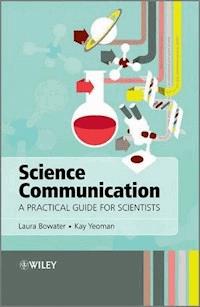
Science communication is a rapidly expanding area and meaningful engagement between scientists and the public requires effective communication.
Designed to help the novice scientist get started with science communication, this unique guide begins with a short history of science communication before discussing the design and delivery of an effective engagement event. Along with numerous case studies written by highly regarded international contributors, the book discusses how to approach face-to-face science communication and engagement activities with the public while providing tips to avoid potential pitfalls.
This book has been written for scientists at all stages of their career, including undergraduates and postgraduates wishing to engage with effective science communication for the first time, or looking to develop their science communication portfolio.
Sie lesen das E-Book in den Legimi-Apps auf:
Seitenzahl: 775
Veröffentlichungsjahr: 2012
Ähnliche



















Contents
Cover
Companion Website
Title Page
Copyright
About the Authors
Laura Bowater
Kay Yeoman
About the Contributors
Foreword
Prologue
Acknowledgements
Chapter One: A Guide to Science Communication
1.1 Introduction
1.2 The influence of science societies, charities and organisations
1.3 Modern societies and organisations
1.4 Science communication as a discipline
1.5 Phases of science communication
1.6 Recent initiatives
1.7 A way forward
References
Chapter Two: Scientists Communicating with the Public
2.1 Introduction
2.2 What does ‘Science and Society’ mean for scientists? The changing environment
2.3 Are academics involved in public engagement?
2.4 What is the current level of science communication by scientists?
2.5 Concluding remarks
References
Useful websites
Chapter Three: Encouraging Scientists to Communicate with the Public
3.1 Introduction
3.2 Science communication: the barriers
3.3 Removing barriers and providing incentives
3.4 Seeking advice and support
3.5 Embedding PE in your job
3.6 Personal benefits and benefits to the wider society
References
Chapter Four: Communication, Learning and Writing
4.1 Communication theories
4.2 Learning and learning theory
4.3 Learning theory frameworks
4.4 Constructivism and how it applies to science communication events
4.5 Learning styles
4.6 Model of family centred learning
4.7 Successful scientific writing for the public
4.8 Concluding remarks
Recommended additional reading for writing for the public
References
Chapter Five: Monitoring and Evaluating your Event or Activity
5.1 Introduction
5.2 Key Stages in undertaking an engagement project
5.3 Monitoring and evaluating
5.4 Undertaking evaluation
5.5 Interviews
5.6 Focus groups
5.7 Observational research
5.8 Deciding which evaluation tools to use for your project
5.9 Analysing the results
5.10 Reporting the results
5.11 Assessing impact
5.12 Ethical issues associated with evaluation projects
Other useful resources and references
Chapter Six: Getting Started with Public Science Communication
6.1 Introduction
6.2 Understanding your audience
6.3 Taking your first steps
6.4 Planning your own event or activity
6.5 How to design hooks for your event or activity
6.6 Designing a science communication activity
6.7 Consider your resources – consumables, equipment, expertise and people (CEEP)
6.8 How to get your project funded
6.9 Top tips for successful marketing
6.10 Health and safety
6.11 Concluding remarks
References
Chapter Seven: Direct Public Communication
7.1 Introduction
7.2 Direct communication delivering information
7.3 Information through conversation
7.4 A focus on policymakers
7.5 Concluding remarks
References
Chapter Eight: Indirect Public Communication
8.1 Introduction
8.2 A focus on science and television
8.3 A focus on radio and science
8.4 A focus on newspapers
8.5 A focus on science and writing
8.6 A focus on science advocacy
8.7 A focus on citizen science
8.8 Public involvement in health research
8.9 A focus on Web 2.0 tools and services
8.10 Concluding remarks
References
Chapter Nine: Getting Started with Science Communication in Schools
9.1 Introduction
9.2 School science education and scientific literacy
9.3 A skills shortage in science
9.4 Attitudes and knowledge of young people about science
9.5 The importance of extra-curricular science to achievement
9.6 Getting started with science communication in schools
9.7 Think about your resources, consumables and equipment
9.8 School years and qualifications
9.9 Concluding remarks
References
Useful websites
Chapter Ten: Demonstrating Interactions between Scientists and Schools
10.1 Introduction
10.2 Enhancing the curriculum within the school environment
10.3 Developing cross-curricular activities for primary and secondary schools
10.4 Enhancing the curriculum with activities with a school audience but outside the school environment
10.5 Influencing curriculum change
10.6 Embedding scientists into schools
10.7 Training teachers
10.8 Concluding remarks
References
Epilogue
Abbreviations and Acronyms
Index
This edition first published 2013 © 2013 by John Wiley & Sons, Ltd
Wiley-Blackwell is an imprint of John Wiley & Sons, formed by the merger of Wiley's global Scientific, Technical and Medical business with Blackwell Publishing.
Registered office: John Wiley & Sons, Ltd, The Atrium, Southern Gate, Chichester, West Sussex, PO19 8SQ, UK
Editorial offices: 9600 Garsington Road, Oxford, OX4 2DQ, UK The Atrium, Southern Gate, Chichester, West Sussex, PO19 8SQ, UK 111 River Street, Hoboken, NJ 07030-5774, USA
For details of our global editorial offices, for customer services and for information about how to apply for permission to reuse the copyright material in this book please see our website at www.wiley.com/wiley-blackwell.
The right of the author to be identified as the author of this work has been asserted in accordance with the UK Copyright, Designs and Patents Act 1988.
All rights reserved. No part of this publication may be reproduced, stored in a retrieval system, or transmitted, in any form or by any means, electronic, mechanical, photocopying, recording or otherwise, except as permitted by the UK Copyright, Designs and Patents Act 1988, without the prior permission of the publisher.
Designations used by companies to distinguish their products are often claimed as trademarks. All brand names and product names used in this book are trade names, service marks, trademarks or registered trademarks of their respective owners. The publisher is not associated with any product or vendor mentioned in this book. This publication is designed to provide accurate and authoritative information in regard to the subject matter covered. It is sold on the understanding that the publisher is not engaged in rendering professional services. If professional advice or other expert assistance is required, the services of a competent professional should be sought.
Library of Congress Cataloging-in-Publication Data
Bowater, Laura. Science communication : a practical guide for scientists / Laura Bowater and Kay Yeoman. p. cm. Includes bibliographical references and index. ISBN 978-1-119-99313-1 (cloth) - ISBN 978-1-119-99312-4 (pbk.) 1. Communication in science. I. Yeoman, Kay. II. Title. Q223.B69 2012 501′.4-dc23
2012016771
A catalogue record for this book is available from the British Library.
Wiley also publishes its books in a variety of electronic formats. Some content that appears in print may not be available in electronic books.
About the Authors
Laura Bowater
Laura is a Senior Lecturer at the Norwich Medical School, at the University of East Anglia (UEA), where she currently teaches microbiology, biochemistry and genetics to medical students. Laura previously worked as a microbiologist at the John Innes Centre – a BBSRC-funded research institute based on the Norwich Research Park – participating in research into the different roles of cupin molecules in bacteria and fungi. Laura has always had an interest in science communication and, while at the John Innes Centre, she took part in the Community X-change project, where members of the public were able to discuss issues relating to climate change during the 2006 British Science Festival that took place in Norwich in 2006. After Laura moved to the Norwich Medical School, she continued her work with the public by organising Café sessions, tackling such subjects as personalised medicine and microbial evolution. Laura has also been involved with the ‘Workshop on User Involvement in Research’, which has helped set up a new network of researchers and Service User groups, and she has designed a workshop to encourage and facilitate the development of a range of skills and expertise within research. During 2009, Laura also spearheaded a collaboration with Future Radio in Norwich and the UEA to produce a series of radio programmes about the life and work of Charles Darwin. Laura has also written articles about her engagement experiences in documents produced by Sciencewise for the Department for Innovations, Universities and Skills and the Research Councils UK. She is a member of the Society for General Microbiology (SGM), and is on the SGM committee for education. In recognition of her science communication work, she was awarded the Cue East Public Engagement Award in 2010.
Kay Yeoman
Kay is a Senior Lecturer in the School of Biological Sciences at UEA. She is a microbiologist with a particular interest in soil bacteria and fungi. She lectures in microbiology and molecular biology to both undergraduate and postgraduate students. In addition, she runs an undergraduate module in science communication and is the director of the Biology with Science Communication degree programme. Kay is involved with research looking at the public understanding of science and how students can gain crucial employability skills by taking part in community engagement. She is a member of the Society for General Microbiology, on the committee for education for the British Mycological Society and is a science advisor for the Norwich Castle Museum. Kay has run school and public science communication events for many years, and has been awarded funding from a variety of sources including The Royal Society and the Wellcome Trust. In 2007 she was awarded a Wellcome Trust Peoples Award for the ‘Mobile Family Science Laboratory’ (http://biobis.bio.uea.ac.uk/family/index.html), which travels throughout Norfolk and also goes to rural hard-to-reach communities. The events provide hands-on biomedical-related science activities for children and adults of all ages and abilities using family learning as the platform. During this project she developed a series of primary school clubs and activity days where children have been able to acquire a more in-depth experience of science, and now several hundred pupils have benefitted from these clubs. In 2007, she was awarded the UEA teaching excellence prize and was also awarded the Cue East Public Engagement Award in 2009.
About the Contributors
Dr Martyn Amos is a Reader in Novel Computation at Manchester Metropolitan University. His PhD, from the University of Warwick (1997), was one of the first in the field of molecular computing, and he has since worked to engage the public with his ongoing research into synthetic biology and complexity science. His 2006 book Genesis Machines was a well-received popular science ‘biography’ of this new area of science. He was the Principal Investigator of the EPSRC-funded ‘Bridging the Gaps: NanoInfoBio’ project, as well as running the Wellcome Trust-supported DIYbio Manchester initiative. He also heads several European Commission-funded projects, and is a contributor to the Speakers for Schools initiative. (Case study 8.3)
Janice Ansine is the Project Manager for the Biodiversity Observatory (iSpot). She works in the Department of Environment, Earth and Ecosystems, at The Open University. iSpot and the Biodiversity Observatory are supported by a grant from the Big Lottery Fund for England as part of the OPAL project. The iSpot team and the iSpot user community are also acknowledged for contributing to the success of the project to date. (Case study 8.5)
Dr Alison Ashby is a member of the Department of Plant Sciences at the University of Cambridge. She promotes ‘Fungal Science’ through public engagement. On behalf of the British Mycological Society, she has produced a set of primary school resources for ‘engaging primary school children with the Kingdom Fungi’, including the development of the BMS's ‘Mycokids’ pages. She held a Royal Society Research Fellowship and is affiliated through fellowships to Jesus College and Fitzwilliam College, Cambridge. Fun with Fungi was supported by the British Mycological Society, the Royal Society and the Department of Plant Sciences, Cambridge. (Case study 10.2)
Dr Stephen Ashworth is a Senior Lecturer in the School of Chemistry, where his science interests lie in high-resolution spectroscopy, and other spectroscopy applied to atmospheric chemistry, using a number of laser techniques. He is very active in the area of science communication and delivers interactive demonstration lectures to a wide range of audiences. Stephen also won a Public and Community Engagement Award from CUE East the Beacon of Excellence in the Eastern Region in 2009. (Case study 7.2)
Dr Richard Bowater is a Senior Lecturer in the School of Biological Sciences at the University of East Anglia (UEA). His research uses a range of contemporary techniques to study the relationship between the structure of DNA and cellular processes. He teaches across a broad range of biological science topics and has developed an interest in science communication activities with the general public. Richard has received funding from the Society of General Microbiology and the UEA's Annual Fund to support these activities. (Section 7.3.2)
Dr Tristan Bunn is the Inspiring Young Scientists Coordinator for the BBSRC and manager of the BBSRC School Regional Champions. He is a former biochemist, lecturer and science teacher who received his PhD from Edinburgh University for his work at the National CJD Surveillance Unit on molecular neuropathology of prions before obtaining a PGCE at Durham University. The ‘Taste and Flavour’ activities were delivered as part of the national Social and Emotional Aspects of Learning (SEAL) initiative. The programme for Pupil Referral Units (PRUs) and pupils with moderate learning difficulties in Norwich was organised by Norfolk Children's Services with funding from SEAL and CUE East. (Case study 9.2)
Annabel Cook works in science communications for the Mathematical, Physical and Life Sciences Division of the University of Oxford. She has an MSc in Microbial Marine Ecology from the University of Warwick and gained most of her initial science communication experience through volunteering while working full-time in an unrelated field. For five years she ran all online and offline, internal and external communication and public engagement for the Wellcome Trust Centre for Human Genetics (WTCHG) at Oxford. Volunteers from the WTCHG were involved in putting together and running the ‘Five-a-day DNA’ activity. (Case study 6.4)
Dr Sheila Dargan is a Lecturer in the School of Biosciences at Cardiff University. She is an active member of the Neuroscience and Mental Health Research Institute's public engagement committee, and a longstanding member of the Biochemical Society's Education Committee. Sheila supervises final year undergraduate students conducting bioscience engagement projects focused on curriculum enhancement in schools and universities. As a STEM ambassador, she has contributed to public engagement activities across the UK and internationally. In 2008 Sheila was selected to participate in a national ‘SEARCH’ project, using action learning sets to effect culture change with respect to public engagement in higher education and to maximise impact. (Case study 7.4)
Dr Darren Evansis a Lecturer in Conservation Biology at the University of Hull. His research focuses on the impacts of human-driven environmental change on the relationships between plants and animals. He is a co-founder of ‘Conker Tree Science’ and a newly established citizen science project with The Observer newspaper to map the spread of 10 highly invasive species in the UK. A regular speaker at conferences, workshops and Science Cafe events and contributor on radio and television, he is passionate about the need to communicate excellent science to the public, media and policymakers. (Case study 8.4)
Dr Ken Farquhar is a world juggling champion and soap bubble chemist. He founded the Inspirational Science Theatre company with a grant from the National Lottery in 1995.His science communication style has developed from on-the-job experience in many complimentary fields including working as a street performer, mime artist, actor, school teacher, television researcher and presenter. His science and maths shows and workshops have toured schools, museums, science and arts festivals across the UK and Europe. He provides bespoke programmes for schools at all Key Stages and development programmes for educational professionals, academics and businesses. (Case study 7.5)
Dr Sarah Field is a Senior Research Associate in the School of Biological Sciences at the University of East Anglia where her research focuses on the fermentation of straw waste by yeast to produce bioethanol. She has been involved in outreach activities for over 10 years. She is an active member of the Norfolk Teacher Scientist Network. Talking Science was supported by the Faculty of Science at UEA. (Case study 7.1)
Sara Fletcher A physicist by training, Sara joined Diamond Light Source in 2005 as Scientific Information Coordinator. The following year she completed an MSc in Science Communication and now writes about Diamond's science as well as looking after all the websites and social media. Growing up, she wanted to be a writer before turning to science, so as a science writer enjoys the best of both worlds! She is also addicted to social media and is interested in how the web is changing the practice and communication of science. (Case study 8.2)
Jaeger Hamilton is studying on the Wellcome Trust 4-year PhD programme at the University of Dundee where he investigates bacterial membrane biology as part of the Frank Sargent group in the division of Molecular Microbiology. He did his undergraduate studies in Microbiology (2009) at the University of East Anglia, Norwich. (Case studies 4.1 and 5.2; section 4.6 and Figure 4.5)
Tim Harrison is the Bristol ChemLabS School Teacher Fellow, Director of Outreach and the Science Communicator in Residence at the School of Chemistry, University of Bristol. He is the recipient of the Royal Society of Chemistry Secondary Education Award, the Royal Society's Hauksbee Award and the Engagement Award from the University of Bristol. The Bristol ChemLabS outreach work that he now directs has also won the Bank of America Merrill Lynch Education Award and the Big Tick Award for Business in the Community (2009), which was reaccredited in 2010 and 2011. Tim Harrison was on the RSC Committee for Schools and Colleges. He is currently an Associate Editor for Chemistry Review magazine, a member of the RSC's Western Region of the Analytical Division and is the Education Officer for the Bristol and District Region of the RSC. (Box 3.3 and Case study 9.1)
Dr Adam Hart is a biologist, entomologist and Reader in Science Communication based at the University of Gloucestershire. He has a special interest in ants and bees, studying how they work together, although his varied research also includes birds, mammals, evolution and ecology. He is a Fellow of the Royal Entomological Society and Outreach Editor for their magazine Antenna. He is widely involved with science outreach, public engagement and broadcasting, including a newspaper column on scientific research, a column in Cotswold Life magazine and a regular science slot on BBC Radio Gloucestershire. He also writes and presents programmes for Radio 4, the World Service and BBC4. In 2010, he was named the Society of Biology's Science Communicator of the Year and was also awarded an HEA National Teaching Fellowship in recognition of his scientific and public engagement work. (Case study 10.5)
Sarah Holmes is currently teaching science, specialising in physics, in Norfolk, where she is also heavily involved in STEM activities. She completed her undergraduate studies in Ecology at the University of East Anglia (2010) where she took part in science communication activities focused on schools. Sarah has also completed a Postgraduate Certificate of Education at the UEA (2011). (Case study 10.7)
Josh Howgego is a Chemistry PhD student at the University of Bristol. During his three years in the lab he has designed and built artificial molecules which mimic natural carbohydrate-binding proteins. Away from the bench, Josh is a keen blogger and aspiring science writer. His blog was included in Open Laboratory 2009 – an annual compilation of the best writing on science blogs. In 2011, he was awarded the Royal Society of Chemistry's Marriott Science Writing Internship and has since written for the Times Higher Education and Chemistry World. (Case study 8.6)
Dr Naomi Jacobs obtained her bachelor's degree in Biological Sciences from Nottingham Unviersity before moving to the University of Sussex for postgraduate work in Experimental Psychology. She was Project Co-ordinator on the EPSRC funded ‘Bridging the Gaps: Nanoinfobio’ project at Manchester Metropolitan Univeristy, designed to foster interdisciplinary research on the boundaries of biology, computer science and nanoscience. She has presented ‘NanoInfoBio’ at public community events such as ‘Girl Geek Dinners’ in Manchester, and has been involved in several high-profile events for the Manchester Science Festival, including, in 2011, delivering a series of events with the ‘Monsters, Microbiology and Maths’ team using zombies as a tool for engaging the public with disease, epidemiology and mathematical modelling. She is currently working at the University of Brighton supporting the management of European Commission Framework 7 Programme grants. (Case study 8.3)
Dr David Lewis is a Senior Lecturer in Neuroscience & Scientific Ethics within the Faculty of Biological Sciences at the University of Leeds where, in addition to running an active research laboratory interested in the brain's control of the gastrointestinal system, one of his principal responsibilities is the teaching of ethics to both undergraduate and postgraduate students across the Faculty. He also has significant involvement in outreach activities, regularly going into schools to discuss ethical issues in science with young people. (Case study 3.4)
Dr Niamh Ní Bhriain swapped postdoctoral for postnatal responsibilities when her first child was born and is now trying to enthuse and recruit the next generation of scientists! Her ‘Aspects of Biology’ course grew from her absolute conviction that schoolchildren are perfectly capable of grasping challenging scientific concepts if they are presented in an engaging and age-appropriate way. The course was developed with the help of the pupils and staff of St Attracta's Senior National School, Meadowbrook. The microbiology and microscopy components of the course are dependent on the goodwill and cooperation of Mr Gerard Dowd and his technical staff in the Moyne Institute, Trinity College Dublin and the financial support provided from the ‘outreach’ component of grant 07/IN.1/B918 from Science Foundation Ireland to Professor Charles J. Dorman. (Case study 10.1)
Professor Anne Osbourn is Associate Research Director of the John Innes Centre, Norwich. Her research focuses on plant natural products – function, synthesis and metabolic diversification. She is an author of over 100 peer-reviewed scientific publications and recently co-edited a comprehensive textbook on plant-derived natural products (Lanzotti, V. & Osbourn, A. (2009) Plant-Derived Natural Products – Synthesis, Function And Application. Springer, New York, USA). She has also developed and co-ordinates the Science, Art and Writing (SAW) initiative, a cross-curricular science education programme for schools (www.sawtrust.org). (Case study 10.6)
James Piercy has a degree in Chemistry and a MSc in Science Communication. He has been involved in writing, producing and delivering science shows, workshops and dialogue events for wide ranging audiences since 1995. He has been awarded the LAMDA Gold Medal in Public Speaking with Distinction, and was Chair of the British Interactive Group (BIG). Before joining science made simple James was Director of Inspire Discovery Centre, a small hands-on science centre in Norwich, where he developed the outreach and educational programmes. James has appeared on television numerous times to present scientific ideas and demonstrations, notably on The Investigators for Channel 4, which was nominated for a Children's BAFTA. Recent projects have involved the development of shows for National Museums Scotland, Butlins, and The Herschel Space Observatory. (Case study 5.1)
Dr Michael Pocock is an ecologist at the NERC Centre for Ecology and Hydrology, having previously held a NERC Fellowship at the University of Bristol. He research is broadly to understand how 'we rely on nature and nature relies on us'. He is a co-founder of 'Conker Tree Science' and is developing more citizen science projects with The Observer newspaper, Open Farm Sunday and the Environment Agency. He is a member of the RCUK Public Engagement with Research Advisory Panel. Enthusiastically promoting public engagement with science through the media, speaking at conferences and training students, he still also participates in hands-on engagement in schools and at public events. (Case study 8.4)
Dr Jenni Rant is a scientist from the John Innes Centre, Norwich, interested in plant pathology and metabolic biology. She is a keen science communicator, working with the SAW Trust, a science education charity, bringing together science, art and writing to explore scientific themes in schools using a cross-disciplinary approach (www.sawtrust.org). (Case study 10.6)
Dr Dee Rawsthorne is Outreach Coordinator for the Norwich BioScience Institutes responsible for the schools and public programmes for the John Innes Centre and the Institute of Food Research. Dee is also founder and coordinator of Science Outreach in Norfolk and organises the annual Science in Norwich Day. ‘Blooming Snapdragons’ was an event held during the John Innes Centenary Celebrations funded by the John Innes Centre from materials uncovered in the John Innes Foundation archives by Dr Sarah Wilmot. Play production was by Sue Mayo, performed by Liz Rothschild and Syreeta Kumar, stage management by Tristan Bunn with additional support provided by the John Innes Centre Communications Team. (Case study 7.6)
Professor Dudley Shallcross is the Professor of Atmospheric Chemistry at the School of Chemistry, University of Bristol, and is a course coordinator for two modules within the MSc in Science & Education programme. He was appointed Schools Liaison Officer for Chemistry in 2000, later to become Bristol ChemLabS Outreach Director (until 2010). In 2004, Dudley was awarded a National Teaching Fellowship by the Higher Education Academy (HEA) under the Rising Star category, for his excellence and innovation in teaching. In 2005, Dudley won the Faculty of Science Teaching Prize and the Higher Education Teaching Award from the RSC. In 2006, he was the first ever recipient of the SCI (Society of Chemical Industries) International Chemical Education Award. In 2007, he received the University of Bristol's Engagement Award for the Faculty of Science. In 2008, he was awarded the RSC Tertiary Education Award in recognition for his contributions to the promotion of the chemical sciences through outreach which have impacted on all ages both in the UK and overseas and, in particular, for work which addresses the school–university transition to include those with physical disability. In 2009, Dudley Shallcross received the Royal Meteorological Society's Michael Hunt Award which is given biennially for excellence in increasing the understanding of meteorology or its applied disciplines among members of the general public. Most recently, in 2010, Dudley was appointed as the new Director of the AstraZeneca Science Teaching Trust (AZSTT) which promotes Science in Key Stages 1–3. Dudley is also a member of the steering committee for the Science Learning Centre South West (SLCSW) University of Bristol subgroup. (Box 3.3 and Case study 9.1)
Dr Kenneth Skeldon is Head of Public Engagement with Research at the University of Aberdeen. He has held personal Research Fellowships from the Royal Society of Edinburgh and STFC and more recently, was the recipient of a NESTA Fellowship for Public Engagement. He has created and produced award-winning bespoke exhibits, outreach and education resources for science centres and museums around the world. In Aberdeen, he founded and currently coordinates one of the UK's biggest Cafe science programmes. He also played a leading role in securing the British Science Festival back to the city in 2012, the first time to return to Scotland for over a decade, and to Aberdeen for some 50 years. (Case study 7.7) Dr Phil Smith MBE trained as a plant pathologist at the John Innes Centre where he worked in research for over 10 years. During this time, he began a long-term partnership with a primary school teacher, Mrs. Maxine Woods (through the Teacher Scientist Network). Their partnership, which continues to thrive, has worked at several schools across Norfolk and Essex. They have been successful recipients of both National Science Week awards and the Royal Society partnership grants for a range of primary school projects: ‘Science in the Home’ (2001); ‘Seed to Sandwich – where does your food come from?’ (2004); ‘The Mobile Microbe Roadshow (MMR!)’ ( 2005). Phil now runs the Teacher Scientist Network, based at the John Innes Centre, on the Norwich Research Park. He has been a reviewer of BBSRC Public Engagement awards and RCUK's NSEW awards and was fortunate enough to be awarded an MBE in the birthday honours list of 2008, for 'services to science education’. (Case studies 3.3 and 10.8)
Dr Nicola Stanley-Wall is a Lecturer in the College of Life Sciences at the University of Dundee. She is the recipient of the Brian Cox Senior Investigator Prize for Public Engagement awarded by the College of Life Sciences (2010), the Society for General Microbiology Outreach Prize (2011) and the Royal Society for Edinburgh Beltane Prize for Public Engagement (2012). ‘Magnificent Microbes’ was supported by staff and students from the Division of Molecular Microbiology at the University of Dundee and enjoyed financial support from many sources including the Society for General Microbiology and the Society for Plant Pathology. (Case study 6.2, Box 6.2)
Dr Elizabeth Stevenson is the Public Engagement Manager and a Teaching Fellow in the College of Science and Engineering at the University of Edinburgh. She is the recipient of the Royal Society of Chemistry Award for the Promotion of Chemistry. The event ‘In Your Element’ was supported by the National Museum of Scotland, the University of Edinburgh and Craft Reactor and was one event in a full programme of activities to celebrate International Year of Chemistry, 2011. (Case study 7.3)
Professor Joanna Verran is Professor of Microbiology in the School of Healthcare Science at Manchester Metropolitan University. She is a National Teaching Fellow, and recipient of the Mike Pitillo Award for Biomedical Science education, the Society for Applied Microbiology Communication Award and the Society for General Microbiology Peter Wildy Award for Microbiology Education. She leads public engagement activities in the Faculty of Science and Engineering at MMU, and encourages the participation of her postgraduate and undergraduate students. Jo has developed a variety of events for a range of audiences, focusing on microbiology, and has enjoyed support from the Society for General Microbiology, the Society for Applied Microbiology, the Manchester Beacon for Public Engagement and other sources. (Case studies 6.3, 7.8 and 8.3)
Dr Robert D. Wells is the Welch and Regents Professor Emeritus at the Institute of Biosciences and Technology in the Texas Medical Center, Houston, USA. His research career has focused on biochemical studies of DNA structure and DNA metabolism. Dr Wells' postdoctoral studies began in the laboratory of Dr H. Gobind Khorana, as part of the team that solved the genetic code, for which Khorana shared the Nobel Prize in Physiology or Medicine in 1968. Dr Wells has held academic and research posts at the University of Wisconsin-Madison, the University of Alabama at Birmingham, and Texas A&M University. He was Chairman of the Department of Biochemistry in the Schools of Medicine and Dentistry at the University of Alabama at Birmingham and Founding Director of the Albert B. Alkek Institute of Biosciences and Technology in Houston whilst also serving as the Head of the Department of Biochemistry and Biophysics, Texas A&M University in College Station, Texas. Dr Wells has acted as an advisor to the White House on healthcare reform and he served on the Scientific Advisory Council of the National Institutes of Health, National Institute of Environmental Health Sciences. Dr Wells has also served as the President of the American Society for Biochemistry and Molecular Biology and the Federation of American Societies for Experimental Biology. (Case study 7.9)
Dr Michael Wormstone is a Senior Lecturer in the School of Biological Sciences at the University of East Anglia. His research interests include the use of human tissue to study human eye disease and the wound-healing events that follow cataract surgery, which lead to a secondary visual loss. The Fight for Sight charity has supported research into blindness and eye disease for more than 40 years. Michael has worked with this charity to successfully fundraise for their research programmes. (Case studies 3.2 and 6.1)
Julie Worrall FRSA joined UEA in 2005. She instigated and now coordinates UEA's Annual Community Engagement Survey and in 2007 she co-authored UEA's successful bid to become a Beacon for Public Engagement. Julie is a member of UEA's Engagement Executive and is currently researching a doctorate on the culture of higher education in relation to public and community engagement, ‘The academy and community: seeking authentic voices inside higher education’. (Case study 3.1)
Foreword
Science – and how it is done – has never been more important. Public interest and appetite remain high and science underpins almost every aspect of our daily life. Yet suspicion, prejudice, misunderstanding and ignorance about science still remain, even in some cases with scientists. Too few of our politicians have a science background and the same is true for many other professions, while something of the old C.P. Snow dichotomy still festers. A more scientific approach to countless policy matters is surely desirable and evidence-based decision-making certainly seems preferable to ignorance.
So perhaps it is not surprising that the top-down promotion of science-related public engagement activity is on the rise. Universities in particular are increasingly being asked to get their academics and other staff out of their ivory silos to talk to and listen to the various publics, individuals and organisations in the communities that they are embedded in. Talk of the engaged university, the civic university and paths to impact resonate around the corridors of academe, and the pressure is increasing on grant holders to engage more effectively with the public.
What does this mean in practice? The landscape is complex and effective science communication is not a straightforward matter. There is both scientific and sociological jargon to get to grips with. TLAs (Three Letter Acronyms!) abound and mathematicians find it odd that, for a biologist, multiplication means the same thing as division. And yet there is now enough case history and best practice on which to draw to know that some things work while others don’t. This book is the repository for what has been learned – an all-in-one-volume synthesis of how to get involved. As the multiple ways through which science engagement can be mediated grow – cafés, exhibitions, books, articles, TV, radio, social media – this book enables you to get engaged effectively through their best-practice and evidence-based success stories. Such practical information, in a relatively new arena, has inevitably been scattered and is hard to access easily. So the success of our two authors in bringing together all you need to know into one handy volume – and in particular the many wide-ranging case studies – is a remarkably useful and pragmatic achievement.
We need more young people – students, technicians and young researchers – to be involved in science engagement activities in addition to the more secure academics who currently dominate. And we need more scientists from business, industry and management to get involved in addition to those from academia. There are many, well-recognised barriers to engagement activity, but no longer can it be said that being unsure of how to get engaged is a valid reason for inactivity. This book has removed that barrier at a stroke and I hope it becomes the turn-to manual of choice that it deserves to be.
Professor Keith Roberts OBE
Prologue
Practical science communication is an aspect of our job as scientists that we have both valued and enjoyed. However, it wasn't until we began to attend science communication conferences that we discovered the breadth and depth of research that surrounds and underpins the science communication field. We became much more aware of the impact that research in this area has had on the development of science communication in the UK and beyond. This realisation allowed us to develop our own personal understanding of both the context and the importance of scientists beginning to engage with the public. We realised that from a scientist's perspective, there are limited interactions between scientists and social scientists. We wanted this book to begin to bridge this gap by describing how science communication theory and activity has developed and changed. In addition we chose to describe some of the different issues, drivers and debates, familiar to many scientists, that have shaped the modern frameworks for communicating science to the public. Over recent years there have been many initiatives that have encouraged scientists to step out of the safety of the research environment and to face outwards towards the wider community. We have highlighted and described some of these initiatives, the impact they have on the day-to-day life of a working scientist and how they influence the way that scientists communicate with the public. We also provide insight and detail about how, why and where scientists fall into the wide spectrum of different communication activities.
This science communication book has been written from our perspective: two scientists who really enjoy and feel personally enriched by communicating science to the public. At the same time that we were developing our own communication skills, we recognised that there was a need for a modern practical guide that could offer sensible and straightforward advice to other scientists starting out on their own science communication career or seeking to diversify and widen their portfolio of communication experiences. We wanted to provide a book for scientists that had a familiar format. Initially we had the idea of developing a laboratory type manual for science communication, but we soon realised that we wanted to produce something that was more comprehensive. The result is a book that is intended to provide useful hints and tips to help you start to undertake science communication activities and events. It also gives examples of pitfalls that should be avoided and points you towards additional reading material to allow you to develop your own background knowledge and understanding of science communication. This book also provides scientists with the essential theories and models that underpin the role of a science communication practitioner. However, it is not intended to provide a detailed discourse of science communication as a discipline. There are already books written by experts that provide this type of information and knowledge and we have signposted them within our text.
We have used a series of case studies provided by colleagues who are scientists, students training to be scientists, scientists who have trained as teachers and also scientists who have established themselves as professional communicators in the science communication arena. The case studies highlight the depth and breadth of activities being undertaken by scientists who are passionate about communicating science to a wider audience. An unexpected outcome of the book, on a personal and professional level, was that it confirmed our belief that there is a whole army of scientists producing innovative and exciting science communication projects. We recognise that we have had an opportunity to highlight just a few of these initiatives but they clearly demonstrate the wealth of good practice and expertise that we wanted to use as an inspirational resource for peers and colleagues.
Acknowledgements
This book is built around the case studies that have been supplied by our colleagues. We are grateful for their generosity and support and allowing us to share their inspirational work with the wider world. As well as the authors of the case studies, we thank Dr Richard Bowater, Dr Stephen Ashworth, Dr Ian Gibson, Professor Robert Watson and Professor Joanna Verran for their generous help and support in discussing chapter material, commenting on draft chapters and providing useful suggestions and resources. A special thank you has to go to Alistair McWalter for being incredibly generous with his time, his graphic artist talents and his ability to listen to our abstract concepts and ideas and turn them into a visual reality. We love the images and the illustrations that he has produced for the book including the front cover – thank you so much (Figures 2.1, 6.1, 6.2, 6.3, 9.1 and 10.1). We must also thank Dr David Waterhouse who created the majority of the artwork that beautifully illustrates the top of each case study. We also thank our commissioning editors Liz Renwick and Lucy Sayer for all their help, encouragement and support with getting this project off the ground and keeping it on track, Fiona Seymour our project editor who has handled our uncompleted and completed manuscript with calmness and care, Jasmine Chang and Baljinder Kaur for helping us tidy up the final bits and pieces. We appreciated it hugely.
Finally we would like to thank our families, and in particular Richard, Jon, Charlotte, Ellie, Alex and George, for putting up with our distraction over the past two years – we couldn't have done it without your support.
CHAPTER ONE
A Guide to Science Communication
One can hardly believe that modern science is almost included within the present century. All before then, except astronomy, was more or less speculation. Scientists had only been playing, like children, in the vestibule of the great Temple. It may be that we ourselves have not advanced far within the precincts at least, those who study these subjects 100 years hence may think so.
Dr J.E. Taylor (The Playtime Naturalist, 1889)
1.1 Introduction
The issue of science communication has risen globally in its importance in recent years, not least due to a belief that science and technology are the basis of a knowledge economy. Science and technology are an integral part of our culture and heavily influence our everyday lives. The knowledge and applications produced from science are powerful and exciting and it's reasonable to suggest that the public should know about these new advances because of the questions they raise for our society. Public money also pays for a substantial amount of research undertaken in many universities and government institutes, although we must also acknowledge that the ratio of private to public funding for scientific research and development has dramatically increased over the past 50 years (OECD, 2004). However, regardless of how research is funded, its impacts must be communicated to citizens, even if the strategies used and the motivations are different for research and development funded by private as opposed to public money (Bauer, 2010).
Communication by scientists to the public is not a new phenomenon. Even before the term scientist was first used (not coined until 1834; Hannam, 2011), Humphrey Davy and Michael Faraday were engaged in the popularisation of science and Joseph Priestly was even encouraging active science experimentation by the public (Broks, 2006). Twenty-first century examples of talented communicators include among others, the physicist Brian Cox and anatomist Alice Roberts, whose enthusiasm for and knowledge about their own subject and science in general has underpinned their willingness to communicate with the public.
1.2 The influence of science societies, charities and organisations
1.2.1 Science societies
Science communication in the UK has been shaped by historical institutions such as the Royal Society, as they have commissioned influential reports that have described the relationship between science and society. The committees producing these reports have often been chaired by eminent and respected scientists and the reports have affected the way that science has been communicated to the public within the UK and across the world. The Royal Society was one of the first science societies to be established and has been in continuous existence for the longest. It was founded in 1660 by a group of well known individuals that included Robert Boyle, Robert Hooke and Christopher Wren. The Royal Society was granted a royal charter by Charles II in 1662 and the society maintained itself with dues from its members (McClellan and Dorn, 2006). The French established the Academie des Sciences in 1663, but it differed from the Royal Society in one key aspect, it was a government institution, with patronage from Louis XIV (Gribbin, 2002). Other countries also saw the value of a science society and by the end of the eighteenth century there were approximately 200 societies across Europe and North America (Fara, 2009). The Royal Society was not established to facilitate communication to a public audience, but it did begin the concept of the ‘scientific paper’ with the publication of the from 1666, enabling communication between individuals interested in science. This was published by Henry Oldenburg, first secretary to the Royal Society from his own private funds (Gribbin, 2002). Since then the phenomenon of the scientific paper has grown in importance. It can be equated to the ‘unit of productivity’ of science (McClellan and Dorn, 2006) and it forms a substantial part of the criteria used to judge scientists in the twenty-first century. This is epitomised by the ‘scientific paper’ being used as a major criteria within the UK's Research Excellence Framework (previously Research Assessment Exercise); a process used to judge research output from universities in order to determine the level of block governmental research funding (HEFCE, 2011).
Lesen Sie weiter in der vollständigen Ausgabe!
Lesen Sie weiter in der vollständigen Ausgabe!
Lesen Sie weiter in der vollständigen Ausgabe!
Lesen Sie weiter in der vollständigen Ausgabe!
Lesen Sie weiter in der vollständigen Ausgabe!
Lesen Sie weiter in der vollständigen Ausgabe!
Lesen Sie weiter in der vollständigen Ausgabe!
Lesen Sie weiter in der vollständigen Ausgabe!
Lesen Sie weiter in der vollständigen Ausgabe!
Lesen Sie weiter in der vollständigen Ausgabe!
Lesen Sie weiter in der vollständigen Ausgabe!
Lesen Sie weiter in der vollständigen Ausgabe!
Lesen Sie weiter in der vollständigen Ausgabe!




