


8,63 €
Mehr erfahren.
- Herausgeber: Seren
- Kategorie: Poesie und Drama
- Sprache: Englisch
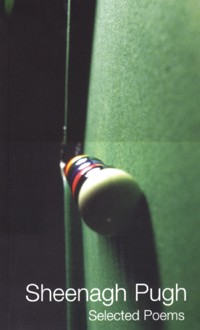
Here is the best of Sheenagh Pugh's early work: a generous and wide-ranging selection from her first four collections, together with two dozen previously unpublished pieces Notable inclusions are the prize-winning 'M.S.A' and 'Intercity Lullaby', and the much-anthologised 'Sometimes.' Throughout, a lively and enquiring mind is brought to bear on how we live and die, and how we might live more equitably. Sheenagh Pugh approaches her subject unpredictably, through Norse saga and snooker, apartheid and falling tortoises, in a poetry of invention and conviction At the heart of the book is the Earth Studies sequence, "a history of the world in 19 poems', and the first major environmental poem of the "green" era. Set in the indeterminate future, it explores the rise of human civilisation, and abuse of the Earth, following them to their logical conclusion: the death of the planet. Ironic, lyrical, penetrating , these poems typify the craft and passion of Sheenagh Pugh's writing. Selected Poems ends with a section of Pugh's much-admired translations, of German poets such as Simon Dach, Andreas Gryphius and Christian Hofmann von Hofmannswaldau.
Das E-Book können Sie in Legimi-Apps oder einer beliebigen App lesen, die das folgende Format unterstützen:
Seitenzahl: 105
Veröffentlichungsjahr: 2012
Ähnliche











SHEENAGH PUGH
Selected Poems
This book is for Anthony and Sam
Contents
Title Page
Dedication
New Poems
M.S.A.
The Frozen Field
The haggard and the falconer
Inter City Lullaby
The Climate of the Country
Official briefing for ministers on the recent violence in the capital
Uninhabited island
The black ram
Man getting hammered: between frames
Exhibition
Filing the Queen of Scots
The ballade of Sexy Rexy
Hello
Frankincense
Birmingham Navigation graffiti
Senesino/Farinelli
Nothing happened here
Tree of pearls
The Chester Zoo marmot movement
Reaches of Light
Sweet 18
Paradise for the children
In memory of Annie Christina
Quetzals only come once
from Crowded by Shadows
Detour
Guys
John Howard
‘Industrial Landscape’: L.S. Lowry 1955
The Partner
Inventory
Delayed reactions
Odin 1
Odin 4
Spring ‘72
Shoni Onions
from What a Place to Grow Flowers
Grand larceny
Coming into their own
Men growing flowers: Hveragerdi
Ingthor the chanter
The flute-playing at Skalholt
The black beach
Going back to Hlidarendi
Love
Eirik the Red
Swords
King Sigurd and King Eystein
Owl’s night thoughts
King Billy on the walls
from Earth Studies and Other Voyages
Earth Studies
Geography 1
The craft I left in was called Esau
Biology 1
Biology 2
I think someone might write an elegy
Religion 1
History 1
History 2
‘Are you saying people got above themselves, sir?’
Geography 2
History 3
Geography was peculiarly taught
Religion 2
‘What do you think about heaven then, sir?’
What Christie wrote when the child died
Literature
Biology 3
After I came back from Iceland
‘Do you think we’ll ever get to see earth, sir?’
Harbours
Sailors
Old widowers
Lost on voyage
McGonagall’s crucifixion
The capon clerk
St Cuthbert and the women
from Beware Falling Tortoises
The railway modeller
In Memory
1: In Morriston Crematorium
2: A Matter of Scale
3: Reallocation
4: Closing up
Magnolia
Eva and the roofers
147
A short history of cocaine abuse
Sometimes
Torturers
She was nineteen, and she was bored
Because
I am Roerek
Railway Signals
Dieppe: Sports Day
A shipwrecked Inuit learns Gaelic from a Hebridean
What a way to go
An even worse way to go
A modest request
Cameraman
Tulips
Translations
Dach:
Last words of a once-proud Lady on her deathbed
Gryphius:
The misery of being human
Mariana
Dominus de me cogitat
A likeness of our life, after a game of chess
Fleming:
On a corpse
Hofmannswaldau:
Poem in praise of the most amiable of womankind
On the gift of a carnation
Bright murderesses
A secret fire
Hebel:
Epitaph of a drinking man
Transience: a conversation
Copyright
NEW POEMS
M.S.A.
The news shows me more than I want to see.
I hold the Guardian between the screen
and my eyes; peer around at the Persian boy
coughing poison gas over his uniform.
I know with my eyes shut what he looks like:
dark smudged eyes, long lashes, skin
like ivory. That’s how they look
in my memory, the ones who must be
sixteen years older now.
The camera slews round; shows women
shapeless in black cloth, and I go back
to the paper. One hidden face
is like another, and any one could be yours.
She was twenty-three
in Berlin: there was a busload
down on a student trip
from the north. (The Shah sent them
West, to study science
and be out of the way.)
There were a dozen, all
dark-haired, pale, willowy.
but she was die Perserin,
the only woman.
She stood out anyway
from the others; she laughed
a lot. The boys didn’t laugh;
they were intense and pure
and a little ludicrously
serious, and very young.
Any of these young eager soldiers
tumbling like puppies towards death,
eyes shining, brain in neutral, could be them.
They’re forty now, if they’re alive,
but when that boy crouches miserably,
doglike, vomiting war, it’s as if
none of them had grown a day older.
That was a hot summer:
we found a lake
in the Zoo-park, and talked,
while she held her long fingers
in the water. They bowed down
under the turquoises: blue
roughcut masses; her dad
traded in them, she said.
She was going back
to him, when she’d qualified
as a textile chemist. The West
was fine, free and easy; the boys’
fiery purity passed her by,
but he had a walled garden
full of old roses, a house
full of old books, and whenever
she spoke of him, she smiled.
There are a kind of thieves that come by day
with dogmas, policies and manifestos
and steal your country when you aren’t looking.
Before you know it, you’ve no pride
any more; immoralities are uttered
in your name; your consent inferred
to actions that disgust you. It’s happened
to me, but at least I’ve a chance
to change things: I’m an exile only
in my heart.
Whenever I see fatherless,
landless people, living on sufferance
among strangers, lowering their eyes,
learning to adjust, their very language
drying to a trickle on the stones
of their throats, I hope you aren’t there.
The hotel room in Berlin
faced east: the morning sun
from UIbricht’s fortress fell
on her dark fall of hair.
It shone blue: gold glints
of light like fish in the black
water; she slept late
of a morning.
Talking half the night
at breakneck speed,
comparing options: Shah,
Islam, Communism, like goods
in a bazaar; spotting flaws
in the fabric; rejecting
the lot… Asleep, she’d turn
her face a little in the light,
like a sun-worshipper.
I wish I could write your name,
but you might be safe
behind your father’s wall, waiting
for better times, polishing the barrels
of your hidden mind, checking the cartridges
ready for action, like a good guerrilla,
and how could I send in the enemy?
The news shows me more than l want to see.
Whenever I watch some woman
behind a chador, scurrying for cover,
veiling her voice, l hope it isn’t you.
Those boys…they believed
so much, it hurt. Their hate
kindled when they spoke of SAVAK,
the pliers, the shocks. It did sound
pretty bad, I said; she eyed
them from a distance: “Yes,
but they’d do it too.”
There’s a night club, called
the Cheetah; probably refers
to the price of beer. The Persian
boys drank coke, sickly-sweet,
innocent, just like them.
They looked askance at her
dancing: she laughed gently,
said things were changing.
They changed all right, I’ve seen them. I’ve read
about the squads of the pure-minded, keeping
the streets clean of unveiled women. I hear
they beat them on the soles of the feet.
Those boys were soft, frail; they’d surely flinch
from the sight of pain. Perhaps they close their eyes.
What happened in your country, when one
murdering old con-man replaced another?
How many girls hid their glinting hair,
their clear voices: how many sweet-faced boys
got a taste for torture? It’s bad enough
he wastes their bodies in his wars:
firm flesh, straight bones, bright eyes, spilt
for a wizened bag of rheum. It’s worse
that he made use of innocence; bought
ardour and hope at market in amounts
expedient to his needs. But the worst
would be if he insinuated craft
and hardness into their wide eyes,
made them like him.
Do not trust, above all men, Priam,
praising the seemliness of young men’s
dead bodies; clinging to the altar
for his own life, when he ran out
of sons to send instead. He’s cunning;
look how he conned Achilles, in all
his youth and grief, out of his revenge.
“Think of your old father”, he wheezed,
“just my age, lonely for you”…. Always
there are mooring-ropes: anchors drag
on the white lovely ship whose canvas
itches for the wind; who would sail so far.
Her father behind his wall
traded in blue stone:
she lay under the wide sky
melting in the sun.
He traced leaf veins; touched
flowers to his face:
she analysed the fibres
of silk, jute, glass.
He stroked leather; fingered
gold leaf on the page:
she defended men’s thoughts
with soft-voiced outrage.
He loosed the jesses; let
his falcon fly,
wherefore she returned to him
most willingly.
The news shows me more than I want to see:
all over the world, young men blow off
young men’s heads with guns people my age
have sold them. I’m not young any more:
it’s the likes of me who counsel
compromise; who settle for less
than truth, because it isn’t that simple,
who grow fat at the centre of a web
of coke pushers, or peddle nerve gas
to good customers and no questions asked.
I am the enemy now.
It was different after Berlin,
the free city. Back in the sticks
I checked my address book; climbed once
to the little flat in Bothfeld.
She was tousled, sleepy; it was onIy
ten a.m., but she let me in. I perched
on the warm bed, while she dressed
and looked embarrassed. Her body
troubled me less than this unease
of hers: for the first time
she seemed un-Western, distant.
And that was all, really. Not much,
except it was when I was young.
I can still see pictures, like snapshots,
not faded, but disconnected,
random: the blue light of turquoises
refracted in water; a face drinking sun;
the serious boys dancing together
to El Condor Pasa: I thought at first
it was backs-to-the-wall time,
till you explained they just liked moving
to the music, and they were too moral
to dance with women.
Now they perform together
on my screen the movements of combat,
as formal, but less graceful; it’s hard
to keep the rhythm when you’re dying…. But no,
of course, these aren’t the same boys.
I was forgetting; we’re all forty,
but I have no picture of you like that.
From all my shots you look out
undamaged, frank, bright-eyed, expectant,
laughing at the grave boys.
The Frozen Field
I saw a flat space
by a river: from the air
a jigsaw-piece. It is green
by times, and brown, and golden,
and white. When green, it gives food
to animals: when golden,
to men. Brown, it is ridged
and patterned, but when white,
a plane of evenness.
When frost touches it by night,
it turns silver: blue shadows
etch the hollows, grassblades glitter
in the grip of silence. It was
in such a place as this,
elsewhere, on the coldest night
of a cold winter, two boys
drove a car, with some difficulty,
over the frozen hummocks: parked
in the breathtaking chill, the stillness
that weighed each leaf down,
and shot each other.
It was a place I knew
years ago: I must have seen
the field, in summer maybe,
growing turnips, grazing cattle.
dotted with the white
of sheep, the blue and orange
of tents, and all the time
traveling toward one night
vast with misery; the sharp cracks,
one-two, like branches in frost,
that broke the silence.
Who knows what a field
has seen? Maldon sounds
of marsh birds, boats, the east wind.
The thin wail across the mudflats
is a heron or a gull, not Wulfmaer,
the boy who chose to die
with his king, never having guessed
how long dying could take.
And an oak lives
a long time, but a nail-hole
soon closes. Of all the oaks
at Clontarf, which is the one
where Ulf Hreda nailed one end
of a man’s guts, and walked him
round and round the tree, unwinding
at every step?
The night the boys died,
their field was Maldon was Clontarf,
was Arbela, Sedgemoor, Solferino,
was every field where a moon
has risen on grass stiff
with blood, on silvered faces.
…Aughrim was so white,
they said, with young bones,
it would never need lime again:
better not to see
in the mind’s eye Magenta,
that named a new dye.
It was as if the field
clenched all this in
on itself, hunched over
the pain of all young men
since time began: as if
every crop it ever bore
crowded in on it: barley, blood,
sheep, leisure, suicide,
sorrow, so much, its being
could not stay in bounds
but spilled out over space
and time, unwinding
meanings as it went.
They tangle around
the field’s riddle now: I saw a stage
for pain, a suffering-space.
The fine mist of aloneness closed it
in the morning: at sunset
it was flooded with blood.
Thinking such things often,
we should see too much. I see
a picnic place, a playground.
My eyes half-open, I lean
against a tree; hear through the ground
children’s feet chasing.
The sunlight shivers: someone
walked over my grave. I chew
on a stiff grassblade.




