


Erhalten Sie Zugang zu diesem und mehr als 300000 Büchern ab EUR 5,99 monatlich.
- Herausgeber: Pushkin Press
- Kategorie: Gesellschafts- und Liebesromane
- Sprache: Englisch
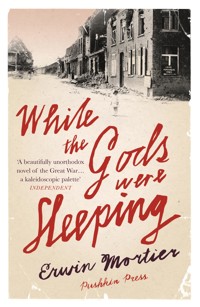
It is the height of summer. In a small, stifling village a young boy's childhood shudders to a close. Joris's father is dead for reasons he is only beginning to understand. His mother is in Spain, for reasons he doesn't want to think about. He lives with his aunt and uncle, in a village where intense dramas run their course in the background, half-seen and little understood. In faded images from half-remembered photographs, through memories invented or suppressed, the last summer of eleven-year-old Joris's childhood comes to an end, deftly picked out in Erwin Mortier's elegant and affecting prose.
Sie lesen das E-Book in den Legimi-Apps auf:
Seitenzahl: 224
Veröffentlichungsjahr: 2014
Das E-Book (TTS) können Sie hören im Abo „Legimi Premium” in Legimi-Apps auf:
Ähnliche


















ERWIN MORTIER
SHUTTERSPEED
Translated from the Dutch by Ina Rilke
Contents
SHUTTERSPEED
I STILL HAVE PHOTOS FROM THOSE DAYS, SHOWING ME fair-haired and sandal-shod. My father holds me by the hand as we stroll along meadows dappled by the shade of poplars, during summers that now seem greener and slower than they were. By the wayside, at the foot of the railway embankment, on the rise to the bridge, my father startles butterflies on the flowering hemlock, and their motion, like my wonderment, is arrested in mid-air.
This is the timelessness of the world when he was still around and I had barely arrived. For all that I am there in the picture with my eyes riveted on the pebbly road, doubtless to avoid losing my footing, and for all that I cling so tightly to his hand, my existence has yet to begin.
I must be about two years old, and it is probably August. The sights around me are finite and warm. From end to end the horizon is serrated by lines of trees cropping the surfeit of sky. Everything about their meandering boughs suggests regularity. A train passing each hour. The stroke of a bell every fifteen minutes, high in the echo chamber above the roof tiles.
By the paling around the rectory I see walnuts dropping from overhanging branches, splitting open like skulls on the cobbles. After sundown sparrows swoop around the house in search of spiders lurking in the crannies of weathered grouting. The upstairs windows are open, with net curtains that hang motionless behind the screens. Up there, over one of the display windows flanking the front door, is the room that is to be mine, the room that once belonged to my father and Werner, his twin brother.
The table with its single drawer, the bookshelf, the chair. Up on the mantelpiece the picture of John Kennedy, from which position it was never moved, not even by me. The cherrywood wardrobe. The grass-green bedspread. The pre-war lino, fractured between feet and floorboard. The bed, which they must have shared like two sardines in a tin when they were boys, and which started out too big for me just as it did for them, and then became too small.
Two glass-fronted shop counters on the ground floor, then a doorway to a long passage leading to the back of the house. From the ceiling dangle the legs of almost life-size dolls, looking like hanged men in clear plastic bags, side by side with bicycle wheels, pitchers and fly swatters.
Daylight filters darkly through the cluttered window displays into the shop, where shelves and storage cabinets with drawers stretch from floor to ceiling. Racks of bottles and jars, some of them filmed with dust; rows of liqueurs from godforsaken times, tiers of brightly coloured pill-boxes – the salves and potions of Uncle Werner’s sideline in dubious remedies for every conceivable ailment. Hanging gardens of tinned pineapple, apricot and peach teeter on the brinks of precipices. Further back, like treasure-hunters’ bounty, gleam glacé cherries in tall glass jars. A glass showcase, fitted with a lock by Aunt Laura, Uncle Werner’s wife, holds a polar region of crystal bottles and phials of essential oils, so ethereal and precious that they are almost sold by the drop.
The shop-front is still recognisable. You can tell from the size of the windows that they were once used for display, but the walls are no more than a shell; the house itself has moved elsewhere. The inside doors now open on to rooms in other remembered houses, leading from one to the other in seamless transition.
Dates are irrelevant. One moment I am standing with my feet in a zinc tub, twisting round to peer at my buttocks in the mirror, the next I have just been lifted from my cradle and am being wrapped in a blanket by a woman.
There are also spaces without walls, only the chequered pattern of a tiled floor strewn with jigsaw pieces. I can feel the cold tiles beneath my feet, I can hear whispers that sound as if they are coming from a tube somewhere in the passage behind me. I am far too young to understand what they are saying, but I have a sense of voices being lowered on account of me being here and my father having gone.
Coming home after work on a Friday night he would have sweets hidden in his fists, or else disappointment. He was never empty-handed.
I can see them now, the fists of a manual worker, thick fingers, coarse dark hairs on the wrists, and the palms so hard-callused as to give the impression of stone or some other lifeless, carved material.
All the rest, the dark hair that was almost as dark as mine is now, the thick lashes, the eyes set deep in their sockets, are things I am not sure if I remember or am just imagining. The fists, though, I am sure about.
He was a little sturdier than his twin brother. Broader shoulders, bigger bones. Their mother always said he had stayed inside her the longest and had kicked Werner out first, and that she had had to stop him from sucking both her breasts dry.
In a garden of long ago she sits on a chair, wide-kneed, still dazed from giving birth, her infant sons like small Buddhas on her lap. Uncle Werner looks at once earnest and unconcerned, while my father’s gaze seems turned inward, or just vacant. Sated, full, the pair of them.
On the day of their baptism my father sleeps through the whole ceremony, a small bundle of newbornness in white lace. Even as the priest pours water on his forehead from a brass shell, he does not stir.
At the festivities afterwards he and his twin lie forehead to forehead in a wicker cradle festooned with lilies: fists bunched, eyes shut tight, knees drawn up against bellies, as though still resisting the dread passage from womb to world.
Beneath his eyelids the pupils twitch to the rhythm of unsteady dreams. In his oversized head his spirit must already be branching out into all those brain cells.
His fingers grasp at everything and nothing. When someone strokes his cheek, so gratuitously veined with life, his face reciprocates with a wide grimace which he has yet to learn is a smile and connected with pleasure.
They were inseparable. Forever side by side, identically dressed, posing in relatives’ gardens, where he trailed after his twin among the flowerbeds, apparently without ever getting his clothes dirty.
He always seems to freeze in a self-conscious pose, hands on the stomach, face slightly averted, with that narrow-eyed look of his that shoots past me as if to say: ‘Don’t touch, don’t look, let me be. I’m not here.’
The sight of me wearing the same strained expression at the age of about twelve, here, in the doorway of the shop on a Sunday in late May, still gives me the vertigo of someone posing on a cliff edge.
It is the day of my First Communion. The shop is closed. Aunt Laura has hung sheets across the bottom half of the display windows, because her wares need protection from the summer glare, unlike us, for whom the spiked morning sunlight holds no menace.
There are three of us standing on the doorstep, huddled together as if there isn’t enough room for us all in the picture. I wear grey knee breeches and a tartan blazer over a shirt with a bow tie, my cheeks still on fire after Aunt’s harsh scouring. Uncle Werner wears his usual kindly, slightly loopy grin as he rests his hand on my shoulder, looking down at me as if he were my real father.
My lips are curved into a smile that has clearly been cajoled out of me. My sweaty, satin-gloved hands clasp a soft leather-bound missal with gilt-edged pages and a string of rosary beads.
I am visibly embarrassed by my knee socks and my sissy appearance in general.
Emerging from the church afterwards, standing on the steps amid hats and collars, partially screened by Aunt’s coat swinging open as she raises her arm to steady her hat for no good reason, I offer the same dutiful smile, but my eyes are guarded, as if I had only just noticed the photographer focusing on me and had braced myself in the nick of time for the all-seeing lens.
I look straight into the camera, my face like a raised fist against the dark background of the portal. In the way I have quickly struck a pose, one foot slightly in front of the other, left hand on my hip and the right in my trouser pocket, I recognise the wish to resemble my father and fill his frame with my own.
I wanted to feel what he had felt, to feel it tingle in my own pores on the very same spot where he once posed for the camera, bathed in an equally summery sunshine which, over the years, turned his complexion sallow. He wore a similar blazer, only speckled. His shirt, tie and shoes look old and worn in the photo.
It was taken just after the war, so perhaps only the jacket was new.
At the post-Communion party I am the centre of attention: a grave-looking boy occupying the place of honour beneath the mantelpiece in the invariably stuffy front room. I am delivering the coup de grâce to the lamb-shaped frozen dessert, apparently oblivious to all those bored elbows propped on the table.
Displayed on the sideboard at my back is the candle Aunt Laura bought for me, inscribed with my name, Joris Alderweireldt, in gilt lettering beneath a Lamb of God holding a crucifix in its front paws.
Later, when the table has been cleared, I unwrap the parcel Uncle Werner deposited on the sideboard in the morning with a conspiratorial air, saying it was not to be opened until later. I do my best to look surprised and pleased as the wrapping paper parts to reveal a black case containing a hefty pair of binoculars, smelling of new.
There I am, reaching inside the case for a narrow envelope wedged in the bottom. I remember my heart leaping then sinking at the sight of the familiar hand, a neat copperplate with a hint of the schoolgirl disciplined by years of ruler-wielding nuns.
The heading would have been the usual ‘My darling boy’. Perhaps I was too young, perhaps not, to get a sense of the stiltedness, the hesitation before putting pen to paper, possibly even a smattering of guilt or remorse sweepingly glossed over by how much she missed being with me today, and did I like the Spanish stamps. Spain, land of tangerines and St Nicholas, who showed considerably less reluctance than her to board a boat or train.
Aunt leans back in her chair, giving one of the wry smiles she reserves for signalling disapproval. There is a hint of unease in the faces around her, whereas I look quite serene, and it is only now that I realise how much energy it cost me to hold up the letter, which was more like an oversized postcard, as if I am going to read it aloud.
Over the scene hangs a pall of silence, shot through with the painfully measured ticking of the mantel clock. Twenty minutes to three. Outside, the hens have settled in their dusty hollows, over in the churchyard the gravestones are blistering in the heat.
There is no one ‘from her side’, as Aunt used to call my mother’s relations. They must have lost touch over time. There are a few photos, not many, in which one of her brothers is to be seen: a man with a pointed moustache and dark glasses, his teeth bared in a forced smile that seems all the grimmer for the glint of gold fillings, while I blow out candles or skip around a Christmas tree.
He has her lean build, her long fingers, and a vulnerable agility which, here on this camping holiday on the moors, does not tally with how I remember him. I am sitting in the long grass at his feet playing with a bucket, while he looks out over the car towards the tent and the figure of a woman picking daisies on a rise farther off.
The various homes belonging to members of her family are intertwined in my memory to form a single labyrinthine building with a different season at each window. The straight-edged lawns, the well-trodden paths, the chicken runs edged with elder have all come together in one vast garden of secret walks and terraces shaded by spreading branches. Beyond the trees rise the house-tops, cool, stately, aloof, darkened with soot or rain, as if the brickwork were steeped in its own shadow.
My mother looms palely in dim interiors filled with massive furniture, a blond toddler at her knee, her brothers forming a defensive rampart around her. At the age of eighteen, in the company of some relatives – on her birthday, perhaps – there is no sign of the rebellious spirit she must have possessed for her to invoke her clan’s contempt by marrying beneath her. I see a young girl, frail and prim in a jacket and skirt, her hair up, blinking against the harsh afternoon sunshine as she poses among overblown peonies on a lawn, two pigeons like snowy napkins in the grass at her feet.
She stands among the tables laden with refreshments, partially obscured by summer hats, shoulders, politely smiling faces and hands arrested in mid-gesture, and chats with her friends – ladies in the making with handbags and summer gloves they would prefer to keep on when shaking hands with gentlemen. She is a Nachtergaele, a name that resonates in the village. There is no trace of the awkwardness I feel every time a camera is pointed at me, the same awkwardness as my father’s and which always makes me, like him, look like a photo within a photo hanging crookedly on a wall in the final moment before it shatters to pieces on the floor.
At a fairground dance she sails across the floor in the arms of one of her brothers. On another occasion she claps her hands for the boys’ sack race on the lawn. A fine-tuned mechanism of civilities and platitudes governs her gestures in these snapshots, tempering her response to jests by removing their sting.
On an outing, beneath the cherry blossom, surrounded by her beaming girlfriends, she winks coyly at the camera as she raises a foaming tankard to her lips. At the same instant a man at the next table – my father, as it turns out – beckons a waitress, leaning so far back that his head almost touches her ear. They seem utterly unaware of one another.
Somebody snapped the pair of them in a field of ripe corn, peering happily over the swollen ears. That summer the fathomless sky was a shade of blue that only the earliest colour photographs were able to record. Studio-enhanced, no doubt.
Later, they hold hands as they gaze over a mountain lake, two unassuming silhouettes standing at the edge of a glassy stretch of water encircled by steep cliffs and snow-capped peaks. He carries a rucksack, she leans on a walking stick. The light has an icy clarity, making them seem almost as transparent as the feathery clouds high over their heads, swirling around the mountain-tops.
One winter’s day he sits on his heels on a frosted football pitch, his arms around his mates’ shoulders. Judging by the twinkle in his eye it must have been her taking the picture. She seems to have had some trouble focusing the lens; perhaps the sight of him with tousled hair, unbuttoned shirt, and thighs glistening with post-match sweat made her head spin.
How he must have loved her wide skirts, her sleeveless blouses showing off her pretty arms. He lifts her over puddles, thresholds, ditches, just for the fun of encircling her small waist with his hands.
The long pigtail that tied her to her girlhood has suddenly gone. Her hair is short and bouncy, with curls flying in jubilation at their newfound freedom after so many years of constraint, or perhaps it was just that she thought the new hairstyle went well with the wedding band on her finger.
In a meadow on the outskirts of the village she sits on a rug under a greening willow, holding herself with the propriety she must have acquired through careful instruction. The slightly strained elegance of knees and ankles kept close together makes her look older than her years. Her hand reaches out to my father, from whose vantage I observe her now, showing him something, a blade of grass or a twig perhaps, and apparently speaking to him.
Here she repeats the same gesture. At a table set up in the garden she offers my father a spoonful of jam to taste, cupping his chin with her free hand. He cranes his neck, mouth agape. She holds the spoon just beyond his reach.
There is no sign of me anywhere. But the fruit trees behind them look familiar. The white-washed trunks are a little thinner than I remember, but I can tell by their leafy crowns and the deep shadows on the grass that June is drawing to a close. They must have been picking cherries. In the scullery there would have been a pan on the boil, and steaming jars lined up on the draining board.
It is their last summer without me. She is as round as a cannonball. Her breasts loll like mounds of fat on her midriff. Her arms are strewn with freckles, as if inside the batik tent-dress she were succumbing to the never-ending thirst with which I am sapping her lifeblood.
I must have dug my heels into her stomach, butted my head against her bladder, sent her running to the kitchen pump day and night to gulp down water in an effort to dull the vicarious craving for sugar, pickled herring or raw milk, made her want to purge her flesh of me, who was plundering her like a larder.
With an expression of wonder, which with hindsight qualifies as maternal love, she gazes at the white bundle in her arms. My father sits on the side of the bed, leaning over to run a fingertip over my brow. He seems afraid to touch me – me, half of him, but more inextricably entwined with her than he has ever been.
In the chapel at the hospital he watches impassively as Uncle Werner lights the baptismal candle while their mother, wasted by the disease that will soon kill her, holds me over the font. She looks uncertain, almost as if I could slip from her hands any moment. In the next picture my father, having taken me from her arms, pulls funny faces in the hope of quieting my howls.
I cannot possibly remember any of it, and yet I can see his face before me, vague and ethereal like the marbled rainbow stripes on the lenses of my binoculars.
On the evening after my First Communion, while the sky clouded over, I stood by the open window in my bedroom and unscrewed the caps on the lenses. Aunt was downstairs doing the dishes, Uncle Werner was feeding the hens in the back yard.
It took me a while to work out how to adjust the focus so that the church appeared in minute detail. I could distinguish the hairline cracks in the rendering on the spire, just as I could count the leaves of the linden tree in the road, pale green against the darkening sky.
I told myself there must be a world out there stocked with all the images that had never been captured, except by the sunshine perhaps, which always seemed to absorb a smattering of whatever it illuminated, reuniting it God knows where with all those two-dimensional figures patiently prised from frames, albums or the depths of the old suitcase in which I kept my most treasured possessions.
I waited until it was nearly dark before dragging the case out from under the bed, raising the lid and adding my mother’s letter to the others inside.
The coppery sheen of the sun sinking behind the trees that evening conjured a vast, shimmering lake or reservoir, an afterlife of once reflected surfaces, fragile and inaccessible.
I see the same light, but much longer ago. In a room somewhere I hear footsteps, a door swings open on squealing hinges and someone calls my name.
Try as I may, I cannot pull myself upright. I feel anger welling up inside me, the briny prickle of tears in my eyes.
I remember my shoes: blue with leather laces. I can still hear the sound they made on the tiles when I flew into a rage and kicked all my cars, building blocks and pencils across the room.
I see my father reaching out to me. There is something about his broad grin that makes my mother’s soft features seem surprisingly stern at times.
Hanging on to his fingers to pull myself up, I almost lose my balance, and a tingling sensation shoots down my shins.
In some pantry or kitchen at the back, a leaky tap drips on to the lid of a saucepan, and the echo rings with the emptiness of the whole house.
My father lifts me, makes the wind whistle in my blond hair and throws me up in the air, higher and higher. My chest tightens. I hear myself shriek more in terror than in mirth as my body leaves his hands and I grow conscious of being surrounded by air.
He probably cried something like ‘Up you go, Joris! Fly!’ But his lips offer no clues.
I do not know who took that picture, who it was that left me suspended for ever in mid-air above my father’s splayed fingers, like an alarmed putto in a painting.
OF THAT LAST SUMMER I HAVE ONLY A FEW DISTINCT memories. In the unrelenting heat of those months the days seemed to run together into a single, long day, as though intent on confirming Aunt’s prediction that this would be the last of the good life for me. The world was immersed from May to late August in the shimmer of a dream, deep beneath the surface of sleep. I was eleven and had learned about Newton. I could write and spell, I could read the hands of the clock and work out what time it was outdoors, where the hours made a difference.
The day the photographer came to take the annual class photo our master, Mr Snellaert, turned up at school wearing his best suit and his homburg with a jaunty blue feather tucked in the headband.
He lined us up four rows deep in the playground, in the shadow cast by the arcade. July was already weighing down the trees. The end of term was drawing near, and I was feeling the hypnotic approach of the summer holidays.
‘I shall count up to five,’ said the master. ‘At three you keep still, and at five we’ll be done.’
He snapped his fingers and we held our breath. A dry click sounded and the next thing we knew it was all over.
I wore the beige nylon shirt Aunt Laura had quickly ferreted out from the top shelves in the shop, where skeins of knitting wool awaited the cold season like eternal snow. The fabric chafed my arms and chest and irritated the skin of my neck. The stubborn smell of plastic packaging and cardboard collar-strip lingered in the seams all day long.
I felt strangely crease-proof, starched, new, and when we filed back to the classroom Mr Snellaert growled: ‘Alderweireldt, boy, you gave your usual impression of an ironing board, that’s for sure.’
He always had me in his sights. There were times that I suddenly felt the weight of his eyes, his latent sarcasm impinging on me like a fly on my forearm when I was busy lining up my ruler exactly parallel to the side of my desk, or couldn’t decide where to lay my jotter – underneath or beside my reading book – or how to position my protractor or my pencils, but most of all when for the umpteenth time I frantically crossed out the opening line of my composition, shielding the page with my left arm for fear that the words I needed would evaporate before I had a chance to commit their sounds to paper.
Just as unexpectedly he would lay a heavy hand on my shoulder, as if he had crept up on me, soundlessly treading on the tiled floor in which his soles had worn out a shiny path.
‘Eyes like marbles and still you don’t know where to look,’ he said, pushing my head down over my desk.
His fingers seemed to be kneading the muscles around my bones, massaging my spine to make it longer, and shaking my head so that the thoughts, which were like as not lost in the branches of the apple tree by the big window, fell from my hair like unripe fruit.
‘Get on with it. Too finicky by half, you are …’
The boys squirmed in their seats, nudging and smirking, but it could also happen that their gales of laughter descended on me like a hailstorm, especially when the master went round collecting up the exercise books while I was still labouring to end what I had scarcely begun, my handwriting chasing over the lines in an ever wilder scrawl.
‘You’ll be late for the Last Judgment at this rate. And what’ll you do then, eh?’ he sneered. ‘Hang around in space? Or put your hand up and moan: Oh sir, wait sir, I’m not ready yet, sir!’
The ensuing jeers and sniggers moved me to retreat into more or less wounded silence, and to fix my gaze on the dark green dust coat which he donned morning and afternoon as if it were his robe of office.
Back in the days when my father and Uncle Werner were his pupils, his hair had been dark and wavy and his paunch nowhere near sagging.
The annual school photo was not taken in the playground then, but indoors, with all the boys at their desks and the master standing right at the back of the classroom, ramrod-stiff in the space between the stove and the




