


Erhalten Sie Zugang zu diesem und mehr als 300000 Büchern ab EUR 5,99 monatlich.
- Herausgeber: epubli
- Kategorie: Geisteswissenschaft
- Sprache: Englisch
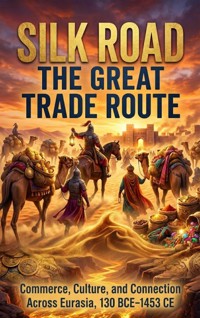
For over fifteen centuries, the Silk Road network connected East and West through overland routes traversing deserts, mountain passes, and steppe grasslands. More than a single path, this complex system of trade corridors facilitated exchange of goods, ideas, religions, and technologies that shaped civilizations from China to the Mediterranean. This history examines how commercial networks created unprecedented cultural interaction across Eurasia. Drawing on archaeological findings, merchant accounts, diplomatic records, and material evidence, the narrative traces the Silk Road's evolution through distinct periods. Han Dynasty China sought western horses and sought to counter nomadic threats, establishing trade relationships that brought silk westward. Roman demand for luxury textiles created profitable commerce. Sasanian Persia controlled central routes, taxing caravans and mediating exchange. Tang Dynasty China presided over the network's golden age, when goods, pilgrims, and diplomatic missions traveled between Chang'an and distant kingdoms. The book explores practical realities of long-distance trade. Caravanserais provided rest stops in hostile terrain. Merchants navigated multiple currency systems, languages, and political jurisdictions. Nomadic peoples both threatened and facilitated commerce, demanding tribute while offering protection. Oasis cities like Samarkand and Bukhara became cosmopolitan centers where diverse populations interacted. Maritime routes complemented overland paths, connecting Indian Ocean trade to continental networks.
Sie lesen das E-Book in den Legimi-Apps auf:
Seitenzahl: 195
Veröffentlichungsjahr: 2026
Das E-Book (TTS) können Sie hören im Abo „Legimi Premium” in Legimi-Apps auf:
Ähnliche


















Table of Contents
Chapter 1: The Origins of the Silk Road
Understanding Early Trade Networks
The Han Dynasty's Role
Nomadic Tribes and Their Impact
The Role of Caravan Routes
Chapter 2: Trade and the Roman Empire
The Roman Empire's Demand for Silk
Trade Routes and the Journey of Goods
Cultural Exchange Along the Silk Road
The Role of Nomadic Peoples
Chapter 3: Persia's Role in the Silk Road
Overview of the Sasanian Empire
Persian Merchants and Their Impact
Taxation and Economic Benefits
Cultural Exchange and Influences
Challenges and Declines
Chapter 4: The Golden Age of the Tang Dynasty
The Emergence of Chang'an as a Trade Hub
Trade Goods and Economic Adaptation
Cultural Flows and Artistic Expression
The Role of Diplomacy in Trade Relations
Chapter 5: The Function of Caravanserais
Historical Significance of Caravanserais
Architecture and Design
Economic Functions of Caravanserais
Social and Cultural Interactions
The Role of Nomadic Peoples
Caravanserais and Safety
Decline of Caravanserais
Chapter 6: Navigating Cultural Differences
The Role of Language in Trade
Trade Practices and Negotiation Techniques
The Influence of Religion on Trade
Cosmpolitanism in Oasis Cities
Chapter 7: The Role of Nomadic Peoples
Nomadic Societies and Their Structures
The Role of Nomadic Peoples in Trade
Military Influence and Protection
The Economic Impact of Trade Tribes
Chapter 8: Oasis Cities and Cultural Melting Pots
The Geography of Oasis Cities
Cultural Exchange and Interaction
Economic Networks and Trade Dynamics
Caravanserais: Hospitality and Trade Facilitation
The Role of Nomadic Peoples
Decline and Transformation
Chapter 9: Maritime Silk Road Connections
The Indian Ocean Trade Network
Cultural Exchanges through Maritime Trade
Economic Impacts of Maritime Trade
The Role of Maritime Powers
Chapter 10: The Spread of Buddhism and Other Ideas
The Beginnings of Buddhist Spread
The Role of Monks and Missionaries
Artistic Expression and Cultural Synthesis
The Influence of Trade Cities
The Eventually Global Reach of Buddhism
Buddhism and Other Intellectual Currents
Chapter 11: The Influence of Islamic Empires
The Rise of Islamic Empires
Transformation of Trade Routes
Cultural Exchanges and Innovations
The Role of Cities in Commerce
Chapter 12: The Pax Mongolica and Its Impact
The Unification of the Mongol Empire
Trade Routes and Economic Growth
Cultural Exchanges Under the Pax Mongolica
The Impact of Pax Mongolica on Technology
Chapter 13: Decline of the Silk Road
Shifts in Trade Patterns
Political Fragmentation
Economic Factors
Cultural Transformations
Chapter 14: Legacy of the Silk Road
Economic Influence of the Silk Road
Cultural Exchange Across Borders
Technological Innovations
Political Impacts and Connections
Lasting Legacy in Modern Times
Chapter 1: The Origins of the Silk Road
The Silk Road wasn't just one route; it was an intricate web of pathways that emerged from ancient civilizations. In this chapter, we will explore the initial formations of the Silk Road, focusing on the interactions between the Han Dynasty of China and the nomadic tribes of Central Asia. This connection was driven by the demand for goods, especially horses and silk, that shaped the economic landscape of the time.
Understanding Early Trade Networks
The roots of the Silk Road can be traced back to earlier trade networks that linked various cultures. These early interactions set the stage for a more complex system that later became the Silk Road. This section examines how initial trade routes facilitated exchanges of goods and ideas and the geographical factors that influenced their development.
Initial trade routes often followed natural pathways, such as rivers and mountain passes.
Early trade networks were deeply influenced by the geography of the land. Routes often emerged along natural pathways, taking advantage of rivers, valleys, and mountain passes, which not only facilitated movement but also ensured access to water and shelter. These routes provided the most efficient ways for traders to connect diverse regions.
For instance, rivers like the Yangtze and the Amu Darya were not just physical barriers; they were also vital conduits for trade, allowing for the transportation of goods to flourish. The rugged Himalayas and the formidable Tian Shan range presented challenges, yet they also prompted traders to develop specific skills to navigate these terrains.
This reliance on natural landmarks not only directed the paths traders took but also influenced the types of goods exchanged. Silk, spices, and metalwork traveled along these established routes, setting the groundwork for future trade expansions that contributed to the interconnectedness of distant civilizations.
Exchange of goods like spices, textiles, and precious metals took place long before the Silk Road's formal establishment.
Before the formal recognition of the Silk Road, various goods were already being exchanged across regions through local and regional networks. Spices like saffron, textiles such as silk, and precious metals, including gold and silver, were in high demand among various cultures.
This informal trade created a rich tapestry of economic interaction, wherein caravans of merchants transported these valuable commodities across territories. Such exchanges often occurred at marketplaces within oasis towns that emerged along these routes, fostering cultural exchanges alongside commercial transactions.
Evidence from archaeological sites indicates that these exchanges were not only limited to goods but also encompassed ideas, religious beliefs, and technologies. The intrinsic value of these trades was pivotal in developing relationships between different cultures, paving the way for the more structured Silk Road system that would follow.
Geographic features played a pivotal role in shaping trading activities, affecting both accessibility and safety.
The geography of Eurasia was both a facilitator and a deterrent to trade activities along emerging routes. Natural features such as mountains, deserts, and rivers dictated the accessibility of certain regions, influencing which areas became bustling trade hubs and which remained isolated.
Mountain ranges like the Altai and the Himalayas presented physical barriers, complicating travel and transporting goods. However, these same mountains often provided passages that were strategically important for establishing trade routes, such as the famed passes through the Pamirs.
Deserts, particularly the Taklamakan and the Gobi, posed significant risks to traders, demanding careful planning and caravan organization for survival. Well-established oases within these arid regions became crucial waypoints, enhancing safety and enabling traders to rest, resupply, and exchange goods, ultimately affecting the dynamics of trade interactions.
Tribal networks and local economies contributed to the early commerce, providing the foundation for future expansions.
The early commercial activities along the nascent Silk Road were heavily influenced by local economies and tribal networks. Indigenous tribes played significant roles as they catered to the food and goods needs of traveling merchants. They often served as intermediaries, facilitating exchanges between distant cultures.
These tribal networks were equipped with extensive knowledge of the terrain and its potentials, which enabled safer passage for traders. They not only participated in trade but also cultivated relationships that were foundational for developing networks of exchange over the centuries.
As these local economies thrived, they established a mutual dependency between nomadic pastoralists and settled agriculturalists. This exchange of goods, ideas, and resources contributed to the gradual evolution into more complex trade networks, setting the groundwork for the eventual emergence of the Silk Road, which would unite a vast array of cultures and traditions across Eurasia.
The Han Dynasty's Role
The Han Dynasty (206 BCE - 220 CE) marked a significant chapter in the evolution of the Silk Road. Its exploration efforts sought to secure trade routes and establish relationships with western kingdoms. This section highlights the dual objectives of the Han: acquiring valuable horses and spreading silk across regions.
The Han rulers recognized the strategic importance of horses for military purposes, leading to the establishment of diplomatic missions.
During the Han Dynasty, horses were not merely valued for their utility in warfare; they were seen as vital assets that could determine the outcome of conflicts. Recognizing this, Han rulers initiated a series of diplomatic missions aimed at procuring high-quality horses from the nomadic tribes inhabiting the Central Asian steppes. This effort was essential for mobilizing imperial power across vast territories.
The establishment of these diplomatic channels included sending envoys and establishing formal relationships with tribes such as the Xiongnu. The Han emissaries not only negotiated for horses but also endeavored to forge alliances that could ensure security along trade routes. Such missions exemplified the intricate balance between military necessity and trade, laying the foundation for early Silk Road connections that would expand over centuries.
Silk became a symbol of wealth and status, significantly boosting its demand in various regions.
Silk emerged as one of the most coveted commodities of the ancient world, particularly during the Han Dynasty. Its luxurious texture and vibrant colors made it a symbol of wealth and high social status. As demand surged throughout various regions, silk trading became intricately linked to elite culture and economic prosperity. The Han government capitalized on this demand, establishing a state monopoly on silk production.
The spread of silk stretched beyond Chinese borders, reaching places like the Roman Empire, where it became a desirable item among the elite. The fascination with silk not only fueled trade but also encouraged the exchange of ideas and artistic influences. This trade opened avenues for cross-cultural interaction, enhancing the political significance of silk as both a commodity and a cultural bridge across Eurasia.
Interactions with nomadic tribes allowed the Han to negotiate trade deals, facilitating cultural exchange.
The complex relationship between the Han Dynasty and nomadic tribes was pivotal in shaping the early Silk Road. While these tribes posed military challenges, they also acted as vital trade partners. The Han engaged in negotiations that allowed for the exchange of goods, information, and cultural practices. Through these interactions, merchants could traverse dangerous terrains with some degree of security.
This environment of negotiation and cooperation fostered a rich tapestry of cultural exchange. Innovations in textiles, art, and technology were shared, leading to a more interconnected region. The merchant routes established during these negotiations not only served economic functions but also acted as conduits for the flow of ideas and cultural identities across diverse peoples.
Establishment of the Silk Route also supported the movement of ideas, particularly Buddhism, into China.
The Silk Road's development had profound implications, especially in the realm of religious exchange. As trade flourished, so did the movement of ideas, notably Buddhism, which traveled from India into China along these burgeoning networks. The Han Dynasty played a crucial role in facilitating this spiritual exchange, as established trade routes allowed monks and missionaries to journey to new territories.
This influx of Buddhist philosophy and practices not only transformed the spiritual landscape of China but also contributed to the development of a more cosmopolitan culture. Temples, art, and manuscripts began to reflect this influence, and the integration of these ideas into Chinese culture illustrated the Silk Road's role as a highway for not just commerce but also profound cultural exchange that reshaped societies.
Nomadic Tribes and Their Impact
Nomadic tribes played a crucial role in the initial commerce along the Silk Road. Their movements in the Eurasian steppe not only posed challenges but also created opportunities for trade. This section focuses on the dynamics between these tribes and settled civilizations, shedding light on their dual role as both traders and raiders.
Nomads controlled key territories that facilitated trade, making them vital players in the Silk Road economy.
Nomadic tribes, primarily inhabiting the vast Eurasian steppes, played an essential role in the economy of the Silk Road during its formative years. Their control over strategic territories allowed them to oversee the movement of goods across critical routes that connected Eastern and Western civilizations. The expansive grasslands were essential for herd animals, providing the necessary resources for nomadic lifestyles, which included horses that were highly sought after by settled agrarian societies like the Han Dynasty.
This geographic advantage enabled nomads to act as gatekeepers of trade routes, facilitating commerce and acting as a vital link between cultures. Their ability to traverse vast distances swiftly made them indispensable in the transport of not only goods but also ideas and technologies. As such, nomadic tribes were not mere obstacles; they became pivotal actors in the Silk Road economy, influencing trade dynamics and enriching the material culture of the regions involved.
They often acted as intermediaries, exchanging goods between East and West.
The role of nomadic tribes extended beyond mere territorial control; they frequently acted as intermediaries in the Silk Road trade network. Such tribes possessed a unique understanding of both the agricultural and nomadic cultures, which allowed them to facilitate exchanges that might not have occurred otherwise. They traded horses, wool, and livestock for silk, spices, and other luxury items, effectively bridging the gap between vastly different economic systems.
This intermediary position helped stabilize trade routes and ensured that goods could flow among disparate regions, from China in the East to the Mediterranean in the West. The nomads' familiarity with denizens of both worlds provided opportunities for cultural exchange, influencing everything from artistic styles to culinary practices. Their pivotal role ensured that trade was not only profitable but also enriched with shared practices and traditions, thus fostering a broader cultural interaction across Eurasia.
Nomadic raids could disrupt trade, prompting civilizations to protect their trade routes more effectively.
While nomadic tribes were integral to the Silk Road economy, they also posed significant threats through raids. Such incursions could jeopardize the safety of trade caravans, making merchants wary and instilling a sense of insecurity in the lucrative routes that connected East and West. Tribes like the Xiongnu were known for their aggressive tactics, which forced settled civilizations to rethink their strategies in safeguarding their commerce.
As a result, civilizations such as the Han Dynasty undertook measures to fortify their trade routes, including establishing military outposts and alliances with neighboring tribes. This security focus not only protected economic interests but also solidified diplomatic ties, leading to a complex interplay between fear and cooperation that characterized Silk Road relations. The need for protection ultimately shaped the economic landscape, creating a dynamic where the threat of raids became a catalyst for enhanced trade security and partnerships.
Cooperating with nomadic groups provided stable trade networks, allowing cultural practices to blend.
Despite the challenges posed by their raiding activities, many settled civilizations recognized the value of forming cooperative relationships with nomadic tribes. These partnerships facilitated stable trade networks that were mutually beneficial. Cooperation often took the form of economic agreements, intermarriage, or military alliances, which helped to ensure safe passage for caravans traversing difficult terrains.
This interaction led to a vibrant fusion of cultures, as shared trade hubs emerged within oasis cities like Samarkand and Bukhara. Here, nomadic tribes and settled populations could exchange not just goods but also ideas, technologies, and social customs. The result was a rich tapestry of cultural practices, where shared experiences influenced art, religion, and everyday life. The collaboration between nomads and sedentary societies thus became a cornerstone for the cultural richness that defined the Silk Road's legacy.
The Role of Caravan Routes
As the demand for goods increased, so did the need for organized caravan routes. These paths became structured networks where merchants could travel with relative safety and reliability. This section elaborates on the formation and importance of these caravan routes in enhancing trade.
Caravanserais, or rest stops, were established along key routes, offering food and shelter for traders and their animals.
Caravanserais were crucial infrastructures that dotted the landscapes of the Silk Road, serving as rest stops for weary merchants and their caravans. These rest areas provided essential amenities such as food, water, and shelter, which were imperative for maintaining the health and strength of both animals and traders. Typically located every few days' journey apart, caravanserais were strategically placed to ensure that caravans could travel long distances without the risk of running out of supplies.
Beyond mere logistics, caravanserais functioned as cultural melting pots, bringing together traders from diverse backgrounds. This exchange facilitated not only trade but also the sharing of information, customs, and ideas. The architects of these establishments often included features like stables, storage rooms, and communal areas, which promoted interaction among travelers. Thus, caravanserais did not just enhance the efficiency of trade; they also fostered the cross-cultural connections that were a hallmark of the Silk Road.
The safety of caravans improved as more traders participated, creating a sense of community and shared interests.
As the volume of trade increased, so did the size of the caravans traveling along the Silk Road. More merchants joining these expeditions cultivated a greater sense of safety among participants. A larger caravan could deter bandit attacks and provide collective security against natural and human threats. This communal approach to trade not only enhanced the safety of individual traders but also created a network of mutual assistance and camaraderie.
The increased presence of traders along various routes prompted the formation of informal alliances and partnerships. Merchants who traveled together often shared risks and rewards, developing strong relationships that would benefit future trading endeavors. Such networks contributed to a robust commercial culture where shared interests in successful trade fostered cooperation and trust, leading to a thriving Silk Road economy.
Merchants shared knowledge about routes, markets, and cultures, enriching the overall trading experience.
Beyond the exchange of goods, the interactions among merchants along the Silk Road were pivotal in the dissemination of knowledge. Traders often shared information about the best routes, seasonal weather patterns, and the conditions of markets ahead, which allowed for better planning and increased profitability. This exchange of practical knowledge helped to refine and enhance trading strategies over generations.
Moreover, merchants acted as cultural ambassadors, imparting insights about their homelands' customs, languages, and belief systems. Such exchanges enriched the experiences of those involved in trade, often leading to a deeper appreciation for diverse cultures. This cultural dialogue not only fostered understanding but also contributed to the diffusion of innovations and ideas, making the Silk Road a dynamic tapestry of interconnected societies.
Caravan routes encouraged the systematic exchange of goods, leading to more regular and extensive trade relationships.
The establishment of well-defined caravan routes was instrumental in normalizing trade practices across vast distances. With designated pathways for caravans, traders could predict travel times and logistical challenges, facilitating more predictable trade cycles. This systematization allowed for the establishment of lasting trade relationships, as merchants came to rely on established routes and the consistent availability of goods.
As goods flowed more regularly between regions, it created a marketplace where demand and supply could develop in response to each other. Traders could specialize in specific products, enhancing the quality and variety of goods on offer. This not only bolstered local economies but fostered a sense of interdependence among different cultures and regions. As trade relationships solidified over time, they laid the groundwork for economic networks that transcended mere barter, evolving into intricate systems of commerce that shaped the Silk Road's legacy.
Chapter 2: Trade and the Roman Empire
The vast Roman Empire had a significant appetite for luxury goods, particularly silk. In this chapter, we take a closer look at how Roman demand influenced trade routes and commercial practices along the Silk Road. Through merchant accounts, we'll discover how silk and other goods traveled across borders, transforming the world's economies and cultures.
The Roman Empire's Demand for Silk
The Roman Empire, renowned for its vast territory and diverse population, developed a profound taste for luxury goods, particularly silk. This section explores how this demand shaped trade relationships along the Silk Road and the economic landscape of the empire.
Luxury as a Status Symbol
In Roman society, silk became synonymous with wealth and prestige. The luxurious fabric was so prized that it was often associated with the elite classes, including emperors and senators. Its delicate texture and vibrant colors were not just a testament to the skill of the artisans who produced it but also a reflection of the wearer's social status. Many wealthy Romans adorned themselves in silk garments, flaunting their wealth and taste in social gatherings.
The desire for silk extended beyond personal attire; it influenced various aspects of culture, including art and interior design. Silk draperies adorned the homes of the affluent, showcasing their refinement. This obsession with luxury had significant implications, as it stimulated trade routes and encouraged the flow of goods and ideas from the East, thereby creating a broader economic network across Eurasia. Silk was not simply a fabric; it became a cultural symbol, linking the Romans to distant lands and peoples.
The Role of Merchants
Merchants were instrumental in the acquisition and distribution of silk across the Roman Empire. Operating within complex trade networks, they navigated a myriad of cultures, languages, and political landscapes to ensure a steady supply of this coveted commodity. Most silk reached Roman markets through a series of intermediaries, each adding their mark on the price and quality of the fabric.
These traders often traveled dangerous paths along the Silk Road, facing threats from bandits and navigating harsh landscapes. Despite these challenges, their expertise in negotiating deals and understanding market demands made them pivotal to the economic strategies of both the East and West. As demand for silk soared, the merchants facilitated not just the exchange of goods but also the transfer of knowledge, including trading practices and cultural ideals, further enriching both empires.
Silk Prices and Economic Impact
The skyrocketing demand for silk in Rome had profound economic repercussions. As a luxury item, silk commanded exceptionally high prices, leading to an increase in profit margins for merchants and contributing to a burgeoning market. However, this demand also created challenges, as local economies struggled to accommodate these elevated price points, making silk an exclusive commodity primarily for the wealthy.
This economic phenomenon prompted the introduction of various taxes and tariffs specifically targeting silk importation. Roman officials recognized the flow of wealth it represented and sought to capitalize through regulation of this lucrative trade. Consequently, the financial ramifications of silk’s popularity extended beyond simple consumerism, reshaping taxation structures and influencing economic policies throughout the empire.
Legislation and Regulation
The Roman government took significant steps to regulate the silk trade, acknowledging its economic importance. Laws were enacted to control the importation process, ensuring that it benefitted the empire economically while also trying to maintain quality and manage supply. These regulations aimed to curb illegal trade and to monitor the activities of merchants who participated in the silk exchange.
Such legislation was crucial, not only for revenue generation through taxes but also for maintaining the stability of trade relationships with Eastern partners. The control over silk imports played a key role in sustaining the demand for this luxurious fabric, which in turn facilitated broader trade and cultural exchange across continents. Regulations allowed Rome to harness the economic potential of silk while preserving its status as a prestigious item within Roman society.
Trade Routes and the Journey of Goods
This section details the intricate routes that silk and other luxury goods took from Asia to the Roman Empire. Understanding these trade routes sheds light on the complexity of commerce in the ancient world.
The Overland Pathways
The overland Silk Road pathways were essential corridors that connected the Roman Empire with the East, facilitating the movement of goods, ideas, and cultures. These routes traversed a variety of challenging terrains, including vast deserts like the Taklamakan and treacherous mountain passes in the Tianshan and Pamir ranges. Merchants and their caravans, laden with precious goods such as silk, spices, and precious metals, navigated these arduous landscapes, relying on local knowledge and weather patterns.




