


0,49 €
Niedrigster Preis in 30 Tagen: 0,99 €
Niedrigster Preis in 30 Tagen: 0,99 €
Mehr erfahren.
- Herausgeber: Booksell-Verlag
- Kategorie: Lebensstil
- Sprache: Englisch
In "Six Months in Mexico," Nellie Bly embarks on a daring exploration of the Mexican landscape and its vibrant culture during a period of significant political unrest in the late 19th century. Written in an engaging, observational style, Bly's narrative captures the complexities of daily life, from indigenous traditions to the turbulent atmosphere of the revolution, elucidating the cultural dichotomies and societal challenges of the time. Her work is reflective of the investigative journalism movement, marked by vivid descriptions and a keen sense of social critique that allows readers to experience Mexico through her discerning eyes. Nellie Bly, a pioneering journalist, broke barriers for women in the field with her fearless pursuit of truth. Her earlier work, including her famous exposé in the mental institution, set the stage for her next adventure. Bly's deeply empathetic nature and relentless spirit galvanized her journey, making her acutely aware of the disparities faced by the Mexican populace in a country grappling with modernization and self-identity. With her unique background, she became a voice for the underrepresented, shining a light on societal injustices. "Six Months in Mexico" is not only an essential reading for those interested in travel literature but also serves as a poignant historical document. Readers will find Bly's insights strengthening their understanding of both Mexico and the nature of journalism itself, drawing connections to contemporary issues. This book promises to enlighten and inspire, offering a timeless perspective on courage, culture, and enduring human spirit. In this enriched edition, we have carefully created added value for your reading experience: - A succinct Introduction situates the work's timeless appeal and themes. - The Synopsis outlines the central plot, highlighting key developments without spoiling critical twists. - A detailed Historical Context immerses you in the era's events and influences that shaped the writing. - An Author Biography reveals milestones in the author's life, illuminating the personal insights behind the text. - A thorough Analysis dissects symbols, motifs, and character arcs to unearth underlying meanings. - Reflection questions prompt you to engage personally with the work's messages, connecting them to modern life. - Hand‐picked Memorable Quotes shine a spotlight on moments of literary brilliance. - Interactive footnotes clarify unusual references, historical allusions, and archaic phrases for an effortless, more informed read.
Das E-Book können Sie in Legimi-Apps oder einer beliebigen App lesen, die das folgende Format unterstützen:
Veröffentlichungsjahr: 2019
Ähnliche









Six Months in Mexico
Table of Contents
Introduction
A young reporter crosses a border to test the boundaries of power, curiosity, and truth. In Six Months in Mexico, Nellie Bly brings the pace of a newsroom to the patient art of travel, rendering a country’s texture through scenes of markets, plazas, workshops, and official corridors. Written in the late nineteenth century, her account captures the exhilaration and unease of observation: the desire to understand, the limits of access, and the responsibilities of bearing witness. Bly’s method is simple and exacting—go, look, ask, and write—and the questions she raises are equally enduring: What can an outsider see, and what does seeing oblige one to say?
This book is considered a classic because it fuses two traditions—travel narrative and investigative reporting—at a moment when both were rapidly evolving. Bly’s brisk, lucid prose and her eye for telling detail established a model for immersive journalism that prized immediacy without sacrificing judgment. Readers return to this work for its clarity of purpose and its refusal to treat observation as passive. By moving beyond scenic description to examine institutions and everyday life, she broadened what travel writing could encompass. Its status endures not through ornament but through utility: a reader learns, compares, questions, and feels the tug of ethical inquiry.
Six Months in Mexico also occupies an important place in literary history because it demonstrates how a first-person voice can be at once personable and analytical. Bly narrates with evident presence yet keeps the focus on the people and systems she encounters. That balance—between self and subject, encounter and context—became influential in later nonfiction, encouraging writers to blend scene, character, and social critique. The book’s durability lies in its method as much as its material: careful observation, transparent framing, and clear stakes. It crystallizes a style of reporting that treats attention as a civic act and narrative as a form of accountability.
Key facts are straightforward. The author is Nellie Bly, the pioneering American journalist known for her enterprising reporting. Six Months in Mexico emerged from her extended stay south of the United States border in the late 1880s, during the long rule of Porfirio Díaz. The book compiles dispatches shaped by on-the-ground experience into a cohesive portrait aimed at general readers. It offers a guided tour of culture, labor, faith, and governance as they intersect in daily routines. Without relying on abstraction, Bly builds a concrete sense of place and moment, orienting readers to what she saw and how she chose to view it.
The content is, at its core, a series of encounters: cities and small towns, public festivals and quiet households, artisan workshops and official ceremonies. Bly observes how people work, socialize, celebrate, and navigate the presence of authority. She notes the textures of language, dress, food, and trade while attending to the rhythms of travel itself—the delays, the conversations, the surprises. The narrative’s compass is human scale, yet it points to larger structures. By showing how customs and policies meet on the street and in the home, the book invites readers to consider the lived experience beneath political headlines.
Bly’s purpose is double: to bring Mexico vividly before readers who might never go, and to examine how power shapes what can be seen and said. She writes to inform without condescension and to analyze without presuming mastery. Her intention is not to deliver a final verdict on a nation but to chart contact points—places where curiosity becomes knowledge and where knowledge meets constraint. That stance keeps the prose alert and provisional. Rather than masquerading as neutrality, Bly acknowledges perspective and risk, making the act of reporting itself part of the subject and heightening the reader’s awareness of how narratives are made.
Stylistically, Six Months in Mexico is distinguished by economy, scene-making, and momentum. Short chapters frame discrete topics, yet recurring motifs—border crossings, public space, ceremony, and communication—thread the account into a unified whole. Bly favors concrete details and exchanges that let readers infer broader meanings. Her tone moves between admiration and skepticism, intimacy and distance, always anchored in clear description. This compositional strategy yields a book that can be read as both travel literature and social study. It rewards attention to language while remaining accessible, and it invites readers to test observations against their own knowledge and curiosity.
The historical context is crucial. Bly wrote during a period of rapid modernization paired with concentrated political control in Mexico, a combination that affected infrastructure, commerce, and the press. For readers in the United States, the book also addressed a near neighbor too often construed through stereotype or policy debate rather than lived detail. By situating street-level scenes within that broader frame, Bly offers a time capsule that doubles as a commentary on how nations present themselves and how visitors interpret those presentations. The result is a narrative that captures both the cadence of a particular era and the mechanics of representation.
As one of the most recognized reporters of her generation, Bly brought authority and daring to a field that was often skeptical of women’s public voices. Six Months in Mexico showcases her signature approach: go where the story is, listen closely, write plainly, and follow implications to their social edge. That approach influenced expectations for nonfiction by demonstrating that candor, speed, and integrity can coexist. The book’s legacy is not only literary; it is pedagogical. It teaches readers to weigh testimony, to consider sources and setting, and to understand how genre choices—travel sketch, profile, analysis—shape what a text can claim.
The themes are durable and resonant. At their center are curiosity as a civic virtue, the ethics of representation, freedom of expression, and the tension between hospitality and surveillance. Bly returns often to the interplay between spectacle and structure: festivals that reveal social bonds, ceremonies that signal authority, and ordinary transactions that disclose policy’s reach. Questions of gender and access surface as she navigates spaces open to some and closed to others. The book also probes language itself—how translation and tone frame meaning—reminding readers that interpretation is an act with consequences for both subject and audience.
For contemporary readers, Six Months in Mexico remains relevant on several fronts. It models a disciplined mode of cross-cultural reporting that values humility alongside clarity, a useful counterpoint to the speed and simplifications of modern discourse. It offers a historically grounded view of a nation still entwined with the United States, illuminating how proximity can breed both understanding and misunderstanding. It also invites reflection on the responsibilities of storytellers—journalists, travelers, and scholars alike—when depicting places not their own. In classrooms and book clubs, it sparks discussion about evidence, fairness, and the craft choices that render other lives legible.
Ultimately, this book endures because it brings together immediacy, insight, and moral attention. It is a narrative of movement that steadies itself by attending to people and particulars; a study of power that never loses sight of texture and joy; a work of journalism that remembers literature’s duty to form. Bly invites us to examine how we look, what we miss, and why it matters. In doing so, she offers more than a travelogue: she offers a method for reading the world. That method, shaped in the late nineteenth century, remains a bracing companion for readers today.
Synopsis
Six Months in Mexico is Nellie Bly’s nonfiction account of a half year spent observing Mexico during the late nineteenth century. Writing as a reporter from the United States, she outlines her reasons for going, the logistics of the journey, and first impressions formed while crossing the border by rail. She notes the procedures of customs, the changes in currency and language, and the shift in landscape from northern border towns to the interior. From the outset, her purpose is to provide readers a straightforward picture of daily life, institutions, and notable features of the country as she encountered them.
Upon arriving in the capital, Bly describes Mexico City’s setting and organization, emphasizing its broad avenues, plazas, and public parks. She introduces the Alameda, the fashionable Paseo, and the historic grounds of Chapultepec with their ancient trees and castle. Streetcars, carriages, and pedestrian crowds frame a portrait of a city mixing older colonial structures with new public works. She observes municipal services, the visible presence of police, and the patterns of street commerce. Through these scenes she establishes the capital as the focal point of government and society, and as the vantage from which she begins to examine Mexican life.
Bly turns to social customs and domestic life, describing the architecture of homes with interior patios, iron-grilled windows, and shaded corridors. She notes visiting etiquette, the exchange of calling cards, and formalities that structure social calls. Attention is given to women’s roles, education, dress, and the conventions surrounding chaperonage and courtship. She records the uses of fans and gestures, fashionable clothing, and household routines managed by servants. Children’s upbringing, schooling, and amusements are summarized to show everyday rhythms within families. These observations provide a framework for understanding how public ceremony and private custom intersect in the urban middle and upper classes.
Daily life in the streets receives extended treatment through depictions of markets and foodways. Bly reports on stalls filled with maize, chiles, fruits, and sweets; the preparation of tortillas and tamales; and the prevalence of chocolate and coffee. She describes maguey cultivation and the sale of pulque as a common beverage, along with the widespread habit of smoking cigarritos. Street cries, water carriers, and laundresses are presented as features of city commerce. Costs of staples, housing conditions for the poor, and charitable institutions appear alongside scenes from public baths and washhouses. The cumulative detail outlines how necessities and small luxuries circulate through the capital’s neighborhoods.
Public amusements are surveyed across theaters, music, and sport. Bly recounts Sunday gatherings, band concerts in plazas, and performances of opera and popular stage works. She describes bullfights and cockfights as organized spectacles with set rituals and regular audiences. Fireworks displays, street fairs, and lottery drawings illustrate pursuits of chance and spectacle that punctuate the calendar. She notes the social cross-section present at these events and the codes of behavior that accompany attendance. Together, these depictions situate leisure as both entertainment and a public forum where fashions, hierarchies, and communal celebrations become visible to the casual observer.
Religious institutions and festivals receive close attention. Bly outlines the prominence of Catholic churches in city life, the soundscape of bells, and the aesthetic of altars and processions. She summarizes major observances such as Holy Week, Corpus Christi, and commemorations tied to local patron saints. Pilgrimage practices and the importance of the Guadalupe shrine appear as emblematic expressions of devotion. Customs surrounding death and mourning, including cemetery visits and All Souls offerings, are described to show continuity between domestic ritual and public ceremony. The account emphasizes how religious rhythms structure time, shape education and charity, and anchor communal identity across classes.
Bly broadens the frame to the economy and labor. She reports visits to mining districts to observe silver extraction, stamping mills, and the hazards faced by workers. Agricultural estates and smallholdings appear in sketches of crops such as maize, sugar, and coffee, along with maguey fields linked to pulque production. The organization of haciendas, indebted labor, and the role of overseers are described as features of rural work. Railroads, telegraphs, and foreign investment are presented as signs of modernization, altering trade routes and employment. She also notes the presence of soldiers and rural police as mechanisms for security in both transportation corridors and countryside.
Governmental structures and the press are treated through portraits of authority under President Porfirio Diaz. Bly summarizes electoral formalities, the influence of local jefes politicos, and the routines of police, courts, and prisons. She records instances of newspaper censorship and the arrest of a journalist for criticizing officials, using the case to illustrate the limits placed on public dissent. Her attempts to report on such events bring official attention, leading her to document how permissions, surveillance, and warnings function. These chapters present the interaction between administration and information, noting how order is maintained alongside constraints on expression.
Later chapters move beyond the capital to nearby towns, manufacturing centers, and historic sites, noting differences in dress, dialect, and local industries. Bly describes landscapes of valleys and volcanoes, roadside inns, and craft production, integrating geography with custom. As her inquiries into political restrictions draw scrutiny, she recounts receiving advice to curtail reporting and ultimately to leave the country to avoid arrest. The narrative closes with her departure at the six-month mark. She restates her aim: to offer a compact, factual portrait of Mexican society, economy, traditions, and governance as she encountered them, providing readers an organized overview of a complex nation.
Historical Context
Nellie Bly’s Six Months in Mexico is set in the mid-1880s, principally 1885–1886, during the Porfiriato, when President Porfirio Díaz dominated national life. Mexico City and the central highlands frame much of the narrative world, with excursions to key corridors linked by rail and stage, including routes toward Veracruz and Puebla. The capital functioned as the political and symbolic core, crowned by Chapultepec and the new boulevards of Reforma while tenements and markets displayed stark social contrasts. The broader landscape—haciendas, mining districts, indigenous villages—revealed the country’s uneven modernization under an authoritarian regime emphasizing “order and progress.”
The period featured expanding telegraphs and railways, growing foreign investment, and a carefully policed public sphere. A formal peace masked coercion in the countryside and the delicate truce between state and Church. Bly, a pioneering American reporter, entered this setting as both participant-observer and outsider, relying on the new transportation infrastructure to move between locales. Her vantage highlighted contrasts between elite salons and rural peonage, official spectacles and private fear of the censor. The book’s time and place thus situate a regime tightening political control while showcasing modern amenities—conditions that shaped the events and social realities she recorded for U.S. readers in 1888.
Porfirio Díaz’s rule defined the era. After first taking power in 1876, Díaz served 1876–1880 and then 1884–1911, establishing the Porfiriato. His government centralized authority through appointed jefes políticos, disciplined the press, and expanded the rurales to police the countryside. Díaz cultivated foreign capital to fuel railways, mines, and export agriculture, presenting a vision of stability after decades of civil war and foreign invasion. Six Months in Mexico portrays the social atmosphere that accompanied this arrangement—deferential public rituals, guarded conversations about politics, and conspicuous modern displays—while emphasizing the anxiety created by surveillance, arbitrary detention, and the regime’s intolerance of open dissent.
Modernization under Díaz accelerated in the 1880s. Railway mileage surged from a few hundred kilometers in the 1870s to thousands by the mid-1880s, connecting Mexico City with Veracruz (via the Mexican Railway, completed in 1873) and the U.S. border (Mexican Central, completed to Ciudad Juárez in 1884). Telegraph lines stitched together administration and commerce. Legal reforms included the Mining Code of 1884, which recognized private subsoil rights and drew U.S. and British investment into silver and copper. Bly’s travel, hotel culture, and observations of foreign colonies reflect these changes; she repeatedly notes sleek conveyances and cosmopolitan circles that existed alongside enduring poverty and rural indebtedness.
Repression structured the Porfirian peace. The rurales, a national rural police force expanded by Díaz, patrolled highways and rail lines, while compliant courts and electoral rituals secured his re-elections, including 1884. Newspapers risked closure or prison if they crossed tacit red lines. Bly recounts the atmosphere of censorship and the jailing of a local journalist who criticized the president, a case that precipitated her hurried departure to avoid arrest. She also relays the grim reputation of San Juan de Ulúa fortress-prison in Veracruz for holding political detainees. These scenes make palpable how “order” rested on intimidation, surveillance, and exemplary punishment.
The Plan of Tuxtepec (1876) brought Díaz to power by overthrowing President Sebastián Lerdo de Tejada. Proclaiming the principle of “No re-election,” Díaz had earlier opposed Benito Juárez through the failed Plan de la Noria (1871). Tuxtepec’s success expressed regional military dissatisfaction with central authority and a promise to end caudillo permanence. Ironically, Díaz later subverted that principle to entrench himself. Bly writes within the legacy of Tuxtepec: the formal language of constitutionalism persisted, but the practice of politics had become tightly choreographed. Her portraits of deferent officials and risk-averse editors illustrate how revolutionary slogans were absorbed into a durable authoritarian structure.
The French Intervention (1862–1867) and the Second Mexican Empire profoundly shaped late nineteenth-century Mexico. French forces were checked at the Battle of Puebla on 5 May 1862 under General Ignacio Zaragoza, while Díaz distinguished himself in the campaigns that followed. Emperor Maximilian’s capture and execution at Querétaro in 1867 restored the Republic under Juárez. These episodes forged nationalist rituals and military prestige that Díaz later leveraged. Bly encounters commemorations and patriotic narratives rooted in these years; the valorization of order and a unified nation, drilled by military parades and civic ceremonies, echoes the post-Intervention desire to prevent renewed foreign humiliation.
Railroads transformed economy and society. The Mexican Railway (Veracruz–Mexico City) surmounted the Orizaba mountains by 1873, while the Mexican Central linked the capital to Ciudad Juárez/El Paso in 1884. By the mid-1880s Mexico counted thousands of kilometers of track, expanding markets, lowering transport costs, and accelerating mining and export agriculture. New depots, hotels, and merchant houses sprouted at junctions. Bly’s itinerary and reporting depended on these lines; she describes swift passages through varied climates and the juxtaposition of elegant stations with impoverished trackside settlements. Railroad spectacle—engineered bridges, tunnels, and timetables—offered Díaz a visible symbol of progress that her pages both admire and interrogate.
Land policy under the Porfiriato favored concentration. The Ley de Deslinde y Colonización (June 15, 1883) empowered survey companies to “discover” and privatize land deemed vacant, often communal or indigenous property. Vast estates expanded, and with them tiendas de raya bound workers via debt peonage, while municipal autonomy shrank under appointed jefes políticos. Agricultural exports—henequen, cattle, sugar—surged, but tenancy and displacement deepened. Bly’s depictions of hacienda life, meager wages, and scrip payments align with these processes. She highlights the unequal bargain of modernization: scientific surveys and commercial crops alongside families tethered to store credit, scarce schooling, and the constant risk of eviction.
Indigenous resistance persisted despite state consolidation. In Sonora, Yaqui communities under leaders such as José María Leyva “Cajeme” waged intermittent war against encroachment; Cajeme was captured and executed in 1887. In Yucatán, the long Caste War (1847–1901) ebbed and flowed as Maya groups defended land and autonomy. The Porfirian state combined campaigns with forced relocations and, later, deportations. Bly, traveling primarily in central regions, nevertheless comments on indigenous markets, languages, and marginalization. Her portraits of dress, diet, and labor conditions intersect with these conflicts by documenting how colonial legacies and Porfirian land policy kept indigenous communities precarious even far from active battlefronts.
Church–state relations were governed by the Constitution of 1857 and the Reforma laws, which curtailed ecclesiastical privilege and corporate landholding. Under Díaz, the government maintained the legal framework while reaching an informal accommodation with Catholic authorities, allowing public devotions and festivals so long as clergy avoided overt political agitation. Religious calendars structured urban and rural life through processions and feast days. Bly describes crowded churches, pilgrimages, and the cult of Our Lady of Guadalupe, while also noting the political calculus: the regime tolerated visible piety as social cement and distraction, provided it did not challenge the primacy of presidential authority and police oversight.
Public security was a Porfirian priority. The rurales, formalized as the Guardia Rural after 1861 and expanded in the 1880s, patrolled railroads and highways, projecting swift justice. Banditry legends, including the famed thief Chucho el Roto—captured in 1885—fed a culture of both fear and fascination. Summary punishments and showy uniforms signaled that the countryside belonged to the state. Bly recounts encounters with rurales on trains and roads, noting passengers’ relief at their presence but also their power. Her vignettes suggest order obtained through coercion, with the line between protection and intimidation blurred by the need to reassure investors and dignitaries.
Mexico City’s urban life showcased ambition and inequality. Paseo de la Reforma, begun under Maximilian, became the emblematic boulevard of modernity. Horse-drawn tramways, gas-lit avenues, theaters, and cafés catered to elites and foreign visitors, while dense barrios, open-air markets, and limited sanitation revealed persistent poverty. Monumental projects and the presidential residence at Chapultepec staged authority. Bly moves between salons and street life, describing opera performances, bullfights, and markets. Her contrasts—silks beside rags, marble beside mud—document a capital city performing progress for foreigners and domestic elites even as overcrowding, low wages, and the threat of police harassment hemmed in the urban poor.
U.S.–Mexico relations intensified with trade, rail links, and border management. The 1884 convention between the countries addressed river-boundary changes along the Rio Grande and Colorado; in 1889 they created the International (later International Boundary and Water) Commission. U.S. capital financed railways and mines, and cross-border cities like El Paso/Ciudad Juárez and Laredo/Nuevo Laredo grew as gateways. Bly’s own passage relied on these corridors, and she comments on American investors and tourists visible in hotels and trains. Her observations register both curiosity and unease: prosperity depended on foreign money, yet nationalists worried about sovereignty and the corrosive social effects of unequal exchange.
Veracruz remained the nation’s principal Gulf port and a conduit of commerce, disease, and state power. The fortress of San Juan de Ulúa, offshore in the harbor, served for centuries as a prison; under Díaz it retained its fearsome reputation for housing political and common prisoners in harsh conditions. Steamships linked Veracruz to New Orleans and New York, facilitating trade and travel. Bly references Veracruz and Ulúa to evoke the tangible machinery of control: a place where a critic might disappear. Even when she writes admiringly of the mountain railway from the coast, she juxtaposes engineering triumphs with the specter of incarceration.
Popular entertainments and fiscal devices reveal everyday politics. Bullfighting and cockfighting drew crowds and tax revenues; the National Lottery, with eighteenth-century origins, flourished as a legal outlet for hope in a society with few avenues of mobility. Street vendors hawked tickets, and gaming intersected with taverns and pulquerías. Bly describes these scenes with ethnographic curiosity, then links them to poverty and governance: spectacles regulated leisure, while lottery proceeds and municipal fees lubricated Porfirian administration. Her sketches suggest how the regime cultivated distraction and cash flow, even as gambling losses pulled the poor deeper into debt and moralists worried about public order.
As social and political critique, the book exposes the contradictions of Porfirian modernization: glittering railways, theatres, and boulevards juxtaposed with debt peonage, dispossession, and censored speech. Bly’s account of a jailed journalist, her own flight to evade arrest, and her depictions of rurales policing make the costs of “order” visible. She interrogates elite comfort financed by foreign capital and regressive local monopolies, while recording the marginalization of indigenous communities and the urban poor. The work implicitly indicts class stratification, the ritualization of elections, and the suppression of civil liberties that later fueled the 1910 Revolution’s demands for land, labor rights, and political freedoms.
Author Biography
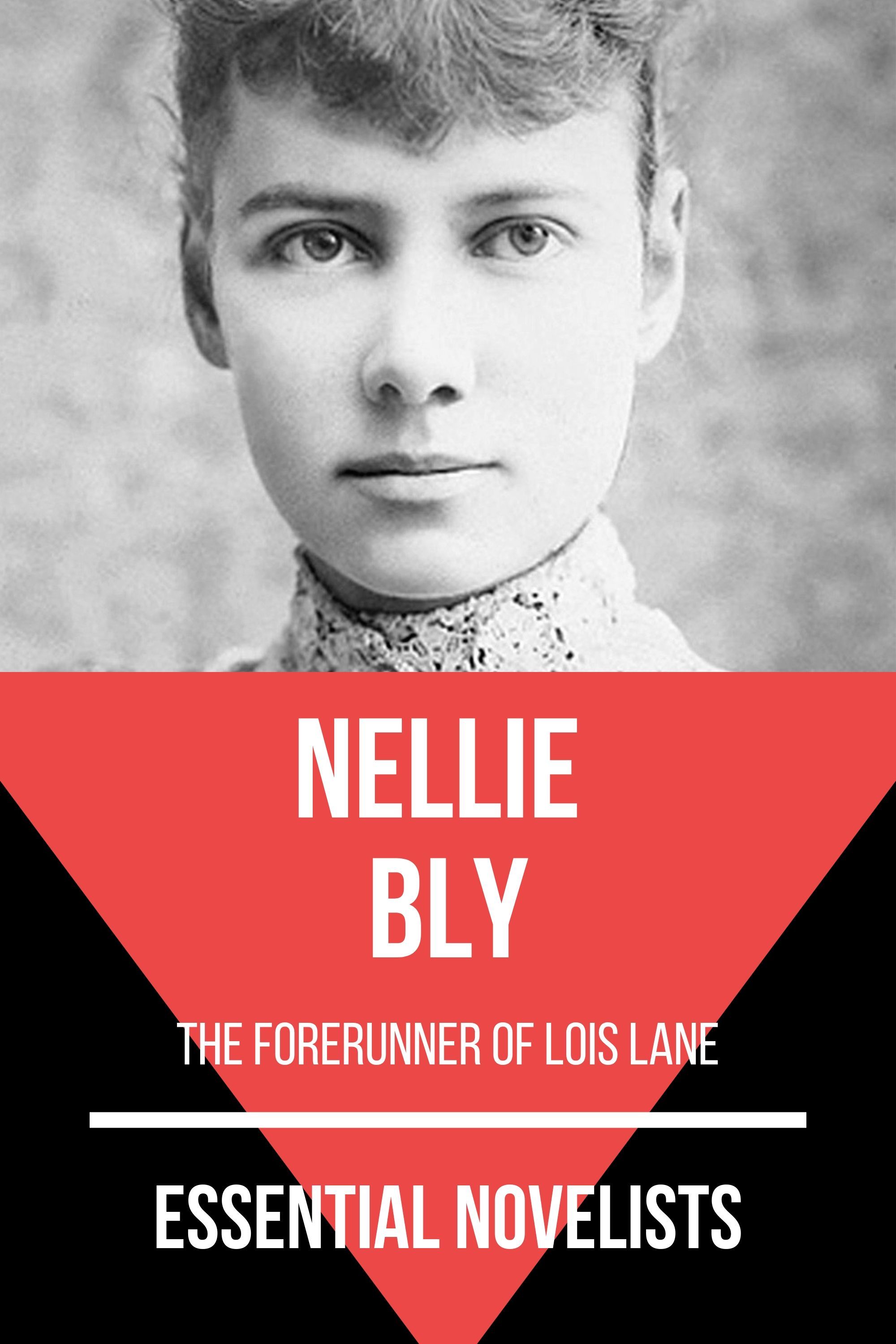
Nellie Bly, born Elizabeth Cochrane, was an American journalist active from the late nineteenth century into the early twentieth. She is best known for pioneering investigative reporting that used immersion and undercover methods, and for a headline-making solo trip around the world completed in seventy-two days. Working at a moment when mass-circulation newspapers were reshaping public life, Bly produced vivid, first-person narratives that exposed institutional abuses and celebrated modern possibility. Her reporting helped define the social-reform spirit associated with muckraking while broadening the kinds of assignments open to women. She combined tenacity, theatricality, and a clear moral purpose, leaving a body of work that bridged reportage and popular storytelling.
Raised in western Pennsylvania, Bly had limited formal higher education, attending the Indiana Normal School (today Indiana University of Pennsylvania) briefly before finances curtailed study. Her entry into journalism came after she wrote a forceful letter to the Pittsburgh Dispatch challenging a piece on women's roles; the paper hired her and assigned a pen name drawn from a popular song. As Nellie Bly, she wrote early columns on working women, divorce, and other civic questions, and tested her hand at local investigations and features. Those assignments honed the direct, conversational voice and reformist orientation that would characterize her later work in larger metropolitan newspapers.
In the late 1880s Bly moved to New York and secured work at Joseph Pulitzer's New York World, where she undertook the undercover asylum investigation that made her nationally famous. Feigning mental illness, she gained admission to the Women's Lunatic Asylum on Blackwell's Island and documented cold, cruelty, and neglect from the inside. The resulting series, later collected as Ten Days in a Mad-House, prompted a grand jury inquiry and increased public funding and oversight. Its brisk narrative, careful observation, and moral clarity offered a model for immersive expose reporting, while also raising enduring questions about the ethics and risks of deception in newsgathering.
Beyond the asylum story, Bly ranged widely. For the World she chronicled sweatshops, employment agencies, and other workplaces, describing precarious pay, long hours, and unsafe conditions in plain language aimed at a broad readership. Earlier, after reporting from Mexico for the Pittsburgh Dispatch, she published Six Months in Mexico, a late-1880s account attentive to everyday life, censorship of the press, and political atmosphere under Porfirio Diaz. She also produced interviews and personality sketches that revealed her flair for staging encounters without losing a reform focus. Across these assignments, Bly blended advocacy with narrative momentum, expanding the subjects and styles considered suitable for front-page reporting.
Bly's most famous feat of mobility came with her attempt to circle the globe faster than the fictional hero of Jules Verne's novel. Departing in the late 1880s, she traveled by steamship and rail through Europe and Asia, met Verne in France, and returned to New York in seventy-two days. The public followed her progress via telegraphed updates, and crowds greeted her homecoming. She shaped the journey into Around the World in Seventy-Two Days, a brisk travelogue that foregrounded logistics, modern infrastructure, and a self-assured female traveler navigating a male-dominated industry. The project cemented her celebrity and showed journalism's capacity to turn movement into story.
In the mid-1890s Bly married a manufacturer and, after his death in the early 1900s, assumed leadership of Iron Clad Manufacturing, a Brooklyn-based firm producing metal goods. She managed operations and secured U.S. patents related to industrial containers. Financial reversals and litigation eventually followed, and she returned to full-time reporting in the 1910s. Bly wrote columns on social services and women's suffrage and, during World War I, filed dispatches from Europe for American papers, offering eyewitness accounts of wartime conditions and relief efforts. These later pieces extended her range while maintaining the accessible, morally engaged voice that marked her early investigations.
Bly spent her later years in New York journalism and died in the early 1920s. Her legacy rests on a small but influential shelf of books: Ten Days in a Mad-House, Six Months in Mexico, and Around the World in Seventy-Two Days, and on dozens of newspaper investigations that pressed institutions toward accountability. Scholars and reporters continue to study her for narrative technique, public impact, and the ethical complexities of deception in service of the truth. Read today, her work captures the energy and contradictions of the Gilded Age press while demonstrating how a determined reporter could translate curiosity and courage into concrete civic reform.




