


61,99 €
Mehr erfahren.
- Herausgeber: John Wiley & Sons
- Kategorie: Bildung
- Sprache: Englisch
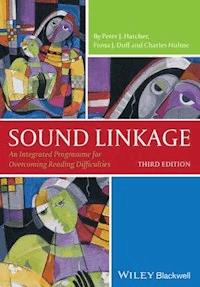
The updated edition of this successful resource has been developed to support children with reading delays and dyslexia. It contains a phonological training programme, an explanation of how this programme can be embedded within a broader reading intervention, a standardized test of phonological awareness and a methodology to grade children’s reading books.
- This third edition has been revised throughout to include the latest developments in the field
- These resources have been used with a wide range of children and found to be suitable for use with any reading-delayed children, irrespective of cognitive ability and age
- All activities are accompanied by a set of photocopiable record sheets, a set of pictures, and an appendix of additional activities useful in helping children master a particular skill or to reinforce existing learning
- The ten sections of activities within the guide include: identification of words and syllables; identification and supply of rhyming words; identification and discrimination of phonemes; and blending, segmentation, deletion, substitution and transposition of phonemes within words.
Sie lesen das E-Book in den Legimi-Apps auf:
Seitenzahl: 248
Veröffentlichungsjahr: 2014
Ähnliche








Table of Contents
Title page
Copyright page
Acknowledgements
Foreword
About the Companion Website
Introduction
Test of Phonological Awareness
Programme Administration
Phonological Training Activities
Phonological Linkage Activities
SECTION 1: Identification of Words as Units Within Sentences
SECTION 2: Identification and Manipulation of Syllables
SECTION 3: Identification and Supply of Rhyming Words
SECTION 4: Identification and Discrimination of Phonemes
SECTION 5: Phoneme Blending
SECTION 6: Phoneme Segmentation
SECTION 7: Phoneme Deletion
SECTION 8: Phoneme Substitution
SECTION 9: Phoneme Transposition
SECTION 10: Phonological Linkage Activities
Instructions
Sound Linkage: Theoretical Background to the Programme
Phonological Awareness and Learning to Read
The Hatcher, Hulme and Ellis Study
Evidence from Subsequent Studies for the Effectiveness of ‘Reading with Phonology’ Programmes
Using Sound Linkage as One Component of an Integrated Approach to Teaching Reading
Grading Children's Early Reading Books
Summary
Test Development and Standardisation
APPENDIX 1: Additional Activities
APPENDIX 2: Table of Percentages (Observed Score / Possible Score) × 100
APPENDIX 3: Grading Children's Early Reading Books
Sound Linkage Training Programme: Record Sheets
Record Sheet A: Test of phonological awareness
Record Sheet B: Identification of words as units within sentences
Record Sheet C: Identification and manipulation of syllables
Record Sheet D: Identification and supply of rhyming words
Record Sheet E: Identification and discrimination of phonemes
Record Sheet F: Phoneme blending
Record Sheet G: Phoneme segmentation
Record Sheet H: Phoneme deletion
Record Sheet I: Phoneme substitution
Record Sheet J: Phoneme transposition
References and Bibliography
Picture Sheets
This edition first published 2014
© 2014 John Wiley & Sons, Ltd.
Edition history 1e Whurr Publishers Ltd. (1994); 2e Whurr Publishers Ltd. (2000)
Registered Office
John Wiley & Sons Ltd, The Atrium, Southern Gate, Chichester, West Sussex, PO19 8SQ, UK
Editorial Offices
350 Main Street, Malden, MA 02148-5020, USA
9600 Garsington Road, Oxford, OX4 2DQ, UK
The Atrium, Southern Gate, Chichester, West Sussex, PO19 8SQ, UK
For details of our global editorial offices, for customer services, and for information about how to apply for permission to reuse the copyright material in this book please see our website at www.wiley.com/wiley-blackwell.
The right of Peter J. Hatcher, Fiona J. Duff and Charles Hulme to be identified as the authors of this work has been asserted in accordance with the UK Copyright, Designs and Patents Act 1988.
All rights reserved. No part of this publication may be reproduced, stored in a retrieval system, or transmitted, in any form or by any means, electronic, mechanical, photocopying, recording or otherwise, except as permitted by the UK Copyright, Designs and Patents Act 1988, without the prior permission of the publisher.
Wiley also publishes its books in a variety of electronic formats. Some content that appears in print may not be available in electronic books.
Designations used by companies to distinguish their products are often claimed as trademarks. All brand names and product names used in this book are trade names, service marks, trademarks or registered trademarks of their respective owners. The publisher is not associated with any product or vendor mentioned in this book.
Limit of Liability/Disclaimer of Warranty: While the publisher and author(s) have used their best efforts in preparing this book, they make no representations or warranties with respect to the accuracy or completeness of the contents of this book and specifically disclaim any implied warranties of merchantability or fitness for a particular purpose. It is sold on the understanding that the publisher is not engaged in rendering professional services and neither the publisher nor the author shall be liable for damages arising herefrom. If professional advice or other expert assistance is required, the services of a competent professional should be sought.
Library of Congress Cataloging-in-Publication Data is available
Pb Isbn: 9781118510087
A catalogue record for this book is available from the British Library.
Cover image: Bharati Chaudhuri, Mother and Child, acrylic on canvas. © Bharati Chaudhuri / SuperStock.
Cover design by Cyan Design
Acknowledgements
Many people have helped in the compilation of this training programme. All are greatly appreciated. We would particularly like to express our gratitude to the following:
The teachers and other colleagues who helped construct the teaching package: Joan Armstrong, Judith Botham, Deborah Catlett, Gill Dicken, Pam Chaldecott, Janet Hatcher, Penny Kennedy, Mary Kirk, Judith Lord, Cynthia McKerr, Margaret Munn, Joyce Rogers and Mary Savage.
Angela Menhams, who drew and collated the pictures from originals drawn by Mary Kirk and Joyce Rogers.
Members of the Cumbria Education Authority, especially John Harrold, Dennis Turner and Michael Watmough, without whose support the Cumbria–York research study would not have been possible.
The Reading Intervention tutors in Cumbria who helped pilot the Sound Linkage test, the children who took part in the grading exercise, their parents and the staff of Carlisle infant, junior and primary schools for their support.
Andrew Ellis, Sandra Iverson, Kate Nation, Margaret Snowling and William Tunmer, who offered support and advice at various stages in the development and production of these materials.
North Yorkshire Education Service, and particularly Glynnis Smith and Simon Gibbs (now of Newcastle University), for the encouragement and opportunity to undertake further research involving the materials in this programme.
Christine Noyes and Glynnis Smith for their ongoing support of Sound Linkage, and for their highly valued and well-informed suggestions for this third edition.
Finally, Janet for ever being helpful.
Peter J. Hatcher, Fiona J. Duff and Charles Hulme, March 2014
Note
The authors and publisher wish to thank the following for permission to reprint copyright material. ‘Red Riding Hood and the Wolf’ from Roald Dahl's Revolting Rhymes and Dirty Beasts © 1982 by Roald Dahl, is used with the permission of Jonathan Cape, The Random House Group Ltd and Alfred A. Knopf Children's Books, a division of Random House, Inc. Excerpt ‘Neighbours’ from The Beaver Book of Funny Rhymes is used with permission of Barbara Ireson. Text © 1980 by Barbara Ireson. All reasonable efforts have been made to secure permission for the reproduction of other copyright material.
Foreword
Many children experience difficulties in learning to read. One common form of reading difficulty, sometimes referred to as dyslexia, is a problem in ‘cracking’ the alphabetic code. In the last few decades research into the nature of dyslexia has made enormous strides and we now know a great deal about the nature and causes of these children's reading problems. Children with dyslexia are characterised by having difficulty learning how the letters in written words map onto the speech sounds in spoken words. These problems in mastering the alphabetic principle appear to originate from problems with the representation of speech sounds (a deficit in phonological representation).
This research has led to a large body of work concerned with developing and evaluating how best to teach children with dyslexia. The work by Peter Hatcher and his colleagues has been at the forefront of work in this area. The Sound Linkage programme contains an easy-to-use assessment of children's phonological awareness skills. If this shows that a child has problems acquiring these skills, the training materials in Sound Linkage can be used by a teacher, or well-trained teaching assistant, to help improve the child's phonological awareness. The groundbreaking research that underlies this programme (Hatcher, Hulme & Ellis, 1994) showed that an integrated programme linking phonological awareness training with structured reading instruction was remarkably successful in helping to improve children's reading skills. Although the materials provided here were developed with the needs of poor readers in mind, there is every reason to suppose that many other children will benefit from explicit teaching to analyse the sounds of words and to understand how these relate to their written forms. The Sound Linkage programme is therefore a valuable resource for all those concerned with helping children learn to read.
Sir Jim Rose CBE FRSA
Former Director of OFSTED
About the Companion Website
There is a companion website for this book: www.wiley.com/go/hatcher
The website contains the following material for you to download and use:
Electronic versions of the Picture SheetsElectronic versions of the Record Sheets.Introduction
Phonological awareness can be defined as the ability to explicitly access and manipulate the sound structure of spoken words. It is now recognised that phonological awareness is a critical component skill for learning to read. Phonological awareness is a broad term that covers different ‘levels’ or sizes of phonological units in spoken words. For example, a child may begin by developing syllable awareness first (that ‘happy’ contains two syllables) and then become aware of rhyming relationships between words (that ‘cat’ and ‘hat’ share the rime unit /at/ at the end of the syllable) before going on to develop phoneme awareness (the understanding that ‘cat’ can be split into three speech sounds, /k/ /ae/ /t/). Phoneme awareness is particularly critical for reading development (Muter, Hulme, Snowling & Stevenson, 2004).
Problems in phonological awareness are a major cause of reading problems in young children. Sound Linkage allows a teacher or teaching assistant (TA) to assess whether a child has adequate phonological awareness skills, and if they do not, provides materials that can be used to help teach this skill in a sequential and systematic way. However, teaching that is designed to improve phonological awareness should not take place in isolation. The name of this programme refers to the fact that there is good evidence that phonological awareness training needs to be ‘linked’ or integrated with the teaching of letter–sound knowledge and reading and spelling skills in order to improve reading. Activities that emphasise this linkage are also included in this programme.
The materials in this manual were used as part of the Reading with Phonology remedial teaching programme developed by Hatcher, Hulme and Ellis (1994). Research has shown that these materials are effective as one component of an integrated approach to teaching young children who are struggling in the early stages of learning to read. Details of the research findings associated with Sound Linkage are given in the ‘Sound linkage: theoretical background to the programme’ chapter, which has been updated and extended for this third edition.
The majority of this manual contains the programme of phonological and phonological linkage activities that was used in the original research study. The activities are accompanied by a set of photocopiable Record Sheets and a set of pictures. The 10 sections of phonological activities have been reordered for the third edition, to fit with advances in research findings. These sections cover identification of words and syllables, identification and supply of rhyming words, identification and discrimination of phonemes and blending, segmentation, deletion, substitution and transposition of phonemes within words. Given the prime importance for phoneme awareness in learning to read, teachers and TAs should aim to focus their efforts here, rather than on training syllable and rhyme awareness. In addition to the extra linkage activities at the end of sections 5, 6, 7, 8 and 9, the original activities for linking sounds and letters in the context of reading and writing text are described in Section 10. The appendix of additional phonological activities may be used to help children master a particular skill or to reinforce existing learning.
It is important that the ‘Programme administration’ section, which contains specific details about the administration of the programme, should be read before implementing any of the activities with a child. This information immediately precedes Section 1 of the training activities.
The test of phonological awareness should be used to gauge a child's level of phonological development at the start of the programme and as an indication of where to start a child in the programme. For example, if a child demonstrates a high level of ability in working with syllables and rhymes, those sections of the programme might be omitted. Given the structure of the programme, it is possible to return to a lower level if a teacher or TA finds that they have started at too high a level. The test of phonological awareness may also be used to measure a child's progress in developing phonological awareness. Normative data for the Sound Linkage test are given in the ‘Test development and standardisation’ chapter.
In addition to the 54 Picture Sheets included with this manual, teachers and TAs must have access to a packet of six counters, a stopwatch or a watch with a second hand, a miniature car and a box of crayons.
We hope you will find these materials useful in the assessment and teaching of children with reading difficulties.
Test of Phonological Awareness
Aim
The Sound Linkage test of phonological awareness takes about 10 minutes to administer. The main aims of the test are to create a profile of a child's strengths and weaknesses in phonological awareness, and to determine a child's point of entry to the training activities. As a normative test (Hatcher, 1996), it may be used to identify young children at risk of reading failure and those children whose reading delay may be attributable to limited phonological awareness skills. Following an interval of at least three (preferably six) months, the test may be re-administered in order to provide a measure of progress in acquiring phonological awareness skills. Instructions for administering and using the test are given here; information on its development and standardisation can be found in the ‘Test development and standardisation’ chapter.
Testing considerations
Materials needed: five counters, administration sheets (this chapter, p. 4 to 9) and photocopiable ‘Test of Phonological Awareness’ Record Sheet (Record Sheet A, pp. 156–157).
Administration, scoring and discontinuation
From testing to teaching
The areas of difficulty on the test can be used as a general guide for where to enter the training programme.
The earliest phonological skills to develop are awareness of words, syllables and rhyming relationships between words. If a child makes any errors on the syllable blending or rhyme subtests, we suggest that some time is spent on training these skills using the first three sections of the teaching programme. However, for reading development, awareness of phonemes in spoken words is the most critical skill and we suggest that teaching progresses to developing phoneme awareness as soon as possible (using sections 4 through 10).
Children who made no errors on the syllable blending or rhyme subtest, but made errors on any of the phoneme awareness subtests, should begin with phoneme awareness training. As a guide, we suggest that such children should begin the training at section 4, ‘Identification and discrimination of phonemes’. Sections 4 through 10 are ordered according to their level of difficulty for most children. We would recommend that teachers use these sections flexibly, but work through these different exercises to ensure that children have a secure foundation in being able to hear phonemes in words, blend and segment phonemes, and manipulate phonemes flexibly in conjunction with letters.
Syllable blending
Say:
I am going to pretend to be a robot who can only say words in a funny way. I want you to try to guess what I am saying.
Pronounce the word ‘biscuit’ leaving a one-second gap between each syllable:
bis – cuit
Help the children if they cannot do it. Present the next exemplar in the same way.
di – no – saur
Say:
What do you think the robot is trying to say now? Listen carefully.
Phoneme blending
When pronouncing phonemes, leave a one-second gap between each. Say:
The robot is now going to say some short sounds. See if you can make them into words.
t – a – p
Help children if they cannot do it.
Present the next exemplar in the same way.
d – o – g
Say:
What do you think the robot is trying to say now?
Rhyme
Say:
Have you heard of Hickory, dickory dock? Hickory, dickory dock, the mouse ran up the ___ [clock]? Dock and clock are different words, but they sound a bit the same. Listen. Dock, clock.
Do you know Jack and Jill? Jack and Jill went up the ___ [hill]? Jill and hill are different words, but they sound a bit the same. Jill, hill. Can you think of another word that sounds a bit like Jill?
Does ‘fill’ sound a bit like ‘hill’? What about ‘pill’? Does ‘pill’ sound a bit like ‘hill’?
What about ‘did’? Does ‘did’ sound like ‘hill’ and ‘pill’?
Give the children feedback after their answers, but do not tell them to listen to rhyming sounds or to the last sound.
Say:
I am going to say three words and I want you to tell me the one that sounds the most different.
Pronounce the following with equal emphasis, at one-second intervals:
hat, fat, man
If a child got it wrong, say:
No. ‘Man’ was the one that sounds most different. Listen again.
hat, fat, man
Now try these:
peg, hen, beg
If a child got it wrong, say:
No. ‘Hen’ was the one that sounds most different. Listen again.
peg, hen, beg
Present the following sets of words and before each say:
Tell me the word that sounds most different.
Phoneme segmentation
Say:
Now it's your turn to talk in robot language. How do you think the robot would say ‘off’?
Help the children if necessary by using two counters. Push a counter forward simultaneously with the pronunciation of each sound. If children are helped by the use of the counters, let them use them for the second example (two counters) and for the six test items. Always give the children the correct number of counters corresponding to the number of phonemes in each word (given in brackets after the word).
How do you think the robot would say ‘tea’?
Help children if necessary.
Say:
You see if you can say these words just like the robot would.
Phoneme deletion
Say:
This time we are going to say a word like ‘cup’. Then we will say it again, but without one of its sounds. What would the word ‘cup’ become without the /c/ sound? What word would you hear?
If necessary, help children by first pronouncing ‘cup’ and then segmenting it into its onset /c/ and rime /up/. The segmentation part of the process might be done a number of times with increasingly longer gaps between the onset and rime.
Cup, /c/ – /up/, /c/ – – /up/, /c/ – – – /up/
Say:
If we take away the /c/ sound from cup, it leaves the word ‘up’. What word would be left if we took away the /m/ sound from arm?
If necessary, help children as above.
Say:
See if you can do these. What word is left if we take away the:
Phoneme transposition
Say:
In this section we are going to say a word like ‘pat’. ‘Pat’ has three sounds: /p/ /a/ /t/. You say them. If we say the sounds for ‘pat’ backwards, /t/ /a/ /p/, we get another word. What word is that?
If necessary, help by saying:
Say the sounds for ‘pat’ like the robot would. Now say them backwards. What word does that make? Let's try another one. What word would we get if we said the sounds for ‘nip’ backwards?
Help if necessary.
Say:
Let's try these. What word would we get if we said the sounds for these words backwards?
Spoonerisms
Say:
In this last section, we are going to say two words and listen for their beginning sounds. We will change the beginning sounds round and say two new words. For example, ‘bed time’ (pause) would become ‘ted bime’. Listen to the steps, ‘bed time’, /b/ /t/, /t/ /b/, ‘ted bime’.
If necessary, help by saying:
The new words do not always make sense but that does not matter. Say the beginning sounds for ‘large boat’. Now change them round (pause) and say the new words [barge loat].
Help if necessary.
Say:
Let's try these. What words would we get if we changed the beginning sounds round?
Programme Administration
Phonological Training Activities
The purpose of the 70 phonological awareness training activities is to help children with reading difficulties appreciate that words are made up of sounds, and that when a sound is changed it alters the meaning of a word. The activities are of a purely auditory nature. Without this ability, children are likely to experience difficulty in learning to read. This ability is not enough on its own, however. Children must also be able to make the connection between sounds and letters (Byrne & Fielding Barnsley, 1989).
Lesen Sie weiter in der vollständigen Ausgabe!
Lesen Sie weiter in der vollständigen Ausgabe!
Lesen Sie weiter in der vollständigen Ausgabe!
Lesen Sie weiter in der vollständigen Ausgabe!
Lesen Sie weiter in der vollständigen Ausgabe!
Lesen Sie weiter in der vollständigen Ausgabe!
Lesen Sie weiter in der vollständigen Ausgabe!
Lesen Sie weiter in der vollständigen Ausgabe!
Lesen Sie weiter in der vollständigen Ausgabe!
Lesen Sie weiter in der vollständigen Ausgabe!
Lesen Sie weiter in der vollständigen Ausgabe!
Lesen Sie weiter in der vollständigen Ausgabe!
Lesen Sie weiter in der vollständigen Ausgabe!
Lesen Sie weiter in der vollständigen Ausgabe!
Lesen Sie weiter in der vollständigen Ausgabe!
Lesen Sie weiter in der vollständigen Ausgabe!
Lesen Sie weiter in der vollständigen Ausgabe!
Lesen Sie weiter in der vollständigen Ausgabe!




