


Erhalten Sie Zugang zu diesem und mehr als 300000 Büchern ab EUR 5,99 monatlich.
- Herausgeber: Story Machine
- Kategorie: Gesellschafts- und Liebesromane
- Sprache: Englisch
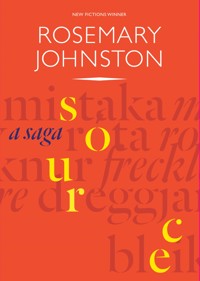
Kate and her teenage daughter return to Ireland to sort through what is left of the family farm. Source is a book about beginnings and homeland and the words that accompany us on our journey.
Sie lesen das E-Book in den Legimi-Apps auf:
Seitenzahl: 63
Veröffentlichungsjahr: 2021
Das E-Book (TTS) können Sie hören im Abo „Legimi Premium” in Legimi-Apps auf:
Ähnliche




















Source
A Saga
Rosemary Johnston
Story Machine
Source, Copyright © Rosemary Johnston, 2021
Print ISBN: 9781912665105
Ebook ISBN: 9781912665112
Published by Story Machine, 130 Silver Road, Norwich, NR3 4TG; www.storymachines.co.uk
Rosemary Johnston has asserted her right under Section 77 of the Copyright, Designs and Patents Act 1988 to be identified as the author of this work. All rights reserved. No part of this publication may be reproduced, stored in a retrieval system, or transmitted i100102255n any form or by any means, graphic, electronic, recorded, mechanical, or otherwise, without the prior written permission of the publisher or copyright holder.
This publication is sold subject to the condition that it shall not, by way of trade or otherwise, be lent, re-sold, hired out or otherwise circulated without the publisher’s prior consent in any form of binding or cover other than that in which it is published and without a similar condition including this condition being imposed on the subsequent purchaser.
The time had come to clear out the old family farm. Both Kate’s parents had now died, her father some time ago and her mother just last year. Out of a sense of duty - and little else - Kate had returned for her mother’s funeral. She had arrived just in time for the service and, not wanting any condolences, hadn’t hung around afterwards. The place had been empty since then. But in recent months, the house and its possessions had, in Kate’s mind, begun to seem tinged with the resentment of having no purpose. So she had started planning to clear the house and sell it.
Someone might come and renovate the house. But a buyer would more likely want to knock it down and start again - she’d overheard a neighbour at the funeral mention that giant black slugs had invaded the roof space. The buyer would probably turn the semi wild bogland into a garden that would look unnaturally suburban in this landscape of strewn boulders.
So Kate had come back to the west of Ireland accompanied by her daughter, Lavinia, who was as unfitting as a landscaped garden in the Connemara wilderness with her Jack Wills coat and her Uggs.
They entered the whitewashed farmhouse through the kitchen, Lavinia complaining about the lack of signal and asking where the shops were. The place seemed in darkness even though it was the middle of an April day. Kate fumbled around for the light switch. She could see that someone else must have tidied away the tea things. The drying cloths were still where the neighbours had hung them over the handle on the oven door when the last of the mourners had left, the wedding-present crockery having fulfilled its last function.
‘God!’ said Lavinia, looking down at the flagged floor of the kitchen. ‘Look at this place!’ Kate watched her take in the kitchen table with its floral oil cloth and the old stone sink, underneath which was a cupboard, fronted by a curtain. She walked over to a painted dresser which stood at one end of the kitchen like the old matriarch in her tattered sage green apron. For years before her mother’s death, Kate had almost taken pleasure in thinking of the day when she would be able to take the shelves full of ornaments and just throw them away. The sandwich plates, the soup tureen and the solitary ladle hanging from a hook. She couldn’t imagine that anyone had come to eat at the house for years anyway. But now that the day was here, it was not pleasure she felt, more the assuagement that might be found in an ending.
Kate set down on the table a shopping bag containing the basic provisions they’d acquired at the airport. Then she dragged a suitcase to the living room which adjoined the kitchen. There was an open fireplace and a black leather sofa covered with a crocheted blanket that these days would be called a throw.
‘It’s freezing!’ cried Lavinia.
‘There’s storage heaters. I’ll put them on, but they’ll take a while to get going.’
‘What’s that smell?’ asked Lavinia, sniffing.
‘Damp. I’ll open the windows, get some fresh air moving round the place.’
‘Are we really going to sleep here?’
‘Why not?’
‘It’s mouldy.’
‘Oh! I thought you meant because of the ghosts!’ said Kate.
‘Mum!’
‘It’ll do you good to experience a bit of hardship.’
Not knowing what state the bedding would be in, Kate had filled a suitcase with sleeping bags and pillows. She unpacked them now and followed Lavinia along the hallway, passing the bathroom and her mother’s bedroom, to the room that had been Kate’s.
She waited on the threshold while Lavinia nosied around, bending down under the sloping ceiling to peer through the low set draughty window.
Someone had stripped the single bed and placed the folded bedding on the chest of drawers.
‘Where will you sleep?’ Lavinia asked.
Looking back to her mother’s room, the door firmly shut, Kate nodded to the living room, ‘I’ll have the sofa.’
She passed the sleeping bag and a pillow to Lavinia.
‘Are you sure? What about granny’s room?’
She shook her head. The door to that room would stay shut for at least today.
Kate returned to the kitchen and unpacked the groceries. She handed a loo roll to Lavinia who took it with her into the bathroom. She unravelled the other sleeping bag over the sofa and set about taking the necessary items from the case.
‘There’s no lock on the bathroom door,’ said Lavinia.
Kate had wondered, before they left England, to what extent Lavinia’s presence or innocent observations would push Kate to disclose, or simply to remember. But for now, she just hesitated before replying.
‘It doesn’t really matter, there’s only us two.’ Kate took a roll of bin bags from the suitcase. ‘We might as well get started. The sooner we start the sooner we finish.’
‘What’s the plan?’
‘I suppose most of it will just get thrown away.’
‘Won’t that make you sad?’
‘No. I said goodbye to it all a long time ago.’
Kate took a bag and started filling it with china shepherdesses from the mantelpiece, string and buttons from drawers in the dresser, watching Lavinia as she took out the twenty or so books that were in a small bookcase.
‘Keep that book,’ said Kate.
‘What is it?’ asked Lavinia.
‘Poetry. Patrick Kavanagh.’
‘Did granny like poetry?’
‘No, she never read anything. It was your granddad’s book. There’s a dictionary somewhere. Keep that as well.’
Kate took the book from her fair haired, freckled daughter. She looked through its thick, mildewed pages for the poem that had been her first introduction to grown up poetry, many years ago. She could almost see her younger self, sitting cross legged and hesitant in front of the bookcase, not sure if it was permitted or not, to read grown up poetry.
Her father had found her there and asked what she was reading.
‘Ah!’ he said ‘Kavanagh! Great choice.’And he opened the book and started to read:
On Raglan Road on an autumn day
I met her first and knew
That her dark hair would weave a snare
That I might one day rue.
He gave her back the book and said ‘We should pay more heed to the poets.’
At the time Kate had taken it as a general piece of advice.
‘He liked poetry and history and languages,’ Kate said. ‘The things he loved I came to love.’
‘How did they meet?’ asked Lavinia.




