


Erhalten Sie Zugang zu diesem und mehr als 300000 Büchern ab EUR 5,99 monatlich.
- Herausgeber: Valley Press
- Kategorie: Gesellschafts- und Liebesromane
- Sprache: Englisch
On a beach in Greece – accessible only by sea or down a steep path – the waves caress the land, crash against the rocks, keep watch at night and doze in the noonday sun. Visitors include Aphrodite, whose house is above the shore, and her family from Athens. An English couple, who own the only other house visible from the beach, their children and these youngsters' friends. An Albanian migrant seeking work. A castaway from ancient Athens trying to return home. And the Fates. They seek safe passage or new paths to follow amidst a chorus of overlapping voices – as the past hums in the background and tomorrow spreads its wings. The beach is a beautiful, wild place where everyone is more than they appear, and a single year can shape the course of a life.
Sie lesen das E-Book in den Legimi-Apps auf:
Seitenzahl: 416
Veröffentlichungsjahr: 2022
Das E-Book (TTS) können Sie hören im Abo „Legimi Premium” in Legimi-Apps auf:
Ähnliche




















—————
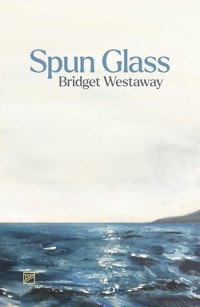
Spun Glass
—————
Bridget Westaway
Lendal Press
Look now, you’ll find
sprinkled among the salt stars,
once more a small kiss
scatter its light across the sky.
January
An Island in the Aegean · New Year’s Day, 2000
They fall into the New Year tumbling down the rough path like overgrown puppies, running blind across the sand. They celebrate as the days stretch ahead in an infinitude of possibilities, of loves and sorrows. It is only their existence that breathes life into the waiting world and the only place that exists is where they happen to be – everywhere else is unreal, is nowhere. They are an unruly fivesome, but it is six o’clock in the morning and the beach is empty.
It is a year born for their pleasure and they have come to christen it, only Lucy senses a lingering misgiving cloud the otherwise bright future. She slips away in the half-light and sitting on a rock apart from the others, dips her feet in the sea. Anaesthetised by the local spirit, it is some time before she realises how numb her toes have become and when she holds them in her hands they are like shards of glass.
‘Hey, Luce,’ Jamie, her brother’s friend, staggers towards her, ‘Julian says you find us contemem,’ he stumbles over the word, ‘is that so? Do you find us com…conemeptible?’
‘Shut up, Jamie,’ Lucy answers without taking her eyes off the horizon, where the edge of the ocean is just visible, a clear and distinct line growing beneath the lightening sky.
Julian, Tasha and Matthew link arms. Separately none of them are sober, together they can scarcely remain upright.
Tasha in the middle begins to sing. ‘Isn’t it beautiful,’ she murmurs absorbing the soft light of early dawn. She feels she could cry because it is too perfect, a beauty that even in her drunken state she knows cannot last. ‘Amazing grace in…’ The words are light in spite of the way she falters.
Matthew joins in – his voice adding a discordant note as he fails to keep in time or tune.
Julian, in competition, belts out a rendition of ‘Auld Lang Syne’ getting louder as he gathers pace.
This ungainly trio, this six-legged monster, staggers tortuously along the beach, lurching in the direction of the water and then, just before Matthew at the end would get his feet wet, back again.
Julian drowns out the other two, ‘For the sake of…’
‘And a Happy New Year to you, too, Julian,’ Jamie shouts. ‘I think you’re right she finds us cont-tantain…’
‘Shut up, Jamie.’ Lucy rubs her feet as hard as she can and a painful, raw sensation grows at the tips of her toes.
Julian reaches the end of the song and only Tasha can be heard, quietly singing.
‘Bollocks,’ Lucy says.
‘You’re full of shit,’ says Julian.
‘And what do you think you’re full of then?’
‘Alcohol,’ answers Julian and going towards the sea he sends an arc of urine high into the air. ‘There,’ he says, shaking himself, ‘pure nectar.’
‘Bollocks.’
They have just finished a late lunch following a late breakfast after another late night. Unbounded by schedules or clocks, time slips away. It is easy to lose track of the minutes and hours and effort is needed if breakfast is not to happen in the evening after a day spent asleep.
Julian yawns. The sea laps ineffectually, making no purchase on the soft sand. It barely moves the tiny fragments of stones and shells that make up the foreshore and it is hard to imagine days when great waves, driven by storms far out at sea, crash onto the exposed coast.
It is a natural quietude, although it cannot remain in the sense that nothing does. Beneath the Aegean Sea, earthquakes set off by wild fluctuations in the earth’s crust could raise up new islands or sink existing ones. So this calmness cannot persist, but it is not of itself pregnant – it presages nothing.
Their footprints from the day before run across the sand as if there has been a stampede or a battle. The steps go off and back and round in circles – it looks like a child’s sandpit after a gang of toddlers have just left.
The next day Tasha wraps her arms around her shoulders, an inadequate protection against the chill wind. It has been hotter than many days of an English summer, a few days ago they were sunbathing but now there is a stiff inshore breeze. Beside her, Lucy shivers under a thin top as they huddle together. With the others still asleep, the two of them had crept out of the shuttered house, slipping and slithering down the path – damp and overgrown at this time of year – to the beach.
‘I hate him,’ Tasha pronounces. She seems to be talking or not talking to herself, mulling over some private grief. ‘I’m sorry,’ she adds.
‘What’s it to me?’
‘He’s your brother.’
‘So?’
Only Lucy and Julian can put such force into this one little word. Tasha realises, not for the first time, how alike they are.
By late afternoon, as if it has run out of patience, the sea is racketing up the shore. The footprints of the past week are obliterated by each new wave as it drives inland and is then pulled back by the undertow of the receding water.
There is a brooding anger to the ocean, not a fully-fledged rage but rather a feeling of being put upon, of being taken for granted. It is demanding attention and at the same time nursing its grievances, mulling them over and storing them away so they can be aired some other day. For now, it is content to whip at the beach, to nibble the edges, wiping away all trace of anyone having been there.
‘Don’t mix me up in this.’ Lucy is looking, not at her brother who is standing next to her, but inland at the cliffs.
’She’s your friend,’ Julian is looking straight at her.
‘So?’
‘So, you might know what she’s thinking.’
‘She’s my friend, not my alter ego. I’m not her father confessor.’
‘She must have talked to you.’
‘Look.’ Turning towards him, Lucy sees her brother shadowed against the irritable waves. ‘I don’t know what’s happened between you two. Why don’t you talk to her yourself?’
He shrugs.
‘For God’s sake Julian, you’re not usually so pathetic.’
‘And a lot of help you are.’
There is no end to this rivalry, nor any remembered beginning. It started soon after Lucy was born – continuing in different guises for the last nineteen years.
‘What do you expect?’
In answer, the bow waves from a passing ship wash up the beach and fill Julian’s shoes with water. ‘Shit,’ he exclaims.
‘You’d better take them off.’
Lucy holds the dripping shoes as he wrings out his sodden socks.
‘Look out.’
They step further back as more water rushes towards them.
‘I’m going up to the house,’ Julian says. ‘You staying here?’
‘For a bit.’ She calls after him, ’I wouldn’t worry about Tasha – talk to her if it’s bothering you so much.’
Her brother doesn’t turn round but raises an arm and waves it above his head.
‘Luce.’ She looks up, only Julian and Jamie call her Luce. But it is Matthew standing next to her waiting, it seems, for an invitation.
‘Yes,’ she encourages him. There is an awkward formality about the way he is standing, tense, expectant.
‘I wonder if you think I might have a chance.’ It is an effort for him to put this much into words.
A chance at what, wonders Lucy.
‘What do you think?’
‘I…’ she begins, confused, what is he asking?
‘I know he’s your brother but…’ Matthew seems unable to continue. Lucy, stunned, wonders what he wants with her brother. ‘They don’t seem to be…and I thought…maybe.’
‘Tasha,’ Lucy mutters quietly – of course, it has to be Tasha.
‘Yes,’ Matthew nods, ‘what do you think, might I have a chance?’
Lucy looks at the sea and imagines being buried in its icy depths, far below its nodding surface. Floating in the blue-green waters. In a primordial soup but cold, unlike the warm amniotic fluid that surrounds the growing foetus. It is a false reassurance this encompassing embrace, what does it tell of the days or years to come? She craves, not the warm enclosure of a mother’s love, but fidelity of a different kind, the echo of a distant ocean.
‘Well, what do you think?’
She is interrupted by Matthew still at her shoulder, still waiting.
‘How should I know?’ It is almost the same question that Julian asked only minutes before. But he is her brother. ‘Why should I care?’ she mutters under her breath.
‘I’m sorry, Luce.’
‘Why are you sorry?’
‘Because I…I’m…’
‘Forget it.’
* * *
It is a grey morning and Aphrodite is wearing thick black stockings, strong shoes and a dark coat covering any number of vests and blouses and cardigans. A black shawl is wound around her grey, nearly white hair. Despite her apparent age and the slowness of her steps, she is as sure-footed as any donkey as she makes her way down the uneven path. She walks along the back of the beach appearing from a distance like a black scavenging bird. She is carrying two plastic bags, one already full of greens, horta, she has gathered on her way down. When she reaches the end, just before the rocks jut into the sea, she turns inland and bends to gather more leaves to fill her other bag.
Bent over she is a still black shape, not easily distinguishable from the boulders that the sea, in its wilder moments, has fashioned from the cliff – splitting the rock asunder and grinding the rough edges of the stones until they are as round and smooth as her back.
She straightens herself up, taking a moment to draw breath and survey the patch of vegetation she has just harvested, before walking slowly and purposefully back in the direction she came from. She glances briefly at the grumbling sea. At the other end of the beach there is a cave and when her eyes fall in its direction she stands still and crosses herself – resting the ends of her fingers on her chest for a moment after she has done so. Her grey eyes reflect the greyness of the sea and the rocks, the greyness of the sky and of the morning itself.
Later, as midday slides into afternoon it becomes difficult to distinguish the sea from the sky. The washed beach and the scattered rocks are all one, as the colour is drained from the land. Soon the evening creeps up, surreptitiously stealing a glance this way and that to see if anyone has noticed this lacklustre day before, with relief, the blackness of the moonless, starless night again envelops the deserted sands.
* * *
‘Well?’ Julian says into the fresh breeze of a new day.
‘You’re mad.’ Matthew is blunt.
‘You’re not coming in then?’
‘I don’t think so,’ Jamie equivocates.
Lucy and Tasha have walked to the end of the beach and are coming back. Julian, seeing them approach, strips off his clothes. ‘There’s nothing for it then, I shall swim alone.’
He runs full pelt at the bright sea. The shock of sudden immersion in cold water drives the breath from his body but he ploughs on, swinging into a fast crawl straight out towards the horizon. He waves as he turns and heads back in.
Tasha picks up his clothes. With his jumper and trousers over one arm, she bends to recover an errant sock. As soon as Julian stops running, he starts shaking. Tasha winds the jumper around his shoulders. She wraps her arms around him, feeling his wet, clammy flesh like that of a dead fish as he embraces her.
Lucy watches them shivering and whispering as they nuzzle together. Julian has always been keen on the heroic gesture. When he was six, he scaled a pine tree in a bid to rescue a kitten, a new family pet, only to find it impossible to coax the terrified animal down and he, as well as the cat, had to be rescued by the fire brigade.
He must have plunged into the icy waters knowing exactly what he was doing – but why does it work? What is it about this foolhardy act, this pretentious, preposterous bid for attention that appeals, and he knows will appeal? It is a charm lost on Lucy. If anyone wants to swim in the frozen sea that is fine by her, she won’t stop them, but neither will she applaud.
Glancing in his sister’s direction Julian knows exactly what she is thinking. Other times she might be half right – but here she is wrong. Today he really does want to feel the ice-cold water embrace him, in the hope it might anaesthetise the uncomfortable stew inside himself that has been disturbing his equanimity. This time, the attention is a welcome extra.
Matthew is standing expectantly beside Lucy.
‘Not much chance.’ She feels a twinge of sympathy and catches his eye.
He must be taking his disappointment lightly for he turns to her and asks, ‘How about you?’
‘Me?’
‘Yes, you, Lucy.’
‘I’m sure I would be a poor substitute.’ There is a nasty undertone to her voice that she does nothing to control, as she walks off with the beginning of his response lost in the salt air.
‘What’s the matter?’ Jamie asks.
‘It’s nothing,’ she answers.
‘If you’re sure.’
‘I am.’
They come together to make their way back up the path. ‘I’m sorry,’ Matthew proffers, ‘I didn’t mean…’
‘Fuck off,’ she cuts him short and sees Jamie raise an eyebrow.
It is late afternoon as Lucy walks slowly by herself along the high-water mark. The sun, an engorged orb, will soon drown in the wide sea. In England it will already be dark. Here, nearer the equator, the days are more even, longer in the winter, shorter in the summer. But it is the other extreme, the land of the midnight sun, never ending daylight in the summer and eternally dark winters, a dim gloom at midday, that appeals to Lucy.
It is the incongruity, the odd juxtapositions her imagination conjures from such discord that pleases her. Darkness at noon, stars in the daytime, a summer without sleep. She dislikes routine and predictability. If something is known, if a day, a year or a lifetime is pre-ordained, it seems a waste, pure drudgery to walk through such an already painted landscape. With the optimism of youth, she craves the excitement of the lottery – to be one day among the chosen and the next among the damned.
She picks up a shell. She is searching for a pair, for two that fit together exactly so she can open and close them like a baby’s toy. But they are all different in size, shape, colour, texture or some other quality.
Jamie is sitting on a rock, a sketchpad on his knee. His eyes move rapidly, seeing both the beach and his drawing at the same moment. His hand is light and fast across the paper, pausing only briefly to add a goat out on the headland or a bird flapping into view. Then instead of the easy grace – with his arm, like a dancer’s, skipping effortlessly over the page – he is all concentration, peering as if to look underneath the lines.
He is a slight figure bent over his work. Standing he is quite tall but hunched as he is now, he appears small, insubstantial. His long hair flops forward, framing his thin face. His hands are slender, spiderlike as they hover.
Lucy doesn’t see him there, hidden among the rocks. She is searching for small white cockles, collecting only these and soon her hands are full. Jamie, watching her approach, sketches her rough outline as she dodges the waves.
When she sees him, he stops.
‘Well?’ he asks her. ‘What brings you to the beach?’
‘Shells,’ she holds out her hands. ‘And you?’
‘I need to get some work done. I’m really behind.’
‘Go on, then.’
Jamie lifts a pencil and puts it down.
‘What is it?’
He indicates his sketch with distaste and complains. ‘The light’s wrong.’
‘Can’t you change it?’
‘Yes…’ Jamie takes another pencil and replaces it. ‘No, I can’t’
‘Why not?’
‘I can’t work if anyone’s watching.’
‘How do you manage at college?’
‘That’s not the same.’ Jamie gazes out over the sea, picks up the pencil and chews the end.
He shares Julian’s taste for heroics, but while Julian likes to show off, to make a spectacle of himself never doubting that he will be admired, with Jamie it is different. By nature he is withdrawn and his exuberance, when it comes, has an undercurrent of desperation – an edge of despair – to watch Jamie is to watch a fairground ride out of control, bucking and rollicking its way to disaster.
‘Can you sit over there?’ He points towards a flat rock a few feet away.
Lucy shrugs. ‘If you like.’ She spreads out her shells in a grid according to size and quality of their whiteness.
‘It’s going to rain.’ She fidgets, getting up as fat drops start to gather in her lap.
‘Just a minute,’ Jamie implores and she waits as the rain gets heavier.
‘What’s the point?’ She shouts rushing past him. ‘It’s soaking wet.’
He shuts his sketchpad and shoves his pens and pencils into his pocket. ‘It’ll dry,’ he calls out, running after her up the path.
* * *
The sky is dark. Slowly, a low rumble, like the sound of a quarry far off with rocks being torn from the earth, can be heard on the beach. It builds up and begins to die away, until a thunderclap, the noise of two worlds colliding or one being rent in two, splits the sky. And for a fraction of a second, every living thing pauses.
Out of this dissonant moment, this rip in the fabric of time, a man appears. Standing either in the sea at the beginning of the land or on the beach at the water’s edge. The man, Elpidius, raises his head to the heavens and beseeches the gods to deliver him from this torment.
For two days and nights, he was tossed like a spent cork by the boisterous waves. His strong limbs and broad back rendered useless by the fitful sea. His boat sank beneath mountainous waters before being raised again into the air and then dropped into the next trough. His shipmate was carried overboard by the curling crest of a wave breaking far out from land.
Alone he battled on, until his boat, its back broken, snapped in two like a dry twig on a summer’s day leaving him helpless in the frothing ferment of the water.
His voice echoes in the deep recesses of time, reverberating around the ancient rocks and up the ancient rivers, stirring up a storm such as Poseidon, that wily old god of the sea, has seldom raised before. Elpidius collapses on the beach in despair, drained and exhausted, remaining all through that next day and the following night.
Black clouds, dense villainous banks of sorrow race across the sky. They chase each other, bringing rain, which pours down the path and cascades off the cliffs. It falls in sheets, drenching everything in seconds, cratering the sands until the beach resembles the surface of the moon.
Elpidius, opening his eyes, sees this endless water falling from the sky as if the heavens mean to drown the world and, for a moment, thinks he must himself be drowned. Held in a cold clasp at the bottom of the ocean, caught midway between the wrath of Poseidon and the despair of Hades, the god of the underworld.
Slowly, a weak sun emerges. The veil lifts and out of the murk he can discern the edges of the beach and the hills beyond. The sun is too feeble, or too indifferent, to banish the clouds and the waves threaten to wash him back into the teeming ocean.
After raising himself up, Elpidius casts an almost triumphant glance back at the turbulent sea. Retreating, he finds the cave and, thankful to be still alive, in the realm of Zeus, the king of the gods, he promises when he wakes to make him an offering.
Later, woken by thin sunshine, he pads across the damp sand and, remembering his promise, searches for a suitable sacrifice. It is well after midday before he builds a fire and lays two fish on top of the flames. He stands with his arms raised in the direction of Olympus and invokes Zeus’ name, ‘Greatest of all, did not I, Elpidius, always honour you? Have you not been pleased with my offerings? See me safe home to Athens and I will find two fat pigs to satisfy you.’ He takes the flesh from the cooked fish, eating it as the flames consume the bones, the head and the skin while the smoke rises heavenwards.
* * *
All of them – Lucy, Jamie, Tasha, Julian and Matthew – are becoming tetchy, impatient with themselves and with each other as the storm keeps them indoors. They are squashed together and the excitement of the New Year, of the New Millennium, is fading. There is nowhere to go and they feel confined. They hardly venture out – except when they battle their way through high winds and savage rain to visit the one taverna in the village that is open all year. And they drink. Both in the house and at the taverna. Too much.
Julian, when drunk, talks too much – much more too much than usual. Jamie becomes mournful. Tasha is sick, she turns a nauseating shade of yellow, tinged with green before rushing headlong to the nearest toilet. She avoids the waiters’ eyes, imagining them censoring her behaviour, measuring out the glassfuls, but still she drinks. Matthew becomes loud, demanding, the petulant child. Lucy draws into herself, becoming pensive and, apart from making the odd derogatory comment about her assumed superiority, the others ignore her.
‘How long have we been here for?’ Matthew asks, as he counts the days since they arrived.
‘Since last year.’
‘How many days is that?’ Matthew persists.
‘I don’t know,’ says Jamie.
‘I don’t care,’ says Tasha.
‘And I certainly can’t remember.’ Lucy adds.
‘Nor can I. I think we’ve been here forever.’
They straggle down to the beach, deserted by the heady optimism of the previous week when the year was new and all things possible. They go cautiously down the path, careful not to slip and injure their fragile selves. Julian tries to avoid sudden movement which sets a million forks ajangle in his head as Tasha helps him down.
Lucy walks slowly over new mounds of soft sand piled high by the intemperate sea. Now the waves are peaceful and, unable to separate her breath from the hypnotic motion, she keeps pace with their rhythm.
She is following the tideline when something catches her eye. A wisp of smoke? Looking again, she sees just ash atop a few charred, half-burned pieces of wood.
She kneels down. ‘Hey look,’ she calls.
Only Matthew responds. ‘Hi Luce,’ he waves.
‘Come and look at this,’ she urges.
He bounds towards her with Julian complaining loudly behind.
‘You need the fresh air,’ Tasha says to him.
‘It’s too bright and…ouch, I stubbed my toe on that stupid rock.’
‘I don’t think you should criticise the character of the rock, it didn’t drink the best part of a bottle of Greek brandy last night.’
‘Look at this.’ Lucy points towards the ash.
‘What’s so special?’
‘Someone must’ve had a barbecue.’ Jamie pokes at the remains of the fire. ‘We could have one before we go home.’
This idea revives Julian. ‘Let’s do it,’ he says.
‘If it doesn’t rain. There’s still a mass of cloud.’
‘It’ll be fine.’ Matthew speaks as if he can personally foresee, if not actually control, the weather.
‘OK, tomorrow then,’ Julian says, the thought of the barbecue sufficient effort for today.
Jamie skims a flat stone out across the ocean.
Only Lucy is left staring at the dead fire. She touches the flakes of pale ash that crumble beneath her fingers. ‘No footprints,’ she mutters.
The other four are already halfway across the beach but she is not unobserved. Elpidius is dozing – half-asleep, half-lost in the depths of the cave, half-alive, half-dead, half-dreaming – when he sees her bent over the remains of his fire. A nymph perhaps, more beautiful than any mortal or immortal he has ever encountered before. Is she sent to lure him into mishap? Well, he is not a fish and will not take the bait. Yet it is hard to resist the grace and beauty of this female figure with the lithe athletic body of a young boy.
Lucy feels his eyes on her and – thinking it must be one of the others – calls out, ‘There are no footprints.’
‘Maybe it’s the abominable snowman,’ suggests Jamie as they pass her on their way back from the far end of the beach.
‘He had big footprints, nothing else, just huge footprints.’ Julian stamps his feet.
‘We’ll come back tomorrow,’ Tasha says as they wait for Lucy to join them.
Left alone, Elpidius slips back into himself, back into a world half-known, half-remembered where he struggles with concepts of honour and revenge quite alien to this group of barbarians, whose existence he is completely unaware of save for that one glimpse, that haunting sight of the loveliest creature he can possibly imagine.
Another dawn, and now there is warmth in the sun.
‘How many days have we got left?’ Jamie asks.
‘D’you remember the mix-up with the tickets?’ Matthew replies. ‘So, four days for Lucy, Tasha and you, Jamie. But only two for me and Julian.’
‘We’ll have to make these last days super special.’
As if a starting gun is fired, they scatter across the beach looking for wood. Jamie is dragging a long piece of timber he found floating in the shallows, it is quite sodden and too heavy to lift. Matthew busies himself collecting large stones. Lucy, gathering kindling, watches as he adds a second, then third layer to the circle he is making. As it gets higher, the edifice collapses.
‘It’s no good,’ she says to him, wondering how an engineering student can be so inept at such a basic construction. Electronic engineering, Julian would have said had he heard her thoughts, it is between the brain and the computer – no need to touch the actual physical world.
‘Are you still cross with me?’ Matthew asks her in the tone of a small child, who knows he is loved but wants to hear it said over and over again.
Lucy ignores his plea. ‘You need a solid base.’
‘A more solid base,’ he corrects her, as together they embed the bottom circle of stones upright like teeth. ‘You are angry with me.’
‘No, Matthew,’ she assures him in a sweet tone that a listener, depending on their mood, could construe as sanctity or malice, ‘I’m not angry with you.’
‘Don’t be like that, Lucy.’
‘Like what?’
‘Cross.’
‘But I’m not cross with you.’ She chucks the sticks into the middle and goes to fetch more.
He continues his construction and is just about done when Jamie, having dragged his enormous log all the way up the beach, calls out, ‘Where’s this going to go?’ He gives it one last heave and it busts the circle.
‘For God’s sake Jamie.’ Matthew complains.
‘It wouldn’t have fitted anyway. That’s much too small.’
‘And that’s soaking.’
‘So’s this,’ Jamie says as he takes the wood out of Lucy’s arms.
‘We could spread it out to dry?’ Matthew suggests.
‘Alright, alright,’ Lucy concedes.
‘You are angry with me,’ Matthew says.
‘No, I’m not,’ Lucy insists.
‘There you see! You are.’
Lucy steps away, muttering.
Jamie positions himself between the warring parties, one arm round each. ‘How about we come back tomorrow.’
Three days left. This time they bring firelighters and dry wood from the house. It is a bright, windless morning and their trail of smoke drifts in the clear, unsullied air.
They’ve finished all the beer and open a bottle of wine before anyone thinks about putting something on to cook.
Julian prances round the fire.
‘You weren’t a scout, were you?’ asks Jamie.
‘I was, I’ve got badges to prove it, the whole thing.’
‘Were you in the guides, Lucy?’
‘You must be joking.’
‘They wouldn’t have her,’ shouts Julian.
‘Unlike your scout leader!’
‘Cut it out. He wasn’t like that.’
Lucy and Matthew cook the food, skewering the meat and turning it over the fire that leaps into life as melted fat falls on hot ash. They maintain an uneasy silence. Watchful of each other. Wary as two crabs, claws raised in provocation. They circle in concert, each reflecting the other’s movements in a unison designed to keep them apart.
Tasha and Julian sit quietly contemplating the prospect of separation after Julian and Matthew fly home the next day. They hardly speak, uttering only occasional small sounds that evaporate in the air.
Jamie is a little way off. He is sketching the group around the fire – a scene that in his hands gains an altogether different emotional pitch.
Eventually the food is cooked. Tasha and Julian untwine themselves. Jamie puts down his pencils and they all eat.
Afterwards, Julian and Tasha show no signs of moving.
‘We’ll take the rubbish back to the house,’ volunteers Lucy, gathering up armfuls of debris. ‘Can you put the fire out?’
‘Does it matter?’ asks Tasha.
‘Don’t worry,’ Julian assures them, ‘we’ll make sure it is.’
‘Like a good boy scout.’
‘Just so,’ he and Tasha remain exactly where they are as the footsteps recede up the path and, even when it is silent save for the lapping of the water, they hardly stir.
A piece of wood spits.
‘You’re cold,’ Julian takes his jumper off and gives it to her.
‘Aren’t you?’
‘No, I’ve got you to keep me warm.’
We shouldn’t, thinks Tasha, remembering the condoms back up at the house. Did she speak aloud?
For Tasha and Julian nothing exists beyond their bodies and the boundaries of these are lost where one ends and the other begins. After an indeterminate time, they drift apart and gradually become aware again of the sea, that in its murmurings, mimics their desire.
‘Shall we come back at Easter?’
‘If you want. My parents like to have the house checked after the winter, so they’d be pleased.’
The fire flickers into life.
‘How do we put it out?’
‘Water,’ Julian casts about for a receptacle. All the glasses, bottles, plastic containers, have been taken by the others. They glance at the dying embers that hiss back at them.
‘Sand,’ Tasha says.
‘Here,’ Julian hands her a stone and they shovel until the fire is suffocated. Then slowly, reluctantly, they leave.
Two days left – or none for Julian and Matthew. Tasha hoped a storm would blow up in the night keeping the ferries in harbour and marooning Julian on the island. But it is another still day and they go on the midday boat. It pulls in at speed and leaves a few minutes ahead of schedule.
The night before they celebrated at the taverna. Ending at an ouzerie until the early hours and when they got home Julian was at the brandy. It was a rush to make the ferry by noon.
Julian’s eyes are bloodshot, his gait sullen, reluctant, as if his legs have trouble supporting the weight of his sagging shoulders. Matthew carries one of Julian’s bags. Tasha doesn’t want them to go before the rest of them and she hates to see Julian leave like this.
The ferry churns up the water as it turns in the tight harbour. Waving to him with both arms, she can tell Julian is shouting something back to her, but she can’t hear. He is so close she could almost touch him and it looks as if he might jump back to join her on dry land – of course he can’t and too soon the ferry steams out into the open sea.
Lucy and Jamie come straight back from the port and sleep.
Tasha walks backwards and forwards along the beach. She passes the heap of sand where she and Julian extinguished the fire. Then she passes the remnants of the other fire. Most of the ash has blown away but there are still traces of a scorched circle. A plane crosses overhead. Looking up, she remembers Julian and Matthew are not flying until the evening.
Lucy, waking up hungry, starts down the path and seeing Tasha through a gap in the trees calls out. ‘Come on Tash, we’re going to get something to eat.’
The surface of the sea darkens and Lucy senses a shift in some elemental force as an underlying current switches sides. She watches a fish leap into the air and stares at the spot where it broke its bounds.
* * *
One more day and no one comes to the beach. Lucy, Tasha and Jamie have gone across to the other side of the island. Only Elpidius sees a snake uncurl briefly in the sun before skidding away. A warning? But who can tell what is to come?
There are those who would have you believe that if you purify yourself at every step and avoid owls hooting, if you pause when you pass a smooth stone at a crossroads, if you do all these things and more, you will be safe. They bid you trust that a ritual designed to prevent evil will keep away the chill winds of misfortune. But does misfortune know this?
Reliance on augury makes a person superstitious – a craven attitude preventing a body raising their eyes or themselves above the ground. Does it not require true courage, a courage of almost superhuman kind, to read the signs, to know of an impending disaster and yet to continue, to set a course in defiance of the gods? To stand as a single being, unbowed by fate?
Yet, these ideas are from some other time and Tasha, who is now standing on the terrace up at the house waiting for Lucy and Jamie, would find them strange. At the dawn of the second millennium we know that a tree bends with the wind and the wind is sent, not by Aeolus, the ancient god of the winds, but caused by depressions out at sea, isobars too close together. And the air is full, not with the whispers of sprites and immortals but with our own babble. Endless, impossible rumours circumnavigating the globe and bouncing off the ionosphere. Yet still we are afraid of chaos, of the capriciousness of our modern deities, and still we seek omens from our own soothsayers.
* * *
It is the last day and the three of them, Tasha, Lucy and Jamie, drop down to the beach for a final visit. ‘Come on,’ says Jamie, ‘we’ll be late.’
‘I don’t care,’ answers Lucy – aware that she does care and they might miss the boat.
Tasha is becoming agitated, ‘we haven’t finished packing.’
‘Stuff the packing.’
‘I’m going back.’
‘Wait a minute,’ says Jamie, ‘we’ll go together.’
‘Look at those birds.’ A large flock of shearwaters are sitting on the water, riding the growing swell. As Lucy speaks, something disturbs them. One or two at first, then all at once, they take to the air with a great flapping of wings.
‘I could paint them.’
Lucy lets her eyes slip out of focus as she stares at the sea. Without a fixed point, with only the motion of the tide, her thoughts rise and fall, tumbling with each wave.
Tasha is itching to be gone.
‘Come on,’ repeats Jamie.
From the path Lucy looks back. Goodbye beach, she silently bids it and as if in answer, the sea comes further in to erase their footprints.
February
It is winter, but which winter? There is no discarded packaging bearing the distinctive flavour of a season’s fashion. No scraps of print or detritus from a simultaneously self-assured and self-doubting but above all self-proclaiming society. The sea laps from the middle of one year to the next and from one century, one millennium to that following without pause – with no account of passing time.
The sun shines through a veil of cloud, but clouds come and go. They evaporate in the sun or discharge a torrent of tears on the land. There is nothing to be gained from questioning the clouds. A small olive tree hangs onto the edge of the cliff, its tangled roots exposed to the weather. A location might be imagined. But a time? The sea washes away the years, breathing them in and out. The waves coming and going would seem the same if time slowed or reversed.
Two children, a girl and a boy, it is hard to tell which is older. Two children somewhere in the middle of childhood appear on the beach.
Elpidius wakes briefly from his slumbers. Squinting through a half-shut eye, he looks out beyond the mouth of the cave – a restricted view, similar to seeing the beach through the wrong end of a telescope. He follows the children’s halting movements and their drawn faces. Where is he? Who are these children? What are they doing here?
These questions mingle in his thoughts without answer. In the children’s dull eyes, he sees hunger. He reaches out for food to offer them but there is none. Then, the cracked corners of a memory come back. The cave is almost familiar, he is so tired he can’t stop his half-open eye from joining the other that is already tight in the arms of Morpheus. Soon he is asleep again.
He stirs uncomfortably in his dreams as he is gifted an unwelcome glimpse of another famine. One that afflicted Athens two and a half millennia before these children shiver on the shore. When the population of ancient Athens was swollen by families who, but for fear of the Spartans, would be tending their lands beyond the walls. Then it was impossible to walk from one part of the city to another without tripping over those displaced by the Peloponnesian Wars.
This vision of hunger eats at Elpidius’ unconscious mind as he wanders through time, with no idea how far from his own world he has strayed.
In 1941, when the girl and boy, these skeletal children come to the beach, there is famine again. The girl bends down. She is thin as a piece of twine. With their eight limbs, the two children make a spider on the sand. They keep together but do not speak. They move in unison and perhaps are twins. They stare out to sea, large eyes in drawn faces, silently beseeching the ocean. Begging the waves.
A bright shell, a mother-of-pearl glistens in the sun. One child reaches towards it, fingers like knobbly matchsticks, then lets the hand fall idle. It is the bright silver spark of a fish they are searching for.
We need a boat – the thought passes between them.
A sea-worthy boat is beyond dreaming, as unattainable as a starship and as dangerous as an unexploded mine. The Germans or the black marketeers have the boats. There are none for those like themselves whose family has fished these waters, as the island changed hands, alternately and in succession, from the Spartans, the Athenians, Barbarians from the north, the Romans, the Crusaders, the Venetians and the Turks. Now these new barbarians have destroyed their craft and forbade them putting to sea.
They stand at the water’s edge waiting for a fish to fall as a sacrifice at their feet. ‘Look,’ the boy calls silently, plunging his arms into the icy water. Minutes later he extracts his fingers, blue with cold, his sleeves dripping, his hands empty.
The next day the children’s father visits the beach. Before it is light his presence can be felt, his steps – tentative, fearful – remain years later. He is as thin as his children, clothes acquired before the famine hang from his body as dust sheets on stored furniture. He is carrying a quantity of netting, a knife, some floats and hooks which he hides in the hollow of a rock. He sits down to wait as he keeps a lookout, surveying with flagging eyes the open sea, the path he came down and the sharpening outline of the dark hills behind.
In the slowly emerging light of an uncertain dawn, Elpidius sees the boat approach the shore. Small, patched up, precarious, as soon as it touches the ground, the man – the children’s father – collects his fishing tackle and runs with a strength that belies his physical condition. He throws the gear into the boat and with a nerve-wrenching effort, pushes it clear and climbs in after the netting. The small vessel drifts, with an occasional flick of an oar, away from the cover of the coast. Already, they are shipping water and the two of them aboard are fully occupied bailing, an impossible task and they must realise the venture is doomed. That it will yield no fish, their equipment will be lost and they will be lucky, even without the intervention of the occupying forces, to get home alive.
Hunger is like a virus or a plague of locusts. This time the locusts are men, northern invaders.
Animals die of hunger, in bad years, in severe winters, in the drought of a long summer. When the balance is out of kilter, when there are too many predators and not enough prey, both may be driven near to extinction. Some animals are very fussy eaters. A panda will dine almost exclusively on bamboo and a koala on eucalyptus. But people are omnivorous. They eat anything and everything – mammals, reptiles, birds, insects, fruits, nuts, leaves, seeds, roots, fungi, fish, shellfish, seaweed, everything. Only humans die from the lack – not of food – but of pieces of paper, little round bits of metal, cowry shells.
The children collect shells. They chew on these hard, dry bones of dead animals and spit out mouthfuls of grit.
It is two days after the hastily and illicitly repaired boat put to sea before the first pieces start to arrive back on the beach.
The ocean swallows many of these inedible morsels as others drift – a plank, a piece of seating loosened when the hull broke up, floats for hours in the shallows. It knocks against the rocks at one end of the beach, before becoming lodged, stuck fast in a crevice between two boulders at the other. A short length of rope, some remnants of netting attract curious fish on the scrounge.
Reminders of the hapless venture litter the shoreline. A battered tobacco tin is caught inside a shoe, forgotten in the scramble back after they gave up bailing. When they were overwhelmed by a sickening feeling, like an earthquake shaking solid ground, as the boat foundered beneath them. For useless minutes they had clung to its barely floating hull, but with an offshore wind, they knew they needed to strike out – soon – for land.
Now a gentle inshore breeze is shepherding a dark shape towards the beach. By evening, the spine of the boat, with some of its ribs still attached and others snapped off as if by a hungry sea monster, is bedding down in soft sand.
In the morning the children return. Strange ghostlike beings – even in their proper time they are little more substantial than wisps of smoke from a funeral pyre. They move with an odd jerkiness. A brief smile, a sudden joint laugh cut short as surreptitiously as it began, the comfort of complicity as transient as a breaking wave.
The girl gathers up pieces of the stricken vessel. Together they pull at the sodden hulk, tugging at the keel, before defeated they fall backwards. They watch clouds wheel above them, soft white palaces in the sky, magnificent rooms suffused with golden light, stairs ascending high into the firmament. They seem borne aloft until, perhaps sensing the tentacles of death, the soundless, irresistible lure of its spell, they pick up whatever wood they can and disappear.
A caustic wind gathers pace as it gallops across the open sea, hitting the north coast with the full force of its fury. There it is impossible to stand. Here, a fluttering of snow dances above the beach, twisting and turning in a fleeting, frenzied performance. Upon touching the land, the show disappears like magic into the cold sand and wet rocks.
The next day. There is always a next day. Whenever in the whole spectrum of time one alights there is another day and another stretching away like an endless fairground ride, a roundabout turning, whirling long into the night and another dawn while the riders become giddy, go green, weak-kneed and cling on, for what else can they do? No wonder some dream of relief from the tyranny of days, long for the cessation of time, for an unattainable stillness, a silence borne from the vast sea of space.
And on this day, the day before, hundreds of years hence or aeons ago, one day set in the morass of days, piling up after each other, on this day the sea is quiet. It is tired of the procession of the days and tries to sleep. Each wave, as it licks the land, sings hush to those before. Sshh, it whispers, as if it wants to cast off the necessity of its being.
There is only one child. The boy or the girl? It is a foolish question. To have meaning, one needs the other. A lone soul – having nothing to weigh itself against – can be neither.
This solitary creature, small against the vastness of the ocean, feet burrowing into the sand lacks any trace of delight – the exuberance of childhood – left. The arms hang straight down. The hands are slowly lifted, as exquisite and delicate as any ballet dancer. The fingers finding little comfort, slip in and out of each other’s grasp.
Together, against the odds, the two children had kept a fragile hold on life. Now, with one wasted from want of food, the surviving child gives way to despair – to sorrow. A small sorrow, for even sorrow requires energy. Standing at the edge of the water the shape fades until only patches of light and shadow remain to trick the senses. Then, as night grows, this mirage vanishes into the encroaching darkness.
The sea wakes to raw pity. It was dreaming of other worlds, of another planet with no troublesome spits of land or irritating islands, to wrap itself around. Of a sphere that could be entirely wrapped by an endless fluid, blue-green ocean. As it dreamed of such an untroubled paradise, all around its perimeter dramas were played out – and on this beach, the children perished.
Thinking on this, the sea grows angry. It brews this anger deep in its bowels and when it can no longer contain such an alarming rage, when it frightens even its own reflections, it whips at the coast.
* * *
Aphrodite is bundled up in layer upon layer of clothes. Her quiet grey eyes are tinged blue by the cloudless sky. It is a winter brightness, different in quality from the harsh dazzle of the summer sun. A bird of prey circles overhead, ascending on soft rising currents, as Aphrodite draws great gulps of sea-laden air into her lungs.
On the beach she can be young – careless of age in the way youth can be. She came here as a child. All the time. Whenever she could leave whatever chore she was assigned and slip away from the small rooms and thick walls of the shuttered family house or the bustle and labour of the fields.
Her father grumbled. ‘It isn’t right, she’s more like a boy than the boy.’ His expression one of bemused indignation as Theo, his son, was meekly reading a book, oblivious to his surroundings. ‘She ought to be helping you,’ he had said to his wife.
But her mother just shrugged, a strange, impenetrable gesture. ‘She’ll have time for that soon enough, let her be.’ So the beach was a sanctuary she escaped to with impunity. Even then she knew every inch of the shore but, as it never stays the same, she knew none of it. It was and is both familiar and strange. Pulling the shawl tighter about her shoulders, she stops by the cave.
As a child, she imagined the Cyclopes, or perhaps Medusa deep inside. On summer days, emboldened by fishermen or others on the beach, she crept in, daring herself to go further into the dank interior, until with a foot half-raised for one more step, her nerve gave way. Then she would run panting towards the small patch of light visible at the entrance and tumble out into the sunlight, shaking at the memory of the darkness behind. However many times she plucked up the courage to enter that blackened world, however far she ventured inside, she never reached the end and she envisioned it going on forever into the guts of the earth.
Today something draws her attention and, thinking she sees movement, she squints into the gloom and calls out, ‘Hello, who’s there?’
No one answers.




