


38,99 €
Mehr erfahren.
- Herausgeber: John Wiley & Sons
- Kategorie: Wissenschaft und neue Technologien
- Sprache: Englisch
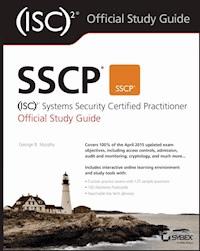
Fully updated Study Guide for the SSCP This guide prepares you for the SSCP, Systems Security Certified Practitioner certification examination by focusing on the Common Body of Knowledge (CBK) as determined by ISC² in seven high level topics. This Sybex Study Guide covers 100% of all exam objectives. You'll prepare for the exam smarter and faster with Sybex thanks to expert content, real-world practice, access to the Sybex online interactive learning environment and much more. Reinforce what you've learned with key topic exam essentials and chapter review questions. Along with the book you also get access to Sybex's superior online interactive learning environment that includes: * 125 question practice exam to help you identify where you need to study more. Get more than 90 percent of the answers correct, you're ready to take the certification exam. * More than 100 Electronic Flashcards to reinforce your learning and give you last minute test prep before the exam * A searchable glossary in PDF to give you instant access to the key terms you need to know for the exam * Appendix of charts, tables, typical applications, and programs Coverage of all of the exam topics in the book means you'll be ready for: * Access Controls * Security Operations and Administration * Risk Identification, Monitoring and Analysis Incident Response and Recovery * Cryptography * Network and Communications Security * Systems and Application Security
Sie lesen das E-Book in den Legimi-Apps auf:
Seitenzahl: 932
Veröffentlichungsjahr: 2015
Ähnliche



















Table of Contents
Title Page
Copyright
Series
Dedication
Acknowledgments
About the Author
About the Technical Editor
Introduction
Who Should Read This Book?
What Is Covered in This Book
How Do I Use This Book?
Assessment Test
Assessment Test
Answers to Assessment Test
Chapter 1: Information Security: The Systems Security Certified Practitioner Certification
About the (ISC)
2
Organization
Exams, Testing, and Certification
The SSCP Exam
Summary
Exam Essentials
Chapter 2: Security Basics: A Foundation
The Development of Security Techniques
Understanding Security Terms and Concepts
Security Foundation Concepts
Participating in Security Awareness Education
Summary
Exam Essentials
Written Lab
Review Questions
Chapter 3: Domain 1: Access Controls
What Are Controls?
Types of Access Controls
Identification
Authentication
System-Level Access Controls
Discretionary Access Control (DAC)
Nondiscretionary Access Control
Mandatory Access Control
Summary
Exam Essentials
Written Lab
Review Questions
Chapter 4: Domain 2: Security Operations and Administration
Security Administration Concepts and Principles
Data Management Policies
Endpoint Device Security
Security Education and Awareness Training
Business Continuity Planning
Summary
Exam Essentials
Written Lab
Review Questions
Chapter 5: Domain 3: Risk Identification, Monitoring, and Analysis
Understanding the Risk Management Process
Risk Management Frameworks and Guidance for Managing Risks
Risk Analysis and Risk Assessment
Managing Risks
Risk Visibility and Reporting
Analyzing Monitoring Results
Summary
Exam Essentials
Written Lab
Review Questions
Chapter 6: Domain 4: Incident Response and Recovery
Event and Incident Handling Policy
Creating and Maintaining an Incident Response Plan
Understanding and Supporting Forensic Investigations
Understanding and Supporting the Business Continuity Plan and the Disaster Recovery Plan
Summary
Exam Essentials
Written Lab
Review Questions
Chapter 7: Domain 5: Cryptography
Concepts and Requirements of Cryptography
Key Management
Secure Protocols
Summary
Exam Essentials
Written Lab
Review Questions
Chapter 8: Domain 6: Networks and Communications
Network Models
Network Design Topographies
Ports and Protocols
Converged Network Communications
Network Monitoring and Control
Access Control Protocols and Standards
Remote User Authentication Services
Local User Authentication Services
Network Segmentation
Securing Devices
Security Posture
Firewall and Proxy Implementation
Network Routers and Switches
Intrusion Detection and Prevention Devices
Telecommunications Remote Access
Wireless & Cellular Technologies
Wireless Networks
Traffic Shaping Techniques and Devices
Quality of Service
Summary
Exam Essentials
Written Lab
Review Questions
Chapter 9: Domain 7: Systems and Application Security
Understand Malicious Code and Apply Countermeasures
Malicious Add-Ons
User Threats and Endpoint Device Security
Understand and Apply Cloud Security
Secure Data Warehouse and Big Data Environments
Secure Software-Defined Networks and Virtual Environments
Summary
Exam Essentials
Written Lab
Review Questions
Appendix A: Answers to Written Labs
Chapter 2
Chapter 3
Chapter 4
Chapter 5
Chapter 6
Chapter 7
Chapter 8
Chapter 9
Appendix B: Answers to Review Questions
Chapter 2
Chapter 3
Chapter 4
Chapter 5
Chapter 6
Chapter 7
Chapter 8
Chapter 9
Appendix C: Diagnostic Tools
Microsoft Baseline Security Analyzer
Microsoft Password Checker
Internet Explorer Phishing and Malicious Software Filter
Manage Internet Cookies
Observing Logs with Event Viewer
Viewing a Digital Certificate
Monitoring PC Activities with Windows Performance Monitor
Analyzing Error Messages in Event Viewer
Calculate Hash Values
Comprehensive Online Learning Environment
End User License Agreement
Pages
iii
v
vii
ix
xi
xxv
xxvi
xxvii
xxviii
xxix
xxx
xxxi
xxxii
xxxiii
1
2
3
4
5
6
7
8
9
10
11
12
13
14
15
16
17
18
19
20
21
22
23
24
25
26
27
28
29
30
31
32
33
34
35
36
37
38
39
40
41
42
43
44
45
46
47
48
49
50
51
52
53
54
55
56
57
58
59
60
61
62
63
64
65
66
67
68
69
70
71
72
73
74
75
76
77
78
79
80
81
82
83
84
85
86
87
88
89
90
91
92
93
94
95
96
97
98
99
100
101
102
103
104
105
106
107
108
109
110
111
112
113
114
115
116
117
118
119
121
122
123
124
125
126
127
128
129
130
131
132
133
134
135
136
137
138
139
140
141
142
143
144
145
146
147
148
149
150
151
152
153
154
155
156
157
158
159
160
161
162
163
164
165
166
167
168
169
170
171
172
173
174
175
176
177
178
179
181
182
183
184
185
186
187
188
189
190
191
192
193
194
195
196
197
198
199
200
201
202
203
204
205
206
207
208
209
210
211
212
213
214
215
216
217
218
219
220
221
222
223
224
225
226
227
228
229
230
231
232
233
234
235
236
237
238
239
240
241
242
243
244
245
246
247
248
249
250
251
252
253
254
255
256
257
258
259
261
262
263
264
265
266
267
268
269
270
271
272
273
274
275
276
277
278
279
280
281
282
283
284
285
286
287
288
289
290
291
292
293
294
295
296
297
298
299
300
301
302
303
304
305
306
307
308
309
310
311
312
313
314
315
316
317
318
319
320
321
322
323
324
325
326
327
328
329
330
331
332
333
334
335
336
337
338
339
340
341
342
343
344
345
346
347
348
349
350
351
352
353
354
355
356
357
358
359
360
361
362
363
364
365
366
367
368
369
370
371
372
373
374
375
376
377
378
379
380
381
382
383
384
385
386
387
388
389
390
391
392
393
394
395
396
397
398
399
400
401
402
403
404
405
406
407
408
409
410
411
412
413
414
415
416
417
418
419
420
421
422
423
424
425
426
427
428
429
430
431
432
433
434
435
436
437
438
439
440
441
442
443
444
445
446
447
448
449
450
451
452
453
454
455
456
457
458
459
460
461
462
463
465
466
467
468
469
470
471
473
474
475
476
477
478
479
480
481
482
483
484
485
487
488
489
490
491
492
493
494
495
496
497
498
499
500
501
502
503
504
505
506
507
508
509
510
539
Guide
Cover
Table of Contents
Introduction
Begin Reading
List of Illustrations
Chapter 1: Information Security: The Systems Security Certified Practitioner Certification
Figure 1.1 The DODD 8140 chart
Figure 1.2 A typical framed SSCP certification
Figure 1.3 An example of a hand-drawn rough sketch
Figure 1.4 An example of a Google Images search on the term
IPsec
Chapter 2: Security Basics: A Foundation
Figure 2.1 This Figure illustrates a notepad drawing of a remote user logon
Figure 2.2 A typical 15-pin D-shaped connector
Figure 2.3 The CIA triad
Figure 2.4 An access process illustrating the three AAAs, known as authentication, authorization, and accounting
Figure 2.5 A typical job rotation scheme
Chapter 3: Domain 1: Access Controls
Figure 3.1 The relationships between subjects and objects
Figure 3.2 A typical authorized use policy screen
Figure 3.3 A typical login screen
Figure 3.4 User entering PIN into a reader device
Figure 3.5 Typical login verification question
Figure 3.6 This Figure illustrates CAPTCHA characters
Figure 3.7 Toll authority RFID device
Figure 3.8 Standard ID badge with proximity chip
Figure 3.9 Retina scanning technique
Figure 3.10 The crossover error rate (CER) is where the FAR and FRR intersect. The lower the CER, the better the biometric system.
Figure 3.11 An example of a token
Figure 3.12 The reference monitor mediates all transactions between subjects and objects.
Figure 3.13 Warning screen
Figure 3.14 Various groups under role-based access control
Chapter 4: Domain 2: Security Operations and Administration
Figure 4.1 The relationship between corporate policies, security policies, and supporting policies
Figure 4.2 Illustration of the hierarchy from general corporate policies to guidelines
Figure 4.3 The business continuity plan and support plans and documents
Figure 4.4 An illustration of the relationship between maximum tolerable downtime and the recovery time objective
Figure 4.5 The relationship between recovery point objective and recovery time objective
Figure 4.6 An illustration of restoration priorities based upon the importance of the asset or department to the organization and the impact to the organization if it is unavailable or lost during a disaster
Chapter 5: Domain 3: Risk Identification, Monitoring, and Analysis
Figure 5.1 The process of risk management
Figure 5.2
NIST SP 800-37 Revision 1
risk management framework
Figure 5.3 The four risk assessment process steps from the
NIST SP 800-37 Revision 1
risk management framework
Figure 5.4 Typical risk treatment schedule
Figure 5.5 A typical security operations center
Figure 5.6 Data visualization
Chapter 6: Domain 4: Incident Response and Recovery
Figure 6.1 A hard drive attached to a Tableau portable forensic write blocker
Figure 6.2 A cost/timeline graph Illustrating the relationship between MTD, RTO, and RPO
Figure 6.3 A typical disaster classification system
Figure 6.4 An illustration of a differential backup
Figure 6.5 An illustration of an incremental backup
Chapter 7: Domain 5: Cryptography
Figure 7.1 Electronic codebook (ECB) mode
Figure 7.2 Cipher block chaining (CBC) mode
Figure 7.3 Cipher feedback (CFB) mode
Figure 7.4 Output feedback (OFB) mode
Figure 7.5 Counter (CTR) mode
Figure 7.6 Symmetric cryptography using one shared key
Figure 7.7 The relationships of public and private keys in an asymmetric cryptographic system
Figure 7.8 Proof of origin encrypted message with a private asymmetric key
Figure 7.9 The creation of a digital signature by encrypting a hash of a message
Figure 7.10 The process of steganography
Figure 7.11 Comparison of hash values
Figure 7.12 A typical digital certificate
Figure 7.13 A certificate warning banner
Chapter 8: Domain 6: Networks and Communications
Figure 8.1 The Open Systems Interconnection model
Figure 8.2 The OSI model mapped to the TCP/IP model
Figure 8.3 Categories of twisted-pair cable
Figure 8.4 TCP three-way handshake
Figure 8.5 A bus topology
Figure 8.6 A tree topology
Figure 8.7 A ring topology
Figure 8.8 A mesh topology
Figure 8.9 A star topology
Figure 8.10 A virtual private network
Figure 8.12 IPsec in tunnel mode
Figure 8.11 IPsec in transport mode
Figure 8.13 Kerberos diagram
Figure 8.14 Single sign-on with federated access
Figure 8.15 Example of a three-segment network
Figure 8.16 Illustration of a demilitarized zone
Figure 8.17 Illustration of a baseline and a clipping level
Figure 8.18 Illustration of an ad hoc mode wireless network
Figure 8.19 Illustration of the infrastructure mode wireless network zone
Figure 8.20 Illustration of a home network using a wireless router
Figure 8.21 A cellular network illustrating geographical cells served by cellular base stations
Chapter 9: Domain 7: Systems and Application Security
Figure 9.1 Threat source and threat action as illustrated in
NIST SP 800-30 revision 1
Figure 9.2 The APISID cookie from Google.com
Figure 9.3 A Wireshark packet capture
Figure 9.4 A Microsoft Baseline Security Analyzer scan showing several problems that were found
Figure 9.5 A typical password change policy advisory pop-up
Appendix C: Diagnostic Tools
Figure C.1 Select an MBSA download version
Figure C.2 MBSA selection choices
Figure C.3 Select a device to scan.
Figure C.4 Scanning report with errors
Figure C.5 Using Microsoft Password Checker
Figure C.6 Internet Options advanced settings
Figure C.7 Internet Options Privacy tab
Figure C.8 Advanced Privacy Settings dialog
Figure C.9 Windows Control Panel
Figure C.10 Event Viewer
Figure C.11 Event Viewer showing events and errors
Figure C.12 Certificate properties
Figure C.13 Windows Certificate Manager
Figure C.14 Certificates of trusted root certification authorities
Figure C.15 Performance Monitor
Figure C.16 Resource Monitor indicating usage levels
Figure C.17 Performance Monitor expanded view
Figure C.18 Selecting Event Viewer from Control Panel
Figure C.19 Event Viewer Overview and Summary
Figure C.20 Windows Logs
Figure C.21 Summary of the system event errors
Figure C.22 Event properties
Figure C.23 Event details
Figure C.24 The MD2 Hash Calculator in text mode
Figure C.25 Choosing a hash algorithm
Figure C.26 Hash Calculator creating a hash value from a message
List of Tables
Chapter 6: Domain 4: Incident Response and Recovery
Table 6.1 Alert levels
Chapter 7: Domain 5: Cryptography
Table 7.1 The XOR truth table
Table 7.2 Block cipher algorithms
Table 7.3 Hashing functions and their hash value lengths
Chapter 8: Domain 6: Networks and Communications
Table 8.1 Well-known TCP ports
Table 8.2 Well-known UDP ports
Table 8.3 802.11 Standards and amendments
SSCP® Systems Security Certified Practitioner
Study Guide
George B. Murphy
Development Editor: Tom Cirtin
Technical Editors: Brian D. McCarthy and John Gilleland
Production Editor: Christine O'Connor
Copy Editor: Judy Flynn
Editorial Manager: Mary Beth Wakefield
Production Manager: Kathleen Wisor
Associate Publisher: Jim Minatel
Media Supervising Producer: Richard Graves
Book Designers: Judy Fung and Bill Gibson
Proofreader: Kim Wimpsett
Indexer: Ted Laux
Project Coordinator, Cover: Brent Savage
Cover Designer: Wiley
Cover Image: ©Getty Images Inc./Jeremy Woodhouse
Copyright © 2015 by John Wiley & Sons, Inc., Indianapolis, Indiana
Published simultaneously in Canada
ISBN: 978-1-119-05965-3
ISBN: 978-1-119-05968-4 (ebk.)
ISBN: 978-1-119-05995-0 (ebk.)
No part of this publication may be reproduced, stored in a retrieval system or transmitted in any form or by any means, electronic, mechanical, photocopying, recording, scanning or otherwise, except as permitted under Sections 107 or 108 of the 1976 United States Copyright Act, without either the prior written permission of the Publisher, or authorization through payment of the appropriate per-copy fee to the Copyright Clearance Center, 222 Rosewood Drive, Danvers, MA 01923, (978) 750-8400, fax (978) 646-8600. Requests to the Publisher for permission should be addressed to the Permissions Department, John Wiley & Sons, Inc., 111 River Street, Hoboken, NJ 07030, (201) 748-6011, fax (201) 748-6008, or online at http://www.wiley.com/go/permissions.
Limit of Liability/Disclaimer of Warranty: The publisher and the author make no representations or warranties with respect to the accuracy or completeness of the contents of this work and specifically disclaim all warranties, including without limitation warranties of fitness for a particular purpose. No warranty may be created or extended by sales or promotional materials. The advice and strategies contained herein may not be suitable for every situation. This work is sold with the understanding that the publisher is not engaged in rendering legal, accounting, or other professional services. If professional assistance is required, the services of a competent professional person should be sought. Neither the publisher nor the author shall be liable for damages arising herefrom. The fact that an organization or Web site is referred to in this work as a citation and/or a potential source of further information does not mean that the author or the publisher endorses the information the organization or Web site may provide or recommendations it may make. Further, readers should be aware that Internet Web sites listed in this work may have changed or disappeared between when this work was written and when it is read.
For general information on our other products and services or to obtain technical support, please contact our Customer Care Department within the U.S. at (877) 762-2974, outside the U.S. at (317) 572-3993 or fax (317) 572-4002.
Wiley publishes in a variety of print and electronic formats and by print-on-demand. Some material included with standard print versions of this book may not be included in e-books or in print-on-demand. If this book refers to media such as a CD or DVD that is not included in the version you purchased, you may download this material at http://booksupport.wiley.com. For more information about Wiley products, visit www.wiley.com.
Library of Congress Control Number: 2015947763
TRADEMARKS: Wiley, the Wiley logo, and the Sybex logo are trademarks or registered trademarks of John Wiley & Sons, Inc. and/or its affiliates, in the United States and other countries, and may not be used without written permission. SSCP, the SSCP logo, and the (ISC)2 logo are registered trademarks or service marks of the International Information Systems Security Certification Consortium. All other trademarks are the property of their respective owners. John Wiley & Sons, Inc. is not associated with any product or vendor mentioned in this book.
Disclaimer: Wiley Publishing, Inc., in association with (ISC)2®, has prepared this study guide for general information and for use as training for the Official (ISC)2 SSCP® CBK® and not as legal or operational advice. This is a study guide only, and does not imply that any questions or topics from this study guide will appear on the actual (ISC)2 SSCP® certification examination. The study guide was not prepared with writers or editors associated with developing the (ISC)2® SSCP® certification examination. The study guide may contain errors and omissions. (ISC)2® does not guarantee a passing score on the exam or provide any assurance or guarantee relating to the use of this study guide and preparing for the (ISC)2® SSCP® certification examination.
The users of the Official SSCP®: Systems Security Certified Practitioner Study Guide agree that Wiley Publishing, Inc. and (ISC)2® are not liable for any indirect, special, incidental, or consequential damages up to and including negligence that may arise from use of these materials. Under no circumstances, including negligence, shall Wiley Publishing Inc. or (ISC)2®, its officers, directors, agents, author or anyone else involved in creating, producing or distributing these materials be liable for any direct, indirect, incidental, special or consequential damages that may result from the use of this study guide.
Attacks on organizations' information assets and infrastructure continue to escalate while attackers refine and improve their tactics. The best way to combat these assaults starts with qualified information security staff armed with proven technical skills and practical security knowledge. Practitioners who have proven hands-on technical ability would do well to include the (ISC)2 Systems Security Certified Practitioner (SSCP®) credential in their arsenal of tools to competently handle day-to-day responsibilities and secure their organization's data and IT infrastructure.
The SSCP certification affirms the breadth and depth of practical security knowledge expected of those in hands-on operational IT roles. The SSCP provides industry-leading confirmation of a practitioner's ability to implement, monitor and administer policies and procedures that ensure data confidentiality, integrity and availability (CIA).
Reflecting the most relevant topics in our ever-changing field, this new SSCP Study Guide is a learning tool for (ISC)2 certification exam candidates. This comprehensive study guide of the seven SSCP domains draws from a global body of knowledge, and prepares you to join thousands of practitioners worldwide who have obtained the (ISC)2 SSCP credential. The SSCP Study Guide will help facilitate the practical knowledge you need to assure a strong security posture for your organization's daily operations.
As the information security industry continues to transition, and cybersecurity becomes a global focus, the SSCP Common Body of Knowledge (CBK®) is even more relevant to the challenges faced by today's frontline information security practitioner. While our Official Guides to the CBK are the authoritative references, the new study guides are focused on educating the reader in preparation for exams. As an ANSI accredited certification body under the ISO/IEC 17024 standard, (ISC)2 does not teach the SSCP exam. Rather, we strive to generate or endorse content that teaches the SSCP's CBK. Candidates who have a strong understanding of the CBK are best prepared for success with the exam and within the profession.
Advancements in technology bring about the need for updates, and we work to ensure that our content is always relevant to the industry. (ISC)2 is breaking new ground by partnering with Wiley, a recognized industry-leading brand. Developing a partnership with renowned content provider Wiley allows (ISC)2 to grow its offerings on the scale required to keep our content fresh and aligned with the constantly changing environment. The power of combining the expertise of our two organizations benefits certification candidates and the industry alike.
For more than 26 years, (ISC)2 has been recognized worldwide as a leader in the field of information security education and certification. Earning an (ISC)2 credential also puts you in great company with a global network of professionals who echo (ISC)2's focus to inspire a safe a secure cyber world.
Congratulations on taking the first step toward earning your certification. Good luck with your studies!
Regards,
David P. ShearerCEO(ISC)2
To my beautiful wife, Cathy—thank you for your patience, understanding, and especially your encouragement. You are and always will be my angel. With much love.
Acknowledgments
It's always amazing how many people are involved in the production of a book like this. Everyone involved deserves a world of thanks for all of their hard work and efforts. I especially want to thank Carol Long, who was executive acquisitions editor for Wiley & Sons when we started this project. I genuinely appreciate the opportunity that she afforded me. I also owe so much to many others, especially Tom Cirtin, for keeping everything on track, as well as Christine O'Connor, who tied together all of the production efforts. I want to thank Jim Minatel for herding all of the cats and keeping it all running. Many thanks to Judy Flynn for her tireless efforts in making sure all of the copy worked, as well as the entire team of layout editors, graphic design folks, and others, all of whom provided their expertise to make this project come together. I would like to express a big thanks to Brian McCarthy for his knowledge and his wonderful work as technical editor. I would also like to express my appreciation to both Mike Siok and Willie Williams for their friendship and inspiration through a great many projects over the years. They have always been there to lend an ear and offer encouragement. I want to recognize Chuck Easttom for giving me my break into the world of publishing a few years ago. And, I want to especially thank all of the wonderful folks at (ISC)2 for their ongoing assistance in this and many other projects. Thank you all very much.
About the Author
George (Buzz) Murphy, CISSP, SSCP, CASP, is a public speaker, corporate trainer, author, and cybersecurity evangelist who, over the past three decades, has touched the lives of thousands of adult learners around the world through hundreds of speaking and training events covering a variety of technical and cybersecurity topics. A former Dell technology training executive and U.S. Army IT networking security instructor, he has addressed audiences at national conferences, major corporations, and educational institutions, including Princeton University, and he has trained network and cybersecurity operators for the U.S. military branches, various U.S. government security agencies, and foreign military personnel.
As a military data center manager in Europe, he held a top-secret security clearance in both U.S. and NATO intelligence and through the years has earned 26 IT and cybersecurity certifications from such prestigious organizations as (ISC)2, CompTIA, PMI, and Microsoft. He is an (ISC)2 Authorized Instructor specializing in CISSP and Cloud Security certification training. He has authored, coauthored, and contributed to more than a dozen books on a wide range of topics, including network engineering, industrial technology, and IT security, and recently served as technical editor for the (ISC)2 CCFP – Certified Cyber Forensics Professional Certification Guide by Chuck Easttom (McGraw Hill, 2014) as well as for the recent publication CASP: CompTIA Advanced Security Practitioner Study Guide by Michael Greg (Sybex, 2014).
About the Technical Editor
Brian D. McCarthy, founder and director of 327 Solutions, Inc., has been involved in placement, consulting, and training since 1992. Brian is an entrepreneur, IT trainer, operations leader, certification expert, recruiter, instructional designer, sales executive, formally trained project manager (PMP), and e-learning guru. He has more than 20 years of talent development expertise, has been working in building technical competency for decades, and has held multiple positions in operations, training facilitation, and sales with increasing responsibility for building a world-class national network of performance experts. Brian has worked hand in hand with the Department of Defense to enable information assurance compliance for cybersecurity workers (8570.1-M / 8140). He also has experience working with cutting-edge e-learning, workshops, immersive environments, gamification/contest design, method-of-action 3D animations, LMS tracking, portal systems, and other learning assets to accelerate world-class corporate teams.
Introduction
What a wonderful time to be involved with IT security. The role of security practitioner is expanding almost on a daily basis. Challenges abound as we all try to get our arms around not only traditional hardwired networks but also everything involved with wireless communication and the virtualization of everything in the cloud. There is so much to know and understand, and the growth potential seemingly has no bounds. Keeping up with this pace is (ISC)2, the creators of the Certified Information Systems Security Professional (CISSP) certification, along with several other certifications.
(ISC)2 is renowned for offering industry-leading cybersecurity and other types of training courses around the world. Achieving the Systems Security Certified Practitioner (SSCP) from (ISC)2 indicates mastery of a broad-based body of knowledge in IT security. From network engineering to application development and from cybersecurity to physical security, the prestigious SSCP certification indicates that an individual is an accomplished and knowledgeable security practitioner. The certification is not a vendor-specific certification but a comprehensive broad-based certification.
Candidates for this certification will take a 125-question exam over a period of three hours. The exam covers questions from seven separate and distinct areas of knowledge called domains. Upon passing the examination with a score of 700 or better out of a possible 1,000, successful candidates also must agree to adhere to the (ISC) Code of Ethics. Applications must also be endorsed by a current (ISC) member or by the organization. This sets SSCP certification holders apart because they are true accomplished professionals who adhere to a clear set of standards of conduct and are in the forefront of the IT security industry.
Lesen Sie weiter in der vollständigen Ausgabe!
Lesen Sie weiter in der vollständigen Ausgabe!
Lesen Sie weiter in der vollständigen Ausgabe!
Lesen Sie weiter in der vollständigen Ausgabe!
Lesen Sie weiter in der vollständigen Ausgabe!
Lesen Sie weiter in der vollständigen Ausgabe!
Lesen Sie weiter in der vollständigen Ausgabe!
Lesen Sie weiter in der vollständigen Ausgabe!
Lesen Sie weiter in der vollständigen Ausgabe!
Lesen Sie weiter in der vollständigen Ausgabe!
Lesen Sie weiter in der vollständigen Ausgabe!
Lesen Sie weiter in der vollständigen Ausgabe!
Lesen Sie weiter in der vollständigen Ausgabe!
Lesen Sie weiter in der vollständigen Ausgabe!
Lesen Sie weiter in der vollständigen Ausgabe!




