


15,99 €
Mehr erfahren.
- Herausgeber: John Wiley & Sons
- Kategorie: Wissenschaft und neue Technologien
- Sprache: Englisch
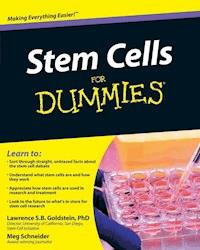
The first authoritative yet accessible guide to this controversial topic Stem Cell Research For Dummies offers a balanced, plain-English look at this politically charged topic, cutting away the hype and presenting the facts clearly for you, free from debate. It explains what stem cells are and what they do, the legalities of harvesting them and using them in research, the latest research findings from the U.S. and abroad, and the prospects for medical stem cell therapies in the short and long term. * Explains the differences between adult stem cells and embryonic/umbilical cord stem cells * Provides both sides of the political debate and the pros and cons of each side's opinions * Includes medical success stories using stem cell therapy and its promise for the future Comprehensive and unbiased, Stem Cell Research For Dummies is the only guide you need to understand this volatile issue.
Sie lesen das E-Book in den Legimi-Apps auf:
Seitenzahl: 615
Veröffentlichungsjahr: 2010
Ähnliche



















Stem Cells For Dummies®
Table of Contents
Introduction
About This Book
Conventions Used in This Book
What You’re Not to Read
Foolish Assumptions
How This Book Is Organized
Part I: Brushing Up on Biology
Part II: Delving into Stem Cell Science
Part III: Discovering How Stem Cells Can Affect the Future
Part IV: Putting Stem Cells to Use Today
Part V: Understanding the Debate: Ethics, Laws, and Money
Part VI: The Part of Tens
Icons Used in This Book
Where to Go from Here
Part I: Brushing Up on Biology
Chapter 1: Painting the Broad Strokes of Stem Cell Science
Working with Animals and Other Organisms
Understanding the mouse’s role in stem cell research
Using mice in today’s labs
Exploring What Scientists Know (And Don’t Know) About Stem Cells
Understanding stem cells’ key properties
Confirming that cells really are stem cells
Figuring out how to use stem cells
Looking at some unanswered questions
Chapter 2: Understanding Cells and Tissues
Exploring Cell Structure and Function
Sizing cells
Decoding cell messages: DNA and RNA
Covering entrances and exits: How things get in and out of cells
Understanding how cells communicate
Building Tissues and Organs
Comparing Stem Cells to Other Kinds of Cells
Chapter 3: Tracing the History of Stem Cell Research
Regenerating Body Parts: Legends, Tales, and Truths
Taking a look at ancient regeneration myths
Looking at animals that can regenerate
You do it, too: Regenerating human skin and blood
Discovering the Genetic Controls in Cells
Comparing ideas about heredity
Understanding DNA
Mapping the genetic library
Discovering growth factors
Identifying stem cells
Recapping Developments Since the 1950s
Transplanting organs and tissues
Developing in vitro fertilization
Cloning animals
Part II: Delving into Stem Cell Science
Chapter 4: Starting with Embryonic Stem Cells
Exploring the Stages of Embryonic Development
Looking at the Role of In Vitro Fertilization in Creating Blastocysts
Growing Embryonic Stem Cells from Extra Blastocysts
Exploring Embryonic Stem Cell Properties
Growing and growing and growing . . .
Generating any kind of cell
Making Cells and Tissues
Directing cell specialization
Growing pure cells
Touring the Lab: What Scientists Are Doing with Embryonic Stem Cells
Looking at examples of current research
Creating a basis for future research
Understanding the Possibilities and Limitations of Embryonic Stem Cells
What embryonic stem cells can do
What embryonic stem cells can’t do
What embryonic stem cells may be able to do
Chapter 5: Understanding Adult Stem Cells
Demonstrating the Existence of Tissue Stem Cells
Defining Adult Stem Cells (And the Problem with Definitions)
Exploring the Abilities of Adult Stem Cells
Understanding how they work
Figuring out their uses and limitations
Finding Stem Cells in Tissues
In bone marrow
In the brain
Miscellaneous adult stem cells
Exploring Cord Blood Stem Cells
Working with Adult Stem Cells
Chapter 6: Exploring Other Stem Cell Sources
Why the Uproar?
Understanding Nuclear Transfer Techniques
Getting inside somatic cell nuclear transfer
Bringing embryo development to a halt with altered nuclear transfer
Exploring Other Techniques for Generating Pluripotent Cells
Pre-implantation genetic diagnosis
Males need not apply: Parthenogenesis
Investigating Other Pluripotent Cell Types
Collecting stem cells from tumors
Exploring reproductive sources of pluripotent cells
Engineering stem cells
Chapter 7: Understanding Why Scientists Mix and Match Cells
Exploring Hybrids
Creating stronger versions of species
Using hybrids in the lab
Decoding Chimeras
Finding the chimera within
Using chimeras to improve medicine
Comprehending Clones
Using cloning methods to develop therapies
Using cloning for research
Understanding the difficulties of cloning primates
Discovering Cybrids
Using cybrids to understand development and disease
Understanding the Uproar over Cell-Swapping Technology
Part III: Discovering How Stem Cells Can Affect the Future
Chapter 8: Looking into Cancer’s Cradle: Cancer Stem Cells
Battling the Age-Old War on Cancer
Understanding What Cancer Is
Changing cells’ genetic instructions
Losing control of growth
Cheating death
Breaking out of tissue jail
Exploring the Idea of Cancer Stem Cells
Figuring out differences in cancer cells
Discovering similarities in normal and cancerous stem cells
Connecting Cancer, Stem Cells, and Possible Therapies
Chapter 9: Using Stem Cells to Understand and Treat Neurodegenerative Diseases
Understanding Neurodegenerative Diseases
Attacking Alzheimer’s Disease
Figuring out what happens in Alzheimer’s
Testing cause-and-effect theories in clinical trials
Exploring genetic causes of Alzheimer’s
Bringing stem cells into Alzheimer’s research
Treating Lou Gehrig’s Disease (ALS)
Understanding why ALS is so difficult to treat
Using stem cells to find new drugs and save motor neurons
Fighting Batten Disease
Finding Treatments for Cerebral Palsy
Getting a Grip on Huntington’s Disease
Tackling Niemann-Pick Disease
Treating Parkinson’s Disease
Understanding what happens in the Parkinson’s brain
Using stem cells to replace critical brain cells and seek drug treatments
Creating New Treatments for Spinal Cord Injuries
Limiting the Effects of Stroke
Chapter 10: Improving Therapies for Diseases of the Heart, Liver, and Pancreas
Different Diseases, Common Problems
Getting to the Core of Heart Disease
Using stem cells to look for new treatments
Looking at a current clinical trial involving stem cells
Considering challenges to using stem cell treatments for heart disease
Looking into Potential Treatments for Liver Disease
Treating Diseases of the Pancreas
Investigating stem cell therapies for Type 1 diabetes
Exploring stem cell treatment ideas for Type 2 diabetes
Chapter 11: Improving Drug Development
Weighing the Pros and Cons of Current Drug Treatments
Doing their job well
Bringing along unwanted guests
Looking at Why Drugs Are So Expensive
Finding promising drug-like chemicals
Proving a drug’s safety and effectiveness
Getting the regulatory green light
Getting Stem Cells into the Act
Part IV: Putting Stem Cells to Use Today
Chapter 12: Where We Are Now: Stem Cell Treatments, Trials, and Possibilities
Looking at Treatments That Work Well Now
Using bone marrow transplants in leukemia
Grafting skin to treat burns
Assessing Treatments Currently Being Tested
Going after other cancers
Keeping heart disease at bay
Treating multiple sclerosis
Easing the effects of Type 1 diabetes
Attacking lupus
Investigating Promising Leads
Improving function in patients with spinal cord injury
Finding a treatment for Batten Disease
Exploring the Human Potential in Animal Treatments
Understanding the Challenges of Clinical Trials and Experimental Treatments
Understanding safety issues
Racing the clock
Chapter 13: Understanding the Role of Stem Cells in Transplants
Exploring Circumstances When Stem Cell Transplant Is Appropriate
Understanding the Challenges in Stem Cell Transplants
Choosing a source of stem cells
Finding and matching donors
Overcoming the body’s immune response
Preventing disease relapse
Going Through the Stages: What Happens in a Stem Cell Transplant
Evaluating the potential transplant patient
Preparing your body for the procedure
Receiving the transplant
Waiting for old and new to work together
Seeing How It Works: Becoming a Donor
Donating blood-forming stem cells
Donating solid organs and tissues
Signing up to donate
Understanding the Current State of Transplant Medicine
Chapter 14: Putting Stem Cells in the Bank
Examining Medical Uses of Cord Blood
Understanding How Cord Blood Banking Works
Weighing the pros and cons of private and public banks
Making a deposit
Knowing what can go wrong
Conducting Due Diligence: What You Need to Know in Choosing to Bank
Exploring standards of practice
Finding the right bank for you
Exploring the Future of Stem Cell Banking
Part V: Understanding the Debate: Ethics, Laws, and Money
Chapter 15: Exploring Ethical, Religious, Philosophical, and Moral Questions
Deciding When Personhood Begins
Considering definitions of personhood
“Living and human” versus “living human”
“Cooperating with Evil” — Another Ethical Dilemma
Looking at the Ethical Views of Creating Embryos, Clones, and Chimeras
Exploring the Questions on Fetal Tissue Research
Understanding the Ethical Concerns of Genetic Testing and Manipulation
Tracing the history of eugenics
Looking at genetic testing
Dissecting the Goals of Stem Cell Research
Chapter 16: Getting a Handle on Current Stem Cell Laws and Policies
Exploring the Relationship between Science and Government
Looking at the relationship between funding and regulation in the United States
Providing funding
Encouraging basic research and innovation
Regulating for safety
Restricting questionable practices
Understanding General Political Pressures
Exploring Stem Cell Policies in Individual States
Looking at What Other Countries Are Doing with Stem Cell Research
Exploring the Roles of Science and Medical Societies
Chapter 17: Following the Money: Understanding Stem Cell Funding and Profits
Taking a Look at Funding in the United States
Looking at Government Funding
Considering arguments for and against government funding
Exploring how federal money can advance stem cell research
Understanding Academic Funding
Getting Private Foundations Involved
Understanding the Role of Private Industry
Establishing Ownership Through Patents and Licenses
Understanding how patents work
Exploring patents in stem cell research
Looking at objections to the WARF patents
Cutting through patent thickets
Seeing how patents affect funding
Part VI: The Part of Tens
Chapter 18: Ten (or So) Stem Cell Myths
Stem Cells Come Only from Aborted Fetuses
Embryos Are Created Just to Be Destroyed
Stem Cells from Adults Can Do Everything Embryonic Stem Cells Can
Researchers Don’t Need to Create Any More Embryonic Stem Cell Lines
Advances in Drug Therapies Eliminate the Need for Stem Cell Research
Stem Cell Research Will Lead to Human Cloning
If the Research Were Really So Powerful, Private Companies Would Fund It
Stem Cells from Adults Are Already Curing Many Diseases
Nothing Has Yet Come Out of Embryonic Stem Cell Research
Hope Equals Hype
President Bush Banned Embryonic Stem Cell Research
Chapter 19: Ten Hurdles to Stem Cell Use
Knowing Whether Stem Cells Can Actually Fix What Ails You
Cultivating Enough Cells
Getting the Right Cells for the Job
Eliminating Unwanted Cells
Matching Cells and Patients
Delivering Cells to Their Destination
Keeping Track of Cells
Ensuring Safety
Setting Up Clinical Trials
Figuring Out Healthcare Delivery
Chapter 20: Ten Possibilities for the Future of Stem Cells
Fighting and Winning the War on Cancer
Developing Drugs that Tell Your Stem Cells What to Do
Growing Replacement Tissues in the Lab
Healing Spinal Cord Injuries
Improving Treatments for Huntington’s, Lou Gehrig’s, and Parkinson’s Disease
Helping Stroke Victims
Beating Multiple Sclerosis
Reversing Retinal Degeneration
Fixing a Broken Heart
Assisting Diabetes Patients
Chapter 21: Ten (or So) Things to Do Before You Consider Stem Cell Treatment
Look for Independent Oversight and Regulation of the Clinic
Understand Your Disease and Why the Treatment Might Work
Find Out How the Treatment Was Developed
Know What You’re Getting with Experimental Treatments
Ask About Risks and Side Effects
Look for Valid Confirmation
Beware of Patient Testimonials
Watch Out for Hidden Costs
Get a Second (and Third) Reputable, Expert Opinion
Make Sure That Your Consent Really Is Informed
Know How to Spot Scams and Charlatans
Chapter 22: Ten (or So) Great Resources to Stay Up to Date
National Academies/National Academy of Sciences
National Institutes of Health
International Society for Stem Cell Research
Harvard Stem Cell Institute
University of California–San Diego Stem Cell Initiative
NIH Clinical Trials Registry
National Bone Marrow Program/C.W. Bill Young Cell Transplantation Program
The Nobel Foundation
American Society of Reproductive Medicine
National Bioethics Panels
Stem Cell News Sites
Glossary
Stem Cells For Dummies®
Lawrence S.B. Goldstein, PhD, and Meg Schneider
Stem Cells For Dummies®
Published byWiley Publishing, Inc.111 River St.Hoboken, NJ 07030-5774www.wiley.com
Copyright © 2010 by Wiley Publishing, Inc., Indianapolis, Indiana
Published simultaneously in Canada
No part of this publication may be reproduced, stored in a retrieval system, or transmitted in any form or by any means, electronic, mechanical, photocopying, recording, scanning, or otherwise, except as permitted under Sections 107 or 108 of the 1976 United States Copyright Act, without either the prior written permission of the Publisher, or authorization through payment of the appropriate per-copy fee to the Copyright Clearance Center, 222 Rosewood Drive, Danvers, MA 01923, 978-750-8400, fax 978-646-8600. Requests to the Publisher for permission should be addressed to the Permissions Department, John Wiley & Sons, Inc., 111 River Street, Hoboken, NJ 07030, (201) 748-6011, fax (201) 748-6008, or online at http://www.wiley.com/go/permissions.
Trademarks: Wiley, the Wiley Publishing logo, For Dummies, the Dummies Man logo, A Reference for the Rest of Us!, The Dummies Way, Dummies Daily, The Fun and Easy Way, Dummies.com, Making Everything Easier!, and related trade dress are trademarks or registered trademarks of John Wiley & Sons, Inc. and/or its affiliates in the United States and other countries, and may not be used without written permission. All other trademarks are the property of their respective owners. Wiley Publishing, Inc., is not associated with any product or vendor mentioned in this book.
Limit of Liability/Disclaimer of Warranty: The contents of this work are intended to further general scientific research, understanding, and discussion only and are not intended and should not be relied upon as recommending or promoting a specific method, diagnosis, or treatment by physicians for any particular patient. The publisher and the author make no representations or warranties with respect to the accuracy or completeness of the contents of this work and specifically disclaim all warranties, including without limitation any implied warranties of fitness for a particular purpose. In view of ongoing research, equipment modifications, changes in governmental regulations, and the constant flow of information relating to the use of medicines, equipment, and devices, the reader is urged to review and evaluate the information provided in the package insert or instructions for each medicine, equipment, or device for, among other things, any changes in the instructions or indication of usage and for added warnings and precautions. Readers should consult with a specialist where appropriate. The fact that an organization or Website is referred to in this work as a citation and/or a potential source of further information does not mean that the author or the publisher endorses the information the organization or Website may provide or recommendations it may make. Further, readers should be aware that Internet Websites listed in this work may have changed or disappeared between when this work was written and when it is read. No warranty may be created or extended by any promotional statements for this work. Neither the publisher nor the author shall be liable for any damages arising herefrom.
For general information on our other products and services, please contact our Customer Care Department within the U.S. at 877-762-2974, outside the U.S. at 317-572-3993, or fax 317-572-4002.
For technical support, please visit www.wiley.com/techsupport.
Wiley also publishes its books in a variety of electronic formats. Some content that appears in print may not be available in electronic books.
Library of Congress Control Number: 2009942438
ISBN: 978-0-470-25928-3
Manufactured in the United States of America
10 9 8 7 6 5 4 3 2 1
About the Authors
Lawrence S.B. Goldstein, PhD: Larry Goldstein, director of the University of California–San Diego Stem Cell Program, is one of the United States’ foremost experts in stem cell research. He has studied genetics and cellular development for 35 years and has an active laboratory research program studying Alzheimer’s and Lou Gehrig’s disease and possible uses of embryonic stem cells and their derivatives in treating these diseases. He has played an active role in national science policy, having served on many public scientific advisory committees. He has testified on a number of occasions before the U.S. House of Representatives and the U.S. Senate about National Institutes of Health funding and stem cell research. He also served as co-chair of the scientific advisory committee to the campaign for the Proposition 71 stem cell research initiative, which authorized $3 billion in tax-free state bonds to fund stem cell research in California over 10 years. As a cofounder and consultant of the biotechnology company Cytokinetics, he also has had an active role in private industry, where he has gained experience in translating scientific insights into new therapeutic approaches.
In addition to the directorship of the Stem Cell Program, Larry is Professor of Cellular and Molecular Medicine at the UCSD School of Medicine and an Investigator with the Howard Hughes Medical Institute. Before moving to UCSD, he was assistant, associate, and full professor at Harvard University’s Department of Cellular and Developmental Biology.
He received his B.A. degree in biology and genetics from UCSD in 1976 and his PhD degree in genetics from the University of Washington, Seattle, in 1980. He did postdoctoral research at the University of Colorado at Boulder and at the Massachusetts Institute of Technology.
His awards include a Senior Scholar Award from the Ellison Medical Foundation, an American Cancer Society Faculty Research Award, the Loeb Chair in Natural Sciences when he was at Harvard University, election to the American Academy of Arts and Sciences, and the 2009 Public Service Award from the American Society for Cell Biology.
Meg Schneider: Meg Schneider is an award-winning writer who has authored or coauthored ten books, including Making Millions For Dummies (Wiley), Budget Weddings For Dummies (Wiley), New York Yesterday & Today (Voyageur), and The Good-For-You Marriage (Adams Media).
Meg’s journalism honors include awards from the Iowa Associated Press Managing Editors, the Maryland-Delaware-D.C. Press Association, the New York State Associated Press, and the William Randolph Hearst Foundation.
A native of Iowa, Meg now lives in upstate New York.
Dedication
Larry dedicates this book to the many people who need the insights and therapies that scientific and medical research aim to find.
Meg dedicates this book to Marjorie Boeger, who thinks Meg is smarter than she really is, and whose guts and gusto are an eternal inspiration.
Authors' Acknowledgments
Although our names appear on the cover, we can’t claim sole credit for this book. Publishing is a team sport. Those who think they played but a minor role did more heavy lifting than they realize, and we would be remiss if we didn’t give them a shout-out for their contributions.
We offer our thanks and appreciation to the following people:
The folks at Wiley, for recognizing the importance of arming readers with accurate, plain-English information about stem cells and for supporting this book to fill that need.
Our editors, Michael Lewis and Kelly Ewing, for their vision, patience, and dedication.
Our agent, Barb Doyen, for bringing us together on this project and acting as business partner, cheerleader, coach, and friend.
Mark Dixon, for (once again) standing at the ready throughout the process, administering support, comfort, and ice cream as needed.
Connie Holm, for advice, support, and inexhaustible patience.
Our friends and colleagues Juan Carlos Izpisua-Belmonte, Paul Berg, Sylvia Evans, Fred “Rusty” Gage, Catriona Jamieson, Lynda Heaney, Olle Lindvall, Sean Morrison, Jim Spudich, Kevin Wilson, and Laurie Zoloth, who provided vital encouragement to undertake and complete this project and who helped immensely with advice and input about science, ethics, medicine, law, business, regulation, and policy, and ways to present this material in as understandable and accurate a way as possible. Of course, any errors of fact, presentation, or interpretation are ours alone.
Publisher’s Acknowledgments
We’re proud of this book; please send us your comments through our online registration form located at http://dummies.custhelp.com. For other comments, please contact our Customer Care Department within the U.S. at 877-762-2974, outside the U.S. at 317-572-3993, or fax 317-572-4002.
Some of the people who helped bring this book to market include the following:
Acquisitions, Editorial, and Media Development
Project Editor: Kelly Ewing
Acquisitions Editor: Michael Lewis
Assistant Editor: Erin Calligan Mooney
Editorial Program Coordinator: Joe Niesen
General Reviewer: Dr. Heather P. Tarleton
Senior Editorial Manager: Jennifer Ehrlich
Editorial Supervisor and Reprint Editor: Carmen Krikorian
Editorial Assistant: Jennette ElNaggar
Art Coordinator: Alicia B. South
Illustrator: Kathryn Born
Cover Photos: © Jochen Tack/Alamy
Cartoons: Rich Tennant (www.the5thwave.com)
Composition Services
Project Coordinator: Patrick Redmond
Layout and Graphics: Ashley Chamberlain, Joyce Haughey, Christine Williams
Publishing and Editorial for Consumer Dummies
Diane Graves Steele, Vice President and Publisher, Consumer Dummies
Kristin Ferguson-Wagstaffe, Product Development Director, Consumer Dummies
Ensley Eikenburg, Associate Publisher, Travel
Kelly Regan, Editorial Director, Travel
Publishing for Technology Dummies
Andy Cummings, Vice President and Publisher, Dummies Technology/General User
Composition Services
Debbie Stailey, Director of Composition Services
Introduction
In some ways, stem cell science represents a whole new world for medicine. Although scientists still have much more to discover, we know more than ever before about how the human body works, how cells and tissues and organs work together, and what goes wrong in disease. Forty years after Neil Armstrong first stepped on the moon, we’re on the brink of another giant leap for mankind — only this time the new frontier is under a microscope instead of beyond the clouds.
Like most frontiers, stem cell territory is fraught with unfamiliar sights, unanticipated perils, wrong turns, dead ends, and misadventures of all kinds. In an interview with TIME magazine, Owen Witte, director of UCLA’s Institute for Stem Cell Biology and Medicine, said, “Biology is more complicated than splitting the atom” because stem cell researchers have to figure out how to create the outcomes they’re seeking and how to measure the results at the same time.
Then there are the ethical considerations of stem cell research. For centuries, scientists have been portrayed in fiction and fable as doing things because they can do them and ignoring the question of whether they should do them — a perception unfortunately cemented by a few highly publicized real-life scandals. The New York Times reported in 2007 that James Thomson, whose team first isolated human embryonic stem cells, thinks the controversial aspects of the research may have kept talented scientists away from the stem cell field. In real life, most scientists and physicians are highly ethical people who would never consider creating a modern-day Frankenstein or resurrecting a Tyrannosaurus Rex. Most of these professionals shun the notoriety that comes with controversy, and few 21st-century scientific endeavors are more controversial than stem cell research.
Finally, there’s just a lot of confusion about what scientists have done, what they’re trying to do, and what they think they might be able to do in the future. Unfortunately, those critical distinctions aren’t always clear in media reports. During the Civil War, a Syracuse, New York, newspaper ran a column of battlefield gossip under the headline, “Important, if true.” In our opinion, the media should revive that disclaimer when it comes to stem cell reports because sometimes it’s hard to determine what’s true, what’s sort of true, what’s true but irrelevant, and what’s more or less wishful thinking.
About This Book
We’ve written this book with three main objectives. First, we want to present the best available information on what stem cell research is and where it may lead in straightforward, easy-to-understand language. Throughout the text, we strive to leave the technical jargon to the scientific journals and translate the information into everyday English.
Second, we aim to dispel the persistent myths and misconceptions about stem cell research. (We even devote a chapter in the Part of Tens to common myths.) Many of these misconceptions are driven by the nature of mainstream media reporting; newspapers and even Web sites often don’t have the space to devote to truly complete explanations of what scientists are doing. And sometimes — not always, but sometimes — reporters don’t fully understand the story they’re covering, so factual errors enter the public debate as truth.
Finally, we want to lay out as fairly and objectively as possible the many perspectives and points of view about the morality and ethics of stem cell research. Naturally, we’re generally in favor of stem cell research (we don’t support some practices), but we recognize that opponents have many valid concerns and questions about the field and its implications for a conscientious society. We don’t attempt to persuade you toward one opinion or another; we simply provide the arguments and counterarguments so that you can decide for yourself.
Conventions Used in This Book
For the sake of consistency and readability, we use the following conventions throughout the text:
Technical terms appear in italics, with a plain-English definition or explanation nearby.
Keywords in bulleted lists and the action part of numbered steps are in bold.
Web addresses are in monofont. (When this book was printed, some Web addresses may have been split into two lines of text. If that happened, rest assured that we haven’t inserted any extra characters (such as hyphens) to indicate the break. So, when using one of these Web addresses, just type exactly what you see in this book as though the line break doesn’t exist.)
Many people use the words embryo and fetus interchangeably, or at least inconsistently, and, in fact, various dictionaries offer different definitions of embryo and fetus. For our purposes throughout this book, we generally use embryo to refer to stages of development from zygote up to blastocyst (see Chapter 4) — that is, stages that haven’t yet implanted in a woman’s uterus. We use fetus to refer to stages after implantation and generally after 8 weeks of development.
We hedge on quite a few things, with phrases like “as far as we know” and “apparently can.” We include these qualifiers because, contrary to popular belief, science isn’t a collection of hard and fast facts; it’s a collection of experiments, observations, and interpretations. We present the most accurate and up-to-date information available, but what’s accurate today may not be accurate a year from now as scientists make more discoveries and as interpretations of observations evolve.
What You’re Not to Read
Like all For Dummies books, this one is organized so that you can find the information that matters to you and ignore the stuff you don’t care about. You don’t have to read the chapters in any particular order; each chapter contains the information you need for that chapter’s topic, and we provide cross-references if you want to read more about a specific subject. You don’t even have to read the entire book (but we’ll be delighted if you do).
Occasionally, you’ll see sidebars — shaded boxes of text that go into detail on a particular topic. You don’t have to read them if you’re not interested; skipping them won’t hamper you in understanding the rest of the text.
You also can skip any information next to the Technical Stuff icon. We explain most technical information in simple language and reserve the Technical Stuff icon for details that are interesting but not crucial to understanding the topic.
Foolish Assumptions
In researching and writing this book, we’ve made some assumptions about you, the reader. We assume that you
Have a health condition (or a loved one with a health condition) for which stem cell research may produce effective treatments.
Want to be able to separate the realistic possibilities stem cell research is opening up from overblown hype.
Want straightforward information to help you understand various viewpoints in the debate over stem cell science.
Are interested in understanding stem cell science, but don’t want to pursue a Ph.D. in the field.
Want a convenient, comprehensive, and easy-to-understand resource that covers all this information without making you feel like a dummy.
How This Book Is Organized
For Dummies books are known for breaking a topic down into broad subtopics so that you can easily find the information you want without having to slog through a lot of information you’re not interested in. For the highly complex topic of stem cells, we split the information into the following parts.
Part I: Brushing Up on Biology
In this part, we give you an overview of stem cell science, as well as a primer on the structures and functions of human cells and tissues. We provide the basic information you need to understand how and why stem cell researchers do what they do in the lab and explain the apparently unique properties of different kinds of stem cells and why they inspire so much hope for treating or curing so many devastating illnesses.
Because the field has garnered so many headlines in recent years, many people think stem cell research is brand new. But today’s research is built upon decades — even centuries — of investigation into and discoveries about how living organisms work. So we also provide a brief recap of the history of stem cell science and show you how the research arrived at its current point.
Part II: Delving into Stem Cell Science
One of the things that makes the stem cell debate confusing is that there are so many different kinds of stem cells. Even the names of different stem cell types can be misleading: “Adult” stem cells, for example, don’t always come from grownups, and “cloning” in this context usually refers to methods for making specific kinds of stem cells rather than creating a carbon copy of a human being.
In this part, we break down all the different types of stem cells and explain what they are, where they come from, and what scientists think each cell type can do. These chapters explore embryonic stem cells, adult stem cells, and alternative methods for creating and directing stem cells. We also cover the advantages and disadvantages of combining cells from different sources — different breeds and different species — and the scientific and ethical implications of such “cell swapping.”
Part III: Discovering How Stem Cells Can Affect the Future
The potential for today’s stem cell research is huge. Researchers around the globe are aggressively pursuing lines of inquiry that may lead to revolutionary therapies for such devastating human ailments as cancer, Lou Gehrig’s and Parkinson’s diseases, diabetes, and heart disease.
The chapters in this part look at the stem cell research for these and other diseases. We tell you what scientists have discovered so far and what they think their discoveries mean for the future. We show you how and why stem cells hold such exciting possibilities for developing effective treatments and explain the challenges researchers have to overcome before patients can actually begin to receive stem cell-based treatments.
Part IV: Putting Stem Cells to Use Today
Not all stem cell therapies are products of the distant future. Doctors routinely use some stem cell therapies to treat leukemia and severe burns, and researchers are testing methods for treating other cancers, diabetes, heart disease, and multiple sclerosis. In 2009, the U.S. Food and Drug Administration approved the first clinical trial for an embryonic stem cell-based therapy for people with spinal cord injuries.
Meanwhile, interest in banking stem cells (from a variety of sources) has exploded. We tell you how stem cell banking works and what you need to know if you’re considering preserving your own (or a loved one’s) stem cells.
Part V: Understanding the Debate: Ethics, Laws, and Money
Stem cell research raises a complex series of moral, ethical, and philosophical questions that politicians, religious leaders, and the general public have been debating for years. In this part, we cover the various viewpoints and arguments — pro and con — on different kinds of stem cell research and explain where there seems to be common ground and where the deep divisions are.
We also provide a summary of current laws and policies in the United States and abroad, as well as the events and forces that led to their enactment. And we explain how stem cell research gets funded and the issue of who owns the rights to things like genes and specific stem cell lines.
Part VI: The Part of Tens
The Part of Tens is one of the most popular features of For Dummies books because it condenses lots of information into small, easily digested nuggets. In this part, we explore popular myths and misconceptions about stem cells and ten challenges to using stem cells in routine medical therapies. We also look at ten exciting possibilities for the future of stem cells.
Finally, we give you ten essential things you need to do before you seek stem cell treatment for yourself or a loved one.
Icons Used in This Book
Throughout the text, you see icons that alert you to certain types of information. Here’s a glossary of those icons and what they mean:
We use this icon to indicate procedures you should follow if you’re looking for stem cell-based treatments or considering banking stem cells.
This icon highlights important information you should keep in mind about stem cell research, especially if you haven’t yet formed an opinion on the merits, morality, or ethics of the science.
This little bomb alerts you to information that may have been misreported or misconstrued in the media, as well as potential dangers that often are played down or overlooked in news reports.
With a topic like stem cell research, you might expect every paragraph to be marked with this icon; after all, it’s a pretty technical subject. But our job is to make the topic easy to understand, so you’ll only find this icon next to a few details that are more technical than the rest of the text.
Even in the gee-whiz-evoking field of stem cell research, some things stand out as particularly nifty. We use this icon when we tell you about funky machines, awe-inspiring biological processes, and other things that make us say, “How cool!”
Myths and misconceptions about stem cells and the people who study them are varied and plentiful. This icon identifies information that may not agree with what you’ve heard or that provides important clarification of potentially vague points.
Where to Go from Here
The beauty of For Dummies books is that, unlike textbooks, you don’t have to read earlier chapters to understand the information in later chapters. Where you start reading about stem cells is entirely up to you.
If you want to understand why stem cell research is so controversial, turn to Chapter 15 for a discussion of moral and ethical questions surrounding the science. If you’re curious about where embryonic stem cells come from and what they can do, start with Chapter 4. If you’re interested in receiving stem cell-based therapy for yourself or a loved one, go to Chapter 21 to find out what you need to know before you sign up. And if you’re thinking of banking stem cells for future use, check out Chapter 14 to understand the process and the pros and cons.
Part I
Brushing Up on Biology
In this part . . .
Stem cell research has a long history, but it has come under intense public scrutiny only in the past decade or so. Research involving human embryonic stem cells is at the root of most of the controversy surrounding stem cell science. (Research on fetal tissue and fetal stem cells also is controversial in some circles.) In this part, we provide an overview of stem cell research, as well as a primer on cells and tissues and how they work in the human body.
We also explore the history of stem cell science, revealing what the ancients knew about regenerating body parts in humans and other animals and what scientists have discovered about how cells operate in living organisms. We show you how understanding DNA and other cellular mechanisms have helped researchers combat diseases like leukemia and how today’s scientists are building on that body of knowledge to tackle other health issues.
Chapter 1
Painting the Broad Strokes of Stem Cell Science
In This Chapter
Exploring the foundations for stem cell science
Understanding what researchers know now
Looking at what scientists still need to discover
Some stem cells researchers shake their heads in bemusement at the sudden public interest in their field. Thirty years ago, no one outside the scientific community had ever heard of stem cells. Today, stem cell scientists are sort of like the overnight singing sensations who have been performing at local nightclubs for years and suddenly has a No. 1 hit on the national charts. The general public has no idea how much work that singer put in before she was “discovered.” Similarly, many people aren’t aware of how much stem cell researchers have discovered about normal biological development and disease, or how those years of research have led them to the experiments and discoveries that are touted in the headlines today.
Lesen Sie weiter in der vollständigen Ausgabe!
Lesen Sie weiter in der vollständigen Ausgabe!
Lesen Sie weiter in der vollständigen Ausgabe!
Lesen Sie weiter in der vollständigen Ausgabe!
Lesen Sie weiter in der vollständigen Ausgabe!
Lesen Sie weiter in der vollständigen Ausgabe!
Lesen Sie weiter in der vollständigen Ausgabe!
Lesen Sie weiter in der vollständigen Ausgabe!
Lesen Sie weiter in der vollständigen Ausgabe!
Lesen Sie weiter in der vollständigen Ausgabe!
Lesen Sie weiter in der vollständigen Ausgabe!
Lesen Sie weiter in der vollständigen Ausgabe!
Lesen Sie weiter in der vollständigen Ausgabe!
Lesen Sie weiter in der vollständigen Ausgabe!
Lesen Sie weiter in der vollständigen Ausgabe!
Lesen Sie weiter in der vollständigen Ausgabe!
Lesen Sie weiter in der vollständigen Ausgabe!
Lesen Sie weiter in der vollständigen Ausgabe!
Lesen Sie weiter in der vollständigen Ausgabe!
Lesen Sie weiter in der vollständigen Ausgabe!
Lesen Sie weiter in der vollständigen Ausgabe!
Lesen Sie weiter in der vollständigen Ausgabe!
Lesen Sie weiter in der vollständigen Ausgabe!
Lesen Sie weiter in der vollständigen Ausgabe!
Lesen Sie weiter in der vollständigen Ausgabe!
Lesen Sie weiter in der vollständigen Ausgabe!
Lesen Sie weiter in der vollständigen Ausgabe!




