


Erhalten Sie Zugang zu diesem und mehr als 300000 Büchern ab EUR 5,99 monatlich.
- Herausgeber: No Exit Press
- Kategorie: Krimi
- Serie: A Jesse Stone Mystery
- Sprache: Englisch
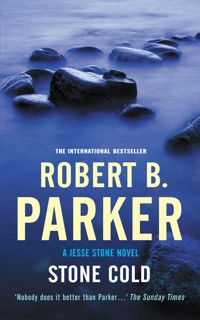
Paradise, Massachusetts, police chief Jesse Stone returns, tracking the path of a pair of thrill killers. Jesse Stone has a problem no officer of the law likes to face: Dead bodies keep appearing, but clues do not. A man takes his dog out for a run on the beach, only to be discovered hours later - with two holes in his chest. A woman drives her Volvo to the store to do some grocery shopping, and is then found dead, her body crumpled behind her loaded shopping cart. A commuter takes a shortcut home from the train, and never makes it back to his house. Hunting down a serial killer is difficult and dangerous in any town, but in a town like Paradise, where the selectmen and the media add untold pressures, Jesse feels considerable heat. Already walking an emotional tightrope, he stumbles; he's spending too much time with the bottle, and with his ex-wife - neither of which helps him, or the case. And the harder these outside forces push against him, the more Jesse retreats into himself, convinced - despite all the odds - that it's up to him alone to stop the killing. 'What is most remarkable...is Parker's ability to not only sustain the quality of his writing but also to continue to develop his characters. Stone Cold ... is among the best works of his career'Joe Hartlaub,Bookreporter.com 'this is prime Parker, testament to why he was named a Grand Master at the 2002 Edgar Awards' Publishers Weekly 'Pitch perfect' New York Times
Sie lesen das E-Book in den Legimi-Apps auf:
Seitenzahl: 276
Veröffentlichungsjahr: 2013
Das E-Book (TTS) können Sie hören im Abo „Legimi Premium” in Legimi-Apps auf:
Ähnliche













A JESSE STONE NOVEL
Paradise, Massachusetts, police chief Jesse Stone returns, tracking the path of a pair of thrill killers.
Jesse Stone has a problem no officer of the law likes to face: Dead bodies keep appearing, but clues do not. A man takes his dog out for a run on the beach, only to be discovered hours later - with two holes in his chest. A woman drives her Volvo to the store to do some grocery shopping, and is then found dead, her body crumpled behind her loaded shopping cart. A commuter takes a shortcut home from the train, and never makes it back to his house.
Hunting down a serial killer is difficult and dangerous in any town, but in a town like Paradise, where the selectmen and the media add untold pressures, Jesse feels considerable heat. Already walking an emotional tightrope, he stumbles; he’s spending too much time with the bottle, and with his ex-wife - neither of which helps him, or the case. And the harder these outside forces push against him, the more Jesse retreats into himself, convinced - despite all the odds - that it’s up to him alone to stop the killing.
Robert B. Parker (1932–2010) has long been acknowledged as the dean of American crime fiction. His novels featuring the wisecracking, street-smart Boston private-eye Spenser earned him a devoted following and reams of critical acclaim, typified by R.W.B. Lewis’ comment, ‘We are witnessing one of the great series in the history of the American detective story’ (The NewYork Times Book Review).
Born and raised in Massachusetts, Parker attended Colby College in Maine, served with the Army in Korea, and then completed a Ph.D. in English at Boston University. He married his wife Joan in 1956; they raised two sons, David and Daniel. Together the Parkers founded Pearl Productions, a Boston-based independent film company named after their short-haired pointer, Pearl, who has also been featured in many of Parker’s novels.
Robert B. Parker died in 2010 at the age of 77.
CRITICAL ACCLAIM FOR ROBERT B. PARKER
‘Parker writes old-time, stripped-to-the-bone, hard-boiled school of Chandler…His novels are funny, smart and highly entertaining…There’s no writer I’d rather take on an aeroplane’ – Sunday Telegraph
‘Parker packs more meaning into a whispered ‘yeah’ than most writers can pack into a page’ – Sunday Times
‘Why Robert Parker’s not better known in Britain is a mystery. His best series featuring Boston-based PI Spenser is a triumph of style and substance’ – Daily Mirror
‘Robert B. Parker is one of the greats of the American hard-boiled genre’ – Guardian
‘Nobody does it better than Parker…’ – Sunday Times
‘Parker’s sentences flow with as much wit, grace and assurance as ever, and Stone is a complex and consistently interesting new protagonist’ – Newsday
‘If Robert B. Parker doesn’t blow it, in the new series he set up in Night Passage and continues with Trouble in Paradise, he could go places and take the kind of risks that wouldn’t be seemly in his popular Spenser stories’ – Marilyn Stasio, New York Times
THE SPENSER NOVELS
The Godwulf Manuscript
Thin Air
God Save the Child
Chance
Mortal Stakes
Small Vices*
Promised Land
Sudden Mischief*
The Judas Goat
Hush Money*
Looking for Rachel Wallace
Hugger Mugger*
Early Autumn
Potshot*
A Savage Place
Widow’s Walk*
Ceremony
Back Story*
The Widening Gyre
Bad Business*
Valediction
Cold Service*
A Catskill Eagle
School Days*
Taming a Sea-Horse
Dream Girl
Pale Kings and Princes
(aka Hundred-Dollar Baby)*
Crimson Joy
Now& Then*
Playmates
Rough Weather
Stardust
The Professional
Pastime
Painted Ladies
Double Deuce
Sixkill
Paper Doll
Wonderland (by Ace Atkins)
Walking Shadow
Lullaby (by Ace Atkins)
THE JESSE STONE MYSTERIES
Night Passage*
Night and Day
Trouble in Paradise*
Split Image
Death in Paradise*
Fool Me Twice (by Michael Brandman)
Stone Cold*
Killing the Blues (by Michael
Sea Change*
Brandman)
High Profile*
Damned If You Do (by Michael
Stranger in Paradise
Brandman)
THE SUNNY RANDALL NOVELS
Family Honor*
Melancholy Baby*
Perish Twice*
Blue Screen*
Shrink Rap*
Spare Change*
ALSO BY ROBERT B. PARKER
Training with Weights
A Year at the Races (with Joan Parker)
(with John R. Marsh)
All Our Yesterdays
Three Weeks in Spring
Gunman’s Rhapsody
(with Joan Parker)
Double Play*
Wilderness
Appaloosa
Love and Glory
Resolution
Poodle Springs
Brimstone
(and Raymond Chandler)
Blue Eyed Devil
Perchance to Dream
Ironhorse (by Robert Knott)
*Available from No Exit Press
For Joan:everything started to bum
1
After the murder, they made love in front of a video camera. When it was over, her mouth was bruised. He had long scratches across his back. They lay side by side on their backs, gasping for breath.
‘Jesus!’ he said, his voice hoarse.
‘Yes,’ she whispered.
She moved into the compass of his left arm and rested her head against his chest. They lay silently for a while, not moving, waiting for oxygen.
‘I love you,’ he said.
‘I love you too,’ she said.
He put his face down against the top of her head where it lay on his chest. Her hair smelled of verbena. In time their breathing settled.
‘Let’s play the video,’ she whispered.
‘Let’s,’ he said.
The camera stood beside the bed on a tripod. He got up, took the tape from it, put it in the VCR, got back into bed, and picked up the remote from the night table. She moved back into the circle of his arm, her head back on his chest.
‘Show time,’ he said, and clicked the remote.
They watched.
‘My God,’ she said. ‘Look at me.’
‘I love how you’re looking right into the camera,’ he said.
They watched quietly for a little while.
‘Whoa,’ she said. ‘What are you doing to me there?’
‘Nothing you don’t like,’ he said.
When the tape was over he rewound it.
‘You want to watch again?’ he said.
She was drawing tiny circles on his chest with her left forefinger.
‘Yes.’
He started the tape again.
‘You know what I loved,’ she said. ‘I loved the range of expression on his face.’
‘Yes,’ he said, ‘that was great. First it’s like, what the hellis this?’
‘And then like, are you serious?’
‘And then, omigod!’
‘That’s the best,’ she said. ‘The way he looked when he knew we were going to kill him. I’ve never seen a look like that.’
‘Yes,’ he said. ‘That was pretty good.’
‘I wish we could have made it last longer,’ she said.
He shrugged.
‘My bad,’ she said. ‘I got so excited. I shot too soon.’
‘I’ve been known to do that,’ he said.
‘Well, aren’t you Mr. Dirty Mouth,’ she said.
They both laughed.
‘We’ll get better at it,’ he said.
She was now rubbing the slow circles on his chest with her full palm, looking at the videotape.
‘Ohhh,’ she said. ‘Look at me! Look at me!’
He laughed softly. She moved her hand down his stomach.
‘What’s happening here?’ she said.
He laughed again.
‘Ohh,’ she said. ‘Good news.’
She turned her body hard against him and put her face up.
‘Be careful,’ she murmured. ‘My mouth is sore.’
They made love again while the image of their previous lovemaking moved unseen on the television screen, and the sounds of that mingled with the sounds they were making now.
2
It was just after dawn. Low tide. Several herring gulls hopped on the beach, their heads cocking one way then another, their flat black eyes looking at the corpse. Jesse Stone, with the blue light flashing, pulled into the public beach parking lot at the end of the causeway from Paradise Neck, parked behind the Paradise Police cruiser that was already there, and got out of his car. It was mid November and cold. Jesse closed the snaps on his Paradise Men’s Softball League jacket and walked to the beach, where Suitcase Simpson, holding a big Mag flashlight, stood looking down at the body.
‘Guy’s been shot, Jesse,’ he said.
Jesse stood beside Simpson and looked down at the body.
‘Who found him?’
‘Me. I’m on eleven to seven and I pulled in here to, ah, take a leak, you know, and the headlights picked him up.’
Simpson was a big shapeless red-cheeked kid who’d played tackle in high school. His real name was Luther but everyone called him Suitcase after the ballplayer.
‘Peter Perkins coming?’
‘Anthony’s on the night desk,’ Simpson said. ‘He told me he’d call him soon as he called you.’
‘Okay, gimme the flashlight. Then go pull your cruiser across the entrance to the parking lot and call in. When Molly comes on I want Anthony down here and everybody else she can wrangle. I want the area secured.’
Simpson hesitated, still looking down.
‘It’s a murder, isn’t it, Jesse?’
‘Probably,’ Jesse said. ‘Gimme the light.’
Simpson handed the flashlight to Jesse and went to his cruiser. Jesse squatted on his heels and studied the corpse. It had been a young white man, maybe thirty-five. His mouth was open. There was sand in it. He wore a maroon velour warm-up suit, which was soaking wet. There were two small holes in the wet fabric. One on the left side of the chest. One on the right. Jesse turned the head slightly. There was sand in his ear. Jesse swept the flashlight slowly around the body. He saw nothing but the normal debris of a normal beach: a tangle of seaweed scraps, a piece of salt-bleached driftwood, an empty crab shell.
Simpson walked back across the parking lot. Behind him the blue light on his patrol car revolved silently.
‘Perkins is on the way,’ he said. ‘And Arthur Angstrom. Anthony called Molly. She’s coming in early. Anthony’ll be down as soon as she gets there.’
Jesse nodded, still looking at the crime scene.
He said, ‘What time is it, Suit?’
‘Six-fifteen.’
‘And it’s dead low tide,’ Jesse said. ‘So high was around midnight.’
A siren sounded in the distance.
‘You think he was washed up here?’ Simpson said.
‘Body that’s been in the ocean and washed up on shore doesn’t look like this,’ Jesse said.
‘More beat up,’ Simpson said.
Jesse nodded.
‘He’s got some marks on his face,’ Simpson said.
‘That would probably be the gulls,’ Jesse said.
‘I coulda lived without knowing that,’ Simpson said.
Jesse moved the right arm of the corpse. ‘Still in rigor,’ he said.
‘Which means?’
‘Rigor usually passes in twenty-four hours,’ Jesse said.
‘So he was killed since yesterday morning.’
‘More or less. Cold water might change the timing a little.’
A Paradise patrol car pulled in beside Simpson’s, adding its blue light to his. Peter Perkins got out and walked toward them. He was carrying a black leather satchel.
‘Anthony says you got a murder?’ Perkins said.
‘You’re the crime-scene guy,’ Jesse said. ‘But there’s two bullet holes in his chest.’
‘That would be a clue,’ Perkins said.
He put the satchel on the sand and squatted beside Jesse to look at the corpse.
‘I figure he was probably shot here, sometime before midnight,’ Jesse said, ‘when the tide was still coming in. There’s the high water line. The tide reached high about midnight and soaked him, maybe rolled him around a little, and left him here when it receded.’
‘If you’re right,’ Perkins said, ‘it probably washed away pretty much any evidence might be lying around.’
‘We’ll close the beach,’ Jesse said, ‘and go over it.’
‘It’s November, Jesse,’ Simpson said. ‘Nobody uses it anyway.’
‘This guy did,’ Jesse said.
3
When he left the beach, Jesse called Marcy Campbell on his cell phone.
‘I’m up early fighting crime,’ Jesse said. ‘Got time for breakfast?’
‘It’s seven-thirty in the morning,’ Marcy said. ‘What if I’d been asleep?’
‘You’d be dreaming of me. When’s your first appointment.’
‘I’m showing a house on Paradise Neck at eleven,’ Marcy said.
‘I’ll come by for you.’
‘I’m just out of the shower,’ Marcy said. ‘I’m not even dressed.’
‘Good,’ Jesse said. ‘I’ll hurry.’
Sitting across from Jesse in the Indigo Apple Café at 8:15, Marcy was completely put together. Her platinum hair was perfectly in place. Her makeup was flawless.
‘You got ready pretty fast,’ Jesse said.
‘Crime busters float my boat,’ Marcy said. ‘What are you doing so early?’
‘Found a body on the beach,’ Jesse said.
‘Town beach?’
‘Yes. He’d been shot twice.’
‘My God,’ Marcy said. ‘Who was it?’
‘Don’t know yet,’ Jesse said. ‘ME is looking at him now.’
‘Do you get help on major crimes like that?’
‘If we need it,’ Jesse said.
‘Oh dear,’ Marcy said. ‘I’ve stepped on a prickle.’
‘We’re a pretty good little operation here,’ Jesse said. ‘Admittedly we don’t have all the resources of a big department. State cops help us out on that.’
‘And you don’t like it when that happens.’
‘I like to run my own show,’ Jesse said. ‘When I can.’
The Indigo Apple had a lot of etched glass and blue curtains. For breakfast it specialized in omelets with regional names. Italian omelets with tomato sauce, Mexican omelets with cheese and peppers, Swedish omelets with sour cream and mushrooms. Jesse chose a Mexican omelet. Marcy ordered wheat toast.
‘Speaking of which, how is the drinking?’
‘Good,’ Jesse said.
He didn’t like to talk about his drinking, even to Marcy.
‘And the love life?’ Marcy said.
‘Besides you?’
‘Besides me.’
‘Various,’ Jesse said.
‘Well, doesn’t that make me feel special,’ Marcy said.
‘Oh God, don’t you get the vapors on me,’ Jesse said.
‘No.’ Marcy smiled. ‘I won’t. We’re not lovers. We’re pals who fuck.’
‘What are pals for,’ Jesse said.
‘It’s why we get along.’
‘Because we don’t love each other?’
‘It helps,’ Marcy said. ‘How’s the ex-wife?’
‘Jenn,’ Jesse said.
‘Jenn.’
Jesse leaned back a little and looked past Marcy through the etched glass front window of the café at people going by on the street, starting the day.
‘Jenn,’ he said again. ‘Well … she doesn’t seem to be in love with that anchorman anymore.’
‘Was she ever?’
‘Probably not.’
Marcy ate some toast and drank some coffee.
‘She’s going out with some guy from Harvard,’ Jesse said.
‘A professor?’
The waitress stopped by the table and refilled their coffee cups.
‘No, some sort of dean, I think.’
‘Climbing the intellectual ladder,’ Marcy said.
Jesse shrugged.
‘You’ve been divorced like five years,’ Marcy said.
‘Four years and eleven days.’
Marcy stirred her coffee. ‘I’m older than you are,’ Marcy said.
‘Which gives you the right to offer me advice,’ Jesse said.
‘Yes. It’s a rule.’
‘And you advise me,’ Jesse said, ‘to forget about Jenn.’
‘I do,’ Marcy said.
Jesse cut off a corner of his omelet and ate it and drank some coffee and patted his lips with his napkin.
‘Is there anyone advising you otherwise?’ Marcy said.
‘No.’
‘If you resolved this thing with Jenn,’ Marcy said, ‘maybe you could put the drinking issue away too, and just be a really good police chief.’
‘I’ve never been drunk on the job,’ Jesse said.
‘You’ve never been drunk on the job here,’ Marcy said.
‘Good point,’ Jesse said softly.
‘It got you fired in LA,’ Marcy said. ‘After you broke up with Jenn in LA. And you came here to start over.’
Jesse nodded
Marcy said, ‘So?’
‘So?’
‘So Jenn followed you here and you still struggle with booze,’ Marcy said. ‘Maybe there’s a connection.’
Jesse ate some more of his omelet.
‘You think anyone in Mexico ever ate an omelet like this?’ he said.
‘Are you suggesting I shut up?’
Jesse smiled at her and drank some coffee from the big white porcelain mug like the ones they had used in diners when he was a kid, in Tucson.
Jesse shook his head.
‘No,’ he said. ‘Your advice is good. It’s just not good for me.’
‘Because?’
‘I will not give up on Jenn until she gives up on me,’ Jesse said.
‘Isn’t that giving her a license to do whatever she wants to and hang on to you?’
‘Yes,’ Jesse said. ‘It is.’
Marcy stared at him.
‘How does it make you feel that she’s sleeping with other men?’ Marcy said.
‘We’re divorced,’ Jesse said. ‘She’s got every right.’
‘Un-huh,’ Marcy said. ‘But how does it make you feel?’
‘It makes me want to puke,’ Jesse said. ‘It makes me want to kill any man she’s with.’
‘But you don’t.’
‘Nope.’
‘Because it’s against the law?’
‘Because it won’t take me where I want to go,’ Jesse said.
‘I don’t mean this in any negative way,’ Marcy said. ‘You are maybe the simplest person I ever met.’
‘I know what I want,’ Jesse said.
‘And you keep your eye on the prize,’ Marcy said.
‘I do,’ Jesse said.
4
Bob Valenti came into Jesse’s office and sat down. He was overweight with a thick black beard, wearing a blue windbreaker across the back of which was written Paradise Animal Control.
‘How you doing, Skipper?’ he said.
Valenti was a part-time dog officer and he thought he was a cop. Jesse found him annoying, but he was a pretty good dog officer. In the fifteen years he’d been a cop, dating back to Los Angeles, South Central, Jesse had never heard a commander called Skipper.
‘We’re pretty informal here, Bob,’ Jesse said. ‘You can call me Jesse.’
‘Sure, Jess, just being respectful.’
‘And I appreciate it, Bob,’ Jesse said. ‘What’s up?’
‘Picked up a dog this morning,’ Valenti said, ‘a vizsla – medium-sized Hungarian pointer, reddish gold in color …’
‘I know what a vizsla is,’ Jesse said.
‘Anyway, neighbors said he’s been hanging around outside a house in the neighborhood for a couple days.’
Jesse nodded. Jesse noticed that the sun coming in through the window behind him glinted on some gray hairs in Valenti’s beard.
‘Not like it used to be,’ Valenti said. ‘Dogs running loose they could be lost for days before anybody notices. Now, with the leash laws, people notice any dog that’s loose.’
Jesse said, ‘Um-hmm.’
‘So I go down,’ Valenti said, ‘and he’s there, hanging around this house on Pleasant Street that’s been condo-ed. And he’s got that wild look they get. Restless, big eyes, you can tell they’re lost.’
Jesse nodded.
‘So I approach him, easy like, but he’s skittish as a bastard,’ Valenti said. ‘I had a hell of a time corralling him.’
‘But you did it,’ Jesse said, his face blank.
‘Oh sure,’ Valenti said. ‘I been doing this job a long time.’
‘Dog got any tags?’
‘Yeah. That’s the funny thing. He lived there.’
‘Where?’
‘The house he was hanging around. Belongs to somebody named Kenneth Eisley at that address. So I ring the bell, and there’s no answer. And I notice that the Globe from yesterday and today is there on the porch, like, you know, nobody’s home.’
‘How’s the dog?’ Jesse said.
‘He’s kind of scared, you know, ears down, tail down. But he seems healthy enough. I fed him, gave him some water.’
‘He look well cared for?’
‘Oh, yeah. Nice collar, clean. Toenails clipped recently. Teeth are in good shape.’
‘You pay attention,’ Jesse said.
‘I got an eye for detail,’ Valenti said. ‘Part of the job.’
‘Where’s the dog now?’
‘I got some kennel facilities in my backyard,’ Valenti said. ‘I’ll keep him there until we find the owner.’
‘You got an address for Kenneth Eisley?’
‘Yeah, sure. Forty-one Pleasant Street. Big gray house with white trim got three different condo entrances.’
‘The address will help me find it,’ Jesse said.
‘You got it, Skip,’ Valenti said.
5
They sat in the study looking at digital pictures on the computer screen.
‘Look at them,’ she said. ‘Aren’t they sweet.’
‘Your photography is improving,’ he said.
‘Maybe it would be more fun to do a woman this time,’ she said.
‘Variety is the spice of life,’ he said.
‘Any of these look interesting?’ she said.
He smiled at her.
‘They all look interesting,’ he said.
‘But we need to find the right one,’ she said.
‘Wouldn’t want to rush it.’
‘She may not even be in this batch.’
‘Then we’ll do some more research and come back with a new batch.’
‘That will be fun,’ she said.
‘It’s all fun,’ he said.
‘It is,’ she said, ‘isn’t it? The research, the selection, the planning, the stalking …’
‘Every good thing benefits from foreplay,’ he said.
‘The longer you wait for the orgasm, the better it is.’
They looked at the slide show some more, the new picture clicking onto the screen every five seconds.
‘Stop it there,’ she said.
‘Her?’
‘You think?’ she said.
‘Un-uh.’
‘Too old?’
‘I think we should get someone young and pretty this time.’
‘That feels right to me,’ she said.
‘Feels good, doesn’t it,’ he said.
‘Yes.’
He clicked on the slide show again and they sat holding hands watching the images of young men, old men, young women, old women, men and women of indeterminate age. All of them white, except for one Asian man in a blue suit.
‘There,’ he said and froze the image.
‘Her?’ she said.
‘She’s the one,’ he said.
‘You think she’s good-looking?’
‘I think she’s great-looking.’
‘She looks kind of horsy to me.’
‘She’s the one,’ he said.
He was very firm about it, and she heard the firmness in his voice. He said it again.
‘She’s the one.’
‘Okay,’ his wife said. ‘You want her, you got her. She does look like she’d be kind of fun.’
‘That’s her house she’s coming out of,’ he said. ‘Rose Avenue if I remember right.’
His wife looked at the list of locations.
‘Rose Avenue,’ she said.
‘Memory like a steel trap,’ he said.
‘So tomorrow we put her under surveillance?’
‘We watch her every minute of her day,’ he said. ‘See who she lives with, when she’s alone, where she goes, when. Does she drive? Ride a bike? Jog? Fool around?’
‘The more we know,’ she said, ‘the more certain it’ll be when we do it.’
‘And the better it will feel.’
He smiled. ‘During or after?’ he said.
‘Both.’
6
Carrying a tan briefcase, Jesse stood on the big wraparound porch at 41 Pleasant Street. There were two doors that opened onto the porch in front, and one that provided entry from the driveway side. Jesse rang the bell at 41A, where the name under the bell button said Kenneth Eisley. He waited. Nothing. The name at 41B was Angie Aarons. He rang the bell, and heard footsteps almost at once. A woman opened the door. She was wearing a black leotard top and baggy gray sweatpants. Her blond hair was pinned up. Her feet were bare. There was a faint sheen of sweat on her face.
‘Hello,’ she said.
‘Ms. Aarons?’
‘Yes.’
Jesse was wearing jeans and his softball jacket. He held up his badge.
‘Jesse Stone,’ he said.
‘Could I see that badge again?’ she said.
‘Sure.’
She studied it for a moment.
‘You’re the chief,’ she said.
‘I am.’
‘How come you’re not wearing a chief suit,’ she said.
‘Casual Tuesday,’ Jesse said.
‘Aren’t you awful young to be chief.’
‘How old is a chief supposed to be?’
‘Older than me,’ she said and smiled.
‘I’ll do my best,’ Jesse said. ‘Are you friendly with Kenneth Eisley, next door?’
‘Kenny? Sure, I mean casually. We’d have a drink now and then, sign for each other’s packages, stuff like that.’
‘Have you seen him recently?’
‘Not for a couple of days.’ She paused. ‘Omigod, where are my manners,’ she said. ‘Come in, want some coffee? It’s all made.’
‘Coffee would be good,’ Jesse said. ‘Cream and sugar.’
She stepped back from the door and he went in. The walls were white. The trim was white. The furniture was bleached oak. The living room was to the right, through an archway. There was a big-screen television to the left of the fireplace, and an exercise mat spread on the rug. She brought him coffee in a large colorful mug.
‘I’m sorry,’ she said. ‘The good china is in the dishwasher.’
‘I’m a cop,’ Jesse said. ‘All I know how to drink from is Styrofoam.’
On the floor near the exercise mat were several pieces of rubber tubing, and a round metal band with rubber grips. She sat on a big white hassock.
‘Why are you asking about Kenny?’ she said.
‘He has a dog?’
‘Goldie,’ she said. ‘He’s a vizsla. You know what they are?’
Jesse nodded.
‘Goldie’s been hanging around outside looking lost for a couple of days,’ Jesse said. ‘The dog officer picked him up, but he can’t locate Kenny.’
‘Last I saw they were going over to the beach together to run.’
‘When was that?’ Jesse said.
‘Couple nights ago.’
Jesse took an eight-by-ten photograph from the briefcase.
‘I’m going to show you a picture. It’s not gruesome, but it’s a picture of a dead person.’
‘Is it Kenny?’
‘That’s what you’re going to tell me,’ Jesse said. ‘You ready?’
She nodded. He held the picture out and she looked at it without taking it, then looked away quickly and sat back.
‘Oh,’ she said. ‘Oh.’
Jesse waited.
After a moment, she nodded.
‘Yes,’ she said. ‘It’s Kenny.’
Jesse put the photograph away.
‘What happened?’ she said.
‘Somebody shot him,’ Jesse said. ‘On Paradise Beach two nights ago.’
‘My God, why?’
‘Don’t know.’
‘Do you know who?’ she said.
Jesse shook his head.
‘Goldie,’ Angie Aarons said. ‘He must have been running with Kenny on the beach and was there …’
‘Probably,’ Jesse said.
‘And then he didn’t know what to do and he came home … poor thing.’
‘Yes,’ Jesse said. ‘Do you have any idea who might want to shoot Kenny?’
‘Jesus, no,’ Angie said.
‘What does he do?’
‘Ah, he’s, ah, he’s a, you know, stock guy, some big brokerage in town.’
‘Family?’
‘I don’t know. I didn’t know him real well. I never saw any family around.’
‘Do you know how long he’s lived here?’ Jesse said.
‘No. He was here when I moved in three years ago.’
‘From where?’
‘From where did I move?’
‘Yes.’
She smiled.
‘Am I a suspect?’
‘No,’ Jesse said. ‘The question was unofficial.’
‘Really?’ she said. ‘I came from LA.’
‘Me too,’ Jesse said.
7
Jesse was eating a pastrami sandwich on light rye at his desk, when Molly brought the girl and her mother into his office just after noontime on Thursday.
‘I think you need to talk with these ladies,’ Molly said.
Jesse took a swallow of Dr. Brown’s Cream Soda. He nodded.
‘Excuse my lunch,’ he said.
‘I don’t care about your damned lunch,’ the mother said. ‘My daughter’s been raped.’
‘Moth-er!’
‘You might want to stick around, Molly,’ Jesse said.
Molly nodded and closed the door and leaned on the wall beside it.
‘Tell me about the rape,’ Jesse said.
‘I didn’t get raped,’ the girl said.
‘Shut up,’ the mother said.
Jesse took a bite of his sandwich and chewed quietly.
‘She came home from school early and tried to slip into the house. Her dress was torn, her hair was a mess, her lip was swollen. You can still see it. She was crying and she wouldn’t tell me why.’
Jesse nodded. He drank a little more cream soda.
‘I insisted on examining her,’ the mother said. ‘She had no underwear, her thighs are bruised. I said I would take her to the doctor if she didn’t tell me, so she confessed.’
‘That she’d been raped?’ Jesse said.
He was looking at the daughter. The daughter looked frantic to him.
‘Yes.’
‘Anyone do a rape kit?’
‘Excuse me?’
‘Did you take her to the doctor?’ Jesse said.
‘And have it all over town, God no. I had her clean herself up and brought her straight to you.’
‘Clean herself up?’
‘Of course. Who knows what germs were involved. And I’m not bringing her in here looking like a refugee.’
‘Bath?’ Jesse said to the daughter. ‘Shower?’
The daughter wouldn’t speak.
‘I put her in a hot bath,’ her mother said, ‘scrubbed her myself like she was two years old.’
Peripherally, Jesse saw Molly raise her eyebrows.
‘What are your names?’ Jesse said.
The mother looked startled, as if Jesse had been impolite.
‘I’m Mrs. Chuck Pennington. This is Candace.’
Jesse said, ‘So who raped you, Candy?’
‘Candace,’ her mother said.
Jesse nodded.
‘Candace,’ he said.
Candace shook her head.
‘You tell him, young lady. I will not permit anyone to rape my daughter and think they can get away with it.’
‘I won’t tell,’ Candace said. ‘You can’t make me.’
‘No,’ Jesse said, ‘I can’t. But it’s hard to protect you if I don’t know who they are.’
‘You can’t protect me,’ Candace said.
‘He threaten you?’
‘They all did.’
‘All,’ her mother said, ‘dear God in Heaven. You tell the chief right now what happened.’
Candace shook her head. Her face was red. She was teary.
‘If I don’t know who they are,’ Jesse said, ‘I can’t stop them. They might do it again. To another girl. To you.’
Candace shook her head.
‘Don’t you even want revenge,’ Molly said. ‘If it happened to me I’d want revenge. I’d want them caught.’
Candace didn’t speak. Her mother slapped her on the back of her head.
‘No hitting,’ Jesse said. ‘Molly, why don’t you take Candace out to the conference room.’
Molly nodded. Left the wall and put her hand gently under Candace’s left arm and helped her out of the chair and through Jesse’s office door. Jesse got up and went around to the door and closed it and came back to his desk.
‘She’s been traumatized by the rapists,’ Jesse said. ‘She should not be traumatized by her mother.’
‘Don’t you dare tell me how to raise my daughter.’
‘I don’t know a hell of a lot about daughters,’ Jesse said. ‘But I know something about rapes. She needs to see a doctor. If nothing else he might be able to give her some sedation. Who’s her gynecologist? I can call him for you.’
‘Is there some kind of medical thing they can find out who did it?’
‘The hot bath tends to wash away evidence,’ Jesse said.
‘Well then, I won’t take her. The doctor may not tell, but someone will. The nurse, the receptionist. The doctor’s husband. I am not going to have her the subject of a lot of filthy talk all over town.’
Jesse finished his pastrami sandwich and drank the last of his cream soda and wiped his mouth with a paper napkin. He put the napkin and the empty can and the sandwich wrapper in the wastebasket. He rocked his chair back and rested one foot on the open bottom file drawer in his desk, and tapped his fingers gently on the flat of his stomach, and looked thoughtfully at Mrs. Pennington.
‘Why don’t I talk to her alone,’ he said.
‘You think she’ll tell you things she won’t tell her own mother?’
‘Sometimes people do,’ Jesse said.
Mrs. Pennington frowned. She put her palms together and tapped her upper lip with the tips of her fingers. She’s pretty good-looking, Jesse thought. A little too blond, a little too tan, a little too carefully done, maybe, teeth a little too white. Face is kind of mean, but a good body.
‘This entire incident must remain confidential,’ Mrs. Pennington said.
Jesse nodded.
‘Can you promise me that?’
Jesse shook his head.
‘You can’t?’
‘Of course not. We don’t plan to blab about it. But, if there are arrests, indictments, trials, someone will hear about it.’
‘Oh God,’ she said. ‘I cannot bear, cannot bear, the scandal.’
‘Being raped is not scandalous behavior,’ Jesse said.
‘You don’t understand.’
Jesse didn’t say anything.
‘I can’t discuss this any further. I’m taking my daughter home.’
‘Sooner or later you’ll have to deal with this,’ Jesse said. ‘Or she will.’
‘I want my daughter,’ she said.
Jesse stood and went to his office door.
He yelled, ‘Molly,’ and when she appeared he said, ‘Bring the girl in.’
When she saw her daughter, Mrs. Pennington stood.
‘We’ll go home now,’ she said.
Candace’s eyes were red and swollen. A bruise had begun to darken on her cheekbone. She seemed disconnected. Jesse looked at Molly. Molly shook her head.
‘Candace,’ Jesse said.
The girl looked at him vaguely. Her pupils were large. She had no focus.
‘Is there anything you want to say to me?’ Jesse said.
She looked at her mother.
‘We are through here, Candace,’ Mrs. Pennington said.
The girl looked back at Jesse. Their eyes met and held for a moment. Jesse thought he saw for just a moment a stir of personhood in there. Jesse nodded slightly. The girl didn’t say anything. Then her mother took her arm and they walked out of the station.




