


Erhalten Sie Zugang zu diesem und mehr als 300000 Büchern ab EUR 5,99 monatlich.
- Herausgeber: Corvus
- Kategorie: Gesellschafts- und Liebesromane
- Sprache: Englisch
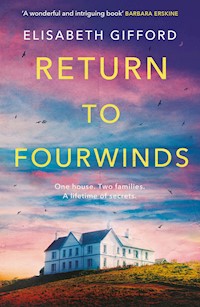
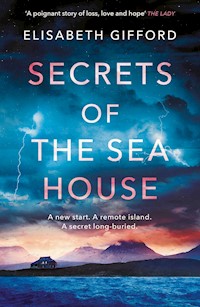
Secrets of the Sea House Scotland, 1860. Reverend Alexander Ferguson, naïve and newly ordained, takes up his new parish, a poor, isolated patch on the Hebridean island of Harris. His time on the island will irrevocably change the course of his life, but the white house on the edge of the dunes keeps its silence long after Alexander departs. Secrets of the Sea House is an epic, sweeping tale of loss and love, hope and redemption, and how we heal ourselves with the stories we tell. Return to Fourwinds At Fourwinds they gather: Alice and Ralph, Patricia and Peter, to celebrate the marriage of their children. But the bride is nowhere to be seen. What could have caused Sarah to vanish? As both families search for the answer, the past floods through the corridors of the old house. Return to Fourwinds is a sweeping, lyrical story of the things we choose to tell and the secrets that we keep.
Sie lesen das E-Book in den Legimi-Apps auf:
Seitenzahl: 1012
Veröffentlichungsjahr: 2016
Das E-Book (TTS) können Sie hören im Abo „Legimi Premium” in Legimi-Apps auf:
Ähnliche


















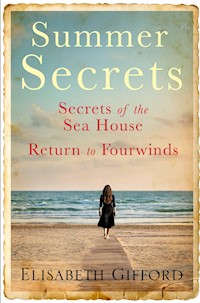
Summer
Secrets
Elisabeth Gifford studied French Literature and World Religions at Leeds University. She has written articles for The Times and the Independent, and has a Diploma in Creative Writing from Oxford OUDCE and an MA in Creative Writing from Royal Holloway College. She is married with three children. They live in Kingston upon Thames.
To Josh, Hugh, Kirsty and George
CONTENTS
Secrets of the Sea House
Prologue
Part One
Chapter 1
Chapter 2
Chapter 3
Chapter 4
Chapter 5
Chapter 6
Chapter 7
Chapter 8
Chapter 9
Chapter 10
Chapter 11
Chapter 12
Chapter 13
Chapter 14
Chapter 15
Chapter 16
Chapter 17
Chapter 18
Chapter 19
Chapter 20
Chapter 21
Chapter 22
Chapter 23
Chapter 24
Chapter 25
Chapter 26
Chapter 27
Chapter 28
Chapter 29
Chapter 30
Chapter 31
Chapter 32
Chapter 33
Chapter 34
Chapter 35
Chapter 36
Chapter 37
Chapter 38
Part Two
Chapter 39
Chapter 40
Chapter 41
Chapter 42
Q&A with Elisabeth Gifford
Reading Group Questions
Return to Fourwinds
Chapter 1
Chapter 2
Chapter 3
Chapter 4
Chapter 5
Chapter 6
Chapter 7
Chapter 8
Chapter 9
Chapter 10
Chapter 11
Chapter 12
Chapter 13
Chapter 14
Chapter 15
Chapter 16
Chapter 17
Chapter 18
Chapter 19
Chapter 20
Chapter 21
Chapter 22
Chapter 23
Chapter 24
Chapter 25
Chapter 26
Chapter 27
Chapter 28
Chapter 29
Chapter 30
Chapter 31
Chapter 32
Chapter 33
Chapter 34
Chapter 35
Acknowledgements
Q&A with Elisabeth Gifford
Reading Group Questions
Acknowledgements
Bibliography
PROLOGUE
My grandmother’s grandmother was a seal woman. She cast off her seal skin, fell in love with a fisherman, had his child, and then she left them. Sooner or later, seal people always go back to the sea.
At least, that’s the story that Mum used to tell me.
‘But is it true?’ I wanted to know.
‘It’s as true as you and me, Ruthie,’ she said. ‘There’re plenty of people up in the islands that come from the seal people.’
And later I used to think, Of course, that’s what must have happened. That’s why she left me. She couldn’t resist going back to the water, because she was a Selkie.
For a long time, I liked to think that. Because it meant she might come back one day, and then I could go home.
PART ONE
CHAPTER 1
Ruth, 1992
I don’t think I had ever felt so piled with gifts as I did that first night we slept in the Sea House, or so excited. I was ready to get up and carry on with the painting there and then. It was completely dark, no slur of city light. I pressed the little light on the alarm. Two a.m.
I curled up closer to Michael’s long back. He was so solid in the darkness; his presence filled the room like a comfort. When I first met Michael, I thought he was too tall and elongated, a species I didn’t recognise. Then I realised that he was just how he should be, a sapling in a wood, his pale brown hair the colour of winter leaves. And right now, he was exhausted, completely dead to the world.
It had taken months of back-breaking and filthy work to get the old place scraped down to a blank canvas, and then we’d had to start the long haul of repairs ready for us to move in. The truth was that our bedroom and the half-finished kitchen were still the only inhabitable bits, but you could see from the proportions of the Georgian rooms with their elegant windows and carved fireplaces that one day the house was going to be beautiful.
I turned over again, far too awake for two in the morning, and also incredibly thirsty, probably because of the dubious cava from the Tarbert Co-op. I didn’t want to get a drink from the bedroom sink: we’d just cleared a dead bird from the tank feeding the upstairs taps.
It was icy when I slid outside the bedcovers. The fire in the bedroom grate had gone out. I went down the stairs as quietly as I could, feeling with my hands along the cold plaster where it was too dark to see.
Down in the kitchen, I filled a mug from the tap, and drank the water as I stared out at the dark shapes of the hills. A glassy moon clear in the black sky. The room was flooded with monochrome shadows, but then the kitchen looked at its best in the dark. You could almost imagine that the humped shape in the corner was a new Aga rather than a builder’s old trestle covered with a cloth, a tiny Belling hot-plate and washing-up bowl on top.
Next to the window, the moonlight showed the pale squares of my noticeboard with its To Do lists for every room; snippets of cloth and paint cards; pictures of ideal rooms torn from magazines; a collage of how the Sea House was going to be – one day. I loved sitting at the rickety kitchen table updating the lists, adding and crossing off, enjoying the delicious feeling of our forever home finally rising up from the rather disgusting ruin we’d bought in the dead of winter.
I’d first seen the house by torchlight, running the pale light over the boarded-up windows, the walls cracked and streaked with green damp. We had to force the back door to get in. The air was thick with vegetal rot. Piles of filthy fleeces stacked up in the wreck of a kitchen. Crumbling dirt and debris everywhere. The air had felt so cold it sucked the heat from my face and hands.
I was ready to turn round and go back to London.
‘But don’t look at the mess,’ Michael said. ‘Think of it freshly painted, curtains at the kitchen windows, a nice big pine table here.’
Now, with the outside more or less weatherproofed, the rats evicted and the holes in the roof remedied, the debris swept away, and after hours and hours of plastering and painting, we were finally in – and it was possible to imagine that one day, instead of a chilly building site, the Sea House would feel like a real home.
And always the next thought, the one that seemed impossible. When the house was completely ready, we’d come in through the front door, and I’d be holding a small, warm weight, a little sleeping face in a nest of soft shawls. Our child.
I avoided glancing down to the bottom of the noticeboard and the scruffy wad of bills still to be paid. Felt the niggle of worry stir in my stomach.
I tipped the mug up and put it on the draining board – carefully, as the sink was a bit loose from the wall, propped up with some wood offcuts. The flagstones were freezing and starting to make my feet hurt. My shoulders felt pinched by the cold.
There was hardly any moonlight as I crossed the hall to go back upstairs. The new floorboards felt unpleasantly gritty under my bare feet and a freezing draught was coming up from the missing skirting board, bringing with it a clayey odour. I shivered and made for a pool of moonlight on the lower banisters. I put my hand out to take the newel post and felt the cold of the gloss paint under my palm.
That’s when I saw it: a quick blur of movement like a tiny wing caught from the corner of my eye. I saw a hand descending on the newel post just after mine.
I froze. A sudden, painful pricking of blood in my feet, the smell of clay sharp in my nostrils, every instinct primed to get out of there. She was so close, so palpably present, I thought she would appear in front of me. I couldn’t breathe. My heart was gabbling so hard I thought it was going to give out.
And then she was gone. The air relaxed.
I ran up those stairs, the door to our room half ajar just as I had left it. I got back into bed with a thump and lay close to Michael. He murmured but didn’t wake.
I stared into the dark. What on earth had just happened? Some delay in the messages from my eye to my brain. Some silly trick of the mind half roused from sleep had sent me into a stupid panic. Eventually my heart slowed to normal and I’d almost talked myself down, was almost drifting off when I woke up once more, very alert. I opened my eyes onto the darkness. Then why had it felt so intensely real, as if someone else was there in the hallway, standing beside me so closely that for a moment I wasn’t sure who I was?
The fear was beginning to seep back in. I felt sick from fatigue, but there was nothing I could do; I stayed alert and awake, listening out to the minute sounds of a silent house, all my senses still primed.
I could hear the waves breaking along the shore like soft breaths. I got up and wrapped a blanket from the chair round my shoulders, went to the window and lifted the wax blind. The moon was completely round in the blackness. There were bright lines of its phosphorescence along the waves, continuously moving through the darkness and then disappearing.
I watched them for a while. After that I felt calmer. Eventually, I got some sleep.
When Michael came in with two mugs of coffee next morning, the sun was already strong through the blinds.
‘The wood’s being delivered this morning,’ he said, picking out a T-shirt and giving it a sniff. He worked his arms into it. ‘We might have a floor in the sea room today.’
He sat on the bed, making the mattress bounce, and pulled on his grubby jeans from the day before. I had to cradle my coffee so that it didn’t spill on the new duvet. It had an oily bitter smell. I wondered if the jar of Nescafé had gone stale. I put the coffee to one side on the orange box that was covered in a new tea towel for elegance.
‘Donny’s coming to help pull up the rest of the old boards. Although we’re going to dig a channel in the earth underneath to lay a cable first.’
‘I’ll come down and help,’ I said.
‘I thought you were going to finish your drawings.’
He leaned over and bashed my chin with a quick kiss. His long, slim arms looked different, the muscles and veins more prominent. He’d worked so hard to get us out of the caravan. He’d hated the little bed that didn’t let him stretch out, but I’d got to quite like living in the shelter of the dunes, right next to the deserted beaches and the wide Atlantic rollers that towered up like molten glass in the blue winter air. I was glad that the Sea House was almost as close to the water, just the other side of the dunes, where the green machair broke into sandy waves of undulating silver marram grass. And then the beginning of the wide, flat beaches.
Michael stood up, stretched his long torso and combed his hands through his curly hair. I think the thing that made me fall in love with Michael was the way he stooped to listen to me because he was so tall, as if he really wanted to hear what I was saying; and he was so kind and willowy, his mop of wiry, fair hair like a medieval angel in a picture. He pulled on a jumper, then his grimy overalls. He smiled, slapped his legs, ready to get started.
‘So, Donny’ll be here in half an hour.’
‘I’m getting up. It’s just, I didn’t sleep well.’
‘Yeah, I know. I’m constantly thinking about the next thing to do, seeing us open, the first guests rolling up. And I still can’t believe we live in this house, in this fantastic place.’
I could hear him whistling as he went downstairs.
I got the fire going again in the grate and had a horrible cold wash in the sink in the corner of the bedroom. I pulled on my jeans and a flannel shirt, feeling guilty that it was Michael who was doing all the back-breaking work, while I got to sit in the only good room and draw lizards. The book was on reptile neurology and I’d just started the last chapter: ‘The Brain and Nervous System of Podarcis erhardii, commonly known as Erhard’s Wall Lizard’. Michael had got used to sleeping in a room with the dry aquarium and its lizard family, and the faint acrid smell of waxy chrysalises that collected at the bottom of the tank.
I lifted the insulation wadding and looked through the side of the lizard tank to see how they were getting on; immediately, a flick of a tail and a scuttle; the two lizards flashed into a different position and then froze. The thing about lizards is you can never tame them. They have a very small, very ancient brain that operates on one principle: survival. They spend their whole lives on high alert, listening out for danger, scanning their surroundings with their lizard eyes, their toe pads picking up every vibration in the earth, ready to send back one message to the brain cortex: flee, flee now. They don’t consider, or think; they simply reach a certain overload in feedback criteria and then run. They are sleek little bundles of vigilant self-preservation with an evolutionary strategy so effective, you can find a lizard brain tucked inside every developed species.
I pushed back the sleeve of my jumper and carefully lowered my hand into the glass tank. There was a flicker and they both scuttled to the other end in a flurry of sand and tiny sideways straggle legs. But there was nowhere else for them to go. I slowly moved my hand towards the corner; another quick scuffle, and my hand closed round one of them. I could feel the little whip of muscle working inside my palm and the scratching of its back legs.
I held the chloroform bottle against my chest with the top of my arm and unscrewed the top. Then I covered the opening with a wad of cotton wool and tipped it over with my free hand. I held the damp cotton over the struggling lizard. Waited till it stopped. I put the lid back on the bottle, and sat down at the desk. The lizard was lying across the piece of card, its arms and legs something between a minute plucked chicken and a cartoon frog in its anthropomorphic arms-up pose. I picked up the scalpel and started to slit along the belly skin, ready to map out the nerves.
I realised that the banging and splintering from downstairs had stopped. I have an amazing ability to sit through noise and not notice it once I begin to work, but the sudden silence was unsettling. Not even the sound of digging. Something’s come up, I thought, and went downstairs with my arms folded. I only hoped it wasn’t more problems. Michael’s father had lent us enough to get the manse ready to take our first bed and breakfasters, but we needed to be open as soon as possible if we were to keep up the payments.
I made my way down through the hallway, crossing my arms across my chest against the chill. Down in the sea room, every one of the square sash windows was filled with views of the Atlantic so that the place always felt more sea than room. Michael and Donny were standing thigh deep among the floor joists, looking at something. When Michael saw me coming in he didn’t look pleased.
‘What is it?’ I asked. ‘Just tell me the worst. Is it dry rot?’
Donny looked upset and serious. Michael was white under his summer tan and the grime from ripping up the old wood. It was freezing in there. There was a fusty smell of rot and damp.
‘I don’t want you to look,’ he said. ‘You won’t like it.’
‘What is it? Oh God, not another rat.’
I walked round the edge of the walls where there were still some floorboards down and then lowered myself into the floor space between the joists. The floor was damp and sandy and littered with dirt and debris. Michael and Donny were standing one each side of a small dark-brown box, or rather a little metal trunk that was rusted away in places. It had evidently just been dug up from the sandy soil.
The lid was open.
I squeezed next to Michael so that he had to hold on to the joist behind him.
‘Don’t,’ he said.
I squatted down and looked inside. The earth smelled very sour and close there. I could see a jumble of tiny bones mixed in with a nest of disintegrating woollen material. There was some kind of symmetry to them; a tiny round skull, like a rabbit or a cat. The bones had a yellowish tinge, scoured clean by beetles and other organisms that had got into the trunk as it rusted, probably over many years. I wondered why someone had buried a cat under the house. Then I tipped my head sideways, frowned.
This was no family pet or small animal. No, this was the skull of a human baby, but everything so tiny that it must have been born either very underweight, or premature. My eyes traced along the arm bone and then down the bones of one of the legs.
Something was wrong. Where was the other leg? I shuffled closer, and noted the strange thickness of the single leg bone, the long central indentation along its length, and then I realised that it wasn’t so much that any of the bones were missing but that both legs had been fused into one solid mass, the feet barely there and oddly splayed out like tiny appendages.
My heart missed a beat. I couldn’t believe what I was looking at.
CHAPTER 2
Ruth
The same day we found the remains under our house, the police arrived from Tarbert. They parked several cars on the grass in front, churning the green turf with muddy tyre tracks.
As I watched them through the kitchen window, for a moment I was there again, a child standing alone beside the canal, watching from my hiding place behind the police van while they worked to bring something up from under the water. I felt dizzy, my breath short as I saw the muddied body rising up from the water again.
A wave of nausea made me grip the back of the kitchen chair. I dipped my head and concentrated on breathing. After a while, I straightened and looked around the kitchen.
Michael went out to see them and I left him to it. I focussed on sorting out the mess in hand, clearing away the breakfast things, but I couldn’t stop shivering.
I felt a hand on my shoulder and jumped.
‘You going to be okay?’ Michael said.
‘It’s just cold in here with them going in and out of the front door all the time.’
‘I’ll ask them not to leave it open.’
For the rest of the morning, Michael kept shooting worried, sideways glances in my direction each time he came in.
Michael knows about my past of course. It was always out in the open. On the first day we met, I told him: I was brought up in a children’s home. After Mum died. After she drowned herself.
He knows, and he doesn’t know. So many things I’ll never tell him about those years. Things I don’t even tell myself any more.
I pulled on an old jumper that Michael had left hanging behind the kitchen door and clutched a mug of tea in my frozen hands. I could hear them tramping in and out, their voices calling, doors slamming.
I went out into the hallway and saw the tracks of brown mud being brought in by the police, staining the new hall floorboards before we’d had a chance to seal them clean with layers of varnish. Sounds of them digging deeper under the floor coming from the sea room. Trembling with anger, I went back into the kitchen and closed the door.
‘I’m afraid it will be at least two more days before Forensics arrive from Inverness,’ said Sergeant MacAllister, coming into the kitchen where Michael and I were holed up together eating lunch, pretending to live a normal life. ‘Perhaps it would be better if you moved out for a few days, until we can take the remains away.’
The caravan felt damp and unused when we went back. It smelled like the inside of an old biscuit tin. And it was freezing in there, even with the paraffin heater on. Every surface I touched leached the heat from my skin.
The day was now wasted. I sloshed formaldehyde into the prepared lizard’s tray and slid it into the bottom of the tiny caravan fridge.
‘I can’t believe we’re being driven out of our own home by that thing,’ I said to Michael as we lay in the cramped bed.
‘They’ll take it away soon, and given time, we’ll forget it was ever there.’
He sounded so certain and so confident. We huddled together, waiting to feel warm, waiting for sleep.
*
The next day, high winds came in. I woke up to the stale smell of the caravan. The memory of the rusting trunk and the bones inside like the remains of a small animal made me feel too nauseous to eat any of the porridge that Michael had made.
Michael went back to the house to carry on papering the upstairs bedroom, and so he was there when the call came in from the police about the forensic team who were supposed to be coming over from the mainland. I heard the wind slam the caravan door against the van. He came in looking gloomy, his hair wet and blown about by the squally rain.
‘Ferry’s being held up in Uig for the weekend.’ He sat down at the tiny caravan table, the water running off his yellow sailing jacket. ‘We’re not going to be back in the house any time soon I’m afraid, love.’
‘You’re dripping on the paper,’ I said, irritated that nothing was going right. ‘This is going to set us back weeks. Could jeopardise us opening in time for next season, and starting to pay off the loan.’
I glanced up; saw Michael’s face anxious and white.
‘Well, there’s nothing we can do till they take the … you know… the remains away.’ He sighed. He turned a drawing of the lizard’s nervous system round and looked at it. ‘How’s it going? This looks beautiful, like the veins of a leaf.’
‘At least when these are finished we’ll get paid.’
‘I’d better get on too. We’re out of woodchip and we need more paint. Donny and I are going to drive up to the store in Tarbert.’
I kissed his cold, wet cheek and dabbed at the sploshes he’d left on the table.
For the next hour, I worked solidly on the illustration, absorbed in minutely delineating the nerve pathways and intricate blood vessels that lay ready to flood the lizard’s muscles with blood at the first semaphoring of danger.
All the while, the wind thumped vengefully on the side of the van. I could feel the compressions of air like waves of dizziness, the vibrations travelling through the table. As I took up the scalpel and started to open the tiny muscles in the lizard’s forearm, a vicious blow thudded into the van; I jumped and sliced into my thumb, dropped the knife and swore.
I found a plaster, struggled with the sticky adhesive.
For a moment I caught a whiff of Mum’s talcy smell as she had unwound a strip of plasters; a memory of how she’d leaned over to wash my gouged knee, the lilt of her voice as she took out the playground grit. She was telling me about the island siths, the scattered boulders left by ancient glaciers that changed at dusk into funny, stupid creatures. The crinkly orange plaster neatly fastened to my skin, the wound clean and smelling of Germolene, she had bent over and kissed my head, told me I was her mo ghaol.
Mum came from the islands, though she brought me up in London. I grew up in a block of council flats with long brick balconies that smelled of bleach and stairwells that smelled of wee.
She never told me which island she came from exactly.
I snapped the first-aid tin shut with my good hand and manhandled it back into the little cupboard. I sat back down in front of the drawings but the rain had come in like buckets of grit being poured over the roof. It was impossible to concentrate.
I sat watching the flattened marram grass through the blurred window. Then I took a fresh piece of paper and began to sketch out another anatomical drawing, from what I could remember of that poor child in its makeshift, rusty coffin. I stared at what I’d drawn, at the bony appendage where legs should have been. I thought about the child’s mother. Wondered if it was she who had dug down into the earth beneath our house, covered the little trunk over, nailed down the boards.
As I sat tapping my pencil on the Formica table, it occurred to me that I knew someone I could ask about such an odd foetal mutation. I gave a little laugh not to have thought of it before. After I’d rooted around for the number of my old anatomy professor in London, I decided to go back over to the Sea House where our new phone was sitting on a chair in the hallway. I hesitated for a moment, knowing that Michael and Donny weren’t there, but roundly scolding myself for being so weak-minded, I wrapped up in a huge oilskin jacket of Michael’s and walked over to the house – or rather I was bodily driven there by the strength of the wind.
I closed the Sea House door behind me, glad to be out of the rain, and hung the dripping oilskin over the banister. I was ready to feel purposeful about calling Professor Carter. I turned round to get the phone, my eyes glancing back over the cold space of the hallway. The same tightening in the air. The anxiety seeping in again, creeping through the systems of my body; my heart was starting to hammer; my hands felt clammy and slippery. Once more, I was overwhelmed by an urgent and unpleasant instinct to get right out of there.
But this time, I wasn’t going to let her get to me. I pulled the phone number out of my pocket, picked up the receiver and started to dial.
I waited in the empty hallway for someone to answer, tensing the muscles in the back of my neck against the cold air on my skin. Against her. I knew it was a she. And I understood something else – this child was no newborn. She was older, knowing.
And I wanted her gone. I listened to the phone ringing somewhere in London, and felt a flood of relief as I heard Professor Carter’s sensible voice answer.
We talked for quite a long time. He said that he’d heard of such a condition, but it was very rare. He promised to get some information together and send it in the post.
‘Don’t forget, Ruth,’ he said, ‘any time you can make Christmas dinner again. We miss you.’
I put the phone down and let myself out of the front door.
Speaking with him on the phone had left me feeling a bit homesick for the professor and his wife. That first Christmas at university, when the halls of residence cleared and everyone went home, they had rounded up all the strays with nowhere to go. It was the best Christmas I’d had for years, even though it was shadowed by an odd resentment, a memory of the broken train sets and scraggy-haired Sindy dolls wrapped up in Christmas paper and left in a giant scrum in the dining-room hall of the home. No idea who sent those parcels.
But then if I hadn’t hated the children’s home so completely, I would never have spent so much time hanging out in the local library.
You don’t want to live with twenty-nine teenage girls like me. It took a while to learn how to fit in. I got steel rings from Woolworths; I showed them I could give as good as I got when cornered in a fight. I cut my hair off, got workmen’s steel-capped boots and a black Crombie coat – skinhead gear.
Where do you go when you’ve no real home to go to? Hours and hours walking around the city, my hands bright red with cold. Where do you go when you’re the sort of person people can overlook, forget about – the sort of person anything can happen to, and no one cares?
One afternoon, in a freezing November fog, I’d walked off the streets into the marble halls of a London library, the quiet air spiced with the smell of old books, and everything else just fell away
I liked the reference section best. Running my hand along the smooth spines, I’d take a book out at random. A whole world of things I hadn’t known. That’s how I got the grades to read Biology at university.
Year Zero. University. You could be anyone. I lost the monkey boots and the steel rings; and it seemed like I finally lost the fug that they said we home kids always carried on our clothes in school. I turned up on freshers’ day in a crowd of endless new faces, wearing my brand-new jeans and a coat bought with my grant money.
The campus libraries were modern, made of white concrete and glass, and full of people who might be just like me, or perhaps I could be like them. It was all to invent, to create, and no one was more hard-working than me.
In my second term, I met Michael in a laundromat. He carried my washing and his washing back to the halls of residence. I thought he was mad, and I thought he was handsome – in a woolly jumper way, like one of the lecturers; and so clean and gentle. I watched him manhandling both bags. He had such a polite, soft voice – posh even.
He had the gift of caring; it radiated off him like a warmth. First bite at the apple of happiness when I kissed Michael.
The day we got married, there were no family guests on my side of the church. We filled it with friends from university. Professor Carter and his wife came.
My hands were beginning to lose their chill as I walked across the grass back to the caravan. The air actually felt warmer outside the house, and soft and damp now that the rain had passed over. In the distance, I noticed a tiny van approaching along the coast road. Squinting at it, I was relieved to make out a police van. The ferry must have managed to sail from Uig after all. They’d be coming to take away the remains.
‘One thing I know from rummaging around in boxes of bones in the zoology department, that child must have died at least a hundred years ago,’ I said to Michael as we sat in the Sea House kitchen once more.
‘Ruth, it’s gone. I think we should stop talking about it now,’ Michael said through a mouthful of toast.
‘I don’t know how you can say that. How can you stand it, not knowing exactly what happened here?’
He got up and started running water in the washing-up bowl. ‘I grew up in a house that was a priory in medieval times. An archaeologist friend told my dad once that there were probably dead monks buried in our garden. But if there were, they never bothered us. Ruth, it’s pointless thinking about something that’s over.’
I sat on at the table, dabbing my finger in a pool of honey till Michael took the plate away.
I went over to dry the dishes. I stacked them on the trestle table, looking out through the kitchen window towards the little white church. Dougal, the minister, had parked his car outside.
We bought the Sea House from the church board. It had been the church manse originally, until it became too expensive to heat and they built a nice pebbledash bungalow for the minister down in Tarbert. So its official address was the Manse, but the few people who lived in the sparse and scattered village of Scarista always called it the Sea House, Tigh na Mara. It stood away from the other houses, at the edge of the miles of empty, undulating grasslands that were surrounded by a half circle of hills. It was so close to the sea that sand from the dunes blew into the hallway.
Wherever you stood in the house, you heard the soft breaths of the waves. The view from the front of the house showed water so turquoise and sand so white that it looked like a holiday poster for the Bahamas – except with ragged sheep wandering the beach instead of people in swimsuits.
Ideal for a holiday business – until now.
‘I think I might walk over and ask Dougal some questions. There must be records of who lived here once.’
Michael sighed.
I walked up to the church past the walled-in graveyard. The fancier headstones, now toppling at crazy angles, had been placed importantly on the top of a rise in the grass. At the base lay the poorer stones, little more than dug-up rocks, and with no inscriptions. There were also newer, sharp-cut headstones, standing in municipal rows down near the road – and plenty of room to bury a baby properly under the turf of the churchyard.
The church was empty, silent. Michael liked to go along to the Gaelic services; he said he found them meditative, calming even, but sitting through the foreign sounds of their psalm singing created a mounting pressure in my chest that made me want to stand up and protest. Having lived on Harris now for a few months, I was starting to get a fair idea of why Mum might have hidden herself away in London, coming as she did from this strict religious community that locked up the children’s swings on Sundays and had no concept of an unmarried mother other than in biblical terms. It made me feel irritable and argumentative every time I met poor old Dougal the vicar.
I found Dougal in the vestry. He was standing on a chair, emptying out a large cupboard in the wall. As always, he wore a black suit, his white hair and pink face made even brighter above the white vicar’s collar. His elderly skin had a surprising smoothness to it, as if it was washed clean and back to innocence each morning by the island rain.
‘Ah, Ruth, there’s you,’ he said, getting down carefully from his chair. ‘What can I help you with? And I wanted to tell you how sorry I am for all your trouble with the manse. We had no idea.’
‘Thanks, Dougal, but actually that’s why I’ve come to see you. I was wondering if there might be some old records in the church, some information about the people who used to live in our house, say about a century ago?’
‘Sergeant MacAllister was asking me just the same thing and so I’m here to get the old ledgers out. This cupboard can’t have been emptied properly for years. You could give me a hand.’
He balanced his solid frame on the rickety chair again and began passing things down. I took a pile of floppy green hymn books, a stack of missionary society pamphlets in thick Victorian print, armfuls of parchment-coloured ledgers. ‘I think that’s everything,’ he said, leaning further into the cupboard. ‘Although…’ I heard something heavy falling onto wooden board. He pulled out a small bundle wrapped in a cloth and banged off the dust. He handed it down to me and stretched his arm to the back of the cupboard again.
He stepped down and placed a small metal lion on the table. It was a kind of paperweight, the dull greenish yellow of old brass. It needed a good shine with metal polish.
The bundle was wrapped in brown velvet. The cloth felt old and silky and gave off the smoky odour of mildew as I folded it back. Inside was a notebook marbled with blues and reds, and a square glass bottle with a line of dried ink. There was also an old-fashioned ink pen, nothing more than a wand of mother-of-pearl with a nib; faint layers of light glowed as I turned it.
‘This looks like a minister’s notebook for sermons,’ said Dougal as he flicked through the pages, ‘but there’s no name.’ He passed me the book. I scanned the insides of the covers.
‘There’s a date though, look,’ I said, pointing to the corner of a page, ‘1860.’
He pulled a ledger from the pile on the table. The faded black ink of the entries had sunk into the paper with a yellow bleed. He counted back until he came to 1860.
‘There you are: the Reverend Alexander Ferguson, minister in Scarista in 1860.’
‘So these must have belonged to him.’ The edges of the mother-of-pearl pen were fluted for decoration. It seemed rather pretty for a man.
Dougal was still frowning as he continued to scan the ledger. ‘According to this, he was in sole charge of the parish at just twentysix. Not an easy task for a man so young. And I see Ferguson wasn’t a married minister, so the child couldn’t have been his.’
‘We can’t rule him out just because he wasn’t married,’ I said. Then, noticing how embarrassed Dougal looked, I quickly added, ‘Who else was living in the house at that time?’
He hunted through the pile of ledgers and found a slim accounts book for the manse farm. He spread it out to show a list of staff and their wages for September 1860: Margaret Kintail, Moira Gillies, Effie MacAllister, several male farmhands.
‘Maybe Ferguson never knew what was buried beneath his floor,’ I said, thinking aloud. ‘Perhaps the baby was the child of one of these men and one of the maids. But why on earth would they choose to bury it under the floorboards of the manse study?’
I started making some notes from the ledger on the back of an old parish newsletter.
‘Dougal, would you mind if I took Alexander’s notebook with me to read? I’ll bring it back.’
‘I’m sure Sergeant MacAllister isn’t going to be interested in a book of sermons, and I can always look at it later. In fact, why don’t you take the writing set back to the house? After all, it must have belonged there once, and I know you young people like these old things.’
Part of me hesitated – a vague fear of making too many connections back to the past. Decided I was being silly.
‘That’s really kind,’ I told him. ‘We’ve nearly finished restoring the fireplace in the sea room, and these would look wonderful on the mantelpiece.’
Dougal came outside with me and we stood in the wind looking over the graveyard. He looked worried. It felt like there was something more he wanted to say.
‘I was sorry to hear about your mother, Ruth,’ said Dougal. ‘You were very young to lose her, and in such sad circumstances.’
Taken aback that he should suddenly refer to her like that, I realised there must have been some conversation between him and Michael.
‘Oh well,’ I said. ‘Thanks.’
‘And it must have been so very hard for you, with your father never being around.’
I shrugged. ‘Actually, Dougal, I prefer not to talk about all that.’
‘I wanted to let you know, Ruth, that once the remains are returned to the island, we will be holding a proper burial for the baby.’
I nodded, and we stood in silence for a while, watching the frantic drama of the breakers. The sea was mountainous with navy blue waves, the spray blowing off like fine white hair streaming in the wind.
‘And I was thinking,’ he said, ‘I could be holding a house blessing for you if you would like me to. It might help you to feel more settled, after all that has happened.’
‘How do you mean, a house blessing?’
‘When people move in to a new house, I often come over and pray in each room to bless it. A fresh start.’
‘I don’t mean to be rude, Dougal, but that’s not really my sort of thing. But thank you anyway.’
He smiled and nodded, and we shook hands.
I walked away, half tempted to turn back and say, Yes, come over right away and do your house-blessing thing, but it smacked too much of superstition and magic and holy water, and I was still angry with myself for letting my stupid nervousness taint how I felt about the Sea House. No, if there was an unquiet spirit in our house, the only way to lay it to rest was to find out exactly what had happened to that child.
A few days later, I heard something land on the floor in the hallway and ran down to get the post. Professor Carter had sent a wad of photocopied pictures and articles. I took them back to bed, passing them over to Michael as I read through them.
‘There’s a condition called Mermaid Syndrome then?’
I nodded. ‘The correct name is Sirenomelia.’ I showed him a grainy photo of a large specimen jar containing a baby floating in preserving fluid, its round face placid, eyes closed in sleep. The torso was extended to a tapering sleeve of flesh twisted slightly to one side. At the end were two malformed tiny flipper feet. It wasn’t pretty. He pulled a face.
‘So this is how the mermaid baby would have looked?’
I nodded.
‘Grief! Poor thing.’
The article explained that the child had been born with a large vein missing from its lower body. The mother’s blood supply to the legs had probably been so poor in utero that the infant’s legs had simply failed to develop. The child had no kidneys and several other organs were underdeveloped. It would have been able to live for only a few hours before it passed away from its fatal mutations.
I read on and found that the condition was often linked to poor health in the mother: some illness, or exposure to a toxic chemical, perhaps poor nutrition. There was no incidence – and here I leaned forward and felt my heart beating too hard – no record of the condition being hereditary. No child had ever survived to pass on the gene. It was an extremely rare condition, each case a new mutation that died out almost as soon as it was born.
The relief I felt on reading that made me realise that I had actually been wondering if there was some kind of link between my mother’s wild sea people stories and the child under our house. I picked up the picture of the baby floating in the jar, and shivered.
We finally heard from the police about the post-mortem findings. The report showed that the baby had died of natural causes, just as Professor Carter had anticipated, and since it had happened such a long time ago, the coroner had recommended that the case be closed.
But I was more determined than ever to find out who’d been involved. Who had taken the decision to take up the floorboards, dig down into the compacted earth?
It would have taken such a lot of effort to do that. And why leave the child under our house when there was a whole island out there where a child could be tucked away in a quiet grave?
The old-fashioned cursive handwriting and dense theology made Alexander Ferguson’s book of sermons hard going. Each sermon was transcribed into a wall of impenetrable Gaelic. I realised with a pang that Mum would have been able to read all that. I could only remember tiny snatches of her Gaelic. I remembered ‘mo ghaol’, ‘dear one’, and a few other words she used to say when she was angry – words that she told me not to repeat – but that was it.
I was pleased to discover the occasional journal entry in English: nature observations; notes on Alexander’s daily life. Here the writing was looser, snippets of comments and reflections where you could almost hear Alexander’s voice. I flicked through the book to see if I could find more, the thin breath of the paper fanning my wrist. I realised that a couple of the pages were a loose insert. I carefully took them out.
The thicker piece of paper seemed to be a letter, copied out from The Times newspaper. Even in Ferguson’s time, the article would have been some fifty years old. I read on, blinked, then read it through again. A schoolmaster in Reay was reporting a sighting of a mermaid. I gave a half laugh, and turned the page over. On the back was a list of three further sightings with names and dates.
The second piece of paper was thin enough to act as tracing paper. Opening it out, I found some rather fine anatomical drawings. I turned the paper round, held it closer. The upper body of each one was human, but the lower part tapered to the bone structure of assorted sea mammals. It was as if someone had tried combining two skeletal systems to create the mythical form of a merman. I could see they didn’t really make sense at the join. I shook my head. Why on earth was Ferguson inventing mermaid skeletons?
When I showed the letter to Michael, he whistled. I called up Dougal on the phone.
‘Oh yes,’ he said, seemingly unfazed. ‘There were a lot of mermaid sightings in the old days. Not so much now, of course, now that we know better. But you know, don’t you, that there is the grave of a mermaid, down in Benbecula, in Father Mac’s parish?’
‘Really?’
‘Oh yes.’
‘But it can’t have been a real mermaid. What on earth did they see to make them think that? Dougal, what do you think it was that the schoolmaster in Reay actually saw?’
‘That, we may never know. But evidently our Reverend Ferguson was asking the same questions.’
I put the phone down feeling a bit shaken. I’d always accepted that Mum’s tales of sea people were some kind of old fairy story – nice, but nothing significant. But now I was beginning to wonder. Suddenly, I felt a lot less smug about being able to explain the baby skeleton. Frowning, I went back to Alexander’s notebook and began to read through the journal entries with close attention.
CHAPTER 3
Alexander Ferguson, 1860
As soon as I heard the news from my servant girl, I hurried to Benbecula, but with the tides being difficult and the journey through the Uist isles long, I arrived too late. The wake was already finishing, the crofters almost all dispersed to their homes, and the minister refused my request to have the coffin dug up and opened, so that I might make an examination of the body. I thus made a further arduous journey, returning across the estuary to enlist the help of the harbour sheriff in Lochmaddy but he refused to go above the minister, and made it quite clear that he looked upon my request to disinter the mermaid – if such she be – with great suspicion.
The hour was growing late, and on the islands darkness is complete unless there is a moon, so I found lodgings at the harbour inn. While my dinner was being prepared, I took the opportunity to walk out and enquire among the fishermen if there were any among them who had seen the mermaid while she was still alive, or had had occasion to see her body before it was buried. By their frowns and puzzled faces they implied that my poor Gaelic was causing them great difficulty in understanding my questions, but as they turned away, I saw some of the men cross themselves. They understood me perfectly well. As soon as they decently could, each one of them turned his back and resumed stacking his ropes and creels. The water in the harbour beyond them was unusually still, a great sheet of red glass in the setting sun and I noted that there was a second black inn and customs house perfectly inverted in the water. Eventually, the silence grew long and I had no choice but to return to the inn’s bare little dining room and wait for my supper.
I found the landlady, however, a devoted gossip, and kindly disposed to help me improve my Gaelic. During the course of my dinner she settled herself at the far end of the table. ‘It was the MacKinnons who found the poor lady, lying dead on the shore. And I heard that Eilidh MacKinnon touched her with her own hand, just as I am touching this plate now.’
I slept between somewhat damp and musty sheets that night but I slept most contentedly. The landlady had given me directions to find the aforementioned persons, and my feelings may well be imagined as I lay in the dark and anticipated speaking with the very people who had seen and even touched this as yet scientifically unrecorded creature.
I was awake with the first light and composed a letter to the Dean of Science at the university in Edinburgh, requesting him to order an exhumation. I assured him that there were eyewitnesses who could attest to the existence of this half-fish, half-human specimen, and though I could not lay claim to complete certainty in the matter, it was my belief that the creature might hold the key to some previously undiscovered branch of the evolutionary chain.
This was an opportunity such as may not come twice in a man’s life, I assured him, and I urged the Dean to kindly dispatch his reply with every haste.
I left the letter with the landlady, along with an entire shilling to deliver it to the mail boat, and rode out towards the sea the happiest man in Scotland.
Of course, at that time I was not to know that the Dean’s reply would be most discouraging. He refused to order the raising of the mermaid’s coffin and wrote that I was too ready to give credence to ‘the fanciful tales of fairies and legends held by the aboriginal peoples of the Western Islands in their state of ignorance’. He suggested, now that my health was improving, I should consider making arrangements to return to a parish nearer to Edinburgh, where I could study once more alongside men of science and reason, and so continue perhaps with my classification of molluscs and crustaceans from the coast of Fife.
By late afternoon I had arrived back at the western seaboard of Benbecula. After enquiring at some of the black houses – which a visitor may easily mistake for a pile of stones, since they are surely some of the least civilised habitations in Europe – I was able to locate the whereabouts of the women mentioned by the landlady. I rode out to Traigh Mhor and left my horse grazing while I walked across a vast plain of wet sand that mirrored the wide brightness of the sky, to where two black figures were stooping to fill their buckets with periwinkles.
Once they understood my request, the women were very anxious to share their story. They asked for no coin. They appeared to be simple women of good character, deeply affected by the encounter. The details were as follows.
On the morning of June the sixteenth, 1860, Kate MacKinnon, and her mother, Eilidh MacKinnon, were gathering periwinkles and other seaware from the shores of the island of Benbecula on the Atlantic seaboard, when they were astonished to see a woman, visible only from the waist up, gliding along a little way out to sea, her lower portion hidden under the water. She swam in closer, whereupon a huge tail could be seen wavering beneath the sea’s surface. The creature remained with them a good hour, travelling up and down the shore as the women worked. Since the creature had a cheerful face and called out to them in a kindly voice, they called back to her, although they were unable to understand her language. They were sorry to see her swim away and not return.
The following morning, after a great storm, the two women returned to their work on the shore and were grieved indeed to discover the mermaid lying dead on the white sands. She was of small, adult size, her face clearly a human face, and with long black hair. The skin of her naked body, however, was unlike that of any man or woman living, being smooth and ‘sleekit’ as the skin of a seal. She did not have legs, but in their place, a tail covered in a thin, loose skin. One of the women told me that she had touched the tail, which felt as smooth as a fish, but without any fish-like scales.
I made my way back to Harris by boat and horseback, feeling increasingly feverish and cold, and once again fell prey to doubts: how could it be that I, a man of science and education, was willing to entertain a belief in mermaids? And yet, I remonstrated with myself, are we not, as scientists, called to consider the evidence? Could it not be possible that these persistent rumours and sightings were reports of some undiscovered link in the transmutation of species, the type of link that had been recently predicted by Mr Darwin? Might there be, visiting these very shores, a creature as fantastical as any newly uncovered, ancient fossil – but which was not yet extinct?
I returned to the manse very late, the house a black shape against the dark sky. I was glad to see a lamp still lit in the hallway. After so many hours of mental speculation beneath the host of white coals in the night sky, it seemed to me that I had taken fever less from the cold than from attempting to encompass the whole of Creation within my own small brain. Dizzy and aching, I fell rather than alighted from my horse and was heartily glad to see the maid come out carrying a lantern.
I was gratified to see that she had waited up for my arrival though it was not many hours till morning. In spite of an inauspicious start, my faith in her was beginning to pay off, evidenced by her daily progress towards civilisation and thoughtfulness.
I also noted with a sigh, as she helped me unbutton my wet great-coat – my fingers too numb and cold to achieve this small task myself – that many were the days when I would wish to see the evidence of such progress in myself.
As I pulled off my boots and left them to steam in front of the fire, I was forced to admit that there were personal reasons for my determination to discover any truth behind such rumours of sea people. For when I was a child, my dearest grandmother taught me not only her native Gaelic but also the stories braided into that tongue. My mother expressly forbade such superstition, but many were the evenings when the old lady held me spellbound with the old tales while the Aberdeen mists came in round the house and the ships’ horns boomed down in the harbour. She insisted my own black hair was dark and sleekit because all Selkie children are born covered with such hair, though, she said, it falls away quickly from the rest of the body.
As I grew older, I dismissed my grandmother’s stories as the innocent ramblings of the uneducated. But now, living in the islands, where the stories of the sea people seemed to be but yesterday’s news, I felt compelled to follow through with my enquiries – only trusting that in seeking out the truth of the matter, I would not thus destroy my own reputation, or indeed, my own peace of mind.
CHAPTER 4
Moira, 1860
The first day I came to the house of Reverend Ferguson, he looked down at my bare feet and said, ‘We must get you some boots, Moira, my dear.’
So he sent off to Glasgow and they came in a brown paper parcel, and they fitted me well longways, but they never did fit me for width. So he wrote off again to the shop that sent them, asking if they had any wider boots, but they replied that it was my feet that was wrong, not their boots, since feet didn’t ought to have been so wide in a woman.
The Reverend stuffed them with wet paper to make the leather stretch a little, but even so they were still sore to my feet. When not serving at the table, I pulled loose those laces and always kicked them off whenever I went out on the grass.
I knew I had good feet. Where I come from, forty miles away from here out in the Atlantic, everyone had good strong feet. My father, he had powerful big ankles, standing steady on the cliff face as he tucked the gannets under his belt like a fat skirt. Uisdean and me, we used to lie on the turf, put our heads in the wind and peer over the clifftop and watch the sea boiling a thousand feet away below us – almost as far away as the sky above. And there, down on the crags, my father, standing steady as he eased the bamboo pole along, slipped the noose over the guga’s neck. A tug on the rope to Finlay to say he was climbing up, and we watched him as he made his careful, easy way, back up the cliff face.
When they cleared us off the island, my father said we would not go to Canada with the others. So the factor of Lord Marstone promised us a home, on his own big island. ‘John,’ he told my father, ‘I have long valued you as a tenant. I will make sure that your new home will be far more suitable than this place. You will have a shop you can walk to.’




