


3,99 €
Mehr erfahren.
- Herausgeber: Publisher s21598
- Kategorie: Fachliteratur
- Sprache: Englisch
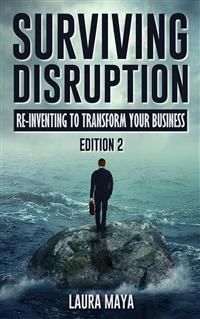
Disrupt ,Reinvent , Transform and Innovate.. How is it Possible to stay ahead … or Can we change the Game ! Given this time of rapid global change ,it is important that all individuals works to address new innovation and seize new opportunities happening every day , anywhere . Business in the developed world has progressively move into a new era where new technologies and funding possibilities are driving disruptive trends creating a new look into the sharing economy and revolutionize the ways innovators manage new ideas in implementation and manufacturing . From the popular crowdfunding financial services like Kickstarter, office space sharing through PivotDesk , transport service rendered by Uber , educational services on Skillshare , childcare and household assistance through co-ops such as Taskrabbit and more localized services like Rapid Prototyping incubation centers , F&B delivering platform and even bicycle sharing services , the sharing economy is now very much acceptable to most empowered consumers for many sectors. The new frugal innovative business concept behind the sharing economy provides a way to use an asset less expensively or with frugality than has ever been possible before and yet allow service providers to gain some incremental income from customer’s service purchase and benefits the customers who also gain from being able to access to product and services that they require when they need them without the burden of owning them. This new emergence of peer-to-peer sharing companies such as Airbnb, Mobike and Uber has been one of the more intriguing developments in recent years both for online web development but also in this new sharing economy. They have brought on the overhauling the traditional concept of business versus consumer by enabling users to offer up their assets like their apartments, cars or teaching skills in return for monetary gains . Out with the Old , In with the New But it could mean bad news for most traditional businesses that fail to transform or reinvent to adapt . The sharing economy are creating new economic value and disrupting current established industry players. There is a gradual shift occurring and I believe all industries will be or are already being affected by this change The understanding and practice of disruptive innovation should be taken as a priority –as market leaders must believe newly developed product or services eventually will displaces established competitors–should be under every marketing leader’s agenda. One rule stand above the rest , and if you want to survive , - you must embrace for change to Disrupt , Reinvent , Transform and Innovate Ignoring this basic belief could make your company the next diminishing service provider . Businesses need to rev up their innovation engines quickly because they are losing market share and brand security with each passing day This book will provide a fresh perspective on innovation and change , identifying and gauging how fast innovation model will be adopted and understand the psychology of business disruption and explain just how to reinvent concepts and ideas from the start but ways to continuously meet today’s constantly challenging market’s competitive environment . Beside it will provide insight on Crowdfunding which offer new avenues for funding new products or startups and the ease of using such platforms to getting new business financially sound and readied for their venture which could also be attached with a steep learning curve. Many startup ventures may find themselves caught into unfamiliar territories without the real knowledge of choosing a platform, crafting a pitch and attracting investors
Das E-Book können Sie in Legimi-Apps oder einer beliebigen App lesen, die das folgende Format unterstützen:
Veröffentlichungsjahr: 2018
Ähnliche





Table of Contents
Disclaimer:
Surviving Disruption | Re-Inventing To Transform Your Business | Table of Content
Introduction
Chapter 1 : | Social Media and The Sharing Economy
Chapter 2: | How the Sharing Economy works
Chapter 3: | Creating a ‘Service Orientated’ Product- as The Money Machine
Chapter 4: | How to Come up with the Next Big Thing
Chapter 5: | How to Prompt the Out the Box Thinking
Chapter 6: | Prototype Incubation - Structure and Build Your Idea
Chapter 7: | Validating Your Idea – Does Your Innovation Work as a Business?
Chapter 8: | Funding Your Disruptive Business idea
Chapters 9: | Re-invention and Transformation with Launching New Idea
Chapter 10 : | Buy-In Strategy for Potential Growth Startup Companies
Chapter 11 : | Social Networking Buy-In Secret Technique
Chapter 12: | Product Launch A- Z
Chapter 13 : | Pitch Development Versus Business Development
Chapter 14 | Marketing Strategies
Chapter 15 | New Disruptive Type of Marketing Concept
Chapter 16 : | Businesses Gone Global
Conclusion: | The Long Journey Ahead
Disclaimer:
Every effort has been made to be accurate in this publication. The publisher does not assume any responsibility for errors, omissions or contrary interpretation. We do our best to provide the best information on the subject, but just reading it does not guarantee success. You will need to apply every step of the process in order to get the results you are looking for.
This publication is not intended for use as a source of any legal, medical or accounting advice. The information contained in this guide may be subject to laws in the United States and other jurisdictions. We suggest carefully reading the necessary terms of the services/products used before applying it to any activity which is, or may be, regulated. We do not assume any responsibility for what you choose to do with this information. Use your own judgment.
Any perceived slight of specific people or organizations, and any resemblance to characters living, dead or otherwise, real or fictitious, is purely unintentional.
Some examples of past results are used in this publication; they are intended to be for example purposes only and do not guarantee you will get the same results. Your results may differ from ours. Your results from the use of this information will depend on you, your skills and effort, and other different unpredictable factors.
Surviving Disruption is a followup edition of “Disrupt Old Money Making Ideas ”, a extended 2nd edition with additional 3 chapters with 50pages of fresh content
It is important for you to clearly understand that all marketing activities carry the possibility of loss of investment for testing purposes. Use this information wisely and at your own risk.
Copyright © 2019 Laura Maya
Surviving Disruption
Re-Inventing To Transform Your Business
Table of Content
Chapter 1:Social Media and the Sharing Economy
Chapter 2:How the Sharing Economy Works
Chapter 3:Creating a ‘Service Orientated’ Product- as The Money Machine
Chapter 4:How to Come up with the Next Big thing
Chapter 5:How to Prompt the Out The Box Thinking
Chapter 6:Prototype Incubation - Structure and Build Your Idea
Chapter 7: Validating Your Idea -Does Your Innovation Work as a Business?
Chapter 8: Funding Your Disruptive Business Ideas
Chapter 9:Reinvention and Transformation with Launching New Idea
Chapter 10: Buy-In Strategy for Potential Growth Startup Companies
Chapter 11: Social Networking Buy-In Secret Technique
Chapter 12: Product Launch A- Z
Chapter 13 :Pitch Development Versus Business Development
Chapter 14 : Marketing Strategies
Chapter 15 : New Disruptive Type of Marketing Concept
Chapter 16: Businesses Gone Global
Conclusion: The Long Journey Ahead
Introduction
We live in an incredibly exciting time for business and technology. Apart from anything else, I find it immensely satisfying and exciting that it is now possible to earn money online from anywhere in the world.
The web has transformed the way we do business. Just fifteen years ago, it would have been unheard of to think that you could earn a living this way .But as I mentioned, internet marketing is really only the tip of the iceberg. The web is far more transformative than simply allowing us to work from other locations.
Right now, technologies like the web and mobile phones are transforming countless industries in ways that we could never have predicted or foreseen. And the future is looking even more incredible.
The opportunities that this presents for savvy business is huge and if you’re willing to take advantage of the changing face of business and economy, then you can not only profit HUGELY but also steer the course of mankind’s future.
Big, world-changing ideas do not come along often. And when they do, they can be incredibly hard for people to swallow. People like the status quo in fact and when you come along and try to change that, you will always meet resistance. People are afraid of change.
And people – as a whole – are also unfortunately lacking in ambition often. If you tell someone that you’re going to be a rock star or an astronaut, the most common reaction you’ll get is disbelief. This is a shame though: someone has to make it after all!
With all that in mind though, how can you go about convincing people to put their faith (and cash) behind your idea? If you want to do something big, how do you get others on board?
The Power of Credibility
This is actually the very same problem that Elon Musk faced when he wanted to send a man into space. Musk is taken seriously by everyone now but at the time, he was completely unknown. All he knew, was that it was his mission to make space tourism a reality. And he was disenfranchised with the attempts made by NASA and others at that time.
He thus came up with an idea of a prize to motivate companies into creating the technology necessary to make his vision a reality. The only problem? He didn’t have the money and no one believed that he could offer it!
His solution was to make his initial presentation alongside enthusiastic engineers and astronauts. He found people that were as passionate about his idea as he was and by doing this, he lent his entire concept credibility. People would have laughed him off the stage but not when he appeared alongside such luminaries.
How to Get Credibility for Your Big Idea
So, the next time you have a big idea for a business, think about how you can get others to buy into it and who it would take to convince them. If it sounds stupid coming from you, then speak to someone who won’t think it’s stupid and who will be able to convince others.
And this is actually the advantage of having a ‘big idea’ – it will automatically be more exciting than a small idea and so you’ll find there will be people out there who want to become ambassadors for it. You just have to find them!
Chapter 1 :
Social Media and The Sharing Economy
How Facebook Has Changed the World and Continues to Change the World
When you think of transformative businesses that work online, perhaps the one that comes to mind first is Facebook. Facebook is of course a social media network that allows us to connect to people we’ve met both online and in the real world.
Today, if you meet someone at a party, you don’t need to ask for their number – you can just get their name and then look them up on Facebook!
Of course, the notion of a social network was not new when Mark Zuckerberg first built Facebook. We already had the likes of MySpace and Friendster.But what was new was the way that Mark went about marketing and designing Facebook. The ability to tag friends in photos was one of the first big innovations that made the platform stand out, for instance. And then came the inclusion of the ‘home feed’ – controversial at first, but ultimately a fantastic way to catch up on what all your friends were doing.
Smart design choices like this and a fantastic roll-out ultimately resulted in Facebook becoming larger than any single country in the world in terms of its members. Not only that, but it has genuinely changed the way that we interact with other people.
But Mark and co. are not happy to stop there and call it a day. They’ve already acquired Oculus with the intention of allowing us to meet our friends in a virtual setting for example. And in the future, they plan on introducing systems to help communities work together and even vote on important matters. Zuckerberg wants this to serve as a blueprint for how governments could one day handle elections and referendums.
Facebook has also been credited with helping to make the world a slightly smaller place; for helping us to gain a better understanding of people in different parts of the world. And through exposure to Western influences, it has been credited with leading to many progressive movements – including the Arab spring.
Would the fall of Gaddafi have happened if it were not for Facebook?
Of course, it’s not all positive either. Facebook has also contributed to the perpetuation of ‘fake news’ – and this has even been suggested to have helped contribute to the election of president Trump! Facebook has also been a place for extreme views to be perpetuated and there has been much discussion as to whether Facebook should take a more active role in policing its feeds and groups.
The point is, whatever way you slice it, Facebook is MUCH more than simply a website that makes Mark Zuckerberg money. It’s a tool that is challenging the very nature of human interaction and of democracy.Imagine if you were responsible for something like that.
The Sharing Economy
Another big movement that has been made possible thanks to the web is that of the ‘sharing economy’. This is another concept that threatens to transform the way we interact with one another – and that specifically might change the shape of the global economy.
In many ways, the sharing economy is looking to ‘reset’ the economy to a time before money. No doubt, money evolved as a natural progression from trade. Back in our evolutionary prehistory, we would not have had bank notes, coins or credit cards. Instead, if you wanted something, you needed to have something else that you could offer to trade for it.
Need someone to cut your hair? Then you might offer to mow their lawn in exchange.
Want to eat some nice steak? Then perhaps you ought to trade it for the interesting looking stone you found...
Money in theory is simply intended to facilitate this kind of trade by acting as a sort of ‘place holder’. This way, you can give your audience something that represents labor rather than having to do the labor right then and there. It also means that you can trade with more people – in case someone doesn’t have anything that you need.
But money has created problems as we know, such as great inequality and a whole lot of stress.
What if we went back to a time where we could trade goods and services? Thanks to the web, this is now far more practical because we have the means to partake in a global market. You can almost always find someone who has the thing you want and who is looking for the thing you’ve got, because you can ask the entire planet.
Although that being said, many examples of the sharing economy work on a slightly smaller scale – bringing focus back to local communities and areas.
And the companies that are taking advantage of these ideas are highly successful in producing profit and in changing the way that we do business.
Here are some amazing examples:
Uber – Uber is a ‘taxi’ company, or more like a ‘taxi replacement’ company. Rather than having to hire a taxi from a taxi firm and pay obscene amounts, Uber allows you to look for registered drivers in your local area that are willing to offer lifts for a small price. Anyone can sign up to become a driver with Uber and using the app, it’s possible to see where the drivers are at any given time, how much they’re going to charge and how long before they get to you!
Suffice to say that Uber is currently giving traditional Taxi firms a lot of sleepless nights. It has made nights out in London far more convenient and affordable. And it’s looking into providing patient transport for moving the elderly from hospitals. This could potentially solve problems in countries like the UK where hospital beds are often full because of people who are simply unable to leave once they’ve been treated.
AirBnB – AirBnB is to hotels what Uber is to taxis. Once again, this is a solution that allows users to sidestep the usual (expensive) avenues when finding a place to stay. In this case, the solution is to allow users to offer guests to stay in their spare room, out house or holiday home while they’re away. That way, anyone can make some extra money and there are far more options for accommodation when travelling.
A similar idea is Couchsurfing, which lets users offer up their couches to strangers for free. In exchange, they of course get the good will of other homeowners, and the idea is that you can end up with a network of free places to stay all across the world whenever you go travelling!
Schpock – Schpock is a much more direct and straight-forward example of the sharing economy in action. Here, users are invited to trade their possessions or to sell them for a small fee. This is accomplished using an app to snap photos and then show them to the local area.
Mobike & OBike - We quote these 2 app based New Sharing economy business models , as they are recently launched product which has proven as working model and uses a dockless bike-share system and users can unlock its bicycles by scanning a QR code on it.
Users pays a small fee for every 30 minutes of use, and each bicycle comes with a proprietary "smart lock" containing GPS technology, which allows the company to locate and track the position of each bicycle.
When a rider reaches his destination, he simply has to park the bike and secure the smart lock
How could you create the ‘next’ Uber or AirBnB ? Is it as simple as “Thinking-out-of-the-Box”
That said, some startups in China are receiving huge funding for several sharing apps and here is some interesting ideas of some new startups come out from thinking outside the box :-
E Umbrella - Umbrella-sharing Concept
Two known examples setup by 2 companies in China , namely Molisan and Hujie Web are allowing individuals to rent out umbrellas and return them afterwards, in the same way that bike-sharing concept work. Molisan has already begun trial runs in 2 cities in China where for a deposit of RMB 20 and a daily fee of RMB 2 ( paid via chat-line messaging app) , Molisan’s bright orange umbrellas are rented out by simply scanning a QR code attached to the docking station where the umbrella is locked. A late penalty of RMB 0.5 per day will be imposed after the initial rental period of 15 days.
Umbrella-sharing is extremely useful in cities which experience sudden episodes of intense rainfall or even from Intense heat from the hot sun. Having these umbrella-sharing stations at metro stations could prove helpful to densely-populated demographic
E Basketball Sharing -
Basketballs rented out of a box have started bouncing around outdoor courts. The balls are stored in locked cabinets and can be retrieved or access to the box by anyone paying a deposit who also agrees to an hourly charge. Users must go to the Zhulegeqiu app on WeChat and scan the QR code placed on the docking station to rent a basketball. Payment works the same way for Umbrella-sharing
E Power Bank
Another niche focusing on small but popular items involves portable power banks that are stored in special locked cabinets when not rented by a customer. For a small fee, a user can borrow one of the fully charged batteries after scanning a QR code with their phone, and they can return the charger later at any station.
––––––––
So, have a thought , about your local community or the things you are regularly buying and selling. Take a “Pause” ,and look around , open your mind and wonder - What could be the next big thing that can be transformed through the power of the sharing economy?
The sharing-economy ecosystem is dynamic, overly-communicated and highly-competitive. What may seem traditionally viable and progressing well , may just turn obsolete overnight, quoting - Uber ,which is a strong example which is affecting traditional taxi services throughout the world
How it could have managed to succeed for this period of time are very much related to the various economy drivers that is empowering this new growth
They are likely to be :
The profileration of smartphone technology and Cloud web integration of mobile application
Popularity of QR codes and Locational based Apps
Easy communication on Messaging Chat-line Apps
Convenient Mobile Payment Gateway system
Real Name registration through Mobile Internet
Funding support from Crowdfunding Portal and Telco Giants How do companies like these make money?
Sometimes, it is through advertising. In other cases, the companies focus on providing a great service and then rely on an exit strategy with the hopes that some investor will be keen to buy their business after initial startup with few good years of successful turnover in sales .
The most important drivers will be user’s population , as each products has to be popular and provide consumers the benefits to come together to share.
Yet ,quantity and quality services may not be key drivers for all these sharing economy companies to maintain its survival as their highest possible challenge is still low profitability.
Most sharing economy startups have been relying on investments rather than revenues. Being a totally new conceptual business , many are not even sure whether with rental charges they can make ends meet over the long term
Whatever the case, there are plenty of ways you can make a lot of money from these kinds of opportunities. Nevertheless, entrepreneurs have found that the sharing economy can support a variety of goods, including trucks , portable chargers ,cake sharing , basketballs and some have even found a way to share office work-spaces.
Chapter 2:
How the Sharing Economy works
The sharing economy is a new type of business built on the concept of shared resources. This concept works around the ability to share what is available that allows customers to access goods or services when they are needed, rather than having to purchase them on purpose , but rather to use what they can make do with or offer , at times
In fact, it can be traced that “The Sharing Economy” emerged out of the idea of “collaborative consumption”, since 1978. The Sharing Economy simply focus on the idea that consumers share access to goods and services based on sustainability and doing more with fewer resources, but also tied to the basis of frugality and being conservative .The sharing economy is a growing trend that could stay with us for the long-term. Companies like Uber , Scoot, and Mobike are now delivering innovative services that have influence new growth ideas to the sharing economy. It is also changing how people take vacations ,booking of accommodation , getting transportation, eat and seeking alternative methods to getting done in a cost saving way while baring some social responsibilities to the societies also
The sharing economy for these services- orientated business models has been the most effective in urban areas with concentrated population so much so that it has been disruptive with added competition to the existing traditional business operations there, that are not using a shared economy model.
The other highly possible reason why this model works effectively is mainly due to most of them are supported with some type of online platform or Mobile application that helps to keep their overhead low and the benefits from consumer’s reliance on their mobile phones and their interest in the added convenience of ordering services directly from their devices.
The sharing economy is only one small example of how the web is transforming business and regular human interaction.
Another great example is ‘crowdsourcing’.
Crowdsourcing refers to using the ‘power of the crowd’ in order to accomplish things that would otherwise be incredibly difficult.
Incredible, Innovative Examples of Crowdsourcing Businesses
One good example is 99Designs.
99Designs is a site that allows you to ‘crowdsource’ designs for your books and logos. The idea is simple: you put a job description up on the site (such as a book cover) and make sure to include the specifications, target audience, requirements etc.
From there, you then wait for designers to submit ideas and designs for the project, allowing you to choose from the ones that you think best fulfill the brief and that you most like the look of.
The great thing about a site like 99Designs, is that as the client, you are given the opportunity to pick from multiple different options, rather than being stuck with whatever the person you hire produces. Meanwhile, it creates an ‘equal opportunities’ environment for designers. Even if you don’t have contacts and years of experience, you can find fantastic opportunities for work just by producing the best quality end products.
Crowdsourcing can be used in countless other ways too. Some businesses use crowdsourcing as a way to get suggestions and tips for their new products. Likewise, some companies use crowdsourcing as a way to get suggestions for product names or features from their fans.
Or how about the incredible ‘Planet4.org’? This is a website set up by NASA that invites users to look through pictures of the Mars’ surface taken by a satellite. The satellite has taken millions of pictures – far too many for researchers at NASA to look through all the photos personally, so instead they’ve crowdsourced the project to the rest of us. Your job as a visitor to the site is to flick through the photos, to highlight discoloration and to point out any ‘interesting features’ that you find in the photos.
These images have never been seen by anyone, so for your part, you have the opportunity to potentially make a discovery that would change the course of history (though probably not). In exchange, NASA gets to map out the geography of Mars’ surface and potentially highlight any features of interest without having to dedicate countless man-hours.
This is the power of the web – to bring people together to accomplish things that no individual could ever accomplish alone. Similar projects are being used to help try and learn more about cancer – some of which ‘borrow’ processing power from users’ computers.
Crowdfunding
Of course, the other big use of the crowd is ‘Crowdfunding’.
As an entrepreneur, this a concept you should be aware of both as something you can learn from and be inspired by, and as something that you could potentially someday use to ensure your own success. Crowdfunding essentially means raising money from the general public and using their combined number in order to raise more than would otherwise be possible. Let’s say you have an idea for a new service or product but you don’t have the money to get the idea off the ground. You need to work with professionals, you need to buy materials and you need to pay for manufacturing.Thus, you turn to Kickstarter – by far the biggest and most notable crowdsourcing platform – and you present your idea to the audience. You tell that audience how much money you need and you offer to let people ‘back’ the project in exchange for a tangible and intangible reward.
Perhaps they donate $5 and get the satisfaction of knowing they played a part in something exciting – and ensuring they’ll one day be able to benefit from it themselves. Or perhaps they spend $30 and they get a free t-shirt and their name in the credits. Maybe they spend $100 and get a copy of the product. Maybe they spend $1000 and get a copy of the product, the free t-shirt, their name in the credits and the chance to meet you in person to ask questions.
This way, an entrepreneur can raise money for an idea without having to give away any share of their business! Suddenly, it becomes possible for anyone with an idea and the skill to make that idea possible, and earn the money they need to take the idea to market.




