


0,49 €
Mehr erfahren.
- Herausgeber: Booksell-Verlag
- Kategorie: Gesellschafts- und Liebesromane
- Sprache: Englisch
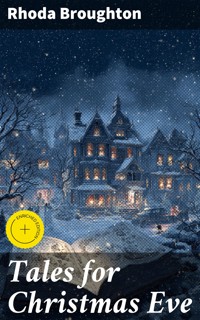
In "Tales for Christmas Eve," Rhoda Broughton compiles a captivating collection of stories that explore themes of mystery, nostalgia, and the supernatural, all set against the enchanting backdrop of the Christmas season. Broughton's literary style, characterized by her vivid prose and keen psychological insight, draws readers into a world where the familiar tradition of Christmas intertwines with elements of the uncanny. Each tale unfolds with a sense of intricate plotting and rich character development, inviting a reflective engagement with the festive spirit through a lens of intrigue and moral complexity, reminiscent of Victorian literary traditions. Rhoda Broughton, an accomplished English novelist born in the 19th century, developed her literary voice amidst the cultural upheavals of her time. Her experiences as a woman writer in an era where female authors were often marginalized have imbued her works with a distinctive perspective. Broughton's penchant for the gothic and the macabre, combined with her fascination for societal norms, clearly informed her intention in crafting these Christmas tales that both celebrate and critique the season. This collection is highly recommended for readers seeking to enrich their holiday traditions with thoughtful literature. "Tales for Christmas Eve" not only entertains but also provokes contemplation on the deeper meanings of Christmas, making it an excellent companion for cozy winter nights or festive gatherings. In this enriched edition, we have carefully created added value for your reading experience: - A succinct Introduction situates the work's timeless appeal and themes. - The Synopsis outlines the central plot, highlighting key developments without spoiling critical twists. - A detailed Historical Context immerses you in the era's events and influences that shaped the writing. - A thorough Analysis dissects symbols, motifs, and character arcs to unearth underlying meanings. - Reflection questions prompt you to engage personally with the work's messages, connecting them to modern life. - Hand‐picked Memorable Quotes shine a spotlight on moments of literary brilliance. - Interactive footnotes clarify unusual references, historical allusions, and archaic phrases for an effortless, more informed read.
Das E-Book können Sie in Legimi-Apps oder einer beliebigen App lesen, die das folgende Format unterstützen:
Veröffentlichungsjahr: 2023
Ähnliche














Tales for Christmas Eve
Table of Contents
Introduction
These winter tales turn the glow of the hearth into a mirror where comfort and apprehension gaze at one another without blinking.
Tales for Christmas Eve by Rhoda Broughton belongs to the Victorian tradition of seasonal storytelling, where the pleasures of a winter gathering meet the prickling unease of the supernatural. Broughton, a nineteenth-century novelist noted for sensation and ghostly fiction, draws on familiar settings and social rituals to stage encounters with the uncanny. The collection sits within a period when Christmas numbers and fireside tales flourished in Britain, shaping how readers experienced suspense at the darkest time of year. Its genre mix—domestic realism shaded by spectral possibility—places it alongside other Victorian explorations of mystery and mood, yet it retains Broughton’s distinctive sharpness of observation.
The premise is simple and inviting: a series of stories designed for a long evening, each opening on a recognizably human situation and allowing a small disturbance to widen into disquiet. Rather than piling on shocks, the narratives cultivate atmosphere—quiet rooms, murmured confidences, the creak of a stair—so that anxiety arises naturally from the ordinary. The reading experience is intimate and poised, with a voice attentive to social nuance and emotional undercurrents. Broughton sets expectations deftly, moving from conversation to implication, from a glance to a chill, and offering the satisfactions of concise, self-contained plots without surrendering the lingering aftertaste that marks a good ghostly entertainment.
At its core, the book meditates on thresholds: between light and shadow, hospitality and intrusion, the said and the unsaid. Domestic life—its loyalties, silences, and hierarchies—becomes a stage on which the past returns to test the present. Broughton’s interest in reputation, decorum, and the pressures placed on women and men within polite society informs the tensions that flicker beneath the surface. Belief and skepticism wrestle not as abstractions but as attitudes shaped by community and circumstance. Secrets germinate in the very places designed for safety, and the familiar—houses, heirlooms, family ties—acquires a delicate estrangement that persists even after the final page.
Broughton’s craft lies in control: careful pacing, suggestive detail, and the judicious use of framing that echoes the conviviality of Christmas storytelling. The tales feel spoken as much as written, letting readers inhabit the role of listener as shadows lengthen. She favors inference over explanation, trusting the audience to register a half-seen gesture or an oddly timed knock. Weather, lamplight, and architectural corners are not mere backdrops but instruments for tuning emotion. This restraint amplifies the psychological dimension; what troubles the characters often mirrors what haunts the rooms they occupy. In such spaces, a pause can be as eloquent as a revelation.
For contemporary readers, the collection offers both seasonal charm and a probing look at how societies manage fear, desire, and decorum. Its brevity and tonal subtlety suit modern attention while rewarding slow, attentive reading. The questions it raises—about what communities choose to remember or forget, how stories police and also liberate feeling, and where private conscience meets public expectation—remain timely. In an era still drawn to domestic thrillers and intimate horror, Broughton’s approach feels strikingly current: the menace is not external spectacle but the tremor that passes through a room when truth brushes the edge of conversation and then, almost, withdraws.
Approach these stories as they were meant to be savored: in a pool of light, with time to let the quiet accumulate. Expect not violent shocks but the steady tightening of atmosphere and the pleasure of artful reticence. Broughton’s blend of social acuity and spectral suggestion makes the collection a bridge between festive warmth and reflective unease. It is an invitation to consider how narratives shape gatherings—and how gatherings, in turn, shape what can be said. Read singly or in sequence, the tales reward attention to tone and gesture, leaving behind a residue of wonder that turns the ordinary room around you into part of the fiction’s spell.
Synopsis (Selection)
Tales for Christmas Eve is a Victorian collection of short fiction that blends domestic drama with touches of the uncanny, arranged for seasonal reading. Rhoda Broughton presents concise, self-contained narratives that favor first-person perspectives, intimate settings, and heightened emotions. The mood suits winter evenings: quiet rooms, flickering firelight, and conversations that turn toward memory and rumor. Across the volume, Broughton balances plausibly observed social situations with suggestive mysteries, letting atmosphere carry much of the suspense. The sequence gradually moves from realistic dilemmas into increasingly eerie territory, then back toward reflection, shaping an arc that links the stories without binding them into a single plot.
The opening tale sets the tone with a narrator who arrives at new lodgings and encounters a household governed by small, peculiar rules. Ordinary details acquire weight: a door that ought to stay shut, footsteps that seem to move where no one walks, a picture that unsettles for reasons the teller cannot name. Broughton teams restrained description with a slow accretion of uneasy incidents. The narrative emphasizes what can be seen and what must be inferred, inviting the reader to weigh common sense against suggestion. Its turning point pivots on whether to probe a forbidden space, leaving the final inference to the listener.
A subsequent story shifts to provincial society, where a young gentlewoman navigates expectations, gossip, and a courtship that promises more than it reveals. Broughton sketches drawing rooms, winter calls, and the subtleties of polite conversation. The conflict centers on trust and rumor: what an ambiguous letter means, how a glance is read, whether a promise counts when spoken in haste. A pivotal winter gathering brings competing narratives into the same room, intensifying doubt without resolving it. The emphasis remains on how reputations are made and unmade, and on the cost of speaking plainly in a world that prizes tact.
Another tale takes the country house as its stage, with an old family portrait, an heirloom, and a stormy night drawing past and present together. Inheritance worries and generational conflict create pressure, while a chance discovery in a neglected room exposes a pattern of decisions that cannot be forgotten. The plot hinges on what the previous generation concealed and the current one can bear to acknowledge. Broughton uses the clamor of the weather and the hush of corridors to measure anxiety. The story reaches a turning point when the narrator connects a whispered family legend to a tangible object, leaving consequences implied.
A more overtly supernatural piece follows, organized around a dream or waking vision that repeats with troubling regularity. The narrator’s effort to test experience against proof structures the plot: noting times, retracing steps, comparing notes with a confidante. A set of vivid scenes recur, each time accumulating detail while withholding a clean explanation. The locations feel empty yet charged: a moonlit path, an echoing staircase, a threshold that seems crossed twice. Broughton resists certainty, letting the tale end with a sign that could be read as reassurance or warning, maintaining the seasonal balance between curiosity and comfort.
The collection includes a lighter interlude grounded in social observation, set during a holiday visit when guests pile up, customs are observed, and small indiscretions become stories. Witty dialogue sketches minor rivalries, mismatched expectations, and the rituals of gift giving. Beneath the humor lies a subtler thread: a token exchanged without fanfare carries meaning that not everyone shares, and the misreading of a gesture threatens to bruise a friendship. The narrative turns on a choice to clarify or leave well enough alone, keeping outcomes open while reinforcing Broughton’s interest in how modest acts guide broader destinies.
A darker narrative intensifies themes of secrecy and misinterpretation, confining action to a few rooms where jealousy and pride press hard on the characters. Here a forbidden staircase, a locked drawer, and an overheard sentence mark the path toward crisis. Broughton focuses on emotional weather rather than outward action: the escalation from suspicion to resolve happens in quiet, interior spaces. The crucial decision arrives when one figure confronts the limit of patience and reputation, setting in motion consequences the story allows the reader to anticipate without detailing. Winter imagery underscores stark choices, while the final paragraphs pull back from explicit revelation.
The penultimate piece returns to the act of telling tales, staging a conversation about truth, discretion, and the kinds of stories suitable for Christmas. Narrators compare methods of keeping faith with facts while preserving kindness, hinting at versions left untold. Past episodes are reframed as lessons rather than confessions, and a minor mystery dissolves into a practical explanation that still leaves a lingering chill. The structure mirrors the collection’s design: each anecdote contains a choice about how much to say. This reflective turn readies the reader for a close that privileges mood and meaning over dramatic closure.
The volume ends by drawing together its central impression: that the ordinary domestic world is close to sudden change, whether from passion, chance, or the inexplicable. Broughton’s arrangement moves from plausible everyday tangles through suggestive hauntings and back to calm consideration, matching the seasonal swing from daylight bustle to firelit story hour. The overall message emphasizes attention and restraint: look closely, judge slowly, and accept that some consequences are best understood in outline, not detail. As a whole, Tales for Christmas Eve offers compact narratives that highlight turning points without laying them bare, honoring the tradition of winter tales that accompany reflection.
Historical Context
Tales for Christmas Eve unfolds within the social and material textures of late Victorian Britain, a world of gaslit drawing rooms, suburban villas, provincial parsonages, and London lodging houses. The stories evoke domestic interiors in the 1860s–1870s, when winter gatherings centered on the hearth provided occasions for communal narration. Railways and reliable postal services had tightened geographic distances, enabling seasonal family reunions while preserving strict class demarcations within households staffed by servants. The tone presumes Anglican moral culture and a legal order in flux, allowing the narratives to place private anxieties—inheritance, reputation, propriety—within recognizably contemporary English settings that readers of the early 1870s London publishing market would have known intimately.
The Victorian reinvention of Christmas supplied a direct cultural frame for the collection. Prince Albert popularized the German Christmas tree at Windsor in the 1840s; an 1848 Illustrated London News engraving broadcast the custom nationwide. Henry Cole’s first commercial Christmas card (1843), Dickens’s A Christmas Carol (1843), and the seasonal “Christmas numbers” of Household Words and All the Year Round (1850s–1860s) consolidated the festival as a domestic, charitable, and reflective holiday. By the 1860s, railways and cheap print made December a peak moment for gift-books and fireside tales. Broughton’s Christmas Eve framing harnesses this expectation, using wintry interiors and ritualized conviviality to stage uncanny visitations whose moral shocks counterpoint the season’s ideals of goodwill and remembrance.
The mid-Victorian surge of Spiritualism and psychical inquiry formed a powerful backdrop. After the Fox sisters’ “rappings” in Hydesville, New York (1848), séances swept Britain in the 1850s; the medium Daniel Dunglas Home demonstrated phenomena in London drawing rooms (1855–1868). The London Dialectical Society’s committee investigated spiritual manifestations in 1869–1870, publishing a report in 1871, while William Crookes’s controversial experiments with mediums such as Florence Cook (the “Katie King” materializations, 1873–1874) blurred boundaries between science and belief. The Society for Psychical Research followed in 1882. Broughton’s tales echo this milieu: narrators adopt cool, observational tones yet confront apparitions that test empirical confidence, capturing a society negotiating doubt, faith, and the possibility of the supernatural within respectable homes.
Transformations in women’s legal status and social control are central historical coordinates. The Matrimonial Causes Act 1857 established a civil Divorce Court, while the Married Women’s Property Acts of 1870 and 1882 incrementally allowed wives to own earnings and property. Conversely, the Contagious Diseases Acts (1864, 1866, 1869) policed women’s bodies in garrison towns, prompting Josephine Butler’s national campaign that secured suspension (1883) and repeal (1886). These statutes codified anxieties around female autonomy, reputation, and dependence. Broughton’s domestic plots mirror these tensions: fragile inheritances, guardianship over women, and the moral surveillance of the unmarried become pressure points where fear—often figured as haunting—exposes the precarious legal and social footing of middle-class women.
Urban growth and public health crises furnished the era’s atmosphere. Industrialization swelled cities; rail lines and commuter suburbs expanded, and the world’s first underground railway opened in London in 1863. Recurrent cholera epidemics (1848–1849, 1853–1854, 1866), John Snow’s Broad Street pump findings (1854), the Great Stink of 1858, and sanitary reforms culminating in the Public Health Act 1875 reshaped everyday life. Gaslight, new waterworks, and telegraphy altered perceptions of distance and night. Broughton’s settings—gaslit corridors, sparsely occupied suburban houses, and lodging rooms—translate these material changes into mood: modern architecture and technological light fail to dispel primordial fears, while the anonymity of expanding cities intensifies dread and moral ambiguity.
Political reforms reconfigured class relations and civic voice. The Second Reform Act 1867 broadened the male franchise in boroughs; the Ballot Act 1872 introduced secret voting; and the Trade Union Act 1871 legalized unions, though the Criminal Law Amendment Act (1871) constrained picketing until the 1875 adjustments. The Elementary Education Act 1870 created elected school boards, signaling new public responsibilities. These measures energized working- and lower-middle-class agency while preserving elite influence through property and patronage. In Broughton’s households, servants, governesses, and dependents inhabit liminal positions; ghostly disturbances often catalyze revelations about obligation, exploitation, and status. The stories thus refract contemporary debates over authority and duty within the micro-politics of the Victorian home.
Victorian mourning culture, intensified after Prince Albert’s death in 1861, permeated domestic life. Queen Victoria’s protracted mourning popularized elaborate etiquette: black crepe, jet jewelry, hairwork mementos, and memorial photography. High mortality rates, especially during epidemics, and improvements in funeral services fostered a dense economy of remembrance. The era’s fascination with messages from the dead—table turning, trance speaking, spirit photography—offered consolation and controversy. Broughton’s Christmas tales draw on this culture’s affective charge: anniversaries, empty chairs at the table, and heirlooms become conduits for hauntings. The season’s backward glance, entwined with mourning rituals, makes apparitional justice and belated confession plausible, even necessary, within respectable parlors.
As social critique, the collection uses the supernatural to interrogate Victorian norms. Spectral visitations expose inequities of property transmission, the moral hazards of male guardianship, and the scrutiny imposed on women’s conduct. Christmas settings juxtapose proclaimed charity with failures of duty—toward servants, dependents, and the socially vulnerable—revealing the limits of paternalist benevolence. Rational narrators who confront inexplicable events mirror a polity grappling with science, faith, and responsibility. By staging fear where propriety is tightest, Broughton reveals how class hierarchy, gendered law, and the cult of respectability deform private conscience, implying that true reform requires more than seasonal sentiment or polite domestic order.




