


5,49 €
Mehr erfahren.
- Herausgeber: Nyumba Yetu Onlus
- Kategorie: Fantasy und Science-Fiction
- Sprache: Englisch
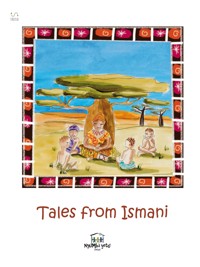
This book was born in order to help the children living at Nyumba Yetu, a shelter for orphans and for those affected by AIDS.These tales have been collected year after yearamong the Ismani’s villages, on the central upland of the Iringa region, in Tanzania. Many people have believed in this project and visited many villages to listen to these tales, copy them out, translate and illustrate them for this book. All these people have somehow lived the so-called Ubuntu, the African philosophy that says: “I am because we are”.This book has been realised by all thosewho have worked together with love and passion to help these children.
Das E-Book können Sie in Legimi-Apps oder einer beliebigen App lesen, die das folgende Format unterstützen:
Veröffentlichungsjahr: 2016
Ähnliche



















Tales from Ismani
Thanks
Thanks for choosing this book
Your donation will help Nyumba Yetu’s children.
©2015 Nyumba Yetu onlus
Favole da Ismani
Editorial project coordinator: Roberta T. Di Rosa
Editing: Alberto Todaro
Graphic poject: Manuela Cucina
Illustrations: Roberta Sapio
Translator (english translation): Alessia Pautassio
http://nyumbayetu.org/
According to Italian laws on publishing, any partial or total reproduction of this work by any means done is illegal and prohibited.
This book was born in order to help the children living
at Nyumba Yetu, a shelter for
orphans and for those affected by AIDS.
These tales have been collected year after year
among the Ismani’s villages,
on the central upland of the Iringa region, in Tanzania.
Many people have believed in this project
and visited many villages to listen to these tales,
copy them out, translate and illustrate them for this book. All these people have somehow
lived the so-called Ubuntu, the African philosophy
that says: “I am because we are”.
This book has been realised by all those
who have worked together with love and passion
to help these children.
To you all
Asante sana!
(thank you)
Paukwa pakawa!
This is the announcement that precedes the beginning of each tale: it can be heard under the shadows of a tree during the day or around the fire in the evening. All aged children rush when a babu (grandfather) or a bibi (grandmother) is about to start tell-ing a story. Everybody can draw inspiration and learn from these stories about animals, men and daily life.
Pakawa, pakawa! A call less and less heard. Family habits, their daily life and the time dedicated to social relations is drastically changing. AIDS is destroying too many lives, tearing too many young husbands and wives apart from their parents and from their children. An entire generation is disappearing and orphans are taken care by grandpar-ents and by the community.
There is no time to tell stories anymore: those who survive have to take care of their nephews, continuing to work hard in the fields despite their age and physical problems.
Together with those children, we have tried to recuperate their memories, when the family used to live together, when parents were alive and there was time to listen to grandparents’ tales. That is how experiences and traditions were transmitted and preserved. With their tales, grandparents used to educate future generations, guiding them through their lives as men and community members. Telling these stories, chil-dren have gone back to their past and to the magic moments lived with their families. If AIDS had not killed them too soon, their parents could have told the same stories to their grandechildren, one day.
Living too far away from this world and its environment, it is often difficult to under-stand the deep meaning of these tales: their protagonists and messages can seem too naïve, prosaic, and sometimes cruel too.
With these stories we would like you to travel with your hearth and your imagination beyond your boundaries to meet different cultures and different people.




