


Erhalten Sie Zugang zu diesem und mehr als 300000 Büchern ab EUR 5,99 monatlich.
- Herausgeber: Eye Press
- Kategorie: Gesellschafts- und Liebesromane
- Sprache: Englisch
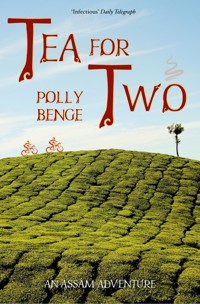
Packing away her tutu and pointe shoes and donning cycling shorts and yellow Lycra, professional dancer Polly Benge took the decision to follow her heart. She soon found herself ferociously pedaling up mountains in India, staring at the increasingly distant backside of her beloved Tim. But mere mountains were to be the least of her worries. Prior information about the unsmiling Border Officials, the surroundings of extreme poverty, the inadequacy of maps, the continual bouts of constipation, and the real danger of travelling through Assam may have persuaded her to stay at home. This was not the India of Raj palaces or holy Ghats but the dangerous and explosive region of the isolated northeast. Polly and Tim spent their nights huddled under mosquito nets in the middle of the jungle while outside barbarous militants hid from the Indian army, and by day they cycled through the intoxicating hills of Meghalaya and the tea gardens of Darjeeling and Assam. This expedition was to represent far more than a journey to find the perfect cup of tea; for Polly it was to be a test of stamina, self-belief, and most of all her love for Tim. If they could survive this, then she would leave her comfy world of dancing, friends, and family and move to New Zealand to be with him forever.
Sie lesen das E-Book in den Legimi-Apps auf:
Seitenzahl: 367
Veröffentlichungsjahr: 2000
Das E-Book (TTS) können Sie hören im Abo „Legimi Premium” in Legimi-Apps auf:
Ähnliche




















Tea for Two … with no cups
1st Edition
Published by TravellersEye Ltd
May 2000
Head Office:
60B High Street
Bridgnorth
Shropshire
WV16 4DX
United Kingdom
tel: (0044) 1746 766447
fax: (0044) 1746 766665
email: [email protected]
website: www.travellerseye.com
Set in Times
ISBN: 0953057593
Copyright 2000 Polly Benge
The moral right of Polly Benge to be identified as author of this work has been asserted by her in accordance with the Copyright, Designs and Patents Act 1988.
All rights reserved. No part of this publication may be reproduced, stored in a retrieval system or otherwise, except brief extracts for the purpose of review, without the prior permission of the publisher and copyright owner.
Printed and bound in Great Britain by Creative Print & Design Group.
For Mum and Dad
ACKNOWLEDGMENTS
I would like to say thanks to Lee Shale and Tracey Horseman without whom the trip would not have been possible. To my sister Sophie for her support, Peel Hunt for the use of their office equipment and Dan Hiscocks and Jill Ibberson at TravellersEye for their time, patience and faith.
CONTENTS
1. SWANS, LOVE AND TOMATO CONCASSE
2. KATHMANDU, I’LL SOON BE SEEING YOU
3. ON THE ROAD
4. SIDDHARTHA HIGHWAY TO LUMBINI BIRTHPLACE OF BUDDHA
5. DARJEELING, THE QUEEN OF THE HILLS
6. INTO THE BELLY OF INDIA
7. MR AND MRS PINKIE
8. INTO THE BOONIES
9. FREE ESCORT SERVICE
10. INDIA HERE! BANGLADESH THERE!
11. THE MINDREADING CHOWDIKKAR
12. HOSTAGES
13. DELHI - THE BRITISH EMBASSY
14. DENIM AND GINGER
15. BALOO I THINK I LOVE YOU
16. ‘FIRST I MAY HAVE TO KILL A MAN’
17. THE BOREDOM OF BIRDWATCHING
18. ‘GOODBYE MY DARLING’
19. HOW LONG IS LONG ENOUGH?
LIST OF KIT
1
SWANS, LOVE AND TOMATO CONCASSE
It was my fourth audition in a row and the calibre of dance company I was auditioning for was becoming steadily more suspect. I had managed to convince myself that a job with the Christian Dance Company, performing in churches in southeast London, was at least a job where I would be dancing. I pinned my number on the front of my leotard and entered the studio. One look at the happy-clapper guitarist strumming away in the corner, one quick glance at the choreographer telling everyone to be ‘happy and free’ and I turned on my heels and left the room.
I walked home with a heart as heavy as lead trying to stop the negative dialogue running through my head. ‘I’m not good enough. I need to do more training. I’m not fit enough. I’m too fat. I’m too thin … Tomorrow I will start again. No, tomorrow I quit.’ Tomorrow came and I rummaged in my purse for the last few pounds to spend on doing a class. The first few minutes are always depressing until that magic happens when body and music join together bringing with it such intense joy that it inhabits every cell, every nerve-ending leaving me with no doubt as to what to do. There is no other option but to carry on. This is what I am. I am Polly and I dance.
At the age of nineteen I joined the Northern Ballet Theatre under the directorship of the late Christopher Gable. For the first year I euphorically traipsed the country dancing the role of the girlfriend of the third Spear Carrier on the left. In my second year I was allowed to venture out onto the proscenium arch and by my third year I was promoted to Soloist. My roles now had a name and my dressing room was nearer the stage.
For the next two years I worked myself to the bone, slowly beginning to trust in my artistic capabilities and longing for the day when I would be made Principal Ballerina. But then an unaccountable thing happened: I began to have suspicions that perhaps there was more to life than being a fairy, a swan or a woodland nymph at 7.30 every night. I began to dread going on tour; another theatre, another town with a faceless shopping precinct, another twenty-four hours spent in suffocating proximity to the same thirty people.
I finally plucked up the courage to tell Christopher Gable that I was leaving the safety of the company to boldly go out into the world of freelance dancing. He was never very good at letting go of his dancers and with me he was no exception. Far from encouraging me, he painted a picture of rejection, financial instability and panic.
Undeterred and full of confidence I came down to London, exchanged my pointe shoes for baggy tracksuit pants and tentatively stepped into the world of contemporary dance. My confidence began to wane as his words of warning rang true.
Although dance is common ground, dancers from different fields eye each other with undisguised caution. Ballet dancers are derisively called ‘Bun-heads’ and Contemporary dancers are thought never to have seen a Lady Shaver in their lives. Eventually, after cutting my hair and refraining from waxing my legs, I was accepted into their circles and got a job with a company called Dance Theatre Red. It was creative and experimental and I loved it.
Gone were the barn-like Opera Houses of Manchester and Saddlers Wells, gone were the sponsorship hospitality evenings. No longer did I have to schmooze with the heads of major British companies, my recent exertion still shining on my face, whilst trying to look every part the graceful ballerina as I knocked back a vodka and tonic and tried not to eat a chicken vol-au-vent too greedily. The comments were always the same, ‘Gosh, I didn’t think ballet dancers ate! Look, and you’re smoking!’ I always responded in the same way too, a fixed smile and a little ‘aren’t I naughty’ shrug of the shoulders.
With Dance Theatre Red our rehearsal rooms were wherever we could find cheap and appropriate space; The Buddhist Arts Centre in Bethnal Green or a converted mill deep in a Gloucestershire village. I lived in digs with a lesbian Installation Artist and a black Labrador called Plank. Unfortunately with this type of dance money is not abundant, every penny is accounted for and weekends are often given up for extra rehearsals. We were very much at the hands of the Arts Council and other funding bodies who, on a whim, could cut our grant by half not realising the serious ramifications that followed.
A yearly schedule would go like this: work for three months then two months off, work for four months then three months off, and so on. It was exhausting and unsettling. The day after a contract ended I would have to find work immediately to keep paying the bills. Sometimes it would be other dancing contracts, other times waitressing, secretarial work, teaching, washing-up or leafleting. They should coin a phrase for the likes of me, ‘Jack of all trades and master of one.’ On a good day I would feel bohemian, on a bad day just plain pissed-off!
It was during one of my waitressing stints that I met Tim, a beautiful, cheeky, Dutch/Kiwi chef. I remember the day well; I had been dancing abroad and had not worked in the restaurant for a few months. I entered the kitchen whereupon a chef, whom I had never seen before, looked up, put down his knife and walked straight over to me. Amidst the clamour of the kitchen he engaged me in conversation ignoring the orders from the head chef to get back to his prepping. I couldn’t help but admire his gall, he enchanted me immediately.
A few weeks passed and we became more and more aware of each other. He would turn the ingredients for the pasta of the day into a concasse of hidden agendas and woo my taste buds by adding something special to my staff dinner. One night he seduced me in the storeroom beside a box of oyster mushrooms and a crate of baby leeks.
From the start I had always known that Tim would have to go back to New Zealand if he wanted to keep his permanent resident status, but I regarded this as my ‘get-out’ clause. Forewarnings of being left a visa widow didn’t concern me: Tim, you see, never fitted into my picture of the ideal man. He is five years younger than me, an Antipodean with spurious traits from the Low Countries and always accompanied with a pervading aroma of garlic and chilli. I had been brought up to mate with the bigger-older-stronger archetype.
But in life, ideals are always challenged and no one was more surprised than me when I realised I had fallen in love with him as I took his Butternut Tortes to table twelve.
Before returning home Tim was going to fulfil his life-long dream of cycling around India with his friend Lee. This didn’t come as much of a surprise. From the age of seven he had spent his summer holidays cycling across Holland and Belgium. The preparations for the trip were all-consuming but, although I coo-ed over his made-to-measure bike and organised the shipping company to come and collect his belongings, I remained removed and distant. He was about to embark on something that I could never conceive of doing and his spirit of adventure made me love him all the more.
And so it was that one month before his departure date I came home from another failed audition, the river of disappointment now running a little deeper into my heart. Tim picked his moment well; through my tears he took hold of my face, ‘Come with me?’ he said.
I didn’t answer him. ‘Come with me?’
A torrent of ifs and buts tumbled from my mouth, ‘…but my dancing?’
‘What dancing? You have no dancing at the moment.’
‘But that still doesn’t mean I can come with you, I’m not that sort, I don’t do adventure like you do.’
Not for a moment had I ever associated myself with the pioneering echelons of the worldly-wise travellers. They seem to be a different breed far removed from the world I occupy. Adventurous travel to my mind comes hand in hand with sickness, horrors and tests of character. I have always been rather scared and harbour the belief that my neurotic streak would have a chance to live out its full potential. The more I banged out the reasons why I couldn’t go the more Tim assured me that this was exactly what I needed to do. I told him I would give him the answer in a week.
For three days I went through every argument as to why I shouldn’t go with him but with each rationale my seed of excitement grew. There seemed to be not one good reason for staying behind. I tried to imagine saying goodbye to Tim on my doorstep on what would inevitably be a wet, bleak January day in London.
I tried to imagine kissing him for the final time, then shutting the door and going through the motions of getting ready for my day. Coming home to an empty house, imagining Tim weaving his way through the streets of Kathmandu, wondering if we would ever see each other again. And then what? Weeks of waiting patiently to see what our love amounted to, to see if it was the ‘real thing’ or if it was only intense but insubstantial.
What if I could use this trip as a test of love? If we still loved each other at the end then I would know to go with him to New Zealand. I wanted to see if Tim would still love me sweating and bitching up a mountain, unwashed and unkempt and out of my depth. But what about him? What was to say that my gentle Tim wouldn’t turn into a testosterone-fuelled monster? I wanted to see how we were in all possible circumstances before I made the decision to go and live with him on the other side of the world.
I didn’t think I was being overly cautious, just a little extreme perhaps. My friends tried to take the edge off.
‘Couldn’t you at least go on motorbikes?’
‘I’m sure a couple of weeks of cycling in Scotland would give you a pretty good idea.’
No! It was this or nothing.
We were to start our journey in Nepal, joining the hundreds of Indian and Chinese bicycles in the hubbub of Kathmandu. After cycling through the foothills of the Himalayas and around the Kathmandu Valley we were to cross the Indian border at Kakarbhitta and cycle up to the hill station of Darjeeling. From there crossing West Bengal and the North Indian plains into the region least visited by foreigners: Assam and Meghalaya.
Assam has been closed to visitors for the last twenty years: bombings, kidnappings, murders, detonated express trains and blown-up bridges have been commonplace occurrences in the still unresolved pursuit for independence. Although it has now been declared safe for visitors the Government’s Unified Command is still firmly installed to counter any insurrectionary operations.
So why were we going to such an unsavoury place? A friend of Lee’s, a man called Finn who specialises in remote cycling tours, discovered the uniqueness of this part of India a few years before. He came back consumed with the unspoiled beauty of the place and urged us to go before the Coca-Cola signs are brandished and the backpacking trail firmly entrenched.
I harassed every sales person in countless bookshops to find some travel literature on Assam but nothing came up apart from the skinniest chapter in Lonely Planet. It was becoming clearer by the day that we were going to uncharted territory. I tried to keep my nerves under control but they inched their way out and wriggled around my chest catching me unawares. The more stories we heard from Finn about tribal pygmies and headhunters the more I wanted to back out. But with each bout of nerves I had an equal amount of resolve; I was going to do this and that was that.
There was no time to get fit, in the cycling sense. I just had to hope that sheer determination would hold me up until my stamina and muscle power kicked in. I was worried about being a woman on such an expedition, hoping that I wouldn’t hamper their progress by issues like menstrual cycles or cycle maintenance.
We spent many hours at Lee’s flat writing endless lists of vital equipment. Lee has to be one of the most organised people I know; it is not enough for him to do a one-stop bonanza at Cotswold Outdoor like I did. As I looked at his carefully researched cycling gear, all slim-fit, waterproof, air-venting and micro-fibre with a recurring colour theme of lilac, I felt the first attack of nerves.
We left just after Christmas and the New Year, surviving one set of absurdities to embark upon another. For the week leading up to our departure strange things started happening to me; I came out in a curious rash on my face and developed an angina-like spasm around my heart. People suddenly felt duty-bound to tell me of their near fatal diseases caught in India, tales of lying in a two-bit hospital losing consciousness and all belongings. Lee was struck down with bad flu and he looked like he was at death’s door before we had even arrived.
I inoculated myself to the eyeballs, put together a first aid kit worthy of treating war casualties and purposely bypassed the audition page in The Stage. The winds of adventure had started blowing; all I had to do was ride.
‘He that is a traveller must have the back of an ass to bear all, a tongue like the wagging of a dog to flatter all, the mouth of a hog to eat what is set before him, the ear of a merchant to hear all and say nothing.’
Thomas Nashe 1567 - 1601
2
KATHMANDU, I’LL SOON BE SEEING YOU
Sitting in the plane I opened my guide book and read for the hundredth time “Abode of the Gods”, “Roof of the World”, “Birthplace of Buddha and residence of some of the most eminent Hindu deities.” I don’t think I had ever heard such a thrilling set of epithets. I read on, my tongue tripping over the words.
“……Nepal, a country that is hardly bigger than England and Wales and yet boasts eight out of the world’s ten highest mountains. Rivers wend their way from the loftiest of mountaintops to tropical jungle; sherpas tend their yaks in the mountain shadows whilst thousands of feet below elephants and rhinos lumber across the emerald plains of the Terai.”
My mind was working faster than a flicker book. I was finding it hard to resist flinging open my arms and shouting ‘Take me there!’ at the top of my lungs. I was anticipating cycling through an adventure playground, a thrill-a-minute that would challenge and transcend me from the mindset of my city lifestyle.
But first Kathmandu beckoned. I had been warned that I would be disappointed, that the laconic strumming of Cat Stevens paints a much more glamorous picture than the reality of pollution, filth and hassle. Well, they were wrong. I couldn’t even say the name without a bodysuit of goose pimples spreading from my head to my toes. Kathmandu, such a pleasing, rhythmic word to say.
We arrived late at night on the last plane out from Delhi. Thank God for sherpas, although the fee they demanded was enough to keep us fed and watered for two days. As long as they touched our belongings at some point they deemed themselves eligible for some hefty remuneration.
We booked into the Kathmandu Guesthouse, a gracious colonial building with open fires and wood panelling that lulled us into a false sense of luxury. It was in these gardens that a friend first got stoned ten years ago. Gazing at the stone Buddha statues dotted around the garden and the huge grapefruits dangling from the trees it was easy to believe that this was a venue for many a personal historic event.
The plan was to stay in Kathmandu a few days in order to become acclimatised to being in a third-world country. It doesn’t matter how many books and pictures you might have looked at, nothing can prepare you for the shock of experiencing squalor and poverty at such close quarters.
I felt myself doing everything very gingerly during those first few days. I sipped at my tea waiting for the first grip of stomach cramps; I walked the streets with my arms wrapped tightly around me; I gave my fork an added clean under the table with my napkin hoping that Lee and Tim wouldn’t catch me doing so.
Two steps from the Guesthouse and we were in the main thoroughfare of central Thamel, the hub of the tourist district. Even in one of the more spiritual and supposedly immaterial places on earth the power of shopping must not be underestimated. Just imagine an exotic Camden Market where the shoppers were just as stoned and equally dreadlocked.
Yak wool sweaters, Gurkha knives and spiritual bookshops were plentiful, as were the bars with cringing names such as The Enlightened Yak, Cosmic Café and Bar Nirvana. This slightly dampened my spirits; my naïve hope to come to a place infused with a spiritual incandescence already made a mockery by the tidal wave of western commercialism. One morning as we were walking around the narrow streets of Derber Square, trying not to fall foul of kamikaze rickshaws or trip over sleeping cows, a voice piped up behind us. He tugged at Lee’s sleeve,
‘Please sir, may I have your gogs (sunglasses) sir? I love your gogs.’
‘Thank you but I need them myself.’
‘Please sir, if you give them to me then my girlfriend will marry me and I will have good fortune all my days.’
He stayed with us for an hour keeping up a running dialogue as to why Lee’s sunglasses would be beneficial to him. I had to marvel at his tenacity although the desire to shake his shoulders and bellow ‘NO’ was quite overwhelming.
‘Just tell me yes or no and I go from here.’
‘No, and please leave us alone now.’
‘But sir, my girlfriend will not marry me. Please sir, you do not want me to have bad life?’
I felt that I should warn him; once the novelty of the sunglasses wears off she will want him in Calvin Klein’s and Levi jeans. He should quit while he’s ahead. The only way we got rid of him was by slinking into the murky depths of a handy temple.
Sadly we encountered this obsession with all things western in some form every day. It may have been a half-hour discussion with a travelling Punjabi about the idiosyncrasies of Abba and Boney M, or telling disappointed people we were from England and not from the hallowed land of America.
In the sixties Nepal was known as the Mecca of the Hippies, the abundant flow of hash and ganja helping to magnify the mystic and sublime. Now visitors fall into two camps: the Hippies and the Trippies. There are many tie-dyed dropouts who have had one too many life changing experiences in this land of fantasy. The hassle of applying for housing benefit or the slog of finding a job can surely wait another month? Meanwhile, add one more Buddhist amulet to the neck and continue contemplating life and death over a sweet banana lassi.
Then there are the Trippies. This is where I raise my hand; gap-year eighteen year-olds with eyes full of wonder and, ‘Hey, amazing man!’ never far from their lips; the established professionals who want to put their six-figure salary lifestyles back into perspective; the romantics and enlightenment seekers; the adrenaline bunnies and nature lovers. But we all have one thing in common - a fleece! Polartec prevails. In cafés All-Weather Karrimors jostle against Nike Dry-Fits in a lurid colour explosion. What did we Trippies do before the invention of man-made fibres?
The best way to describe Kathmandu is like being a seven-year old let loose in Disney Land. But in this Disney Land your pocket money never runs out and all the rides you can walk straight on. There are freak shows around every corner to make you suck in your cheeks. In place of Goofy wander semi-naked Sadhus, smeared with ash, matted hair and painted faces to have your picture taken with although it probably wouldn’t be wise to sit on their knee.
Trying to choose which of the many temples to visit poses the same dilemma as trying to pick which of the January sales to go to. We caught a taxi, our bikes still dismantled, up to Pharping, a heart-stoppingly beautiful part of the Kathmandu Valley. Just out of the village is the Dakshinkali Mandir temple, one of the most sacred of Hindu pilgrimages. Dedicated to the Goddess Kali, “…born of anger, drinker of blood”, pilgrims travel miles to perform their ritual slaughter of hapless chickens or, if feeling extravagant, uncastrated, black male goats.
I found it rather ironic that Tim and Lee, two ardent vegetarians, practically ran to the scene of the crime saying with relish, ‘I hope we see some killings!’ We did. Thankfully they were mercifully quick, one deft swipe across the throats swelling the gutters that already ran with blood. Kali looked greedy too with her multitude of arms and long, pointy tongue.
In contrast to this blood and gore is the Buddhist temple of Swayambhunath. Tradition says that when the Kathmandu Valley was a vast lake, Buddha Vipashyin, an Enlightened One from a previous age, cast a lotus seed into the water. The flower bloomed into a thousand petals and from its centre a hillock rose, the “self-arisen” Swayambhu.
Many years later the Bodhisatva Manjushri, sent from the land of Nirvana to help people find The Truth, severed the lake with his sword creating a gorge. The waters drained, the land became habitable and the hill of the “Lotus Light” accessible for worship. Later, Buddha came here to meditate and preach. Even the hundreds of fluorescent-bottomed monkeys that leapt across my path as I climbed four hundred treacherous steps to pay homage were not your average primates. They are believed to have descended from the lice in Manjushri’s hair; as his shorn locks fell to the ground the lice turned into monkeys and each strand of hair into a tree.
I entered the holy complex full of expectation. I had read Herman Hesse’s Siddhartha, I had been on a retreat and flirted with a good few philosophies in an attempt to make sense of life. Here in Nepal was I going to experience the lifeblood of Buddhism? Was I going to come away committed to saving all sentient beings?
In the middle of the courtyard was a stupa: a white, spherical mound adorned with a thirteen-ring spire, each ring representing the degrees of knowledge needed to attain enlightenment. Buddha’s all-seeing, all-knowing eyes were painted below the spire but, not wishing to hear praise of himself, he had no ears nor did he have a mouth for silence is golden.
From the tip of the spire, fanning outwards like a maypole, were garlands of prayer flags. A set of prayer flags always comes in the same sequence symbolising the five elements: blue for space, white for water, red for fire, green for air and yellow for earth. Mantras were inscribed on these “horses of the wind” and when the wind blew each individual blessing scattered to the four corners of the earth. It was beautifully simple unlike the shrine that resembled more of a Blackpool Pier novelty kiosk. How much glitz and gaudiness could they decorate Buddha with? Having spent a lifetime unattaching himself from his ego he was now enshrined with flashing coloured fairy lights, plastic flowers and florid tinsel. It seemed so inappropriate in its felicity.
Recoiling, I stepped out into the courtyard bumping straight into a crocodile of saffron-robed young monks. Authenticity at last perhaps? I watched them spin the prayer wheel and circle the shrine clockwise. I searched their faces for a sign that they were somehow different from us, were their faces more benign, their movements more measured? But as I watched I noticed a couple of them delve into rucksacks and pull out cameras! I then turned my head and behind a stone edifice a group of them were playing footie with a makeshift ball. This was the Nepalese equivalent of a school trip to St. Paul’s Cathedral. I went away suppressing a smile at my expectations and assumptions. Lesson number one of the Four Noble Truths of Buddha - do not expect, do not assume. I may have felt disappointed but I couldn’t resist backtracking to the prayer wheel to seek a blessing for our journey.
The atmosphere in the streets of Kathmandu intoxicated me. The air vibrated with the smell of wood smoke and esoteric murmuring. On every doorway dog-eared posters advertised Yoga classes, meditation courses and Tantric massage. It was too enticing to pass by. I opted for a Yoga class at the Himalayan Health Centre and dragged Tim along. A whippet of a woman led us into a dimly lit room that looked just like a student ‘chill-out’ den except this was the real thing - or was it? We were the only participants but there was no going back. It took a while to decipher what she was saying.
‘You must have piss.’
Confusion. Maybe she wanted us to go to the loo before we started.
‘You can achieve piss by breeding in your nafal aria.’
Aaah, it began to make sense. She guided us through positions whilst we tried hard to unify our minds and bodies through our ‘breeding’. Half way through a salute to the sun, whilst passing my heart and stomach chakras along the floor, I felt the first nip, followed by the second, the third, the fourth…Before long my torso was on fire and a surreptitious look confirmed all suspicions: I was covered in bites.
Not wanting to offend our gentle lady by insinuating that her rugs were bug-ridden all I could do was tuck in my layers of T-shirts when she wasn’t looking. As I lay face up on the infested rug my concentration was absorbed in figuring out how to ‘release the palms of my feet off, relaxing all my tumbs (?)’ and thankfully not on the creatures feasting on my body. We finished the lesson with humming ‘OM’ and drinking tea of freshly ground herbs and spices.
My tranquil, if itchy, state was short-lived. We went back to assemble our bikes only to discover that they had not survived the journey unscathed. Tim’s handlebars were irretrievably bent and the rim of my back wheel cracked and warped, the implications of which I was to find out later.
Returning in the evening to the Kathmandu Guesthouse after dining on ‘chilly soop’ and ‘pillow rice and vegitibals,’ we relaxed around the fire in the lobby. The comfy chairs housed weary trekkers with weather-beaten faces and a look of accomplishment about them. I felt like a junior looking admiringly at the seniors as they came out of their O’levels. ‘One day I’ll be that clever’, ‘One day I’ll be that intrepid.’ It vexed me slightly that everyone in the Guesthouse was heading upwards on foot whereas we were venturing sideways on two wheels.
The atmosphere on the eve of our departure was tense. Lee was chomping at the bit to be in the saddle; four days in Kathmandu were two days too many. I was suffering from severe anxiety, suddenly crippled with doubt about my physical capabilities. Tim’s and Lee’s dauntless excitement highlighted my fearfulness. Retorts back home such as, ‘You may as well cycle criss-cross up the M1 in the opposite direction,’ resounded in my ears. The reactions from our fellow guests were equally disconcerting.
‘Cycling? You must be mad!’
‘I don’t know. Are we?’ I replied.
A friendly American who slipped into the ‘I used to be an alcoholic gambler until I came to Nepal’ category, tried to dispel my fears by telling us a story he had heard a few days before. The event had occurred on the route that we would be taking the following day. A truck was going too fast and knocked down a villager. Word got to the village who quickly put up a blockade. The driver and his mate saw the blockade and the angry villagers and abandoned the truck to run up into the hills. They were chased and killed. The villagers believe that the motor vehicle is spawned from the devil and revenge is ruthless.
Unfortunately this story did little to pacify me, not only are the drivers careless but the villagers barbaric. Great! In my mind God left something out when he created humankind. He was proficient with senses and organs, nerves and limbs but to me he messed up when it came to the brain, which is why computers win hands down over us - they have a selective memory, we do not. How many times have I been told something or overheard something that I categorically do not want to remain in my memory bank? If only we had an icon of a wastepaper basket in the grey matter of our frontal lobe to dump all the negative information that we come across and with a single click it vanishes never to be recalled again. During that evening I heard one thing too many that I knew would stick firmly in my memory.
I went to bed experiencing the same feelings as I did before the First Night of a new ballet. Closing my eyes I would go through all of my steps of the entire three acts obsessing where I could go wrong: a difficult balance in Act One I that I could misjudge, a series of pirouettes in the finale where I could fall over. In truth it rarely happened but often the first grey light of dawn would show in the crack of the curtains before I fell asleep.
“A woman will always sacrifice herself if you give her the opportunity. It is her favourite form of self-indulgence.”
W. Somerset Maughan ‘The Circle’, 1921
3
ON THE ROAD
We got up at the crack of dawn hoping to dodge the morning mayhem of Kathmandu. Togged up to the neck in thermals and with a belly full of porridge we launched ourselves onto the streets. Swerving past a motor-rickshaw on a death mission and rebounding over a series of potholes whilst nearly decapitating a bewildered chicken, I had the alarming discovery of not seeming to possess any back brakes.
I yelled ‘STTOOOPPPP!’ at the top of my lungs and had a small epileptic fit in front of the men. They patiently explained to me that because my back wheel was warped, if my brakes were tight then the wheel would get stuck. I had to have loose brakes in order to move forward. I was aghast! I was about to embark on a six week journey through some of the hilliest, most potholed terrain in the world on one set of brakes. These were also not that efficient as due to a bent wheel spoke my panniers had to be attached to the front. Between them they did a bit of tweaking and gave me some professional advice.
‘Poll, just leave a lot of time before stopping.’
I hadn’t planned on using my helmet, mainly because I am vain but also for temperature reasons, but visions of my mother receiving news of my multiple head injuries made me think twice about it. I swallowed hard, took a deep breath and fastened my chinstrap.
The road to Pokhara took us along the Prithvi Highway deep into Gurkha country. The highway is named after the famous Gurkha, King Prithvi Narayan Shah. He was born in 1723 and at the age of twenty succeeded to the Gurkha throne where a saint in disguise told him that he would rule wherever his feet took him (my guess is that Richard Branson was also paid a visit by the same saint). He fulfilled this prophecy by becoming the most influential king that Nepal had ever known. Under his rule he took control of the Tibetan borders and conquered the separate states of the Kathmandu Valley, uniting the Kingdom of Nepal for the first time.
Gurkha translates as ‘bravest of the brave’. These stocky, sturdy hillsmen fear nothing and nobody. The way they wield the Gurkha knife has been described as the most fearful sight in military history. In years past it was believed that the long, curved blade could not be returned to its scabbard unless it had been smeared with blood. Now, however, they cut their own fingers in order to satisfy the gods.
The highway was beautiful, when we could see it. Each time a truck rumbled past it belched out a thick, black cloud of fumes that made breathing difficult and obscured the road ahead. We needn’t have worried, the volume of their horns alerted us to their presence.
The more the truck was decorated, the hipper the driver. There was definitely some connection with the shrines, metres of the ubiquitous tinsel, flashing Buddhas on the dashboard and a collection of stickers on the windscreen. Alarmingly, some had so many that only the smallest of eye-spaces was left clear for the driver to look through. Not until we had our TTT (Truck Toleration Tactic) worked out - holding our breath and sticking as close to the side of the road as possible - could we begin to enjoy the first step of our journey.
There was so much to take in that it alleviated the pain of spending those first few agonising days in the saddle. If I’m honest it didn’t alleviate it enough. Quite a lot of the time I wanted to cry at the mental and physical anguish that I seemed to be suffering.
‘It’ll get better we promise you,’ said Tim and Lee.
There were moments when I believed them but they really only lasted a nano-second. I found myself adhering to a pattern; the first few kilometres of the day were sheer hell until my legs warmed up, and for a couple of hours I cycled along feeling pretty chirpy and pleased with myself. But for the twenty kilometres before lunch it was as if someone had pulled the plug on my resources.
In the time it took for someone to click their fingers my stamina and muscle-power drained from my body. I wasn’t even like one of those wind-up toys that gradually peters out, rather more like a CD that suddenly becomes stuck in the same place. No matter how much I pedalled it felt like I was making no progress whatsoever. Lee would carry on, his figure becoming smaller and smaller. Tim would have kept him company but if he still wanted to call me his girlfriend he knew what was best for him.
‘Tim! Don’t go so fast. How much further till lunch time?’
‘Twelve k’s, that’s all.’
The boys each had one of those computers on their handlebars that tells you your speed, your average speed, the altitude, kilometres cycled and how your shares are doing on the stockmarket. I knew that if I were to have one I would spend every cycling minute checking how far I had ridden; so I didn’t - I relied on Tim instead.
‘How much further now?’
‘Eleven k’s and quit your asking, you’re driving me nuts.’
Uh oh! Was it starting already? The demise of our rock-solid relationship was being tested after only the second day. I made a rule with myself there and then. I would only ask the distance every half an hour. Surely that wouldn’t be too irritating?
At the slightest of inclines I learnt the seriousness of weight. I regretted packing my eye repair gel, emergency moisture surge and extra pair of trousers. Hard-core cycle tourers, so I have been told, drill holes in their spoon, saw the handle off their mug and cut the labels out of clothes in the never-ending quest for a lighter load. I am not that puritanical. There are certain things in life that would be downright careless for a woman to be without, and if it meant popping them into Tim’s panniers when he wasn’t looking then so be it. I was caught.
‘Polly, what are these things in my panniers?’
‘I need them. You don’t want me ending up a weather-beaten old hag now do you?’
He didn’t have an answer for that so there they remained.
The few networks of roads in Nepal were not built until the 1970s and many died in the process. At times the road was tortuous, carved out of sheer rock faces that clung to the mountainside and sliced through rice terraces. Often we had to screech to a halt after speeding round a corner where a landslide had washed away the road. Below us lay ravines and icy rivers, behind us the skid marks of our tyres with the faintest whiff of smoke encircling the rubber. We took a couple of minutes to compose ourselves before carrying on.
Despite newcomer’s legs those first few days of cycling were fabulous, our senses drunk on the riot of colour and the hum of life. On either side were thatched mud huts, tumbling streams and terraced smallholdings. Kids waved furiously at us and ran to the side of the road shouting, ‘Hello! Goodbye! Chicken burger!’
The old traveller’s adage of taking a stash of pens to give to the children is still circulated. They repeated like a mantra, ‘Please sir, pen sir!’
The difference now is that they don’t need them, their top pockets were already home to four shiny pens of their own.
In practically every village there was a group of budding entrepreneurs. The young horrors set up road tolls of their own using a piece of string. Their little hands held steadfastly to each end, a metre above the road. As we came to a hasty stop nearly catapulting ourselves over the string, they would pounce on us demanding rupees. If we were not forthcoming they dived across our panniers making it impossible to cycle off.
Other times we had stones thrown at our wheels and kids running for all their might beside us, screaming at the top of their lungs. It was never vindictive, they were just full of energy and mischief.
The villages we cycled through were swollen with people; toddlers clambering over grandfathers, school kids with baby sisters in slings across their backs, aunts admonishing teenagers, mothers chivvying goats and men lolling in the sunshine. The majority were smiling, the majority looked well fed and the majority were filthy.
Personal ablutions took place in rivers or under roadside pipes that trickled down icy Himalayan water. The colour of our skin made the women coyly cover their breasts, suspended in motion, whilst large chocolate eyes followed our progression.
It is true, cows are holy. They looked like they knew it too. Amidst the chaos the beasts basked in the sunshine, noses lifted slightly in the air, eyes semi-closed with an adopted air of superiority. Most of the population of Nepal are Newars who are descended from the Mongols; they make every day a celebration of life and death and once a year honour one of the family cows. To them the cow personifies Lakshmi, the Goddess of Wealth, and in order to bring prosperity to the family the cow must be treated to feasts of rice and grain.
Never have I seen so much faeces, both human and animal; the dogs were not discerning however, they licked either. I felt consumed by it; if I wasn’t sidestepping it then I was smelling it, talking about it, not doing it or doing it too much. Loo paper became a prized commodity in which Lee held all the shares; he had cycled around Burma and knew to bring his own supply. After Tim’s and my one pack of Handy Andys had run out and we had recycled a tatty napkin from Costa Coffee at Heathrow we were at the mercy of Lee’s generosity. Never again will I travel without a little box of that tissue paper kind that never seems to run out. There is something rather demeaning about having to ask for loo paper especially if you’re given one sheet and you think you might actually need two.
It took us two days and then a pitch-black ride to reach the strange town of Pokhara. Until thirty years ago the place hardly existed but with the growing demands of trekkers and hippies the town soon burgeoned. Pokhara lies on the shores of Lake Phewa in whose waters the silhouettes of the Annapurnas are reflected. So far I hadn’t seen so much as a glimpse of the Himalayas; I was beginning to get impatient.
Several kilometres before reaching Pokhara we stopped for a tea break at a roadside shack. As we sipped our tea and rested our quivering legs we watched a scruffy motorbike splutter to a stop beside our bikes, cocooning them in a cloud of dust. An even scruffier character dismounted and came and sat down beside us.
Christophe was a Frenchman who arrived in Nepal twenty-five years ago; he fell in love with a local lady followed by the local herb, or he fell in love first with the local herb and then with a local lady (I think with Christophe they are one and the same), and married her. They had a number of kids and a guesthouse. His commitment to making a living out of tourists’ purses was as urgent as any Nepali and he wasted no time in giving us the hard sell; we promised we would stay with him.




