


9,49 €
Mehr erfahren.
- Herausgeber: Tom Zuk
- Kategorie: Gesellschafts- und Liebesromane
- Sprache: Englisch
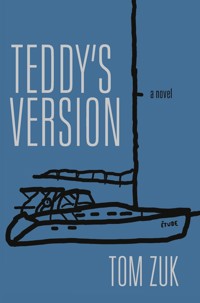
Teddy’s Version illuminates an unlikely, decades-long, mid-twentieth-century friendship between two political scientists, their relationship and their times, revealed by the titular character as he recalls discursive conversations between the men.
Teddy’s best friend and interlocutor, Chaim Mermelstein, is a hulking, guarded, heterosexual, a single father, Jewish, an orphan of the Second World War, his American name, Charlie Parker.
Tadeuz
Teddy Falenski, a Christian from Poland by way of England, is his colleague’s opposite: slender, charming, fond of recreational drugs, a polymath with a passion for photography, and a closeted homosexual.
Teddy’s bifurcated existence is divided between a public
eligible bachelor persona and his hidden gay life. For the duration of their long friendship, the topic of Teddy’s homosexuality remains undiscussed between two men, leaving open the question Chaim's awareness of Teddy's sexual proclivity.
Whether sitting on the deck of Teddy’s tumbledown floating home,
The Étude, or walking the beach near Chaim’s house in Venice, CA, or cruising the freeways, or taking lunches at their regular table in The Annapurna, an Indian strip mall restaurant, conversations leap from topic to topic: their specialty, the Communist Bloc; Chaim’s unbalanced American wife; his rebellious musician daughter; Teddy's passion for photography; Chaim’s avocation as a writer of screenplays…and on occasion, an opaque character named Wolf, whom Chaim has known since they were both young men in Vilnius, who may have had a hand in the death of Chaim’s brother in the ghetto, and may be alive and residing in Los Angeles.
Teddy’s Version begins at the end, in the 1980’s, with the revelation that Teddy has contracted a mysterious, undiagnosed illness that initially presents as a sore throat and a rash.
Other characters insinuate themselves into the novel with first-person asides, adding their brushstrokes to a Cubistic portrait of Chaim, who never speaks directly to the reader.
In a manner similar to the characters’ asides, excerpts from Chaim’s screenplays are presented in screenplay format––NIGHT, INT, TAVERN––etc.
Das E-Book können Sie in Legimi-Apps oder einer beliebigen App lesen, die das folgende Format unterstützen:
Veröffentlichungsjahr: 2023
Ähnliche




















Copyright © 2023 by Tom Zuk All rights reserved.
Library of Congress Cataloging-in-Publication Data Name: Zuk, Tom, author.
Title: Teddy’s Version / Tom Zuk.
TXu 2-369-261
ISBN 979-8-218-21764-8 (ebook)
ISBN 979-8-218-24421-7 (paperback)
For Tony and Phyllis
CONTENTS
Teddy’s Version
Acknowledgments
About the Author
The friendship began in Los Angeles, the nineteen-fifties, when my boyhood and university years were in the rearview mirror and my health hadn’t yet gone to hell.
I was a recent hire at IDES, a so-called think tank, founded by a man named Sloane––scion of old New England Money, the Revolutionary War, OSS in WW II. One fine day, I was walking to the water cooler, and there he was.
By the way, Dr. Falenski, he said, wiping a stray drop of water from his chin, your department is expanding, a new hand is coming aboard to share the load with you, Parker, his name.
I look forward to…I said, gulping water, waiting for the other shoe to drop.
Conversant in Polish, Russian, German.
Degrees?
Chicago, a freshly minted doctorate.
Interesting, I said to myself, experiencing a twinge of insecurity. The new colleague had yet to arrive and already I felt intimidated by his achievement. Chicago’s reputation for rigorous intellectualism was formidable.
You’re safe here, Dr. Falenski, Sloane added, having seen through my façade of collegiality to the concern underneath it.
Fair enough. Sloane and I been cordial with one another, and I was certain he respected my professional abilities. Yet there remained a slight, almost imperceptible, frost between us, no doubt relating to our differing characteristics. Sloane, wide of face, burly, thick, unkempt hair graying, voice low and gravelly, gave the appearance of being, in the expression of the day, a man’s man; and I, blue-eyed, fair in both hair and skin, tall, thin, with fine features, didn’t.
IDES has to grow, he averred, as if it were God’s will. This Parker fellow was born in the east, and after the war he cooled his heels in Germany. Makes sense that he’ll focus on the GDR and you on the satellites farther east. Roughly speaking, of course, nothing is set in stone. I’m sure you and Parker can work out an arrangement.
Of course, absolutely, I replied, realizing that his I’m sure was a request. Such was life. In Marxian economic terms, Sloane owned the means of production, and at that juncture in my life, I wasn’t inclined to seek employment elsewhere.
Walking back to my office, I gave thought to the new hire, Dr. Parker, polyglot, former resident of Lithuania and Germany. I wondered about his relationship with the Germans, was it friendly, frigid, professional? I wagered it had to be an amalgam.
I turned my thoughts to our first encounter, how it would go once he’d been shown the lay of the land and had settled into his office.
* * *
THAT DOOR LEADS to International Economics, I said, performing the task I do for new employees, showing them around.
Now we’re passing Domestic Policy…
The office doors are all closed, he noted.
Security, I said. He nodded.
Here’s Defense, Dr. Parker, I said, Asia is that way… That corridor leads to Africa, South America... And here’s Europe.
I opened a door to a corridor exactly the same as all the others. Western Europe… And our destination, the Soviet Bloc.
We stopped at a door, I unlocked it and stepped aside for Dr. Parker to enter before me.
Spartan, I should say. Two chairs, one in a corner, one behind the gray metal desk, on top of which were an ashtray, a telephone, a directory of personnel, an atlas of the world, a half-sheaf of white paper and a typewriter. On the opposite wall was a chalkboard.
I raised the Venetian blinds on the single large window, and bright California morning light filled the room.
Parker came around the desk, sat in the seat, tested it by shifting his weight. We heard a squeak emanating from somewhere below the cushion.
I’ll make a note to get it lubricated, I said, smiling, hoping for a smile in return. It was as thin as a piano wire.
Welcoming Parker to IDES was the main event of my morning, I had nothing until after lunch, and lingered by the window while Parker acquainted himself with the office. He pushed the typewriter’s carriage left and right, slipped a sheet of paper into the typewriter’s roller, and typed what I imagined to be, the quick brown fox jumps over the lazy dog.
The e sticks, he said.
That’s an important letter, isn’t it, I replied, still foolishly trying to engage him in banter.
More important than the x, he said, playing along, relaxing his face a bit. I thought of the Mona Lisa painting by the Italian painter.
I’ll see to its repair, I said.
Parker opened the desk drawers one by one, and brought forth detritus: a bent paper clip; several rubber bands; a key to the top middle drawer; tufts of lint.
If we were detectives, I offered, we’d have hit a dead end with this office. No leads as to who might have used it last.
One clue, he said, the last person who was here didn’t want to leave any clues as to his identity.
A keen insight, I said to myself.
Parker rose from the chair, walked to the window, stood beside me and looking out, took in the view of a walkway that no one seemed to favor; flower beds to the left and right of the path, the latter leading to an entrance in the U-shaped building. Across the way was the two-story mirror image of the long section where we were standing. The Venetian blinds in several of the offices were raised, and we could see men at work sitting at their desks or standing at chalkboards.
I sensed that Parker wanted to be alone.
When you have a few minutes, I said, handing Dr. Parker a manila folder I’d been carrying, containing information regarding IDES benefits, expenses, sick days, holidays, parking, etcetera.
He nodded and dropped the file on the desk.
Best of luck at IDES, Dr. Parker, I said, on my way out.
Thank you, he answered. Tell me, where is Dr. Falenski’s office?
First door on the left.
He nodded, said thank you again. I left.
* * *
CHARACTER IS EVERYTHING, I told myself, either we’ll be compatible, and therefore friendly toward one another, or we won’t, period, and I’ll offer my resignation.
Deep breath, bold rap on the new man’s door, enter.
My new colleague was sitting at his desk, toying with a paper clip.
Pan Doktor Parker, I said affably, trying my luck with Polish, grabbing a chair in the corner by the window and pulling it in front of Parker’s desk. Pozwól mi się przedstawić, Dr. Tadeusz Falenski, Eastern Europe, Poland specialist, your next-door neighbor and new partner in crime. I’ve come to welcome you to our sector of Berlin.
How do you do, Dr. Falenski, Parker said, half-rising from his seat to shake my hand. The smile was cautious, the dark-brown eyes wary.
What had I learned in our several seconds together? Self- control: formidable. My bursting in hadn’t rattled him in the slightest. His grip was strong, had he wanted, he could have crushed my hand. His Eastern European sibilants betrayed him as Polish or Lithuanian, but precisely where he hailed from, Poland or Lithuania… We’d find out.
Jak sie masz? I inquired, so far, so good?
Everything is okay, he answered, so far, so good.
From childhood, I’d been highly attuned to the unspoken intentions of others, and noted his preference for conversing in English.
The time seemed right for testing his equanimity by as it were making myself at home, so I unbuttoned my blazer, extinguished my cigarette in his ashtray, leaned far back in the chair, stretched my legs and brought my feet to rest on his desk. Daring, but what the hell. People either get on well or they don’t.
I like your shoes, he said, staring at them.
Well played, Parker! I thought, and said to him, Chukkas, they’re called, my Lawrence of Arabia in the Sahara fantasy, comfortable as bedroom slippers.
I should buy a pair, he replied.
Terse. A terse Israelite. Handsome in the Semitic way, his mouth, set in an oval face, was expressive of a quiet strength, his hair, as wavy and black as mine was straight and fair. He was shorter than I by two or so inches, but his physique... Parker had a boxer’s body, a light-heavyweight’s, and in combination with a scar on his forehead that, it seemed to me, had been acquired long ago, exuded an air of physical threat one didn’t often see in intellectuals. I wouldn’t have wanted to tangle with Dr. Parker, who was clearly, absolutely heterosexual, and was probably very successful with a certain kind of woman, one who is attracted to opposites.
Glad to have you aboard, Dr. Parker, I said to him. You can take the GDR, if you like, leave me the east.
I may prove to be a liability, he replied, the corners of his mouth rising, but thank you, and yes, the GDR. I don’t mind. Alles gut es.
Can’t figure why you made your way here, the money is in Washington, nichtwar?
The good climate is here, he said, sun, warmth, friendly people.
I noticed Parker’s heavy-lidded eyes wander as if casually to my eyes, my mouth, away from my face, down to my hands, my jacket, shoes. He was taking my measure, every detail, for later analysis. I could have saved him the trouble. Fair-skinned Pole with a good Christian nose set in a longish, clean-shaven face; intelligent eyes secured by liquid-blue irises and bloodshot whites. Falenski drinks. Below the eyes, incipient hammocks of flesh, undesirable for a man of his early middle age. A nascent potbelly. A hard-living man, this Falenski, dissolute. Bingo, Dr. Parker. Parker… That can’t be your name.
Sloane provided me with a synopsis of your thesis, I said, tapping a fresh pack of Chesterfields on the heel of my hand. Wise of you to give Polish anti-Semitism no more than a scholarly mention, stick like glue to the Molotov-Ribbentrop Pact, its ramifications as they applied to Poland––and to Lithuania, of course. Smoke? I held out my pack.
I’ve got, he replied, and brought forth a pack of Lucky Strikes from his jacket pocket, shook loose a cigarette.
My heart soared. I don’t trust people who don’t have bad habits. He lit the smoke and tossed me his book of matches.
Charles Parker, I said, exhaling a plume of smoke, making no effort to disguise my direct gaze. Did you play alto saxophone on the other side of the pond?
I didn’t play any instruments. To my parents’ chagrin.
Something about Parker, his physicality, led me to think he was Ukrainian. I could almost smell Odessa’s brackish dockside.
City boy? I asked, country?
City. Vilnius.
I detest the country, I said, avoid it at all costs. Lived in Warsaw, my boyhood, in any event. Then London, then Surrey, followed by Cambridge, where I read European History, and here we are in sunny Los Angeles.
I’m also well-traveled, he said, but not by choice.
That provocative, not by choice… The war, of course.
What did your parents call you?
My father had several names for me, depending on what I did wrong.
I like this man.
Your mother, she loved you unconditionally, as mine loved me, by what name did she call you to come to table?
Chaim, or the diminutive, Chaimke.
Chaim is life in Hebrew, is it not? A fine thing, life. You won’t mind if I call you Chaim in private.
Do I have a choice?
Call me Teddy.
Dr. Teddy or just Teddy?
Chaim’s sense of humor was top-tier, Eastern Europe, the driest of Martinis––hold the vermouth.
Your parents, they were intellectuals?
No, he answered forthrightly, merchant class, intelligent, but uneducated in literature or philosophy. My mother had a Russian language copy of Anna Karenina, Father knew the Talmud, the Torah. They read newspapers. Every paper. Father was conversant in several languages. But were they intellectuals? No, not as you and I would define intellectuals.
Parker watched me tap a long cigarette ash into the palm of my hand, invert my palm and dump the intact form into the ashtray. An old habit, my only parlor trick.
You said London, he probed.
My time there was, how shall I say, the least bad option. We became British by happenstance, the war, this, that, the other. Mother and I. You know how it goes.
I do, he remarked, a note of wistfulness in his voice.
If I close my eyes, I said, closing my eyes for a moment, I can see our apartment in Warsaw. Many rooms, a fine neighborhood. We had a steady income from property. Hay for sale, fruit from an orchard. A Chekhovian existence, not wealthy, but hardly poor. Bourgeois.
The similarities between us begin and end with a big apartment, he said, we had no orchards as one finds in Chekhov, no inherited wealth.
I went on, didn’t I, I said, ridiculous of me.
Not at all, he said, offering me a gentle smile.
There was a ring on Parker’s ring finger, in the shape of a wedding band, but unlike gold, it didn’t gleam, was as dull as tarnished brass.
You’re married, I said, nodding in the direction of his left hand.
Yes. And you?
Divorced, one of your people, I said, admitting that I knew he was Jewish. I took her to be a freethinker, we could both have our fun. Turned out she wasn’t a free thinker after all.
Parker nodded as if he understood, and commiserated. I made a mental note: Some day, if we become close friends, one night I might get terribly drunk and reveal that the marriage had been a misunderstanding, I’d been under the impression that she knew full well that ours would be, as they say in drawing-room novels, a marriage of convenience, that I liked––preferred by a significant percentage––the company of men. Some day.
South African, I continued, diamond money. Her father is rich as Croesus. We met in university, Cambridge. A less than amicable parting of the ways. I was paid to piss off. My then father-in-law said he’d write me a sizable check on one condition, that I leave the nest within seventy-two hours, take only that which could be carried, and move to a distant port.
Los Angeles qualifies, he said.
I bought a boat.
Very nice. You seem content with your lot.
Content, but not happy, I replied. A happy Pole is an oxymoron.
Parker chortled.
I’d have bet a decent amount that he hadn’t expected the level of intimacy I was offering.
I didn’t catch your wife’s name, I said.
I didn’t throw it.
No, he didn’t.
Ann, no e, he said.
A lovely name.
I’ll tell her you think so.
American?
Yes.
Where did you meet?
New York.
A great city, New York, I said.
He nodded, ran a finger across his mouth.
* * *
WE MET IN A MUSTY, smoke-filled, pitch-black, below-ground jazz joint on Bleecker Street. No Cover Charge, proclaimed a sign by the door, an obvious invitation to the temporarily under-financed artists-philosophers of Greenwich Village––painters, sculptors, scribblers, flâneurs––to come inside and catch a set or two.
I was sitting at a table with two friends from my classes at New York University. Looking around, this way and that. At the far end of the room, the musicians, a trio, as I recall, were playing on a riser, the carpet-covered boards sagging under their feet. A man sitting at the bar caught my eye. Dark hair, swarthy, broad in the shoulders, medium in height. Could have been a wrestler. A Jewish wrestler. Or was he Italian, perhaps? Greek? A Mediterranean hybrid? I can’t tell one from another. He was feral, scanning the club like a thief on the hunt for an easy mark, that is to say, a temporary female companion. I know the type. No one seemed to strike his fancy, or he didn’t strike anyone’s fancy. Everyone strikes out occasionally. (If I say strike one more time, it will be three, three strikes and you’re out. So ends another of my dreadful little poems in free verse.).
I found it laughable, how different we were, opposite in every physical respect, I, tall, blonde, long hair parted in the middle, twin waterfalls cascading down either side of my face. High, rounded cheekbones, skin as white as Ivory Soap, a thin nose with a bump in the middle. Connecticut girl, tennis and sailboats.
As I turned my head, from the corner of my eye, I saw his eyes land on me as I lit a cigarette, knew without a doubt that he continued to watch me as turned my head to make my own sublimely dégagé circular patrol of the club. Our gazes intersected. I pressed on for a couple of seconds before returning. We stared at one another, he tilting his head when people passed between us. Faint smile of recognition on his part, a meager nod hello, followed by a playful tug on his shirt that said, Look! It’s destiny! We’re both wearing black! Despite my splendidly elevated mood, in those weeks I had taken to dressing in funereal black.
The man sitting on the stool next to him was paying his tab. Would he leave? Yes. Black Shirt motioned to the unoccupied stool. I shook my head to indicate helplessness––can’t be rude and leave my friends. He pleaded in pantomime. Game, set, match.
I said to the fellow writing student beside me that there was someone at the bar I knew, had to say hello. Drink in hand, I threaded my way among the little tables to Black Shirt.
He opened the dialogue with a comment on my eyes, how pale blue they were.
His accent was a mystery to me. European, was the closest I could come.
You’re from Europe, I said.
Yes.
Is the country a secret?
Lithuania.
Wonderful people, I said. No reply. My glibness, ridiculous, I should stop doing that.
I couldn’t find Lithuania on a map of Europe, I said.
Baltic, he said.
Now you live here.
Yes.
Where?
Here, Greenwich Village.
Working?
A student, and working, too.
You read books.
Of course.
About what?
Politics, economics, history.
Tedious.
Thank you. In your opinion, what is not tedious?
Literature, poetry.
Lev Tolstoy, okay, literature.
We can argue about the Russians.
Maybe another time. Is there a boyfriend?
Nope, on the loose.
Hello, on the loose. Charlie, with an e.
The set came to an end, we applauded. I insisted on paying for my drink (You’re a foreign student, you’re broke!), and we went into the night.
I did most of the talking, Charlie most of the replying. His observations were clever and cogent. He was smart.
My place or yours, I blurted out, my dizzy little happy mood having its way with me.
Yours, I demanded. I have company. That’s the trouble with living in New York, everyone wants to visit. Macy’s, Gimbels, the Empire State, the Statue… One becomes a hotel operator cum tourist guide. Dreadful.
My apartment is two rooms in a basement. Smells.
I waved away his concern for my welfare.
Good grief, the place truly was crummy: bed with collapsing mattress, table, bookshelf, the two rooms the size of those in a dollhouse enveloped in peeling paint and linoleum. The smell of New York summer trash drifted in from the cans on the curb.
We talked until very late. Talked and smoked, killed a bottle of Rosé we picked up on the way. One thing led to another.
Late in the day after the night before… Dear Diary, what a night it had been! Spent it with a man by the name of Parker––not the musician, the former Chaim Mermelstein, from a city I’d never heard of, in a country in the Balkans––sorry, Baltics. His autobiography is astonishing. Displaced. Stateless. Ingenious. Finagled his way into New York University. On a scholarship. Took a test and passed it, how’s that for impressive. Striving for a degree in foreign affairs. He’s my foreign affair, my Jewish refugee.
I’ll tell you, diary, of something that took me aback: he asked if my parents were alive. I must have tilted my head, done something to indicate surprise, because Charlie noticed, and he explained to me that for an American to ask the question of another American is stupid, but because of the war and everything, when you meet a European, and get to know the person a little, the question isn’t unusual in the slightest. As it happens, Charlie Parker, I said to him, my parents are very much alive, thank you, and resolved to drag him up to Connecticut and introduce him to the tribe. Oliver will sit cross-legged on the sofa, smoke, check his watch every ten seconds. Mother will say What kind of name is Mermelstein, darling? Father will say, And just how does your immigrant beau, what’s his name, intend to make a living? I’ll say, Charlie’s a thumper, he has a job in a restaurant, studies late into the night, wants to be a scholar…and until he’s on his feet, we’ll just stretch your generous stipend, daddy dearest! We’re getting married, so there! ––And don’t interfere because I’m deliriously happy! Mother and father will get drunk. Oliver will catch the next train for Grand Central.
So ends this entry, Dear Diary. I’m in love!
* * *
WHERE ARE YOU STAYING? I asked Dr. Parker.
We rented a house in Venice Beach. Sometimes you can hear the waves.
We’re neighbors, I said, but who isn’t nearly neighbors in Los Angeles. I’m just south of you, a mile or so, twenty minutes by car. Come visit me on my yacht, comrade. I’ll give you directions.
I hate boats, he averred. I came to America on a boat.
You mean ship, of course, pardon the correction. Mine is not a ship, it’s a sailboat. When I saw it, and learned it was for sale, I said to myself, Teddy, you’ve got the money from the ex-father-in-law, here’s a boat, here’s the goddamn ocean, wouldn’t it be wonderful to learn how to sail? Unfortunately, the project has stalled. I’ve never raised the sails. They’re rotting. The boat is a bed––and a floating darkroom. I do photography, got the bug in boarding school, stuck with me, have a Leica. Anyhow…
I had a Leica, Parker said ruefully, a gift from a friend, stolen from me in New York. Washington Square.
A pity, I said, lovely camera, Leica, German craftsmanship, but changing the subject, what are your thoughts on Containment? A waste of time and money, you ask me, provide Stalinists with a perfect argument, persecution at the hands of the imperialists. But who am I––can I include you, who are we––to tilt against prevailing ideology? Little cogs in a big machine, Chaim. Czy rozumicz?
I knew before I applied to IDES that Sloane is deeply anti-Communist, he said, that he is in great favor of Containment.
Sloane is Containment through and through. A strong military posture. Support for White-House-approved dictators. That’s the ticket.
Containment it shall be, Parker said, rather unenthusiastically, giving me to wonder whether he cared one way or the other about the doctrine.
I’d been sinking into the chair, but now I raised myself and rubbed the butt of my Chesterfield in the ashtray.
You know the Sloane story.
Pilgrims, Puritans, he said, nodding. OSS, decorated for bravery…
Counter-intelligence, he was a Nazi hunter.
I have no objection to working for a Nazi hunter.
Nor do I. Wish the pay was better. Sloane doesn’t toss around his money.
It will be hard for us, he said, when you have a little one…
Well! A kiddie. Boy, girl? That’s for another time. Keep my foot on the pedal, go for the big one.
We didn’t talk about the war, I said, looking out the window. You were in the military.
The partisans.
My pulse quickened, and I said to him, not seeming to inquire, simply stating a fact, You weren’t apprehended, thank goodness.
Almost. One time, very close.
Tell me about it.
There isn’t much to tell, he replied, a circumscribed shake of his head indicating his desire to close the door on the subject.
Not nearly as hazardous for me, I said, as I mentioned, my mother and I made our way to England.
My mother and I… That must have piqued his curiosity. What had become of my father? He didn’t bite.
We never returned to Warsaw, I continued, became loyal Brits. Preferable to life under Stalin.
Only by a few percent, he said.
You don’t care for Brits.
Not especially. Am I wrong?
For another time, I said, sighing deeply, bringing my feet to the floor and hoisting myself from the chair.
Anything I can help you with?
The e sticks in the typewriter, but that will be repaired.
Sloane pays us to think big, Chaim, I said, let us discuss more important things. Do you like Indian cuisine?
I had it once, he said, screwing up his face. Not for me.
It could have been that the restaurant wasn’t up to the mark. Try it again. Meet me in the parking lot at twelve-thirty, I’ll drive us to The Annapurna. If you don’t like it, I’ll buy. Deal?
It’s a deal, he said, reluctantly.
I opened the door, had one foot in the hall when a thought occurred to me.
Chaim what, in the old country? Your surname.
Mermelstein.
Chaim Mermelstein, I spoke the name by which he went in his previous life.
That was I, Dr. Falenski, he said, or is it me? I or me? I find that confusing.
I’ll take either one, Chaim Mermelstein, I said, I’m one door to the left.
I know.
Twelve-thirty. Look for a black Jaguar motorcar in the parking lot.
I noticed it.
No sooner did I close the door then another thought came to me, and I quickly stuck my head around the frame.
Were your people in Vilnius for generations?
Are you writing a book? he said.
Not planning on it. Just my natural curiosity.
Two generations, he said.
They came from Poland, I imagine.
My mother’s family, from Lodz.
And your father’s family?
Odessa.
I knew it!
See you in the parking lot.
Twelve-thirty.
I’ll be there, Dr. Falenski.
Teddy, I said, leaving him to wonder about me.
So, the deed was done, Parker and I had made one another’s acquaintance, had taken preliminary measures of one another, and apprised ourselves of whether we’d get along. As he’d said of his time at IDES (or did he mean Los Angeles?), regarding our relationship, So far, so good.
Back in my office, with time to kill before lunch, I relaxed with a cigarette and reflected on my new colleague. What were his first impressions of Dr. Tadeusz Falenski? Did he take me to be his intellectual equal? Probably. Did he enjoy my discursiveness? To be determined. He may have found my digressions annoying, my probes into his personal life to be irritating. Mermelstein wouldn’t be the first person I’ve rubbed the wrong way. Somewhere along the line, he must have said to himself, This Falenski wants to know everything about me, but aside from talk of a divorce and a boat, he gives away very little. I made a note to myself, Must remember to give the appearance of openness. You’ve summoned memories from my youth, I’ll tell him, hateful memories––not your fault, Chaim. A week before the Germans invaded, my father arranged for my mother and I to leave Poland. We departed in great haste. I didn’t say goodbye to my school chums (among whom were several Jews).
I issued a caution to myself: beware of pandering to Mermelstein from a latent feeling of Polish guilt. I don’t think I’ve done it to date. If I was pleasant in his office, it was because I found him to be a decent fellow, clever, genuine, not, in my impression, someone given to shoving knives in the backs of colleagues just for a leg up.
His life, like mine, but worse, has been a life in three acts: peace, war, peace. Where had he been between Lithuania and Los Angeles? We’d find out.
I can’t imagine Chaim Mermelstein has great peace of mind. We share that as well.
Wonder if he drinks, and if so, opens up after a couple. Find out about that, too.
It’s a certainty that several of the most sensitive lacunae in our personal lives will go undiscussed. Conversational landmines. I should remove the dust and grime from my confirmed bachelor speech.
There is a youngster in Mermelstein’s life, its name and gender to be ascertained.
The wife is Ann, no e.
Fifteen minutes by car from the office, The Annapurna, a three-foot-tall statue of the Buddha in its window, sat among its neighboring shops––a shoe store; a record store; an aquarium supply vendor––on an architecturally indifferent shopping strip, one of thousands, situated along the secondary arteries of Los Angeles.
Enter The Annapurna, however, and the ordinary vanishes, one is transported to exotic India––the Hollywood version. I love it here.
The Annapurna’s owner greeted us.
Venkat Venkataramanan, I said, clasping him on the shoulder, Mr. V to his regulars, Mr. V, meet my new colleague, Dr. Charles Parker.
Mr. V was a slight, mahogany-hued man outfitted in a close-fitting jacket and a vermillion turban, with a red dot of kumkum powder in the center of his forehead.
Excellent to see you, Doctor, on such a lovely day! he chatted effusively as he led the way from the entrance, through the main room, all the way to my usual table in the rear of the restaurant. And a new colleague, Dr. Parker! Brilliant!
Mr. V placed two menus on the table, brushed nonexistent crumbs from the sparkling white linen, and made his exit.
If you’d come alone, Chaim inquired, adjusting his chair, would the owner have strewn rose petals at your feet?
You’re suspicious of warm greetings.
It depends. The colonial overtones are impossible to miss.
You’ll get no argument from me, I said. The history of Britain’s relationship with India hasn’t passed me by. But note that we’re all immigrants, Mr. V, you and me, and neither you nor I are running a tea plantation. In his roadside temple of capitalism, he’s the seller, we’re the buyers.
Duly noted, said Chaim, but for the purpose of clarification, I would add that you and I are different kinds of immigrants. You and the owner of this place wanted to come here. You brought your skills. I’m jetsam, debris that washed ashore.
It’s as you say, I acknowledged, and wondered why he was hammering the point.
Silence reigned as my new colleague and lunch companion undertook a careful reconnaissance of the dining room, its stucco walls a faux fantasia of India, the brightly painted, mythopoeic Hindu gods and goddesses, their abundant limbs entwined around themselves; foreshortened tigers’ heads with flashing eyes and wet noses; leaping monkeys; bejeweled elephants, their trunks elevated in perfect S’s. The smells of coriander and cumin hung in the air, adding to the room’s sub-continental ambience, as did also a softly droning raga, its otherworldly Eastern scales emanating from concealed speakers.
Intriguing, he said, of the room, and turned his attention to the menu.
Inexpensive, I noted, watching his eyes shift as if he were checking the prices. Generous portions.
I like Chef Boy-Ar-Dee, he announced.
That’s Italian cuisine in a can, yes?
I wouldn’t call it cuisine, he answered.
A young man in a waist-high scarlet waiter’s jacket, his black hair gleaming, approached our table.
Dr. Parker, I made the introduction, say hello to Rajiv, the world’s foremost waiter, busboy and aide de camp to Mr. V. He’ll take our orders.
Rajiv muttered a hello as he bowed to Charlie, and waited for instructions.
What do you recommend, Dr. Falenski?
A curry, I answered.
Okay, he said to Rajiv, I’ll have a curry.
Which curry, sir? Rajiv inquired.
Bring my friend a chicken curry, I interjected. Mild. A Mutton curry for me. An order of paratha, aloo, yes? and two beers. Schlitz.
Rajiv, his notes complete, nodded and made his way to the kitchen.
A few seconds later, no doubt informed by Rajiv that Dr. Teddy, in a hard break with tradition, wasn’t dining alone, the chef emerged.
Baldev! I called to the burly man wearing a four-cornered handkerchief on his head. Cordon bleu of the Punjab. Meet Dr. Charles Parker. A new colleague.
Baldev smiled, raised his ladle in greetings and got back to work in the flaming-hot kitchen.
You’re a pasha here, Chaim observed.
Not really, I said, we play the game. Wealth is transferred in exchange for good food and services, and a bit of the white man’s burden. Everyone’s happy, more or less.
I’m comfortable, so far, he said.
While waiting for Rajiv to return with food and drink, we discussed professional matters: the U.S.S.R.’S current five-year plan; bare shelves over there, in return for a sense of moral superiority. We discussed Lenin’s prediction that Russia would be the last country to adopt communism, Leninism’s turn from Marx.
In terms of a position paper, I said, I think there’s plenty of mileage remaining in the bare-shelf story. Consumer goods, the lack of them in a socialist paradise. And the corollary, of course, in qualitative terms, the manufactured goods on the shelves of the Satellites, astonishing, the poor quality, worse than the rubbish we import from Japan.
Wages, Dr. Parker said, subsidized salaries, out of proportion to reality.
Absurdly so, I agreed, annoyed with myself that I hadn’t hit on subsidized socialist wages as an interesting topic for a paper.
We touched on Kremlin language, propaganda, the Church-like trick of absolution, lifting from the Satellite countries’ citizens all feelings of stupidity and cravenness, of complicity in their own demise.
The more we conversed, the greater became my certainty that Sloane was right to have offered Dr. Parker a position at IDES. I enjoyed his description of the heavy-handed state intrusion into the Satellites’ economies, …a predictable excessive eagerness on the part of bureaucrats to please their superiors, resulting in failed experiments and false productivity figures to cover the failures, and I was glad that we were on the same team.
Rajiv, balancing on his palm a large serving tray, came forth from the kitchen with our orders and placed them before us.
Chaim made a tentative stab at his curry, took a mouthful, and quickly reached for his beer.
Only makes it worse, I counseled. Chew on a piece of flatbread.
He tore off a chunk of golden-fried bread and stuffed it in his mouth. Didn’t seem to help.
Next time tell Rajiv to go easy on the heat. They’re very accommodating.
I will.
Small talk. Shopping for clothes, car repair, this and that.
The notion comes on me now and then, I said, looking around, of one day bringing my camera to The Annapurna and taking a few exposures. Probably get nothing, too dim, but I really ought to try. The walls, fascinating creatures…
You told me you enjoy photography, he said, recalling the detail from our conversation in his office.
I do, yes, very much, and you had a Leica stolen, I said, evidence that I’d also paid attention during our chat in his office.
It would have sat in a drawer, he said.
That came as a surprise. I’d have to pry a little, find out what the matter is, that he doesn’t like photography.
My wife was our photographer, he said.
was…
The meal progressed. I was drinking my beer faster than Mermelstein, and casually put the question to him, Shall we order another round?
Maybe we should think about returning, he answered, cautiously, giving me to think that perhaps he disapproved of people who ordered second and third rounds.
To hell with it, I thought, and when I caught Rajiv’s eye, held up my empty bottle of Schlitz and two fingers.
We’re not indentured servants, I said, eliciting a smile. Two more beers won’t harm our position vis-à-vis the Kremlin.
True, he acknowledged, and relaxed into his chair.
What shall we discuss? I said, corruption in the Satellites, secret dachas, Swiss bank accounts?
If you like.
I knew what I wanted to discuss. It wouldn’t be a discussion, however, more a holding forth by my new colleague, concerning something he’d mentioned when we first met.
He appeared to be at ease, so I said to him, If you don’t mind me asking…
He fixed his eyes on me.
Your time as a partisan. You said you were nearly caught by the enemy. A close call. Very close, you said.
He turned from me to the paintings on the wall across from us, the animals and Hindu gods.
Almost, I think I told you, he said, after three or four seconds had elapsed.
Almost, yes, almost caught.
You tell, I listen, I said, if you like.
A clarification, he added, turning toward me. You said caught by the enemy. You no doubt assumed that enemy meant Germans. A reasonable assumption. They were Poles.
Enemies were everywhere, I said, as fatuous a statement as was ever uttered. I had indeed assumed Germans. That they were Poles was, in a way, worse than if they had been Germans.
We could begin with a horse, he said, removing his napkin from his lap, folding it in neat sections and placing it on the table beside his plate. That’s another story. Let’s say that it begins with a horse and moves quickly on foot to Byelorussia. Then it goes east, to a farm outside of Bialystok. My father knew someone, and that someone knew someone else. A farmer and his wife. They were going to hide my brother. Instead of him, they got me.
An older brother?
Younger. That’s where we would begin. If you want. Or we can save it for another time.
I didn’t answer. Mermelstein’s matter-of-factness, as if he were giving driving directions, unnerved me, I couldn’t find words. Rajiv’s arrival with two bottles of Schlitz spared me from having to answer.
Pan i Pani Zdrojewski, said Mermelstein, as he poured beer into his glass. He was pressing on. Good.
Between late middle age and elderly, I would estimate, in keeping with our theme of almost. Given their class, they were intelligent. The official terms of the arrangement were jewelry and money in return for hiding my brother, but… Do you want to hear this? It’s a prelude.
I’m very interested, I said to him, and to myself, The brother is dead, I just know it.
They were very kind to me, Chaim continued, above and beyond, as the saying goes. Food, books… Pan Wislaw shared his cigarettes with me. Pani Jadwiga washed my clothes.
A pause while both of us lit cigarettes.
There was a girl, he said, exhaling smoke. Krystyna. The neighbor’s daughter. You know the jokes about the farmer’s daughter. The father was a farmer, a widower. Whenever she had time to herself, she paid a visit on the Zdrojewskis. Preferred to be with them rather than with her father. She liked me, brought me cookies, buttermilk, wrote childish but heartfelt poems for me. We weren’t worried that she would betray us.
We met under interesting circumstances.
* * *
CZY WIESZ SIE kompiesz na moim oicu posiadloci? I called out, from the tall grass on the bank. A naked man was rinsing himself in the stream. On my father’s property.
Chaim, whose name I didn’t know at the time, played the village idiot: eyes big and round, a frozen smile on his face.
Pan jest Zyd, I said to myself, he’s a Jew. And right away I felt terrible. And also terrified. I could tell that he was one second from coming toward me, maybe strangling me.
Whatever your name is! I called to him, your secret is safe with me. And my name, by the way, is Krystyna, and you have a nice backside, Zobaczymy sie zmowu, see you again, and I disappeared into the stand of trees that separated my father’s property from Pan Zdrojewski’s. My heart raced.
One afternoon, I was at the Zdrojewski house, talking with Pani Zdrojewska, and I heard footsteps above us. Someone was in the attic. Pani froze. She asked me that if I knew someone’s life was in the balance, would I say something or say nothing? I understood that they were hiding the man I saw in the stream. For money, probably. None of my business. Anyway, I secretly liked Jews. Where we lived, you didn’t tell that to anyone, they would think you were crazy, and next thing you know, a priest would come to have a talk with you. Or much worse, a stinking German. I would say nothing.
That’s how it began. Chaim came down from the attic. Soon I was paying calls specially to see him. After a few pleasant words with the Zdrojewskis, I climbed the stairs to the attic, knocked on the wall of his secret spot, presented him with cookies I made, buttermilk from our cows. For the one or two hours I spent with Chaim, I left my prison, and maybe he did, too. A little, for a while.
I was not a beauty, but when I rode up and down on Chaim’s penis (Oskar, he called it, Oskar the Snake), my big thighs clamped on him, my large breasts bouncing this way and that, I felt like a film star.
It was wonderful to lie on the bed and talk with Chaim. Actually, I talked and he listened. I told him about my miserable existence, my father who was a boor, every night drinking until he raged at the world, Jews, Germans, me, everything under the sun. I feared that my destiny was to continue until death to milk the cows, slop the hogs, cut the wood for the fire, cook the food, wash the plates. I didn’t see an exit.
Chaim (he could be a pompous ass, but a lovable one) told me that according to Karl Marx, I was living a life of rural idiocy, and should leave at the earliest opportunity. Wonderful advice! There was a war going on, where was I to go? To Vilnius, of course. He filled my head with stories of life in Vilno, mostly about its nightlife, with which he was very familiar, of cafés filled with lovers of politics, poetry, whiskey, scoundrels of many stripes.
Chaim told me that after the war, he’d bring me to his favorite places in Vilno and introduce me to his people. We both knew that his stories were about a Vilno that no longer existed for him. We pretended it did.
* * *
NINETEEN FORTY-TWO, Mermelstein continued, his gaze fixed on the pack of Lucky Strikes he was twirling between his fingers. The situation had become…difficult. There was talk in the village, rumors that some among the local citizens were hiding Jews.
As many times as Pan Wislaw had asked the girl, Słyszałeś kiedyś coś? she always answered Nie, nie, Krystyna hadn’t heard anything, no one was asking questions, there were no new faces in the village. Deaf, dumb and blind.
The Zdrojewskis knew the reason, so did I. It was obvious that she was crazy about me, didn’t want me to leave. We had a meeting and decided that the price of not taking action was getting higher and higher.
Pan Zdrojewski joined the conversations in the village, he heard talk of soldiers in the forest, maybe they were partisans.
A plan was devised. We would wait for a night with no moon. I would walk east. Left at the fork in the road, straight for one kilometer to a barn, then right for a few hundred meters, then a sharp left into the forest. There was a path. My destination was a hunter’s cabin, in front of which was a stone well with a water bucket.
I’m astonished that I remember the directions, he said, wincing, seeming to have become pensive.
Things we can’t forget, even if we tried, I agreed, ruing my decision to press Mermelstein on the war. In my mind’s eye, I saw my father, how he looked the last time I’d seen him in his uniform. Wars live on.
The details, he continued, I can see myself placing my arms through the sleeves of a green coat, first the left sleeve, then the right. My rucksack, everything I had. Hugs and kisses. I can see the sharp creases around their eyes, like incisions.
Mr. V passed us, slowed for a moment and inquired if we’d enjoyed our meals.
As ever, Mr. V, I said to him. He was pleased.
Shall we return to the office, Teddy? Chaim asked.
Of course, I said, reaching for the check. Chairman Sloane was stingy with salaries but generous with research and entertainment expenses. I viewed lunches as being both.
I owe you the rest of the story, Chaim said, when we emerged from The Annapurna into dazzling early afternoon sunlight.
You owe me nothing, I answered.
He didn’t respond, and I wondered whether he agreed that he had no obligation to continue.
I can’t recall what we discussed on the fifteen-minute ride back to the office. Business, I assume, trade agreements, NATO, it doesn’t matter.
Fast-forward, as they say of the film technique wherein the years fly by, the plot advances, the characters have aged.
It was the nineteen-eighties, a televised panel discussion on the Poland situation, involving a spirit of rebellion by union activists, resulting in the imposition of martial law. I’d been feeling poorly, a mysterious illness of some sort that caused me to shiver and perspire, and it worsened the day of the discussion. I left the set and went backstage, made my way to the men’s room and laid down in a stall.
A door opened. Someone said, Is that you in there, Dr. Falenski?
I recognized the voice as belonging to Virgil something or other, a camera operator, we’d been exchanging hellos for years, during which he’d told me his entire life story: stalwart union man, began as a grip, rose through the ranks, wife, two kids, was counting the years until he could tell the station manager to go fuck himself, buy an Airstream, drive to national parks and play the slots in Las Vegas. No expensive hotels, Doc, he’d said to me, and I’d replied, Brilliant plan, Virge!
Virgil wasn’t a fool, must have been aware that no one in his right mind prostrates himself on a crapper floor. No one sane, that is, or not in agony. I should have immediately asked Virgil to call for an ambulance, but having become a typical Los Angeleno, all I could think was that traffic was heavy and an ambulance wouldn’t arrive in time, so what was the point. On the other hand, I didn’t want to die here, this way.
Yes, it’s I in here, Virgil, I answered, perhaps you could summon an ambulance.
You got it! he said.
Tick-tock… Shivering on the TV station’s crapper floor, the dice rolling, bouncing this way and that, which would come first, death or an ambulance?
I heard voices in the corridor, indistinct chatter, couldn’t get a handle on the topic, wondered if they’re talking about me, must focus. On what, though? Ah! My photographs. In a recent experiment, I’d undertaken to follow the lead of an article whose topic was, How to add zest to your photos, and shot an entire roll of 35mm. black-and-white film on the move, holding the Leica with one hand and aiming the lens through the Jaguar’s windscreen, or out the side windows. Shooting from the hip, so to speak, you don’t know what you’ll get until you see the film. I’d developed the roll this morning, hung it up to dry, and was eager to have a look at the negatives.
The voices in the corridor faded. Where did they go? Must focus.
On the movie screen in my head, I visualized Chaim Mermelstein, after our lunch together, saying to me in the Jag, on our return to the office from The Annapurna, I greatly enjoyed our lunch, Teddy, and that he looked forward to doing it often.
Glad to hear you enjoyed our lunch, old boy! I’d replied, with no little glee.
In those years, I knew that brash Dr. Falenski wasn’t particularly popular at IDES. Full of myself, I was quick to offend, to offer unrequested, oftentimes acerbic criticism of fellow scholars, and was therefore suffering a degree of professional loneliness, and greatly liked the idea of having an interesting new colleague who found me agreeable. But I’d also made an imaginary bet with myself that, as it was with the others at the firm, sooner or later, I’d offend Dr. Parker, the pleasure he seemed to take in my company would be short-lived, and once again I’d be taking my lunches alone. To my great, good fortune, I lost the bet.
If memory serves, Mermelstein had been silent during the rest of that drive back to the office from The Annapurna. Once or twice, he’d turned in my direction, giving me the sense that he was trying to capture Dr. Tadeusz Falenski, his fellow scholar in the field of Eastern Europe Studies. Not able to read his thoughts, I invented his mental narrative: Not sure what to make of this guy in the office next to mine. bohemian, or does he feign bohemian? A humanist, curious about me. Charming, dresses like a dandy in checks and plaids. A tart Polish sense of humor–– or is it English? Impressive man. Quick of mind, courageous, put his feet on my desk, ventured to ask at our first meeting, (a difficult question for a Christian Pole to ask of a Lithuanian Jew), how I spent the war. Most people wait for the so-called right moment. Drinks like a fish, had four Schlitz to my two. Unhappy.
Tick-tock… Commotion in the corridor, louder, and of a sudden, the men’s room door crashed open.
Hey, Dr. Falenska! a man called to me, can you come out so we can have a look at you?
No can do, I replied, feeling weak, dizzy…
Can you try? Give it a try, why don’t you. Otherwise…
Otherwise what? I’ll die in this fucking stall?
Okay, I muttered, and rose to my knees, slowly turned, lifted the stainless-steel latch––and straightaway I collapsed back onto the tiles. Hit my head on the toilet. It hurt.
Two men wearing the uniforms of public servants pulled me out as if I were a side of beef, brought me to rest on the lavatory floor between my former abode and a row of several urinals.
Questions. Yes, I’d had the usual breakfast: coffee, toast, six or seven cigarettes. No, I hadn’t taken any drugs (he’d said, Take; I smoked, ha, ha!). Stethoscope, blood pressure cuff, air tube in the nostrils.
Professional chatter between the two chaps, while I lay there. Words, words, words, Hamlet’s lament to Polonius.
I’m just going to give you… one of them said, as he filled a syringe, bared my arm and jabbed me with me a hypodermic. Seconds later, I was extraordinarily calm, drifting on a cloud.
The ambulance chaps, assisted by Virgil, lifted me onto a frame with wheels underneath, and out we went, the medics guiding my supine self through the men’s room door and along the corridors. My conveyance shifting pleasantly from side to side, not so different, I thought, from the bobbing of my boat.
One of the fellows opened a door and they wheeled me into the warm daylight.
For no reason I could comprehend, a long-dormant sense of guilt, perhaps, the thought came to me that mere days after he’d arrived, I’d already begun lying to Chaim.
I was scheduled to attend a conference in San Francisco.
We were having lunch and he’d asked when the conference was over?
Any particular reason you’re asking? I said.
If I know when you’re returning, he replied, until you do, I’ll bring sandwiches from home and eat lunch at my desk.
There was no point in lying about the conference’s closing date, it was a matter of record, easily obtainable. There was a point in lying about my staying two additional days in San Francisco. The nineteen-fifties were not an ideal decade in which to be a homosexual. I’d gone to extraordinary lengths to erect an impenetrable wall between my personal and professional lives. At the office I was a confirmed bachelor who loved and dated women, left them to pine after me after the inevitable breakup. The day would arrive when Teddy Falenski found the right girl, but until then he was having a ball.
I’ve got a cousin in San Francisco, I said to Chaim, Cecil’s a banker.
There was no American cousin, but there was a friend who happened to be a banker.
He’s not my cup of tea, I added, but he’s family nevertheless. Has a lovely house in a prime location.
Enjoy San Francisco, regards to your cousin, Chaim said, cheerfully, perhaps too much so, all of which gave me to contemplate his intent, until I decided he was just being polite.
The ambulance’s rear door opened and they slid me into the hold like a tube down a goose’s esophagus.
Don’t worry Doc, you’re gonna be fine! Virgil said enthusiastically.
I returned his words of comfort with a tepid wave of a hand, The door closed, and off we went into heavy traffic.
Once again, my thoughts drifted rearward, to a long-ago Saturday afternoon, Charlie and I, both of us wearing au courant Bermuda shorts, slouched in deck chairs on deck of The Étude, the sailboat moored to the dock in a marina south of Venice. The sky was azure, the cumulus clouds were few, the Bloody Marys I’d been drinking to work off my hangover were doing a job.
Not long after Dr. Parker’s arrival, in a matter of several months, we’d drifted into a pattern of paying visits to one another’s homes, I driving several miles north to his house in Venice, or he and his little girl, Nina, her name, driving down to see me on my boat. I knew their weekend visits to me provided them with an activity, somewhere pleasant to go, keeping the little one occupied. The arrangement was fine, I had no objection to being used. On the contrary, Nina was quite a charmer, and Uncle Teddy, destined to never have a child of his own, delighted in lavishing doting-uncle-like attention on the girl. I can still see Nina swaying lightly in rhythm with a pop tune playing on the transistor radio I’d given her, singing along quite well to the song as she stood atop a crate at the boat’s enormous wheel and steered us on a course for Tahiti.
Probably gastroenteritis, Dr. Falenski, said the hospital’s emergency room resident on duty, the name stitched on his scrubs identifying him as Dr. Daniel Greenman.
Dehydrated, he continued, we put you on a saline. Your heart rate has come down to normal, you certainly look much better than when they brought you in.
I lay on the bed only half-listening to Greenman, the beeps and bleeps issuing from the machines––stainless-steel meters, monitors, pumps, what have you; aliens attempting to contact earthlings––distracting my attention from whatever it was the doctor was saying about my health. I’m afraid of doctors, would just as soon not hear the truth of what’s wrong with my body.
A bit pale, was I?
A ghost, he replied, taking a prescription pad from his shirt pocket. Now you’re a much-improved ghost.
Glad to hear it.
Can you swallow all right? Does your throat hurt?
A little, why?
Going to give you something for…
Doctor! a nurse, said as she pulled back the curtain.
Be right back, he said, don’t go away.
Wouldn’t dream of leaving, I replied.




