


Erhalten Sie Zugang zu diesem und mehr als 300000 Büchern ab EUR 5,99 monatlich.
- Herausgeber: Nine Arches Press
- Kategorie: Poesie und Drama
- Sprache: Englisch
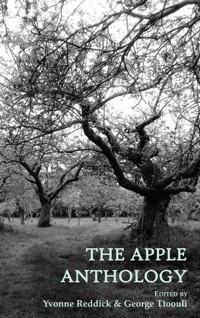
Runner-Up for Best Anthology in the 2014 Saboteur Awards. The Apple Anthology is a rich harvest of new, recent and ancient poetry, prose and visual art from a global array of writers, artists and scientists. The Anthology tells the story of how apples migrated from Northeast China to Europe, how to make zyder and why apples are such potent symbols of beauty, temptation and sexuality. Here you will encounter an apple clock, fruity surrealism, apples from Chernobyl and a tree called Camilla. You will meet King Byerd, Lady Henniker, The Bloody Ploughman, Pig's Snout, Slack Ma Girdle and countless other characterful apple varieties. Pushing the boundaries of genre and subject specialism, all of these creations look at apples in new, challenging and surprising ways. With a foreword by David Morley, contributions from members of the Worshipful Company of Fruiterers, and a range of intellectuals, creators and collagists, The Apple Anthology is bursting with flavour and delight. This book is also available as a eBook. Buy it from Amazon here.
Sie lesen das E-Book in den Legimi-Apps auf:
Seitenzahl: 97
Veröffentlichungsjahr: 2014
Das E-Book (TTS) können Sie hören im Abo „Legimi Premium” in Legimi-Apps auf:
Ähnliche















The Apple Anthology
The Apple Anthology
Editors: Yvonne Reddick & George Ttoouli
ISBN (pbk): 978-0-9573847-9-8
ISBN (ebk): 978-0-9927589-4-3
Copyright © remains with individual authors, 2013
Cover photograph © Mark Seow
All rights reserved. No part of this work may be reproduced, stored or transmitted in any form or by any means, graphic, electronic, recorded or mechanical, without the prior written permission of the publisher.
The various authors have asserted their right under Section 77 of the Copyright, Designs and Patents Act 1988 to be identified as the authors of their individual works.
This anthology has been made possible with support from the University of Warwick’s Research Development Fund, attached to the ‘Grow Warwick’ project.
First published October 2013 by:
Nine Arches Press
PO Box 6269
Rugby
CV21 9NL
United Kingdom
www.ninearchespress.com
Ebook conversion by leeds-ebooks.co.uk
The Apple Anthology
Edited by
Yvonne Reddick & George Ttoouli
About the Editors:
Yvonne Reddick explores literature’s fascination with the environment through her research and writing. After completing her PhD and a short fellowship at the University of Warwick, she has moved to the University of Central Lancashire to take up a research fellowship, teach English literature and creative writing, and explore the Lake District.
George Ttoouli is an Honorary Teaching Fellow for the Warwick Writing Programme. His first collection of poetry is Static Exile, with a second, from Animal Illicit, forthcoming in 2014. He is currently pursuing a PhD in ecopoetics and serial poetry. With Simon Turner he co-edits Gists and Piths, an occasional blogzine.
CONTENTS
David Morley
Prologue
Yvonne Reddick & George Ttoouli
Introduction
Mario Petrucci
starlings so
Jackie Wills
Bramley
Adrian Barlow
The Bramley’s Seedling
Image Southwell Apple
Image The Original Bramley Tree
Janet Sutherland
Crumble
Andy Brown
Devon Apples
Rosemary Collier & Peter Cooper
The Worshipful Company of Fruiterers
Gerry Loose
Eight Apples
John Edgeley & Yvonne Reddick
An Interview with John Edgeley, Apple Expert
Joel Lane
The Winter Archive
Alec Finlay
Orchard, Falkland Palace
PJ Gregory
Apples in the Garden of England
Deborah Tyler-Bennett
Scrumped
Sue Butler
The Job
Ben Armstrong
The Year of the Apple
Jonathan Skinner & Julie Patton
Project for The Swing
Sophie Mayer
Sib (Samira Makhmalbaf, 1998)
Mario Petrucci
‘Can you eat apples from Chernobyl?’
Peter Blegvad
from Leviathan
Camilla Nelson
A is for ‘Camilla’
Image A is for wet apple
David Hart
A translation into fruity poetry of a fragment of André Breton’s Secrets Of The Magical Surrealist Art
Rupert Loydell
Nutritional Fragment
Carol Watts
from Occasionals
Mark Goodwin
Apple Clock
Claire Trévien
Kerné
Chris Campbell & Michael Niblett
Towards a Critical Ecology of Cider
Eleni Philippou
Pilion
Gwyneth Box
Village Customs
Wayne Burrows
The Apple Migrations
Adrian Barlow
English Apples: Development, Decline and Renaissance
Image Jazz Apples
Adam Crothers
Apfelschorle
Alison Brackenbury
In May
Carina Hart
Apple of my Eye
Giles Goodland & Alistair Noon
from Surveyors’ Riddles
Amy Cutler
Fructus
Janet Sutherland
Felling the Apple Tree
Carina Hart
Forbidden
Sophie Mayer
sapph_
Chris McCabe
The Apple Tongue
Helen Moore
Aphrodite’s Seed
Yvonne Reddick (trans.)
Le Mystère d’Adam
Acknowledgements
Like the sweet-apple that blushes at the top of the branch, the tip of the topmost branch, which the apple-pickers missed, or did not miss, but could not reach.
Sappho
DAVID MORLEY
PROLOGUE: THE HARVEST
apples in the apples, apples’ apples, through and through
R.F. Langley
When I was a baby, my mother planted six miniature apple trees at the bottom of our garden. Every January, she winter-washed each sapling scrupulously and in March she stretched and tied grease bands around their bases to stop moth larvae inching up. The little trees grew and bore pink-white blossom in April, each apple tree cross-pollinating the other.
Charles Ross. Laxton Superb. Laxton Fortune. Beauty of Bath. I was enchanted by this tiny orchard for I found myself growing with the trees the same height each year. When they and I reached seven my mother took pruning shears to them and sealed the dripping sap with tar. This wounding of their growth spurred them.
I was drawn by their scent in Spring — and to their fruit from the moment it budded (it seemed to unfold from bud to fruit overnight). The temptation for a hungry child was to pluck and eat the tart infant apples before they had time to swell. There were bound to be casualties: gall or being pecked rotten by blackbirds and song thrushes. To mask my thefts I selected the young, marble-like fruit equally from each tree. I was never discovered, although I often suffered from stomach ache. There seemed to be thousands. Early windfalls were treasure. I prayed for gales.
Our crop of apples was harvested and put to work. Cleansed in salted water to drive out beetles and larvae; dried cheaply in the sunshine’s antibiotic, polished to a shine, and stowed in newspaper in sweet-smelling cardboard boxes under our parents’ bed. My father would lodge one in his jacket as he rose early for shift-work.
The apples were also put to play. On Hallowe’en night, the children of the house would bob for apples (the apple being the prize). On Christmas Eve they found their way into the toes of our stockings. By Easter, the boxes under the bed were bare but scented by Laxton Fortune’s perfume-like, almost sickly sweetness.
My father started dying in the eighth year of the apple trees, my own eighth year. The routines of cancer treatment did not affect my mother’s husbandry of the trees. They were her trees. Winter-washing; grease banding; spraying; harvesting; pruning; tarring; salt-cleansing; sun-drying; stowing; boxing. None of these rapt processes stopped — and the trees thrived. They began to exceed my own height despite the attention of shears.
By the time my father was cremated, the trees were out of control. My brother was out of control, stealing cars. His absence for six months in a detention centre brought some peace, for now it was only I and my mother, my sister having grown and gone. And the trees had grown beyond my mother’s care. August was florid with a harvest that lazily thudded to the ground among eager blackbirds and the waiting worms.
One apple tree’s care could consume a whole day and I was a teenager with a skateboard, minding my mother. My father, being gone, allowed her to blossom into her own life. That December, while the trees slept, my mother hacked them down. She dragged out their roots — ‘They were too much trouble’. She burned their limbs and leaves.
Charles Ross. Laxton Superb. Laxton Fortune. Beauty of Bath. My mother used the ash to make something grow. Raked, sieved, double-dug into the loam, the apple ash made our heavy clay soil breathable and easily breakable for the roots of my mother’s roses.
YVONNE REDDICK & GEORGE TTOOULI
INTRODUCTION: SCRUMPING
Scrumping is the stealing of fruit from orchards and gardens, a dialect variant of the word scrimping. It also suggests scrumpled: something rumpled and shrunken and wizened, an old apple past its blushing prime. This anthology has broken into a number of orchards to steal just the right kind of apples from other people’s trees: apples that will refresh our comfortably wizened notions about this most familiar of fruits.
Many of us have personal stories, memories of apples, to draw on, and some of the work herein will be familiar, other parts surprising, stretching and reminding us of how we relate to apples, but also showing how apples relate to and depend upon our roles as selectors and shapers of food and nature. As with individual apple cultivars, each tree has a particular shape, fruiting time and flavour of fruit; to some, trees even seem to have their own peculiar personalities. Northern Greening fruits enthusiastically, and woodpeckers tend to drill holes into its hollow trunk; Bramley’s Seedling is a gigantic green knight, producing fruit the size of a baby’s head. The richness of cultivars’ names, some familiar from supermarkets, others distinct to particular regions or uses — cider or chutney-making, baking and juicing — are a history of imagination, of place and of human activity.
Editing this anthology has been like gathering a rich harvest. Although the illicit frisson of scrumping isn’t there (for copyright reasons) we have enjoyed the thrill of first-fruits alongside biting into centuries-old textures and symbolisms. And unlike that scrumpy cider some of us made all those years ago, we feel we’ve got the blend right this time. An impressive array of poets, young and established, brings delectable produce to the feast. Horticulturists and scientists bring fruit of a different kind, no less inspiring for its insights: stories of how different varieties of apples have arisen, how they made the long journey from Asia to Britain, how old varieties can be preserved. Sociologists, writers and literary critics have provided juicy articles about temptation, cider, politics and art.
What these pieces share is a concern with the cultivation of apples and orchards, but also with culture. Those two words, culture and cultivation, come from a common Latin rootstock. It’s surprising just how much culture and cultivating have in common. When you’re writing a poem, it seems to be a living thing with a will of its own; you need to prune it gently and with skill in order to let it bear fruit. One slip of the shears and you stunt it. Let it grow unruly and you end up with something untrained and hard to work with.
In assembling this primer to the apple, we aimed to cultivate a mini-encyclopaedia, a diversity of perspectives and a reminder of how much can sit within a single slice. Charles Olson once wrote of the importance of doing a ‘saturation job’, of learning as you venture deeply into a single subject — “barbed wire” or “pemmican” were his suggestions — that everything connects to everything else, to a vast range of human experiences and non-human understanding. We also drew inspiration from the wonderful Animal and Edible series published by Reaktion Books, in which an author delves into a single subject from the natural world. We hope to enrich those approaches, showing how many voices can cohere into a similarly expansive sensation.
The vast monoculture of a supermarket bookshelf, with its rows of identical bestsellers, begins to resemble the bland, extensive fields of agribusiness. Many of the pieces published here capture moments when culture and cultivation are carried out differently, either more innovatively or more traditionally, on a smaller scale or more organically. The poems, essays, photographs, translations and artworks in this anthology show that not everyone thinks in monocultures and we invite you to join us in thinking through a community of voices, about how much flavour you can hold in the palm of your hand.
MARIO PETRUCCI
starlings so
ravenous at my apples
jump branches as
i might jump
ships — yet i
think myself apart
as they move in half-flight
contrast to static rounds of
flesh they are almost
as many as &
open up in bird-
tip shapes — in white
chevrons i can see from w-
here i stalk them adrift with en-
croachment till like them i
bear my weight
no longer : this
newtonian mass of
what i want — not that snake
of sight — but unpecked apples
so discrete they make
the other side
of frost into
festivity wherein i
cradle one miraculous
apple much later than
the rest drawing
its noose of
wonder round
my table because it
sits in its middle so out
of season & thus a
proprium & so
do not let
starlings eat
but burst blackchaff
at my bullet-clap knowing
they think my hands a
thing of dread a




