


5,02 €
Mehr erfahren.
- Herausgeber: Heritage Books
- Kategorie: Geisteswissenschaft
- Sprache: Englisch
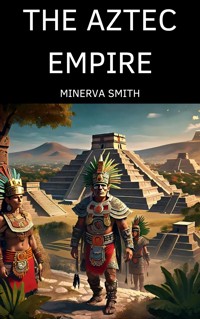
The Aztec Empire takes you on a fascinating journey into one of the most powerful and complex civilizations of the ancient world. From their incredible cities and architectural wonders to their rich culture, religion, and military might, this book brings the Aztec Empire to life. Dive into the world of Aztec rulers, explore their intricate social systems, and discover how they built an empire that shaped history. Perfect for history enthusiasts and curious minds, this book offers a captivating glimpse into the rise and fall of an extraordinary civilization that still captivates imaginations today.
Das E-Book können Sie in Legimi-Apps oder einer beliebigen App lesen, die das folgende Format unterstützen:
Seitenzahl: 45
Veröffentlichungsjahr: 2024
Ähnliche
















THE AZTEC EMPIRE
COPYRIGHT PAGE
The Aztec Empire
Copyright © 2024 Minerva Smith.
No part of this ebook may be reproduced, distributed, or transmitted in any form or by any means, including photocopying, recording, or other electronic or mechanical methods, without the prior written permission of the publisher, except in the case of brief quotations used in reviews and certain other noncommercial uses permitted by copyright law.
Table of Contents
Title Page
Copyright Page
DISCLAIMER
INTRODUCTION
ORIGINS OF THE AZTEC EMPIRE
THE RISE OF THE AZTEC EMPIRE
KEY LEADERS OF THE AZTEC EMPIRE
DAILY LIFE IN THE AZTEC EMPIRE
ART, MUSIC, AND EDUCATION IN AZTEC SOCIETY
THE LEGENDS OF THE AZTECS
THE SPANISH CONQUEST
THE AFTERMATH OF THE CONQUEST
LEGACY OF THE AZTEC EMPIRE
DISCLAIMER
The information provided in this book is for educational and informational purposes only. Every effort has been made to ensure that the information in this book is accurate, up-to-date, and helpful. However, no responsibility is assumed by the author or publisher for any loss or damage resulting from the use of this book or the information contained herein
INTRODUCTION
The Aztec Empire is a remarkable civilization that existed in central Mexico in the 14th to 16th centuries. It is remarkable example of human creativity, perseverance and sophistication. Following the paths of migration and war, the Aztecs give rise to a complicated social sphere with striking urban centers, layered sociocultural organization, and diverse customs and beliefs. This empire was founded on the city of Tenochtitlan which belonged neither to land nor sea ground as it was built over numerous islands in the lake Texcoco. This is where the Aztecs established imposing structures, enjoyed numerous activities in many markets and practiced agriculture remarkably well.
Imperial expansion of the Aztecs was mainly achieved through a series of careful military conquests and alliances as well as a distinctive and efficient tribute system that enabled them to suppress all issues inciting neighbouring city-states. Militarily and economically, the Aztecs also managed to gain more lands and power and therefore created a trade net and cultural relations that extended far beyond their territories. The empire's great accomplishments in the field of architecture, arts, and agriculture reflect a culture that embraced invention and originality and that has therefore provided the foundations of a vibrant cultural heritage that is still appreciated in the modern times.
Significance of Studying the Aztec Civilization
There are multiple reasons as to why it is important to learn about the Aztec culture. First of all, it helps to appreciate the intricacies and variation of pre-Columbian cultures. The Aztecs were not a culture that had existed in isolation, on the contrary, they were one of the many native cultures that existed in the Americas with different customs, ways of governance and perspectives of the world. In studying the Aztec Empire, one comes to appreciate how these societies were related and the causes of that development.
Furthermore, the history of the Aztec civilization is not only interesting but also provides some lessons on the nature of power relations, control and the structuring of society. The history of the Aztec Empire speaks in turn to the problem of the weaknesses intrinsic even to the mightiest systems in existence. The processes of European colonization, the ‘importation’ of maladies, and the collapse of the empire’s unity present a range of issues contributing towards a society’s downfall. In that regard, readers can engage with such themes and are able to resolve them in the context of such contemporary problems as political order, culture, and justice.
Additionally, the Aztecs made significant contributions to various fields, including agriculture, astronomy, and the arts. Their innovative agricultural techniques, such as chinampas (floating gardens), allowed them to sustain a large population and adapt to their environment effectively. Their astronomical knowledge, evidenced by intricate calendars and celestial observations, played a vital role in their religious practices and daily life. By understanding these achievements, we can appreciate the ingenuity of indigenous peoples and their lasting impact on subsequent generations.
––––––––
Purpose and Scope of the eBook
This e-book intends to conduct an in-depth study of everything concerning the Aztec empire's history, including the emergence and development of the empire, the important persons in the empire, and the empire's cultural elements as well as its eventual fall. Furthermore, it is the purpose of this eBook to shed more understanding on the complexities of the Aztec Empire, where not only the victories and conquests of its rulers are remembered, but also the legends and stories behind them that stayed long with the empire.
This eBook's coverage includes the beginning, development, collapse and aftermath of the Aztec Empire. Each chapter will focus on a specific theme such as politics, daily activities, warfare and cultural practices – and the legends about them in Aztec society. This eBook presents history, archaeology, and ethnography in order to comprehensively understand the Aztec Empire in the context of global history.
ORIGINS OF THE AZTEC EMPIRE
The Early Beginnings of the Mexica People




