


4,79 €
Mehr erfahren.
- Herausgeber: Parthian Books
- Kategorie: Gesellschafts- und Liebesromane
- Sprache: Englisch
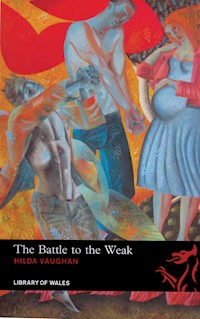
In the first and, arguably, the finest of Hilda Vaughan's ten novels, the dawn of the twentieth century brings a new generation that clashes with the conservative traditionalism of an old Welsh way of life. Rhys Lloyd and his engagement with the ideas of Social Darwinism and the League of Nations make him a dangerous figure in the village. The son of a Welsh-speaking Nonconformist, his love for the church-going Esther reflects tensions that have long and bitterly divided the community. Most striking, however, is the stoic and determined Esther who calmly suffers the casual brutality of her agricultural upbringing, drawing on an inner strength and organic spirituality that would provide an archetype for Vaughan's later heroines. Despite a loving and sensitive depiction of her native Radnorshire landscape, Vaughan offers no rural idyll. The Battle to the Weak is a vividly drawn, socially engaged portrait of a small rural Welsh community with an awareness of its context within the wider world.
Das E-Book können Sie in Legimi-Apps oder einer beliebigen App lesen, die das folgende Format unterstützen:
Veröffentlichungsjahr: 2011
Ähnliche



















THE BATTLE TO THE WEAK
HILDA VAUGHAN
‘...and the race is not to the swift, nor the battle to the strong’
Ecclesiastes
Contents
Title PageEpigraphFOREWORDPROLOGUEBOOK ICHAPTER 1CHAPTER 2CHAPTER 3CHAPTER 4CHAPTER 5CHAPTER 6CHAPTER 7CHAPTER 8CHAPTER 9CHAPTER 10CHAPTER 11CHAPTER 12CHAPTER 13CHAPTER 14CHAPTER 15BOOK IICHAPTER 1CHAPTER 2CHAPTER 3CHAPTER 4CHAPTER 5CHAPTER 6CHAPTER 7CHAPTER 8CHAPTER 9CHAPTER 10About the AuthorCopyright
LIBRARY OF WALES
FOREWORD
Much of my early education left me completely oblivious to Welsh women writers writing in English. Even though R.S. Thomas was studied on the syllabus, and Dylan Thomas was referenced repeatedly, when it came to the women I was only aware of a handful of writers, and most of those, I was told, wrote in Welsh, not English. Towering above them all was the writer Kate Roberts, hailed as ‘Brenhines ein Llên’, (Queen of our Literature), whose short stories of hardship and endurance often left me and my friends feeling disheartened for days. And so for escapism, we would turn to our English lessons, where we could read rather of the trials and tribulations of Jane Eyre and the Bennett sisters; scenarios that seemed to communicate something profound, interesting and exciting about the human condition, and more so about love, which was, of course, a major preoccupation of ours in those early days of womanhood. On the corridors of a Welsh-speaking school we’d talk in English literary riddles and quotes so that the boys would not guess at our intentions, and when our hearts were inevitably broken, and the dark clouds of disappointment and doubt would appear; that would be when we would revert back to Welsh, and start quoting Kate Roberts.
And so for me there seemed to be Kate Roberts at one end of the spectrum and Jane Austen and the Brontë sisters at the other and, in my mind, very little lay in between. But of course, all the while, Hilda Vaughan and her contemporaries lay in between, or maybe I should say, side by side, for Vaughan was in fact an exact contemporary of Kate Roberts, with only a year’s difference between them – Roberts having being born in 1891 and Vaughan in 1892. Both died in 1985.
The Battle to the Weak, therefore, was my first encounter with the rather elusive literary figure of Hilda Vaughan, and I could not help but wonder what my impressionable, teenage self would have made of her. In the days where author images were scarcely featured on books, I was first struck by Hilda Vaughan’s portrait, which stared at me from the back of the crumbling, weather-beaten 1925 edition. She is staring almost expressionlessly at the camera, not giving too much away; hair slicked neatly to the side, beads hanging from the neck, seeming far more glamorous, more aristocratic, than sharp-eyed Kate. But like Kate Roberts herself, she also had a well-known husband, and beneath the photo one is informed that ‘in private life Hilda Vaughan is Mrs Charles Morgan, author of Sparkenbroke’, and the instant this is revealed the fact ceases to be private, and Hilda Vaughan herself is partly obscured by her literary husband. In searching the portrait again for signs of this rather more demure figure of ‘Mrs Charles Morgan’, I catch something else in her gaze, a certain wryness, perhaps, which acknowledges the patriarchal conventions of her time, yet dares the reader to dip into the book, to discover her not as a wife or a member of a well-known family, but simply as an author and a storyteller.
And it is well worth doing so. To call this novel ‘A fascinating story of farm life, laid in Breconshire on the borders of Herefordshire’ as the original 1925 edition does, is almost to understate its narrative prowess and descriptive beauty. It is indeed a novel rooted to that very location and in some ways carries with it the classic traits of border experience, with tensions played out between complex characters with unsound identities – but it is also a diverse and rich novel which could speak on behalf of any part of rural Wales during that period. Above all, the reissuing of The Battle to the Weak, gives us an opportunity to appreciate afresh the gifted, subtle storytelling of one of the prominent voices of the Welsh borders, one whose use of language and narrative devices indeed transcends any period, and imbues the novel with a modern touch, making it feel contemporary and fresh. The sense of place is captured succinctly, effortlessly almost, and time and time again one is left reeling by the finely tuned sensory descriptions, the world that ‘is without form or void’, the house that is like ‘a button mushroom with snowy top and flesh-coloured stem’, as Vaughan creates wonderful optical illusions with the deftness of a watercolour artist. She conjures character in very few brushstrokes – and when Esther comes bounding down the path of ‘crushed cockle shells’, we are instantly drawn to the lovely, dutiful, fascinating Esther, who, like any credible character in a work of fiction, undergoes many changes throughout the novel, and who finds herself hardened by circumstance, unwilling to yield to love in her later years.
And yet, the first flush of love she feels towards Rhys Lloyd as an impressionable eighteen year old, certainly would have engaged with the younger reader in me who felt so enamoured of Austen and Brontë. Looking back objectively on it now, I can see the disparity between my world and Austen’s, not only in terms of the period but in terms of the values of the English gentry of the late eighteenth and early nineteenth century, so far removed from my own world. Of course, this may have been part of her appeal, but in reading The Battle to the Weak, I was struck by how a novel like this would have resonated entirely differently with my group of friends, brought up as we were in the rural area of the Teifi Valley, many of us living on farms or friendly with farming families. Esther and Glenys are almost robust, rural antidotes to Jane and Elizabeth Bennett, and their emotional journeys, though darker, are also so much more illuminating in the long term.
The whole range of woman’s experience is to be seen in this rich tapestry of a novel – from the passionate Glenys and the poor, suffering Annie Bevan, to the misguided yet well-meaning Megan, and Vaughan is careful to eschew happy, straightforward endings for her characters. Their fates are all brought about through their dealings with men, and these are never simple or clear cut, with the battle between the sexes often involving a hearty struggle of values before a truce can be reached. We see also a similar pattern to Megan Lloyd’s life in Vaughan’s crafty and sophisticated story, A Thing of Nought, also reissued in the Library of Wales. Here again is a female character pining for a man who has been sent overseas on his travels, and yet driven to forget him, and eventually forced into an unhappy marriage. But the more compact form of the short story allows a more mystical, otherworldly narrative to flourish on this particular canvas, one which haunts the reader for days.
Esther finds herself at an emotional border towards the end of the novel; as Vaughan contemplates a tentative happy ending for her heroine. Like Jane Eyre, Esther is called to her suitor’s side in illness and injury, and finding him in this state, emasculated and dependent, finally accepts herself as his equal, feeling that: ‘Rhys the suitor, for whom she felt deep admiration and awe, had never been so dear to her as was this Rhys, the sick child who had spoken so fretfully and who had fallen asleep in his chair.’ Like Jane Eyre, Esther becomes empowered here, finally finding the familiarity for which she has been searching, the homeliness she craves, and there may also be something quintessentially Welsh in this, too, not a world away from the understated denouements of Kate Roberts’ stories.
Although there was no question of Hilda Vaughan replacing Kate Roberts on our syllabus (it was, after all, a Welsh-language syllabus), one wonders whether, in fact, Hilda Vaughan’s alternative voice would have made an interesting addition to our English classes back in the 1990s. Esther Bevan may be denied the privileges of the Bennett Sisters and the education of Jane Eyre, but she is, in many ways, a shrewder, more sharply drawn character, who embodies the land around her, and who would have spoken more directly to generations of young women brought up in rural areas. As Rhys Lloyd states towards the end of the novel: ‘She’s of the land… maybe as that is how she is bein’ so dear to me. My nature is rooted in hers like, same as ’tis rooted in the soil from which both of us is springing.’
Fflur Dafydd
THE BATTLE TO THE WEAK
PROLOGUE
For an hour after sunrise, a shepherd who stood upon the summit of the Garth might have believed himself returned to the first days of creation. For ‘there went up a mist from the earth, and watered the whole face of the ground’. Later in the day it would be possible, from this point, to look westward into the bleak country of Wales and eastward over the richer pasturage of Herefordshire. Now the world was without form and void; the valley beneath and the hills beyond were alike hidden.
The mist thinned slowly as time passed. Presently the upper slopes of the hillside became visible like the sea coast of an island itself half-submerged, and the higher patches of lightness admitted a dominant blue from the sky. From one of these – a picture of dull pastel in a billowy frame – emerged the quivering outline of a farm.
A man on horseback stooped from his saddle to kiss a girl who carried a baby in her arms. As he straightened himself he glanced over his shoulder at his house and its outbuildings. Whitewash still fresh spoke of a new tenant, and, though his pride of ownership had already lost its first fine savour, John Bevan had not ceased to talk long and loud of ‘My farm’, ‘My stock’, and ‘My house’. He surveyed them now with obvious pleasure; then turned once more to the frail figure of his wife. ‘She is bein’ my missus, too,’ he reflected. ‘Not lookin’ her best now, she isn’t, but when I was marryin’ her there was a lot as ’ould have liked to have her, and I was cuttin’ ’em all out.’
When he had first seen her, faintly flushed by the excitements of the yearly pleasure fair, her delicate prettiness had appeared to him like that of a wild rose. Since then she had faded fast, and her expression threatened to become peevish. Seeing her daily, he had scarcely noticed the change, but she knew it was creeping upon her. Her manner was the more timid because she understood that what small influence she had over him would vanish with her physical attractions.
‘Payin’ less and less heed to me he’ll be, and all along o’ the children I do bear him,’ she reflected, as she watched him ride off briskly down the cart track which led from Pengarreg to the valley below.
Straightening herself, she carried her bundle back into the kitchen where she put it in the wicker cradle beside the hearth. She was glad to have disposed of it, for the next baby, to whom she must give birth in three months’ time, demanded the whole slight stock of her vitality. She was thankful that Esther seldom cried, and proud of the child’s appearance, which even John Bevan’s unmarried sisters were forced to admire. Yet she was disappointed and shocked at finding so little pleasure in her motherhood.
‘I do wish as I were not havin’ another so soon,’ she sighed, looking down at the round little head, covered with golden-red fluff, soft as a duckling’s down. ‘I don’t seem to take no delight in Esther now, like what I did when she were first born.’ She turned away listlessly from the cradle. ‘And indeed I don’t know how to come around the work in this great big old house. I was a deal happier in the small little one as we were havin’ the first year o’ our marriage. Times ’on’t never be like that no more. The boss he do seem to think more o’ his drink than he do o’ me since he comed into his grandfather’s money.’
With a deepening line of worry between her brows she began to clear away the breakfast. A saucer slipped through her fingers, and falling on to the stone floor broke to pieces with the tinkling sound of ice.
‘Oh dear, oh dear!’ she cried. Little Esther opened her round grey eyes and stared solemnly.
To her the room was a vast place in which giants moved to and fro about their mysterious business. Sometimes they came and clapped their hands and smiled at her, and she smiled back at them, a slow, fat smile that produced a dimple in each of her cheeks: but for the greater part of her time she lay unheeded, gazing at the strange sights, and listening to the noises around her. She had already begun to distinguish the sounds of pain and anger, and her mother’s exclamation of distress awoke a dim response in her. She tried to say the word they had been at such pains to teach her, but it was unheard in the clatter of crockery. She tried to struggle out of her cradle, a new and exciting accomplishment, but she was wound up in a thick shawl and could not extricate herself. Her impulse was to cry; but, as that seldom brought her attention or relief, she lay still, whimpering slightly, and fighting with fat little pink hands to free herself from bondage. In the attempt she grew sleepy. Her mother had gone from the room, and it was profoundly quiet. A sheepdog slunk in at the open door. Having sniffed the floor for crumbs, he came to the cradle-side, wagged his tail shyly, and licked the clutching fingers. Once more Esther became wide awake, and this time she crooned with delight; but at the sound of a human footfall, and the fear of a blow, the big warm creature that was soft to touch was gone. The world was full of bright things at which Esther grabbed, trying to hold them because they pleased her, or to convey them to her mouth in order to find out if they were good to taste. Some of them, like the sunshine on the wall, could never be caught, and others were snatched away from her by the giants. She did not know why the friendly dog had gone. She was lonely and began to cry, but after a while her sobs turned to deep breathing and she fell asleep.
Annie Bevan had started a dozen of her tasks and finished none. Already she was exhausted, though the long summer’s day lay before her. She dragged herself into the kitchen, and, noticing that the fire had gone out and would have to be re-lit, dropped on to a chair, laid her arms on the table, and hid her face in them. ‘Three months more,’ she thought, ‘and me goin’ weaker all the while.’
Meanwhile the man, riding along on a showy pony, was intent upon his day’s outing. The moist cool air was fragrant with the meadowsweet beside the track, and with the honeysuckle which festooned the rocks and stunted may trees on the open hillside. The river valley beneath him was still shrouded in mist, so that he appeared to be riding down from the sky into a bank of white clouds. As the first rays of the sun touched them, the dew-drenched grass slopes about him began to glitter and sparkle with millions of prismatic points of light. Even to him, whose pleasures were mainly of the grosser sort, the beauty of that morning made its appeal, quickening his sense of well-being and filling him with new fire. He threw up his head and began to sing his favourite hymn – ‘Jerusalem the golden, with milk and honey blest’. The words echoed from the far side of the narrow dingle down which he had begun to ride, and died away long after they had been uttered. He enjoyed making so much noise where he alone could be heard. The sound of his singing seemed to fill the universe. He flung back his shoulders, filled his lungs, and sang on lustily in a rough bass voice, lingering over the words he liked best – ‘The shout of them that triumph, the song of them that feast’. So pleased was he with the performance that, having bawled out the hymn once, he began it over again; but when he reached for the second time the line ‘And they who with their Leader have conquer’d in the fight’, which he had rendered with great spirit on the first occasion, he had entered the mist zone, and an impenetrable curtain muffled the sound of his singing. It was light, yet he could scarcely see where he was going. Even the pricked ears of his pony were dim as though seen from a distance. He was forced to drop the reins on her neck and to let her find the way for him. He shivered with cold, and abruptly ceased to sing, feeling less secure than he had done in the importance of his own personality. His face assumed a sullen look, and he rode on quietly until he reached the valley where the track he had been following joined the main road to Llangantyn. There he gathered up his reins, turned at right angles, and trotted along briskly, for it was now level going. Only the click-click of iron horseshoes on a metalled highway, and the quiet murmuring of a river, unseen in the fog, broke the stillness.
Suddenly ahead of him loomed up another figure on horseback, riding in the same direction but at a more sober pace. He urged on his pony and overtook his fellow-traveller.
‘Lloyd the Henallt, is it?’ he cried as he came abreast of him. ‘Well, well, and where are you off to so early?’
The man thus addressed was of a type still to be found among the Celtic peoples of Wales. His skull was long and narrow, and his black eyes slightly oblique. He was short and thin, and his yellowish complexion suggested kinship with the Portuguese. Clean-shaven, but for trim black side-whiskers, he wore a dark suit and a bowler hat, the badge of well-to-do respectability. There was nothing in his expression to indicate that he was pleased at the prospect of having company on the road, but he greeted his neighbour civilly enough.
‘Good mornin’ to you, Mr Bevan. What are you thinkin’ o’ the weather? Is it likely to take up now?’
‘’Deed, I don’t know. It do look likely whatever with this old mist so thick first thing in the mornin’. But wherever are you off to?’
‘Oh, goin’ into Llangantyn, I am.’
‘What for at this time o’ day? There’s no one ill up at your place, is there?’
‘No, indeed; we’re all keepin’ pretty fair.’
‘Maybe you’re wantin’ the vet, then?’
‘No, no.’
‘Well, you can’t be goin’ shoppin’ at this hour?’
Elias Lloyd hesitated and shot an angry glance at his persistent questioner. At last he said reluctantly ‘To tell you the truth now, I’m catching the mail down to Aberyscir.’
‘You don’t say! Doin’ the very same as myself, then.’
Elias Lloyd turned his head sharply and peered up through the mist.
‘Are you goin’ to Aberyscir today?’
‘Yes, indeed. They do tell me the cattle market there is bein’ a deal better nor ours in Llangantyn. Wantin’ to buy a cow, I am, so I did think to go and look for one there.’
‘You are givin’ yourself a terrible long journey to buy one old cow.’
John Bevan laughed. ‘Oh, you aren’t one to go from home, only on some partic’lar business, or to tend chapel. You don’t understand a man likin’ to treat hisself onst in a while. Havin’ plenty o’ money I am to afford an outin’ since I comed into Pengarreg after grandfather,’ and he glanced down patronisingly at the man whose brother had been the bailiff there in the late owner’s time.
‘Havin’ to be tight on the money, the Lloyds is, no doubt,’ he reflected. ‘Not bein’ in so good a position as what I am.’
‘Maybe,’ Elias Lloyd ventured, ‘as I could be buyin’ a cow for you – savin’ you the expense of the journey…?’
‘Crafty old fox,’ thought John Bevan. ‘Thinkin’ to make his bit out of it.’
‘You’re wonderful kind, Mr Lloyd,’ he answered, clapping him heartily on the shoulder, ‘but indeed I’m looking forward to the trip. And what is takin’ you to Aberyscir?’
‘Oh! A small little matter o’ business.’
‘Oh indeed! Wantin’ to buy summat, are you?’
‘No, I’m not wantin’ to buy nothin’.’
‘Well, damn you, man, what are you bein’ so close about? Anyone ’ould think as you was goin’ to make your will.’
Elias Lloyd shifted uneasily in the saddle. ‘Havin’ a sale o’ sheep, I am,’ he announced after an interval of silence.
‘Well, fancy my not hearin’ o’ that before! I wasn’t knowin’ as you carried enough sheep at the Henallt to have a regular sale like.’
‘’Tis my brother’s sale as well as mine.’
‘Your brother? Not the one as was bailiff to grandfather?’
‘That’s the only brother I’m havin’.’
‘But he is livin’ in a small little cottage alongside o’ your place. He’s not havin’ much land to keep sheep on.’
‘Enough for a few, whatever.’
‘What do make you have your sale so far from home?’
‘Well, indeed, I’m knowin’ some good buyers down by Aberyscir.’
‘Well, well.’
Conversation languished.
As they neared Llangantyn, the mist grew more transparent, and, lifting suddenly, hung in quivering trails upon the hills on either side of the valley. Flat pastures came into view, gay with the lush grass of early summer, in which the placid cows stood knee deep. The river that had come dashing down from the mountains, foaming and furious, broadened out, and ran smoothly between low banks.
‘Rich land here,’ observed John Bevan.
Elias Lloyd grunted his assent. Side by side they rode over the stone bridge, and into the sleepy little town. The shutters of the shop windows creaked and groaned as they were taken down, as if they were unwilling as the townsfolk themselves to be disturbed in their late slumbers.
‘Now is the time to be showin’ these old townies as honest farmers are astir,’ cried John Bevan, eager for an opportunity to show off his horsemanship. ‘I never did see such a late-risin’ lazy lot,’ and he set his pony at a gallop that sent sparks flying from the cobblestones, and made the clatter of hooves echo through the streets.
Opposite the Greyhound Hotel he pulled her up, so regardless of her mouth that she reared and came to a standstill on her haunches. Flinging himself off, he shouted for the ostler, and swaggered into the bar, pleasantly conscious of the superiority of such an entrance to that of the sober Methodist, who rode quietly into the yard, dismounted slowly, and led his own horse into the stable. A couple of drinks further strengthened John Bevan’s self-esteem, and he strode off to the railway station, humming to himself so gaily that passers-by turned to stare at him.
The twenty-mile journey to Aberyscir was accomplished leisurely in an hour and a half.
The narrow streets of the old-fashioned town were crowded to suffocation, and the high-pitched voices of a Welsh crowd, engaged in the congenial pursuit of bartering, made a deafening clamour. John Bevan, coming from an anglicised border county, could not speak his own language, and despised his fellow-countrymen who were able to do so as much as they despised him. But he could shout as loud and gesticulate as freely in a bargain as the best of them; and when he had struck his man’s extended hand with a dramatic gesture of finality signifying that the deal was made, he led away the cow he had bought, satisfied that he had done a creditable morning’s work. He had some difficulty in finding the drover who was to take her home for him with other cattle bound for Llangantyn. The delay made him thirsty. Talking to the bystanders in the heat and dust of the market made him yet thirstier, and when he succeeded in tracking down his man and disposing of the cow, he adjourned with several dealers to the nearest public house, and stood them round after round of drinks. They left him at last, flushed and elated, with his hat pushed back on his head, and his huge red hands thrust deep into his pockets. Out into the street he strolled, jingling his money and wondering whether he had better take the next train home.
‘There’s work to be done there,’ he reflected, ‘and it ’ould pleasure the Missus wonderful to see me back early.’
A dealer leading a colt shouted a greeting at him as he passed. A fine colt! John Bevan with his eye for a horse must needs go to look at it. He was back in the smithfield before he was aware of it, and engaged in a lively piece of banter with a young woman against whom he had jostled.
‘Damn it all,’ he thought, ‘there’s a bit o’ life to be seen here. Best enjoy myself now as I’ve got the chanst.’
The late afternoon found him entering another public house for a last drink on his way to the railway station.
‘No more nor one,’ he told himself.
A hand was laid on his arm, and looking down he saw the stunted figure of Ben Davies, a neighbour of his from the Llangantyn district.
‘Why, Mr Davies,’ he cried, before he had recalled that the man was a noted mischief-maker whom wise folk avoided. ‘’Tis good to meet someone here as can talk a word o’ English. Come and have a drink, man.’
Nothing loth, the little cringing fellow followed him to the counter and began to administer compliments. For the sake of these John Bevan stood him another drink, and another, and because by that time he was himself becoming fuddled and ready to give anything to a man who pleased him, or to knock down one who did not, he forgot about his train home and his good intentions, and settled himself down to enjoy one of his drinking bouts.
‘You’re a good fellow, Ben Davies,’ he said, as though he defied his listener to contradict him. ‘I don’t see it fair to say nothin’ against you like what some o’ them old Methodists do do. Give me a man as can drink – like the gentries; my friends is all bein’ gentlemen.’ And he laughed loudly.
Then Ben Davies saw his opportunity for getting even with Elias Lloyd who had denounced him at a chapel meeting. With eyes craftily narrowed and head on one side, he began: ‘You are bein’ in wonderful good spirits today, Mr Bevan.’
‘Come you, we must all be havin’ a joke sometimes.’
‘Jokes is all very well; but I could be tellin’ you summat – but there – I mustn’t be sayin’ nothin’, or I’ll be gettin’ myself into trouble. I ’ould be likin’ to serve you, Mr Bevan, since you are bein’ that kind; but I’m a poor man, and we must each of us be thinkin’ of our own skin.’
‘Whatever do you mean, man?’
‘What I am sayin’, Mr Bevan. Wantin’ to act like a neighbour to you, I am.’
‘Well?’
‘But ’tisn’t hardly my business. And, mind you, ’tis only hearsay. I don’t know nothin’ for certain.’
‘Out with it, man.’
‘You ’on’t never be mentionin’ my name if I do tell you?’
‘No, no. Speak up, can’t you?’
Ben Davies sidled up closer.
‘Are you seein’ anything strange with Elias Lloyd’s sheep, the ones as he and his brother is makin’ a sale of today?’ he whispered.
John Bevan stared down at him. ‘I haven’t been lookin’ at his old sheep. What are they to me?’
Ben Davies shrugged his shoulders as though disclaiming any responsibility. ‘Maybe they aren’t nothin’.’ He finished his drink and wiped his mouth with the back of his hand. Then he added: ‘But maybe as they are.’ There was another pause. ‘All I do say is as some o’ the wethers do look as if they’d had their ear-marks altered so as they shan’t be recognised.’
John Bevan made a clicking sound with his tongue. ‘Stolen?’ he suggested vaguely looking round the crowded room and wishing that someone would strike up a song. He wanted to join in a chorus and to beat time upon the counter with his fist, but he was not sufficiently drunk to start singing alone.
‘Stolen,’ repeated Ben Davies ominously. ‘Stolen, sure, to be. I wonder now whose sheep they may have been?’ After a while he added: ‘What ’ould you be doin’ now, if someone was to steal sheep o’ yours, Mr Bevan?’
‘I’d be killin’ ’em just.’
‘And serve ’em right too. ’Tis a wicked thing robbin’ a neighbour.… Was you countin’ all your sheep when you did come into your property after your grandfather?’
‘Not just at first I wasn’t. The snow was lyin’ that deep when I took over the place.’
Ben Davies shook his head. ‘Pity. Pity indeed.’
John Bevan stared at him for a full minute, and the colour heightened in his already flushed face.
‘Are you meanin’ as them sheep was stolen off o’ me?’ he demanded.
Ben Davies shrank away from him. ‘I ’ouldn’t like to say so, Mr Bevan.’
‘Well, I’ll be findin’ out whatever.’ His voice rose to a shout. ‘I’ll never be restin’ until I do know the truth. And if those sheep was bein’ mine…’
He left the sentence unfinished, and brought down his clenched fist upon the counter so that the glasses danced. A number of strangers standing near turned to stare at his angry face.
‘An ugly customer that,’ whispered one.
‘Ah! But he’s a fine swampin’ lad. Look at the shoulders he’s got on him, and a neck like a bull, just. Them big red-haired fellows is terrors to fight. I’ve known a lot o’ ’em, all with the same hissy tempers. You mind them fierce-rollin’ eyes he’s got too. I ’ouldn’t like to handle a colt with eyes like that, and men and horses is bein’ wonderful sim’lar.’
‘Ah, well! Them noisy ones is mostly bein’ bested by the quiet little ’uns. Look at that small little sneakin’ chap with him – for all the world like a weasel after a big dull old rabbit.’
‘I don’t believe,’ thundered John Bevan, ‘as the man is born as ’ould dare to rob me under my very nose.’
The mocking grins which spread over the listeners’ faces goaded him to fury.
‘If that’s what you do think, I’ll soon be showin’ you,’ he shouted. ‘Out o’ my way, you.’
He flung out into the street. The loitering crowd there impeded his progress, and he swore under his breath as he elbowed his way through it, whilst the sweat poured down his face and the dust made his eyes smart. In spite of his haste the Lloyds’ sale was over, and the last lot of sheep was being unpenned when he burst into the smithfield.
‘Holt,’ he cried, ‘I do want to look at your sheep.’
A grey-bearded farmer looked him up and down with evident disapproval.
‘No use, man. I’ve only now been buyin’ ’em, and I’m not wishful to sell again.’
‘I don’t want to buy the damned sheep.’
‘Then get out o’ my way, can’t you? Time’s money to honest folk.’ And muttering something about drunken fools, the farmer shouldered past him, and shouted to the boy in front of the flock to go on.
‘Stop those sheep,’ roared John Bevan, as they pattered out of sight round a bend in the road leading out of the smithfield. ‘I do demand to see their ear-marks.’
‘That you ’on’t do,’ said their new owner. ‘I’ve paid my deposit on the sheep to one man, and I don’t want no bother about their belongin’ to another. I can see right enough what you are gettin’ at. You leave me and my sheep alone.’
He hurried away, pursued by drunken shouting.
‘Damn you, you old fool! You can’t stop me to look at the sheep. They’re bein’ mine, I tell you. I don’t care who do know it. I’m an honest man. I’ve been robbed. Robbed, d’you hear? A swindlin’ hypocritical neighbour o’ mine’s robbed me. That’s why he was bein’ so close about his business here this mornin’. I didn’t think at the time, but ’tis plain as daylight now. I’ll teach him to steal my sheep, I’ll…’
The farmer whom he had followed down the street turned and faced him.
‘Look here, there’s the policeman comin’. You go and tell him what it’s all about.’ And he left him standing alone, his feet planted wide apart, his hat pushed far back on his head, swaying slightly as he stood. Seeing the policeman’s eye upon him, he ceased to shout and tried to pull himself together. Since he had no evidence that the sheep had been stolen, it would be wise to make enquiries into the matter before raising a scandal; but the effort needed to control his temper made him rage the more. Clenching his fists until his nails bit into the horny palms of his hands, he staggered off in search of the auctioneer, and having, with difficulty and delay, collected the names and addresses of those to whom the sheep had been sold, returned to the public house in which he had left Ben Davies. Other farmers from Llangantyn had joined the company and greeted him with derisive laughter.
‘Well, well,’ cried one of them. ‘I was allus hearin’ as you did think yourself too sharp to be bested by no one. Fancy an innocent old Methodist stealin’ the sheep off o’ your grandfather’s farm atween the day as he come to die and you was takin’ over the place!’
‘I don’t say as they was stolen for sure,’ put in Ben Davies. ‘I ’ouldn’t like to make no trouble.’
The others greeted this as a good joke, and their laughter, though for the moment it was not directed against himself, infuriated John Bevan. Between them they enraged him to such a pitch that at last they ceased to enjoy the fun of seeing such a boastful man made to look a fool, and became alarmed for their own safety. So they agreed with him that Elias Lloyd and his brother were unparalleled rogues, for whom no punishment could be too severe. John Bevan, meanwhile, drank more and more beer, and became, with each tankard, more fuddled and furious.
On the journey home he muttered and nodded, his head hanging foolishly first on one side and then on the other, his bloodshot eyes half-closed. Now and then a violent jerk would awaken him, and glaring around him he would announce that he intended to break every bone in the bodies of Elias Lloyd and his misbegotten brother.
Meanwhile the chapel deacon, having heard the tumult of his neighbour’s arrival at Aberyscir station, had wisely kept out of his way. When they alighted at Llangantyn he was quick to reach the Greyhound Hotel, and in a few minutes he had left the town, and was urging his grass-blown pony homeward.
The river flowed serene and silvery in the quiet evening light. The dusty white road was deserted. The hills on either side of it were growing dark, and the level pastures beside the river were an emerald velvet. The mood of this still twilight hour was soothing even to Elias Lloyd, who ordinarily cared little for beauty and was more concerned with the jealousy of God than with His gifts. His pace slackened as he approached the steep track which led up to his farm on the hillside. With feet shaken clear of the stirrups and reins dropped on his pony’s neck, he jogged along with his mind for once empty of fear or wrath. He had not reckoned on John Bevan’s ability to sit a horse at full gallop when he was almost too drunk to stand upright, and the thunder of hooves on the road came as an unexpected warning that he was being pursued.
‘That drunkard, sure to be,’ he thought. ‘I’d best be givin’ him the slip quick. He’s dangerous tonight. By mornin’ he’ll be forgettin’ the lies some mischief-makers have been tellin’ him in market, and if he’s still bein’ inclined to quarrel, I’ll go and reason him out of it. If there was maybe one or perhaps two o’ his sheep got put in with my brother’s by mistake, he can’t never prove it.’
Without stopping to look over his shoulder he seized the reins, thrust his feet hurriedly into the stirrups, and urged his fat pony forward. The drowsy valley was filled with the clamour of iron beating furiously upon stone, and a cloud of dust arose. But fast as Elias Lloyd rode, John Bevan gained upon him.
‘Come on, damn you, come on,’ he shouted, striking his pony blow after blow with his stick.
With terror-stricken eyes and nostrils distended, she galloped on, labouring for breath and flecked with foam.
‘Now I’ve got you,’ yelled her rider as he came abreast of his quarry. ‘Now I’ll learn you to go stealin’ my sheep, you bloody hypocrite – you!’
Elias Lloyd swerved out of the way just in time to avoid a shattering blow, and as the other rode at him again, he wheeled his horse round and shouted with all the vehemence of extreme fear: ‘Don’t you be hittin’ me now. Holt, for the Lord’s sake! Holt! There’s some mistake, man.’
‘Mistake,’ roared John Bevan. ‘You dare to call it a mistake – stealin’ my sheep and making o’ me a laughin’ stock amongst strangers?’
And he rode at his enemy once more, and tried to seize his horse by the bridle. In doing so he almost rolled out of his own saddle, and the two terrified ponies reared and plunged. Elias Lloyd, always a poor horseman, and helpless now with fright, clung to the peak of his saddle. At that moment, his antagonist, quick to recover himself, struck him in the face with all his force. Elias Lloyd uttered a loud cry, swayed, and fell. His panic-stricken animal galloped away towards the mountainside on which it had been bred, and John Bevan, on his own sweating pony that quivered under him as if she were about to drop with exhaustion, sat looking down at his victim. Sobered by the sight of what he had done, he leant out of the saddle.
‘Are you hurted?’ he asked foolishly.
The injured man groaned, and covered his face with his hands.
‘You are not dead whatever,’ the victor muttered in a tone of relief. Now that he had experienced the satisfaction of striking someone, his anger had abated, and the matter of the sheep was forgotten. ‘Shall I be helpin’ of you up?’ he enquired; but Elias Lloyd staggered to his feet unaided.
‘My face is all broke to pieces,’ he groaned. From between his fingers there oozed blood.
‘Indeed, I’m sorry as I was hittin’ you so hard,’ John Bevan confessed.
Elias Lloyd withdrew his hands, and looked up with a face distorted with pain and fury. ‘May the Lord requite you for this,’ he shrieked. ‘May you be desolate and rewarded with shame.’
‘I’ve said as I wasn’t meanin’ to hit you so hard. Indeed, and I’m terrible sorry for what I’ve done.’
‘Get out o’ my sight, can’t you! Oh, the pain! Oh Lord, ’tis terrible! Do thou requite mine enemies for this.’ He raised his voice as if he were praying in chapel. ‘Let them be as the dust before the wind, and the angel of the Lord scatterin’ them. Let their way be dark and slippery, and let the angel of the Lord persecute them. Let hot burning coals of fire fall upon them, let them be cast into the fire and into the pit that they never rise up again.’
John Bevan turned and rode away sullenly, but the deacon, his face and hands smeared with blood, continued to stand in the deserted road and to curse his neighbour aloud in the words of Holy Writ.
The steep hill on which were perched the homesteads of Pengarreg and the Henallt overlooked the road to Llangantyn. At the foot of the hill, confronting each other from opposite sides of the road, were the church and the chapel. A diminutive schoolhouse, a blacksmith’s forge and two or three labourers’ cottages completed the village of Lewisbridge. The oldest building in the place was the church, ivy-covered and guarded by three yew trees. The newest was the red-brick Calvinistic-Methodist chapel, which glared impudently at its rival from across the way. The two places of worship were emptied at the same hour on Sunday mornings, and the separate streams of black-clad men and women mingled upon the common highway. They were indistinguishable from each other. In earlier years the younger churchwomen had been made conspicuous by their coloured clothes, but soon the less strict among the Methodists had followed their example, and gay ribbons were no longer peculiar to the establishment.
On the Sunday after his encounter with Elias Lloyd, John Bevan slouched out of church with his hands thrust into his pockets, and the defiant look of a naughty child on his face. Detaining him in the porch, his wife clung to his arm and began a whispered entreaty.
‘’Tis a terrible bad job to be comin’ into a district, strangers from ten miles away as we are, and quarrellin’ with our next o’ neighbours within the year. Indeed, and I dare say as there wasn’t no truth in what you was bein’ told agin Mr Lloyd, and you havin’ had a drop o’ drink…’
‘I’ve heard enough about that from you already,’ he answered, jerking his arm away from her.
She bit her lip, and tears, ever ready to overflow, came into her eyes. ‘Oh dear!’ she thought, ‘I do allus seem to be sayin’ the wrong thing when I’m just beginnin’ to win him round.’
She drooped against the wall of the porch, and her husband stood before her, while gossiping groups of neighbours passed with inquisitive glances, and, sauntering out of the churchyard, mixed with the larger crowd from chapel.
The last to appear from under the red-brick archway were the Lloyds. Elias came first with small dark eyes peering out vengefully from the bandages that swathed his face. After him came his wife, with one hand laid on his shoulder, and the other clasping that of a little lad of three or four. She was a tall, gaunt woman, some years older than her husband. Every line of her rigid figure suggested unyielding hostility, for she had been telling the minister what she thought of John Bevan, and had worked herself up into a state of righteous fury. She was followed by her father, spare and stern of countenance as herself, and by Evan Lloyd, whose sallow skin and crafty eyes resembled those of his brother. They were all dressed with neat severity in their Sabbath black, and the three men carried ponderous hymn books in their hands. Mrs Lloyd wore gloves of black kid which were too long at the fingertips and had left a purple stain on the hot little palm of the child. He alone of the party was not engaged in indignant discussion, and he looked up now and then in frightened bewilderment.
Seeing the group pause in the road, Mrs Bevan turned once more to her husband. ‘Go you on now whilst there’s a chanst o’ makin’ it up,’ she urged, ‘or maybe he’ll be havin’ the law on you for hittin’ him.’
‘Oh, a’ right,’ he growled at last. ‘I’ll go, since you ’on’t give over else,’ and unwillingly leaving the shelter of the churchyard, he accosted his enemy on neutral ground.
‘I ’ould like to be speakin’ a word to you in private,’ he announced in a surly tone.
Four pairs of eyes, full of astonishment and hostility, looked him up and down, but no one spoke. The homeward-bound church and chapel-goers stopped and stared, and their presence became a humiliation to John Bevan.
‘Can’t we be goin’ somewhere quiet to have a talk by ourselves?’ he asked.
Mrs Lloyd’s tongue was loosed. ‘Did you ever hear the like o’ that?’ she cried shrilly, appealing to her husband. ‘Havin’ the face to ask you to go off alone with him after doin’ what he’s done. Why, he might be killin’ o’ you outright this time.’
John Bevan glared at her. It was like a woman’s meanness, he reflected, to blame a man after he had become sober for what he had done when he was drunk.
‘I am not speakin’ to you,’ he retorted.
‘Nor am I wishful to speak to you,’ put in Elias Lloyd.
‘No, indeed, I should think not,’ cried his wife. ‘Come away, Elias. Come away, all o’ you. He’s no fit company for God-fearin’ folk.’
She turned on her heel, dragging the child after her, but Annie Bevan interposed.
‘Indeed and indeed,’ she wailed, ‘only anxious to make it up, the boss is. Do you be givin’ him a chanst now to ask your pardon.’
‘No call for you to interfere whatever,’ he answered, roughly pushing her out of his way. ‘I’m not askin’ no man’s pardon, and this business is atween Elias Lloyd and myself.’
‘That it is; and I’ll not be forgettin’ of it neither.’
‘Call yourself a Christian, do you? Not willin’ to forgive nothin’.’
‘Spoilin’ his face for life, you have been, you brute, you!’
‘But I was in drink when I struck him.’
‘The more shame to you, then.’
‘Aye, aye. ’Tis written as drunkards and them that make a lie shall not enter into the Kingdom of Heaven.’
All their voices rose together in an effort to drown one another. In the background stood Annie Bevan, passing her crumpled handkerchief across her lips. The little boy had begun to cry in anticipation of the blows which usually followed angry words, but no one paid the least heed to him. The bystanders had edged themselves closer, and were grinning. Their mirth stung John Bevan to fury.
‘Well, if I do go to hell for bein’ a drunkard, you’ll go there for bein’ a liar – a liar and a thief too,’ he shouted.
Elias Lloyd turned his back on him. ‘I’m not stayin’ to listen to no more o’ this low talk,’ he explained to those about him.
‘You’ll stay and hear the truth whatever,’ his neighbour yelled. ‘You and your bloody hypocrite of a brother, as do set up to be so religious, have been stealin’ the sheep off of his old master’s place. Robbin’ the dyin’ – that’s a nice thing for a deacon to be doin’.’
Evan Lloyd moved away hastily, making signs to the others to follow him, but Elias turned round.
‘I’ll have the law on you for callin’ me a thief,’ he declared. ‘The neighbours here ’ull be bearin’ witness to it.’
‘I’ll have the law on you for stealin’ my sheep, then.’
‘You’ll have to prove as I did do it first.’
‘That I will, you…’
‘Shame on you, man,’ cried one of the bystanders, cutting short a string of foul names. ‘There’s language to be usin’ on the Lord’s Day. Can’t you wait till Monday mornin’?’
The young men and boys broke into a titter; and in haughty silence the Lloyds moved off, the child with his big dark eyes full of tears and his little mouth trembling.
John Bevan, aware that he had made a fool of himself, stood in the road, shouting after their retreating figures. His florid face was sweating, and he pushed back his hat. The day was still and sultry. The sun shone dimly through luminous clouds. The glare of the road was hurtful; the air oppressive as if before a storm. All the birds were hushed, and the monotonous sound of the river arose loud and persistent.
Gradually the crowd dispersed amid a subdued hum of excited conversation. ‘Now there’ll be a time on us,’ was the general opinion, and instinctively, not knowing the rights of the case, the church folk began to decry Elias Lloyd for a dishonest humbug, and the chapel-goers to denounce John Bevan for his blasphemous violence.
Annie Bevan, left alone with her husband, presented a pathetic figure in an ill-fitting black dress that emphasised rather than concealed her condition. Thinking of little Esther whom she had left sleeping in her cradle, she was filled with a sense of dread.
‘Oh, boss, boss,’ she lamented, ‘why was you bein’ so rash? This is only the beginning o’ worse troubles. Who do know where it may all end, for us and our children as is yet to come?’




