


0,49 €
Mehr erfahren.
- Herausgeber: DigiCat
- Kategorie: Gesellschafts- und Liebesromane
- Sprache: Englisch
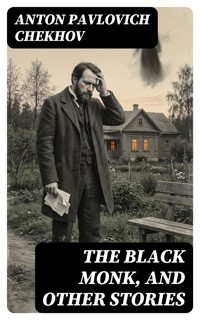
In "The Black Monk, and Other Stories," Anton Pavlovich Chekhov showcases his existential depth through a collection of narratives that deftly navigate the intersection of the mundane and the metaphysical. The titular story, "The Black Monk," explores themes of madness, disillusionment, and the tension between reality and illusion, while other tales delve into the intricacies of human relationships and the often-unrecognized suffering inherent in daily life. Chekhov's prose is marked by its economy of language, keen psychological insight, and an innovative structure that reflects the complexities of human experience, thus situating his work within the broader context of Modernist literature. Chekhov, a physician by training and a revolutionary playwright, drew from his own experiences and observations of society to infuse his stories with both empathy and critical social commentary. His dual identity as a medical professional and a literary innovator endowed him with a unique perspective on the human condition, often portraying characters in moments of profound existential crisis. Often chronicling the lives of the Russian middle class, Chekhov's works push readers to confront the unvarnished truths of life. This collection is highly recommended for readers seeking to explore the depths of psychological realism and the nuances of human emotion. Chekhov's keen observations illuminate the fragility of human existence, making his stories a vital study for those interested in literary classics that resonate with contemporary moral and existential dilemmas.
Das E-Book können Sie in Legimi-Apps oder einer beliebigen App lesen, die das folgende Format unterstützen:
Veröffentlichungsjahr: 2023
Ähnliche

















The Black Monk, and Other Stories
Table of Contents
Introduction
This volume, The Black Monk, and Other Stories, gathers a group of Anton Pavlovich Chekhov’s short fictions around the long story commonly known as The Black Monk. The aim is not exhaustive coverage of his vast output, but a concentrated introduction to his art in the short form: narratives that probe ordinary lives with uncommon acuity. By presenting a selection that balances intensity with variety, the collection invites readers to encounter Chekhov’s characteristic blend of clarity, empathy, and restraint. It offers an accessible path into a body of work that helped define modern short fiction and continues to shape how we read everyday experience.
Anton Pavlovich Chekhov (1860–1904) is internationally recognized as a Russian master of the short story and the modern stage. Trained as a physician, he wrote steadily for periodicals while practicing medicine, and he developed a style notable for observational precision and moral tact. His short fiction emerged primarily in the final decades of the nineteenth century, during a period of social change and intense literary activity. Without grand proclamations or elaborate plots, his tales examine the textures of private feeling and public obligation. Together with his later plays, they secured his reputation as a writer who expanded the possibilities of realism.
The present collection confines itself to short fiction: concise stories and, at its center, a longer tale. These works first appeared in Russian and were originally published in journals and newspapers before entering book form. No poems, essays, letters, or dramatic texts are included; the emphasis is on crafted prose narratives that can be read in a single sitting or an evening. The variety is one of scale and mood rather than of genre. Some pieces move swiftly, sketching a life in a few pages, while others unfold with patient detail, allowing characters and situations to gather resonance without spectacle.
Anchoring the volume, The Black Monk follows a learned protagonist whose encounter with a mysterious figure of a monk catalyzes a struggle between exalted purpose and the demands of ordinary affection. The premise allows Chekhov to explore questions of inspiration, health, and responsibility without reducing them to a thesis or a parable. The story’s power lies in its refusal to tell the reader what to think, and in the way it places private experience against the quieter rhythms of a household and a landscape. Around this central piece, the other stories echo and refract its concern with inward weather.
Across the selection, readers will find the signature Chekhovian preoccupations: the weight of habit, the ache of missed chances, the dignity and limits of work, and the testing of conscience within constrained circumstances. Teachers, doctors, clerks, landowners, students, and children appear without caricature. Situations turn not on sensational incident but on small choices and long memories. Social forms, visits, walks, letters, meals, become stages for revelation. A sympathetic irony steadies the narration, allowing folly and tenderness to coexist. The result is a humane vision that neither flatters nor condemns, attentive to how people talk past each other and to what they cannot say.
Chekhov’s craft is marked by economy and subtext. Scenes begin late and end early, avoiding explanatory summaries. Details are chosen for their pressure: a worn sleeve, an unwatered plant, the color of evening light. Dialogue carries meanings that are never explicitly stated, and narration often tracks the drift of thought without editorial comment. Endings resist neat closure; they leave a resonance rather than a conclusion, asking the reader to complete the experience. The prose remains lucid, even when it approaches the border of dream or anxiety, and the sense of proportion keeps sentiment from hardening into doctrine or spectacle.
His characters are rendered through action and gesture rather than through authorial judgment. A pause, a slip of tone, or a small kindness reveals a moral horizon more clearly than any pronouncement. Chekhov’s discipline favors implication over emphasis, trusting the reader’s attention. Humor flickers through pathos; miscommunication sits beside devotion; pettiness does not cancel generosity. The cumulative effect, especially in a collection, is of a living social world, various and undecorated, that invites readers to recognize themselves without special pleading. Even when a plot involves illness or anxiety, the writing maintains an even temper that amplifies rather than dulls feeling.
The settings reflect late imperial Russia’s mixture of town and countryside, with estates, apartments, offices, gardens, clinics, and schools furnishing the ordinary spaces of experience. Seasons and weather matter less as symbols than as the medium in which people move and think. Customs of address, patronymics, and everyday etiquette situate the stories within their linguistic and social milieu, while the emotional patterns they trace remain legible beyond that context. Chekhov’s interest is not in exoticizing his world but in showing how it works from within: how institutions and family ties shape desire, and how attention itself is an ethical practice.
Chekhov’s medical training informs his prose, not by turning stories into case histories, but by sharpening his eye for symptom and cause. States of mind are observed with the same care as physical conditions, and he recognizes the pressures of fatigue, anxiety, and hope on judgment. The Black Monk places the relation between inspiration and well-being near the foreground; other tales observe how work, boredom, or sudden happiness recalibrate a life. At every turn, the writing resists easy diagnoses. What counts is the texture of a particular moment, and the respect the author affords to the limits of knowledge.
Over the twentieth century and beyond, Chekhov’s short fiction has influenced writers across languages and traditions, who have learned from his restraint, his empathy, and his insistence on ordinary stakes. Many practitioners of the short story have acknowledged their debt to his example, and his plays reshaped modern theater by demonstrating how quiet action and subtext can carry dramatic weight. The persistence of his work in classrooms and on bookshelves owes less to doctrine than to craft: the capacity to make time, speech, and setting reveal character. This collection speaks to that legacy by showing its sources in concentrated form.
Reading these stories benefits from patient attention to nuance. Names in Russian custom often include a given name and patronymic, and forms of address may shift with intimacy or status; such matters register social temperature. Cultural references appear without gloss, but context usually makes their role clear. The narratives rarely announce themes; they invite the reader to notice patterns of repetition, avoidance, and return. Taken individually, each piece offers a complete experience. Read together, they align in contrapuntal ways, amplifying images and concerns from one to the next and returning, in varied keys, to the central questions of purpose and care.
By assembling The Black Monk with a carefully chosen group of shorter works, this volume presents a coherent portrait of Chekhov’s achievement in prose. It shows how a writer, with modest means and disciplined feeling, can open ordinary scenes to uncommon depth. The pieces gathered here are independent yet related, offering multiple approaches to the same enduring inquiries: how people live with one another, what they owe themselves, what they owe others, and what they can bear to know. The result is an introduction and an invitation, to return, to reread, and to discover how much can fit inside a quiet page.
Author Biography
Introduction
Anton Pavlovich Chekhov (1860–1904) stands among the most influential writers of modern literature, celebrated for transforming both the short story and the stage. Trained as a physician, he brought diagnostic clarity and humane restraint to depictions of ordinary lives under late Imperial Russia. His best-known plays—The Seagull, Uncle Vanya, Three Sisters, and The Cherry Orchard—recast drama as a theater of quiet shifts and submerged feeling. His stories, including The Lady with the Little Dog, Ward No. 6, The Steppe, and Peasants, model an art of understatement and moral nuance. Across genres, Chekhov’s work privileges suggestion over declaration, allowing readers to infer the unseen currents shaping human choice.
Chekhov’s historical significance lies in his reinvention of narrative expectation. He resisted melodramatic plots, choosing instead to capture moments of transition, missed opportunities, and modest acts of kindness or failure. In the theater, his ensembles distribute focus across many lives, refusing simple heroes or villains. On the page, his compression and open endings reoriented the short story away from tidy conclusions toward epiphany and ambiguity. That aesthetic, carried worldwide through translation and repertory performance, made him a touchstone for modernist prose and naturalistic drama. His influence persists whenever narrative tension arises not from eventful spectacle but from character, memory, time, and silence.
Although firmly anchored in local settings—from provincial towns to country estates—Chekhov’s themes invite broad reflection. He depicts how institutions, custom, and chance impede personal fulfillment, yet resists polemic, emphasizing the dignity of ordinary endurance. The Seagull and The Cherry Orchard show characters navigating desire and change; The Lady with the Little Dog reveals quiet moral reckoning; Ward No. 6 examines institutional cruelty and self-deception. Such works exemplify his tonal balance of irony and sympathy. The result is a humane literature that treats people not as types but as enigmas, seen in fleeting, revealing moments rather than in grand, decisive acts.
Education and Literary Influences
Chekhov grew up in Taganrog on the Azov Sea and attended local schools before moving to Moscow to study medicine in the late 1870s. He completed medical training while supporting his family through journalism and short comic sketches, an apprenticeship that honed his speed, concision, and ear for everyday speech. Under pen names in weekly periodicals, he learned to compress character into a few gestures and lines, a skill later deepened in works like The Steppe and The Lady with the Little Dog. The clinical discipline of diagnosis informed his nonjudgmental approach, encouraging observation, economy, and empathy rather than overt authorial verdicts.
His literary formation reflected both Russian and European currents. He admired the clarity and restraint found in Turgenev and the psychological penetration associated with Tolstoy, while adapting techniques from French and European realists, including the swift, ironic turn seen in Maupassant. Yet Chekhov rejected doctrine in art, seeking an objective stance that let readers and audiences do interpretive work. Encounters with the theater further shaped him: collaboration with the Moscow Art Theatre later confirmed his interest in subtext, ensemble playing, and the importance of staging silence. Across his fiction and drama, he blended scientific attention with an ethical commitment to understatement.
Literary Career
Chekhov’s early career in the 1880s produced hundreds of brief pieces for newspapers and humorous journals, cultivating a style of swift setup and backloaded resonance. Transitioning from sketches to more ambitious fiction, he published The Steppe, a landmark work that demonstrated his capacity for expansive yet tightly controlled narrative. Around the same time, he refined a method of indirection—parsing feelings through gesture, weather, or a remembered phrase. This period laid the groundwork for the later psychological depth of stories like The Lady with the Little Dog and the moral inquiry animating Ward No. 6, establishing him as a singular, versatile voice.
He extended his range with longer stories and novellas that scrutinized social and ethical dilemmas without preaching. Ward No. 6 explores institutional inertia and the hazards of detached intellectualism; Peasants presents rural hardship with unflinching candor; The Duel examines weakness, pride, and moral drift; and The Lady with the Little Dog portrays intimate transformation with rare delicacy. In these works, Chekhov preferred implication over commentary, crafting open endings that invite reflection rather than closure. His prose trimmed ornament in favor of telling detail, and his narratives often pivoted on ordinary moments that, almost imperceptibly, expose the fault lines of a life.
Chekhov’s dramatic career developed alongside his fiction. Ivanov introduced his interest in disillusioned protagonists and social fatigue. The Seagull, initially received coolly, later found decisive success with a new production that revealed the play’s undercurrents of unfulfilled ambition and artistic restlessness. Uncle Vanya reworked material from an earlier play into an ensemble portrait of stasis, while deepening his method of offstage events shaping onstage lives. Across these works, action resides less in plot twists than in conversation, silence, and pause. Subtext carries feeling; seemingly minor exchanges accumulate until a shared atmosphere becomes the true protagonist.
His final plays perfected this approach. Three Sisters studies hope, resignation, and the passage of time, while The Cherry Orchard entwines loss and renewal in a changing society. Both balance comedy and sorrow, refusing to reduce characters to symbols. Chekhov’s theater trusts directors and actors to realize meaning through rhythm, gesture, and spatial arrangement; this openness fostered major performances and enduring repertory life. Meanwhile, late stories maintained his commitment to brevity and suggestiveness. The coexistence of stage and page work enriched each form: techniques of ensemble and silence informed his prose, just as his fiction’s psychological shading deepened his dramaturgy.
Beliefs and Advocacy
Chekhov publicly affirmed a writer’s ethical duty to observe without sermonizing, yet he led a quietly active civic life consistent with humane values evident in his work. Trained as a physician, he provided medical care to the poor and, during times of hardship, assisted in local relief efforts. He supported rural education and health initiatives, using his resources to build or improve community facilities near his country home. His journey to the Sakhalin penal colony yielded a detailed investigative account, grounded in interviews and statistics, that exposed harsh conditions and urged reform. Even while avoiding partisan alignment, he modeled practical compassion and empirical honesty.
Final Years & Legacy
Chronic illness shadowed Chekhov’s later years, prompting a move to the milder climate of the south while he continued to write. Collaboration with the Moscow Art Theatre intensified, and his marriage to actress Olga Knipper connected his private life to the ongoing evolution of his plays in rehearsal and performance. Three Sisters and The Cherry Orchard emerged from this period, marked by even greater reliance on subtext and ensemble interplay. Despite declining health, he maintained a steady output of stories that distilled experience into lucid, penetrating episodes. The late Chekhov is spare yet generous, relinquishing judgment to let characters speak for themselves.
Chekhov died in 1904 while seeking treatment abroad and was buried in Moscow. His legacy is vast. In theater, his collaboration with actors and directors helped define modern performance, emphasizing psychological truth, ensemble balance, and the dramaturgy of silence. In prose, his understated architecture influenced generations of writers who prize implication over declaration, from early modernists to later minimalists. Translations and global productions anchored his place in world literature, making titles like The Seagull and The Cherry Orchard staples of international repertory. Above all, he bequeathed a humane method: attentive, unsentimental, and quietly radical in its faith that small moments reveal entire lives.
Historical Context
Anton Pavlovich Chekhov’s career unfolded during the last decades of the Russian Empire, a period of rapid social change and tightening political control. The stories commonly gathered under the title The Black Monk, and Other Stories date mainly from the 1890s, when Chekhov wrote at Melikhovo near Moscow and, later, in Yalta. The Black Monk (1894) sits at the center of this phase, reflecting his mature style: compact, elliptical, and attentive to everyday speech. These works arose as Russia moved from the lingering aftershocks of the 1861 emancipation of the serfs into the age of Alexander III and Nicholas II, with modernization colliding with tradition across town and countryside.
The political climate after 1881 shaped the conditions under which Chekhov wrote. Following Alexander II’s assassination, the state pursued “counter-reforms,” strengthening the secret police, curbing the autonomy of local self-government (zemstvos), and tightening press restrictions. Censorship did not ban social critique outright, but it encouraged indirectness and nuance, habits at which Chekhov excelled. His short fiction often places tension beneath quiet surfaces, allowing readers to infer conflicts rather than see them declaimed. That restraint answered both aesthetic conviction and practical necessity: in an era wary of public dissent, understatement enabled serious engagement with power, privilege, and moral responsibility.
Equally important was the acceleration of industrialization in the 1890s under Finance Minister Sergei Witte. New rail lines, factory growth, and the launch of the Trans-Siberian Railway (begun 1891) altered daily life and expectations. Urban populations swelled; social mobility and precarity increased together. Chekhov’s contemporaneous stories register these shifts through settings and professions—clerks, engineers, factory managers—exposing anxieties about work, status, and purpose. A story from the same period, A Woman’s Kingdom (1894), explores industrial capital and gendered authority. Against this backdrop, The Black Monk locates its central drama on a country estate, its orchard and routines appearing orderly, yet never fully insulated from the strains of a transforming economy.
The disintegration of the gentry estate system forms a continuous hum in Chekhov’s 1890s fiction. Many landowners struggled with debts, falling agricultural prices, and changing labor relations after emancipation. Estates still symbolized refinement, leisure, and stewardship of culture, but they increasingly depended on fragile balances of money and labor. The Black Monk’s lovingly tended grounds and careful horticulture evoke a rational ideal of improvement, while undercurrent anxieties hint at the new era’s fragility. Stories from the same decade—such as The House with the Mezzanine (1896)—dramatize collisions between reform-minded professionals and owners defending custom, suggesting that even well-ordered properties felt the pressure of social transformation.
Chekhov’s medical training and public health work during crisis years decisively marked his outlook. In 1891–92, famine and cholera ravaged large regions; Chekhov helped organize relief and later led anti-cholera efforts as a zemstvo doctor around his Melikhovo estate. He also funded and built several rural schools. This engagement sharpened his portraiture of peasant hardship and provincial administration. Stories like Peasants (1897) and In the Ravine (1900)—often paired with The Black Monk in later volumes—depict overcrowding, illness, and strained domestic economies without sentimentality. Even when The Black Monk turns inward to explore consciousness, its rural setting carries the findings of an author who had learned the costs of scarcity firsthand.
Chekhov wrote at a time when psychiatry was professionalizing in Europe and Russia. Clinics, societies, and medical journals proliferated; debates about neurasthenia, hereditary “degeneration,” and hallucination reached educated readers. The Black Monk engages that discourse without adopting its dogmas, presenting visionary experience alongside worries about overwork and fragile nerves. Ward No. 6 (1892), from the same period, examines institutional responses to mental illness and the thin line separating “normal” from “mad.” Chekhov neither romanticizes breakdown nor reduces it to diagnosis. Instead, his fiction places medical language next to ethical and existential questions, allowing readers to weigh competing interpretations of troubled minds.
The ferment of the intelligentsia is another key context. In the 1890s, populist legacies mixed with the spread of Marxist ideas; student circles debated Russia’s path as police surveillance intensified. The Russian Social Democratic Labour Party formed in 1898, and campus unrest marked the decade’s end. Within this atmosphere, Chekhov presents scholars, teachers, and provincial professionals wrestling with vocation and responsibility. The Student (1894), set on Good Friday, tests the consolations of historical continuity against the chill of doubt. The Black Monk’s protagonist, a fatigued academic, navigates ambition, inspiration, and exhaustion—concerns recognizable to a class asked to carry the moral weight of a rapidly changing society.
Religion’s presence in everyday life remained pronounced. The Orthodox liturgical calendar structured time; pilgrimages and feast days shaped communal rhythms. Yet Russia also saw moral debates stirred by Tolstoyan ethics and lay reform movements. Chekhov avoided polemic, but he probed the uses and limits of faith. The Student quietly explores how sacred narratives can briefly rekindle meaning; The Bishop (1902) later turns to mortality within ecclesiastical life. In The Black Monk, visionary motifs brush against scientific rationality, not to endorse a doctrine but to register the era’s overlapping languages of salvation, sanity, and purpose.
Rural society after emancipation faced chronic land hunger, debt, and taxation. Communal land allotments (the mir) often proved insufficient; crop failures deepened vulnerability. State policy added pressures, including a state vodka monopoly introduced in 1894 that reshaped village economies and revenues. Chekhov’s peasant portraits resist idealization, attending to illness, cramped quarters, and frayed kinship. Peasants (1897) emerged from his Melikhovo years, when he treated villagers and observed zemstvo administration. These conditions haunt the quiet world of The Black Monk: the estate’s apparent order sits near communities coping with scarcity, reminding readers that refined conversation and cultivated gardens coexist with structural want.
Debates about the “woman question” intensified from the 1860s onward, and by the 1890s women’s education and employment had expanded unevenly. New courses in the capitals opened professional paths for some, while most women remained confined by legal and economic dependence. Chekhov’s stories from this period map these contradictions. Anna on the Neck (1895) examines marriage as strategy within patronage networks; The Darling (1899) follows shifting identities anchored in attachment; A Woman’s Kingdom depicts a female industrial heir negotiating authority and pity. These portraits resonate with The Black Monk’s broader concerns about autonomy, vocation, and how social roles shape, enable, or distort inner life.
Legal and bureaucratic frameworks also figure in the backdrop. Judicial reforms of 1864 had introduced juries and more independent courts, yet arbitrary authority persisted in administrative and medical institutions. Chekhov, a doctor and meticulous observer, wrote about hospitals, prisons, and the paper-laden machinery of provincial life. Ward No. 6 explores the ethics of care and the ease with which neglect can masquerade as philosophical detachment. Such institutional critiques inform the atmosphere of The Black Monk, where questions of diagnosis, responsibility, and humane treatment hover—less as plot devices than as a moral weather system familiar to late imperial readers.
Periodical culture shaped both what Chekhov could publish and how he reached audiences. Thick journals and newspapers—among them Russkaya Mysl, Severny Vestnik, and Suvorin’s Novoye Vremya—mediated literary reputation and political argument. Censorship and editorial pressures encouraged concise forms and tonal restraint. Chekhov’s association with Suvorin was influential, but it frayed in 1898 amid the Dreyfus Affair, when Chekhov sided with Émile Zola’s defense of legal justice and distanced himself from Suvorin’s anti-Dreyfus stance. That episode reflects the entanglement of literature, civic conscience, and international news in the 1890s public sphere shaping the reception of stories like The Black Monk.
The 1890s also witnessed a changing relationship between science and art. Russian Symbolism took shape in the same decade, valuing suggestive images and spiritual inquiry. Although Chekhov avoided manifestos, his fiction could be read by symbolist contemporaries attuned to ambiguity. The Black Monk’s spectral figure invites metaphoric interpretation even as the story anchors itself in botany, routine, and the language of nerves. This coexistence of empirical detail and open-ended symbol mirrors a broader cultural moment: scientific authority was growing, but metaphysical hunger persisted, prompting works that register both the weight of facts and the lure of the ineffable.
Chekhov’s journey to the penal colony on Sakhalin Island in 1890 exemplifies his empirical bent. He conducted a census, interviewed convicts and officials, and published The Island of Sakhalin (1893–94), a documentary study of punishment and administration. That research sharpened his attention to procedure, paperwork, and human cost—concerns that thread through later short fiction. While The Black Monk turns inward, its moral seriousness reflects an author who had measured institutions against the lives they governed. The Sakhalin experience fortified Chekhov’s commitment to sober description, distrust of grand solutions, and faith that precise detail could expose systemic failures without declamation.
Chekhov’s work in fiction coincided with his breakthroughs in drama and with transformations in theatrical practice. The Moscow Art Theatre, founded in 1898 by Stanislavsky and Nemirovich-Danchenko, staged The Seagull to resounding success after its initial 1896 failure, inaugurating a new, psychologically attentive style. The same principles—subtext, silence, and ensemble—inform Chekhov’s prose. Readers of The Black Monk and its companion pieces encounter pauses, glances, and ordinary gestures that carry ethical weight. Theatrical modernity thus fed narrative modernity, teaching audiences to hear what is not said and to notice the friction between surface calm and subterranean strain.
Contemporary reception of Chekhov’s late-1890s stories was mixed but intense. Some critics lamented a perceived lack of program or resolution; others praised the exactness of observation and moral tact. Early English-language readers encountered him through Constance Garnett’s translations in the first decades of the twentieth century, which helped establish Chekhov as a master of understatement. Soviet-era criticism later highlighted class relations and the exposure of provincial backwardness, while post-1960s and post-1991 readers emphasized psychological nuance, narrative innovation, and the ethics of attention. Medical humanities and psychiatry have since reread The Black Monk as a classic inquiry into experience beyond neat categories.
Environmental and technological shifts shape the texture of these stories as well. Railways changed distances and rhythms; telegraphs sped communication; gardens, orchards, and experimental plots embodied dreams of rational improvement. The Black Monk’s setting takes these ideals seriously—the cataloging of plants, the pacing of work—while showing how nature can both soothe and unsettle. Modern readers often register ecological overtones: cultivation promises mastery, yet seasons and weather impose limits. Such details are historically specific—mirroring the 1890s fascination with applied science—and persistently contemporary, keeping the collection’s landscapes alive as more than picturesque backdrops for private dilemmas. The physical world is a historical actor here, not merely scenery to thought. The collection known as The Black Monk, and Other Stories operates as a compact social chronicle of the 1890s and early 1900s. Editions vary, but they typically cluster works written between 1892 and 1902, a span that includes famine relief, industrial acceleration, new psychiatric vocabularies, and intensifying debates over faith, gender, and class. Anchored by The Black Monk’s inquiry into inspiration and illness, the assembled narratives press readers to examine institutions and intimacies together. Later audiences—shaped by modern psychology, trauma studies, and new translations—have continued to reinterpret these stories as meditations on responsibility in times of rapid change, where inner weather and public storms are inseparable.
Synopsis (Selection)
The Black Monk
An ambitious intellectual retreats to the countryside and begins to see a mysterious black-robed monk who speaks to his sense of exceptional destiny. The encounters fuel alternating bursts of creative rapture and personal strain, testing the boundary between inspiration and illness. Haunting and introspective, the tale probes the costs of genius, the allure of transcendence, and the fragility of domestic harmony with Chekhov’s characteristic ambiguity and restraint.
Other Stories
The accompanying tales follow ordinary people—doctors, clerks, landowners, and artists—through quiet turning points that reveal character under the pressure of habit, hunger, duty, and desire. Small decisions, missed connections, and social constraints drive the action, with endings that remain open enough to invite reflection rather than deliver verdicts. Across these stories, Chekhov’s spare realism, dry irony, and humane gaze illuminate themes of disillusionment, compassion, and the gap between ideals and everyday life.




