


9,59 €
Mehr erfahren.
- Herausgeber: Seren
- Kategorie: Poesie und Drama
- Sprache: Englisch
The Black Place is dark and gorgeously multi-faceted artwork, like a black diamond. Tamar Yoseloff is a gifted contrarian: she eschews the sentimental, embraces alternatives, and offers us antidotes to cheery capitalist hype. But there is a dark grandeur to her view of mortality, one that matches the sublime desert painting of the same name by Georgia O'Keeffe which inspires the title poem. The book's central sequence is 'Cuts', which is a characteristically tough look at the poet's cancer diagnosis and treatment: "The consultant says 'carcinoma' – the word a missile…". The diagnosis arrives at the same time as the Grenfell Tower disaster, a public trauma overshadowing a private one. These poems focus on the strangeness of the illness, they refuse to offer panaceas or consolations. Also included are some formally inventive 'redacted' poems that are blacked-out except for key words that float ominously within their depths. Tamar Yoseloff has moved the horror poem into the twenty-first century mainstream. These poems are tough but not mere gore; the first step towards a humane society is to visit its back alleys at midnight. While The Black Place is rain-drenched and concrete bunkered, a filmic urban vision stripped down to its inner grit, no one lyricises mean streets with such compassion as Tamar Yoseloff. – Claire Crowther
Das E-Book können Sie in Legimi-Apps oder einer beliebigen App lesen, die das folgende Format unterstützen:
Seitenzahl: 40
Veröffentlichungsjahr: 2019
Ähnliche











The Black Place
Tamar Yoseloff
Seren is the book imprint ofPoetry Wales Press Ltd.57 Nolton Street, Bridgend, Wales, CF31 3AEwww.serenbooks.comfacebook.com/SerenBookstwitter@SerenBooks
The right of Tamar Yoseloff to be identified asthe author of this work has been asserted in accordancewith the Copyright, Designs and Patents Act, 1988.
© Tamar Yoseloff, 2019.
ISBN: 978-1-78172-559-7ebook: 978-1-78172-564-1
A CIP record for this title is available from the British Library.
All rights reserved. No part of this publication may be reproduced, stored in a retrieval system, or transmitted at any time or by any means, electronic, mechanical, photocopying, recording or otherwise without the prior permission of the copyright holder.
The publisher acknowledges the financial assistance of the Welsh Books Council.
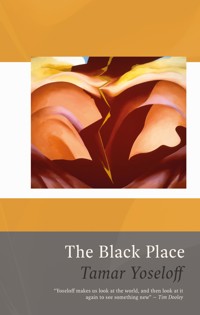
Cover artwork: ‘Black Place IV’ (1944) by Georgia O’Keeffe© Georgia O’Keeffe Museum/DACS 2019.
Cover design: Andrew Lindesay
Author photograph: Stephen Wells
Printed in Bembo by Severn, Gloucester.
Contents
The C Word
Dawn
Girl
Alice in Hell
Anti-midas
The Lambeth Prophecy
Basement
In Clover
Train at Night in the Desert
Bearskull
The Treasury of Alonis
Redaction 1
Heart Burn
Walk All Over Me
Emoji
City
Occupation Road
Sheeple
Holiday Cottage
The Wayfarer
Snails
Islanders
Night Mode
Redaction 2
Disappointment
Body Language
Little Black Dress
Climacteric
Jade
Absent Friends
Frits De Vries’s Great Work
Darklight
Small White Dot
Nephritic Sonnet
Redaction 3
Cuts
The Black Place
Notes
Acknowledgements
The Black Place was the name Georgia O’Keeffe gave to one of her favorite painting sites, located in the Bisti Badlands in Navajo country, about 150 miles northwest of her home in Ghost Ranch. It was a stretch of desolate gray and black hills that the artist said looked from a distance like “a mile of elephants.”
Isolated far off the road and away from all civilization, O’Keeffe made several camping trips there in the 1940s, with her assistant Maria Chabot. Writing to Alfred Stieglitz in 1944, the year Black Place II was made, Chabot described in words what O’Keeffe captured in paint: “. . . the black hills – black and grey and silver with arroyos of white sand curving around them – pink and white strata running through them. They flow downward, one below the next.Incredible stillness!”
from georgiaokeeffe.net
When I was sick they moved me to a room with a window and suddenly through the window I saw two fir trees in a park, and the grey sky, and the beautiful grey rain, and I was so happy. It had something to do with being alive.
Joan Mitchell
The C Word
catches in the throat; the first syllable
on its own, enabling, followed by a hissing snake,
rattletail bringing up the rear.
It trumpets its presence in the glare of the ward,
sneaks into glossy brochures, flashes its statistics
(the odds are against me), looks like carer but isn’t.
Not to be confused with the other c word
that cuts at both ends, detonated in hate
murmured in love – how can it be both?
And how can I contain them, sites of birth
and death? I should know how to speak
of what’s inside me. To be blunt.
Dawn
The city stirs, planes drown out birds,
the fox cries like a strangled child
over the uncertain street. Not a soul.
Each day I lose more: words,
names, things I thought I cared about.
The sun does its duty, as it should
but dawn still holds on to night
like a blanket covering a body.
Poppies stamp the lawn, loud as fists,
but their petals are widow’s skin.
I’ll lie down in their red caress, let them
stroke my cheek, black eyes winking.
Girl
comes from nowhere, no great shakes –
a slip, a trick, a single polka dot
dancing on her own. In the swoosh
of the train she is gone, to trip
the switch of her heart, to fill the gap –
mind you, she’s been there before
and it sucks. She’s stuck on night shift,
flashing her dugs, doing her bit
and for what? No one
gets it – she holds her tongue
but slippy lizard can’t be tamed,
sliding over cusses, tequila, semen.
She’s good for nothing because nothing’s
good: sirens drown out violins
and crows swoop to carnage in the street.
Alice in Hell
And then the White Queen said
off with her head!
Down the hole I went,
plunged into a throbby gullet;
crocodile tears spiked my arms,
drew rubies, price of my dewy flesh.
That infernal rabbit kept muttering
you’re late, you’re late, and in a beat
I knew I was dead, but not
in the pearly place.
The Hatter, murderer of time,
wielded the second hand
like a stiletto, rosy juice flew
through the picket pikes on my skin,
my mouth swilled rare claret,
thick elixir of my heart. I longed
to wake, caught in the crease




