


Erhalten Sie Zugang zu diesem und mehr als 300000 Büchern ab EUR 5,99 monatlich.
- Herausgeber: Prototype Publishing
- Kategorie: Gesellschafts- und Liebesromane
- Sprache: Englisch
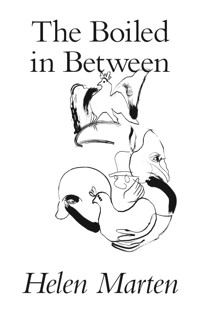
The Boiled in Between is the debut novel by Turner Prize-winning artist Helen Marten, a bold and daring work of fiction which transposes the poetic sensibility of Marten's visual work to the page. It is a challenging, playful, enigmatic, tactile and deliberately ambiguous work of great inventiveness, which will establish Marten as an exceptional talent and unique voice in contemporary fiction. The novel began as an attempt to map the structure and stories of a house; within its tilted, sensuous, alchemical world, characters navigate strange, meticulously indexed landscapes – real and conceptual – to question language and definition and illuminate the associative movements of our minds. Spliced between three voices, the narrative is a project always in movement. The characters traverse these in-betweens: the hot-blooded living world; the curious disembodiment of the imagination; and the rampant snipping away at time in a progression morbidly (and comically) ever closer to death.
Sie lesen das E-Book in den Legimi-Apps auf:
Seitenzahl: 339
Veröffentlichungsjahr: 2020
Das E-Book (TTS) können Sie hören im Abo „Legimi Premium” in Legimi-Apps auf:
Ähnliche




















( )
Helen Marten (1985, Macclesfield) is an artist based in London. She studied at the Ruskin School of Fine Art, University of Oxford, and Central St. Martins, London. In recent years she has presented solo exhibitions at the Serpentine Gallery, London; Fridericianum, Kassel; CCS Bard, Hessel Museum, New York; Kunsthalle Zürich and Palais de Tokyo, Paris, among others. She was included in the 55th and 56th International Venice Biennales and in 2016 won both the Turner Prize and the inaugural Hepworth Prize for Sculpture. Marten’s work can be found in public collections including Tate Collection, London; Guggenheim Museum, New York and The Museum of Modern Art, New York. She has forthcoming solo exhibitions at Castello di Rivoli, Turin and Kunsthaus Bregenz. Marten’s artwork is collected in three recent monographs and she works with Sadie Coles HQ, London, Greene Naftali, NYC, and König Galerie, Berlin.
The Boiled in Between
Helen Marten
In loving memory of MAK, for all the birds and the ducks
and
for Frances, may your world be always open
The Boiled in Between
When the fog casts a shadow, one puts on a coat.
Lyn Hejinian
In the dark times will there also be singing?
Yes, there will also be singing.
About the dark times.
Bertolt Brecht
Nothing helps scenery like ham and eggs.
Mark Twain
MESSRS.EXTERNAL & INTRODUCTORY
Traffic
MESSRS.EXTERNAL & EARTHLY
The Somebody Logo
MESSRS.EXTERNAL & BODILY
House and heart
MESSRS.EXTERNAL & MANLY
Ethan, for a man
ETHAN
New tenements
MESSRS.EXTERNAL & CRUMBLY
Cellophane
PATRICE
The Age of Obsession
Full of face
MESSRS.EXTERNAL & MELANCHOLY
Birthday
ETHAN
A pair so famous
A godless herding
Canals
Old soup
Oats
MESSRS.EXTERNAL & STILL
Milky way
ETHAN
This Tudor trifle
P.S.
PATRICE
Darkling
MESSRS.EXTERNAL & SLEEPY
Coffee all coffee
PATRICE
Hortulan Greenth
MESSRS.EXTERNAL & FALLING
Ducks, electric
MESSRS.EXTERNAL & HOMELY
1,094 bones
PATRICE
Margarine
Bowl and box (storage)
Must your hot itch
MESSRS.EXTERNAL & WEARY
Rainbows
ETHAN
An occult alphabet
Farmyard pH
MESSRS.EXTERNAL & GRASSY
Spirit levels
PATRICE
Divining the dog
MESSRS.EXTERNAL & ANIMAL
Café calling
PATRICE
Time
MESSRS.EXTERNAL & WOODY
Glue
PATRICE
Cherries, newly
MESSRS.EXTERNAL & HEAVING
Dust
ETHAN
Specific antibodies
MESSRS.EXTERNAL & SULTRY
In a fool’s coat
PATRICE
Table of excluded dishes
ETHAN
A kneaded clod
Monster
Terms in crumpling
Natural sweets
MESSRS.EXTERNAL & SUNNY
Open sky situation
PATRICE
Little mushroom
ETHAN
Maltworm
Heavy metal
Cardinal directions
MESSRS.EXTERNAL & COUNTING
To grasp a fish
ETHAN
No fixed address
MESSRS.EXTERNAL & YELLOW
Two flowers
PATRICE
Busy (future perfect, feminine)
ETHAN
Boon (future perfect, masculine)
Sousing the nappy
MESSRS.EXTERNAL & COMMUNITY
Invent the underworld
MESSRS.EXTERNAL & BLUE
Shorts, early
ETHAN
Th Dyssy
Science (old magic)
PATRICE
Happiness
Great is wickedness
On more wizened dismantling tools
MESSRS.EXTERNAL & PEATY
Rotten earth
ETHAN
A tobacco zone
MESSRS.EXTERNAL & SORRY
Witch grass
ETHAN
Ichnos frog
PATRICE
Jogging to the sister library
MESSRS.EXTERNAL & WATERY
Sailing alone
ETHAN
Chopped hands
MESSRS.EXTERNAL & STRICKEN
Memorandum
PATRICE
Luxury
Dead Badger
MESSRS.EXTERNAL & WEALTHY
Always Christmas
ETHAN
Browned off
Delicates
Customs and declarations
MESSRS.EXTERNAL & BREEZY
Old wind
PATRICE
Hot shells
Lobster, a season in red
ETHAN
A wretched macaroni
MESSRS.EXTERNAL & DARKENING
Fishing
MESSRS.EXTERNAL & SALTED, OPTIMIST & OILS
Out
PATRICE
Big sky
ETHAN
The farewell head
PATRICE
Home
PROLOGUE
MESSRS.
All the broken windows and propped doors are where we left them. The snapped twigs pointing the way back are where we left them. It smells of cooking and non-poisonous paint. Legs inert, legs wide apart, legs striding. It’s all there inside the head. Calmly floating on shadows. We comment, not complain. You could speak about the colours where we left them too, but perhaps that wouldn’t reflect a commitment to the truth.
ETHAN
I offer this brain to you like shedding orange peel.
It comes to you soft in the shape of a face and says here, welcome, have my skin, my looks, my point of view.
It has the oblique body of a paragraph slanting down on the page.
It has committed feet, with momentum, like a half moon hell-bent on getting full.
On getting off.
PATRICE
The absolute honest truth frightens me. There are misguided souls who find its essence in a bowl of washed spring greens, with nuts and olive oil licked about. But when that dish is knocked by flies, made erratic, buzzed and opened up to wind, the simple circumstance of it changes. Brusque access of feeling, too, might seize you and there is often some confusion, some fraudulence. There are peanuts thrown in wild disorder.
MESSRS.
We are like a plastic hawk dangling from an olive tree, our movements tracing a shape to inform fullness, swaying through the blaze of sun. The olive tree, grey and stoic with observation, is always there. And when in those glorious new days we are not the hawk – neither body nor air, but a silent streaming of temperature – we can see it all from a dissolving point of view. There is no code or sin, but translation.
This is the grand scramble, the boiled in between.
Some day edibles will run slim and the fat holding us all together will sizzle off or flatten out dried as paper. When we reach that point, even a bit of poison proves useful as glue. A malignant strain at least provides direction.
Who will care about the facts and faces then? When bodies are just bulbous costumes with cobbled information. When proper pronouns and their coordinates blink out leaks.
What use is all that when the action is striking out, keeping going where we don’t usually care to look?
MESSRS.EXTERNAL & INTRODUCTORY
Traffic
It is sometimes said that tears are shed over disappearance. It is sometimes said that the maximum figure of domestic entanglement, without reduction, is two. Human solicitation sometimes means an unzipping of one face and the absorption of another, of many different smiles piled on, glued over with specks of unspeakable matter. This is the threadbare business of men and women and babies. All their animals, the plants, the packaging, milky linen and a stomach filled with mulch.
One might lie awake until morning, left fist balled against the wall, thumping out sheep or the minutes remaining to lever the right fist out of fury and into a hat or jacket, into an appearance of readiness. Sometimes there is an uncovered head, bald, or perhaps an umbrella, broken. Sometimes there is rain and its wetted roads. There is something in the very poise of a hand, its clipped nails and signals sent flying off under the sky that speaks of the grammatical problem of having a body. The birds arrange themselves on telephone wires; they spell it out; they are writing a play. There are people in the world who appear not as primary objects, but as incidental specks or spots on objects.† They too are writing a play.
We all have our audiences, our front row voices ready to whisper us into an unspeakable afternoon. The neighbours lend an ear, extend opinions, but never a hand. We love and murder at the same decibel. And together we scream or softly pace out the words that end in mortgage or divorce, in a nice bracelet or a quick trouser-down fumble under the stairs. We sit in our cars with the radio too low, holding our poor tails between sore legs until a shadow blows across the road and enough time has passed to feel new. To feel tenderly indifferent. We send a lasso out onto the air and feel the dead souls catching in its loop. We torment ourselves with all their commentary that gurgles and raves beyond our curtains. We twitch and lose our lip gloss. Voices leak. We invent them, footnote and file away. We get hot and strong and fall over our shoes with laces long undone. We’re on the verge of ruin!, we say to each other and it feels nice to speak. Let us have the moon and some steady flower to plant in our buttonhole, a rich rosebud stuffed in a jar and pickled to sludge next to biscuits and dog food! Let us have porcelain and paracetamol! Let us slam our heads first into each other and then against a wall! Let us be body and building, for both have a heart and a spine! We are floor plans and footprints, little rats and private jokers.We run around in twos and fours, singles seeking girls and boys and a birthday in between.
We accept the situation. We don’t like any politics. We shatter religion and family. We are the squashed beetles still breathing on the bottom of a shoe. We are smelly beige and full of beer. We are hair-spray, atomised, chemical, vanilla.
All those organic habits of the house are inscribed in us at organ depth. All our feet on the ground are just more examples of vehicles moving in sunlight – a diagram of function. The little empty attic of a brain, stocked with lumber and broken furniture. The kitchen with its earthquakes and fires. The bottom of yet another heart with all its accidents pushed back and forth, a large pendulum in aluminium foil. We remember the thousand little acts that took us to present day, the chopped onions and tears that ran down. It is impossible to find a permanent view. Nobody eats until they starve to death. Until they roll over and die or do a dance, kiss a lover quietly – the most solemn things a life can do.
Clothes look like weather and weather like a sheet to wrap closely about. Do we know what expires in daylight? What privileges of modern living or names carved into trees heal up and mean nothing in vast silence, without even the wild birds whose old seasons are a new delusion? The puddles of deserted gardens are left alone to swoon with their soggy reeds. We do not understand the technicalities of life, so instead we get comfortable with the thresholds, with the buildings where we can camp down and behave with national manners. A body in a bin bag, after all, is a figure in a landscape. We spread butter on our bread or eat an apple and it is the first apple, the first bread, the first butter. There is something in the quality of stillness, in the sadness of beauty giving in to the sensation of being that turns everything into a prototype.
We Messrs. are always here. Our grips and turns, our fingers, our lips over body parts we barely dare to poke a finger into. We are always here and never here. We are a fiction. When we raise our hands or our voices, we launch a little banner. We are something like a cluster study of half a dozen surfaces pressed together, not against glass, but the general transparency of day, of a routine Monday way of looking at things, a Thursday way or a Sunday. We are several minds. We are male languages and female languages. We will look to the man and call him. We will look to the woman and call her the same. We are the breath, the stutters that fill it. We are dog languages carrying rhythm like water. We are built languages with glimmers of structure and a little trouble finding our way to the front door. We will concentrate on essentials: how is your health? Your happiness? Your heart rate? We will find a shape in the chaos. We are here and there. The voice of tepid regret. The punctuation of accident. Wheat germ and same day dry-cleaning. It is our job. Our function to talk above all. Not a mockery, but a patience. Hands that rake over shoulders or open wide to absorb the impact of myth. We will tell you that you are a little brave, a little determined, a little sloppy and wet around the edges. We will watch you fuck and cradle your head in our arms. We will tell you that you’ll chase a serpent map to its cursive end. We won’t say stop. There are long years of scraping liaisons together, normal and expensive, pushing and scraping, sad or unusual tasks, always scraping, performed simply to declare I miss you.
Don’t take for granted that characters here make their meals or meanings with regularity. It occurs to us that we, personally, have told you nothing. That our merciless proceedings show neither a future nor a past. We offer ourselves like a rope to hang onto. A flag, hoisted to signal the acts. We tell of Ethan and Patrice, the major chambers of their lot. We are not shamed by the power of love and its atoms that cling gathered about. We have no business affairs invested, no supposedly damaged heart. We are collective and all at once nobody at all. We say man or woman and mean not husband or wife but everything in between. We shall settle our voice on the veranda. We shall settle oddly, obstinate, above it all.
MESSRS.EXTERNAL & EARTHLY
The Somebody Logo
We cannot remember much of our origins. Namely only a jumble of things, of objects past: hands emptying jars with an economy of movement, touching indulgences in drawers, avoiding the drunkard papers slow with small print, the dapple-bellied plates all old jam and crumbs, whole chicken in one pot, coarse hairs and the pleasure of self-love beneath the covers. We had a knack for the resuscitative energies of matter. How the bloated belly of the cathode TV on one mother’s counter quite merrily matched the lens of another covetous eye and its dilation over bright squares of clothing on the neighbour’s line. Things not to be assessed by their own causality for our feelings are indigenous to place.
There are so many things we want to tell. But perhaps we have forgotten. How to conjugate the verbs to describe varicose veins and the dull defective clunk of bedsores or bunions. We’ve forgotten or never knew the celestial essence of industrial psychology, and why the hot sweet gush of milk before bed does something thick and rich to our bodies’ proteins to make us sleep well. And isn’t that nice, because out there with the counted sheep and the zzz’s it’s possible to breathe into one another, to feel unfixed and light not dead with heavy kidneys and a flooded heart.
There is one way to start – with the furniture – worth noting the degree of polish, the certain grade of skill in turns around the legs. Or start by flinging out a voice, by sticking your fingers in the sockets, bumping into walls as someone falls down the stairs just trying to orient up from down. Wet shoes. Somewhere thereabouts lie all the beginnings that happen and end, cryptic and forlorn, blowing about in the lawless territory between fact and fiction.
There’s always one set of hands – or many – fiddling with laces only to come up holding weeds that scorch a rash across the palms. Just tying shoes to move along. And often, because it’s rained in this country as it always does, there’s a sudden consciousness of having feet, having wetfeet on wet sod that mutually weep beneath us. Having feet being a symptom of self that gets you back to basics. Gets you moving again.
Learn to deal with it, families used to say. There’ll be much turning, they said, and how was anyone to fathom what was meant by that? Were we complicit or affected? To nod our heads endlessly with theirs, those nods constructed upon the very absence of affirmation and us moving our thick skulls up and down only to avoid words or keep warm or busy? Was it to be that kind of turning?
We knew that weaving through the rocky diagram of living, above oozing noodles of worms and tree roots, under blown glass skies, just looking for where you came from, was only one part of the bitter progress. But we didn’t know the complications. That the where you came from and the where you belong might change with every limping day. All the moves in the world, forward and back, seemed told in a poor broken semaphore performed half from memory and the rest signed out with only mildly burning twigs so the general rhythm of instruction was first confused then ultimately collapsed. We lost our category.
Remember the wise maternal function of family? The good and bad objects, the nurses and lovers, the crumbs and morsels, pools and positions of speech and support? People are simply a collection of individuals shaken and salted, sometimes strapped uncomfortably together. Everyone performs their dynamic process of labour: they judge and are judged. The audience has always been a point of reference against which theatre defines itself.
Some folk might tilt their chins and say there are no stones in the sky, so no stones can fall from the sky! We disagree. Each infant arriving in this world makes its entrance in a rush of wind. The child breaks things and then things break the child. Sometimes wind arrives like a rodent thought and knocks you hard about the head, shatters an alphabet of new feeling inside your skull. Cars accelerate, bones are broken, soda belched and blown away. Stick your tongue out in a thin haze of rain and you taste the ash of the city, its fried fish, its petrol, its joints rolled up and spat hot in burning greens back out into the air. This is the circulation of circulation itself. A breathing set of people and their places. Some wind singles you out. From the first flicker of a leaf you know it points directly at you. It says your name and spoils poetry with reason and conjecture. When you are touched by wind, by the forces that bend the trees and scatter dirt hard and fast against windows, this is communication. We tend to underestimate the power of wind. We are something of all these flickers: not individual listeners in any front row or figures red faced on a stage, but rather the soft mist of expectancy that settles slowly about the ears and refuses not to be heard.
We are the Messrs. The instruments of psychic observation. We are not the moral function of behaviour, neither analyst nor pulse. We are spectator, servant and clown. We are animal, vegetable, mineral. Our flight takes us everywhere. We are interested. We see broken men and women, and cast the spaces in between. We found these two, Ethan and Patrice, and bedded down to watch them squeal.
There is Ethan. The King of beers and chicken fingers. His beard is desiccated, meaning passions take weeks to grow through secrets and skin. There is Patrice. The Queen of hearts and ripping them out. Her fingers are cut and have bled down into the soil. They eat at the table of what they have left unfinished. They are amazed individuals in skirts and shorts, rolling their shoes over curb stones, gravel in their soles. Their thoughts are of bed and warm socks, not the absurd dirt of other people. The abstracts of other people. They are bodies in need of chemically better living. They don’t reveal their focus is money, they tell you they’re after happiness. They are silhouettes to follow and unfold. They are full of blood, which alongside other people always acts thick like a thief. It understands itself as a molecule amidst structure. It is hands in the kitchen, peat on the riverbank. It is rubber on the asphalt and any number of cosmologies under the nail. It sets down its load in the veins of cats and the boxes of storage centres. If the critics are staggered with definition, spare a thought for the people. The awkward and virginal people, when it comes to facts.
So show us a house, we’ll draw you mustard nags panting.
Show us a barn, we’ll tell you a myth.
Show us a tent, we’ll assess the erotics of its pitch.
We Messrs., after all, are busy setting a tilt.
MESSRS.EXTERNAL & BODILY
House and heart
What happens here goes on for some time. Has gone on for some time. Trees used to grow with wood so hard it lined the walls of all the capable buildings in town. Sometimes the sky is so black it looks cleaner than anything could ever be. Now it’s rather sheep and puddles and stomachs never in need of a laxative push.
The allotments are cracked and studded with broken buckets. Space is marked and people do their best, but somewhere somebody made a false prophecy for the land that is roasted by degrees of heat and sun, washed up in weather and nobody tames it. We’re all out measuring weather’s weight, factoring the pulse of weeds against the waft of rooms that stink of pancakes, steak and orange juice.
Today it is mud. If it were flooded with water, you might row around in a wide loop with little ducks everywhere because we love them. Instead some leaves shuffle by with indecision, others suck up the breeze, scooting past the plastic rims, licking their rounds before bedding down to nestle, stuck in wet straw. That is the bottle’s play of plastic light, how it flits like a tiny disc in all the hollow things, like a clock or a memoir or the moon.
Prudence plays a small role in the conduct of this place – there is grass that seems able to converse with everything – with the rabbles of dogs and rabbit hutches, with the new trains and their slick blitz, the older ones all mechanical clang in the air’s draft – puffed out – and further across the earth just a big sleepy ventilation. This one is a landscape sold on the merits of all the other landscapes, on the nice horizontal sketches of museums and the peculiar power of invented lives that look very much like our own.
The animals know more, we think. They happen upon their information in the manner of the barn with its sure cocks and happy roosters. They know the remedy for this mental trick is buried in another trick, the joke of substance in absentia. He tells us so: one bird with his squawk, yellow beak sideways, no blinks, mocking the other birds for even thinking about landing. Whole suburbs are founded on these gestures of claiming territory. On claiming inconvenience.
In the year when there was snow all over and only the beakers and a few stalks cracked a path through the whiteness, people brought their horses here and pounded their pubics around on brown leather saddles. There was no dust to settle in, no ridges of mutual support for the overlooked physics of dirt. It was wet and white and a little green, like salt or coriander.
People lost their keys from pockets and the losers would scrabble around, fingers frozen, realising they could no longer justify their margins of existence, their fragile positions of simply being a breathing vessel on this giant blue planet. The creases and stains of other people roughed up the land. A time of frozen plenty. Feet shod dirt on carpets. Worms fattened, buried deep till summer. And with all the necessary authority of it coming, weather went off again, falling right off the edge of the Earth’s sinking bowl. Rarely did anyone stop to note even a finger or a foot, and if we did, we were not factoring in the occurrence of the shared skin and creases, the truth that all this same stuff covered each of us, stopped us leaking out, held us soft and terrible like fragile enamel.
Like a single sick giggle, everything was doomed with early disillusionment. What happened was whole cycles of people feeling murderous about one another. What happened was pale bodies full of cheap wine. What happened was cultural shoes snapped at the heel, men and women run ragged whipping their heads and exposing teeth and hair to the sky for breaking. Most people in their small houses got through each day simply by hating their neighbours. Days clocked up and it was hard to tell if we were charmed by time or the weather.
It was a season of communal malaise. Of narrative struggle. People looked how the seasick look at maps and dream of land. How the hungry see a wrapper, a skeleton fish and trace the edges of their own bones with a slow finger feeling morose and giddy-eyed.
Many people in towns grew fat, whilst those in the country stayed thin in apology to nature, their bodies a solemn alignment of the dignities of careful growth, clever promises made to make the trees carry on with buds and fuzz and lichen. In the town there were idle feet, often centigrades rocketing to one impossibility or another. It was slums and edifices, murky sky and gin palaces; it was idle land, fresh air, bright sunshine and no public spirit. Infidelity kept them warm and cold. Couples split and rearranged, with mouth-first landings somewhere moist and unusual. There was always somebody half naked, congested in their cubbyhole homes like so many shrews and voles and mice.
In the country they’d never fell a tree and make an axe handle. They were reverent and slow-fingered. In the towns, they stuffed anything that would burn into their fireplaces and carried on breathing the rotten air. The table was laid and they were divorced in time for tea. They didn’t look after their bones and would do anything to escape the house. People paid each other to keep at a distance, living out their own gloomy ironies of feeling connected via transaction. They humped their sofas and each other, mislead in their conception that heat meant empathy and therefore intimacy. When fingers got stuck in bottles and limbs stood grey-clothed in empty bathtubs they wondered whether this was the plunge of great erotic feeling, of unparalleled velocity.
We acquire our own versions of happiness. We pick them up at the chemist. We will meet the daughter of a pharmacist, a magician, the unwitting farmers, the florist, dusty curates, all of them touched by the blow of a fortune teller. Which body belongs to the future mother? Which tousled hot head to the boy with the battered bottom? The big hands and squeezed hearts belong to the busted marriage pair, their molars hanging out unhinged, their intestines blocked with impotent sludge, spud skin and unzipped flies. Once the sore of domestic morbidity cracks, it tends to spread at speed.
There is a house in the distance. A few all around. It’s big like a town. Some buildings with their backs ripped off send staircases sloping right out into air. They’re covered over with boards and belts of warning orange, but people go in and out, their decisions predicated, naturally, on conditions of weather. We stay put and look up at the trees and the blocks of buildings overlapping them, taking little time to calculate the degrees of calibration offered by either god or architect. There is no looking at the corners with their nice bricks or cornicing, thinking how neatly one inorganic block folds into the bright breast of natural things. No. Not that. We drink coffee and gallop from building roof to tree canopy, barely noting the difference between slate or leaf.
From where we can see it now, the view is stretched out. If we lie on our side or close one eye the view feels heavy, looser on the edges. We can angle our own choice perspective. What should feel like pollution feels rather like a suggestive hanging on, as though all these silhouettes of everything and nothing that float on by in layers could be caught and dragged back into a shapely form. We could pull time from the top or bottom and should choose a landscape suitable to our condition.
The sun whips the railway into little shards. The smell of hot tracks, their groan in the heat. We watch the train lines black and unmoving and make chromatic rhymes with the mashed-up flies and spiders of autumn, black too but talcumed now in the dust. We could imagine ourselves packaged aboard those trains, finally chopping the scene to bits in escape, seeing anew something ravishing, some palomino horses in a field or cement in factories with their piles scooped and troubled like concentric hairdos. Those troubles not designed to trouble us, or not yet anyway.
Anachronistic heavens, we all stood under them. The HaHa house stands too in rubble like some murderer in ruins. We called it that when the two top windows fell out and in absence of a door or in fact any certain relationship to soil or sky it sagged downwards in a crudely propped guffaw. Each step around the house had a different hue of desperation. And each brick, with all its acid brothers and acid sisters of mortar and their uniquely aggregated pity, had its own melody.
Golden Gingko used to blossom all around. Grass bent as it shouldn’t, snapping off in the wind. Grass turned to hay, sweet straws, battered-blown across the land. Only recently some amicable nobody folded plastics over the windows, coarse ridge-sewn plastics – banners for breathing – and now all the condensation hangs in the bottom edges with weed decks thudding and daily unravelling threads so you can’t pick window from wall.
They used to be touched by light, the windows; not broken by it, but opened up, polished. The house was named a wonder with its hyacinths, sloping grounds and happy rush of folks about. Not a burglar’s dozen like now with the copper wrenched out and carried away for cash. Something of structure had made an invisible leap out the window with those burglars, its own soiled body visible for just a moment as water had lurched out where the copper was sawn and the radiators rang themselves cold against the wall in alarm.
We wondered whether the house mourned for a repossession of indoor and outdoor space, or yins and yangs and all the half-hidden parts that no longer got their shapes to rhyme together. That rather just rested in a foggy doze.
In times of rain and wind, the house accommodated for mood by flinging tiles off its roof, a cascade of roofs, onto the ground, the roof garden. The physics of the roof with its mimicry of the physics of breasts was always on a slow downwards fall. In summer – a hoppy brew – it stank of ferns; the only yeast of subversion. The little place sat there in weather taking its whacks.
We have been watching for some time. May we be forgiven. We Messrs. with eyes all over. When we took a jug with both hands and scooped its heavy bottom up to pour, the weather flowed out of it. We looked at the water in our glass, observed the specks and their impossible swirl and knew answers lay in an observation of closeness that sometimes meant staring at nothing much at all.
MESSRS.EXTERNAL & MANLY
Ethan, for a man
He has a face that is splintered, Ethan, like the oak he lays in houses that will never belong to him. If this is about glue, we should speak of glue. Of glue. He has it often under the nail, on his fingers, trails also on the small metal pins that suck and jangle air into his canvas pockets. The glue stays for so long, a whole building disappeared into a body. It is a false map those fingers of his, first blueprint, quickly bitten off, mouth erased, chiselled away sometimes with the ring pull of a Coke can. When he sees squirrels by the curb, laid out geometrically, blown open like skirts or bogged down in a porridge of blood, he remembers the privilege of living and feels sad for the wounds on his hands.
He had a wife once. Her fine body with its small hips that pulled fabric close around her bones and pressed, almost painfully hard against his thighs, her frightening stillness at the moments when he came, rattling fast and strange. Those blue panties were little puddles to fall right into. To jiggle his feet as some people twist their hair was a move towards alleviating anxiety in ever-smaller increments. Her small chest veined green and blue, hitched up and down, cupped by a hand that would never do it any good. He’d study one part of his headache, realising he could not relocate the pressure but rather reassert the existence of entropy in his noisy little life. They’d lie together and watch for birds. Watch for the particular bird, orange feathered, limbs stalking all bossy. Could have been a cantaloupe on a fork. In that landscape misty with dust, with the white woolly smoke of planes and the brown woolly smoke of birds, all of them shadow evidence of the great velocity of real outside space.
She was Flora. Flora Dorothy Lily Patrice. A long and struggling vine. That she was named after a collective taxonomy for which she had no patience enraged her. She was poor with grasses or lavenders. She hated green. Her friends called her F, a friendly mitigation. But she felt more like a T, arms out at either side of her elongated frame, no breasts, no bumps, just a serif hardness. She was a stable line when she chose it.
He had known her first as Dorothy. Passed her before the checkouts with his canned beans and her plastic apron flashing slick with fish guts. The hairnet pushed back on her crown like a mandarin’s hat. He didn’t even know what you’d do with octopus. With those rubbery arms, suckers gasping on the blue. The fish always flopped back and stared. I could pop your eyeballs with a pin,he would think. Their bladders and their hearts. And he’d feel something clasp in his spine, feel how the air sticks to everything, just like that as he’d raise his fist up through space to scrape at his hair.
He made visits daily. You’re going to be a famous poet, he’d repeat to himself before stepping into the cool sludge of the supermarket. But when he’d reach the fish counter where she’d be, only grunts would come out. As though a hole had been made in his throat. Him grown in a city drainpipe, his words tangled tapioca. He’d buy his fish, looking for a cheap trim, skimming coins across the counter. Her anchored and upright like all small fine things to the Earth. The two of them lengths of comparable feeling. Flora Dorothy Lily Patrice. Such height in names. Stacked tall. The two of them warped figures reflected in the chewing-gum bubble at the neck of the toad, bulging, not bursting. That stupid ceramic frog sitting there on brushed steel with its taped-on tip card in downward curves: thank you for caring, your coins count. He’d drop a penny into its mouth, not look at her as red flamed about his collar. The stress of structure was heavy over them both. Swimming rather than walking. Even the journey home would mean growing older, more tired. He’d put his bag of fish in the freezer and wash his feet right there on the carpet, thinking about her flat boy’s body, imagining laying it out over a great basin filled with ice and water, covering it all with his mouth and a white sheet.
And that was it, how it came to be that he valorised shampoo, validated conditioner above a life lived freely. One to cleanse and one to cream. Him a gentle boy with hair in his soap, with worries at night that hurt his stomach. The crowning mirage of all those supermarket visits, all those petty plastics scooped in and out of transaction just to make contact. Shouldn’t he be laying floors and laying women and spreading out children in beautiful family allegories? That was the anthropological view and what is love and where anyway,he would surmise, not expecting the universe to answer but hoping for a peremptory twitch to at least reset his compass. His index of secret postures didn’t include her at all. It wouldn’t be awful to be thrown out of bed. It wouldn’t be awful to roll on his knees in the soil, to follow temptation down the corridor and right out the door.
Dorothy became Dot to him. A shortened affirmation of property, precise and graphic. Clean. Whoever you are, out there, looking, washing, folding the laundry, your name begins with X or Y, maybe something other. So many letter-functions it takes a practised tongue to roll through it. Dot to Dot. Hair puffed like a mushroom, a ripe meadow mushroom.A black spot. You are the world’s rarest mineral in a storm, he would tell her, tell himself, as he clicked a photograph. Her silhouetted in their garden, graded against the sun, limbs more spent than the peach tree whose roots beckoned to nothing but knotted earth burst apart with boredom.
Some things fitted well into his landscape. He’d have a few dirty thoughts aroused just by handling the butter on the table. Pink fingered dawns and pubic hair spiked in knowing that everything in this very present world curves back to the pleasures of the apple, the sins, too. Remembering her face and blending it into another, feeling the plunge of a cheekbone settled into the wide vinegar hollow by his hips. Always hips, those aching contours, pulling pleasure out of your coat like lovers.
What came for them wasn’t plague, which would have been easier. On cold brilliant days when the geese honked overhead, he knew they mocked him. Rained laughter right down at him with their goose vowels and grammar dropped somewhere across the Atlantic. Make a wish,they seemed to say: We are waiting, We are waiting, We are waiting. It became Fuck you. So much to rattle him. He could simply fall off the edge of the Earth in defeat. The endless barking dogs that might tear his whole face off, the dogs whose bones he might break and kick to seizure. He is not fatalistic but one day those dogs will eat his birds and he will shoot them dead. Even the senseless chicken shit in the yard rings him into rage, all those natural things that intimidate the city, and the fury only intensified as he yanks at his jeans, rubs himself raw and spits his face away in the soapy mirror. That third dimension only adding to the clunk of inner emptiness.
ETHAN
New tenements
Where do the people go? This I have often thought on a busy street, myself hunched to nil, limp dick pulled out, trickling an emergency down a broken wall. So much traffic and feet, then suddenly fewer and none. As though I was once the owner of one complete thought, it ready to share, but know nothing more now than how close the smell of my hair and penis feels in this blowing weather. The state of my teeth and wardrobe goes little way in the manner of reassurance. Even near the lurid tinge of a car park littered with pink plastic bags and fag ends. Even near the mechanical payoff, the plastic glitter of a shopping centre, I feel myself not quite invited.
I have moved often. Towards the closing out of nature with its costly drainage, palatial edifices and well-lit streets. Towards an abundance of water with its need for reform, fresh-air-low-rents and lack of amusement. Towards bright homes and gardens with their flow of capital and no sweating. These are my three magnets: town, country and town-country.




