


4,64 €
Mehr erfahren.
- Herausgeber: Thunderchild Publishing
- Kategorie: Gesellschafts- und Liebesromane
- Sprache: Englisch
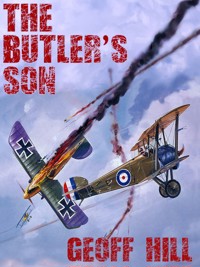
Eighteen-year-old Max Edwards, the self-educated son of a butler, lives on a grand Irish country estate. He dreams of a better life and unexpectedly finds love with the owner's new Japanese bride, but class differences make their love impossible.
World War I erupts, and Max faces the nightmarish Battle of the Somme. Wounded in combat, he meets a commander who transfers him to the Royal Flying Corps to be a pilot. In the air, he fights the famous Red Baron and befriends a German flying ace. But the deadly skies may be Max's undoing. His best friend Bentley is his only comfort as he undergoes a trial by fire.
Can Max survive the war, navigate his complicated friendship with the enemy, and win his true love?
Das E-Book können Sie in Legimi-Apps oder einer beliebigen App lesen, die das folgende Format unterstützen:
Seitenzahl: 242
Veröffentlichungsjahr: 2024
Ähnliche




















Table of Contents
THE BUTLER’S SON
COPYRIGHT INFORMATION
CHAPTER ONE
CHAPTER TWO
CHAPTER THREE
CHAPTER FOUR
CHAPTER FIVE
CHAPTER SIX
CHAPTER SEVEN
CHAPTER EIGHT
CHAPTER NINE
CHAPTER TEN
CHAPTER ELEVEN
CHAPTER TWELVE
CHAPTER THIRTEEN
CHAPTER FOURTEEN
CHAPTER FIFTEEN
CHAPTER SIXTEEN
CHAPTER SEVENTEEN
CHAPTER EIGHTEEN
CHAPTER NINETEEN
CHAPTER TWENTY
CHAPTER TWENTY-ONE
CHAPTER TWENTY-TWO
CHAPTER TWENTY-THREE
CHAPTER TWENTY-FOUR
EPILOGUE
APPENDIX I
APPENDIX II
THE BUTLER’S SON
Geoff Hill
COPYRIGHT INFORMATION
Copyright © 2016 by Geoff Hill
All rights reserved
Edited by Dan Thompson
A Thunderchild eBook
Published by Thunderchild Publishing.
First Thunderchild eBook Edition: September 2016.
This is a work of fiction. All of the characters, organizations,and events portrayed in this novel are either productsof the author’s imagination or are used fictitiously.
CHAPTER ONE
July, 1914. Termon estate, County Tyrone
Max Edwards was eighteen when he saw the woman he loved, and the man he wanted to kill.
He was walking along the path down to the lake with Fido when he rounded the ancient oak and came face to face with Major Martin, the owner of Termon.
“Back from Japan, sir?” said Max.
“Evidently,” said the Major, taking the cigar from his mouth. “Worst year of my life, although it had its…rewards.” He looked at the woman beside him.
“Kumiko, this is young Max, the butler’s son. Max, this is Kumiko, my wife.”
She was tiny, and slender as a reed, with a face like a slightly amused elf, but the most remarkable thing about her was the colour of her eyes: a flickering, iridescent green the colour of rainwashed meadows in spring.
“Good evening, Max,” she bowed.
Max bowed back.
“Konbanwa, Kumiko-san,” he said.
Her eyes widened, then smiled.
“Don’t be surprised,” said the Major. “He’s read every book in the library.”
They walked on, and Max watched them go; the Major in his uniform and Sam Browne belt, bearing his moustache before him and trailing an air of cigar smoke and superiority behind.
And Kumiko, seeming to float beside him in a lilac kimono with a burnt orange sash.
“Gosh, Fido,” said Max.
“Arf,” said Fido, who as a collie always had to have the last word.
Max watched them disappear out of sight along the woodland walk to the back of the big house, then looked back at the lake, with its ragged island and the setting sun beyond.
Then he walked past the sawmill and the hay barn, emerged opposite the door to the walled garden, and turned left past the outhouses, through the archway into the big yard.
Through another archway, he turned left again, opened the door and climbed the stone steps to the rooms above the coach house where he lived with his parents.
In the living room, he found his mother stirring a pot of Irish stew on the range, and hugged her, drinking in her smell of warm hay and salad cream.
“Hello, son. Cup of tea? Your father should be home soon after he’s finished serving dinner,” she said, wiping her hands on her apron and rescuing a stray strand of hair which had fallen over her forehead.
Max sat down to read a two day-old Belfast Telegraph, which made its way from the big house via Mrs Rapier the cook to his father and hence to him, and had just got to the sports pages when he heard the scullery door slamming, and looked out of the tall sash window to see the familiar sight of his father striding across the yard whistling, a copy of not only the previous day’s Telegraph, but the weekly Tyrone Constitution tucked under the arm of his black three-piece suit.
“That stew smells good, Maria. As always,” said Robert, kissing her on the cheek then loosening his tie and settling into the armchair with the Con.
“I met the young Madam by the lake with the Major earlier, father,” said Max.
“Yes, she’s very striking, isn’t she? Quite a lovely person. It seems she was his interpreter when he was in Japan. An orphan, by all accounts,” said his father.
“She must be only twenty. Far too young to be married,” said his mother.
“Ha! You’re one to talk,” smiled his father.
“She is a poppet, though. Her hair’s like blackberries at midnight,” said Maria.
“What a lovely expression, Maria,” said Robert. “You should have been a poet.”
“Too busy making stew, sadly,” said Maria.
“Shall we continue the game after dinner, father?” said Max.
“Why not? Where were we?”
“You were just about to lose your queen, in which case there would be little point in continuing.”
“Very funny. I remember the days when I used to beat you.”
The next morning, Max went for a long walk down the Glen with Fido, then back past the Druid’s Stone, a strange triangular construction of giant slabs of granite, and found Mrs Rapier in the kitchen bending over a steaming pot of tomato and basil soup.
“Max, you wouldn’t be a dear and get me a bag of flour from McGarrity’s?” she said.
“Of course, Cook,” said Max, lifting the lid on another pot and finding her famous Oxford marmalade bubbling away.
“Want to try these and tell me what you think?” said Cook.
“Love to,” said Max, getting two spoons from the cutlery drawer.
“Soup’s yum, and marmalade’s double yum,” he said after.
“Spot on,” said Cook.
Max washed and dried the spoons, then crossed the small yard, collected his knapsack from his bedroom, and went to get his bicycle from the room beside the stables in the big yard.
“You going up to Carrickmore, Max?” said Willie Magee the farrier. “Any chance of a bag of hoof nails from Rafferty’s?”
“And a gross of six-inches?” said Alan Kilpatrick the carpenter from the top of a ladder where he was fixing a joist.
“Flipping heck. I’ll be charging my usual delivery fee, of course,” said Max.
“Naturally. Bugger all from me, and bugger all squared from Alan,” said Willy Magee.
Max laughed, then cycled out of the big yard and took the back lane, past the door into the walled garden in which Willy Magee the gardener and young Willy Magee the gardener’s son had been busy for days picking gooseberries, strawberries and raspberries.
He leaned the bicycle against the wall and found them in the hothouse, drinking tea. The air was rich and dank with the smell of growth.
“Going up to Carrickmore, Max?” said young Willy.
“Aye. Need anything?”
“Don’t think so. Dad?”
“Don’t think so,” said his father.
“Glad to hear it. I don’t think my knapsack could have taken much more.”
“Want some gooseberries for Seamus McGarrity?”
“Aye, can do.”
Young Willy got up, wrapped a handful in a muslin bag, and handed them over.
Max cycled on, past the back gate lodge then onto the main road past his old one-room primary school and up the curving hill into Carrickmore.
Rather than get the flour at McGarrity’s then have to cycle up the hill to Rafferty’s with it, he went to Rafferty’s first, opening the door and stepping into the cavernous gloom which seemed to stretch back for ever, with shelves crammed with hardware on the right, everything from hams to bicycles hanging from the roof, and on the left a polished wooden counter behind which were stacked clothes, shoes and boots, all of it lit by skylights from which four columns of dusty light shafted down.
“Ah, young Master Edwards,” said Pat Rafferty, emerging from a door behind the counter. “What’ll it be?”
“A gross of six-inch nails and a bag of hoofs, please, Mr Rafferty,” said Max. “On the Termon account.”
At McGarrity’s, the bell above the door tinged, and Seamus emerged from the back as Max stepped past the bags of spuds and turnips on the stone floor.
“Bag of flour for Cook, please, Mr McGarrity,” said Max. “On account.”
“Grand job,” said Seamus, and measured the flour out from a hessian sack behind the counter, then looked back at the rows of glass sweetie jars behind him. “Like a handful of clove rock?”
“I’ll take some brandy balls for father, thank you very much,” said Max. “Oh, and here’s some gooseberries from young Willy Magee. You’d be a fool to refuse them.”
Seamus laughed.
“Yes, very funny. Too clever for my own good, you are.”
Just for variety, Max cycled home by the front lane, past the gate lodge and the Water Meadow.
In the Devil’s Wood, so called because it was supposed to be haunted, the wind whispered in the trees and the rooks cawed, as they always did. It was the sound of Termon.
Passing the Devil’s Wood was all right in the day, but there were times when Max found himself cycling or walking just that little bit faster past it at night, then laughing at his foolishness.
As he cycled through the archway into the big yard, John Jameson the blacksmith was ringing the bell above the coach house for the workers to come in from the fields for their midday meal, and after Max had delivered his messages, he walked back out to where they were washing their faces and hands in the stream they called the Runner, or using the drop toilet in a little outhouse built over it downstream.
In the long stone room by the archway into the big yard, John’s wife Margaret had already lit the open fireplace and swung a large black pot filled with potatoes over it.
The men sat themselves on wooden benches down each side of the room, and Margaret ladled the spuds onto used copies of the Con and the Telegraph on the floor in front of them, to be eaten in their hands, with salt and butter.
The pot was replaced by a kettle just as black and the tea was made. They lit their pipes, took a mug of sweet and milky tea, threw the leavings into the remains of the fire and returned to the fields.
Max watched them go, then went home to find his mother making vegetable soup.
“That smells delicious, mother. Would you like some meat to go with it?” said Max.
“That would be lovely, son. Will it be fresh?”
He laughed, and picked up his father’s .22 rifle from where it leaned against the china cupboard.
“It’ll still be twitching. Rabbit or pigeon?”
The next morning, he brought his mother in a cup of tea at half past six to find her still in bed, which wasn’t like her.
“Are you all right, mother?”
“I’ll be up in a minute, dear, but I seem to have come down with a bit of flu. Cold and shivery and aching all over.”
“Do you want me to light the fires in the big house, Maria?” said Robert. “I can get up now and do it before I serve breakfast.”
“I’ll do it, father. You stay in bed and keep mother warm,” said Max.
“Bless you, son,” said his mother.
“Thank you, Max,” said his father.
Max walked down the stone steps, then across the small yard and into the scullery and pantry, then through the kitchen and up seven stone steps into the dining room, which was dominated by a large William IV table, with a sideboard along one wall for serving dishes.
The fireplace was at the far end, flanked by two bell cords to summon the servants, and with a slightly gloomy portrait of the Rev Charles Cobbe Beresford, who had built Termon as his rectory in 1815 before it was bought by the Martins after the disestablishment of the Irish Church.
“Cheer up, chum. It may never happen,” said Max, setting to work with paper and kindling.
Around him, the great house was still, and the only sound was the fizz and crack as the damp logs caught.
When it was blazing, he went through to the drawing room, with its hand-painted floral wallpaper which by all accounts had been there since the house was built.
Along one wall was a row of glass and mahogany cabinets, various sofas and armchairs were dotted around the room and beside the French windows looking out at the great oak tree in the middle of the lawn sat a Steinway & Sons grand piano, although Max could never remember hearing it played.
Above it was a painting of the Major’s mother, a society beauty from Totnes who had died hours after giving birth to her only son.
He left the fire crackling nicely, then walked down the hall past the gun rack with its row of rifles, shotguns and ancient blunderbusses, then a collection of African spears and clubs which Major Martin’s father had brought back from the Boer War not long before he too died, of malaria contracted in Komatipoort.
Next on the right was the library, Max’s favourite room in the house, with a round table in the centre, comfortable club armchairs on either side of the fireplace and a little ante-room off it which was the Major’s office. He lit the fire, then stood and looked at the books lining every wall.
“All life is here,” he said, then went to one shelf, pulled out the Major’s copy of A Japanese-English Reader, and memorised a few more phrases, as he did every morning.
“Anata wa watashitoisshoni ocha o toru nodeshou ka?” he said, several times over.
“Thank heavens it’s atonal. Mandarin would be a bit of a pickle,” he said, then put it back and picked out a copy of the poems of John Donne.
He was reading The Good-Morrow when a sound from upstairs indicated that the house was stirring.
He closed the book, put it back, and returned the way he had come.
A week later, he was forking manure into the rose beds with young Willy Magee the gardener’s son on a scorching afternoon when he suddenly straightened.
“Is that the piano in the drawing room?” he said.
Willy stood, stretched his back and cocked an ear.
“Aye, it is. Dad said the Major’s mother used to play it, but it hasn’t been touched since.”
Max stuck his fork in the manure pile and walked to the open French windows, listened for a few moments, then bent his head to look in.
Kumiko was sitting at the piano wearing an indigo kimono with a primrose yellow sash, and she stopped playing and looked up.
“Oh. Sorry, madam. I do apologise,” said Max, suddenly aware that he was wearing an ancient pair of twill trousers and a frayed shirt with the sleeves rolled up.
“That is all right, Max. Were you enjoying it?” she said with a ghost of a smile.
“It was … enchanting. It’s just that there is never music in the house. What was it?”
“Grieg,” said Kumiko, and went back to playing.
Max stood there listening, then sighed, bowed his head and walked slowly back to forking manure.
CHAPTER TWO
July 31, 1914
The annual Termon fete was in full swing, with a marquee set up on the edge of the lawn.
On one side, Max’s father, out of his black suit for once and with his sleeves rolled up, was dispensing beer, home-made lemonade and ginger beer.
On the other, Cook was in her element behind a long table covered in white linen, on which a vast array of plates were piled high with cold roast beef, cold boiled beef, ribs of lamb, shoulders of lamb, roast fowls, roast ducks, a ham, a tongue, veal and ham pies, pigeon pies, Scotch eggs, boned and sliced chickens and capons, English cheeses, butter wrapped in lettuce leaves to keep it sweet and cool, fruit cake, Violet’s fudge and strawberries and cream for afters, if anyone had any room left after that.
As always, Archie Close, the local eccentric from Drum Manor near Cookstown, where he lived in a state of chaos, had arrived in a jaunting car in full Highland dress and proceeded to march around the lawn playing his bagpipes until John Jameson had picked him up and carried him off, still playing, to laughter and applause.
“Not much point being on the other team than John, is there?” said young Willy Magee afterwards as they looked at the giant figure of Jameson wrap the rope around his waist as the tug of war anchor.
“Not really,” said Max, and so it proved.
“Oh well,” said Willy. “At least I won the cricket ball throwing contest.”
“And the Major didn’t take the broken greenhouse pane out of your pay,” said Max, as John’s son Adam came up.
“Willy, Dad says time for another Punch and Judy show,” he said. “And bags I be Punch this time.”
At the end of each table, a simple, beautiful flower display by Kumiko stood in a vase, and after the Punch and Judy, she gave a puppet show to the children of the estate.
It told the story of Kichiza, a page boy, and his sweetheart Oshichi, whose love finally overcomes their parents’ attempts to marry them off to someone else.
The children sat around her, enthralled, and they were not alone, until Max’s father called for him to bring out some more ginger beer.
He took one last look, then walked to the house.
That evening, the major and minor gentry of Tyrone toiled up the front and back lanes, most in jaunting cars or in a pair of charabancs the Major had organised in Omagh, although Briggs the solicitor made great play of arriving in a new Model T Ford. Then almost tripped and went head over heels getting out of it.
Violet tittered, and earned a rare stern look from Max’s father, now back in his usual three-piece black suit.
The furniture in the drawing room had been pushed back against the walls, and as the string quartet played Mozart and the great and the good waltzed behind him, Max stood in front of the French windows and looked out at the children of the estate draped over the great oak in the middle of the lawn like ragged baubles, looking in at a world which was forever denied to them.
Standing between both worlds and uncertain which one he belonged in, he waved, and they all waved back, then laughed as little Annie Jameson, John and Margaret’s daughter, waved so hard that she fell from the bottom branch.
She jumped up, none the worse for wear, and gave him her best smile.
“Heavens, quite the guest list for dinner tonight,” said Max’s father the following morning, looking at the sheet of paper in his hand. “Churchill, First Lord of the Admiralty, no less, our friends Carson and Craig fresh from saving us all from the horrors of Home Rule, and Trenchard.”
“Wasn’t Trenchard here before?” said Max’s mother.
“Yes, five or six years ago. He was with the Royal Scots in Derry. He’s high up in the Royal Flying Corps now, I think.”
“Don’t let Craig hear you calling it Derry, Robert,” said Max’s mother, and he laughed and squeezed her arm.
“All that UVF nonsense. And now war only days away. If only men realised we’re all human beings, the world would be a better place.”
“Or if the world was run by women,” said Robert.
“Are you turning into a suffragette, mother?” said Max.
“Absolutely. I’d chain myself to this range, if I thought you two would notice the difference.”
“Don’t worry, mother. At least Fido loves you,” said Max.
“Fido loves everyone. Hand me your plate.”
Max walked into the kitchen to hear a strange rumble echoing down the corridor from the dining room.
“What on earth is that?” he said.
“Trenchard,” said his father. “No wonder they call him Boom. Hard to believe he lost a lung fighting the Boers. Lord help the foundations if he still had both.”
“Where’s Madam?” said Max.
“I don’t know what she’s doing,” said Mrs Rapier, the cook. “She asked me to get all sorts of strange things down from Omagh, and she’s been in the pantry all day.”
Max and his father carried the wines through to the drawing room and found the guests already merry on gin and tonics, except for Trenchard, who had just asked for water.
Carson looked stolid, imposing and intelligent, and Craig looked as if he had been born angry, with a face that had apparently been carved with a blunt hatchet.
Trenchard, with his deep eyes, knowing and humorous, and bushy brows and moustache, was somewhat like an earnest spaniel, and Churchill, with his heavy jowls and lips, and wide-set eyes under thinning swept back hair, had the air of a disappointed goldfish.
Kumiko sat among them, like a lily in a gun rack.
“You can bring through the starters now, boy,” said the Major. “Apparently Kumiko has a surprise for us.”
Kumiko had arranged the delicacies on simple white plates, and as Max removed the linen covers and looked at them, he felt the strangest sensation of peace settling on his soul.
“I say,” said his father. “How very pretty.”
They picked up the two plates carefully, carried them through to the dining room, and set them down on the dining table.
“What’s this muck?” said the Major.
“It is sushi, sir,” said Kumiko, stiffening.
“Looks like raw fish and food for rabbits to me. Edwards, is there some mulligatawny left over from last night?”
“Gallons, sir,” said Max’s father.
“Have it heated. Then bring me some real food. And get rid of this.”
Standing across the table from Kumiko, Max saw the brief look of shock and shame that ghosted across her face before she lowered her head.
“I am so sorry, sir. I shall remove it immediately,” she said.
“What’s on the menu?” said Trenchard.
“Spiced beef. Been marinating in saltpetre for weeks. Vegetables boiled to buggery. Apple crumble, then Stilton. It’s been sitting in the pantry since the Boer War, so it’s crawling by now. Just the way I like it.”
“Didn’t you eat this stuff when you were in Japan?” said Carson as Max picked up the sushi plates.
“Good God, no,” said the Major. “We had a bloody good officers’ mess there. And a bloody good wine cellar. No reason to go native. Max, forget that. Kumiko will do it. Tell Cook to get the soup heated sharpish.”
“Isn’t it a bit off to call the servants by their first names?” said Churchill.
“I don’t make a habit of it,” said the Major. “It’s just to distinguish him from his father.”
“Oh well. Can’t be helped. At least he doesn’t sound like a Catholic. I assume you don’t employ them?” said Craig.
“Can’t be helped around these parts, I’m afraid,” said the Major.
“Shame. Absolute vermin. Breed like rabbits. Wouldn’t have one about the place myself.”
“That’s a bit harsh, Craig,” said Carson.
“Perhaps. I’ve nothing against them personally, but as a whole they’re naturally subversive. If we let them, they’ll undo everything we stand for.”
“As long as you don’t employ homosexuals,” said Carson. “The memory of even being in the same courtroom as that mincing pansy Wilde still makes my skin crawl.”
“Didn’t you know him at Trinity?” said Churchill.
“Vaguely,” said Carson.
“Not to mention lesbians. Our late Queen didn’t even believe such a thing was possible,” said Trenchard, making the glass on the table tinkle.
“Lesbians, homosexuals and Fenians. God preserve us from them all,” said Craig.
“Lesbians are homosexuals, sir. The word comes from the Greek for the same, not the Latin for men,” said Max before his brain could tell his mouth to stay shut.
“I beg your pardon?” said Craig.
“I said I think it’s going to rain later, sir,” said Max.
“Don’t be smart, boy. Remember your place,” said the Major. “Now get that bloody soup organised. Pronto.”
“Yes, sir,” said Max, and left for the kitchen before he got into any more trouble.
“He’s a bit of an upstart for a butler’s son,” said Craig. “If he worked for me I’d have him thrashed for such impertinence.”
“Too smart for his own good. Read every book in the library. Complete waste, since he’s just going to be a butler for the rest of his life,” said the Major.
“Shame he can’t go to grammar school and make something of himself,” said Churchill.
“His father did ask me, but I’m afraid if I paid for every bright boy on the estate to get an education, there’d be nobody left to run the estate. No, a butler’s son he is, and a butler he will be. Another splash?” said the Major.
“Don’t mind if I do. This is excellent,” said Churchill.
“Yes, it is quite,” said the Major, glancing at the bottle. Châteauneuf-du-Pape. He turned it so that the label faced away from Craig.
“Will you be going to France with the Expeditionary Force, Trenchard?”
“Afraid not. I’ve been passed over in favour of Henderson and Sykes. Kitchener wants me to stay at home and prepare new squadrons.”
“Lucky you. As for me, I’m all at sea,” said Churchill, to laughter.
“It is only weeks away? War, I mean,” said Craig.
“Days, I fear,” said Churchill, and took another sip.
“Well, we have 100,000 good men who signed a solemn league and covenant to fight for God and Ulster, and are now willing to fight for King and Country,” said Craig. “All we lack is artillery.”
“Artillery’s easy,” said the Major. “Aim, fire, adjust, repeat.”
“You know,” said Carson, “if you had asked me a month ago what I saw in the future, I would have said bitter fighting and rivers of blood in the hills and dales of Ulster. But now I fear it will be in the rolling meadows of France and Belgium.”
He looked into the fire.
“Quite ironic, though, that the Nationalists may get their united Ireland after all.”
“Oh? How so?” said Craig.
“United against the Hun, rather than us, I mean,” said Carson.
They were silent, apart from the crackling of the logs in the grate.
“Did you say apple crumble for pudding?” said Churchill.
“Yes. With custard,” said the Major.
In the kitchen, Max set down his sushi plate and turned to find Kumiko entering silently with the other one.
“I am so sorry you were embarrassed, Madam,” he said.
“You are very kind, Max-san, but it was my own stupid fault,” she said, setting her plate down.
“It looks so exquisite. What a waste to throw it out. May I…taste it?”
“Yes, of course. But you should use chopsticks. One moment.”
She went to a drawer, took out a roll of silk, and unwrapped it to reveal two ivory chopsticks.
“Now. Like this.”
She handed them to him, and their fingers brushed.
“Exquisite, Madam,” he said, unsure at that moment whether he meant the infinite delicacy of the food, the touch of her fingers so fleeting it was hardly there at all, or both. “Better than heaven.”
“Oh? How so?” she said, amused.
“Because I do not have to die to love it,” said Max.
Later, in the pantry, he was clearing up when Cook popped her head around the door with a steaming mug in her hand.
“Max, be a dear and take this up to Nurse. She’s feeling a bit poorly, and I thought some hot milk and nutmeg might settle her stomach,” she said.
“Nurse is always feeling poorly. Ironic, if you think about it,” said Max, taking the mug.
He made his way up the stairs and was walking quietly past the master bedroom when he heard the crash of breaking glass, then the Major shouting.
“It would work properly if you didn’t just lie there, damn you! You’ll just do have to do that other thing.”
There was the sound of a smack, then sobbing. Max tiptoed on, and on the top floor tapped Nurse’s door, then took a deep breath and walked in.
She was lying in bed with a copy of Hard Times, surrounded by her dozen cats. Max tried not to gag.
“Cook sent this up. Do you want me to open the window and let some air in?” he said.
“Don’t be ridiculous. Fresh air’s bad for you. Set it down, there’s a good boy. Frederick, stop that and use the po under the bed.”
Max closed the door, took several deep breaths, then took the back stairs down.
The next day, the Major had organised a shooting party on the moors, and Max was loading for Trenchard, although he may as well not have bothered, since in half an hour, Trenchard had managed only to down one grouse and wing another.
At their feet, Fido sat waiting expectantly, the single kill in a hessian bag beside him.
“Keep your head down, chum, before anyone realises you’re neither a pointer nor a setter,” whispered Max. Fido looked up with that pained and knowing look he had.
“Oh, for Christ’s sake,” said Trenchard, as two more birds sailed blithely on. “Knew I shouldn’t have had that Bushmills after dinner last night.”
“Mind if I have a go, sir?” said Max.
“What? Well, it’s…highly irregular, but you may as well. Can’t do any worse than me,” said Trenchard, handing over his Purdey.
“What a beautiful gun,” said Max, caressing the walnut stock.




