



0,49 €
Niedrigster Preis in 30 Tagen: 1,99 €
Niedrigster Preis in 30 Tagen: 1,99 €
Mehr erfahren.
- Herausgeber: DigiCat
- Kategorie: Geisteswissenschaft
- Sprache: Englisch
The Collected Works of Edward Bellamy presents a comprehensive anthology of the author's influential writings, encapsulating his visionary ideas on social reform and utopianism. Notably recognized for his seminal work, "Looking Backward," Bellamy crafts a narrative that blends social criticism with speculative fiction, set in a future where economic disparities are eradicated through a cooperative society. His literary style is characterized by a blend of idealism and practicality, employing a clear, engaging prose that makes profound philosophical concepts accessible. This collection not only features his most significant works but also includes essays and speeches that elaborate on his views regarding capitalism, social justice, and the potential for a harmonious future society, situating him within the context of late 19th-century American progressivism. Edward Bellamy (1850-1898) was an American author and social activist whose life experiences deeply informed his writing. Witnessing the tumultuous economic landscape of his time and the struggles of the working class, Bellamy became a passionate advocate for social reform. His background as a student of philosophy and economics influenced his vision, allowing him to articulate a compelling critique of capitalism and the inequalities it fostered, ultimately contributing to the emergence of the nationalist movement. For readers inclined towards social philosophy, speculative fiction, and utopian literature, The Collected Works of Edward Bellamy serves as an essential resource. It not only showcases Bellamy's profound foresight but also invites reflection on contemporary social issues. By delving into this collection, readers engage with enduring questions about justice, equality, and the future of society, making it a relevant and thought-provoking choice for a modern audience. In this enriched edition, we have carefully created added value for your reading experience: - A comprehensive Introduction outlines these selected works' unifying features, themes, or stylistic evolutions. - A Historical Context section situates the works in their broader era—social currents, cultural trends, and key events that underpin their creation. - A concise Synopsis (Selection) offers an accessible overview of the included texts, helping readers navigate plotlines and main ideas without revealing critical twists. - A unified Analysis examines recurring motifs and stylistic hallmarks across the collection, tying the stories together while spotlighting the different work's strengths. - Reflection questions inspire deeper contemplation of the author's overarching message, inviting readers to draw connections among different texts and relate them to modern contexts. - Lastly, our hand‐picked Memorable Quotes distill pivotal lines and turning points, serving as touchstones for the collection's central themes.
Das E-Book können Sie in Legimi-Apps oder einer beliebigen App lesen, die das folgende Format unterstützen:
Veröffentlichungsjahr: 2022
Ähnliche











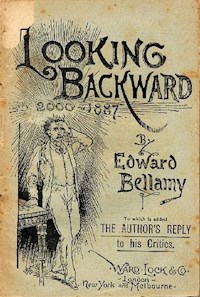








The Collected Works of Edward Bellamy
Table of Contents
Introduction
This collection offers a comprehensive view of Edward Bellamy’s fiction, assembling five novels—Looking Backward: 2000–1887, Equality, Dr. Heidenhoff’s Process, Miss Ludington’s Sister, and The Duke of Stockbridge—alongside a representative selection of short stories. Its purpose is to present the range and coherence of Bellamy’s imaginative project, from speculative reconstruction of society to intimate studies of memory and conscience. Arranged to reflect the breadth of his concerns, the volume invites readers to encounter a writer whose narratives bridged reformist inquiry and narrative pleasure, speaking from the pressures of the late nineteenth century to questions that continue to animate public life.
Bellamy wrote in multiple modes, and the texts gathered here reflect that generic variety. The novels traverse utopian speculation, historical romance, and psychological fiction, while the shorter works range from social satire and domestic vignette to adventure, regional sketch, and what we now call science fiction. Readers will encounter future visions, courtroom and parlor scenes, rural New England settings, and journeys westward. Without attempting a documentary apparatus, the collection foregrounds narrative art: parable-like structures, dream frames, and closely observed dialogues that carry moral argument by way of story, showing Bellamy’s preference for accessible form joined to analytical purpose.
At the center of Bellamy’s reputation stand Looking Backward: 2000–1887 and its sequel, Equality. The first begins when a nineteenth‑century Bostonian falls asleep and awakens in a reorganized future Boston, whose institutions become the occasion for a sustained comparison with his own era. The sequel broadens and clarifies the earlier vision, turning narrative into an extended inquiry into work, distribution, education, and civic life. These books reached a vast audience and stirred vigorous debate about industrialization and democracy, making Bellamy a touchstone in American utopian literature and a participant in the era’s conversations about reform and citizenship.
Other novels here pursue personal transformation and the metaphysics of memory. Dr. Heidenhoff’s Process imagines a medical method aimed at relieving the burden of guilt and regret, using a speculative device to ask what moral renewal might entail. Miss Ludington’s Sister turns to the persistence of ideal love and the alluring, unsettling power of the past, filtering contemporary spiritual and psychological preoccupations through a romantic narrative. Together they show Bellamy’s interest in how belief, emotion, and technology intersect, and how characters negotiate the weight of former selves while seeking ethical clarity in a changing, sensation-saturated modern world.
The Duke of Stockbridge presents Bellamy’s venture into historical fiction, dramatizing tensions surrounding Shays’ Rebellion in post‑Revolutionary Massachusetts. The novel places farmers, officials, veterans, and creditors within a community strained by debt and taxation, tracing the moral and civic stakes of a fledgling republic. In treating contested loyalties and economic distress, Bellamy links the aftermath of independence to the ongoing dilemmas he elsewhere projects into the future: fairness in the distribution of burdens, the legitimacy of authority, and the claims of common welfare. The result is a panoramic study of social conflict rendered with sympathy and restraint.
The short stories gathered here display Bellamy’s versatility and wit. Speculative pieces such as The Blindman’s World, With The Eyes Shut, and To Whom This May Come explore communication, perception, and the social implications of new habits and devices. Others, including An Echo of Antietam, At Pinney’s Ranch, and The Old Folks’ Party, turn to memory, community, and the testing of character. Lighter tales like Hooking Watermelons or Two Days’ Solitary Imprisonment reveal a playful moralist attentive to everyday foibles. Across modes, the stories test ideas in miniature, favoring lucid plotting and humane humor over mere contrivance.
However various their settings, Bellamy’s writings share a signature blend of clarity, moral earnestness, and speculative reach. He prefers plain style and intelligible architecture, arranging debates inside scenes and folding analysis into incident, often by way of dreams, lectures, and framed recollections. The abiding themes—cooperation, equity, the educability of desire, the dignity of common life—give the work a coherence visible across novel and story alike. Read together, these pieces illuminate an author who made narrative a vehicle for public reasoning, and who remains pertinent wherever readers question how technology, labor, and shared institutions might serve human flourishing.
Historical Context
Edward Bellamy wrote amid the American Gilded Age, when industrial output and urban populations surged between the Civil War and the 1890s. Railroads knit markets; trusts in steel, oil, and finance concentrated wealth, while mechanization compressed wages and deskilled labor. Boston and nearby Springfield, Massachusetts—Bellamy’s home region—displayed stark contrasts of Back Bay affluence and immigrant tenements. This landscape informed the collectivist future imagined in Looking Backward (1888) and the systematic elaboration in Equality (1897), where centralized planning, universal service, and guaranteed livelihood answer contemporary anxieties about monopolies, insecurity, and class antagonism that many readers recognized in their daily experience.
Labor conflict framed Bellamy’s horizon. The Great Railroad Strike of 1877 paralyzed interstate commerce; the Haymarket bombing of 1886 in Chicago intensified debate over anarchism, unionism, and police repression; and the Pullman Strike of 1894 dramatized federal intervention on behalf of capital. Rising organizations like the Knights of Labor and craft unions pressed for the eight-hour day. Bellamy’s proposals for an “industrial army” reflect both the appeal of disciplined national coordination and fears of chaotic strikes. His historical novel The Duke of Stockbridge, set during Shays’ Rebellion (1786–1787), echoes themes of debtor revolt and the legitimacy of mass protest across American generations.
Looking Backward quickly became a sensation, reportedly selling hundreds of thousands of copies by 1890 and spawning Nationalist Clubs beginning in Boston in 1888, which advocated the public ownership of industry. The movement drew reformers, ministers, and professionals, while critics such as William Graham Sumner and E. L. Godkin condemned Bellamy’s statism and denial of competitive incentives. In Britain, William Morris’s News from Nowhere (1890) offered an artisanal counter-utopia. This contentious reception shaped Equality, which sharpened arguments about democratic administration, women’s roles, and distribution, showing Bellamy’s close engagement with practical objections raised by economists, socialists, and liberal editors.
New England’s culture and memory saturate Bellamy’s fiction. Born in Chicopee Falls, Massachusetts, he wrote against a backdrop of Congregational churches, town-meeting politics, and the literary prestige of nearby Boston. Local-color sketches and small-town episodes in stories like The Old Folks’ Party or Hooking Watermelons reflect regional humor and moral codes under pressure from commercialization. The Civil War’s lingering presence—veterans’ organizations, commemorations, and battlefield tourism in the 1880s—shapes An Echo of Antietam, which probes reconciliation and trauma. Such pieces ground the grand schemes of his utopias in familiar Yankee settings, linking national debates to everyday New England life.
Contemporary currents in science and psychology also left marks. After Charles Darwin and Herbert Spencer popularized evolutionary thinking, Americans debated heredity, environment, and progress. Simultaneously, mesmerism, hypnotism, and “mind cure” movements—including New Thought and, separately, Christian Science—made claims about willpower and healing. William James’s Principles of Psychology (1890) signaled a new academic framework. Dr. Heidenhoff’s Process explores the ethical allure and peril of medically erasing shame, while Miss Ludington’s Sister dramatizes identity, memory, and spiritualist yearnings. These works reveal Bellamy’s fascination with modern therapies and metaphysics, and with the moral responsibilities that would accompany any technical power over consciousness.
Technological modernity furnished Bellamy both material and metaphor. The telephone (patented 1876), electric lighting (commercialized in the 1880s), urban streetcars, and mail-order catalogues reconfigured time and consumption. In Looking Backward, music and news are distributed by wire, shopping is coordinated centrally, and citizens use a national credit to allocate demand—ideas extrapolated from contemporary utilities and department-store logistics. Short pieces like With the Eyes Shut satirize accelerated reading and mechanized information. Across fiction, transportation grids and communications networks become templates for equitable coordination, suggesting that the same infrastructures enabling monopolies might also enable democratic planning if wrested from private control.
Religious and ethical reform currents gave Bellamy a distinct moral vocabulary. The Social Gospel—preached by figures like Washington Gladden in the 1880s—linked Christianity to labor justice, municipal reform, and cooperative ethics. Henry George’s single-tax agitation after Progress and Poverty (1879) broadened public appetite for structural critiques of land and monopoly. Meanwhile, federal regulation tentatively advanced through the Interstate Commerce Act (1887) and Sherman Antitrust Act (1890). Bellamy’s works translate these debates into narrative form, framing social organization as a question of stewardship rather than charity, and portraying citizenship as service—a synthesis that resonated with clergy, teachers, and civic reformers.
Bellamy’s turn to the past in The Duke of Stockbridge—recounting Shays’ Rebellion in western Massachusetts—illuminates how republican ideals can fray under debt crises, courthouse closures, and class mistrust. The short stories’ excursions to ranches and frontier edges, as in At Pinney’s Ranch, register the nation’s postbellum westward mobility and the diffusion of market norms into remote places. Immigration, urban crowding, and gender roles shift across the pages without didactic repetition. Bellamy died in 1898, as the Progressive Era gathered. His corpus offered a bridge from Gilded Age discontent to twentieth-century arguments about planning, welfare, and the equitable uses of technology.
Synopsis (Selection)
Utopian Novels: Looking Backward and Equality
A Boston man awakens in a coordinated commonwealth and tours a future where centralized industry, guaranteed livelihood, and civic culture reorder daily life with serene efficiency. The companion novel broadens the blueprint to law, gender, and labor, using debates and institutional sketches to press a moral argument for economic democracy in a calm, didactic tone.
Together they model Bellamy’s signature expository world-building—dialogue as social pedagogy, optimism tempered by critique—and frame reform as a practical architecture rather than a mere ideal. Recurring concerns include class reconciliation, the ethics of distribution, and the belief that design can cultivate solidarity.
Metaphysical and Identity Romances: Dr. Heidenhoff's Process; Miss Ludington's Sister
These short novels probe memory, guilt, and the self through sentimental plots tinged with speculative devices, from a doctor’s attempt to erase suffering to a love story haunted by idealized youth. The tone blends earnestness and the uncanny, using romantic dilemmas to ask whether personal renewal depends on forgetting or faithfully transforming the past.
They showcase Bellamy’s early interest in psychological reform as a prelude to social reform, staging moral experiments at intimate scale. Themes of identity, conscience, and the peril of perfectibility foreshadow the programmatic clarity of his later utopian design.
Historical Novel: The Duke of Stockbridge
Set amid agrarian unrest in post-Revolutionary Massachusetts, this narrative follows common people drawn into conflict over debt, law, and representation. The tone is panoramic yet humane, portraying civic struggle as a test of community bonds and democratic spirit.
It emphasizes material pressures and local loyalties over heroic myth, reading history as a ledger of cause and consequence. Bellamy uses plainspoken realism to trace how institutions shape ordinary lives.
Speculative and Utopian Tales (Short Stories): The Blindman's World; With The Eyes Shut; To Whom This May Come
These tales imagine altered modes of perception and communication—from otherworldly intellects to telepathic societies—to reassess privacy, truth, and social trust. Their reflective, gently ironic tone turns speculative premises into ethical thought experiments rather than spectacles.
Bellamy uses future vision and mind-to-mind contact to test how sympathy might be systematized. Recurring motifs include determinism versus human agency and the hope that improved understanding can reform custom and law.
War and Frontier Sketches (Short Stories): An Echo of Antietam; At Pinney's Ranch
One story listens for the long aftershocks of battle in memory and character, while the other stages frontier pressures where hospitality, risk, and quick judgment meet. The tone mixes restraint with flashes of humor, attentive to ordinary bravery and accident.
Together they frame national types and testing moments without grandiosity. Themes include the shaping force of circumstance and the fragile etiquette that keeps danger at bay.
Social Justice and Civic Satire (Short Stories): Two Days' Solitary Imprisonment; The Old Folks' Party
A brief stint in confinement exposes the pettiness and harm of routine punishment, narrated with reformist clarity. A social reversal lampoons age prejudice and ritualized conformity by letting custom reveal its own absurdities.
The tone is lucid and wry, treating institutions as fixable designs rather than fate. Bellamy argues that dignity depends on structures that presume goodwill instead of suspicion.
Domestic Sentiment and Comic Vignettes (Short Stories): The Cold Snap; Hooking Watermelons; A Love Story Reversed; Deserted; Lost
These pieces turn small crises and mischief—weather, youthful pranks, missed connections—into moral miniatures about neighborliness and the stories we tell ourselves. Formal play, as in a courtship told backward, sharpens the insight without cruelty.
The tone ranges from cozy to wistful, favoring humane judgment over melodrama. Themes include community obligation, the texture of memory, and the gentle comedy of everyday error.
Satire of Science, Commerce, and Cure-Alls (Short Stories): A Positive Romance; Potts's Painless Cure; A Summer Evening's Dream
Courtship by calculation, miracle remedies, and dream-visions lampoon the era’s faith in quick fixes and marketable miracles. Bellamy’s playful skepticism exposes how jargon and hype mask moral shortcuts.
The tone is spry and corrective, preferring common sense to grand claims. Across these tales, he weighs progress against credulity and asks whether improvement can be bought or must be built.
Recurring Motifs and Style
Bellamy’s signature moves include expository dialogue, gently satirical inversions, and speculative frames that treat institutions as designs open to revision. His prose favors clarity over flash, aiming to persuade as much as to entertain.
Across the arc from intimate romances to full utopias, the focus shifts from personal conscience to systemic arrangement without abandoning sympathy. Recurrent images of coordinated work, transparent communication, and memory’s burden tie the collection together.
The Collected Works of Edward Bellamy
Novels
Looking Backward: 2000–1887
Edward Bellamy
Table of Contents
Author’s Preface
Historical Section Shawmut College, Boston, December 26, 2000
Living as we do in the closing year of the twentieth century, enjoying the blessings of a social order at once so simple and logical that it seems but the triumph of common sense, it is no doubt difficult for those whose studies have not been largely historical to realize that the present organization of society is, in its completeness, less than a century old. No historical fact is, however, better established than that till nearly the end of the nineteenth century it was the general belief that the ancient industrial system, with all its shocking social consequences, was destined to last, with possibly a little patching, to the end of time. How strange and wellnigh incredible does it seem that so prodigious a moral and material transformation as has taken place since then could have been accomplished in so brief an interval! The readiness with which men accustom themselves, as matters of course, to improvements in their condition, which, when anticipated, seemed to leave nothing more to be desired, could not be more strikingly illustrated. What reflection could be better calculated to moderate the enthusiasm of reformers who count for their reward on the lively gratitude of future ages!
The object of this volume is to assist persons who, while desiring to gain a more definite idea of the social contrasts between the nineteenth and twentieth centuries, are daunted by the formal aspect of the histories which treat the subject. Warned by a teacher’s experience that learning is accounted a weariness to the flesh, the author has sought to alleviate the instructive quality of the book by casting it in the form of a romantic narrative, which he would be glad to fancy not wholly devoid of interest on its own account.
The reader, to whom modern social institutions and their underlying principles are matters of course, may at times find Dr. Leete’s explanations of them rather trite — but it must be remembered that to Dr. Leete’s guest they were not matters of course, and that this book is written for the express purpose of inducing the reader to forget for the nonce that they are so to him. One word more. The almost universal theme of the writers and orators who have celebrated this bimillennial epoch has been the future rather than the past, not the advance that has been made, but the progress that shall be made, ever onward and upward, till the race shall achieve its ineffable destiny. This is well, wholly well, but it seems to me that nowhere can we find more solid ground for daring anticipations of human development during the next one thousand years, than by “Looking Backward” upon the progress of the last one hundred.
That this volume may be so fortunate as to find readers whose interest in the subject shall incline them to overlook the deficiencies of the treatment is the hope in which the author steps aside and leaves Mr. Julian West to speak for himself.
Chapter 1
I first saw the light in the city of Boston in the year 1857. “What!” you say, “eighteen fifty-seven? That is an odd slip. He means nineteen fifty-seven, of course.” I beg pardon, but there is no mistake. It was about four in the afternoon of December the 26th, one day after Christmas, in the year 1857, not 1957, that I first breathed the east wind of Boston, which, I assure the reader, was at that remote period marked by the same penetrating quality characterizing it in the present year of grace, 2000.
These statements seem so absurd on their face, especially when I add that I am a young man apparently of about thirty years of age, that no person can be blamed for refusing to read another word of what promises to be a mere imposition upon his credulity. Nevertheless I earnestly assure the reader that no imposition is intended, and will undertake, if he shall follow me a few pages, to entirely convince him of this. If I may, then, provisionally assume, with the pledge of justifying the assumption, that I know better than the reader when I was born, I will go on with my narrative. As every schoolboy knows, in the latter part of the nineteenth century the civilization of today, or anything like it, did not exist, although the elements which were to develop it were already in ferment. Nothing had, however, occurred to modify the immemorial division of society into the four classes, or nations, as they may be more fitly called, since the differences between them were far greater than those between any nations nowadays, of the rich and the poor, the educated and the ignorant. I myself was rich and also educated, and possessed, therefore, all the elements of happiness enjoyed by the most fortunate in that age. Living in luxury, and occupied only with the pursuit of the pleasures and refinements of life, I derived the means of my support from the labor of others, rendering no sort of service in return. My parents and grand-parents had lived in the same way, and I expected that my descendants, if I had any, would enjoy a like easy existence.
But how could I live without service to the world? you ask. Why should the world have supported in utter idleness one who was able to render service? The answer is that my great-grandfather had accumulated a sum of money on which his descendants had ever since lived. The sum, you will naturally infer, must have been very large not to have been exhausted in supporting three generations in idleness. This, however, was not the fact. The sum had been originally by no means large. It was, in fact, much larger now that three generations had been supported upon it in idleness, than it was at first. This mystery of use without consumption, of warmth without combustion, seems like magic, but was merely an ingenious application of the art now happily lost but carried to great perfection by your ancestors, of shifting the burden of one’s support on the shoulders of others. The man who had accomplished this, and it was the end all sought, was said to live on the income of his investments. To explain at this point how the ancient methods of industry made this possible would delay us too much. I shall only stop now to say that interest on investments was a species of tax in perpetuity upon the product of those engaged in industry which a person possessing or inheriting money was able to levy. It must not be supposed that an arrangement which seems so unnatural and preposterous according to modern notions was never criticized by your ancestors. It had been the effort of lawgivers and prophets from the earliest ages to abolish interest, or at least to limit it to the smallest possible rate. All these efforts had, however, failed, as they necessarily must so long as the ancient social organizations prevailed. At the time of which I write, the latter part of the nineteenth century, governments had generally given up trying to regulate the subject at all.
By way of attempting to give the reader some general impression of the way people lived together in those days, and especially of the relations of the rich and poor to one another, perhaps I cannot do better than to compare society as it then was to a prodigious coach which the masses of humanity were harnessed to and dragged toilsomely along a very hilly and sandy road. The driver was hunger, and permitted no lagging, though the pace was necessarily very slow. Despite the difficulty of drawing the coach at all along so hard a road, the top was covered with passengers who never got down, even at the steepest ascents. These seats on top were very breezy and comfortable. Well up out of the dust, their occupants could enjoy the scenery at their leisure, or critically discuss the merits of the straining team. Naturally such places were in great demand and the competition for them was keen, every one seeking as the first end in life to secure a seat on the coach for himself and to leave it to his child after him. By the rule of the coach a man could leave his seat to whom he wished, but on the other hand there were many accidents by which it might at any time be wholly lost. For all that they were so easy, the seats were very insecure, and at every sudden jolt of the coach persons were slipping out of them and falling to the ground, where they were instantly compelled to take hold of the rope and help to drag the coach on which they had before ridden so pleasantly. It was naturally regarded as a terrible misfortune to lose one’s seat, and the apprehension that this might happen to them or their friends was a constant cloud upon the happiness of those who rode.
But did they think only of themselves? you ask. Was not their very luxury rendered intolerable to them by comparison with the lot of their brothers and sisters in the harness, and the knowledge that their own weight added to their toil? Had they no compassion for fellow beings from whom fortune only distinguished them? Oh, yes; commiseration was frequently expressed by those who rode for those who had to pull the coach, especially when the vehicle came to a bad place in the road, as it was constantly doing, or to a particularly steep hill. At such times, the desperate straining of the team, their agonized leaping and plunging under the pitiless lashing of hunger, the many who fainted at the rope and were trampled in the mire, made a very distressing spectacle, which often called forth highly creditable displays of feeling on the top of the coach. At such times the passengers would call down encouragingly to the toilers of the rope, exhorting them to patience, and holding out hopes of possible compensation in another world for the hardness of their lot, while others contributed to buy salves and liniments for the crippled and injured. It was agreed that it was a great pity that the coach should be so hard to pull, and there was a sense of general relief when the specially bad piece of road was gotten over. This relief was not, indeed, wholly on account of the team, for there was always some danger at these bad places of a general overturn in which all would lose their seats.
It must in truth be admitted that the main effect of the spectacle of the misery of the toilers at the rope was to enhance the passengers’ sense of the value of their seats upon the coach, and to cause them to hold on to them more desperately than before. If the passengers could only have felt assured that neither they nor their friends would ever fall from the top, it is probable that, beyond contributing to the funds for liniments and bandages, they would have troubled themselves extremely little about those who dragged the coach.
I am well aware that this will appear to the men and women of the twentieth century an incredible inhumanity, but there are two facts, both very curious, which partly explain it. In the first place, it was firmly and sincerely believed that there was no other way in which Society could get along, except the many pulled at the rope and the few rode, and not only this, but that no very radical improvement even was possible, either in the harness, the coach, the roadway, or the distribution of the toil. It had always been as it was, and it always would be so. It was a pity, but it could not be helped, and philosophy forbade wasting compassion on what was beyond remedy.
The other fact is yet more curious, consisting in a singular hallucination which those on the top of the coach generally shared, that they were not exactly like their brothers and sisters who pulled at the rope, but of finer clay, in some way belonging to a higher order of beings who might justly expect to be drawn. This seems unaccountable, but, as I once rode on this very coach and shared that very hallucination, I ought to be believed. The strangest thing about the hallucination was that those who had but just climbed up from the ground, before they had outgrown the marks of the rope upon their hands, began to fall under its influence. As for those whose parents and grand-parents before them had been so fortunate as to keep their seats on the top, the conviction they cherished of the essential difference between their sort of humanity and the common article was absolute. The effect of such a delusion in moderating fellow feeling for the sufferings of the mass of men into a distant and philosophical compassion is obvious. To it I refer as the only extenuation I can offer for the indifference which, at the period I write of, marked my own attitude toward the misery of my brothers.
In 1887 I came to my thirtieth year. Although still unmarried, I was engaged to wed Edith Bartlett. She, like myself, rode on the top of the coach. That is to say, not to encumber ourselves further with an illustration which has, I hope, served its purpose of giving the reader some general impression of how we lived then, her family was wealthy. In that age, when money alone commanded all that was agreeable and refined in life, it was enough for a woman to be rich to have suitors; but Edith Bartlett was beautiful and graceful also.
My lady readers, I am aware, will protest at this. “Handsome she might have been,” I hear them saying, “but graceful never, in the costumes which were the fashion at that period, when the head covering was a dizzy structure a foot tall, and the almost incredible extension of the skirt behind by means of artificial contrivances more thoroughly dehumanized the form than any former device of dressmakers. Fancy any one graceful in such a costume!” The point is certainly well taken, and I can only reply that while the ladies of the twentieth century are lovely demonstrations of the effect of appropriate drapery in accenting feminine graces, my recollection of their great-grandmothers enables me to maintain that no deformity of costume can wholly disguise them.
Our marriage only waited on the completion of the house which I was building for our occupancy in one of the most desirable parts of the city, that is to say, a part chiefly inhabited by the rich. For it must be understood that the comparative desirability of different parts of Boston for residence depended then, not on natural features, but on the character of the neighboring population. Each class or nation lived by itself, in quarters of its own. A rich man living among the poor, an educated man among the uneducated, was like one living in isolation among a jealous and alien race. When the house had been begun, its completion by the winter of 1886 had been expected. The spring of the following year found it, however, yet incomplete, and my marriage still a thing of the future. The cause of a delay calculated to be particularly exasperating to an ardent lover was a series of strikes, that is to say, concerted refusals to work on the part of the brick-layers, masons, carpenters, painters, plumbers, and other trades concerned in house building. What the specific causes of these strikes were I do not remember. Strikes had become so common at that period that people had ceased to inquire into their particular grounds. In one department of industry or another, they had been nearly incessant ever since the great business crisis of 1873. In fact it had come to be the exceptional thing to see any class of laborers pursue their avocation steadily for more than a few months at a time.
The reader who observes the dates alluded to will of course recognize in these disturbances of industry the first and incoherent phase of the great movement which ended in the establishment of the modern industrial system with all its social consequences. This is all so plain in the retrospect that a child can understand it, but not being prophets, we of that day had no clear idea what was happening to us. What we did see was that industrially the country was in a very queer way. The relation between the workingman and the employer, between labor and capital, appeared in some unaccountable manner to have become dislocated. The working classes had quite suddenly and very generally become infected with a profound discontent with their condition, and an idea that it could be greatly bettered if they only knew how to go about it. On every side, with one accord, they preferred demands for higher pay, shorter hours, better dwellings, better educational advantages, and a share in the refinements and luxuries of life, demands which it was impossible to see the way to granting unless the world were to become a great deal richer than it then was. Though they knew something of what they wanted, they knew nothing of how to accomplish it, and the eager enthusiasm with which they thronged about any one who seemed likely to give them any light on the subject lent sudden reputation to many would-be leaders, some of whom had little enough light to give. However chimerical the aspirations of the laboring classes might be deemed, the devotion with which they supported one another in the strikes, which were their chief weapon, and the sacrifices which they underwent to carry them out left no doubt of their dead earnestness.
As to the final outcome of the labor troubles, which was the phrase by which the movement I have described was most commonly referred to, the opinions of the people of my class differed according to individual temperament. The sanguine argued very forcibly that it was in the very nature of things impossible that the new hopes of the workingmen could be satisfied, simply because the world had not the wherewithal to satisfy them. It was only because the masses worked very hard and lived on short commons that the race did not starve outright, and no considerable improvement in their condition was possible while the world, as a whole, remained so poor. It was not the capitalists whom the laboring men were contending with, these maintained, but the iron-bound environment of humanity, and it was merely a question of the thickness of their skulls when they would discover the fact and make up their minds to endure what they could not cure.
The less sanguine admitted all this. Of course the workingmen’s aspirations were impossible of fulfillment for natural reasons, but there were grounds to fear that they would not discover this fact until they had made a sad mess of society. They had the votes and the power to do so if they pleased, and their leaders meant they should. Some of these desponding observers went so far as to predict an impending social cataclysm. Humanity, they argued, having climbed to the top round of the ladder of civilization, was about to take a header into chaos, after which it would doubtless pick itself up, turn round, and begin to climb again. Repeated experiences of this sort in historic and prehistoric times possibly accounted for the puzzling bumps on the human cranium. Human history, like all great movements, was cyclical, and returned to the point of beginning. The idea of indefinite progress in a right line was a chimera of the imagination, with no analogue in nature. The parabola of a comet was perhaps a yet better illustration of the career of humanity. Tending upward and sunward from the aphelion of barbarism, the race attained the perihelion of civilization only to plunge downward once more to its nether goal in the regions of chaos.
This, of course, was an extreme opinion, but I remember serious men among my acquaintances who, in discussing the signs of the times, adopted a very similar tone. It was no doubt the common opinion of thoughtful men that society was approaching a critical period which might result in great changes. The labor troubles, their causes, course, and cure, took lead of all other topics in the public prints, and in serious conversation.
The nervous tension of the public mind could not have been more strikingly illustrated than it was by the alarm resulting from the talk of a small band of men who called themselves anarchists, and proposed to terrify the American people into adopting their ideas by threats of violence, as if a mighty nation which had but just put down a rebellion of half its own numbers, in order to maintain its political system, were likely to adopt a new social system out of fear.
As one of the wealthy, with a large stake in the existing order of things, I naturally shared the apprehensions of my class. The particular grievance I had against the working classes at the time of which I write, on account of the effect of their strikes in postponing my wedded bliss, no doubt lent a special animosity to my feeling toward them.
Chapter 2
The thirtieth day of May, 1887, fell on a Monday. It was one of the annual holidays of the nation in the latter third of the nineteenth century, being set apart under the name of Decoration Day, for doing honor to the memory of the soldiers of the North who took part in the war for the preservation of the union of the States. The survivors of the war, escorted by military and civic processions and bands of music, were wont on this occasion to visit the cemeteries and lay wreaths of flowers upon the graves of their dead comrades, the ceremony being a very solemn and touching one. The eldest brother of Edith Bartlett had fallen in the war, and on Decoration Day the family was in the habit of making a visit to Mount Auburn, where he lay.
I had asked permission to make one of the party, and, on our return to the city at nightfall, remained to dine with the family of my betrothed. In the drawing-room, after dinner, I picked up an evening paper and read of a fresh strike in the building trades, which would probably still further delay the completion of my unlucky house. I remember distinctly how exasperated I was at this, and the objurgations, as forcible as the presence of the ladies permitted, which I lavished upon workmen in general, and these strikers in particular. I had abundant sympathy from those about me, and the remarks made in the desultory conversation which followed, upon the unprincipled conduct of the labor agitators, were calculated to make those gentlemen’s ears tingle. It was agreed that affairs were going from bad to worse very fast, and that there was no telling what we should come to soon. “The worst of it,” I remember Mrs. Bartlett’s saying, “is that the working classes all over the world seem to be going crazy at once. In Europe it is far worse even than here. I’m sure I should not dare to live there at all. I asked Mr. Bartlett the other day where we should emigrate to if all the terrible things took place which those socialists threaten. He said he did not know any place now where society could be called stable except Greenland, Patagonia, and the Chinese Empire.” “Those Chinamen knew what they were about,” somebody added, “when they refused to let in our western civilization. They knew what it would lead to better than we did. They saw it was nothing but dynamite in disguise.”
After this, I remember drawing Edith apart and trying to persuade her that it would be better to be married at once without waiting for the completion of the house, spending the time in travel till our home was ready for us. She was remarkably handsome that evening, the mourning costume that she wore in recognition of the day setting off to great advantage the purity of her complexion. I can see her even now with my mind’s eye just as she looked that night. When I took my leave she followed me into the hall and I kissed her good-by as usual. There was no circumstance out of the common to distinguish this parting from previous occasions when we had bade each other good-by for a night or a day. There was absolutely no premonition in my mind, or I am sure in hers, that this was more than an ordinary separation.
Ah, well!
The hour at which I had left my betrothed was a rather early one for a lover, but the fact was no reflection on my devotion. I was a confirmed sufferer from insomnia, and although otherwise perfectly well had been completely fagged out that day, from having slept scarcely at all the two previous nights. Edith knew this and had insisted on sending me home by nine o’clock, with strict orders to go to bed at once.
The house in which I lived had been occupied by three generations of the family of which I was the only living representative in the direct line. It was a large, ancient wooden mansion, very elegant in an old-fashioned way within, but situated in a quarter that had long since become undesirable for residence, from its invasion by tenement houses and manufactories. It was not a house to which I could think of bringing a bride, much less so dainty a one as Edith Bartlett. I had advertised it for sale, and meanwhile merely used it for sleeping purposes, dining at my club. One servant, a faithful colored man by the name of Sawyer, lived with me and attended to my few wants. One feature of the house I expected to miss greatly when I should leave it, and this was the sleeping chamber which I had built under the foundations. I could not have slept in the city at all, with its never ceasing nightly noises, if I had been obliged to use an upstairs chamber. But to this subterranean room no murmur from the upper world ever penetrated. When I had entered it and closed the door, I was surrounded by the silence of the tomb. In order to prevent the dampness of the subsoil from penetrating the chamber, the walls had been laid in hydraulic cement and were very thick, and the floor was likewise protected. In order that the room might serve also as a vault equally proof against violence and flames, for the storage of valuables, I had roofed it with stone slabs hermetically sealed, and the outer door was of iron with a thick coating of asbestos. A small pipe, communicating with a wind-mill on the top of the house, insured the renewal of air.
It might seem that the tenant of such a chamber ought to be able to command slumber, but it was rare that I slept well, even there, two nights in succession. So accustomed was I to wakefulness that I minded little the loss of one night’s rest. A second night, however, spent in my reading chair instead of my bed, tired me out, and I never allowed myself to go longer than that without slumber, from fear of nervous disorder. From this statement it will be inferred that I had at my command some artificial means for inducing sleep in the last resort, and so in fact I had. If after two sleepless nights I found myself on the approach of the third without sensations of drowsiness, I called in Dr. Pillsbury.
He was a doctor by courtesy only, what was called in those days an “irregular” or “quack” doctor. He called himself a “Professor of Animal Magnetism.” I had come across him in the course of some amateur investigations into the phenomena of animal magnetism. I don’t think he knew anything about medicine, but he was certainly a remarkable mesmerist. It was for the purpose of being put to sleep by his manipulations that I used to send for him when I found a third night of sleeplessness impending. Let my nervous excitement or mental preoccupation be however great, Dr. Pillsbury never failed, after a short time, to leave me in a deep slumber, which continued till I was aroused by a reversal of the mesmerizing process. The process for awaking the sleeper was much simpler than that for putting him to sleep, and for convenience I had made Dr Pillsbury teach Sawyer how to do it.
My faithful servant alone knew for what purpose Dr. Pillsbury visited me, or that he did so at all. Of course, when Edith became my wife I should have to tell her my secrets. I had not hitherto told her this, because there was unquestionably a slight risk in the mesmeric sleep, and I knew she would set her face against my practice. The risk, of course, was that it might become too profound and pass into a trance beyond the mesmerizer’s power to break, ending in death. Repeated experiments had fully convinced me that the risk was next to nothing if reasonable precautions were exercised, and of this I hoped, though doubtingly, to convince Edith. I went directly home after leaving her, and at once sent Sawyer to fetch Dr. Pillsbury. Meanwhile I sought my subterranean sleeping chamber, and exchanging my costume for a comfortable dressing-gown, sat down to read the letters by the evening mail which Sawyer had laid on my reading table.
One of them was from the builder of my new house, and confirmed what I had inferred from the newspaper item. The new strikes, he said, had postponed indefinitely the completion of the contract, as neither masters nor workmen would concede the point at issue without a long struggle. Caligula wished that the Roman people had but one neck that he might cut it off, and as I read this letter I am afraid that for a moment I was capable of wishing the same thing concerning the laboring classes of America. The return of Sawyer with the doctor interrupted my gloomy meditations.
It appeared that he had with difficulty been able to secure his services, as he was preparing to leave the city that very night. The doctor explained that since he had seen me last he had learned of a fine professional opening in a distant city, and decided to take prompt advantage of it. On my asking, in some panic, what I was to do for some one to put me to sleep, he gave me the names of several mesmerizers in Boston who, he averred, had quite as great powers as he.
Somewhat relieved on this point, I instructed Sawyer to rouse me at nine o’clock next morning, and, lying down on the bed in my dressing-gown, assumed a comfortable attitude, and surrendered myself to the manipulations of the mesmerizer. Owing, perhaps, to my unusually nervous state, I was slower than common in losing consciousness, but at length a delicious drowsiness stole over me.
Chapter 3
“He is going to open his eyes. He had better see but one of us at first.”
“Promise me, then, that you will not tell him.”
The first voice was a man’s, the second a woman’s, and both spoke in whispers.
“I will see how he seems,” replied the man.
“No, no, promise me,” persisted the other.
“Let her have her way,” whispered a third voice, also a woman.
“Well, well, I promise, then,” answered the man. “Quick, go! He is coming out of it.”
There was a rustle of garments and I opened my eyes. A fine looking man of perhaps sixty was bending over me, an expression of much benevolence mingled with great curiosity upon his features. He was an utter stranger. I raised myself on an elbow and looked around. The room was empty. I certainly had never been in it before, or one furnished like it. I looked back at my companion. He smiled.
“How do you feel?” he inquired.
“Where am I?” I demanded.
“You are in my house,” was the reply.
“How came I here?”
“We will talk about that when you are stronger. Meanwhile, I beg you will feel no anxiety. You are among friends and in good hands. How do you feel?”
“A bit queerly,” I replied, “but I am well, I suppose. Will you tell me how I came to be indebted to your hospitality? What has happened to me? How came I here? It was in my own house that I went to sleep.”
“There will be time enough for explanations later,” my unknown host replied, with a reassuring smile. “It will be better to avoid agitating talk until you are a little more yourself. Will you oblige me by taking a couple of swallows of this mixture? It will do you good. I am a physician.”
I repelled the glass with my hand and sat up on the couch, although with an effort, for my head was strangely light.
“I insist upon knowing at once where I am and what you have been doing with me,” I said.
“My dear sir,” responded my companion, “let me beg that you will not agitate yourself. I would rather you did not insist upon explanations so soon, but if you do, I will try to satisfy you, provided you will first take this draught, which will strengthen you somewhat.”
I thereupon drank what he offered me. Then he said, “It is not so simple a matter as you evidently suppose to tell you how you came here. You can tell me quite as much on that point as I can tell you. You have just been roused from a deep sleep, or, more properly, trance. So much I can tell you. You say you were in your own house when you fell into that sleep. May I ask you when that was?”
“When?” I replied, “when? Why, last evening, of course, at about ten o’clock. I left my man Sawyer orders to call me at nine o’clock. What has become of Sawyer?”
“I can’t precisely tell you that,” replied my companion, regarding me with a curious expression, “but I am sure that he is excusable for not being here. And now can you tell me a little more explicitly when it was that you fell into that sleep, the date, I mean?”
“Why, last night, of course; I said so, didn’t I? that is, unless I have overslept an entire day. Great heavens! that cannot be possible; and yet I have an odd sensation of having slept a long time. It was Decoration Day that I went to sleep.”
“Decoration Day?”
“Yes, Monday, the 30th.”
“Pardon me, the 30th of what?”
“Why, of this month, of course, unless I have slept into June, but that can’t be.”
“This month is September.”
“September! You don’t mean that I’ve slept since May! God in heaven! Why, it is incredible.”
“We shall see,” replied my companion; “you say that it was May 30th when you went to sleep?”
“Yes.”
“May I ask of what year?”
I stared blankly at him, incapable of speech, for some moments.
“Of what year?” I feebly echoed at last.
“Yes, of what year, if you please? After you have told me that I shall be able to tell you how long you have slept.”
“It was the year 1887,” I said.
My companion insisted that I should take another draught from the glass, and felt my pulse.
“My dear sir,” he said, “your manner indicates that you are a man of culture, which I am aware was by no means the matter of course in your day it now is. No doubt, then, you have yourself made the observation that nothing in this world can be truly said to be more wonderful than anything else. The causes of all phenomena are equally adequate, and the results equally matters of course. That you should be startled by what I shall tell you is to be expected; but I am confident that you will not permit it to affect your equanimity unduly. Your appearance is that of a young man of barely thirty, and your bodily condition seems not greatly different from that of one just roused from a somewhat too long and profound sleep, and yet this is the tenth day of September in the year 2000, and you have slept exactly one hundred and thirteen years, three months, and eleven days.”
Feeling partially dazed, I drank a cup of some sort of broth at my companion’s suggestion, and, immediately afterward becoming very drowsy, went off into a deep sleep.
When I awoke it was broad daylight in the room, which had been lighted artificially when I was awake before. My mysterious host was sitting near. He was not looking at me when I opened my eyes, and I had a good opportunity to study him and meditate upon my extraordinary situation, before he observed that I was awake. My giddiness was all gone, and my mind perfectly clear. The story that I had been asleep one hundred and thirteen years, which, in my former weak and bewildered condition, I had accepted without question, recurred to me now only to be rejected as a preposterous attempt at an imposture, the motive of which it was impossible remotely to surmise.
Something extraordinary had certainly happened to account for my waking up in this strange house with this unknown companion, but my fancy was utterly impotent to suggest more than the wildest guess as to what that something might have been. Could it be that I was the victim of some sort of conspiracy? It looked so, certainly; and yet, if human lineaments ever gave true evidence, it was certain that this man by my side, with a face so refined and ingenuous, was no party to any scheme of crime or outrage. Then it occurred to me to question if I might not be the butt of some elaborate practical joke on the part of friends who had somehow learned the secret of my underground chamber and taken this means of impressing me with the peril of mesmeric experiments. There were great difficulties in the way of this theory; Sawyer would never have betrayed me, nor had I any friends at all likely to undertake such an enterprise; nevertheless the supposition that I was the victim of a practical joke seemed on the whole the only one tenable. Half expecting to catch a glimpse of some familiar face grinning from behind a chair or curtain, I looked carefully about the room. When my eyes next rested on my companion, he was looking at me.
“You have had a fine nap of twelve hours,” he said briskly, “and I can see that it has done you good. You look much better. Your color is good and your eyes are bright. How do you feel?”
“I never felt better,” I said, sitting up.
“You remember your first waking, no doubt,” he pursued, “and your surprise when I told you how long you had been asleep?”
“You said, I believe, that I had slept one hundred and thirteen years.”
“Exactly.”
“You will admit,” I said, with an ironical smile, “that the story was rather an improbable one.”
“Extraordinary, I admit,” he responded, “but given the proper conditions, not improbable nor inconsistent with what we know of the trance state. When complete, as in your case, the vital functions are absolutely suspended, and there is no waste of the tissues. No limit can be set to the possible duration of a trance when the external conditions protect the body from physical injury. This trance of yours is indeed the longest of which there is any positive record, but there is no known reason wherefore, had you not been discovered and had the chamber in which we found you continued intact, you might not have remained in a state of suspended animation till, at the end of indefinite ages, the gradual refrigeration of the earth had destroyed the bodily tissues and set the spirit free.”
I had to admit that, if I were indeed the victim of a practical joke, its authors had chosen an admirable agent for carrying out their imposition. The impressive and even eloquent manner of this man would have lent dignity to an argument that the moon was made of cheese. The smile with which I had regarded him as he advanced his trance hypothesis did not appear to confuse him in the slightest degree.
“Perhaps,” I said, “you will go on and favor me with some particulars as to the circumstances under which you discovered this chamber of which you speak, and its contents. I enjoy good fiction.”
“In this case,” was the grave reply, “no fiction could be so strange as the truth. You must know that these many years I have been cherishing the idea of building a laboratory in the large garden beside this house, for the purpose of chemical experiments for which I have a taste. Last Thursday the excavation for the cellar was at last begun. It was completed by that night, and Friday the masons were to have come. Thursday night we had a tremendous deluge of rain, and Friday morning I found my cellar a frog-pond and the walls quite washed down. My daughter, who had come out to view the disaster with me, called my attention to a corner of masonry laid bare by the crumbling away of one of the walls. I cleared a little earth from it, and, finding that it seemed part of a large mass, determined to investigate it. The workmen I sent for unearthed an oblong vault some eight feet below the surface, and set in the corner of what had evidently been the foundation walls of an ancient house. A layer of ashes and charcoal on the top of the vault showed that the house above had perished by fire. The vault itself was perfectly intact, the cement being as good as when first applied. It had a door, but this we could not force, and found entrance by removing one of the flagstones which formed the roof. The air which came up was stagnant but pure, dry and not cold. Descending with a lantern, I found myself in an apartment fitted up as a bedroom in the style of the nineteenth century. On the bed lay a young man. That he was dead and must have been dead a century was of course to be taken for granted; but the extraordinary state of preservation of the body struck me and the medical colleagues whom I had summoned with amazement. That the art of such embalming as this had ever been known we should not have believed, yet here seemed conclusive testimony that our immediate ancestors had possessed it. My medical colleagues, whose curiosity was highly excited, were at once for undertaking experiments to test the nature of the process employed, but I withheld them. My motive in so doing, at least the only motive I now need speak of, was the recollection of something I once had read about the extent to which your contemporaries had cultivated the subject of animal magnetism. It had occurred to me as just conceivable that you might be in a trance, and that the secret of your bodily integrity after so long a time was not the craft of an embalmer, but life. So extremely fanciful did this idea seem, even to me, that I did not risk the ridicule of my fellow physicians by mentioning it, but gave some other reason for postponing their experiments. No sooner, however, had they left me, than I set on foot a systematic attempt at resuscitation, of which you know the result.”
Had its theme been yet more incredible, the circumstantiality of this narrative, as well as the impressive manner and personality of the narrator, might have staggered a listener, and I had begun to feel very strangely, when, as he closed, I chanced to catch a glimpse of my reflection in a mirror hanging on the wall of the room. I rose and went up to it. The face I saw was the face to a hair and a line and not a day older than the one I had looked at as I tied my cravat before going to Edith that Decoration Day, which, as this man would have me believe, was celebrated one hundred and thirteen years before. At this, the colossal character of the fraud which was being attempted on me, came over me afresh. Indignation mastered my mind as I realized the outrageous liberty that had been taken.
“You are probably surprised,” said my companion, “to see that, although you are a century older than when you lay down to sleep in that underground chamber, your appearance is unchanged. That should not amaze you. It is by virtue of the total arrest of the vital functions that you have survived this great period of time. If your body could have undergone any change during your trance, it would long ago have suffered dissolution.”




