


17,99 €
Mehr erfahren.
- Herausgeber: novum pro Verlag
- Kategorie: Gesellschafts- und Liebesromane
- Sprache: Englisch
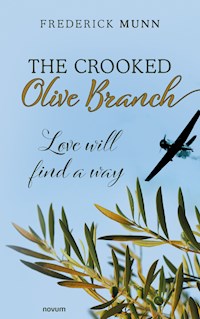
Stories of heroism and bravery during the Second World War are legend. Many of them have remained secret. This fictional account, inspired by real events, experiences and histories, has all the hallmarks of a spy novel with its many twists and turns. The action switches from a peaceful setting in a sleepy village in the Home Counties to the raw, unyielding terrain of the former Yugoslavia and its demands on the courageous band of partisans to aid a seriously injured British Officer escape a determined Nazi S.S. With, ingenuity, good fortune along with an attached British S.O.E. unit they outwit the occupying German Army.
Das E-Book können Sie in Legimi-Apps oder einer beliebigen App lesen, die das folgende Format unterstützen:
Seitenzahl: 1077
Veröffentlichungsjahr: 2022
Ähnliche



















Content
Imprint 6
Dedication 7
Acknowledgements 8
Edgar Stanton 9
The Fourth Dimension 16
Prologue 17
Chapter 1 19
Chapter 2 23
Chapter 3 26
Chapter 4 31
Chapter 5 35
Chapter 6 42
Chapter 7 51
Chapter 8 58
Chapter 9 69
Chapter 10 77
Chapter 11 80
Chapter 12 85
Chapter 13 90
Chapter 14 102
Chapter 15 106
Chapter 16 110
Chapter 17 117
Chapter 18 132
Chapter 19 141
Chapter 20 149
Chapter 21 154
Chapter 22 158
Chapter 23 165
Chapter 24 174
Chapter 25 178
Chapter 26 180
Chapter 27 187
Chapter 28 196
Chapter 29 199
Chapter 30 205
Chapter 31 207
Chapter 32 211
Chapter 33 215
Chapter 34 217
Chapter 35 224
Chapter 36 233
Chapter 37 236
Chapter 38 240
Chapter 39 243
Chapter 40 245
Chapter 41 252
Chapter 42 253
Chapter 43 260
Chapter 44 262
Chapter 45 267
Chapter 46 271
Chapter 47 274
Chapter 48 278
Chapter 49 285
Chapter 50 296
Chapter 51 299
Chapter 52 301
Chapter 53 303
Chapter 54 306
Chapter 55 311
Chapter 56 313
Chapter 57 316
Chapter 58 322
Chapter 59 328
Chapter 60 332
Chapter 61 335
Chapter 62 340
Chapter 63 345
Chapter 64 358
Chapter 65 363
Chapter 66 369
Chapter 67 374
Chapter 68 377
Chapter 69 387
Chapter 70 394
Chapter 71 397
Chapter 72 402
Chapter 73 404
Chapter 74 407
Chapter 75 410
Chapter 76 415
Chapter 77 421
Chapter 78 426
Chapter 79 431
Chapter 80 433
Chapter 81 435
Chapter 82 438
Chapter 83 439
Chapter 84 441
Chapter 85 444
Chapter 86 448
Chapter 87 453
Chapter 88 457
Chapter 89 461
Chapter 90 470
Chapter 91 473
Chapter 92 476
Chapter 93 481
Chapter 94 483
Chapter 95 486
Chapter 96 488
Chapter 97 491
Chapter 98 495
Chapter 99 499
Chapter 100 502
Chapter 101 513
Chapter 102 519
Chapter 103 527
Chapter 104 536
Chapter 105 538
Chapter 106 547
Chapter 107 550
Chapter 108 555
Chapter 109 560
Chapter 110 562
Chapter 111 567
Chapter 112 574
Chapter 113 578
Chapter 114 587
Chapter 115 589
Chapter 116 593
Chapter 117 603
Chapter 118 606
Chapter 119 608
Chapter 120 614
Chapter 121 616
Chapter 122 619
Chapter 123 624
Chapter 124 630
Chapter 125 637
Chapter 126 648
Chapter 127 651
Chapter 128 652
Chapter 129 655
Chapter 130 663
Chapter 131 666
Chapter 132 673
Chapter 133 678
Chapter 134 681
Chapter 135 682
Chapter 136 690
Chapter 137 694
Chapter 138 696
Chapter 139 698
Chapter 140 702
Chapter 141 706
Chapter 142 708
Chapter 143 713
Chapter 144 717
Chapter 145 719
Chapter 146 731
Chapter 147 734
Chapter 148 736
Chapter 149 738
Chapter 150 741
Chapter 151 752
Chapter 152 759
Chapter 153 763
Chapter 154 765
Chapter 155 773
Chapter 156 776
Chapter 157 779
Chapter 158 786
Imprint
All rights of distribution, also through movies, radio and television, photomechanical reproduction, sound carrier, electronic medium and reprinting in excerpts are reserved.
© 2022 novum publishing
ISBN print edition:978-3-99107-667-4
ISBN e-book: 978-3-99107-668-1
Editor:Philip Kelly
Cover images:Teresa Azevedo, Charles Mccarthy | Dreamstime.com
Cover design, layout & typesetting:novum publishing
Internal illustrations: Frederick Munn
www.novum-publishing.co.uk
Dedication
Dedicated to the memory of 2337543 Sergeant Edgar Stanton (1919–2011) of The Royal Corps of Signals and colleagues of Station X, the British Forces personnel involved in Yugoslavia, Jani Kovac*and the Yugoslav partisans who are acknowledged for their work behind enemy lines providing ‘ammunition’ for the Bletchley Park code breakers. Also acknowledged is the part played by Italian partisans in the destruction of significant strategic Axis reserve supplies in the Caves of Postojna.
Edgar gave nothing away about his involvement before Government recognition over 60 years after the events and too little afterwards. This book was inspired by the author’s conversations with Edgar following the issue of commemorative medals in the first decade of the 21stcentury. This acknowledgement by the U.K. Government was the first his family knew of these epic events in the Second World War, 1939–45.
Although following the chronological progress of the period, this novel is a fiction inspired by talks between Edgar and the author and the author’s memories of those times.
***
* Jani Kovac was the train driver who helped rescue Edgar from discovery by the Nazis by hiding him in the overhead toolbox of his railway engine. The partisans took Edgar from hiding in Ljubljana moving him to the Kovac’s home in north east Slovenia thus avoiding his capture by the Nazis and the inevitable execution of Edgar as an enemy spy.
Jani’s and Edgar’s families became friends after the war and keep in touch.
Acknowledgements
Coral Lynn Jackson
John Stanton
Edgar Stanton’s Daughter
Edgar Stanton’s Son
‘The Lambeth Walk’from the West End showMe and My Girl.Lyrics by Douglas Furber and L Arthur Rose, (Music Noel Gay.) This was a huge dance ‘craze’ promoted by Lupino Lane.
Edgar Stanton
Edgar Stanton
Edgar Stanton. Born26thDecember 1919 in Rotherham, South Yorkshire.
Parents, Percy and Polly Stanton.
Percy, a postman, worked 5 a.m. until mid-day/ 2 p.m. until his post round was complete.
Wireless Telegraphy was the early20thcentury ‘Smart ‘Phone.
Percy taught himself and his children Nancy and Edgar, Morse code.
Polly and Percy took in lodgers, workers at the Post Offices (Wireless Telegraphers?)
This was the environment of Edgar’s upbringing.
Even as a very young boy, he was proficient in sending and receiving Morse.
A talented raconteur, Edgar told of having ‘secret’ conversations, in Morse, with sister Nancy during lunch by tapping knives on their plates.
‘Secret Conversations’ subsequently took Edgar on an unusual and dangerous journey.
It was a journey about which he was prevented from speaking of for over 60 years.
Piecing together Edgar’s story is akin to finding a sixty-year old jigsaw puzzle in a ‘dusty attic,’ with half the pieces missing. It is impossible to even approach the truth after so long, and after Edgar’s death. The only options left being guesswork or fiction. Therefore, although using the background of Edgars’ memories and my memories of the Second World War, The Crooked Olive Branch is perforce a total fiction.
In July 1995 on the evening of our son’s wedding, Edgar and James Musty, a cousin, were talking on the terrace of the Avon Gorge Hotel. James, a British Airways captain, had visited the Caves of Postojna in Slovenia. These hugely cavernous spaces had been used by the German Army to store massive quantities of munitions, vehicles and fuel during the war.
During this conversation Jim sensed that Edgar knew so much more about these caves and the area, that there must be a story there. He said as much to me. At a subsequent family event in Maidenhead, Jim and I compared notes.
Late one morning in the mid-1980s I was working in my office in Horsham, West Sussex, when I received an urgent telephone call from Edgar. He and his wife Rosa were at Gatwick Airport. Due to a mix-up between Edgar and the travel agent he should have been at Heathrow for the intended flight to Ljubljana. “Could I ferry them across to Heathrow in time to catch the 14:50 flight?”
This I achieved with seconds to spare. They were being met in Ljubljana by ‘friends.’
Hearing this, Jim Musty was convinced there was a connection leading to a story.
Why Ljubljana? Why there and not a package holiday to Dubrovnik? Did Edgar know more than he was telling about the sabotage of the German reserve munitions, fuel and vehicles carried out by British Sappers aided by Italian Partisans?
Ten years passed until Gordon Brown, the Prime Minister, finally acknowledged the work carried out by Edgar and his colleagues in Yugoslavia behind the German lines.
Edgar and his colleagues of Station X and the Bletchley Park Code Breakers then were released from their oath to observe the Official Secrets Act and were given Citation Certificates and Medals.
***
Certificate and Medal
Then and only then did Edgar acknowledge his service in S.O.E. (Special Operations Executive) and that it was he who sent the success of operation signal to headquarters of the destruction of the German reserves at Postojna. The signal code name “FLAMBO.”
The ‘friends’ meeting Edgar and Rosa in Ljubljana Airport were Jani Kovac and his wife. Jani the son of the train driver who in the occupation was instrumental in helping Edgar escape the S.S. following FLAMBO, by hiding him in the overhead toolbox in his cabin. Transporting him from Ljubljana to his home in North East Slovenia. Edgar survived several weeks hidden in their home until the S.O.E. arranged his repatriation.
Edgar died in 2011. The full story died with him. I gleaned only the basics, these memories being clouded by time. Edgar’s stock answer to my questions was, “it was all such a long time ago.” As a result, I have resorted to a total fiction to alert the wider world to just how much is owed to Edgar and his colleagues at Station X and Bletchley Park.
***
Coincidence or the hand of providence?
Many years had passed until Edgar retired. Whether or not he thought to himself ‘What do I do now?’ He clearly resolved to try and find Jani Kovac, the train driver who helped save his life.
This presented problems and not just with the passage of time.
As with Alan Turing, he was still held under oath by the Official Secrets Act as were all from Station X and Bletchley Park.
Under the sixty year rule he was bound to stay silent. How then would he explain to his wife Rosa and his family why he was compelled to try and find a Jani Kovac in Yugoslavia?
In addition, the name Kovac is common, maybe as common as Smith in England. There were probably thousands named Jani Kovac at the time. Edgar was also sparse of knowledge not knowing just where he was behind enemy lines. His only solid geographical reference point had been Ljubljana. The Yugoslavian partisans had hidden Edgar there following FLAMBO.
The Nazi search net closing in, he was moved by the partisans via Jani Kovac’s train’s toolbox into some small town or village where he remained for several weeks until the S.O.E arranged his repatriation.
Rosa was finally persuaded. She and Edgar booked on a flight to Ljubljana and into a hotel. This was either a massive leap of faith or maybe he just had to know that he had tried his best.
With so little hope and in order to keep faith with his oath Edgar probably took Rosa to the Caves of Postojna behaving as any tourist would.
One day they took the bus to Lake Bled. In the evening, tired and wishing to return to the hotel, hey needed to find the bus stop. Rosa saw a coach load of schoolchildren and their teacher obviously on an outing to the lakes. She asked the teacher where to find the bus stop for the hotel. Fortunately, the teacher spoke a little English. Asking the name of the hotel and where?
Immediately the teacher offered to take them there on the coach which had spare seats and it was on their way home anyway.
It was a very happy coach; the children were singing and the teacher practising her English.
Edgar noted the name of the teacher and the school’s address.
On that coach, unbeknown to Edgar at the time, was Jani Kovac’s granddaughter Sabina! They returned to Rotherham in ignorance of just how close they had been.
Edgar once home, wrote to the teacher at the school thanking her for the kindness and explaining why they were in the country and asked her if she or anyone knew of a Jani Kovac. Maybe he thought the school coach was travelling south west where he had been taken. Or maybe not.
The teacher took Edgar’s letter to the school secretary, Cveta, a linguist, for translation.
Amazingly, Cveta happened to be Jani Kovac’s daughter-in-law who was married to Jani Kovac Jnr, his son!
One very sad note to end this scarcely believable historyis that Edgar’s saviour, Jani Kovac, died in 1947. Edgar never did get to thank him.
***
Cveta Kovac – Jani Kovac Jnr – Coral Lynn Jackson
The Crooked Olive Branch relies mainly upon the author’s memory of a tumultuous decade from 1936 to 1946. The story, although complete fiction, is inspired by real events, experiences and histories.
Nine decades of learning colour the pages. Living long has taught that there are no absolutes in life and that action and interaction between people is mainly tempered and directed by experience. We can never be sure what is true. That which exists in the mind of each participant is at best subjective. This story contains elements of Edgar’s memories and the best of my memory. Both experiences and recollections are wrapped up in the tinsel of a tale inspired by memories of the Second World War.
Allowing for vagaries of memory and perception of histories, first and second hand, I was persuaded by some seemingly inaccurate offerings via all forms of communication, that my memory might just contribute something worthwhile to the history of the Second World War.
If it does not and my story only entertains it is hopefully still worthwhile and it is my way of maintaining mental alertness and staving off the incoming tide of atrophic deterioration.
My thanks are extended to all readers for helping to indulge the fancies of an old man.
***
All characters in the following novel, other than the obvious historical, are fictitious, and any resemblance to real persons, living or dead, is purely coincidental.
The Fourth Dimension
Time, the fourth dimension,
has no beginnings and no ends,
The clock is man’s invention, hours,
thoughts and all intention, time transcends.
This peg, to which we chain
our lives of ill forgiving minutes,
Restricts, like goats,
to trample in tight circles,
Which have small purpose
and few friends.
We cannot remember
true what has been,
Or know what might be seen.
Corinthians one,
verses twelve/thirteen.
***
Prologue
You might ask why I am attending a wedding in a small town in Connecticut U.S.A. in the year 2020. The marriage is of special interest to me. A typical human reaction would be to think that I am here to preen.
Sorry, I ought to introduce myself. I am Lot. No, not that Lot. I am just one of the many Lots from the tribe Naphtali.
Should you think that this takes some believing, then consider the issue from a cared one in my charge. One Miriam Kessler, about whom there are many stories. She is part, a big part of this story I am about to tell, and I am following at this wedding.
Who is Miriam Kessler and why is she important? To partly answer this question, I wind time forward to the year 2036. I am stood at the graveside of the said Miriam Kessler who has died, aged 101, in the village of St. Mary Upperford where she lived for most of her life. In the moment of her passing her issue numbered almost 100 including grandchildren, great grandchildren and their issue. All these and their stories would not have existed if Miriam Kessler had become one of the many victims of the Nazi authorities of Munich, Bavaria in 1938. As it is now, there are enough stones around her grave to build a small house. If you carry all issue and their procreation forward just a few hundred years, there are more people and stories than there are pebbles on Chesil Bank.
Back to the wedding. The bride and groom are connected to my assignment to be Charge Angel to Miriam Kessler. Why, how? To learn more, you will need to read the story.
My medium for the story is an old man who is using his instinct to write now because his mobility is such as to limit normal physical activity. Crossword and other puzzles have palled. I suspect that he is aware of my involvement but not the level. It is fortunate that it is only necessary to point him in the right direction and let him loose. This, incidentally, mirrors the allowed activity of we guardians in their clients’ lives.
Having difficulty in believing? Try this: Imagine a web, similar to those built by spiders, constructed, as such a web is, in multiple sections all connected to a central point. Each section a parallelogram, some square, some rectangular, some irregular, bounded by unbreakable threads to the past. Imagine then each of these ‘boxes’ encompassing one person’s connected life within a specified time scale. If you have got that, now imagine the little fugitive Miriam Kessler as the epicentre of this web. If Miriam had not been rescued from the Nazis, this ‘web’ would change in its entirety and every single connected life would be different, very different. Each life having a changed epicentre. Got it?
Now please read on.
***
Chapter 1
The beautiful August afternoon hummed with bees, wasps and sheer contentment.
Bluebirds trapesed in the cascading willows which fringed the river’s edge while swallows skimmed the sparkling waters and the green outfield oblivious to the crack of willow on leather.
Gnats danced in the shadows under an arc of trees, dragonflies shot unexpectedly into the open, their jewelled bodies flashing, reflecting sunlight as they performed breathtaking acrobatic displays of speed, stop, turn and hover. The day stoked up a thirst for lemonade, cream teas and memories. Old men yawned and yarned in deckchairs while the scorer peered down from the score box window to record each dot ball, run, no ball and soaring six outside the white-lined and picket-fenced boundary which marked the extremes of success or contained failure. If ever there was a moment in the annals of man which exuded peace and tranquillity, this was it.
Yet, in the shadows three men were considering a very different scene. Their minds focused on an impending, probable conflict which, win or lose, could destroy such moments.
Perhaps never to return. A few yards away in the pavilion, consideration of another possible conflict was hovering just below the surface, restrained for the time being, within knowing glances and sly smiles.
Pen and Henry, unaware of any such attention, leaned on the rail of a footbridge which spanned the river alongside the old drover’s ford.
Henry mused as he looked down at the sparkling waters as they bounced and gurgled over the pebbles at the edge.
“Minnehaha,” he murmured.
Pen smiled happily. “Laughing water … it does seem to, doesn’t it?”
Their conversation flowed as easily as the river. Both were comfortable in the long pauses while they took in the beautiful scene. The river bent gently round to the left towards the next crossing a little over a mile further downstream. The banks of the river were dressed by weeping willow, flowering shrubs and occasional felled tree seats along a well-used river path between the village of St. Mary Upperford and the market town of Bendesbury.
Pen, wishing to impress Henry with her knowledge, broke the silence.
“Longfellow,” she murmured just loud enough for Henry to hear.
After a short pause Henry replied, “Tall guy.”
Pen began to giggle.
“Mini Ha Ha,” said Henry to peals of laughter from Pen.
The Hon. Penelope Alice Amelia Bridge-Thompson felt as though she had freed from jail.
She understood now why Peter, normally reclusive, had made a friend of this American who was destined to become best man at their wedding. In his presence, she felt safe.
He exuded a quiet charm and warmth. Yet she perceived great strength. He was clearly comfortable in his own skin, in the presence of others, king or commoner, prince or pauper.
She smiled at the thought as they stood for a while in silence, just ‘being’.
Henry Steading III was not however all that comfortable in Pen’s presence. His upbringing would not allow for being remotely rude or dismissive. He was aware that she was sending out signals which were difficult to ignore. Sitting next to her outside the pavilion a short time ago had seemed not to be a good idea. At the first opportunity, he made an excuse to get away saying. “If you will excuse me, I will go and inspect the river. I’m sure drawn to water.”
To be followed shortly after by the persistent Pen.
It was Henry who next broke silence, whispering. “I fit.”
“What was that, Hank?”
“Call me Hal,” Henry replied. “I prefer Hal. Hank the Yank was Cambridge speak. Peter and the crew.”
“O.K. Hal.” Pen tried copying Hal’s Pennsylvanian brogue. “You fit.”
Another pause followed. “Sure, I could live here.” Henry sighed as he spoke.
“Don’t you find that we British are a little quaint, slightly potty?”
“Potty?” Hal chuckled “I guess you mean eccentric. Potty, what a super word!”
“And quaint?”
“No, I guess not quaint. Quaint is one description of the Drovers. It is hot and cramped and if that is quaint, I’ll take Potty.”
“Yet you fit?”
“Sure, I could live here.”
“You could?” exclaimed Pen, slightly surprised, secretly pleased. “But not in the Drovers?”
“No, I guess in one of those cottages around the Green.” Hal smiled at the thought as he added:
“with a wife and a couple of kids.”
Pen sighed. “You fit. You really mean that, don’t you?”
“Sure, I do, but I guess that’s just a dream.” He paused and chuckled again. He was happy sharing his thoughts. “A guy can always dream.”
“I fit. What a sweet way of putting it.”
“My Ma and Pa would really get this place. I just know.”
There followed a further pensive silence before Hal continued.
“Ma and Pa go up to New England each fall. Take a log cabin by the river. The first thing they do is to link little fingers and say, ‘I fit’, then they would recite a little verse. I guess it came from a Valentine.”
Pen turned to face Hal whose gaze steadfastly remained on the tumbling waters.
“What verse was this?”
Hal sensed they were entering dangerous ‘waters’ and that he had better not carry through.
To be rude however, especially to a lady, was not in his nature. He smiled at his memories. It clearly meant so much to him. He began to recite softly with such meaning that it seemed he was back in New England with his family. Once more, a carefree child.
“If I could choose a world to be,
I’d begin at once with you and me,
Then we would paint a Sky of blue,
white fluffy clouds, just one or two.
Spring and Fall with their tints would
intermingle with their stints,
And by the river’s sparkling flow
we’d go about our ‘to and fro.’
Then raise our thanks to heaven above
for all the beauty and our love.”
Hal’s resolve to keep Pen at arm’s length was immediately shattered. His reservations dissolved by his memories.
“That is beautiful.”
“When me and my brothers came along, we insisted that we join in. Join hands in a circle.”
“And you fit in St. Mary?”
“I guess I do. I really do.”
Instinctively, Pen linked arms with Hal. Shocked by this sudden move of affection he pulled away sharply.
“Howzat!” came the cry from the cricket field. “Out!” The umpire replied lifting his finger.
Chapter 2
St. Mary Upperford had the usual complement of gossips, two of whom were helping prepare the pavilion tea under the close eye of Lady Amelia Bridge-Thompson.
Edna was preparing potted beef sandwiches and Freda the cream teas.
“You’d think she would have stayed to watch while Peter was batting.” Freda whispered.
“And wandering off with that American fellah” came a ‘stage whispered’ reply from Edna.
Amelia Bridge-Thompson stiffened and turned to Pamela Avery.
“Pamela, take over will you please while I go to get Penelope to give a hand.”
Without waiting for a reply, she swept out of the door and around the boundary of the cricket field towards the ford where Pen was last seen.
“There she goes, trying to save her investment,” said Freda.
Edna chuckled. “Some chance, Freda. That Genie is out of the bottle and she’ll not get that back in, no matter how.”
“You reckon?”
“You were there Saturday. Saw as well as I did. Almost dropped her knickers at first sight of him.” Edna gave another chuckle. “At her engagement do an’ all.”
Pamela Avery turned, pleading. “Ladies, please.”
“Don’t you get hoity-toity, Pamela Avery. You’re only trying to protect your future.
If the Hon. Penelope Bridge Doo Dah doesn’t marry money, you will all be out on the streets.”
Pamela took a deep breath and paused to control her temper, to collect her thoughts before replying. When she did, she spoke quietly and firmly.
“Peter is a lovely young gentleman and Pen thinks the world of him.”
Edna however was in full flow of ‘informed’ opinion. “Ask me; Lady Toffee Nose and Sir Surgeon Commander are stony. They are spent up. One step from the knacker’s yard. Sending Penny Poo to be presented at court has scuppered them. They’re boracic and the bank manager is in hot pursuit.”
“Do be quiet Edna, you don’t have the first idea.”
“Don’t I now! Well, I know this, they are a pair of jumped up nothings.”
Pamela put down her knife and fixed Edna with a stare.
“You really do know nothing. Lady Amelia is the first born of a baronet.”
“Who was that then? Baron Stoneybroke?” The pair fell about laughing.
Pamela tried again to regain control while looking round anxiously to see where Lady Amelia was.
“I don’t see how anyone can know about another’s financial affairs. How can you possibly know?”
“Well, that’s where you are wrong. My cousin Stan is a postman and the number of letters marked private and confidential are legion.”
“They are most probably just bank statements.”
“Not every week.”
“It’s the bank manager … he’s behind you” shrieked Freda convulsed with laughter.
Pamela realised there was little she could say or do, so she recommenced buttering bread in silence.
“What’s the matter, the cat got your tongue?” Edna, continued to taunt. “See, can’t deny it!”
Pamela remained silent which only encouraged Edna who was now in full cry.
“Time all you high and mighties got your come-uppance. I for one will not be sorry.”
“She’s coming back,” announced Freda, saving further embarrassment.
“Pen’s in tow. Obedient to the last.”
“Treats her like a puppet. Arranged marriages in this day and age! That’s all it is you know.”
“Really Edna, what nonsense you talk,” said Pamela, although she was not entirely sure that it was.
Chapter 3
“Howzat?” “Out!” The umpire raised his finger.
“That’s Peter’s wicket. I’d better go,” said Pen who at the same time could see her mother bearing down towards them. Pen hurried towards her.
Hal watched her go then returned to watching the bright waters bouncing over the pebbles and stones. “Mini Ha Ha,” he whispered to himself then shrugged his shoulders trying to come to terms with his emotions.
Surgeon Commander Sir George William Bridge-Thompson had been in earnest conversation with Richard Barnes, Peter’s father, and another gentleman, a Bryn Rhys James when he noticed that Peter was out.
“That’s Peter gone. We’ll have that word. Agreed?” The other two nodded. Richard Barnes saw Lady Amelia and Penelope coming around the boundary. He waited until they came within earshot to call out. “Pen, ask Peter if he can spare us a minute, please.”
Peter was still unbuckling his pads as he arrived hot and perspiring. He looked at the stranger and nodded to him, wondering who this might be. He then acknowledged Sir George.
“Sorry sir, not the glorious day I envisaged.”
He failed to add the reason which was lack of concentration caused by Pen’s behaviour.
He then turned to his father “You wanted a word?” adding reluctantly, “sir”.
Sir George interjected. “Shall we take a stroll around the boundary?”
Peter was desperate for a cold drink and an explanation from Pen. Reluctantly he accepted this as an order which it was.“This is Bryn Rhys James.” Sir George introduced the stranger.
Rhys James then without so much as acknowledging Peter’s “how do you do, sir?” walked off into the shadows of the trees behind the sightscreen, assuming all would follow, which they did.
Lowering his voice, he took Peter’s arm, saying. “Come.”
He ‘propelled’ Peter into the shadows.
“Peter, we understand that you and your friend are going to the Oktoberfest in Munich next month?”
“Yes, sir” Peter replied, his mind whirling. He was confused by this sudden turn of events dominated by this stranger. He looked anxiously to his father, who nodded and put his finger to his ear then pointed at his son mouthing “Listen.”
“Your father, Sir George and I have been wondering if it possible for you to go a little earlier stopping off at Bochum to attend the European Special Steel Conference.”
“When is this conference, sir?” Peter avoided replying directly.
He had too many other things on his mind. This confusing, unwelcome question was the last thing he wished to consider. The perceived affair between his intended and his best friend was paramount. Stuck in the batting crease while watching them move out of sight had disrupted his concentration. He needed answers, not more problems.
“September 21stto 23rd,” he replied. He looked to his father hoping for support or failing that, an explanation for this request from a stranger.
Richard Barnes, however, was offering little other than a look which suggested that he should acquiesce. Left without support, Peter answered.
“I suppose I could.” Rhys James continued speaking, oblivious of Peter’s discomfort.
“We know quite a lot about you. A first in modern languages, fluent in German plus others and a Cambridge blue no less.”
“Rowing not cricket,” interrupted Peter.
His father shot him another shut up and listen look, leaving him in no doubt that he was not going to get any support there.
Rhys James continued, “The Germans will not suspect for one moment that you are anything other than a representative of Barnes Tool and Special Steels.”
“Why would they suspect me at all, sir?” Peter answered his mouth dryer than ever.
He was desperate to get away for a cooling drink.
Sir George took Peter’s arm “Look around you, Peter. Isn’t today and our way of life just wonderful? You must agree that it worth preserving. But this …” He waved his arm towards the Bank Holiday scene, “our world, our lives, all that we hold dear are under threat.”
“If you think as we do, then you will listen and listen well.” Sir George paused for effect, then continued. “What Bryn is asking is of the utmost importance. We don’t expect you to be a spy or anything like that. Just to listen and be aware of any new ventures and pass on all that is of interest.”
Peter’s memory ‘rifled’ back to an incident at school when as a young fresher. Surrounded by taunting bullies, his normal clear thinking deserted him. All he could think was “why me?” The ‘why me’ being unspoken. Confused, he found himself turning towards Rhys James as if someone else was speaking for him.
“Yes, sir.”
“If you agree, we need you to observe and listen only. Try and note every piece of information about industrial developments in the steel industries, no matter how trivial. We can then determine its import.”
This gave Peter a clue what this was about.
The ‘why me,’ resurfaced, this time as a studied thought. He could hear this man speaking, his mind now elsewhere trying to rationalise. He tried to find the real reason for his being involved but found none.
Rhys James’s voice returned into focus. “You will be given a list of names, those to whom we hope you will meet and engage in conversation.” Peter was now determined not to speak or nod. It being safer to avoid anything which remotely suggested that he agreed.
Rhys James continued in the manner of a man who was used to giving orders; for them to be obeyed and not accepting any deviation.
“Richard will arrange everything. Also, we think it would be good to take your friend Henry along with you. Having an American there will be of help. They might wish to impress. Be interested in what is new in special steels in the U.S.A.”
He turned to Richard Barnes. “You did say that you could get Steading approved Barnes?”
Peter was furious about Henry being included.
He realised that the only reason his father allowed this to go unchallenged was that there was some substantial gain to be had. What this could be was one question. Why Henry was another.
Bryn Rhys James continued speaking but Peter was no longer paying any attention.
His anger built up as this man droned on.
“There are a couple of chaps we wish you to pay close attention to.”
Peter interrupted. “Really Mr. Rhys James, I fail to see that Henry, or I can be of any use whatsoever.” Sir George, realising that Peter was getting angry, intervened.
“What say you put this to Henry? See what he thinks. May not produce anything.
It could be an interesting few days. I understand the Germans put on a good show.”
“Henry will say the same as me. Why us?”
“Tell you what, young man.” Rhys James took over. “We’ll give you a moment to think about it.”
Signalling to the others he ushered them to the riverbank, leaving Peter to his thoughts.
Peter through the trees, could see them talking.
Rhys James was like an American coach calling time out. It was clear that this man, whoever he was, was nervous when either of the other two men interrupted.
His father and Sir George were almost standing to attention, receiving instructions.
This was so unlike his father. This suggested that Rhys James was a man of significance and not just to Richard Barnes.
Peter began to analyse.
He was involved because of his command of German but why Henry?
The political situation in Europe was a probable catalyst. Again, that didn’t answer the why of Henry.
Peter decided to talk with him to get his view of this strange request.
The three conspirators returned, Rhys James leading the way.
“Well, young man?”
“I will speak with Henry first.” Peter chose his words carefully.
“Good … now who’s for a cream tea?”
Rhys James marched away leaving Peter with the uncomfortable feeling that his message was being deliberately misinterpreted.
Peter, confused and angry with his father and Sir George, wondered how to retract this ‘perceived agreement’.
The conspirators, although serious, gave him the impression of a gang of fourth formers who had just conjured up a wizard prank.
His father’s continued association with Sir George was more to do with the search for a knighthood and government contracts, than genuine friendship. The arrival of this stranger had the same smell about it.
Peter followed the others back towards the pavilion in silence.
The question of Pen and Hank thrust brutally to the back of his mind for the last half hour, now returned with complications. The idyllic scene of a gentle pleasant bank holiday afternoon had been tainted by something more sinister than a flirtation between his fiancé and his best friend.
Even the desperately needed glass of lemonade tasted sour.
Chapter 4
“Tea, Peterkin?”
Until she spoke, Peter had not been aware of Pen who had been sent by her mother to mend fences.
Grateful for the tea, he was still in no mood to receive Pen’s opening gambit at conciliation. “Thanks.” He grunted before adding testily, “This is not Coral Island, Pen.”
“Owl isn’t pleased, and Pussy Cat is very, very sorry.” Pen purred and took his arm.
“Nor are we setting sail in a pea green boat.” Peter shrugged her away.
This ‘slap in the face,’ shocked Pen. “Sorry Peter, I am truly sorry.”
A brooding silence followed, both unaware that all in the know were watching.
From the pavilion Lady Amelia looked on anxiously while Edna and Freda nudged each trying hard not to show their fascination with this real-life drama unfolding before them. Edna was salivating with thoughts of informing the Women’s Guild with all the lurid detail.
“What’s going on with you and Henry?” Peter’s blunt question broke an awkward silence.
Pen was shocked even though she was expecting something of the sort.
“Peter, there’s nothing.” She swallowed.
“You have my promise, there’s nothing between Hal and me.”
“So, its Hal now, is it? What happened to Hank?”
“Henry prefers to be called Hal. He doesn’t like Hank the Yank it being Cambridge speak, just the fun of the crew. I guess he wishes to drop it.”
“You guess? You are even beginning to sound like an American.”
“Look Peter, Hal is good fun I like him a lot but it’s you I love. You I intend to marry.” Peter didn’t reply for some little while. When he did, he managed not to sound too aggrieved.
“Do you realise that walking off with Henry upset my concentration. Your father hoped that I would produce an innings to sink Bendesbury, and I failed.”
Pen who had been up to this last remark, a model of contrition, was angry that this had degenerated into a discussion about a piddling little cricket match. Cricket she had little interest in and no wish to even try to understand it. Here she felt that she had something in common with Henry.
She, however, placed a conciliatory hand on Peter’s.
“I am really sorry darling, truly I am. I will do better in future.”
Peter did not reject this gesture entirely. They remained like that for what seemed an age. Peter broke the silence and the tension. “Where’s Henry?”
“Down by the ford. Why?” Pen replied anxiously.
“There’s something we need to discuss.”
Pen caught her breath. “You’ll not mention our little tiff to him, please.”
Peter removed Pen’s hand from his arm. “I’ll not make promises that I may not keep. I suggest you do likewise.” He turned to go, then relenting, offered her some comfort.
“Actually, it’s to do with a little matter your father and mine have cooked up between them.”
After a very short pause, he added, “Still no promises.”
With these final words Peter headed towards the ford.
Lady Amelia, who had been watching, immediately set off to join her daughter.
“Off she goes on her fool’s errand,” sniggered Edna. “No chance there. You mark my words.” Amelia wrapped her arm around her daughter. “Well?”
Pen was shocked by this seemingly unusual show of affection. She just shrugged and didn’t answer.
“Humble pie, darling.” Amelia continued. “Buckets of it, trust me.”
“Please mummy, just leave me alone.” Pen turned and walked away with Amelia following.
“All right darling, but please don’t throw your life away.”
‘What life?’ Pen thought. It’s your life you’re worrying about not mine. Fortunately, she did manage to keep these thoughts to herself.
Henry, meanwhile, was still trying to sort out his thoughts. It was clear from Lady Amelia’s sortie to retrieve Pen, that his innocent little meander to soak up the glory of this unique scene had had some consequence. Just what, he did not have too much difficulty in imagining. Pen tagging along did not overly disturb him until she became too familiar. Whether to say anything or nothing to Peter was now the decision. He decided that he had nothing to explain.
Peter arrived at the ford to find Henry engrossed in thought.
“Ah! Henry there you are.”
Hal turned around and leaned back on the handrail.
“Hey Pete, what a peach of a place you have here. Cambridge was great, but this is something else.”
“Henry,” Peter began, not acknowledging Hal’s comment. “There is something we should discuss.”
“Hal please, Henry is my Sunday name if you don’t mind. No more Hank. That was Cambridge. As far as I’m concerned it should stay there.”
Peter was completely thrown by Henry’s relaxed attitude. “Hal, it is then.”
“My Pa used to say, ‘if you hear your Ma call me Henry, be sure and make yourself scarce, there’s trouble a brewing.’ He called it his Sunday name, only used when he was in the doghouse.”
Why Sunday name, thought Peter.
Calmed by Henry’s relaxed charm, Peter relaxed. It was the same at Cambridge when they first met. All perceived troubles seemed to melt in his presence.
This plus Henry’s request to call him Hal convinced Peter that his fears were unfounded. There was nothing other than Pen’s inattentiveness at the cricket to concern him.
Relieved, Peter turned to the other problem on his mind. “Henry.” He began.
“Hal” Henry corrected, smiling. “Sure, old buddy, there’s something you want to discuss?”
When Peter had finished telling of the afternoon’s strange encounter Hal didn’t say a word.
He continued looking into the distance along the river as if for inspiration.
Peter waited for his friend’s deliberations. Hal thoughtfully considered.
“These guys seem to me to be a slippery bunch. Question number one, why me?
You Pete we can guess, except for the spying gig. That we get, maybe, but not the whys of involving two greenhorns. Why especially me? They sure would not give me the time of day without reason. We need to figure that one.”
Hal continued looking into the distance, seemingly still trying to work out what this was about.
In the following silence Peter was content to wait for his friend to continue.
Suddenly Hal’s mood changed. Turning, he leaned back once more on the handrail.
“Why not? It could turn out to be a spiffing lark. What say you, old bean?”
“Do you really think so?” Peter asked, ignoring his friend’s attempt to impersonate former university undergraduate colleagues.
“Sure, let’s accept a stake in this affair and give these slippery goats enough rope. They might recycle round to tread in their own shit. Meantime we work out what really gives.”
Chapter 5
The train slowed to a halt and was immediately surrounded by armed soldiers.
Hal looked out of the window. “Not again.” He moaned.
“What the heck are these stooges looking for?”
Peter shrugged. “This is another unscheduled stop. They are clearly after someone special.”
Hal went to the compartment door and looked up and down the corridor, muttering.
“They have checked our papers three times already, once at boarding and on the train twice.
I thought this Hitler guy was making the trains run to time.”
Peter, puzzled by this unusual show of bad temper, offered his opinion.
“You know Hal this really is a police state. We got the whiff of it last night at that reception.
I can’t speak for you, but it made me uncomfortable. It is one thing reading about it but …”
Peter hesitated and sighed before continuing. “This is sinister.” He paused repeating:
“really sinister.”
Hal stretched and yawned. He was fed up, travel sick and weary.
“What a waste of time and all as far as I’m concerned for nothing. What was that all that about yesterday Pete, you figured it yet?”
“No, not yet. I don’t agree that it was a complete waste, Hal. In any case what happened to the spiffing lark?”
Hal was unhappy, not just with the visit to Bochum and the extra journey time involved.
He was aware that his relationship with Peter had not been the same since that August day.
He knew that he had been correct and had dealt with Pen’s familiarity as well as he could, but it was impossible to deny that he remained disturbed by it.
No matter how he tried, his thoughts kept returning to that afternoon on the bridge.
Mini Ha Ha Bridge was how he thought of it.
A stream of memories returned defying attempts to dismiss them as irrational and dangerous.
Peter, initially, was more successful in dismissing any thoughts.
But the usual friendly camaraderie was missing.
Thoughts neither wished to voice, hung around like a pebble in a sandal.
Peter was more and more convinced that his friend was withholding something from him.
Hal was broody and far from the ‘all-inclusive’ confidant.
The reason he was not being entirely open, however, was not what Peter suspected.
Hal was struggling with an embarrassing situation. and seeking the best way to explain.
The question of the incident at Mini Ha Ha, whilst it did figure, was not the main source of discomfort.
Hal was first to speak following a long silence. “You must admit this is one heck of a train journey. Could we not have gotten an overnighter?”
Peter replied with forced jocularity. “Bear up old chap, we’ll be in Munich by five at the latest.”
Realising he sounded boorish, regretting this, Hal attempted to copy Peter choosing his words carefully in his response.
“Sorry Peter, you would expect a seasoned traveller like me would take this in his stride.”
“You are beginning to sound like an Englishman Henry.”
Hal seized upon this opening and replied in kind, relieved to take his mind away from troubled thoughts.
“That Peter, old buddy, is the very compliment I need. I would sure like to have thesavoir faireof that guy last night, Sir Filton Fowlkes Browne. You will note the triple barrelled name.
I would sure like to be able to handle life as him. Now there’s an Englishman I would love to emulate.
He seemed so with it. Even knew my name.”
Peter smiled, relieved to change his mindset, and see that Hal was relaxing.
“I think Henry you should know that he was Scottish.”
“Sounded very English to me.”
“You’d be safer saying British as a coverall,” Peter advised, then added:
“Now you know Sir Filton it would be a good idea to stay in touch. It could prove useful.”
“You know this guy?”
“No, but he sounds really important. As you say, he knew your name.”
Both friends were relieved to be speaking freely. The conversation began to flow more easily for the next few minutes. The tension lessened as they became more involved. Hal tried to speak less formally.
“Very well my dear old friend, I’ll take particular note.” Hal was clearly imitating Sir Filton.
In truth, he was becoming naturally indoctrinated. Then, he reverted to type as he continued.
“These two guys last night, I guess they were Nazis. They were beginning to get up my nose. I was starting to weigh up the consequences of starting the Second World War by punching one of them in the face, when this Sir Filton guy appeared like a guardian angel and says, ‘I see you are entertaining Herr Braun and Herr Lietz, Henry.’ I guess I was too dumbstruck at this stranger knowing little old Henry’s name, I didn’t answer. I figured he was someone important, that I ought to bow or do something special.”
Hal paused. “Where did he come from? Were you told he was to be there?”
Peter shook his head “I didn’t notice him. It was a large meeting. I was too busy feeling out of my depth I suppose.”
The two were silent for a while, deep in thought.
Eventually, Peter broke the silence. “I think that we can safely assume that Fowlkes-Browne is a British agent. That the Sir Filtons of this world have a secretary who provides them with a complete dossier on all participants. This he will study. It will include photographs in addition to descriptions.” Peter paused for a moment before continuing. “And we can guess that there is a connection between him and Rhys James.”
“O.K. Fine, I get that, but it doesn’t explain why we two greenhorns were there in addition to Sir Filton. For sure we are novices. We gave nothing to the scene.”
Peter took a moment to consider before replying.
“Could it be that as innocents we might hear more?”
Hal sighed. “I can’t speak for you Pete, but I had not one clue what I was about. What to look or listen for. I was off my base. If Sir Filton had not intervened, I could have started a Second World War.”
“Hal, unfortunately, the war will happen without any help from you.”
They broke off the conversation while their papers were checked for a fourth time.
The compartment door closed on the German officials. Neither spoke for almost a minute then Peter forced his eyes away from the door. “Hal, are you alright?”
“Jeez Pete, these Goons are something else, polite, efficient but somehow they give me the creeps. There is something just, just …”
“Just what, Hal?”
“I can’t figure, it was just something.”
Peter took a breath, letting it out as he spoke. “Malevolent!”
“Yes Pete, you are so on it. I have never had much cause to use the word before. That was why I was fishing. You felt it too? They made me feel to be a victim. Kind o’ scared even though I know they would not dare touch me. Now I feel angry, not just with them but myself for sitting there and taking it.”
“I was like a rabbit mesmerised by ferrets. I feel dirty and impotent. Like you, a victim.”
Neither spoke for some while. Peter was the first to gather his wits.
“You were about to start a second world war when Sir Filton appeared?” He prompted, trying to resume where they left off.
Hal was taken out of his thoughts by Peter’s sudden return to the interrupted discussion.
They were thoughts not only about the German officials but another matter he was wrestling with.
The two had become strangely entwined. He made a big effort and picked up the story where he left off. “Sure, as I was saying. This Fowlkes-Browne arrives like the Lone Ranger and says:
‘Ah Henry, I see you are entertaining Herr Braun and Herr Lietz’. He introduced himself.
It was then one of the goons began to simper and wheedle and claim kinship with him.”
“Kinship?”
“Keep up Pete, Braun and Browne. This goon Braun says, ‘are you aware Sir Filton that you and I share the same name?’ Sir turns around and says, ‘Really, Herr Braun do you really think that you and I could belong to the same tribe?’ He sure did not dig the idea.
He managed to make it sound preposterous without using any words, just using that impolite dismissive manner born of centuries. He reduced this Braun guy to the size of a squeaking mouse.” Hal chuckled at the memory. “I tell you Pete, it beats smacking the guy in the mouth.
Then he says to them ‘please excuse us gentlemen while Henry and I mingle.’ Away we sped.
Then he says to me. ‘I don’t know about you Henry, but I get somewhat irritated when something nasty is crawling in the hairs of my arse. I need a drink’. I tell you Pete that incident almost made this trip worthwhile.”
“Wait a sec, Hal. Where was Fowlkes-Browne while you were talking to the Nazis?”
“Don’t know he must have been nearby I guess.”
“And he arrived just on cue?”
“So it seemed.”
“What were you talking about?”
“Let me think. They had been bragging how they had gotten around the Treaty of Versailles, built this battleship Bismarck, which could outrun and outrange anything else afloat, equipped with gun turrets which swivelled independently and could engage any enemy on all sides.”
“Did Fowlkes-Browne move in then?”
“No, let me think.” Hal, realising that Peter was on to something, went over the conversations in his mind. Peter waited then, impatient for the answer, prompted.
“It was when you were thinking of hitting him. What upset you?”
Hal snapped his fingers as he remembered. “Some snide remark that the U. S. of A should not still behave as colonials as if we were England’s puppets.”
“They were trying to get under your skin. What exactly was said immediately before that?”
“It was something about a joint research project between Sheffield and Pittsburgh.”
Peter nodded. “Makes sense. That’s the venture my Father got you involved with?”
“Sure, they knew that I was a member of the research team. The co-operation between teams from the States and Great Britain.”
He looked quizzically at Peter. “You’re on to something aren’t you?”
Peter did not reply immediately, instead he asked, “So, Sir Filton arrived when this came up?”
“Sure did, it was then this stooge made his comment about the States not dancing to a British tune and I was about to, you know.”
“You said nothing about it; the research?”
“No, not a chance I wouldn’t anyways.”
“Oh, Hal!” Peter went red and threw his head back against the seat.
“What gives Pete?”
“We were not there to gather information. We were bait. At least you were.”
Hal took a deep breath, thought for some seconds then let out a low whistle.
“The bastards. The slimy bastards.”
Peter didn’t answer. Hal looked concerned. “Sorry Pete I didn’t mean …”
Peter held his hand up. “Don’t be sorry. My father and father-in-law are slimy bastards.”
Peter awaited Hal’s response but when he didn’t, spoke his thoughts.
“Hal, you know something I don’t. I am guessing the research project you were working on is the catalyst for this whole affair. Am I right?”
Hal still didn’t answer. Peter continued. “My father is lurking in there somewhere.”
He paused before engaging Hal forcefully. “TRUE?”
The compartment which had been empty for almost the whole of the journey was entered by a man who sat in the corner and began to read. He had no luggage. He carried only a book.
Peter looked across at Hal, pulled a face, then mouthed, ‘not now, later’.
It was obvious to both that as there had been no recent scheduled stop, this man had moved from another part of the train after their passports had been checked.
Unable to pursue the conversation both Peter and Hal spent the rest of the journey thinking over events and trying to make sense of the happenings. Their thoughts were interrupted by the arrival in Munich.
Chapter 6
“At last,” said Hal grabbing his luggage. “We are meeting this Dieter guy where?”
Peter put his finger to his lips and mouthed, ‘Later.’ Hal mouthed back, ‘you’re getting paranoid’.
Hal was clearly ill-tempered. Peter was worried that his friend would lose patience.
This could prove dangerous for his friend. Hal, on the other hand, an American in a very strange environment, was more than uncomfortable with the intrigue and the restrictions this placed upon them.
The station platform was an endless river of travellers. There were armed police everywhere, at every exit.
Peter looked around and whispered. “We meet at the news stand outside”.
Hal replied in a louder than normal voice, “Speak up Pete, we’ve nothing to hide.”
Irritated by his performance back on the train Hal decided enough was enough.
They picked their way through the teeming crowd to the newsstand.
The city centre was thronged with revellers, many dressed in traditional costume.
The men in Lederhosen, the women in blue and white, most wearing hats with feathers. Beer steins decorated almost every horizontal surface. Outside one bar a pig roasted on a spit.
“Just my take of the Fest, no joke. As I imagined.”
“I’m not sure the pig roast is usual.” Peter murmured, not really paying attention and looking round the square. “Where’s Dieter? I can’t see him.”
“This Dieter guy reliable?”
Peter didn’t answer and continued to search for his friend.
Conversation was proving difficult. They were surrounded by people laughing, talking loudly and jostling. A brass band marched into the square followed by a troop of Brownshirts singing loudly, raucously.
“Let’s find a beer,” Hal shouted in Peter’s ear.
“We should wait for Dieter,” Peter shouted back.
“I’m hot and travel weary and looking for a long cool drink. Let’s get the hell out of here.”
Peter was jostled by the crowds pouring out of the station. He felt someone place a small slip of paper into his hand. He turned around but saw no one he recognised. No one acknowledged him.
He unfolded the paper and read.
TAXI TO THE FAIRY GROTTO
IN THE ENGLISH GARDEN.
Peter passed the slip to Hal and shouted in his ear.
“Let’s get out of here, take a taxi and get you that drink.” Puzzled at the change of plan, Peter led the way to the taxi rank alongside the station. Just before they got there, one pulled alongside.
The driver alighted and asked. “Herr Barnes?”
“Ja das bin ich.”
“Your taxi.” The driver said in English and opened the rear door.
Hal and Peter climbed in without question, pleased at last that something positive was happening. The taxi driver picked his way slowly through the crowds towards the English Garden to be held up by the marching Brownshirts still singing.
“What’s that song?” Hal asked.
“The tune is the Horst Wessel anthem, but they have changed the words. If I could hear clearly it would help. Suffice to say it sounds arrogant and aggressively anti-Semitic.”
“It would be great if you could try and interpret, please, it will make good copy.”
Peter turned and looked at Hal. “Good copy, what does that mean?”
Hal flushed. “Look Pete, I was going to tell you back on the train when the guy came into the compartment and you slammed me up.”
“Tell me what and why did the guy make the problem? You had a couple of hours to say what you will.”
“There is a connection. Pete I’m sorry. I am not joining your father’s research and development team in Sheffield.”
Peter began to speak and ask why.
Hal interrupted. “I’ve accepted the post of Europe correspondent for the East Coast Press Association. I’ve already got my press card. Got it two days ago. Just before we set off.”
Peter didn’t answer, he just sat wide eyed.
Hal continued. “This has bothered me …” He hesitated then began once more. “I was looking for the best …” He hesitated again. “No, I wasn’t, I flunked it. I’ve been sat on the fence so long my butt aches. Pete, I am so sorry.”
Peter still didn’t answer, so Hal repeated. “I am sorry Pete, really sorry.”
Peter found his voice. “Great so you had another reason to take this trip, including Bochum.”
“I didn’t know that at the time at the bridge.”
“You must have known that it was on the cards.”
“Sure, but I didn’t expect to get the post.”
“But youwereshort listed?”
“I guess this does look dodgy but there was so much going on and – and I flunked it. How to tell you and your father.”
“Don’t worry about him, he is all self-interest.”
Peter felt betrayed. Now it seemed his best mate was becoming as devious as his father.
This was not Peter’s major concern. This was the whereabouts of Dieter.
There was clearly a problem. This was so not like his German friend.
To Hal it appeared that Peter had got the hump.
“This is what I’ve always wanted, not metallurgy. Metallurgy and Cambridge was my family’s idea. Please understand I didn’t expect to be accepted when I applied, even when I was short listed.”
Hal was tired and thirsty. His priority, however, was to explain his actions.
Peter took a while to try and sort his mind, eventually he asked.




