


2,99 €
Mehr erfahren.
- Herausgeber: Victor Onyebuchi Katchi
- Kategorie: Religion und Spiritualität
- Sprache: Englisch
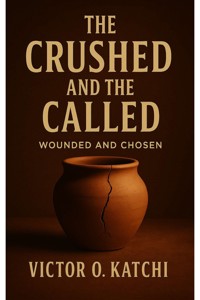
The Crushed and The Called is a powerful reflection on the mysterious ways God uses pain, brokenness, and trials to shape those He calls. Victor O. Katchi offers deep spiritual insight into the paradox of divine calling—how God often crushes before He commissions, wounds before He sends, and breaks before He builds. Through scriptural meditation and heartfelt narrative, this book speaks to those who feel forgotten, rejected, or unworthy, revealing that suffering may be the very sign of divine favor and preparation.
Das E-Book können Sie in Legimi-Apps oder einer beliebigen App lesen, die das folgende Format unterstützen:
Veröffentlichungsjahr: 2025
Ähnliche








The Crushed and The Called REVIEWED
Table of contents
Acknowledgments
Preface
Table of Contents
INTRODUCTION: The Altar of Anointing
Chapter 1: The Oil and the Wound
Chapter 2: When Chosen Hurts
Chapter 3: The Gifted Yet Grieving
Chapter 4: Carrying Fire in Fragile Jars
Chapter 5: Hidden Scars of the Called
Chapter 6: He Anoints... Then Breaks
Chapter 7: The Oil in the Scars
Chapter 8: When Your Tears Are Tongues
Chapter 9: The Broken Ones God Still Uses
Chapter 10: Nights Without a Song
Chapter 11: The Pain That Prays
Chapter 12: When Heaven Feels Far
Chapter 13: The Ministry of Thorns
Chapter 14: Birthing Oil in the Press
Chapter 15: Why God Trusts the Wounded
Chapter 16: The Trial of the Treasure
Chapter 17: Rising While Bleeding
Chapter 18: The Forge of the Faithful
Chapter 19: When Weakness Becomes Power
Chapter 20: Restoration Is a Process
Chapter 21: Healed to Heal
Chapter 22: The Strength of Surrender
Chapter 23: Mantled Again
Chapter 24: Glory in the Scars
Chapter 25:When Silence Is an Instruction
Chapter 26: Not Strong, But Sent
Chapter 27: The Weight of the Mantle
Chapter 28: When Obedience Feels Like Loss
Chapter 29: You Will Speak Again
Chapter 30: The Crushing Was Never the End
Closing Reflection: The Anointing Still Flows from Broken Vessels
Final Reflection: The Vessel and the Voice
Closing Prayer: For the Wounded and the Willing
Acknowledgments
Preface
Table of Contents
INTRODUCTION: The Altar of Anointing
Chapter 1: The Oil and the Wound
Chapter 2: When Chosen Hurts
Chapter 3: The Gifted Yet Grieving
Chapter 4: Carrying Fire in Fragile Jars
Chapter 5: Hidden Scars of the Called
Chapter 6: He Anoints... Then Breaks
Chapter 7: The Oil in the Scars
Chapter 8: When Your Tears Are Tongues
Chapter 9: The Broken Ones God Still Uses
Chapter 10: Nights Without a Song
Chapter 11: The Pain That Prays
Chapter 12: When Heaven Feels Far
Chapter 13: The Ministry of Thorns
Chapter 14: Birthing Oil in the Press
Chapter 15: Why God Trusts the Wounded
Chapter 16: The Trial of the Treasure
Chapter 17: Rising While Bleeding
Chapter 18: The Forge of the Faithful
Chapter 19: When Weakness Becomes Power
Chapter 20: Restoration Is a Process
Chapter 21: Healed to Heal
Chapter 22: The Strength of Surrender
Chapter 23: Mantled Again
Chapter 24: Glory in the Scars
Chapter 25:When Silence Is an Instruction
Chapter 26: Not Strong, But Sent
Chapter 27: The Weight of the Mantle
Chapter 28: When Obedience Feels Like Loss
Chapter 29: You Will Speak Again
Chapter 30: The Crushing Was Never the End
Closing Reflection: The Anointing Still Flows from Broken Vessels
Final Reflection: The Vessel and the Voice
Closing Prayer: For the Wounded and the Willing
About the Author
landmarks
Title page
Table of contents
Book start
By V. O. Katchi
THE CRUSHED AND THE CALLED: Wounded and Chosen © 2025 V. O. Katchi All rights reserved. No part of this publication may be reproduced, stored in a retrieval system, or transmitted in any form — electronic, mechanical, photocopy, or otherwise — without the prior written permission of the publisher, except for brief quotations used in reviews or scholarly works. Cover Design and Interior Layout by: Alexis de Great, in collaboration with V. O. Katchi Scripture References: Unless otherwise stated, all Scripture quotations are taken from the New King James Version (NKJV), © Thomas Nelson. Other versions are acknowledged as used. Printed in [Country of Publication] ISBN: [To be inserted]
To God Almighty — the Master Potter who breaks to remake, crushes to commission, and chooses the wounded to carry the weight of glory.
Acknowledgments
To every crushed vessel who still said “yes.” To those who worshiped with tears, preached through pain, and obeyed when Heaven was silent — this book is for you. And to my faithful readers across nations — Your prayers and encouragement have turned my scars into sermons. Thank you. — V. O. Katchi
Preface
Some books are written from study. This one was written from scars.
The Crushed and The Called is not a manual for the perfect, but a mantle for the wounded. It is for those who have walked with God and wept in secret. Those who were anointed… yet broken. Chosen… yet crushed. Used by God… yet misunderstood by men.
I did not write this as a spectator. I wrote it as one who has felt the weight of calling and the sting of crushing. As one who knows what it means to be trusted by God — and tried by life.
This book is not to impress you. It is to embrace you. To remind you that what wounded you did not waste you. That Heaven still sees your limp… and calls you faithful. That you are not broken beyond usefulness. In fact, your brokenness may be the very thing God uses to birth oil for others.
Every chapter is a mirror and a mantle. A window into the pain of the process — and the power of the promise.
If you’ve ever cried on your way to the pulpit… If you’ve ever served while bleeding… If you’ve ever questioned why the ones God calls seem to hurt the most…
This is for you.
May these pages become balm for your soul. And may you rise again — wounded, yes… but wiser, deeper, and still anointed.
— V. O. Katchi
Table of Contents
Prologue
Chapter 1: The Oil and the Wound
Chapter 2: When Chosen Hurts
Chapter 3: The Gifted Yet Grieving
Chapter 4: Carrying Fire in Fragile Jars
Chapter 5: Hidden Scars of the Called
Chapter 6: He Anoints... Then Breaks
Chapter 7: The Oil in the Scars
Chapter 8: When Your Tears Are Tongues
Chapter 9: The Broken Ones God Still Uses
Chapter 10: Nights Without a Song
Chapter 11: The Pain That Prays
Chapter 12: When Heaven Feels Far
Chapter 13: The Ministry of Thorns
Chapter 14: Birthing Oil in the Press
Chapter 15: Why God Trusts the Wounded
Chapter 16: The Trial of the Treasure
Chapter 17: Rising While Bleeding
Chapter 18: The Forge of the Faithful
Chapter 19: When Weakness Becomes Power
Chapter 20: Restoration Is a Process
Chapter 21: Healed to Heal
Chapter 22: The Strength of Surrender
Chapter 23: Mantled Again
Chapter 24: Glory in the Scars
Chapter 25: When Silence Is an Instruction
Chapter 26: Not Strong, But Sent
Chapter 27: The Weight of the Mantle
Chapter 28: When Obedience Feels Like Loss
Chapter 29: You Will Speak Again
Chapter 30: The Crushing Was Never the End
Closing Reflection: The Anointing Still Flows from Broken Vessels
Final Reflection: The Vessel and the Voice
Closing Prayer: For the Wounded and the Willing
INTRODUCTION: The Altar of Anointing
There is a profound truth, whispered in the quiet hours and etched into the annals of sacred history, that has long been obscured by our brightest assumptions. We speak of "the anointing" with reverence, often picturing a halo of glory, a pathway paved with effortless triumph and public acclamation. We envision applause, promotion, and a life lifted above the common struggles. But what if our vision has been incomplete, perhaps even fundamentally flawed? What if the very essence of divine empowerment has been largely misunderstood?
My own journey, and the countless stories I’ve witnessed and heard from those walking a consecrated path, have revealed a stark, yet beautiful, contradiction: the anointing, in its truest form, often arrives not with a fanfare, but with a groan. It rarely attracts applause before it invites affliction. And far from merely lifting us up, it more often breaks us first.
This isn't a theological anomaly; it is a consistent pattern woven throughout the tapestry of Scripture and human experience. Consider the echoes of those God Himself chose, those marked for something truly divine:
Joseph, chosen from among his brothers, knew the bitter taste of betrayal and the cold confinement of a prison pit long before he ever saw the palace or the power.
David, anointed as a young shepherd boy, spent years being relentlessly hunted, hiding in desolate caves, a fugitive king without a crown.
Elijah, after a fiery display of God's power that shut down an entire nation's false worship, found himself under a broom tree, wrestling with an incapacitating depression, begging for death.
Paul, transformed by a blinding encounter with Christ, carried a persistent, agonizing "thorn in the flesh" throughout his apostleship, even as he carried the very Gospel to the ends of the earth.
And then there is Jesus, the Anointed One Himself, the Messiah, in whom the Spirit resided without measure. He was not a distant deity, untouched by human suffering, but as the prophet Isaiah declared, "a man of sorrows, and acquainted with grief." His anointing led Him not to a throne of earthly power, but to a cross of ultimate sacrifice.
This book is built entirely on the granite of that divine contradiction: the unsettling, yet ultimately redemptive, truth that God often crushes those He calls. This is not, let me be clear, born of celestial cruelty or arbitrary punishment. It is born of a profound, unshakeable covenant. It is a purposeful, sacred process.
Think of it this way: oil, rich and precious, does not simply flow from whole, unblemished olives. It is released only when they are pressed, when their very essence is put under immense weight and broken open. So too, the sacred oil of anointing, intended to heal, deliver, and empower, often requires the crushing of the vessel that is to carry it.
In the pages that follow, we will embark on a raw and honest journey—a pilgrimage, if you will—into the secret wounds of the anointed, the silent battles fought far from public view, and the deep, often agonizing, process of becoming. This isn't merely about being called; it is about being formed. It is about the transformation that occurs when Heaven's touch meets earth's brokenness.
Let me be unequivocally clear: This is not a devotional offering neat platitudes or quick fixes. This is a declaration. It is a loud, resounding affirmation to your soul, to your weary spirit, to the parts of you that have questioned everything: You are not alone. The ache you feel, the confusion that clouds your path, the quiet despair that sometimes whispers in the night—these are not disqualifiers. And crucially, this is not the end of your story.
There is still glory to be found in your scars. There is still potent, life-giving oil in your crushing. There is still a mantle—perhaps even heavier, deeper, and more authentic now—waiting to rest upon your shoulders, refined by the very fire you’ve walked through.
So, I invite you, courageously, to come. Let us walk through the fire of these truths together. Let us lean into the discomfort of this divine paradox. And in doing so, let us discover, with fresh eyes and a renewed spirit, the God who, with unwavering love and intentional purpose, still calls broken vessels to carry His burning oil. Your breakthrough isn't just coming; it's being forged in the very crucible of your current pain.
Chapter 1: The Oil and the Wound
The air crackles with an unspoken tension, an enduring paradox at the heart of divine calling: the anointing is undeniably beautiful, a touch of consecrated power from the very throne of Heaven. Yet, the wound is undeniably brutal, a sharp stab from the very hand of life. And in a truth that bewilders our comfort-seeking souls, God, in His sovereign wisdom, allows—even orchestrates—both.
Somewhere, in the crucible between the sacred touch of Heaven and the raw, often agonizing stab of earthly existence, the soul of the called is meticulously forged. This is the profound paradox we often shy away from preaching, the uncomfortable reality we rarely confront head-on: that those whom God chooses, those He sets apart with His divine oil, He also permits—even intends—to bleed. And with an almost unnerving consistency, the oil and the wound do not appear separately. They emerge as inseparable companions, intertwined like threads in a complex tapestry, marking the life of every truly anointed individual.
The Stirring and the Sacred Pouring
It invariably begins with a whisper. A subtle, yet unmistakable, stirring deep within the spirit. Perhaps it's a dream, vibrant and too sacred to articulate to anyone else, a vision etched onto the canvas of your sleeping mind that feels more real than waking life. Or it could be a quiet, insistent voice in the darkest hours, echoing from eternity: "You’re Mine."
In those initial moments, you feel profoundly chosen. Marked. Set apart. A deep, undeniable sense of being different settles upon you. It’s not a feeling of superiority, but rather a unique sensitivity. You find yourself bothered by injustices others simply overlook. You weep deeply when others might laugh at superficial things. Your soul feels the weight of the world while others scroll past, seemingly unburdened. There's an invisible, almost magnetic, pull on your life, a strange and exhilarating tension between the person you are today and the formidable individual you are sensing you are destined to become.
And then comes the oil.
This isn't necessarily a visible, tangible pouring. It might be an overwhelming moment in solitary prayer, a sense of divine gravity descending. It could be a public commissioning, a laying on of hands that ignites something undeniable within. Or perhaps, most commonly, no one else sees it at all, no human eye bears witness. But you feel it. Something immeasurable has been poured over you, a divine essence permeating your being. The heavens have acknowledged your existence, ratified your purpose. You have been anointed—not merely for easy service, but for significant suffering. Not just for external greatness, but for internal groaning. Not just to stand confidently on exalted platforms, but to crawl painstakingly through desolate wildernesses.
The Uninvited Companion: The Wound
This is the part we gloss over. The truth that sits heavy in the quiet corners of our testimonies: that after the oil, often comes the wound.
Suddenly, almost inexplicably, you begin to experience a profound sense of loss. Relationships that once felt foundational begin to shift, sometimes dramatically. Battles you never invited, challenges you never sought, appear unbidden at your door. People who once celebrated you begin to question your authenticity, your motives, even your sanity. You may find yourself praying with more fervor and consistency than ever before, yet paradoxically, you feel less heard by Heaven. You strive for greater obedience, yet find yourself suffering more acutely. Slowly, relentlessly, the initial glamour and excitement of the calling yield to the raw, unyielding grit of what it truly means to be chosen.
The wound appears—sharp, precise, and unsettlingly holy. It carves into your spirit with surgical precision.
Sometimes, it manifests as rejection: a door slammed shut, a betrayal by those you trusted most, the sting of being cast aside for reasons you cannot fathom. Sometimes, it is betrayal in its cruelest form, a wound inflicted by those within your inner circle, leaving you reeling from the shock of intimacy turned to perfidy. At other times, it is the stark reality of failure, a public stumble, a visible misstep that shatters confidence and brings humbling defeat. Then there’s the agonizing slow burn of delay, a season so protracted, so devoid of progress, that it feels less like a pause and more like outright denial of every promise God whispered. And perhaps most unsettling of all, there is the silence—not from men, but from God Himself. A deafening spiritual quietude where answers seem withheld, guidance is obscured, and His comforting presence feels distant.
In these moments, you inevitably look heavenward, tears blurring your vision, and cry out with a raw, primal question: "Is this what I was anointed for? Is this the path for the one You called?"
The Wound Reveals the Oil's Strength
But here lies the profound, sacred mystery, the heart of this book's message: The wound does not cancel the oil. It proves it.
The oil, poured by divine decree, is not fragile. It doesn’t evaporate in the intense heat of pain, nor is it washed away by tears. Instead, it settles deeper within you. It matures, thickening and enriching. It seeps into every fissure, every crack the wound creates, until it becomes an intrinsic part of who you are. The wound, in a paradoxical and profoundly sacred way, gives an undeniable weight to the oil. It's the difference between a pristine, untouched vessel and one that has been through the fire, bearing the marks of its refining, now capable of holding a more potent, concentrated essence.
This profound truth is why King David, the anointed shepherd-king, could write with such searing honesty, "You anoint my head with oil," in the very same psalm where he also declared, "I walk through the valley of the shadow of death." For the anointed, the shadow and the oil are not mutually exclusive. They arrive together, inseparable companions on the journey of purpose.
For Joseph, the oil of destiny came in vivid, prophetic dreams. The wound, sharp and agonizing, came in the form of the pit, the betrayal by his brothers, slavery, and unjust imprisonment.
For Moses, the oil of leadership and deliverance came at the burning bush, a divine encounter that transformed a stuttering fugitive into a nation-builder. The wound, deep and persistent, came through forty arduous years in the scorching desert, marked by the grumbling of a difficult people and the weight of their rebellion.
For Paul, the oil of apostolic commission came in a blinding flash on the Damascus road, turning a persecutor into a proclaimer. The wound, relentless and diverse, came through beatings, shipwrecks, imprisonments, and a tormenting "thorn in the flesh" that he wrestled with until his dying day.
And for Jesus, the Christ, the Anointed One, the oil was poured without measure, a divine fullness. The wound, the ultimate act of surrender and sacrifice, was the cross—a brutal instrument of death that became the very symbol of eternal life.
No one escapes this pattern. Not the purest in heart, not the strongest in spirit, not even the flawless Son of God. The anointing, contrary to popular belief, does not make you immune to pain. In fact, it often makes you a primary target for pain. Because within your breaking, there is a profound glory waiting to be revealed. Within your pressing, there is an uncontainable power poised to erupt. And there is a unique fragrance, a divine essence, that God desires to release into the world—a fragrance that only emanates when the vessel is crushed.
Have you ever truly noticed? Oil, in its purest form, does not flow until the olive is pressed, its rigid structure broken down. Wine, rich and full-bodied, does not pour forth until the grape is stomped and crushed underfoot. And true, undeniable glory—the kind that shifts atmospheres and transforms lives—does not fully shine until the soul is wounded, surrendered, and yielded to the divine process.
Perhaps you find yourself in this very season, wondering why your path feels so much more arduous, so much more painful, than others around you. You might look at those who seem to glide effortlessly through life, possessing half your devotion, and question why you are left to grind through relentless challenges.
But here is the truth to anchor your soul: You were not anointed for ease. You were anointed for impact. And that impact, that profound, life-altering influence, demands a crushing. You carry within you an oil, a divine empowerment, that Hell itself fears. An oil that cannot be copied, cannot be faked, cannot be duplicated by human effort or spiritual imitation. This oil was reserved, consecrated, just for you—and it came, and continues to come, with a cost.
So, if you're limping through this season, if you're bleeding internally while still clinging to your belief, if you feel torn and raw but are, by some miracle, still trusting the Unseen Hand… know this with every fiber of your being: You are not lost. You are not off course. You are precisely where you are meant to be.
The wound that marks you is not your shame. It is your seal. It is irrefutable evidence that something eternal, something profound and unquantifiable, is being meticulously formed within you—a spiritual substance that cannot be bought, borrowed, or faked by anyone else. And the very same God who sovereignly allowed the wound is vigilantly guarding the precious oil within you.
You will not be wasted. You will not be abandoned. You will not be forgotten. You are actively being formed, transformed, and refined. Not merely as a vessel, a container for His presence, but as a living, breathing carrier of healing for others.
Because one day, a broken soul, raw with their own pain, will sit across from you. And in that sacred space, you will not offer empty clichés or give advice regurgitated from a book. You will simply, tenderly, show them your wound—and in that vulnerability, in the shared humanity of suffering understood, they will begin to be healed. For in the Kingdom of God, it is universally acknowledged that the wounded healer carries the deepest, most authentic authority.
This is your story now. The oil and the wound. The mystery and the mess. The beauty found only amidst the bruises.
And this is your unshakable promise: The anointing upon your life will not fail you. Not here. Not now. Not even as you bleed. It is in this paradox that true power is found.
Chapter 2: When Chosen Hurts
There is a distinct, quiet ache that settles deep in the bones of those truly chosen by God. It’s not the ache of longing for God, that beautiful spiritual hunger that draws us closer. No, this is an ache that surfaces after He has called you, after His hand has rested upon you and marked you for a purpose beyond yourself.
It is the raw, sharp ache of obedience that costs you everything. The gnawing pain of knowing you are profoundly marked, yet consistently misunderstood by those closest to you. It's the bewildering reality of being undeniably chosen, set apart by the Divine, and still finding yourself bleeding, limping, and wrestling in the trenches of life. Because the truth, the raw and often unspoken truth that most people never dare to tell you, is this: Being chosen hurts.
The Divine Processing
When God selects you, His intention isn’t merely to promote you to a position of ease or public acclaim. His primary objective is to process you. He pulls you out from the anonymity of the crowd, His gaze fixed upon your potential, but in that very act of selection, He doesn’t always provide a clear explanation for the bewildering path ahead. He may send vivid, powerful dreams swirling into your spirit, painting a glorious vision of your future. Yet, with an almost jarring abruptness, He then sends you into places—situations, seasons, relationships—that look absolutely nothing like the promised vision. He speaks unwavering promises over your life, words of destiny and breakthrough, and then, inexplicably, He walks you directly into a season of pain, suffering, or delay that seems to contradict every single word He uttered.
Why does He operate in such a confounding way? Because a divine calling is never, ever about convenience. It is, at its core, about consecration. And true consecration, the sacred act of setting apart for holy use, always involves a cutting away, a painful severing of what cannot go with you into your purpose.
Echoes of the Chosen's Agony
Consider Joseph, a poignant testament to this truth. As a favored teenager, he lived with an almost palpable sense of destiny. His dreams were vivid tapestries of greatness: of influence, of leadership, of family reconciliation. But then, the terrifying descent into the pit. The crushing betrayal by his own brothers, who sold him into slavery. Then came the grinding years of servitude, the gut-wrenching experience of false accusation, the cold, silent walls of prison, followed by a bewildering season of divine silence.
What do you do when you're undeniably chosen, yet inexplicably hated? When your faithfulness is met not with reward, but with false accusations? When you've done nothing wrong, nothing to deserve your fate, and still find yourself languishing in a dungeon of injustice? You wrestle. You weep. You question. "Did I mishear God?" you might wonder, your soul raw with confusion.
But Joseph didn’t mishear God. He heard Him with chilling clarity. And that very clarity, that direct line to divine destiny, paradoxically attracted profound crushing. For those who are destined to carry a clear, weighty purpose, those who are marked for extraordinary impact, must almost invariably pass through deep, often agonizing, deaths to self. The same God who breathed the dream into Joseph’s spirit was equally committed to shaping the dreamer. And He often achieves this meticulous shaping by allowing what feels like direct contradiction, a painful tension between promise and present reality.
Being chosen, then, does not shield you from the sting of betrayal. It does not grant you exemption from the brutal touch of affliction. In fact, it often actively invites it. Why? Because the immense weight of a divine calling cannot rest on a soul that remains filled with self-sufficiency, ego, or the fragile illusions of human control. It must rest on someone who has been thoroughly hollowed out, emptied of anything that would compete with God’s glory or compromise His purpose.
Ask David. He was publicly anointed by the prophet Samuel in front of his family, the sacred oil dripping from his head, the promise of kingship clear and unmistakable. Yet, David's path from oil to throne was not a triumphant procession; it was a grueling nightmare. He became a hunted fugitive, living in desolate caves, constantly fearing for his life. He lost loyal friends, endured deep loneliness, and wrestled with pain that very nearly consumed his mind. All of this, after being chosen.
Ask Mary. She was chosen to carry the Messiah Himself, "highly favored," visited by an angel, blessed among women. Yet, her anointing brought not immediate comfort, but the profound shame of walking pregnant and unmarried through a culture that would stone women for far less. She bore the weight of societal judgment, the silent scorn. She watched her miraculous child die a brutal criminal’s death. She endured decades of divine silence after the initial angelic visitation. All of this, after being chosen.
Ask Jeremiah. Chosen from his mother’s womb, appointed as a prophet to nations, yet his life was a relentless cascade of suffering. He was thrown into pits, hated by kings, mocked and scorned by his own generation. He wept so profusely for his people and his calling that history remembers him as "the weeping prophet." Not because God failed him, but because God profoundly trusted him with pain.
The Cross, Not the Crown
Being chosen hurts—not because God is cruel or capricious, but because He is intentional. The crushing you experience is not a punishment for some unseen sin; it is meticulous preparation. The furnace of affliction is not a sign of abandonment; it is purposeful refinement. The deafening silence you sometimes endure is not rejection from Heaven; it is a sacred space, a holy classroom where God teaches you to hear with the profound intuition of your heart, beyond the clamor of external voices.
We often cry out to God for purpose, begging Him to reveal our destiny, to ignite us with His fire. And in His infinite wisdom, God often sends pain. Not because pain itself is the purpose, but because it is the divine chisel that reveals what cannot, what simply must not, go with us into that purpose.
Some deeply ingrained pride must die, giving way to profound humility. Some cherished idols—whether they be comfort, control, or human approval—must fall from their pedestals. Some cherished attachments to lesser things must be severed, allowing us to cling only to Him. Some debilitating approval addictions must be burned away in the fire, freeing us from the shackles of external validation. And some deep-seated wounds from our past must surface, not to destroy us, but so they can be thoroughly healed and properly cauterized before we can stand securely in the high and holy place to which He is calling us.
And so, with a loving, sovereign hand, God allows precisely what we hate to produce precisely what He loves within us. This is why being chosen is not primarily a crown to be worn with earthly fanfare; it is, more profoundly, a cross to be carried with sacred resolve. You carry something profoundly holy within you—a divine essence, a sacred calling. And anything truly holy, anything consecrated for God's purposes, must first pass through the refining fire before it can truly touch and transform others.
You are chosen, yes. And yes, you are hurting. But let this truth anchor your soul: You are not cursed. You are being carved. You are not being broken to be discarded; you are being meticulously sculpted for glory.
Chosen people often walk a path of profound solitude, not because they are unloved by Heaven or earth, but because Heaven is jealously protective of their attention, seeking to cultivate a singular focus on the Divine. They are misunderstood by the world around them, not because they are inherently strange or eccentric, but because their instructions, their compass, their very bearing, are not earthly; they stem from a higher, unseen realm. And when they are attacked with ferocity, it is not because they are weak or vulnerable; it is because they carry a potent, terrifying oil that the enemy of souls perceives as a profound threat. Even when surrounded by crowds, they may feel a deep sense of being hidden, unseen—because their ultimate destiny, their truest purpose, is not yet fully ready to be revealed.
If you find yourself hurting right now, in the very place of your calling, know that you are not in isolation. You are in sacred company, walking the path of giants of faith. You are not broken beyond repair or use. On the contrary, you are being formed for something magnificent, something that transcends your current pain and extends into eternal glory.
So, for the sake of your destiny, for the sake of the oil you carry: Don’t despise the pain. It is working a greater weight of glory. Don’t curse the silence. It is a classroom for your heart to learn divine hearing. Don’t rush the process. Every moment is intentional in the hands of the Master.
Even this ache in your soul is a holy altar where sacrifices of self are made. Even this confusion that clouds your understanding is sacred ground where God is teaching you to trust beyond sight. Even this night, however long and dark it may seem, is not forever.
Because soon, when the processing is complete, when the carving is done, the dream will suddenly come alive. The prophecy over your life will begin to breathe with tangible reality. The wilderness season, with all its trials and desolation, will inevitably come to an end.
And when you emerge—wounded, yes, but profoundly wiser, worshipping with a depth you never knew possible—you will not just carry the call as a burden or an assignment. You will, in every fiber of your being, embody it. The world will look upon your life and see the fruit of God’s grace, the manifest glory. But only you, and the God who walked with you through every shadowed valley, will truly know the immeasurable price—the sacred cost—of becoming.
Chapter 3: The Gifted Yet Grieving
There exists a quiet, pervasive suffering, an unspoken anguish, among those whom God has uniquely gifted. It is a sorrow, often profound, that hides meticulously behind the public spotlight, behind the eloquent sermons, the captivating melodies, the powerful prophecies. It is a grief that grows, like a silent, tenacious root, in the solitude of the soul—precisely because gifted people, by an unspoken societal and often ecclesial mandate, often feel they have no permission to mourn.
You are the one expected to rise, to pour out, to lead with unwavering strength, to shine with an unquenchable light. This expectation remains, heavy and constant, even when your soul is burdened with an unseen heaviness, even when something deep inside you feels as if it’s quietly unraveling. They see the undeniable gift, but they tragically miss the silent, consuming grief. They applaud your voice, your insight, your anointing, but they rarely, if ever, pause to ask if you've cried yourself to sleep that week, or if your smile masks a persistent ache. This, then, is the unspoken burden of the gifted: they often bleed in places no one bothers to look, in the very core of their being, far from any public gaze.
It's a bewildering internal contradiction. You might be fluent in the language of prophecy, yet find yourself stuttering, wordless, in your private prayers. You can stand boldly and call down fire from heaven, commanding spiritual breakthroughs for others, yet struggle intensely to ignite a flicker of hope or peace in your own soul. You can compose and sing songs that bring healing and comfort to multitudes, while simultaneously walking through a personal valley riddled with the ache of your own unanswered questions, your own deep disappointments. This is the stark reality: You can be profoundly gifted, and profoundly grieving.
The Unseen Weight of Discernment
Elijah stands as one of history’s most powerfully anointed prophets. He ran chariots to the ground with divine energy. He single-handedly shut the heavens, preventing rain for years. He called down fire from above, consuming altars and silencing false prophets. He confronted kings with audacious courage. And yet, in the very next chapter of his story—following such monumental triumphs, beneath the crushing weight of exhaustion, profound isolation, and a primal fear for his life—he collapsed under a broom tree, begging God to let him die. "It is enough now, O Lord," he cried, "Take away my life" (1 Kings 19:4).
How does someone so demonstrably powerful, so intimately connected to the miraculous, feel so utterly broken? The answer is stark in its simplicity: Gifting does not, cannot, make you immune to grief. If anything, the very nature of your calling, the heightened spiritual sensitivity that comes with the anointing, makes you feel grief more deeply, more acutely than others.
While others are easily distracted by the noise and superficiality of the world, you are keenly discerning, sensing the spiritual currents, the underlying brokenness, the unaddressed pain. While the majority are able to simply move on from tragedy or disappointment, you still carry the weight of the burden, the lingering ache of what could have been or what still needs to be. While others might rejoice at surface victories, you feel the profound weight of what remains unfinished, what is unseen, and what desperately needs to be resolved in the spiritual realm. You are not just crying for yourself; you are crying for what you carry. And that spiritual weight, that burden of discernment and empathy, is far heavier than anyone outside your experience can possibly comprehend.
There are days, for those who serve, when the microphone in your hand feels less like an instrument of ministry and more like a heavy sword, cutting into your own spirit. There are Sundays when you step into the pulpit, your hands trembling not from nervousness, but from the raw vulnerability of a soul that feels bruised. There are powerful songs you've written not from a place of triumphant joy, but from the deepest, darkest pits of despair. And there are prayers, fervent and desperate, you’ve prayed with cracked, strained voices and silent, scalding tears. And yet, miraculously, defying all human logic, the gift keeps flowing.
Grief: The Activator of Authentic Anointing
This is the profound paradox that defines the journey of the anointed: Grief does not cancel the gift. In a mysterious, divine way, it often activates it, deepening its impact and purifying its source.
The most powerful, life-transforming ministries and expressions of divine gifting are rarely, if ever, born in an atmosphere of unblemished comfort or effortless ease. No, they are forged in the fires of mourning. They are shaped in the secret agony of the soul. They are refined, honed, and made potent in the crushing places, where everything that is not of God is stripped away.
Ask Hannah, the barren woman of Ramah. Her womb was shut, her very identity as a woman and wife challenged by her rival, Peninnah. Her heart was utterly broken by her inability to bear children. She wept with such visceral pain at the altar in Shiloh that the High Priest Eli mistook her fervent, silent anguish for drunkenness. But out of that profound, inconsolable grief, poured out before God without reservation, came Samuel—a prophet who would anoint kings and speak God’s word to nations. Her wound birthed her breakthrough.
Ask David again. He was gifted beyond human measure—a skilled warrior, an unparalleled worshipper, a king destined for greatness. Yet his psalms, the very hymns that continue to minister to millions today, are soaked in sorrow, steeped in lament. He often cried out to God in raw despair, questioned His ways, and groaned through the long, lonely nights. And yet, it was precisely his profound, often overwhelming, grief that gave his gift an unparalleled depth, a resonating authenticity. That's why, when David’s songs of lament and hope are sung, your soul doesn't just hear the melody; it listens, it connects, it recognizes the voice of one who knew genuine pain. Because pain, deeply felt and honestly expressed, adds a palpable weight to truth. And sorrow, courageously embraced, gives songs, sermons, and every act of ministry true wings to reach the deepest parts of the human heart.
Even Jesus—the flawless, sinless Son of God, the most anointed being to ever walk the earth—was profoundly described by Isaiah as "a man of sorrows, and acquainted with grief" (Isaiah 53:3). He did not shy away from the human experience of pain. He wept openly at Lazarus's tomb, not out of weakness, but out of profound empathy for human suffering. He wept over the city of Jerusalem, burdened by its spiritual blindness and impending destruction. He wept, sweating blood, in the garden of Gethsemane, wrestling with the overwhelming weight of the cross that awaited Him. He was not weeping out of a lack of strength; He was weeping because He felt everything—the sin, the suffering, the human brokenness—with an intensity we cannot comprehend.
And so do you. You feel the crushing weight of other people’s stories, their unspoken burdens, their silent cries. You feel the ache of unrealized potential—not just in your own life, but in the lives of those you serve, in the very fabric of the world around you. You grieve for what has been lost, for the agonizing delays, for what remains broken, and for what could be healed if only hearts would surrender. You grieve because your heart is uniquely tender, spiritually sensitive—and that very tenderness, that capacity for deep feeling, is profoundly holy in the eyes of God.
The Sacred Permission
The Church, in its pursuit of strength and victory, urgently needs to proclaim this truth more loudly, more consistently: It is profoundly possible to be highly gifted by God and, at the very same time, to be deeply, intensely grieving. This is not a contradiction that disqualifies; it is, in fact, a crucial aspect of the calling itself. Your grief is not proof that you are unqualified, weak, or somehow spiritually deficient. On the contrary, it is undeniable proof that you are still human—and, perhaps even more importantly, that you have not allowed the relentless demands of your gift or the expectations of others to harden your heart into an unfeeling stone.
The true danger for the gifted isn't in grieving openly and honestly. The profound, soul-destroying danger lies in pretending you don't. Because when gifted people, especially those in leadership, hide their sorrow, when they suppress their tears and deny their pain, a slow, insidious rot begins to set in within their souls. They may continue to perform with excellence, to produce impressive results, to prophesy with power. But internally, the soul grows numb, the heart grows weary, and the spirit becomes brittle. And eventually, tragically, the suppressed weight becomes too much, leading to a catastrophic collapse—emotionally, spiritually, or even morally.
So, let this be your sacred permission, etched deep within your spirit: Grieve.
Grieve what you have irrevocably lost, the dreams that shattered, the relationships that withered. Grieve for what you never had, the unspoken desires, the unmet needs from your past. Grieve for the energy, the time, the love, the profound vulnerability you poured out that was never, ever returned or appreciated. Grieve the profound misunderstanding, the agonizing delays, the cruel betrayals that pierced your soul. Grieve the crushing weight of carrying the burdens of others while, in your deepest moments of need, you felt utterly unseen and uncared for by anyone.
And then, when you have fully embraced that sacred grief, rise. Rise not by pretending the grief is suddenly gone, but by knowing, with certainty, that it no longer rules you. You are not disqualified by your sorrow; you are, in fact, more profoundly qualified. You are not weakened by your tears; you are made stronger, more resilient, more empathetic. You are not less anointed because you are still navigating your healing journey; you are simply, beautifully real.
And God, in His infinite wisdom and tender love, still chooses to flow His power, His anointing, and His glory through real people—people who carry pain, people with complex, often messy pasts, people with wounds that still pulse and ache beneath the robes of their leadership, their ministry, or their daily lives.
This is your story now: Gifted… and grieving. Wounded… and worshipping. Anointed… and aching. Called… and still crying some nights.
But here, in this profound paradox, lies the glory. Your grief has been consecrated; it has become sacred ground, an altar where something holy transpires. And when you next sing, or preach, or write, or lead, or serve—others will not just hear the echo of your gift. They will feel the raw, authentic resonance of your pain, transmuted by grace. And in that shared vulnerability, they will find deep, transformative healing.
Because those who have grieved deeply, those who have walked through the valley of the shadow of death and emerged, are also those who have learned to love most deeply. And ultimately, it is that profound, empathetic, grace-saturated love that imbues the gift with eternal significance and power.




