


2,99 €
Mehr erfahren.
- Herausgeber: via tolino media
- Kategorie: Gesellschafts- und Liebesromane
- Sprache: Englisch
Families torn apart by the Great War. Can promises be kept? When war is declared in August 1914, Bill, is plucking up his courage to ask his sweetheart, Florrie, to marry him. Bill and Florrie’s dreams are dashed when Bill is sent to fight in Gallipoli, Egypt, and Palestine taking with him a horse, Copper, volunteered for service by the 7th Duke’s young daughter, Lady Alice. Bill makes promises before he leaves: to marry Florrie and to bring his beloved warhorse home safe to Lady Alice. While Bill fights Turks and Germans in appalling conditions, Florrie fights her own war with rationing, poverty, the loss of her menfolk, and her father’s drunken temper. As WW1 proceeds, fearful and with her resilience faltering, her feelings of self-worth plummet, and she turns to her dandelion clocks for reassurance. ‘He lives? He lives not? He loves me? He loves me not?’ When Bill returns to England six months after the armistice in November 1918, both he and Florrie have been changed by their personal journeys. Has their love survived their wartime romances, spending five years apart, and the tragedies they’ve endured? Can Bill keep his promises to Florrie and Lady Alice? An insight into the military history of the 1914 1918 war as fought by the Royal Buckinghamshire Hussars and the Queen's Own Worcestershire Yeomanry - some of the 'PALS brigades'. At first thought, 'not real soldiers' by the regular army, the Royal Bucks and the Worcester Yeomanry fought with great courage and suffered huge losses. In fact, the Worcesters sustained more losses than any brigade in any war, and the PALS earnt the respect of all those who fought with them. Although Military Fiction, it is a story inspired by real people and based on real events that doesn't forget the role of strong women in the Great War or their need for a wartime romance - love where they could find it. 'Bryn is, without doubt, one of the best writers of historical fiction writing in English today. In The Dandelion Clock you will not just read about the horrors of war, you will live them in all their stark reality.' - Frank Parker, author of Called to Account 'She truly captured what it was like to be a soldier but also what it was like for loved ones left at home. It is a story of courage, of duty, of heartbreak and of promises made, not to be broken, no matter what the emotional cost. This book had me in tears, in parts, the writing so compelling. It deserves to be read. I strongly recommend.'
Das E-Book können Sie in Legimi-Apps oder einer beliebigen App lesen, die das folgende Format unterstützen:
Veröffentlichungsjahr: 2023
Ähnliche




















Inhaltsverzeichnis
The
Dandelion Clock
MAP EUROPE AND THE MIDDLE EAST
MAP SULVA BAY, GALLIPOLI
MAP OVERVIEW EGYPT, SINAI, AND PALESTINE
MAP WADI GHUZZE AREA
MAP PALESTINE
MAP ES SALT AND JORDAN VALLEY
CHAPTER ONE
CHAPTER TWO
CHAPTER THREE
CHAPTER FOUR
CHAPTER FIVE
CHAPTER SIX
CHAPTER SEVEN
CHAPTER EIGHT
CHAPTER NINE
CHAPTER TEN
CHAPTER ELEVEN
CHAPTER TWELVE
CHAPTER THIRTEEN
CHAPTER FOURTEEN
CHAPTER FIFTEEN
CHAPTER SIXTEEN
CHAPTER SEVENTEEN
CHAPTER EIGHTEEN
CHAPTER NINETEEN
CHAPTER TWENTY
CHAPTER TWENTY-ONE
CHAPTER TWENTY-TWO
CHAPTER TWENTY-THREE
CHAPTER TWENTY-FOUR
CHAPTER TWENTY-FIVE
CHAPTER TWENTY-SIX
CHAPTER TWENTY-SEVEN
CHAPTER TWENTY-EIGHT
CHAPTER TWENTY-NINE
CHAPTER THIRTY
CHAPTER THIRTY-ONE
CHAPTER THIRTY-TWO
CHAPTER THIRTY-THREE
CHAPTER THIRTY-FOUR
The
Dandelion Clock
By
Rebecca Bryn
Text © Rebecca Bryn 2018 All rights reserved
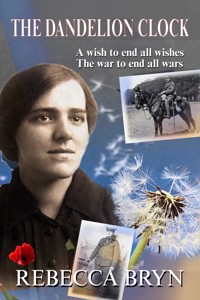
Cover credits
Woman – author’s own family photograph
Man on Horse – author’s own family photograph.
Dandelion background – Penelope Waits on VisualHunt.com. Creative commons attribution licence
Poppy – petercastleton on VisualHunt.com. Creative commons attribution licence. Poppy isolated from background and image reversed.
Font TNR MT Pro Monotype licence 23.2.22
***
Dedicated to the memory of my grandfather, William, 1892 – 1968, who fought in Egypt and Palestine in the Queen’s Own Worcestershire Yeomanry from January 1916 to November 1918 and to the memory of my grandmother, Florence, 1891 -1971, who waited for him.
***
MAP EUROPE AND THE MIDDLE EAST
MAP SULVA BAY, GALLIPOLI
MAP OVERVIEW EGYPT, SINAI, AND PALESTINE
MAP WADI GHUZZE AREA
MAP PALESTINE
MAP ES SALT AND JORDAN VALLEY
CHAPTER ONE
On the idle hill of summer
Sleepy with the flow of streams,
Far I hear the steady drummer
Drumming like a noise in dreams.
Far and near and low and louder
On the roads of earth go by,
Dear to friends and food for powder
Soldiers marching, all to die.
A Shropshire Lad, AE Houseman 1896
***
Northamptonshire, England: June 1914.
The water was cold around Bill’s ankles, and mud oozed between his toes as he waded the brook to free the fishing line caught in a hawthorn bush. He unravelled the fine line from the thorns and waded back to the bank where his older brother, Ernie, sat munching a cheese sandwich.
‘You ain’t caught bugger all except a tree, Billy Mason.’ Ernie’s grin mocked him.
Being called Billy, as if he were a baby, infuriated him. ‘Don’t call me that or I swear…’ He was rising to the bait as Ernie knew he would. He flopped on the ground beside his brother and stretched out on the grassy bank. ‘You ain’t done so well, either, Ern. Two tiddlers ain’t nothing to brag about.’
‘I still beat you.’
A rare half-afternoon off work before haymaking began had seen them revisiting their favourite childhood haunt, the Ise Brook by Warkton Bridge. White cloud-horses galloped past in a Saturday summer sky, reminding him of his cousin, Sam’s, excited story.
‘Sam’s joined the Yeomanry and is training on Saturdays. He reckons His Grace is encouraging sons of tenant farmers to join. Sam reckons it’s a hell of a laugh. They’ve given him a uniform, and they train on horseback with swords.’ He waved his arm as if wielding a long sabre. ‘What do you reckon, Ern? You think we should see if we can join?’
‘Mmmm.’ Ernie cocked his head to one side while he chewed. ‘We ain’t sons of tenant farmers.’
‘Dad being His Grace’s head gardener must surely count for something. Folk admire Boughton House for its gardens.’
Ernie nodded. ‘We could go along next weekend, I suppose. I reckon Kitty would admire me in uniform.’
‘And we’d be doing our duty, training to keep the peace.’
‘Peace? Nothing ever happens around here to need the peace keeping.’ Ernie waved an expansive arm at the avenue of chestnut trees, and the quiet brook that flowed sluggishly between high grassy banks and through Boughton Park, the Northamptonshire estate of the 6th Duke of Buccleuch, to which Warkton and the surrounding villages belonged. ‘Peace we’ve got in bucketsful.’
‘It’ll be a right doddle, then, Ern. A horse, a sword, a musket, maybe, and –’ he admitted the less noble reason for his enthusiasm ‘– I reckon it would impress Florrie, too. That settles it, then. We’ll go along and try our luck.’ He broached the subject that had kept him awake half the night. ‘You reckon I should ask Florrie’s dad for her hand?’
‘She’s a good-looking woman and knows how to care for a man. You’re twenty, Bill, and Florrie’s of age. What’s stopping you? You love her, don’t you?’
He’d pinched flowers from the garden and given them to her on her twenty-first birthday back in April. ‘Course I do, I can’t think of anything grander than being married to Florrie, but her dad scares the shit out of me. Where would we live, and how do I earn enough to support a family?’
Ernie swallowed and frowned, wiping crumbs from his mouth. ‘There’s no room for another body at home, that’s for sure, let alone a family. You could move in with her, surely? Them houses have front parlours. Couldn’t you could put a bed in there?’
‘I was hoping to avoid that. Joe Wesley rules Florrie and her brothers and sisters with a rod of…’ He’d been going to say iron, but Joe had a stick he used to beat his children, like he’d beaten their mother when he was drunk and before she’d succumbed to one too many childbirths. ‘You’re right, though. I don’t see another option. All the estate cottages here are occupied, and anyway old Joe’d struggle to raise his children without Florrie. She’s like a mother to them. If I want to marry her, I’ll have to leave Warkton, move into Joe’s front parlour, and find work in Kettering.’
‘It’d mean me and Kitty could marry and have us boys’ bedroom in the cottage.’ Ernie took a swig of cold tea from a bottle and helped himself to another sandwich. ‘The shoe factories pay well, I hear, but it ain’t like working the land, Bill.’
Haymaking under a blue sky, stacking the sheaves of corn into stooks, walking the furrows behind the plough and the duke’s bay Shire mares: he’d miss it, but it was hard graft and farm work meant he was out all weathers. At least a factory would be dry in winter, and life in town would be more exciting unless he got to join the Yeomanry and charge around Boughton Estate, sword in hand, on a blood horse. He sucked on the sweet stem of a blade of grass. Kettering was only a mile or two across the fields; he wouldn’t have to give up everything to be with Florrie.
Her grey eyes had crinkled in a rare smile when he’d kissed her. His hand went to his lips where the touch of hers still lingered. She had a hard life for a girl her age and smiled too rarely, but he could make her happy and protect her from her father. If he worked hard, he could afford to rent their own home, eventually. Florrie deserved to be happy. ‘I shall ask him.’ He’d try to catch the old bugger in a good mood before he asked though. Mind made up, he sat upright again. ‘Hey, you haven’t left me much grub, you greedy bugger.’ He grabbed what little was left of their lunch and shoved Ernie in the brook.
***
Florrie brushed back her hair with quick fingers and tied it in a neat bun. It was Friday afternoon, the dinner was cooking, and she must hurry if she wanted to meet Father at the gates of the Kettering Gas Company when he left work. Missing him didn’t bear thinking about: he’d be up The Cherry Tree, or The Windmill, drinking his wages away, and there’d be nothing left to feed the family for the coming week. Worse still, he’d roll in drunk, complain his dinner was ruined, and lay about her or Nell with his stick before he collapsed unconscious in his chair.
She did her best to please him, but his drinking had become worse this last year. As the oldest of the girls, she tried so hard to keep the family fed and clothed, and the house clean, but it was more thankless work than the Kettering Corset Company, where she’d worked for pennies from the age of eleven until her mother’s death less than a year ago.
A noise from the living room made her turn. Her sister, Jane, was doing an extra shift at the corset factory, the older boys were still at work, and Arthur, at twelve, was in his last term at school and was playing football in the street with his friends. She didn’t begrudge him his last month of freedom. Work, when school closed for the summer, would trap him for the rest of his life. Little Ellen, the baby of the family at eight, was in the garden checking if the sheet she’d wet during the night was dry, which meant the noise could only be their sister, Mabel, home from work. Boxes for shoes were steady employment in a shoe-making town even if they did only pay her a pittance.
She peered around the door between the kitchen and the living room. ‘Mabel, keep an eye on the dinner. Nell can come with me to the gasworks and help carry the shopping. The walk will do her good.’
Mabel glanced at the clock on the mantelshelf. ‘You’d better hurry.’
She called Ellen, known affectionately as Nell, and gave the child’s hair a quick brush. ‘Come on, Nell. Best foot forward.’
Outside, the air smelt of leather, and the clacking of the machinery in the shoe factory down the street carried on the breeze. They turned uphill and were rewarded by the smell of horse manure from the Kettering Co-operative Society stables in Crown Street. It was a long walk through town from Regent Street to Gas Lane, where the gasworks were. Father would be hot, tired, and thirsty.
He was a stoker, keeping the coking ovens fuelled with coal. It was hot, hard, filthy work, and she was proud of the fact that he helped keep the street lamps alight at night and gas cookers cooking. The smoke from the gasworks’ chimneys hung over the town, filling the air with smuts of soot that would doubtless fall on Nell’s still damp sheet. Her little sister dragged at her hand. Impatient, she quickened her pace. ‘Come on, Nell. If you want to eat next week, stop dawdling.’
The gates of the Kettering Gas Company stood shut. The clock above them showed ten minutes to the end of shift. Already, men on foot or with bicycles gathered in the lane ready for their turn at stoking, and a small knot of women waited with children clutching at their skirts. Their menfolk were hard men, muscled and stocky with grim red faces, and long used to shovelling coal into the ovens for hour after hour in stifling heat. Was it any wonder so many of them were drunkards and spent their wages in the public houses, and the women looked worn down by childbearing and poverty?
Would this be her lot if Bill asked her to marry him? She’d had dreams once. Dreams of dancing on stage like Phyllis Bedells, a Covent Garden ballerina, whose pictures she’d seen in the newspaper, but those dreams had evaporated when Mother died. The family had needed looking after, and, as eldest daughter, the lot had fallen to her. Anyway, she’d probably never have been good enough to dance in public and couldn’t have afforded the fare to London.
Her heartbeat quickened. Bill had seen her dance and had kissed her, but marriage wasn’t necessarily on his mind when their lips met, judging by what she’d overheard her older brothers whispering about. And what would Father think of her choice of a husband? She shrugged: she didn’t care what he thought. She was twenty-one and could make her own decisions about whom she married. Bill was a handsome man and offered hope of escape from her father’s violence and his recent unwelcome visits to her bedroom when her sisters were asleep.
The gates opened and a drudge of weary men, coal blackened and bent, lumbered through them. She grabbed Nell’s hand tighter and stood on tiptoe to see over the crowd. ‘Father?’ Nell trotted along with her as she pushed through the throng. ‘Can you see him, Nell? Father!’
‘There he is.’
‘Where?’
Nell pointed. ‘There.’
‘Typical.’ He was trying to avoid her. ‘Quick, before he loses us in the crowd.’ They darted between broad bodies, small children, and bicycles. ‘Father!’ She grabbed his sleeve. ‘I need money, Father, for shopping. I’ve cooked up all the scraps into a stew, and now there’s no food left in the house.’
Her father scowled and shook off her hand. ‘Ain’t a man master of his own wages no more, girl?’ He lowered his voice. ‘Bloody Christ, don’t embarrass me in front of my mates, Florrie.’
‘I’m sorry, Father, but we have to eat. I need your wages.’
He tore open a brown envelope and counted out coins. ‘There. You’ll have to manage on that. I’m parched. I need a drink.’
‘Mabel’s watching the dinner. I’ll be home in about an hour.’
‘And I’ll be home when I’m good and ready, Florrie. Now don’t pester me, or you’ll feel more than my stick on your backside.’
She clutched the precious coins. ‘I’ll get you something nice for tomorrow’s tea. A bit of belly pork, perhaps.’
He rubbed his chin and then put a hand on her shoulder. ‘You’re a good girl, Florrie.’ A hand wandered down her back and slapped her buttock. ‘Now get yourself home. I’ll be there, later. Keep my dinner hot.’
‘Yes, Father.’
He’d already turned away and was striding towards The Cherry Tree in Sheep Street, one of his favourite drinking haunts.
She headed for the market square; there was shopping to do, and she must try to eke out the shillings to feed eight for a week. She smiled despite her worry. The market was where she’d first met Bill six months ago. Would he be there again today?
***
Bill and Ernie had joined their father in the working men’s club at Weekley, the nearest village to Warkton and a five-minute walk across the fields. Haymaking was in full swing, so a pint or two of ale, a pipe of tobacco, and a game of dominoes were welcome respites from the back-breaking work of the previous two weeks.
Dad laid a blank-six against Bill’s blank-two, and Ernie added a double six, grinning broadly.
‘Ern, you been looking at my dominoes?’ Bill knocked, to signify he couldn’t go, and sat back in his chair while Dad perused his dominoes, puffing on his pipe, brows creased in concentration. Dad never rushed anything.
Eventually, Dad laid his domino and picked up the newspaper folded at his side; he opened it out and held it up in front of his face, smoke rising from above it. If Dad had taken the trouble to look at the page facing the smoke room, which had pictures of a man and a woman on it, he’d have known he was holding it upside-down.
A smile crept across his lips. Everyone knew his father could neither read nor write unlike his mother, who was educated and had visits from young Lady Alice Christabel when her ladyship was in residence at Boughton House.
Ernie placed his last domino with a triumphant bang on the table top. ‘Out. Beat you, again. You owe me a pint, Bill.’
He sniffed. ‘I’ve got more spots left than a zebra.’
‘Zebras don’t have spots.’
‘More spots than our Maggie’s face, then.’
Ernie grinned. ‘That many?’
Dad lowered his newspaper and removed his pipe. ‘You leave our Maggie alone, you young beggars. She can’t help having chickenpox.’ He took another puff on his pipe. ‘You won again, Ernie? Bugger me. Bill, get a round in and pull your socks up if you want to beat our Ernie.’
There was no getting out of his bet, but he’d best Ernie one day, see if he didn’t. ‘Yes, Dad.’ More of his hard-earned wages disappeared the way of last week’s. He needed a better paid job if he was to wed Florrie and have a life beyond work. Three glasses clasped in his hands, he returned to the table and picked up the newspaper, the Daily Chronicle.
‘There’s nothing in it, Bill.’ Dad’s usual comment after he’d pretended to read it for half an hour.
He refolded it to look at the front page. It was that day’s paper, Monday, June 29th.
HEIR TO AUSTRIAN THRONE MURDERED.
ARCHDUKE AND HIS WIFE SHOT DEAD IN THE STREET
DETERMINED PLOT
‘These poor people.’ He read on. ‘Bomb first thrown at their car – second attempt within an hour. Apparently, some bugger threw a bomb into Archduke Franz Ferdinand’s car, yesterday. The archduke chucked it out again, and it blew up the next car. When the archduke and the duchess went to the hospital to visit the injured, somebody opened fire and put a bullet in the duchess and another in the archduke. Got her in the stomach and him in the neck. They’re both dead.’ He paused to take in the horror. ‘And she was pregnant. How can anyone harm a pregnant woman, for Christ’s sake?’
Ernie licked froth from his moustache. ‘Franz Ferdinand? Where was this?’
‘Sarajevo, wherever that is.’
‘Foreign parts. It wouldn’t happen in England.’
‘They can keep their foreign parts if that’s what they’re like. I’ll stick to England.’ He folded the newspaper in half and put the royal tragedy from his mind. Ernie was right. It wouldn’t happen here. The foreign assassination, shocking though it was, didn’t affect him and his little slice of England and never would.
***
It was another week before Bill and Ernie had time to enquire about joining the yeomanry. They’d cut across the fields from Warkton to Weekly and found a line of horses tethered in the shade of a row of trees just inside the wrought-iron gates to Boughton Park.
He pointed. ‘They look like fine animals, Ern.’
‘Riding one of those, waving a sword, will be a bit different from two up on a carthorse.’
‘A horse is a horse, Ern, and we’re here to train. What can be so hard about it?’
A man in uniform approached, his expression stern. ‘Can I help you, lads?’
He took a deep breath. ‘We want to volunteer for the yeomanry, don’t we, Ern?’
‘That’s right. We heard His Grace was asking for volunteers and want to do our bit to keep the peace.’
‘Follow me. I’ll take some details and find you some gear.’
It was that easy? He dug Ernie in the ribs and strode after the officer. In the village hall, the officer wrote down their names and address, occupations, and dates of birth and made them sign to say they were correct.
‘This way.’ The officer rose from his seat behind a table and marched from the hall. ‘The sergeant will kit you out and assign you a horse.’ He smiled briefly. ‘Train hard, and you’ll be an asset to the duke. Mess about, and I’ll see you thrown out on your ears. Understand?’
Ernie nodded. ‘Yes.’
The officer glowered at Ernie. ‘Yes, sir!’
Ernie blushed. ‘Yes, sir.’
Echoing Ernie’s words focussed the man’s attention on him, his other new recruit. ‘And stand up straight when you address your commanding officer, Private.’
He drew himself up to his full five feet six inches, two inches taller than Ernie and a sore point between them he rarely let heal. ‘Yes, sir. Understood, sir!’
‘Next time I shall expect you to know how to salute a superior rank. Dismissed.’
The sergeant, a Weekley farmer called Gilbert Yeats, who’d had cause to chase him and Ernie out of his orchard on more than one occasion, kitted them out with uniforms and masses of items the use of which wasn’t obvious.
Yeats dumped grooming kit on a table. ‘You’ll be issued with a practice sword and rifle when the training session begins. You’ll get your own sword and rifle when the instructor thinks you’ve learnt to look after them and use them. Come and meet your horses.’ Yeats ran his eyes down the line. Men were grooming or saddling horses. ‘Bill, you can have the bright bay mare with the two white socks on her hind legs. She’s a good horse, spirited but steady, and her name’s Copper. She needs grooming before she’s saddled. We start practice in half an hour. Be ready. One of the other lads will show you how to tack up.’
‘Yes, Mr Yea… sir.’
‘And take good care of her, Bill. Copper is Lady Alice’s favourite hunter, lent by her for the good of the parish.’
‘I shall, sir.’ He swallowed. Lady Alice shared his love of horses. She was generous and trusting, and he wouldn’t abuse her trust. He patted Copper’s neck and rubbed her forehead when she turned her head towards him. ‘You’re a beautiful girl, Copper.’
Ernie was given a grey gelding called Captain. Like Captain, Copper was about fifteen hands and both horses looked up to weight. She’d be nippy when he was wielding a sword, unlike a carthorse. Training comprised care for the horses, care of swords and Lee Enfield SMLE rifles, taking the rifles apart and reassembling them until they could do it blindfolded, and riding precision drills in tight formation. Copper was responsive and a joy to ride. She didn’t seem to mind being hung around with bedding rolls, halter ropes, canteens, water bottles, a long sword, and a rifle: all necessities of a yeoman.
He took Copper’s reins in one hand and slid the practice sword from its scabbard, weighing its balance in his hand and making Copper throw up her head, her ears twitching backwards at the motion. Maybe, next weekend he’d get to use it. Maybe, soon, he’d have one of his own. Maybe, if he could learn to wield a sword from horseback, he’d have the courage to face Florrie’s father.
CHAPTER TWO
‘Billy Mason’s a coward.’ Ernie’s voice taunted.
Bill’s fists balled. It was long past time he wiped the smug expression off Ernie’s face. ‘There’s no point me asking Joe Wesley for Florrie’s hand until I’m of age myself. I’d look daft if Dad refused me permission, and I ain’t making a fool of myself asking him. It ain’t long until my birthday. I’ll ask… No, I’ll tell Joe I’m marrying Florrie when she gives me her answer. When she says yes.’
‘You need something to offer the girl, Bill. Farm labourer’s wages ain’t much to live on without a tied cottage provided.’
He straightened his tie. ‘Mobbs and Lewis are advertising for shoe-last makers.’
‘In Kettering – on Carrington Street corner?’
‘I’m going this morning to see if they’ll take me on.’
Ernie nodded. ‘Good luck. I mean it, Bill. I hope you get the job.’
‘Thanks. You ain’t such a bad brother after all.’
Ernie laughed. ‘I’m after getting you out of the cottage, so I can have our room for me and Kitty.’
He stooped, picked up a clod of earth from the track, and flung it at Ernie. ‘You’ll get your comeuppance, Ern. You mark my words.’
Ernie ducked but not before a hail of dirt had gone down inside his shirt collar. ‘You young bugger. Wait till I get you.’
He took a stride backwards, laughing as Ernie struggled to remove collar studs. ‘You can’t catch me.’ He turned and ran down the lane, vaulted the stile into the meadow, and jogged along between the chestnut trees towards the Stamford Road.
***
Red-brick terraced houses lined Kettering’s streets, homes built by the Co-operative Society to house workers for the shoe factories. Horses and carts rumbled past loaded with milk churns, or piled high with leather, timber, corn, crates of ale, and wooden boxes made mysterious by indecipherable letters in faded black ink. The smell of horse manure mingled with his sweat and the smell of tanned leather from the shoe factories.
Mobbs and Lewis occupied a tall, severe building with a grand entrance on the corner of Carrington Street and Victory Street, a few streets away from Regent Street, where Florrie lived. The factory made the wooden lasts the shoe factories used for making boots and shoes and the boot trees that kept the footwear in shape during wear. It was useful work: people needed shoes. Bill brushed back his hair, readjusted his cap, and stepped up into the entrance hall.
A man in a white shirt and black waistcoat took his name and showed him through a door into the factory workshop. Men in flat caps and waistcoats, with their shirt sleeves rolled up, bent over benches set in rows and shaped the wooden lasts with drawknives and sanding wheels. Others worked at machinery whose use escaped him. The floor was littered with wood shavings and off-cuts, and a table held rows of polished lasts and boot trees in size order.
‘Show Bill, here, the ropes, Fred, and let me know if he looks useful.’
‘Yes, Mr Mobbs.’
Mr Mobbs left him to the tender mercies of Fred, who studied him while rubbing his stubble chin. ‘I’ve seen you around somewhere, haven’t I?’
‘I’m stepping out with Florrie Wesley, in Regent Street. Perhaps you’ve seen me walking there.’
‘Joe Wesley’s eldest girl?’
‘Yes.’
‘Terrible business, her losing her mother so sudden. Poor old Joe never got over it, you know.’
‘I know.’ And he took out his grief on his children as if it were their fault.
‘You can use a saw and a draw knife? A sander, a polisher? You done any metalwork – drilling and the like?’
‘I’ve done a bit of whittling, and I’ve helped in the smithy. I’m a fast learner.’
‘Best I show you the ropes, then. I’ll start you on something simple.’
Three hours later, he’d made a passable last for a small girl’s shoe. Fred, the foreman, nodded. ‘Not bad for a first attempt. I’ll tell Mr Mobbs to give you a week’s trial.’ He looked back up at him and raised his voice over the clatter of machinery. ‘I expect you’ll do the right thing by young Florrie?’
‘Soon as I’m earning good money and have a bit put by, I shall ask her to marry me.’
‘Good lad. Poor lass deserves some luck. Don’t you let her down, now.’
‘I won’t, I promise.’ A promise was a promise, and he wasn’t a man to break his word.
***
Florrie dried her hands on her apron and opened the front door to the insistent knock. It was Bill, and he had a huge grin on his face.
He gave her a kiss on the cheek and stepped inside before she could invite him. ‘I’ve got a job at Mobbs and Lewis. A week’s trial.’ He held out a worn leather bag. ‘The foreman let me bring off-cuts for kindling. I thought you might find them handy.’
‘That’s kind of you, Bill.’ She lapsed into an awkward silence. How did you ask a young man what his intentions were and explain why you needed rescuing from your own father? ‘Will you stay for your tea?’
He looked uncomfortable. ‘I can’t, Florrie. Another night?’
‘I’d like that. Father…’
‘He won’t mind me staying?’
‘No. He’ll…’
‘You are all right, Florrie?’
‘I’m fine. I could make a cup of tea if you want – if you’ve time?’ The conversation wasn’t going how she’d expected. Would he propose? Did Bill love her, or had she imagined the spark when they kissed? She led the way into the back kitchen, put the kettle on the gas stove, and put still-warm buns onto a plate. ‘It’s been a while since I’ve seen you, Bill. I wondered if you were ill.’
He took a bun from the offered plate. ‘Haymaking. I’ve been working my… Working all hours. And, weekends, me and Ern are training with the yeomanry. If I get through my week’s trial, and get this job, though, I should be able to see more of you. The hours’ll be regular. I could come and do a few jobs for you after work.’
She grasped the nettle. ‘Maybe you could come for your tea a couple of nights a week to pay you for your work.’ She smiled and arched an eyebrow.
He smiled back and his eyes crinkled. ‘Maybe I could.’
Her cheeks flushed hot, and she turned back to mind the kettle. ‘You could start by putting that kindling in the shed by the coal heap.’
Bill closed the back door behind him, setting the roller towel attached to it swinging. His hob-nail boots clacked on the blue-brick path the way Father’s did when he came home from work. He’d be here soon, if he didn’t go to the pub on his way home. For once, she hoped he would. She hoped he’d get so drunk he never came home.
She poured boiling water into the teapot. Father didn’t approve of young men hanging around her. He wanted to keep her at home, an unpaid skivvy, and someone on whom he could take out his frustrations. At twenty-three, her brother, George, gave as good as he got. He’d laid Father out flat only last week, but it had made things worse for the rest of them, and it was her job to protect her younger brother and sisters and take the brunt of her father’s drunken violence and lust.
***
Bill and Ernie downed their sixth pint before the landlord of The Star at Geddington shook his head. ‘You’ve had enough, boys. Get on home and sleep it off.’
‘But we’re just getting going.’ Bill thumped Ernie on the back. ‘Me and Ern’s celebrating my new job. And I’m going to ask my Florrie to marry me.’
The landlord picked up the empty glasses. ‘I’m not serving you. Get off home, the pair of you.’
‘We know where we’re not wanted, Bill. We’ll get a drink at…’
‘S’closing time anyhow, Ern.’ He steadied himself on the bar, before drawing himself up to his full height. ‘And it’s a long walk home.’ The night air stroked his cheek with a cool hand, and stars twinkled in a cloudless sky. It was a beautiful moonlit night.
Boughton Park lay between them and home. They climbed a gate and ambled across the parkland, familiar with the lie of the land from years of roaming free when the family wasn’t in residence. He was too drunk to care if anyone saw them. Ahead, lay a sunken garden and a pond. A figure loomed black against the moonlight.
Ernie drew a quiet breath at his side. ‘We’ll cop it if we’re found here this time of night.’
They crept forward; the figure didn’t move but stood with a hand outstretched.
He laughed at Ernie’s nervousness, relieved but refusing to show it. ‘It’s Stone Moses. It’s a bloody statue.’
‘Thank God for that, Bill. I thought we were in trouble.’
‘I think Moses should come with us for a walk.’
‘I reckon your right. That’ll teach the bugger for scaring the shit out of me.’
‘Who’s the coward now, Ern?’ Ernie’s earlier jibe about him being scared of Joe Wesley still rankled. ‘Come on. Give us a hand.’
Together they wrested the statue from its plinth and dragged it across the grass.
Ernie panted. ‘What we need is a wheelbarrow.’
‘And I know where to find one. Wait here and be quiet.’ He crept from shadow to shadow between the great trees and made his way to the estate’s walled kitchen garden, his father’s domain, and the rows of barrows. He chose one that didn’t squeak and then ran with it back to Ernie.
They heaved Stone Moses into the barrow and took turns to wheel it along the avenue of trees.
‘Where are we going to put it, Bill? Dad’ll kill us if we take it home.’
He hadn’t thought as far as that. Ahead, was the lane that led to Grafton. ‘The pond on the corner.’ The lane was deserted and hawthorn shadows fingered across the track. ‘Come on. No bugger’ll know it were us.’ He opened the gate to the field and helped Ernie drag the statue to the pond’s edge.
‘You gonna chuck it in?’
‘Yes… No… It ain’t deep. We’ll stand him in the middle.’ He laughed. ‘His Grace’ll wonder how the hell he got here.’ He removed his boots and stockings and rolled up his trousers while Ern stood watching. ‘You scared of getting your feet wet, Ern?’
Not to be outdone, Ernie took off his boots. ‘This’ll be a tale to tell our grandchildren.’
‘We ain’t got children yet, Ern. Never will have if the duke catches us. He’ll have our guts for garters and our balls for boiling.’ He paused. ‘What are we going to do with the barrow?’
‘Bugger the barrow. Chuck it in a hedge. Someone will find it.’
Holding Stone Moses between them, they waded out into the centre of the small pond where they’d caught tadpoles as nippers. They lowered the statue with care, set him down, and turned him so his outstretched hand faced the gate.
‘There you go, Moses.’ Ernie patted the statue on the shoulder. ‘Jesus, this water’s cold, Bill. I’m getting off home to get dry. Beat you there.’
‘Oh no, you won’t.’ He waded back to dry land and grabbed his boots before Ernie threw them into the pond. He thrust his feet into them without his stockings and tugged on the laces. ‘Catch me if you can, Ern.’ Ernie’s feet thudded on the road behind him as he ran. He laughed, knowing his longer legs meant he was the faster of the two. Running was the only thing where he knew he could beat Ernie. ‘Catch me if you can, little brother.’
***
There were times when Florrie wished she could run away, and today was one of those days. Ever since George had knocked Father flat and given him an eye the colour of a ripe plum, Joe Wesley had been in a foul mood. Where would she go if she left? She had cousins in Buckingham, but they had a houseful without her. And she couldn’t leave Arthur and her younger sisters in danger. No, leaving wasn’t an option. She chopped cabbage on a board with jabbing strokes of a long sharp knife. Sometimes, she wished she were a man and could escape like Harry and Joseph, who now had homes and families of their own.
Peeling onions made tears streak her cheeks, and she brushed them away with her sleeve, revealing a dark bruise above her wrist. She pulled the cuff down to cover the mark. If George saw it, he’d thump Father again and that would only make things worse.
The vegetables set to cook on a low gas, she picked up yesterday’s newspaper and made for the outside lavvy. She tore the paper into squares ready to string together and hang onto the hook at elbow level. Large print caught her attention.
WAR DECLARED BY AUSTRIA
HOSTILITIES COMMENCED
SEIZURE OF A SERBIAN STEAMER
THE POWERS AND PEACE
HOPES OF LOCALISING HOSTILITIES
Curious, she held the newspaper to the light that filtered through the holes in the door and over the dogtooth top and let her eyes adjust to the half-light. The Austrian-Hungarian Government has declared war upon Serbia in order to safeguard her right and interests, which she considers were endangered by the unsatisfactory reply received to her demands for the suppression of the anti-Austrian propaganda, and the punishment of the accomplice of the murderers of the Archduke Franz Ferdinand.
It had been a month since she’d read of the tragedy, and the papers had carried columns concerning the growing feelings of unrest ever since. She hadn’t believed it would lead to war, but according to this report, there was fighting on the Drina River, and a concentration of Montenegrin troops was taking place near Grabovo and Njegeech. The names meant nothing to her: they might as well be the other side of the world, but the bottom of the page read FRANCE PREPARING. She’d torn off the rest of the article and had already used it. Preparing for what? Invasion? War?
A chill fingered down her spine. France was close, only across the English Channel, though she’d never been even as far as the south coast. Suddenly, events that had seemed too distant to concern her, became real and threatening. The Crimean War had been fought almost forty years before she was born, and hundreds of miles away, but her grandfather, an Englishman through and through, had served on foreign soil. Frank and George, her older brothers still at home, would volunteer to fight, if asked, just to escape Father. She scanned the piece of newspaper again. HOPES OF LOCALISING HOSTILITIES. She was worrying unnecessarily. It wasn’t England’s concern. It was a case of two neighbours shaking dusters at one other over the garden wall, nothing more.
CHAPTER THREE
‘Hussars, troop will draw swords. Draw…’
Bill’s sword hand reached over his bridle arm and grasped his sword; turning the hand guard to point to his rear, he revealed six inches of the blade.
‘… swords!’
The sergeant’s command produced a slither of blades from scabbards. Thirty swords in a straight row pointed upwards, preparing to guard and glinting in the sun. Copper stamped a restless hoof, and Bill steadied her with a gentle tweak on the reins. He glanced along the line of mounted horses. Ernie was four horses to his right.
‘Eyes on the marker, Bill Mason, not your brother.’ Gilbert, Sergeant Yeats, had eyes like a privy rat.
‘Yes, sir.’ He snapped his head back to watch the marker for timing.
‘Troop will slope swords. Slope swords.’ Yeats walked his horse along the row and picked out a man. ‘Show these wet-behind-the-ears yeomen the thrust of the 1908 Pattern sword.’ Yeats turned and stopped in front of the man next to Ernie. ‘The 1908 is not to be waved around like a flail, Private Sims. It is not a sabre. It is for skewering the foe as you might skewer a rat with a pitchfork. The T-section blade is strong, for thrusting, and the blade is sharpened for the last eighteen inches and has a spear point. The grip is configured like that of a pistol, so that when the arm is outstretched, thus…’ The sergeant straightened his sword arm, ‘…it is in the correct position to hold at a charge. The guard gives good protection to the hand, and the pommel is large to keep the point of balance close to the guard, balancing the full length of the sword.’ Yeats gestured to the man he’d picked out. ‘Demonstrate, please, Private Godwin.’
Private Godwin cantered his horse away, straightened his arm, his sword pointed before him, and put his mount into a gallop towards them. It was an unnerving sight, being on the receiving end of a ton of horseflesh and three feet of cold steel. The horse slewed to a halt mere feet from the line of horses.
‘Troop will engage swords. Engage… swords!’ Thirty swords lowered with menace. Sergeant Yeats paused and looked along the files. ‘By threes, prepare to form line to the front. Form line to the front. March.’
Copper jumped at the touch of his heels against her flanks, and he neck-reined her into the second row of horses in his file.
The sergeant rode at their side, scanning the riders. ‘We’ll walk before we gallop, Mason. Keep formation, keep the spacing between each horse and each line. We’ve done this without swords, and I don’t want any of you stabbing the arse of the horse in front or chopping off your comrades’ arms. Good. Troop will trot and left wheel. By threes, trot and left wheel… trot!’
The horses gleamed in the morning sun, buckles shone, bits jangled. They trotted in a large circle. Yeats yelled over the thudding of hooves. ‘Troop will right wheel and canter. By threes, right wheel… canter.’ Yeats nudged his horse into a canter, and Copper lunged forward, straining at the bit.
This was more like it. The weeks of riding in close formation came into play and he held Copper back, keeping his distance from the horse before him and those to either side, keeping her safe, his heart thudding.
Yeats waved his sword once and then repositioned it, arm outstretched. ‘Keep those positions. Keep your sword arms straight! Troop will prepare to charge. Charge!’
Hooves thundered, Copper snorted, and he let her run, guiding her to follow the sergeant and keep his position, blood pumping in his chest and hammering in his head. Private Bill Mason was more than a boot-last maker: he was a territorial, and he was charging Copper up Regent Street to thrust his yard of steel in the face of Joe Wesley. He could do this. He could ask for Florrie’s hand. Standing in the stirrups, he resisted the urge to wave his sword in the air and let out a blood-curdling yell.
***
Bill opened the entry door between Florrie’s home and the house that shared the access to the joined back gardens. His hobnails echoed in the dark passageway and he suppressed a rising tide of panic. Mr Mobbs had taken him on full-time after his week’s trial, and today, Wednesday, August 5th, a date he vowed never to forget, he would ask Florrie to marry him. If she said yes, he'd stay for his tea and tell Joe Wesley his intentions towards his eldest daughter.
Florrie was at the kitchen sink. She smiled and waved to him through the window. The kitchen door stood open, so he walked in. Florrie was drying her hands, her sleeves rolled up to her elbows. She pulled down her sleeve but not before he saw the large purple discolouration.
He took her wrist in his hand and pushed the sleeve up again. ‘Did your father do that?’
‘It’s nothing. He grabbed my arm that’s all. I bruise easily.’
‘Florrie…’
She turned away at the clatter of the letter-box in the hall. ‘That’ll be the newspaper. Father likes his paper with his tea when he comes in. He’ll be here soon.’
‘If he doesn’t go to the pub and get drunk.’
‘He hasn’t enough money to get drunk or go to the pub. I had to buy Nell new shoes. The girl’s growing as fast as a radish in spring.’
He let the subject drop. Florrie didn’t want to talk about it, but he’d be having words with Joe Wesley.’
Florrie’s quick footsteps pattered on the tiled hall floor. He took a deep breath. ‘Florrie, will you…’
Her face was as pale as bleached linen. ‘Oh, Bill…’ She held out the opened newspaper.
‘What is it? What’s happened?’ He read the bold headline at the top of the column.
ENGLAND DECLARES WAR ON GERMANY
DECISION TAKEN LATE AT NIGHT
DEMAND FOR RESPECT OF BELGIAN NEUTRALITY REFUSED
NAVIES WAITING IN THE NORTH SEA
BRITISH MINE-LAYING VESSEL SUNK BY GERMAN WARSHIPS.
‘War…’ The whole page contained more details than he could take in, but one headline stood out.
YOUR KING AND COUNTRY NEED YOU
A CALL TO ARMS
Bile rose in his throat. ‘Florrie…’ He couldn’t ask her to marry him now. He was a territorial and must do his duty. Who knew where this war would take him? He sank into Joe’s chair having suddenly lost his appetite.
***
A week of speculation ended on the following Tuesday with an official call to arms. The talk was all of war at Mobbs and Lewis. Several of the younger men swore they would join up after work that evening. Bill kept his head down and got on with his work. As a territorial, he was training for home duties. The territorials were a reserve force not intended for fighting abroad as men had in the Crimea. He didn’t know yet what his role would be. He didn’t want to leave Florrie to her father’s less than tender mercies, but maybe she’d fare better as an unmarried woman, dependent on Joe, than a widow, maybe with a baby.
Mr Mobbs addressed them at knocking-off time. ‘I hear some of you are intending to answer the call to arms, but we make boot lasts, and if this war proceeds, the army will need boots. I shall need you men here.’
Mr Mobbs’ words were a salve to his conscience. The factory needed him. He called in on Florrie on his way home, not that it was on his way; he had to make a detour. She was in tears.
‘What’s happened?’
‘George and Frank have gone down the Town Hall to find out about volunteering.’ She turned into his arms and sobbed on his chest. ‘Please, Bill. Tell me you’re not going, too.’
‘I’m not going anywhere, Florrie. Mr Mobbs says the army will need boots, and boots need lasts. I'm staying here to make them.’
‘Promise.’
‘I'm not sure if it’s a promise I can keep, Florrie, but I don’t want to leave you.’
She looked up at him, eyes bright with tears. ‘I couldn’t bear to lose you, too.’
‘It won’t come to that, Florrie. It’s a hailstorm in a water barrel, that’s all. According to the papers, it’ll be over by Christmas.’
He walked home, hoping he was right about storms and water barrels. The weekend would be soon enough to find out what role the territorials would play and whether he’d be caught up in it. Men were needed in farming and other industries vital to the nation; he wouldn’t be the only man not to go to war. He opened the front door. The house was silent.
‘Dad? Ern?’
His mother appeared, drying her hands on her apron. She looked anxious. ‘Your father and Ern are across at the church. There’s a meeting.’
‘What about?’
‘This damned call to arms.’ It wasn’t like his mother to swear.
‘They’re not going, are they?’
‘Your father’s too old for gallivanting. As for Ern, I don’t know.’
He hurried across the lane to the church. Fresh-faced youths, sturdy farmhands, and old gaffers filled the nave: men and boys he’d known all his life. Several of them were yeomen and had had a taste of the rigours of training, but at least the pals would be together. Some younger men were excited at the prospect of volunteering.
The rector called for quiet. ‘As you'll have heard by now, our government has declared war on Germany. I have received a letter from his grace. Field-Marshall Earl Kitchener has issued orders for the expansion of the army. Parliament has sanctioned an increase in army numbers of five hundred thousand. Earl Kitchener is calling for the first hundred thousand volunteers. The terms of service require a man to sign up for general service for three years, or the duration of the war, whichever is the longer.’
‘I heard say it’ll be over by Christmas.’ Eb Toseland, a neighbour, laughed. ‘We’ll soon have them Germans on the run.’
The rector peered over his pince-nez. ‘I hope so, Ebenezer. I pray to God it is so. As I was saying, three years or the duration of the war, whichever is the longer, and the volunteers will agree to being sent to serve anywhere the army needs them. I would suggest, for now, only single men volunteer and those in vital trades stay put.’
Old Pikey, the blacksmith, spoke up. ‘Surely, the army will need men who have trades. There’ll be horses to care for. They’ll need shoeing.’
‘I’m sure you’re right, Mr Pike, but happily for us you’re past the age of fighting. We need you here.’
Ern pushed his way forward. ‘What about those of us in the yeomanry?’
‘His grace instructs that you attend your practice as usual this weekend. I’m sure your commanding officer will have had his orders.’
Seven Warkton lads stepped forward, keen to find out how to join up. The village would be quiet without them. His heart thumped loud in his ears as the full truth hit him. Some of these lads would leave and not return, and he could be one of them. He looked from face to face, imprinting them on his memory. These villagers, this church, and this quiet peaceful English village were suddenly unbearably precious. Life had changed, and it would never be the same again.
***
Saturday arrived with agonising slowness. Bill and Ernie, having been up and out of bed since first light, jogged across the fields to the horse line beneath the trees in Boughton Park. Copper nickered a soft greeting, and Bill rubbed her ears and gave her a chunk of carrot from the cottage garden.
He fetched her a bucket of fresh water, refilled her hay net, and then set to mucking out the line. The wheelbarrow he was using looked suspiciously like the one they’d abandoned in the hedge by the pond. Shame flushed his cheeks. While war was brewing overseas, they’d been playing a childish prank with Stone Moses.
He wheeled the barrow back past Copper. A girl of about twelve was stroking the bay’s neck. He removed his cap. ‘Your Ladyship.’
‘Mr Mason.’ Lady Alice Christabel smiled a little sadly. ‘The sergeant told me you’re looking after Copper. I’m glad it’s someone I know. You will bring her home safe, won’t you?’
‘You’re letting her stay with the brigade?’
‘It’s my duty, just as it’s yours, Bill. The army needs horses.’
‘I’ll guard her with my life, Your Ladyship, whatever happens. I promise. I’ve grown to love her, too.’
Lady Alice's smile broadened. ‘Then the right man has her.’ She patted the mare’s neck, gave her an apple, and then kissed the soft hair on Copper’s muzzle. ‘Be brave, be true, Greatheart.’ With that Lady Alice squeezed his arm and walked away.
His vision misted as he stared after her. A promise was a promise, and he wasn't a man who broke them. Standing staring wouldn’t get the barrow emptied.
Sergeant Yeats clapped him on the shoulder. ‘Leave that now. The captain wants us all in the hall.’
Weekley Village Hall was full, the men standing to attention, when the captain arrived. The man cleared his throat and tapped his stick on his boot leg. ‘Men… I know you’re anxious to find out what’s happening. I received a telegram yesterday with one word on it. Mobilise. We have one week to make sure this happens. We’re about to intensify our training in readiness for whatever part we’re to play in the coming conflict.’ The men stood to attention as he glanced along the lines. ‘The yeomanry will be forged into a fighting force to be reckoned with. A squadron are mobilising at Buckingham, B squadron at Aylesbury, C squadron at High Wycombe, and D squadron at Chesham. From there, you’ll travel to Reading where you’ll be organised into a cohesive regiment, and your training will intensify further before your deployment. You men have all come a long way since you first volunteered, and I’m proud to be your commanding officer. I'm sure every one of us will do our duty and may God go with us. Inform your employers that you will leave their employ as of today. This morning, there’ll be a rifle inspection. Lee Enfields are susceptible to jamming if they get grit in them, so it’s essential they’re kept clean. It could be the difference between you being alive or being dead, and you’re no use to your country dead. Say your farewells to your families and report here at six o’clock tomorrow morning. Troop dismissed.’
***
Florrie stood with her head bowed as the minister led the special mid-week prayers for the protection of British troops in France and a speedy end to the conflict. She added her own private prayer for the safety of Frank and George, who’d volunteered that morning.
At least Bill was safe in Warkton. She took a deep breath and held Nell by the hand as Father pushed past her, the service over. He’d be making for the working men’s club. She and Nell and Mabel had dinner to cook. Jane was ill in bed and would need nursing. There was so much work to be done.
Outside in the bright morning, Father’s bent figure receded into the distance. She turned for home. Nell picked two dandelion seed-heads from the gutter and handed one to her.
‘Blow it, Florrie. You know. He loves me. He loves me not.’
‘What do you know about love, Nell?’
‘I’m not a baby. I see how you moon around after Bill. He hasn’t asked you to marry him.’
So he hadn’t. She smiled at her little sister: not that she should encourage the child in such foolishness, but where was the harm? A gentle breath and seeds puffed into the air and floated along the pavement. ‘He loves me.’ She blew again as she walked. ‘He loves me not.’ There were still a few seeds attached. Another breath. ‘He loves…’
‘Florrie! Wait.’
She stopped and turned. A figure in an army uniform hurried towards her. ‘Bill?’ Her heartbeat quickened. He was so handsome. She’d never seen him in his uniform before, and he never came on a Sunday. ‘Were you coming to see me?’
‘I had to see you, Florrie. ‘We’ve had orders. The Hussars – we’ve been posted.’
Her heart lurched. ‘France?’
‘No, not France. We’re staying in England. Training.’
‘Thank God. Frank and George have volunteered. I couldn’t bear it if you went as well.’
He touched her arm lightly. ‘No news is good news, Florrie. We all have to be brave.’
‘But I’m not brave, Bill. I’m terrified.’
Careless of being seen in public, he took her in his arms. ‘I don’t know what will happen, but I love you.’ Bill’s chest heaved against hers. ‘Florrie, if… when I come back, we’ll get married. If you want to that is.’
She blinked back tears. ‘Of course, I want to.’
‘Then we’ll do it.’ He smiled and her heart thudded beneath her breasts. ‘If I survive this war, we’ll get married, Florrie. I promise.’
He tilted her face towards him and kissed her lips gently, and then with a passion she hadn’t known he felt. A tingle thrilled through her body, and she responded, not caring who saw her cavorting in the street with a soldier, in broad daylight, as her neighbours would doubtless accuse. He let her go at last, and she took a rapid breath. ‘I love you, Bill. I love you so much.’
‘I love you too, Florrie.’
Her hand still clutched the dandelion seed-head, but it was spent: every seed had blown away. She smiled. He loves me.
CHAPTER FOUR
Hooves clattered, iron on metalled road, as Bill rode behind Ernie through the streets of Kettering, Copper weighed down by weapons and equipment and he weighed down with responsibility; Copper belonged to Lady Alice. Children followed, a rag-tag procession, curious to see these soldiers on horseback. Women in aprons, babies clutched to their breasts, watched from open front doors. Men crowded factory steps to watch the hussars ride by. Some waved, some cheered, and some wept.
Bill swallowed. His and Ernie’s parting from their parents and sister had been painful, but now, riding with his troop, his chest swelled with pride. At Kettering station, they loaded the horses into wagons ready for their journey. He checked Copper over, cleaned stones from her hooves with the pick on his knife, and left her with a pat on her neck and a chunk of carrot.
Harness and equipment stacked in the next wagon, he and Ernie made their way to the troop carriages and found a seat. His heart was thumping, and his collar squeezed his windpipe; he was leaving home for the first time.
He lowered the carriage window to get a breath of air and took a gulp of smoke and steam. The distinctive smell reminded him of Rushton Bridge, a mile from home, where the railway ran under the road and smoke had billowed in his face as the trains rushed beneath him. Would he come back to the village or the girl he loved? A tremble began deep inside him, refusing to be quieted.
The rest of August was a whirlwind of activity, and he hadn’t time to feel homesick. He and Ernie only spent five days in High Wycombe before being moved to Reading. There they were reorganised and joined by a machine-gun corps, and he’d barely got used to life in Reading, when they had orders to entrain for Bury St Edmunds. Another ten days saw them being moved again, this time to Berkshire for intensive training with other regiments of the 2nd South Midland Mounted Division.
Somehow, this move felt more purposeful, more serious. The train pulled out of Bury St Edmunds station with a hiss of steam and a long piercing whistle, and he settled back in his seat deep in his own thoughts. At various stops along the way, troops loaded horses and boarded. The stops were frequent and long, the journey slow and longer. It was past dark before they arrived at their destination, a small station with a short siding on a single line in the middle of nowhere. Lanterns threw pools of light along the wide platform and the track. They unloaded the horses, saddled them, and mounted, and formed into a tight troop formation. A sign said Churn, and another had arms that pointed to a slight gradient along the railway track.
Long shadows danced in the light of the moon as the troop rode from the station and through open, rolling grassland. It was a very different landscape from the enclosed pasture and avenues of trees that surrounded Boughton House and its villages.
It was quiet but for the jangling of harness and the distant hissing of the train. They rode through the night until the commanding officer called a halt. They’d arrived, wherever it was they were.
‘Troop dismount.’
He slid down from Copper, glad to have his feet on firm soil again and every muscle aching after a day and night travelling. He stared around him. ‘Where are we supposed to sleep?’
Sergeant Yeats overheard. ‘Brigade headquarters haven’t provided for our encampment. Men, look to your horses. Set up a picket line and then bivouac for the night.’ The sergeant looked up at the sky. ‘It’s a fine night. Try to get some sleep. We have rifle practice at first light.’
Ernie unbuckled his bedding roll from Captain’s saddle. ‘Been a while since I slept under the stars. I reckon the last time was when I got drunk at The Star at Geddington and woke up under old Mrs Baker’s front hedge in Grafton Underwood.’
A laugh bubbled up from his stomach. ‘We had some right pranks, didn’t we Ern?’
‘I expect we’ll have a few more yet, Bill.’ Ernie reached out and touched his younger brother’s arm. ‘We’ll be all right, Bill.’
He was leaving his carefree childhood days behind. ‘Yes, Ern. Of course, we will. We’ll be all right.’
***
Florrie tore open the letter with shaking fingers. It was addressed to her, and she never received letters. Was it from Bill, or news from Frank? The insignia at the head of the notepaper was of the Royal Buckinghamshire Hussars. Their motto ‘Strike Home’ curled around the motif. The letter was from Bill.
September 7th 1914




