


Erhalten Sie Zugang zu diesem und mehr als 300000 Büchern ab EUR 5,99 monatlich.
- Herausgeber: Inkandescent
- Kategorie: Gesellschafts- und Liebesromane
- Sprache: Englisch
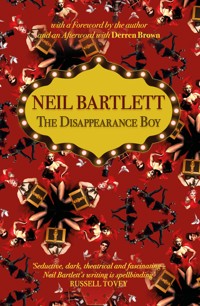
Childhood polio has left Reggie Rainbow with a limp, but his strong arms and nimble fingers are perfect behind the scenes of down-at-heel variety theatres—where he helps illusionist Mr Brookes 'disappear' his glamorous assistants. When Mr Brookes accepts a booking at the Brighton Grand, Reggie finds himself in a strange new town. The seaside air works its own magic and the disappearance boy begins to wonder how much longer he can go on keeping secrets for a living… "Vivid characters, a fascinating subject and an expertly evoked setting. Excellent'"– Daily Mail; "Bartlett delights in taking that which was once hidden and making it clear for all to see." – Independent; "This book and its enchanting characters had me under their spell. I was bewitched." – Sheila Hancock; "Mysterious, tender and utterly compelling." – S.J. Watson "One of England's finest writers" – Edmund White
Sie lesen das E-Book in den Legimi-Apps auf:
Seitenzahl: 451
Veröffentlichungsjahr: 2023
Das E-Book (TTS) können Sie hören im Abo „Legimi Premium” in Legimi-Apps auf:
Ähnliche



















THE DISAPPEARANCE BOY
Table of Contents
Title Page
BIOGRAPHY
Praise for The Disappearance Boy
Praise for Address Book
THE DISAPPEARANCE BOY | Neil Bartlett
FOREWORD | By Neil Bartlett
ONE | BISHOPSTONE HALT
TWO | WIMBLEDON BROADWAY
THREE | NORTH ROAD
ACKNOWLEDGEMENTS
Also from Inkandescent
BIOGRAPHY
Neil Bartlett lives in London with his partner James Gardiner. His first novel, the ground-breaking queer love story Ready To Catch Him Should He Fall, written in a council flat on the Isle of Dogs, was published in 1990 and translated into five European languages. Since then, his books have been nominated for (amongst others) the Whitbread Prize (Mr Clive and Mr Page, 1996), the Costa Award (Skin Lane, 2007) and the Polari Prize (Address Book, 2022). Address Book was an Observer Book of the Year, 2021, and The Disappearance Boy earnt him a nomination for Stonewall Author of the Year in 2014. Neil also makes theatre; most recently, he wrote the script for Orlando, the lead role in which was played by Emma Corrin in the West End of London in 2022.
You can find out more about Neil—and contact him—at:
www.neil-bartlett.com
Inkandescent Publishing was created in 2016
by Justin David and Nathan Evans to shine a light on
diverse and distinctive voices.
––––––––
Sign up to our mailing list to stay informed
about future releases:
––––––––
MAILING LIST
––––––––
follow us on Facebook:
@InkandescentPublishing
––––––––
on Twitter:
@InkandescentUK
––––––––
on Threads:
@inkandescentuk
––––––––
and on Instagram:
@inkandescentuk
Praise for The Disappearance Boy
‘Seductive, dark, theatrical and fascinating,
Neil Bartlett’s writing is spellbinding’
RUSSELL TOVEY
––––––––
‘As someone who works in theatre and live performance, I adored the way Bartlett drew out the characters and life of a backstage world, the glamour and sadness that can sometimes go hand in hand in entertainment. Bartlett writes in a way that draws you personally into the story, yet never lets you fully trust what the outcome may be.’
TRAVIS ALABANZA
––––––––
‘The Disappearance Boy surrounds us in the crumbling spectacle of British variety entertainment—inviting us to an off-season Brighton where performers in lonely digs navigate their marginalised bodies and identities. They long to defy the boundaries of a restrictive and soon to be outdated world. A hypnotic and haunting journey that conjures the ghosts of variety into unexpected and emotive misdirections—the magic cannot be confined to the stage, but breaks through every page.’
MARISA CARNESKY
––––––––
‘Bartlett is a seductive narrator. The Disappearance Boy is written in an intimate, conspiratorial tone familiar to readers of his Costa-nominated novel, Skin Lane ... Bartlett is particularly good at evoking the faded glamour of the theatre and the brittle egos that compete offstage...
An entertaining routine and Bartlett pulls it off with aplomb.’
THE INDEPENDENT
––––––––
‘This book and its enchanting characters had me under their spell. I was bewitched.’
SHEILA HANCOCK
––––––––
‘Neil Bartlett's ability to vividly evoke hidden lives is uncanny.’
JAKE ARNOTT
Praise for Address Book
‘There’s no writer quite like Neil Bartlett. In this tender, evocative and sometimes arousing book he somehow conveys the shifting colours and textures of the English language—and queer vernacular in particular—as it changes over the years. He is nothing less than an alchemist with words.’
ARMISTEAD MAUPIN
––––––––
‘Address Book is completely absorbing; tender, enchanting and a mesmeric read from cover to cover. Neil’s skill as a story-teller is unsurpassed. This book is something else. I adored it.’
JOANNA LUMLEY
––––––––
‘The rooms where we live out troubled, anxious lives are slovenly or crazy-clean, are as spacious as our desires and as cramped as our frustrations. As a man of the theatre, Neil Bartlett knows how to fill a bedsit with love or malice, how to elevate a neighbour boy into a military saint, how to find in a dirty mattress a platform for redeeming passion. He is an all-seeing wizard.’
EDMUND WHITE
––––––––
‘Neil Bartlett writes beautifully about hope and belonging—and this new book from him is something to really look forward to.’
DAWN FRENCH
––––––––
‘Neil Bartlett’s astonishing novels have always seemed content to stand on the edge of the party, like the elegant gay uncle content to entertain and startle any who approach. With Address Book he sheds his jacket to get on down. This is a cleverly structured, funny then deeply moving novel about connections, sympathy and the traces left by our lives and loves. This is a novel for anyone who has ever mourned in silence, a book for anyone who has wondered about that well-dressed man next door but one.’
PATRICK GALE
––––––––
‘A wise, warm, elegant and sexy book, huge-hearted and beautiful.’
SARAH WATERS
––––––––
‘Neil’s delicacy and eye for the absurd, his compassion and seeing of the unseen, his championing of the vulnerable and his great lust for life, and his matchless prose, make Neil Bartlett the consummate storyteller. I am always thrilled when he has a new novel outand Address Book is beautiful.’
ADJOA ANDOH
––––––––
KATE PULLINGER
––––––––
‘Bartlett is a pioneer on and off the page and we are lucky to have him telling our stories.’
DAMIAN BARR
––––––––
‘Neil Bartlett is a peerless chronicler of queer lives lived—
past and present. Address Book is peopled with lovers, battlers, ghosts, penitents, adventurers, and optimists. We’re lucky to have this book.’
NIVEN GOVINDEN
––––––––
‘Neil Bartlett is a national treasure. I read everything he writes and am always lifted by his skill, humour, political purpose and elegance.’
DEBORAH LEVY
––––––––
‘Here is a lovely book full of distinct and vivid voices and teeming with life.’
PATRICK MCGRATH
––––––––
‘Gay love and desire, past and present, has never been so beautifully articulated as in Neil Bartlett’s Address Book. He takes us into the homes and minds of a handful of strangers and then—in prose full of gentle foreboding—slowly peels away the layers until their truths are revealed. Defiant, potent—and ultimately uplifting.’
JULIAN CLARY
Published by Inkandescent, 2023
––––––––
First published in the UK by Bloomsbury, 2014
Text Copyright © 2023 Neil Bartlett
Cover Design © 2023 Justin David
Neil Bartlett has asserted his right under the Copyright,
Designs and Patents Act 1988 to be identified as the author of this work.
All rights reserved. No part of this publication may be reproduced, stored in a retrieval system, or transmitted in any form or by any means, electronic, mechanical, photocopying, recording or otherwise, without the prior permission of the publisher.
This book is a work of fiction. The names, characters and incidents portrayed in it are the work of the author’s imagination. Any resemblance to actual persons, living or dead, events or localities is entirely coincidental.
While every precaution has been taken in the preparation of this book, the publisher assumes no responsibilities for errors or omissions, or for damages resulting from the information contained herein.
––––––––
A CIP record for this book is available from the British Library
ISBN 978-1-912620-26-5 (paperback)
ISBN 978-1-912620-27-2 (ebook)
––––––––
www.inkandescent.co.uk
THE DISAPPEARANCE BOY
Neil Bartlett
FOREWORD
By Neil Bartlett
––––––––
Author Neil Bartlett offers a personal reflection
on the journey behind this book
––––––––
Queer writers have a very particular relationship with trying to write our past. Because our history has so often been erased or mythologised—or both—it is sometimes hard to know if you are even getting the big picture right, never mind the details. If you’re dealing with a murky-yet-glamorous-yet-murky period like the one in which The Disappearance Boy takes place, namely the British nineteen-fifties, then you can all too easily find yourself conjuring up places and people who may have a lot to do with what you wish had happened, but which bear no verifiable relationship with what might have been actually possible in the past.
There; did you spot it? I’m writing a foreword to a novel about a magic act, and half a dozen lines in I’ve already used the word conjuring to describe the act of putting pen to paper...
That—I suppose—is an admission that what I’ve ended up doing in this book is very similar to what any magician worth their salt attempts to do to an audience. I’ve made something that quite deliberately and systematically sets out to rearrange your belief in what could have been—and therefore might still be—possible.
And let me be clear: I don’t mean that I’ve made stuff up (see below). I simply mean that magic, whether on the page or the stage, isn’t really magic at all, but hard and deliberate work.
But not to start with.
The publication of this beautiful new Inkandescent edition of The Disappearance Boy has given me the chance to go back into the underground stacks of the British Library, retrieve the relevant workbooks from my archive there and try to work out where this story first sprang from. I should explain that, until I start assembling my materials into a full-length first draft on my laptop, I still work every day by, quite literally, putting pen to paper. Over a period of months and sometimes years, I assemble ideas and images and fragments in a series of bulky A4 notebooks, and I carry on doing this until I am sure that two things have happened. First of all, I need to be absolutely confident that the working materials of my next fictional idea are all sufficiently composted. By that, I mean I have to be sure that all the key images (as opposed to ideas) in my notebooks have had time to mature and forge unexpected connections between themselves. Secondly, the urge to start sorting them out and turning them into an actual story has to have become imperative. I know from forty years of experience that the narrative of any as-yet-unwritten book has to start making me properly lose sleep before I am prepared to dedicate the next part of my life to typing it into fully realised existence. That second phase involves all the hard work; the first part of the process—the gathering, the note-taking and the composting—is for me mostly a question of staying alert to the inexplicable and the intriguing.
For instance, it looks, from my notebooks, like the starting point of this novel was a real-life incident that lasted less than ninety seconds. I saw a van—a white van—coming towards me on a street quite close to my then home, which was at the top of a steep hill in Brighton. What made this oncoming vehicle intriguing was that the van seemed to be driving itself. I could see a steering wheel, but no one holding it. It was only after a rather long moment of astonishment that my brain worked out a solution to this mystery. The van’s driver was in fact so short that his face was literally behind the wheel; as the van got closer, I could see that, in addition to his shortness of stature, he was tanned, grinning like a monkey, and had terrible teeth. He was gripping the wheel very hard—like a vice, in fact, with what looked like unnaturally strong fingers—and the way that he was hunching himself up to this task suggested a mixture of both glee and determination. All in all, he gave off the most extraordinary energy. He looked both my age—which was the wrong side of fifty, at the time—and like a joyriding teenager. The van passed me. I walked home, and I sat down and wrote a description of this little man in my workbook. I’ve looked it up, as I say, and underneath three lines of not particularly interesting prose the entry ends with these two hastily scribbled and almost illegible questions: what secret, and why those teeth?
On the next page, and apparently unconnected to this shifty little wheel-clutcher, are some notes about the constant presence in Brighton of the sea, and about the constantly shifting and slightly sinister appearance of the stones that make up its beach. As you’ll see, those images also added questions to the eventual shape of my story. Why sinister, for instance? And is the mirror-like or blade-like glitter of the sea a constant for everyone, or only for those of the town’s residents with reflections and knives on their minds?
A whole year later—and now deep in the composting stage—I spent two whole working days trying to record a scene in which that grinning, strong-fingered man-in-van was now being fully imagined rather than sketched. My imagination now had him walking, not driving. In particular, he was now battling down the long slope of the Queen’s Road, which is the road that connects Brighton’s railway station to its prom. He was carrying a suitcase, and it appeared to be making him limp; he also now looked to be in his early twenties, so not my age at all. The teeth were still there, as was a determined grin. Of course, I wanted to know what he was doing in Brighton, and what was in that suitcase. Oddly enough—although my notebook doesn’t mention this—I think I already knew he was queer. Something about the way he was keeping his head down and dodging through the crowd seemed very... familiar. Any explanation of his limp goes unmentioned, but his general air of privacy and determination prompted some scribbled passages about my own childhood and adolescence, and during that scribbling some apparently important feelings about this figure started to emerge. Certain key words started to be underlined; secrecy, and invisibility. Wanting to be rescued. Enjoying having secrets.
A month later—and this happened quite inexplicably, which is to say with no conscious thought on my part, but almost certainly according to some unconscious instinct about the pairing of sexual or physical opposites—my notebooks started to feature a second man. He is a broad-shouldered and black-haired figure, wearing what appears to be 1950s evening dress. He is repeatedly flexing his fingers in the shaft of an overhead spotlight, and appears to be standing on the empty stage of a presumably empty theatre. As I watch him—or rather, write him—he suddenly looks over his shoulder at me. I can now see that he is both drop-dead handsome and rather heavily made-up. His hands—memorably—look as though they might take pleasure in doing me a mischief. Everything about the image is silver and black, and everything about it is full of menace. Once again, the word secrets appears, and is underlined.
Hey presto, as they say; after living with this second figure for a few days I knew what I had to do now was connect these two people in a story. And, to quote my own book, this is how I did it. My maternal grandfather was an amateur magician—Henry, he was called, though my grandma always called him Harry, a detail which in the book has been transposed into the two-syllable stage-name of a man otherwise entirely unlike him. Grandpa’s hobby meant that in the conservatory of their retirement bungalow (in Goring-by-Sea, since you ask) he kept a shelf of old illustrated and diagram-filled books on the history of stage illusion. On Sunday afternoons, while the grown-ups were talking or snoozing after lunch, I used to sneak off and read them, fascinated for reasons I didn’t yet understand by their pictures of evening-dressed men who could control things with the flick of their wrist, or even just with a fixed stare. The evening-dressed man who’d appeared in my notes made me remember those old books and the long afternoons my teenaged-self had spent being oddly aroused by their intimations of a secret world. So, I did what every self-respecting queen should do when in pursuit of a handsome stranger, and headed for the library. To the British Library, in fact, whose Humanities One Reading Room has often been where my scribblings start to turn from happy explorations into actual writing. I ordered up a stack of 1930s and 40s books on magic, biographies, manuals and theatre programmes. And there, in an aimed-at-amateurs ‘how to’ account of one rather basic early-twentieth-century stage illusion, I found what I didn’t even know I was looking for: my title.
Cut to the finished book—and back to my opening riff on how queer historical fiction relates (or not) to verifiable truth. Well, after a lot of research, everything that you’re going to read in here is true. There was a well-known queer pub called The Spotted Dog in the backstreets of Brighton in the summer of 1953; Phyllis Dixie did top the bill with her infamous strip-tease at the Grand Theatre there, just six weeks after the Coronation Day celebrations for Queen Elizabeth II; my mother did do her hair like Princess Margaret’s on her wedding day; you do need to weight the hems of a parachute-silk drape if you want it to fly dramatically through the air—and there really was a place called The Home for Poor Brave Things out on the chattering stones of Bishopstone Beach. Oh, and yes, you can see the English Channel from the windy upper reaches of the Downs Road Cemetery, and in April it does indeed shine like a blade or a mirror. But at the same time (and I do hope you already knew I was going to say this) everything you are about to read is also fiction. It’s all smoke and mirrors—which is to say that, just like in the magic act which centres the book, the details are only there to make you believe.
With hindsight, I now think that all of this process was inevitable—inevitable, because somewhere deep inside the interlocking magic cabinets of this book there is an urgent need to bear witness to the transformation act of my own life. Using everything I know from my parallel career in the theatre about life both backstage and onstage—not to mention everything I know about being an invisible young queer and then, later in life, an escapee from the constraints of the patriarchy—I wanted to convince my reader that a young man who lived on dreams really could—and can—turn himself into someone who lives within a hopeful and secure knowledge of himself. I was born to parents who got married in the same year as this book is set, and like the rest of my born-in-the-fifties queer generation, I eventually worked out that if I wanted to live, then I would have to transform myself. I had to take the version of myself that the world was trying to squeeze into the imprisoning interior of its woman-hating, queer-denigrating and casually violent conjuror’s cabinet and somehow pull off a real body-switch. And that is why two moments of magic that I insist really are magic lie side by side in the heart of this book. The first of them takes place in a graveyard, and is inexplicable. The second is an elaborately plotted piece of theatre, and is ‘real’ in a very different sense of the word. With sweat, confusion, terror and courage, it shows the arts of secrecy, cunning and sheer bloody nerve being put to work in the service of what I personally would call liberation for both of the parties involved.
This book has been on quite a journey. From my jotting down of that first description of a boy with curiously strong fingers to the first edition earning me a nomination as Stonewall Author of the Year back in 2014, took seven whole years. Now, another nine years later, The Disappearance Boy is coming back into print for this second edition. I hope this means that my magic act will get to play to—and with—a whole new audience.
Neil Bartlett, London, 2023
Indocilis privata loqui
ONE
BISHOPSTONE HALT
Let me try this for an opening.
There’s a boy, standing on a railway track. He’s a little boy—he looks eight or nine years old at the very most—and he’s rather small and slight for his age. He is standing with his hands held straight down by his sides, and his feet are clamped firmly together. Seen from behind, he seems to be staring directly ahead at something, but we shall see in a moment that his eyes are in fact screwed tightly shut. He has oddly muscular shoulders, clumsily cropped hair, and is almost naked; he’s wearing a pair of worn linen underpants—nothing else—and just the one hastily laced-up leather shoe, on his right foot. He’s as brown as a berry, all over. The railway track stretches away in front of him in a long straight line, and its rails are hazed with the mist of a fine English mid-September morning as they disappear into the distance.
As if it had been ruled across a map, this track more or less exactly bisects the brown and over-grazed field it runs through, and immediately beyond the scrubby blackthorn hedge on this field’s southern side, divided from it only by a half-dry ditch of dead reeds, is a beach, a great slow curve of shingle that looks as though it reaches along the shore for at least a mile in both directions, east towards the yellowing cliffs of Seaford and west (behind the boy) towards the mouth of the river at Newhaven. There seems to be no sand at all on this beach—all you can see are black and dark grey flints, going on forever, with barely a pale stone amongst them. Almost exactly halfway along their two-mile curve the stones rise to their highest point, and there on the crest of the shingle is perched a strange and lost-looking collection of white-painted concrete and timber huts, each of them lifted above the stones by a squat brick base. These huts look as if they might be a hospital, or perhaps a school—a sanatorium, even—but it’s hard to say for sure; there are no signs up anywhere, and it looks as if there is no-one about to ask, this morning. All of the windows are shuttered closed, and across the stones beneath them the English Channel stretches away to France as flat and cold as a well-sharpened knife. There are no boats about to give scale to its horizon, and no gulls either. There is hardly any wind, and no waves to speak of. A soft swell lifts and clatters the grey stones right down at the water’s edge—and because the wind is so light, and because there seems to be nobody about, the whole scene is very quiet. Not even the reeds in that half-dried ditch are whispering. It is so quiet, in fact, that you can hear the little boy is not crying.
His chin is up, his shoulders are pushed back as far as they’ll go, and his eyes are as tightly closed as those apparently-abandoned windows (you can see that, now). His mouth is clamped shut too—and now, as if he was getting ready for something, the boy spreads his legs and crosses his fists in the small of his back. Near-naked as he is, he seems to be standing ‘at ease’, sticking his elbows out to the sides and pushing his bony little chest forward as if he were expecting a medal. Or perhaps as if he was trying to meet some dreadful blow half-way—as if his infant breast-bone was the breast-bone of some defiant and easily-smashed little bird, one of those softly-feathered species that explode in the air when the shot or hawk hits them... Whatever he’s doing, his feet are now spread slightly too far apart for comfort, and because of the way he’s standing I’m sure that you can now see what you may not have noticed at first, which is that there is something not quite right about this little boy’s legs. The left one is quite a bit shorter than the right and thin enough to make his foot look several bones too large; the left foot itself is turned markedly inward, as if his ankle had been attached in not quite the right place. He’s holding this left heel—the naked one—a good two inches clear of the weeping tar of the railway sleeper, as if he’d just trodden on a nail. The foot is shaking slightly. He still isn’t crying. There still isn’t a train.
And now there is.
And now, the shouting starts.
A Mr Bridges, who in the calm, sunlit autumn of 1939 was living alone in the cottage which then stood next to the tracks at Bishopstone Halt (an unmanned concrete platform on the Hastings to Lewes branch line which had recently been constructed in case it should ever be necessary to get troops to the beach in a hurry) has spotted the tiny figure through his kitchen window. Fortunately, Mr Bridges has a clock above his sink, and he doesn’t need to waste any time calculating in order to know that the next train is due past his window in less than three minutes; they run so close that they rattle his china, and their noise divides his solitary day into such regular parcels of time that he always knows when the next one is on its way. He also knows that this particular train isn’t scheduled to slow down or stop. First, he shouts and bangs on his kitchen window; then he wipes his hands on his dishcloth and runs out of his front door, shouting as he goes.
The little boy doesn’t move. He doesn’t even seem to hear.
As Mr Bridges runs, the oncoming train is still so far away from the two of them that it doesn’t seem to be moving at all—east of Bishopstone Halt, the track runs dead straight towards Seaford for nearly a mile, and the blurred dot of the engine is barely visible at the vanishing point of the converging rails. It seems to shake slightly, even to hover in the distance, but not to be getting any closer. Mr Bridges knows that this is just an illusion. He knows that pretty soon the rails will begin to sing, the dot to swell, and before you know where you are it will be upon them. That’s why he keeps shouting as he runs, shouting at the top of his voice and cursing his middle-aged legs for not moving as fast as he needs them to in this emergency. The spacing of the tarred sleepers forces him to clip his stride, which makes him swear even more—they are placed exactly just too close together to let him break into a full run, but he knows that if he misses one and hits the clinker then a turned ankle will more than likely bring him down. Best as he can, he half lopes and half hobbles towards the boy—and, of course, straight towards the train. The dot hovers, and shakes, and begins to swell.
And now, right on cue, the rails begin their dreadful song; that strange, silvered, high-pitched music that can seem sinister at the best of times, and which now makes Mr Bridges want to vomit as he hears it change key and grow louder. He sees that the little boy—still thirty sleepers away, and with his legs still locked and spread—can also apparently hear or sense this change of key, because as the train approaches the child stretches his puny arms up and out to make himself into its target, and his angry little fists seem to clench themselves into even tighter balls. The pain is starting to tear at Mr Bridges’ sides now. His breath is drowned out by the rails. And now comes the whistle—
Cut.
And now the boy is in his arms—under him, in fact; pinned down under him in the wet and stinking grass by the side of the track, because some instinct has made this middle-aged man cover the boy’s body with his own as the train flashes by in a thunder of light and dark less than four feet from his head, wheel after wheel, rim on rail, metal on metal, less than four feet away from his wet, astonished and staring face (tears of relief, are they, or is that just sweat?) with his ragged breath still tearing at his chest and the pain in his side so sharp now that he thinks he must have broken a rib. Did he really scoop up and then throw down this intransigent bundle of flesh so hard? And then, when the train has passed, and the rails have spun out their song into its final dying whisper and the dot is getting smaller now and going away in the other direction, around a bend and away into the September haze as it heads for Southease and Beddingham and Lewes—and eventually, Brighton—Mr Bridges gasps his breath back into his aching chest and gathers himself. He gets up, and looks down at the miserable and bare-skinned creature lying half crushed in the broken grass between his feet, and he yanks the child upright with one big strong hand. He’s furious. With the other hand, he starts to slap the child, first on the back of the boy’s knees and then right across his sunburnt face, making a furious attempt to get him to open his eyes, or to speak—or something. Anything. And also to relieve his own feelings, I shouldn’t wonder—yes, that’s it; it is a mixture of shock and anger that is making Mr Bridges treat this little boy, who he doesn’t even know, so badly, making him shout at the boy—making him bend right down so that their two very different faces are almost nose to nose, the red, wet, angry one and the screwed-shut, frightened and frightening one, making Mr Bridges roar right in the little boy’s face between those great rib-tearing breaths of his, shout at him—what the bloody, fucking, what the bloody fucking hell, and what if I hadn’t been in my kitchen, eh? Eh? You little fucking. Well you can speak, can’t you? Fuck.
No waves. No people. No boats.
Empty water.
Shuttered windows. Screwed-shut eyes in a burnt-brown face.
No wind.
And still no tears. None.
Not yet.
TWO
WIMBLEDON BROADWAY
1
The next time we see this dry-eyed little would-be suicide he will be hurling himself—as if risking or welcoming collisions was somehow a constant in his life—down the wet, windy and about-to-get-crowded eastern pavement of Wimbledon Broadway, just before dinner-time on a showery Thursday in late March.
There are several important pieces of information I should probably pass on about him before we continue—that he’s now grown up, for instance, but that you wouldn’t necessarily know it to look at him; that the polio he had as a child has marked him out as different from other young men, but not so different that everybody stares; that, courtesy of a broken-down number 47 bus, he’s rather late for work. There’s much more I could say about him of course, but what I want you to concentrate on just now, as I introduce you to young Reggie in this, the twenty-third year of his life—sorry, I should have said that earlier; his name’s Reggie—Reggie (please don’t laugh) Rainbow—anyway, as I introduce you to Reggie and encourage you to watch him closely as he makes his not untroubled way down this particular strip of South London pavement, what I want you to notice most of all is how Reggie carries himself. It tells you a lot. I don’t mean just his limp and his disproportionately strong shoulders or the built-up sole on his left boot—all of those are pretty obvious—but rather the whole impression Reggie makes as he levers himself through the thickening dinner-time traffic. He makes it look as if that slight and oddly-proportioned body of his is some kind of badly-wrapped parcel, and one which he seems determined to deliver on time—and without troubling anyone else for directions, thank you very much. Clearly, carrying it around is some kind of an effort, because even when he hits his stride on a clear patch of pavement he keeps his eyes down and his forehead furrowed; at times, the parcel seems to be about to slip from his grasp, and he’ll pause for a moment, take stock, and reposition the two-sizes-too-large Harris tweed jacket he’s wearing, wrapping the front of it protectively around his chest like a sheet of brown paper before continuing on his way.
Perhaps it’s just the threat of a returning March shower that makes him do that, but there is something about the way Reggie clutches and tugs at this unbuttoned jacket that has a very particular effect. It makes him look as if he’s determined to protect whatever he’s wrapping up so carefully from something more than just the chill March air. Of course, he could be doing this just because of the cold, as I say—that white shirt under the jacket looks thin, and worn—but the vehemency of the gesture combines with his short stature (Reggie is five foot three if he’s an inch) to make him look oddly vulnerable. In fact, if you weren’t able to catch the occasional flash of that downturned face—sharp-featured, bright-eyed and strikingly dark-skinned—weathered, I think would be the exact word—then you might well be hard put to tell from your first impression if Reggie was an adult or still a child.
Whether he was a man of twenty-three or a boy of sixteen. Or even fourteen, at that height.
Not that I want you to feel sorry for him, not for a minute. He doesn’t feel sorry for himself, and never has done, not since he was eight or nine—not since that morning with the train, in fact. He hates pity like a dog hates cats, does our Reggie; hates it, in all its forms and sizes.
––––––––
That’s why, when he reaches the junction of the Broadway with Russell Road—where the shoe shop is—young Reggie comes to a sudden and clumsy halt. Standing on a plinth just outside the entrance to the shop is a dummy made of painted and varnished papier-mâché, and although Reggie has made the best job he can of ignoring the sight of this unpleasant object for several mornings in a row recently, on this particular morning he suddenly finds himself unable to keep up the effort any longer. The dummy depicts a four-foot-high little boy. His hair is an unlikely yellow, his lips a cheery cherry red, and the whites of his turned-up eyes look like they’ve been slicked on straight from the tin. Dressed in a pair of shorts and a neat blue jumper, he’s wearing a leg-brace—complete with carefully painted-on brown leather straps—and has a crutch jammed into his left armpit. With his right hand—and this is the point of his whole existence—he is holding out a bright red, loaf-sized collecting box whose slot is just the right size for a copper—or even, more optimistically, for a fat half crown. If you’re a passerby then this little boy’s blind stare is meant to make you smile sadly and fish in your bag for some change, but that’s not the effect it has on Reggie. In fact, if he thought he could get away with it, Reggie would have picked up a brick from a bomb site one morning earlier this week and cheerfully smashed the face off the thing. Yesterday, he’d caught a shopper in the act of dropping her coin and then patting the boy’s head with her gloved hand as if it belonged to a dog or well-behaved pony, murmuring a few well-chosen words of approval. This morning, there is no lady—thank God, otherwise I think there might have been some kind of a scene—but there are some raindrops caught in the boy’s painted hair, and that, together with the memory of that murmuring, pale-gloved woman and her dropped coin—of the hollow noise it made—is what has stopped Reggie, late as he is. He knows exactly how it feels to be dressed in shorts and a piece of clumsily strapped-on aluminium on a cold March morning. He knows what it feels like to have wet hair, and to be small. He knows exactly how it feels to be looked down on.
He stares.
For a moment, his mouth distorts as if he wanted to spit, giving us a glimpse of some stained and pointed teeth—but then, without looking round to see if anyone is watching, Reggie takes a lurching step towards the sightless little effigy and reaches out and strokes the figure’s hair himself, carefully chasing each and every one of the raindrops out from the grooves between the painted curls. When they’ve all gone, he steps back, and says out loud, There; that’s better.
He stands there for a moment, staring at the boy some more, and at his crutch, and then, apparently remembering where he is—not to mention what time it is—he twists out a thin-lipped little grin—a grin with which you’re going to become very familiar, I hope—and mutters, Sod it, to himself this time, but loud enough to make a passing housewife grimace and tut as she tries to get past him and into the shoe shop. Ignoring her stare, Reggie wraps his parcel back up again with a quick one-two rearrangement of his jacket. A darting look at the black and white enamelled clock on the front of the Co-op opposite confirms that it’s now gone twelve, so he lurches back off down the Broadway to deliver himself at double time, pounding the pavement with that built-up boot of his as if he was angry with them both.
––––––––
When he’s up to speed, this young man can thread himself through a thickening crowd as surely as a darning needle can pierce silk, and I have to say, it’s quite an act. Every human step is a fall from which we save ourselves, they say, but in Reggie’s case that’s even more true than normal; head down, he stabs the toe of that built-up left boot of his down into the paving stones in a kind of regular and staccato demi-pointe, making it the pivot over which he then levers the rest of his top-heavy self, catching himself just in time. Only once does his technique falter, and that’s when a puddle makes him misjudge his launch off the kerb at the corner of Southey Street—the kerbstone here is part of a botched-up repair to some bomb damage, and it tilts. He stumbles, and the two-sizes-too-big tweed jacket flaps open in the wind, revealing another underwing flash of white shirt. With the swiftness of habit, he grabs it and re-wraps himself, and the threat of an undignified tumble soon passes. Once he’s steadied himself, he taps himself on the chest, twice, right where the inside breast pocket of his jacket is. Then lurches on.
That breast pocket is where Reggie keeps his ration book—he’s always on the look-out for anything sweet, is our Reg, and confectionary is still on points in this spring of 1953. It’s also where, during the day, he keeps his knife. It’s not a big or dangerous blade, being merely a miniature two-inch pen-knife with a delicate mother-of-pearl-handle—a lady’s knife, really—but nonetheless, he never leaves his digs without it. He taps at his pocket like that quite often, without even realising he’s doing it, just to make sure the knife’s still there—either that, or for luck, I suppose.
Reggie’s destination? A black-painted door with a black and white sign over it, hidden down an alley just off Montague Road, which is only two more corners away. His employer? One Mr Edward Brookes Esquire, known in the profession as Ted or Teddy. His job? Well, more of that later. It’s all about timing, this business.
Timing, and—
2
––––––––
Under the harsh glare of a single pair of floodlights, a dark-haired man in his late thirties is stepping out onto the stage of an empty theatre. The auditorium is silent, but the man strides on exactly as if he was cutting his entrance through an anticipatory swathe of applause. His jacket is an impeccably cut and close-fitting double-breasted wool-mixture dinner jacket, satin-lapelled. He is wearing white gloves with a single pearl button, and is showing a full inch of starched shirt cuff. His hair is carefully side-parted. His feet are accented in black patent, his trousers have a black ribbon side-stripe, and he’s carrying a black top hat in his gloved right hand; in delicate contrast, the overhead lighting is turning the thin coating of dust on the unswept boards of the stage into a soft, powdery silver. There’s a fringed ivory silk evening scarf draped casually around his neck (the two horizontal lines of fringing are perfectly level) and a snowy linen handkerchief juts in two crisp peaks from the appropriate breast-pocket. Even his eyes are black and white. There’s something very classic and even pre-war about the whole look—a touch of the Café Royal—and he’s a handsome devil. The kind of man who looks as though he smiles for a living, if you know what I mean.
For now his face is pale and deeply shadowed by the overhead floods, but you can easily imagine what the finished effect will be like when the warm glow of the footlights is doing its job and he’s properly made up; you can just see how, when he shoots his cuffs and suddenly glances up at the house like that, the forbidding black glass of his eyes will shine and melt. I wouldn’t be at all surprised if several women in the audience find themselves shifting in their seats as his gaze brushes theirs—but then I would imagine that’s the whole idea.
The man takes a pace forward, and stops. In the middle of the stage is a large object about the size and shape of a telephone box, draped in some kind of silvery silk or satin-like fabric. He looks at it, and then at a wristwatch that he pulls out of his jacket. Then he walks offstage.
Then he walks on again.
He does this three times in a row.
From the way he walks, it would seem that there’s some kind of imaginary music playing in this man’s head. Something that he’s trying to time his moves to, but that only he can hear.
The fourth time he tries his entrance, he seems satisfied, and the frown that was beginning to collect on his forehead is ironed away. He hits a mark just down left of centre, about four strides away from the silver-draped box; then, still clearly timing each move to some imaginary music, he swings his top hat from his right hand up smartly onto his head and taps it into place. Turning sideways to show the stalls his profile, he raises first one hand and then the next, smoothly unbuttoning each of his gloves in turn. He removes them—all the while keeping his eyes moving along the rows of darkened seats in the stalls, one eyebrow ever-so-slightly raised—and then turns square to the audience again and cradles the gloves in his now-bare hands. He looks at them tenderly, as if they were a pair of innocent creatures that he was about to restore to some well-earned freedom. Then with a swift, jerking flourish, he brings his hands sharply down level with his crotch—and immediately flings them up and out to his right and left. Inexplicably, both hands are now empty, and the pair of white doves which surely ought to be circling high above his head in noisy bewilderment are nowhere to be seen.
He leaves his hands hanging in the air for a moment, and raises that black and questioning eyebrow of his ever-so-slightly higher. Then, without pause or explanation, he makes a pair of devil’s horns with the pinkie and first finger of his left hand. He inserts these fingers into his full-lipped mouth, and mimes a loud and commanding wolf-whistle.
This silence produces a sound.
A young woman enters, upstage right. She is wearing slacks, three-inch black glacée heels—they are the source of that silence-interrupting sound—a tight powder blue sweater and an even tighter smile. She’s short—five foot two, I would say, if she took off those shoes. She ignores the large box and walks straight to her mark with exaggeratedly tiny and hip-swinging steps, as if her knees and ankles were hobbled. She’s looking distinctly ill-at-ease under the heavy foundation she’s wearing, and the harsh lighting isn’t doing her scraped-back bottle blonde hair any favours.
She waits.
Without looking round, the man pulls the silk scarf from his neck and prepares to throw it over his head. The woman gawkily prepares to catch it, clearly unsure of whether she’ll be able to manage this simple task. The man’s eyebrow goes up again—straight to the lads in the gods, this time—and with another quick flash of his hands he tosses the balled scarf high in the air, upstage right. His assistant’s eager fingers splay and reach, but instead of gathering an arc of flying silk, they find only air; his hands, meanwhile, are once again elegantly empty. The young woman looks confused, but he doesn’t wait; already his top hat is off and twirling in his hands, the oval of its scarlet lining a sudden and demanding mouth. As if he was playing with a favourite dog, he makes two slow swinging right-hand passes across the front of his body, clearly indicating that he is going to toss the hat stage left for the woman to retrieve. She anxiously totters across the stage behind him, readying herself for her task. He keeps his eyes on his audience—and then on the third swing turns his well-tailored back on them and converts the pass with the hat (which he now swaps deftly into his left hand) into a slow upward diagonal. He does this twice, moving very slowly and clearly for everybody’s benefit—the dog’s included—and still exactly in time with his silent music. Neither he nor the woman has yet looked at the draped box. The hat is now down right of his body; suddenly, he double-times his gesture, flashing the hat up and down and up again, keeping strict time with three peremptory accents from an unheard snare drum—and as the girl stumbles forward to catch it on the expected third pass, both of his hands are suddenly up and to his left and empty again. The hat, of course, is nowhere to be seen; upstage, the girl gives a pantomime flinch of female failure to the sound of an accusatory down-stroke on some imaginary cymbal, but the man is already turning downstage again, and with both eyebrows raised this time. He brings his empty hands down slowly, making a dismissive shrugging gesture that displays just how well cut that dinner jacket of his is across the shoulders. There is a momentary pause, in which he snaps the snowy linen handkerchief from his breast pocket, wipes the sweat from both his hands and then in three successive folds and one sudden landing swoop tucks it back whence it came, its two crisp peaks apparently—and inexplicably—as immaculate as they were before. All of this happens a bit faster than the eye can quite follow, but then his hands slow down again, as if they were considering what to do to next. He shifts his attention back up to the gallery again, and then back down to the circle, and then finally to one particular seat in the middle of the stalls. His expression, though still officially deadpan, seems to shift; he flashes a look upstage at his assistant, and then back out at the empty seat. He is making, it would seem, a choice.
She, meanwhile, tries to look foolish and unconcerned at the same time.
In response to this slight shift in his expression—his brows furrow again, ever so slightly—it would seem that the silent music has just changed key. The man reaches slowly into his right trouser pocket, and quite matter-of-factly produces from it a small coil of rope, soft, and scarlet. Snake-like. He looks down at it as if this prop was an old and valued friend, and gestures elegantly towards it with his other, empty hand. Then, having now apparently decided what to do about his problem upstage, he once again shapes the relevant fingers into a pair of horns and inserts them into his mouth. Evidently the wolf whistle is louder and even more commanding this time, because the problem springs nervously into action. She spins and looks upstage. She doesn’t do it that well, but you can see that she is pretending that the mystery object under the silken drapes is in fact being wheeled on from the wings. You can also see, from the way that the man now strides smartly across to downstage right, uncoiling and coiling the rope as he goes, that the music has changed tempo as well as key—something warmer and brighter seems to be suggested; something a bit more promising, if you know what I mean. The girl steps slightly to one side; clearly, whoever is wheeling the mystery object on from the wings is rotating it as it comes, and she needs to keep out of their way. As soon as it has come to a halt and the man has coiled and re-coiled his rope to his satisfaction, he beckons her over, indicating that she should hold out both her hands in front of her with her wrists pressed together. She hesitates and looks a little worried, but then does what she is told, spreading her fingers out in a double fan. Without hesitating, the man swiftly and efficiently binds her wrists—twice round clockwise, once over and through—and then—
Then, the music seems to falter.
Just before he pulls his knot tight, the man stops and stares straight into the girl’s face. You can see straightaway that this gesture isn’t part of the act; it is as if an imaginary drumstick has just clattered to the floor, and nobody in the pit now dares to pick it up. An awkward silence installs itself on the stage, and the dust has time to settle across its boards like sifted flour.
Slowly and deliberately, the man in the dinner jacket removes the rope from the girl’s wrists and starts to re-coil it. He takes his time, not giving either her or the empty seats out front any hint as to why he’s stopped. Unsure of how to respond, she lets her body go slack; her hips push slightly to one side. Specifically, she seems unsure whether she ought to keep her wrists held out or not. She lets her eyes drop down to the floor and shifts from three-inch heel to three-inch heel, and for the first time in the proceedings begins to look like an actual woman. She relaxes her face and attempts a smile, a proper one, revealing that she’s really quite pretty under all that make-up—but then she thinks better of it and snaps her mask back on because the man is setting to work on her with the rope again now, looping it tightly round her wrists and quickly making her helpless. Again, he stops short of the final knot and stares at her as if she ought to understand why.
This elaborate routine of threat and deferral happens four more times in a row. The silence intensifies.
If the seats out front are empty—and they undoubtedly are—then who is the man doing all of this for? The stare before the missing knot gets stonier each time, and the repetition is beginning to look less like rehearsal and more like a punishment. Is it for something the young woman has done, or merely for something that she is? It is only during the seventh time that the man performs the move—the magic number, you might say—that the reason for this threatening hiatus in their routine emerges.
Despite herself, the girl’s stuck-on smile has started to fray, and the insides of her wrists have started to sweat. She always tries very hard to get everything right for rehearsals with this bastard—she even rinsed her rehearsal jumper out in the sink last night, thinking he might have noticed she was making an effort—but stupidly, today of all days, she has forgotten to powder her wrists before starting work. She could kick herself, but it’s too late now, and as he starts to repeat the rigmarole with the ropes for the seventh time she once again shifts her bodyweight nervously from one three-inch heel onto the other, and rather too abruptly. This makes her unpowdered wrists momentarily slip one against the other, just at that vulnerable spot where the pulse beats under her skin, and—hey presto!—the two inches of spare red silk which are the crux of the matter, the two inches of scarlet slack which the man has tucked swiftly between her wrists under cover of her splayed fingers and which need to be kept firmly pressed between in place if the trick knot is to work, slip, and are suddenly revealed, spilling out from her wrists like blood from a wound. From the frozen expressions on both of their faces (one angry, one afraid) it feels as if the soundtrack at this point shouldn’t be just the clatter of one dropped drum stick, but instead the brazen din of some awful enamelled dinner plate or silver-plated tray being dropped loudly in the wings.
The woman waits, squeezing hard between her legs (to make matters worse, she has just realised that she urgently needs to pop backstage to the Ladies—her bladder never does behave itself, not at the best of times) and he, of course, makes her wait. He re-coils his rope with conspicuous slowness. His voice, when it finally comes, is in lots of ways just like his face: handsome, clean-cut and effortlessly threatening. Without apparently raising it at all and concentrating the whole time on his hapless, wronged and now-flaccid little scarlet friend, he says:
‘Shall we try that move just the once more, Sandra?’
Of course, she daren’t reply.
‘Just the once more... and without one iota of fucking feeling—if you wouldn’t mind, my darling.’
––––––––
Sandra keeps her nerve




