


Erhalten Sie Zugang zu diesem und mehr als 300000 Büchern ab EUR 5,99 monatlich.
- Herausgeber: Lolli Editions
- Kategorie: Gesellschafts- und Liebesromane
- Sprache: Englisch
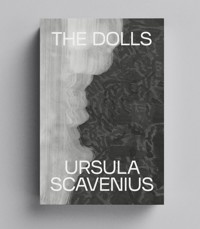
Stories from a world both fantastically strange and gruellingly familiar where isolation, ruin, prejudice, and misinformation soar in an irresistible, susurrant fugue of displaced families yearning to belong In the four stories that make up The Dolls, characters are plagued by unexplained illnesses and oblique, human-made disasters and environmental losses. A big sister descends into the family basement. Another sister refuses her younger brother. A third sister with memory loss is on the run and offered shelter by Notpla, a man both an ally and an enemy. A fourth set of siblings travel to Hungary with their late mother in a coffin. They each have a different version of their mother's story. Drawing on the likes of August Strindberg, Franz Kafka, Andrej Kurkov, Knut Hamsun, T.S. Eliot, Béla Tarr, and Hieronymus Bosch, Scavenius's universe is chilling and excruciatingly seductive. In it, nothing can be said to be true anymore. After all, anything can be propaganda today. Praise for The Dolls Here is a writer of extremely unusual imaginative powers. I found myself completely entranced. This is one of the most extraordinary pieces of writing I've ever read – Editor's Pick, BBC Radio 4 From a Rear Window-like position, a girl in a wheelchair watches extremely sinister happenings at a refugee centre with her complicit parents while her sister refuses to leave the basement of their house. A woman seeks refuge from the ever-present threat of war or the chaos of climate change with a man whose identity is as unclear as his intentions… These are artful, singular stories which, with rigorous inventiveness of language and technique, vividly evoke the calamities that form our nightmares – The Irish Times Fiercely anti-establishment and addictively macabre. The translation is appropriately atmospheric: Jennifer Russell has done a marvellous job of weaving the narrative seamlessly between an almost dreamlike lyricism and a grisly reality – Translating Women Scavenius's book is filled with impressive observation and uncomfortable characters, all bound together by her peculiarnand gritty prose, beautifully told in Russell's immaculate translation – Asymptote A dilute wash of watercolour exposes the terrifying images and themes underneath… Emerging from Scavenius' world, we recognise the cruelty and threat and bewilderment as not only the domain of the world she's writing from, but also a powerful and poetic compression of where we live – Exacting Clam Ursula Scavenius is one of the most exciting Danish short story writers at work today. The Dolls, in Jennifer Russell's magnificent translation, is a literary page-turner: haunting, mesmerizing, and unforgettable in all its grotesque glory – Katrine Øgaard Jensen Scavenius's dystopian narratives are hard to put down, recalling both historical crimes and current crises – Information URSULA SCAVENIUS is a writer based in Copenhagen. She is a graduate of the Danish Academy of Creative Writing and holds an MA in comparative literature and Italian from the University of Copenhagen. She debuted in 2015 with the short story collection Fjer [Feathers], which won the Bodil and Jørgen Munch-Christensen Prize and was nominated for the Montana Prize for Fiction. Her second book, The Dolls, was published in January 2020 and was shortlisted for the Edvard P. Prize that same year, as was Feathers in 2015. JENNIFER RUSSELL has published translations of Amalie Smith, Christel Wiinblad, and Peter-Clement Woetmann. She was the recipient of the 2019 Gulf Coast Prize for her translation of Ursula Scavenius's 'Birdland', and in 2020 she received an American-Scandinavian Foundation Award for her co-translation of Rakel Haslund-Gjerrild's All the Birds in the Sky.
Sie lesen das E-Book in den Legimi-Apps auf:
Seitenzahl: 163
Veröffentlichungsjahr: 2021
Das E-Book (TTS) können Sie hören im Abo „Legimi Premium” in Legimi-Apps auf:
Ähnliche




















I’ll tell the story, even if no one is listening.
The Dolls
Copyright © Ursula Scavenius, 2020
Published by agreement with Copenhagen Literary Agency ApS, Copenhagen
Translation copyright © Jennifer Russell, 2021
Originally published as Dukkerne by Forlaget Basilisk, Copenhagen
This English translation first published in the United Kingdom by Lolli Editions in 2021
The right of Ursula Scavenius to be identified as the author of this work has been asserted in accordance with Section 77 of the Copyright, Designs and Patents Act 1988
The Dollsis No. 7 in the series New Scandinavian Literature
Graphic design by Laura Silke
Cover illustration by Phil Goss
This book is set in Source Serif Pro
Printed and bound by TJ Books,
United Kingdom, 2021
This publication was made possible through the generous support of the Jan Michalski Foundation, the Danish Arts Foundation, and Konsul George Jorck & Hustru Emma Jorck’s Fond
The author would like to thank Sofie, Theresa, Peter, Gustav, Jennifer, Denise, and not least Sophia.
A CIP catalogue record for this book is available from the British Library
ISBN 9781999992842
ePub ISBN 9781919609270
Lolli Editions
132 Defoe House, Barbican
London EC2Y 8ND
United Kingdom
lollieditions.com
The Dolls
I sit at the table listening to the violin music that has started playing in the forest. I don’t budge. Our house is just ten metres from the Centre. Here we are again, sitting around the table, nodding. Mother, Father and me. Like we do every evening. In our town something is often on fire; a car, a house, a bin.
We always agree. We agree that mince doesn’t taste good, but that salt pork does. It’s practically impossible to sleep at night with that violin music, says Father, and I repeat what he says. My sister Ella, who sits in the cellar, sings so loudly we can hear her through the floor. Then she starts to dance, and Mother lifts the trapdoor. Come upstairs now, it’s dinnertime, she yells, but Ella only replies: No.
It’s as if those violins are inside my head, says Father and passes Mother the saltshaker. Mother sprinkles salt on her food and stares out the window. The sound of violins from the forest grows louder. When chicken bones scrape against your teeth, it screeches in your ears. The violin bows gnaw at the strings the same way we gnaw at chicken bones. Violins, we keep calling them, but really it sounds like something else. Like chicken bones scraping against teeth.
Now the sound is softer. I crane towards the window to listen. The other day, our neighbour Kurt complained about the new refugees at the Centre disrupting the peace. All he wants is to go about his business, he says. Enjoy his evening coffee or a relaxing morning beer on his front lawn.
Here we are again, Mother, Father and me, listening to the music. Father puts his hands over his ears. I say that the chicken boiling in the pot on the stove all day is foul. Why, we’ll switch to mince then, says Mother. That’s enough mince talk, says Father. He puts down the drumstick on his plate and returns to the subject of the people across the street. The people at the Centre. We’ve got plans, Kurt and I, says Father, and I nod, tapping my feet against the floor to a steady beat. Stop that, says Mother.
That music has a certain, shall we say, violence to it, says Father. Here we are with empty plates, staring out at the children at the Centre. Mother nods, and Father starts to tap his spoon against his plate so that it sounds like a melody, like Frère Jacques. Would you stop, please? You’re always playing that, says Mother. You know I love this song, says Father and sneezes. As a child I learned to sing songs from a songbook. Father nods: It brings people together. He hums. He has never looked happier. I hand him a spoon bigger than the one in his hand and he starts tapping my metal shin. It’s rusty. Then Mother and Father stand up and clear the table.
Later on, Father tears a page from our calendar on the table. He writes on the back: If anything ever happens, Agnes, just call Kurt. He hands me the note. He’ll always be there to help you, Agnes, he writes on another note. Mother holds her hand to her mouth. But Kurt is sick, she mutters into her palm. I hear her, but I don’t think Father does. Mother gives Father a single hard whack across the back of his hand with the spoon.
I sit by the windowsill and listen to the music. I don’t budge. Mother and Father are slumped across the table, sleeping.
A brown noctuid is sitting in a corner of the ceiling where mould has started to grow. It looks like a tiny cloak with two eyes, a crippled little creature quivering on the green patch of ceiling. It’s been there for a week now, just like the magpie in the tree outside the window. I want to reach my hands up towards the noctuid, stretch out my fingers so far that a jolt of pain shoots through my chest.
While I wait for Mother and Father to go to bed, I wonder whether anything might happen between the noctuid and me, whether it will come any closer. I wait. Father and Mother get up at the same time. They walk to the bedroom in step. That pleases them. In perfect unison they give their duvets a few hard shakes and then they lie down and groan in their sleep.
I sit in the kitchen in my pyjamas listening to the music. In my head, everything is loud and white. The dark garden is dimly lit by a whitish fog. I lean over the stove and sniff the leftovers, then I curl over and hook my arms beneath my knees, taking up as little space as possible. Afterwards I roll my wheelchair back to the window and look down at the playground across from our house.
I listen. Some of the older children from school are still running about laughing on the playground, which is right next to the Centre. They don’t like me. I go mad if I watch them for too long, but I can’t help myself. One day I’ll sneak over to Kurt’s and borrow the camouflage face paint he keeps in his closet and blacken my face. I loathe my yellow hair and white skin. I refuse to look at myself in the mirror anymore, my eyes that shine. They look deranged, and that’s why I’ve hung a dress over my mirror.
Mother coughs hoarsely in her bed. I have a splitting headache. How startled the birds would be if I were suddenly to jump out of the window into the fog. Perhaps I’d land at the bottom of the well where the little children once lay.
I’ll never forget them; the little bodies Ella and I saw in the well last year. It was spring. In the May twilight, the bodies were practically indistinguishable from the murk of the well. And yet you could just make out the outline of three children. My sister had brought me outside to look into the well. Three little children with their arms around each other, bundled up in thick jumpers and nestled among blankets and pillows. As we peered down at the children, we heard Father’s car come to a screeching halt in the driveway. He had come home later than usual that day.
Ella ran inside and sat down in the windowsill, and I chased after her. We wrapped ourselves in the blankets and waited. Father walked in and dropped a couple of sacks in front of us. Bald dolls and black hair came tumbling out. He asked us to bleach the hair and glue it to the dolls’ heads. He planned to start a home production. At the Machine they only manufacture fake hair, he said, but this hair is real, it comes from India. If we dye it blonde, all the newly arrived refugee children will queue up to buy the dolls so they can be like the children whose families have always lived here. I think of that day often, because it was also the day Ella went into the cellar. Shortly after that, my leg went lame and I got the metal shin.
Each of you gets a few sacks, Father said, sitting atop the kitchen table to watch as we examined the contents of the sacks: black hair, bleach, needles, thread. We didn’t play with the dolls. We were too old for that. You know what to do, Father said. We thanked him. My hands itched. I wanted to show him what I was good for.
I sat down on the floor with a doll in my hands and stared at it. Then I opened the bag of hair and began by washing it in the sink. Once I had mixed the bleach, I could start coating the hair with it. I made sure to coat all the black hairs evenly while Father looked on. Afterwards, he handed me a bag of healthy sweets. Now the blonde hair just needed to dry, then I could sew it onto the dolls’ heads.
That was how Ella and I passed our final hours together before she went into the cellar. Before she went down there, we watched the grey ashes drifting onto the leaves in the garden, too. Ella hurled her doll at the wall and it landed bald-headed at her feet. You disgust me! Stop looking at me! she screamed. But Father and I looked at her all the same. Eventually she opened her own bag of hair. Then she stopped dead. I was best at working for Father.
The evening she went into the cellar, Ella told me that the grey flakes that drift onto the flowers came from children’s burnt hair and fingernails.
I stopped dead when she told me that. We were in our bedroom, and I was staring at a doll. The glue on the doll’s scalp had bubbles, and inside one of the bubbles was a pink star. I recognised that star. The doll had been in our house once before. It had lain in my lap, and it was me who had stuck that pink star into the tiny cavity on its head. It was still there, and I scraped it out with my nail.
The star had felt smooth against my fingertips, and I saved it in my pocket. Now I search my pocket for the little star, but it’s gone. Ella has been in the cellar since May 20th. The day we were given the dolls to work on she went down into the cellar. She had growing pains and fell in love with that cellar.
Often we beg her to come back up, but she says: No, I like it down here. She says she’s the tallest girl in town, and she’s retreated to the cellar’s darkness to keep out of the light so she won’t grow any taller. She’ll certainly also avoid infection and boils if she stays in the cellar, or theroom of lies, as we used to call it.
A long time has passed since Ella went down there, and now I’m the only child sitting around the table. I listen to the music, which is distant and faint. So faint I have to be completely still and stop chewing to hear it. But it’s there. I’d like to lose myself in the sound, but now someone knocks at the door, softly and firmly at the same time. I don’t open, just carry on listening to the music outside. It sounds as though someone is practicing an instrument and has grown bored with it. I still sit here, listening.
Mother and Father come into the kitchen with Kurt between them. Mother hurries over to the sideboard and pulls out a bottle of vodka. Here! she says and casts down her eyes. Kurt places a 500-kroner note on the table. He glances over at the trapdoor to the cellar. Don’t worry, he says. They’re going to ban those violins soon. Then maybe Ella will come back up.
Shhh, says Mother. We don’t even know whether it’s violins. Mother speaks standing up while the rest of us sit. Then she sits down, and it seems to me she’s expecting an answer. Kurt gets up and is about to take the vodka bottle from the table, but I roll over and swipe the bottle before he gets hold of it. In a split second Kurt goes from looking like a mad dog to the sick, scruffy old man he is. He’s irritated now. What will he look like when he’s dead, I wonder. Yellowish, maybe, or perhaps more white and green? I toss the bottle into the bin.
Well, time for bed then! Mother announces. She has yellow crosses in her eyes. Kurt responds by walking off but doesn’t make it any further than the sofa, then he passes out.
The music outside has grown louder, and we listen together while we look at our drunken guest slumped on the sofa. Perhaps Mother and Father have also noticed the peculiar coincidence of the music and Kurt’s snores. Should I help carry him out? I ask, without budging. Impossible. He’ll let himself out when he wakes up, says Mother and stands up.
Don’t forget to say goodnight to her too, she whispers, leaning over the trapdoor in the floor. Mother says goodnight to Ella, and Father does the same. I’m glad we don’t have boils, and that Ella doesn’t either. Down below, Ella hums along to the music. Unlike me, she can carry a tune. Father closes his eyes, clasps my hands and whispers: You’re much too skinny, and you look like a boy. You don’t have growing pains, do you?
We sit in the kitchen, Mother, Father and me, right above the trapdoor that leads to the cellar where Ella is lounging about, putting on makeup. She’s beautiful, like Cleopatra, only taller. She often paints little purple stars on her nails, but today they’re black with gold glitter. I’ve seen it through the little pipe we’ve stuck through a hole in the floor that’s always been there. Most of the things the two of us had in our bedroom have been moved down to the cellar now. She’s hung all our sheet music up on the walls.
As we listen to the violin music coming from the forest, Mother, Father and me, Ella sticks her hands up through the half-open trapdoor. She scrapes her nails across the floorboards. You’ll ruin your nails doing that, says Mother, stroking the backs of Ella’s hands, but Ella goes on scratching. It makes a crackling sound. We watch her hands. Sooner or later she’ll surely retract them, I think, but she doesn’t stop.
They could use a trim, whispers Mother. Let’s cut them. I wheel over to search for the nail scissors in the kitchen drawer and can think of nothing but my sister’s fingernails. Ella continues clawing at the floor while I rummage through the drawers. They’re full of identical things; lighters, little torches, matches, clothespins, but no nail scissors.
Ella scrapes a particularly sharp nail across the floor, and I’m reminded of her hair, which never gets cut anymore, since she has no scissors of any kind in the cellar. Her too-long hair makes her look so skinny through the pipe in the floor. Her whole body has become long and scrawny.
Our cabinets are stuffed with identical goods Father has bought at the supermarket. He always gets ten of each thing on offer; ten jars of instant coffee in case the day comes when we can no longer leave the house. Ten packs of crispbread, and honey, one jar after the other, as well as butter, cheese, rye bread and potatoes in the fridge, but no nail scissors.
I wheel back to Mother and Father. They’ve found the nail scissors and are already busy cutting Ella’s nails. Her hands lay limply across the floor like dead mouse tails. There’s a tenderness to the way Mother and Father cut her nails, gently cradling Ella’s slender fingers in their hands. They work together, and when they’re done, they blow on Ella’s nails and kiss her fingers one by one.
All of a sudden Ella yanks back her hands. The nail scissors fall from Mother’s grasp. Mother and Father stop dead. For a while they just sit there, unmoving. Then, slowly, Mother reaches for the nail scissors, but I tickle her under her arms so she drops them. I slip them carefully into my pocket in case I should need them again.
The violins screech outside. I grind my teeth. Now it’s the roots of my teeth that screech. I look through the window in my binoculars and see Kurt in the cemetery. He has his bucket with him and is washing the gravestone. Every day he goes to the cemetery with a mop and scrubs the gravestone until the name on it gleams. When he swings the mop across his shoulder, water drips down his back, but he doesn’t notice. One time, on a Saturday, Kurt went out and buried his cigarette butts on his wife’s grave.
It’s getting to be winter. The sleet has softened the ground, and I can see the cigarette butts protruding from the soil. The moisture must have drawn up the cigarettes from the depths. Now everyone can see that it was true, the thing about the cigarettes on the grave.
We bury our memories of Hungary with her, and all the lies too, Kurt told Father the day they buried his wife. I remember her clearly, his Hungarian wife. Kurt uses washing powder for everything; for washing the dishes, washing himself, washing the gravestone. Through my binoculars I can see the gravestone up close. The dirt is sprinkled with lumps of washing powder. I can practically hear the stone weeping when Kurt washes it. People say his wife isn’t even in the grave anymore. She’s in a chamber pot beneath Kurt’s bed, they say.
Two or three violins are screeching in the forest somewhere. I’m still sitting by the window. I fold a white piece of paper and write down the names of all the languages I don’t speak. I put an X next to the ones I want to learn, and an X next to one that I’m afraid of, and next to one that others are afraid of. What I want most of all is to go to the beach and dangle my legs from the pier like I did a few years ago, back when I could cycle there.
I want to get out of here. Today.
The suitcase is out. When I board the bus I’ll count to a thousand, and then I’ll get off no matter where I am and that’s where I’ll spend the night! Something needs to happen. I pull a poncho over my head, covering my body as much as possible.
The door swings open. Kurt strolls into the kitchen. He extends his hand and says: My, you’re looking fancy, aren’t you! I look like his youngest son, he tells me, whose face is ghostly pale. He looks like he’s got HIV, he sneers. There’s not much ruddy-cheeked Hungarian over my son, I’m afraid! It killed his mother, him looking like that, says Kurt. People thought we had a sick son.
I don’t reply to the part about his wife, because all I remember is how she would often fall into the roadside ditches when she came walking along with her shopping bag full of vodka bottles. Eventually she was hit by a bus when she was out buying vodka for Kurt, as she used to say.
Now Kurt sets a clinking bag on the floor and sits down to drink while he reads the newspaper. He opens another bottle of vodka, but then he pours the contents into the sink, rinses after and yells: No more drinking!




