


Erhalten Sie Zugang zu diesem und mehr als 300000 Büchern ab EUR 5,99 monatlich.
- Herausgeber: NYLA
- Kategorie: Gesellschafts- und Liebesromane
- Sprache: Englisch
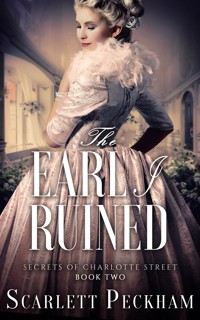
She's beautiful, rich, and reckless… When Lady Constance Stonewell accidentally ruins the Earl of Apthorp's entire future with her gossip column, she does what any honorable young lady must: offer her hand in marriage. Or, at the very least, stage a whirlwind fake engagement to repair his reputation. Never mind that it means spending a month with the dullest man in England. Or the fact that he disapproves of everything she holds dear. He's supposedly the most boring politician in the House of Lords... Julian Haywood, the Earl of Apthorp, is on the cusp of finally proving himself to be the man he's always wanted to be when his future is destroyed in a single afternoon. When the woman he's secretly in love with confesses she's at fault, it isn't just his life that is shattered: it's his heart. They have a month to clear his name and convince society they are madly in love… But when Constance discovers her faux-intended is decidedly more than meets the eye—not to mention adept at shocking forms of wickedness—she finds herself falling for him. There's only one problem: he can't forgive her for breaking his heart. Content Warning: Fair readers, a note on content, for those who like to know. (If you prefer to be surprised, skip this part!) This book contains the following: explicit sex; consensual kink and BDSM; masturbation with creative objects; the outing of a character's private erotic preferences; sex work; trauma concerning past unwanted sexual advances; and one very annoying dog.
Sie lesen das E-Book in den Legimi-Apps auf:
Seitenzahl: 429
Veröffentlichungsjahr: 2018
Das E-Book (TTS) können Sie hören im Abo „Legimi Premium” in Legimi-Apps auf:
Ähnliche

















Copyright
This ebook is licensed to you for your personal enjoyment only.
This ebook may not be sold, shared, or given away.
This is a work of fiction. Names, characters, places, and incidents are either products of the writer’s imagination or are used fictitiously and are not to be construed as real. Any resemblance to actual events, locales, organizations, or persons, living or dead, is entirely coincidental.
The Earl I Ruined
Copyright © 2018 by Scarlett Peckham
Ebook ISBN: 9781641970570
ALL RIGHTS RESERVED.
No part of this work may be used, reproduced, or transmitted in any form or by any means, electronic or mechanical, without prior permission in writing from the publisher, except in the case of brief quotations embodied in critical articles or reviews.
NYLA Publishing
121 W 27th St., Suite 1201, New York, NY 10001
http://www.nyliterary.com
Contents
About this Book
Author’s Note
Chapter 1
Chapter 2
Chapter 3
Chapter 4
Chapter 5
Chapter 6
Chapter 7
Chapter 8
Chapter 9
Chapter 10
Chapter 11
Chapter 12
Chapter 13
Chapter 14
Chapter 15
Chapter 16
Chapter 17
Chapter 18
Chapter 19
Chapter 20
Chapter 21
Epilogue
Thank you—and a little gift from moi!
Want more books from Scarlett?
And lo! Now for a whole new series!
Acknowledgments
About Scarlett Peckham
About this Book
She’s beautiful, rich, and reckless …
When Lady Constance Stonewell accidentally ruins the Earl of Apthorp’s entire future with her gossip column, she does what any honorable young lady must: offer her hand in marriage. Or, at the very least, stage a whirlwind fake engagement to repair his reputation. Never mind that it means spending a month with the dullest man in England. Or the fact that he disapproves of everything she holds dear.
He’s supposedly the most boring politician in the House of Lords ...
Julian Haywood, the Earl of Apthorp, is on the cusp of finally proving himself to be the man he’s always wanted to be when his future is destroyed in a single afternoon. When the woman he’s secretly in love with confesses she’s at fault, it isn’t just his life that is shattered: it’s his heart.
They have a month to clear his name and convince society they are madly in love …
But when Constance discovers her faux-intended is decidedly more than meets the eye—not to mention adept at shocking forms of wickedness—she finds herself falling for him.
There’s only one problem: he can’t forgive her for breaking his heart.
Author’s Note
Dear readers,
While this is a mostly light-hearted book, it contains flashbacks to a moment of unwanted sexual aggression, and an outing of a character’s erotic tastes. If you are a sensitive reader, please do consult the reviews.
Dedication
For Chris, who makes the wildest dreams of wicked women come true in real life.
Chapter 1
Mayfair, London
April 1754
Lady Constance Stonewell awoke to a crisp spring breeze, birdsong streaming through her windows, and the sense that she was, for reasons she could not quite recall, inordinately vexed.
She flopped back against her vertiginous mound of feather pillows, annoyed to be wide-awake before her customary hour of high noon. A piece of paper came dislodged from the sleep-tangled mass of her hair and stabbed her in the cheekbone.
She squinted at the crumpled missive. Potential Husbands for Gillian Bastian.
All the reasons for her ill mood came rushing back.
She scanned over the names she’d written down the night before. Lord Avondale. No, too libidinous. Lord Rellfare. Too bilious. Sir Richard Voth. Too poor.
She balled up the scrap of paper and threw it on the floor, where it joined the pile of other names she’d rejected before she fell asleep. She caught sight of her haggard face in the looking glass and groaned.
This disaster with the Earl of Apthorp was giving her insomnia and making her look drawn. Which was unsurprising: she could alwaystrust Lord Bore to find new, enterprising ways to drain her of her youth and beauty.
She sighed, and rose from bed, dabbing at a blotch of ink smeared onto her cheek. At least by now Gillian must have seen the poem and realized Lord Apthorp was not the saintly specimen of manhood that he so vigorously imitated. She could either decide she didn’t mind a husband with a taste for the illicit and a penchant for hypocrisy or marry someone else. And Constance would come armed with a list of suitable alternatives.
It was the least she could do, having encouraged the match with Apthorp in the first place.
The door to her room flew open and a small child dashed in, clad in a frilly sleeping dress and a grown man’s powdered wig.
She bit back a laugh. “Why, good morning, Georgie. What a fetching coiffure you have today. Will you be delivering an oratory at the Inns of Court?”
“I’m Lord Arsethorp!” he shouted, leaping onto her bed.
She snorted. Her cousin’s three-year-old son had always lisped, but this was a new, rather amusing mispronunciation of Lord Apthorp’s name.
She straightened the wig over his mop of blond curls. “It’s Apthorp, darling, but I must admit, I like your version better. You do rather resemble him today. Though he does not approve of gentlemen appearing in mixed company sans their smalls.”
At least not that he cared to admit publicly.
“I’m Arsethorp!” Georgie insisted, jumping up and down on her mattress in a way that made her head ache.
“If you insist. Shall we go find the man himself and show him your ensemble?”
She draped her silk dressing gown over her shoulders and smirked at her reflection. Apthorp frowned on her habit of meandering through the house in her robede chambre. Provoking his prim sensibilities had been one of life’s great pleasures even before she knew they were contrived and hypocritical.
She picked the child up and carried him down the corridor toward Apthorp’s rooms. In truth, she’d been hoping for an excuse to speak to him ever since she learned his secret. But he kept scrupulously early hours, and she was almost never up before the stroke of twelve. They hadn’t crossed paths in a week.
She paused at his door. “Here we are,” she told Georgie. “Give it a tap.”
The child smacked the wood with his palm. “Arsethorp!” he bellowed.
“Apthorp, darling.”
She waited, wondering if he would seem different now that she knew his sordid secret.
Or if, somehow, she would. To him.
She could not fathom why he’d played the Puritan all these years. Especially to her. She was friendly with plenty of dissipated rogues, circulating as she did among the theater set. She collected objects of scandal like other ladies collected hair ribbons and fine art.
To Apthorp’s supposed never-ending horror.
Ever since his cousin married hers eight years ago, he’d been aghast at the company she kept, missing no opportunity to deem her continental and unladylike. He cast himself as the solemn future statesman, shouldering his heavy responsibilities with perfect bearing, in contrast to her, the frivolous, loud orphan who preferred hosting parties to doing charitable works, and collecting gossip rather than accomplishments. He made no secret that he viewed her as a naughty child who required constant supervision lest she be caught dangling from a chandelier in her nightdress. Or worse: inviting shame upon her family with her wanton, reckless ways.
And all the while he’d been—
“ARSETHORP!” Georgie shouted, kicking the door with his small foot.
There was no answer—to her disappointment as much as her relief.
Georgie giggled at his own antics, squirming in her arms.
“You’re a very evil child, young Lord Lyle. Just like your wicked cousin Constance before you.” She blew a noisy kiss onto his neck. “Apthorp must be down at breakfast. Let’s present you to your nurse instead. I imagine she is looking for you. Just as the poor footman is no doubt looking for his wig.”
They located Mrs. Williams in the children’s nursery. The old woman was craning her neck toward some cacophony coming through the open window from the street below.
“Arsethorp!” Georgie yelled with renewed excitement, gesturing outside.
Mrs. Williams jumped and snapped the window shut, her face the color of sorbet à la framboise. “Lord Lyle! That’s not language for a child to repeat.” She shook her head apologetically at Constance and took Georgie from her arms. “Oh, heavens. Come, let’s go apologize to whichever poor fellow is missing his hair.”
Constance took the old woman’s vacated position by the window and slid it open, curious at what she’d been observing on the street.
A news-rag hawker noticed her and waved. “New Saints & Satyrs, madam,” he said, brandishing a paper with a saucy wink. “Lor’ Arsethorp and the sinful—”
She slammed the window shut and backed away.
Arsethorp.
Oh God. Georgie’d heard that coming from the street?Could that mean—
No. She pressed her fingers to her temples. Impossible. She hadn’t used his name. She’d sent it only to her usual, discreet audience of ladies, written in a code only they could understand.
It’s a coincidence.You’re overwrought from lack of sleep.
Nevertheless she walked briskly down the stairs to the parlor, needing to reassure herself that she was, indeed, imagining things. It was early enough that the man in question would no doubt still be at the breakfast table, tediously droning on about the finer points of irrigation or his favorite blend of tea. He would likely pause his diatribe to remind her in his patient, condescending way that one mustn’t appear at breakfast in half dress.
He would be as he always was: insufferable.
But Lord Apthorp’s customary seat in the dining room was empty.
Constance’s cousin Hilary, and Hilary’s husband, Lord Rosecroft, sat alone in silence.
They looked like someone had died. Someone they liked.
“What a glorious morning,” Constance said, striving for brightness despite the fact that her hands had gone damp.
“Is it?” Rosecroft glanced outside in irritation, as if good weather were an affront to his foul mood.
Hilary just stared at her eggs. And being five months gone with child, she never just observed her food.
“You’re up uncommonly early,” Hilary finally said. Her voice was hoarse, like she’d been crying.
“How dare you malign my wakefulness? I always rise with the horses,” Constance retorted. She waited for one of them to either laugh or reveal whatever was amiss. But they only exchanged a pained glance, in that way that married people had of communicating dire things without speaking.
She forced herself to acknowledge Apthorp’s empty chair. “Where is young Lord Bore this morning? Apthorp never misses breakfast. He’s so inordinately fond of his routine.”
Hilary winced and placed a hand to her stomach, as if the sound of Apthorp’s name was so upsetting it roiled her unborn child.
“Darling,” she said. “I’m afraid something dreadful has happened. You see, there’s been some untoward slander printed about Julian in a gazette.”
“Lies,” Rosecroft muttered. “Vile lies by those damned high-necked bloody—”
Hilary lifted a hand to calm his outburst. “Please, James.”
Constance swallowed. “I see. Is it about … his debts?”
Please let it be about his debts.
Apthorp’s increasingly desperate insolvency was the sort of open secret that everyone in London knew but no one with proper manners mentioned. Such a scandal could be weathered. And had nothing to do with what she’d written in her circular.
Hilary sighed. “The details are not polite. Suffice it to say one of those vulgar gutter verses is going around and it dishonors him.”
Rosecroft slammed his fist on the table. “No, it dishonors whatever bloody hack would write such chop without the decency to—”
“James,” Hilary hissed. “You’ll make yourself ill.”
Perhaps not as ill as Constance felt. For she knew exactly what kind of hack would write such chop.
Oh God. What had she done?
How could it have gotten out?
She tried to fashion her face into a reassuring smile. “I’m sure it will pass quickly, whatever it is. After all, Apthorp’s reputation is as spotless as they come. He’s the most boring man in England.”
His infamous dullness was precisely what had created her dilemma. Feigning a blandness one did not privately possess wasmisleading to the point of being treacherous when one was a gentleman presenting himself to a woman as a candidate for the lifelong office of her husband. Female happiness was routinely diminished by secrets male society insisted ladies were too delicate to countenance until after their weddings, when it was too late to object.
Constance considered it her duty to correct this imbalance using the arts at her disposal.
Namely, gossip.
“Perhaps Constance is right,” Hilary said. “Perhaps we needn’t fret, James.”
“His bill is being read today in the Commons,” Rosecroft thundered. “The evangelicals are handing out the papers to anyone with bloody hands. They spent the whole night singing outside Parliament. And with the election coming …”
He trailed off, as if the dire nature of this was too obvious and tragic to merit explanation.
And, with a sinking heart, she saw that he was right.
After all, she only pretended to grow faint with boredom when Apthorp went on and on about his pending legislation. She knew the details of his precious bill well enough to recite the lines herself. He’d spent half a decade conceiving of these waterways and doubled his debts in the process. His entire future rode on the bill passing into law.
If it didn’t, he’d be ruined. Totally, utterly ruined.
And a certain faithless hack who happened to share a roof with him would be responsible for his destruction.
Exactly as her brother had predicted when, with no small amount of rage, he’d banned her from using rumors to guide the hand of fate in the direction that she favored. That unpleasant disagreement had concerned her decision to expose his affair with his gardener in a national gazette, forcing him to marry her to save her honor.
Constance maintained she’d saved him from a dreary, loveless marriage to someone he disliked, in favor of the happy life he now enjoyed with the woman of his dreams. He maintained she’d treated his wife’s future like a game of chance in a manner that was reckless to the point of cruelty.
They had agreed to disagree.
Or rather, he’d shouted at her vigorously and at length, in such a break from his famously cool demeanor that she’d worried for his heart. You will destroy someone’s life irrevocably with your gossip.Promise me you will not write another word. Or so help me, Constance—
And, of course, because he was her closest living relative, and the man who had, however detachedly, raised her up from infancy, and the only person whose opinion she’d ever really cared about, she’d promised him.
She’d even meant it, at the time.
So he’d forgiven her for what she’d done, and they’d made peace. But not without a certain lingering wariness about her character on his part, nor a certain amount of tenderness on hers for being so villainously cast when she’d only been trying to help.
And not without his reminding her, whenever someone mentioned news more scintillating than the weather in her presence, that she was not to write it down.
If he found out that she had not only violated the only rule he’d ever given her, but done so at the cost of the reputation and financial future of a close connection of their family …
He’d never, ever forgive her.
Which meant she had to fix it.
Urgently.
Before he found out, and she lost the only family she had left.
Again.
Chapter 2
The Strand, London
April 1754
There were several advantages to having one’s life completely ruined.
For one, spirits tasted better. For two, there was no longer any reason not to consume them at four in the afternoon.
Julian Haywood, the Earl of Apthorp, winced down another searing slug of brandy. To be sure, inebriation was not the most salubrious solution to his predicament. But a wallow in one’s cups might be forgiven when one had arisen from bed the most ascendant young politician in the House of Lords, and been reduced to an object of the nation’s mockery by twilight.
The shrill shouts of the gazetteers drifted up from the busy street below his town house window. They were calling him … he almost couldn’t bear to think of it …
Arsethorp.
Lord Arsethorp.
And that was the very least of it.
His most crucial piece of legislation had been delayed until the end of the month, when it would no doubt die of political toxicity, causing his debts to be called in and his mother and sister to be cast from their home. That is, if the humiliation of his ignominy didn’t kill them first.
Certainly, it had killed his hopes of finally proposing to the woman he had loved these past eight years. His prospects for matrimony were as dead as his political ambitions, for no parents who had read the previous evening’s Saints & Satyrs would allow their daughter within a hundred yards of him.
He couldn’t blame them.
If he had a daughter, he wouldn’t let her near him either.
Not because of the peccadilloes of which he’d been accused. The rumors were inaccurate—mostly—and in any case, he never took a lover who didn’t share in his enthusiasms.
No. He would forbid any woman from marrying him on grounds of his sheer, asinine stupidity. For only a fool would allow himself to be ruined twice.
The first time could be forgiven. He hadn’t known what he was doing when he’d staked the remnants of the family fortune on a pair of failing salt mines, and he’d spent a decade correcting that misstep. Proving he was not, in fact, incompetent. Building a coalition that would restore his own estate and the greater western Midlands to prosperity.
Now, for all his efforts, Westminster was covered in woodcuts of his flayed and reddened backside. He’d be lucky if he could afford to keep his holdings in another month of coal.
He poured more brandy in his cup. It splashed onto the table. He couldn’t even drown himself in drink properly.
“God’s elbow,” he muttered. A weak invective, for in his penitent years he’d eschewed cursing. “Dam-fucking-nation,” he tried again.
Yes. That was better.
More like how he felt: alit withwrath at whoever had exposed secrets that were supposed to be better protected than the royal jewels.
But mostly fury at himself. Because he was going to fail at a pursuit most men in his position seemed to scarcely need to try at. Again.
Faintly he heard a rapping at the kitchen door downstairs. That would be Tremont, his valet, with the effects he’d ordered sent here from his usual lodgings at his cousin Rosecroft’s house in Mayfair.
Tap tap.
“Becalm thyself,” he muttered. “No need to rush the gates of hell.”
He walked down the stairs to the cellar kitchen and threw open the shutters.
The face that greeted him through the window was not that of his valet.
It was one Lady Constance Stonewell.
No. Oh, dear God. No.
She waved, gestured for him to let her in, and darted beneath the eave to protect her elaborate silver-blond coiffure from the drizzle.
What was she doing here? Someone was going to see her alone in his garden, and then they would both be ruined.
He threw open the kitchen door, put a finger to his lips to urge her silence, pulled her inside, and scanned above the mossy garden walls for roving eyes.
The garden was quiet. The shutters of the house next door were closed.
Of course.
No one livedon the Strand anymore. At least not the kind of people who would recognize the sister of the Duke of Westmead.
He stepped back inside and shut the door behind him.
“Heavens, Apthorp, what is this place?” she asked, wrinkling her nose at the damp. “Tremont said you’d moved to Apthorp Hall. He didn’t mention it was abandoned.”
That was because he’d not found the force of will to inform Tremont that his new lodgings had stood unoccupied since 1742, and had the mouse droppings to prove it.
A large false widow spider lowered itself from a rusted iron chandelier above his head and dropped directly onto Constance’s gloved hand. She raised a pale, wry eyebrow and flicked it off. “Tell me, is it the ghosts that drew you here, or the spiders?”
He wanted to laugh, but if he did so, he would surely weep. And one did not weep in front of a woman like Lady Constance Stonewell.
God, she was a vision, with that ever-upturned mouth and those luminous blue eyes and hair as pale and silver as some fairy out of myth.
She leaned forward and touched his shoulder with a single, impossibly dainty finger. “Apthorp? Are you well?”
He found his voice. “You mustn’t be here. I’m going to find a litter to take you home.”
“No need, my coachman is waiting in the mews. I told him I’d be an hour. I need to speak to you. Have you somewhere more … tidy … where we might have a little chat?”
“Constance!” he said more forcefully than was polite. She was accustomed to his finest self—the one that was always a gentleman, no matter his true feelings. Perhaps his improper use of her Christian name would shock her into hearing him. “You must leave. Right now.”
In answer she craned her neck, leaned toward him, and sniffed. Her eyes lit up with that glow of mischief that made her such a divisive presence in the nation’s most aristocratic drawing rooms.
“Why, Lord Bore,” she said, with a sly smile. “Have you been drinking?”
“Not nearly as much as I’d like to,” he muttered. “Please, you have to leave.”
She chuckled as if he had made a splendid joke and remained planted where she stood.
It physically hurt to look at her, standing in this filthy kitchen with her laughing eyes in her beautiful yellow dress, her pale hair frizzing in the damp.
He had to save her.
“Come with me upstairs. If you take a sedan chair and keep the drapes pulled, no one will know you were here. I’ll send your carriage home.”
“Very well, if you insist. But first, I mustspeak with you.”
He drew a shaky breath. There was only one explanation for her resistance: she hadn’t heard the rumors. Which, in keeping with his luck, would make today the only time in history Lady Constance Stonewell was not the first to know every scrap of gossip on two continents.
He had to do the honorable thing. The miserable, but honorable, thing.
He had to tell her what was being said about him.
He drew up his last shred of dignity. “Lady Constance, I hope you will forgive me for speaking of improper matters, but you see, there has been a scandal. If anyone were to learn you were here, you’d be—”
“As ruined as you are?” she cut in dryly.
He sank back against the door. “So you know. Of course you do. Everyone knows.”
The amusement in her eyes faded. She looked up at the damp-stained ceiling and let out a shaky breath. “I know because I wrote the poem.”
She nodded stiffly, blinking, as though she couldn’t quite believe it herself.
His frantic desire to get her out of his house by any means necessary was suddenly replaced by a very still kind of quiet. A quiet that began in his bones and rose up through his blood. The kind of quiet the body undertook when the mind needed all the energy one possessed to make sense of what one had just heard.
A statement that could not—must not—be true.
He had never begged for anything in his life. He was far too proud.
But today, in this moment, he could only whisper a plea: “Tell me that I misheard you.”
Constance glanced up into his eyes, then quickly looked away. “I suspect you will be very cross with me,” she said in a low voice.
Cross was not the word. He gripped the dusty table to keep from retching.
She walked around it to come closer, the butter yellow of her dress collecting gray strands of dust as the hem dragged across his dirty floorboards.
She was saying things as she approached him, speaking in an uncharacteristic high-pitched clip that he barely understood.
“Please trust I didn’t mean you any harm. It was only meant for the eyes of a few ladies. I was trying to avert disaster. But then, what is disastrous for Miss Bastian and what is disastrous for you are not quite the same, and in any case, I don’t know how it came to be in Saints & Satyrs. But you see, all is not lost because—”
She was rambling, but her incoherence hardly mattered. His heart was so cracked that had she said his own name, he would have struggled to understand her.
“Why are you here?” he croaked out.
He could hear the misery in his voice and didn’t care if she could hear it too, because for the first time in his life he did not care what she thought of him.
She turned, and looked at him, and her big blue eyes were soft and plaintive.
“To fix it,” she said.
And then, as if by magic, the light in her eyes hardened into the bright cobalt glint he had admired in them so many times: a look of fierce, glittering resolve.
“Lord Apthorp, I am here to do what integrity demands when one’s actions have, however inadvertently, ruined the reputation of another person. I have come to offer you my hand in marriage.”
The words came out in a guilty rush, despite the fact that Constance had written the speech that morning and practiced it all day. She’d hoped to be eloquent and sincere in her remarks. To say the sort of thing a serious-minded person with integrity and forethought might say, were she as much that sort of person as she wished to be.
Oh, how she wished she were more that sort of person. She did aspireto be honorable and wise. But it was so difficult, when one was temperamentally haphazard and secure in one’s convictions right up until the moment that one found oneself in one of these uncomfortable situations, when in retrospect a more cautious approach might have spared oneself a great deal of trouble.
And perhaps regret.
She chewed her lip and waited for Apthorp to react to her proposal.
She was not unaware that the concept of them marrying was absurd, but it was the only solution that might save them both, and they would not be the first aristocratic couple to embark upon a marriage of convenience for the sake of such salvation.
Besides, there was the chance, however slight, that his secret life revealed he was more intriguing than he let on. Perhaps she could inveigle him to join her among the ranks of people who lived wickedly and well without apology.
Or perhaps not.
After all, he was currently standing still and quiet with his eyes shut tight, like the very sight of her was hurting him.
Even in the darkness of his filthy cellar kitchen, his golden locks and symmetrical features made him seem more like a bronzed statue than a living, breathing man. He was so resplendently handsome it was ludicrous. And quite unfair.
Proximity to him had always made her feel windblown and rain-dampened and wretched, even on her most collected days. With his effortless beauty and courtly manners and perfect knowledge of the orders of precedence, he had always been everything she was not.
Though, looking at him in his ragged house, she was less sure.
He’d discarded the trim peruke he wore to Parliament, and his golden hair was short and mussed. The shadows beneath his eyes and at his jaw gave him an air of danger, despite the smoothness of his features. His linen shirt was open at the neck.
In all her years of knowing him—sharing a roof with him—she had never seen him quite like this. All … messy and undone.
Perhaps she should have ruined him ages ago, for in this state he was the single most compelling sight she’d ever seen.
His amber eyes shot open.
“Marry you?” he asked hoarsely. Like the words had been scraped from his throat.
That was not an auspicious start.
“Yes. I know it may sound slightly unlikely, but it’s ingenious really. You see—”
“Constance,” he interrupted her. He looked directly into her eyes, in a way he did not often do when pontificating over breakfast or correcting her use of a fork.
He stared at her so intently she felt hot.
“Yes?”
“Stop.”
He said it so quietly that for a moment she was at a loss. She searched his face, which looked even more haunted, somehow, than it had when she’d arrived.
He noticed her examining him and abruptly turned his back on her.
“Join me upstairs. If you please.” He held out one of his long, elegant hands toward the staircase.
“Yes, of course.” She moved toward the steps with the relief of doing something, anything, to break the tension.
He marched after her slowly, deliberately, as though his feet were composed entirely of anger.
“That door on the left, if you would,” he said, in the tone an extremely well-bred pirate might use to direct a captive off a gangplank. A tone that implied “or else.”
She stepped into an upstairs parlor, dim with dirty leaded windows. Between the rain outside, the disrepair within, and the aura of hostility emanating from the only other person in the room, it was very grim indeed.
“Shall I light a candle?” she asked. “Have you any candles?”
The dilapidation of his ancestral house was difficult to reconcile with his fine tailoring and even finer manners. She’d known he lacked for money, but he always took such pains with his appearance—his tailoring, his snuffbox, his fine imported tea—that this evidence of his true circumstances shocked her. His home looked like it had not been updated since the Tudors ruled the City. In fact, she rather liked it for its faint whiff of the Medieval.
She could play up its romantic character and fill it with very good wine and very amusing people. Yes. She was beginning to see how this would work. The narrative she’d craft for their surprising match.
They would be interesting together.
Apthorp bent and retrieved a crumpled broadsheet from a pile on the sofa and held it up so she could see it. It was a copy of Saints & Satyrs.
She swallowed. She would rather not directly confront the evidence of the damage she had done. She would rather move right along to her brilliant plan for fixing it.
“Shall we discuss the terms of my offer?” she asked. “I think you will find it quite compelling.”
Some muscle in his face spasmed and he inhaled deeply, as if the idea of marrying her was so suffocating he required extra breath. “No need.”
Oh dear. She’d expected him to be annoyed at her, but the severity of his degree of pique was rather worse than she’d expected. She’d miscalculated. She should have led with an apology, then broached matrimony.
She widened her eyes and gave him her most doleful, sincere expression. “I’m so very sorry about this, Apthorp. Like I said, it was entirely an accident. I do hope you’ll let me make it up to you. If you’ll hear me out …”
She trailed off as he strode toward her, waving away her words. She had never noticed he was quite so tall. He held out a palm.
She stared at it, confused.
“Give me your hand. If you please.”
Tentatively, she obeyed. He lightly gripped her fingers and led her to the center of the room, stopping her before the ancient desk that dominated the front half of the parlor.
“Stand here,” he said, placing her like an actress on a stage.
He placed the crumpled gazette into her hands. “Read it,” he said quietly.
The calm in his tone made her nervous.
“Read it? What, to you?”
“Yes.” He turned and took a seat on a threadbare sofa opposite the desk and looked at her in a cold, stern way she had never seen before.
His usual deferential bearing was nowhere to be found. He seemed as certain of his powers as an emperor.
“Go on.”
Her mouth went dry.
It had been one thing to write words of this nature. Reciting them aloud—in front of him, no less—was simply not a possibility. She did not handle embarrassment well. She would die of mortification, and her hopes of fixing this predicament were not high if her corpse was discovered in his parlor.
“I can’t.” She cleared her throat, which had begun to itch, and attempted to use his scruples against him. “It’s not appropriate. For a lady.”
He gave her a black, sardonic smile. Which she supposed she deserved, for he knew her well enough to know that she had never before much cared what was appropriate for ladies.
“If you can write it, Lady Constance, then I daresay you can read it.” His tone was as poisonous and liquid as toxin in a tin of treacle.
And he was right.
But that didn’t make it any easier. She drew a shaky breath.
“A Word of Warning about a Proper Lordling,” she began.
“Louder, please.”
She wanted to wring her hands. Instead, she squared her shoulders and cleared her throat and looked him directly in the eyes and bellowed “A WORD OF WARNING ABOUT A PROPER LORDLING” loud enough to be heard all the way in Southwark.
“By Princess Cosima Ballade,” she added primly. Kind of Mr. Evesham to give credit to her nom de guerre when stealing her work without permission.
Apthorp waved his wrist in the air, signaling for her to proceed.
“This week,” she began,
Princess Cosima must strike a chord
Of caution about a certain lord.
Marriage-minded ladies should be ’ware
That this man, who haunts the drawing rooms of St. James Square
—and indeed the halls of Parliament,
Where one notes with some lament
He is known to ramble on about the laws of decency
And the creek-heads of the Midland shires with equal frequency—
She winced. The verse was meaner than she remembered.
“Go on,” he ordered.
Is in search of a wife possessed of fortune
Of which he might exchange his title for a portion.
You will know him by his manner fair, and courtly air
And by the beauty of his golden hair.
“Too kind,” he muttered.
She looked up, and his face was akin to that of someone whose foot had been trampled by a milk cart. “If you’re not enjoying this, may I stop?”
He leaned back and recrossed his ankles. “And miss the end? Many say that’s the best part. Please, read on.”
“Very well.” She took a deep breath and recited the rest quickly, to get it over with:
Such a swain might seem a suitor most appealing
If one did not know the secrets he’s concealing.
A reputation for virtue, calm, and gravity
Belies an inclination for depravity.
Princess Cosima must, out of duty, here announce:
His lordship belongs to a SECRET WHIPPING HOUSE
Where he’s been espied by London’s knowing sages—
“Enjoying acts not fit for decent pages,” Apthorp cut in, slowly, and with the excellent elocution he was known for in the Lords.
She stopped, but he gestured for her to read on. As she did so, haltingly, he closed his eyes and recited with her from memory.
“A rogue in disguise as a paragon of virtue,” they said together,
Is the kind of rogue most liable to hurt you.
Or, better still, to be the source of rue
On that day he comes to you
And beseeches—oh, wicked farce—
That his wife deliver pain unto his arse.
Eyes still firmly shut, he gave a long, slow clap at her performance. “Inspired work. Though you might have tidied up the meter.”
She felt like her heart might burst from shame. She rushed forward and perched on the arm of the sofa on which he was rather imperiously reclined. “You must let me explain. You see—”
“I see,” he said, “that there is nothing further to discuss. Follow your own advice, Lady Constance. Stay away from me.”
He rose and stalked across the room to a decanter of brandy.
Her pulse beat wildly. She had not anticipated he might be so unmanageable. She had to fix this now before it spiraled out of her control.
As it was, there was time enough to correct the worst of the damage. But only if Apthorp agreed to her plan. And he had to, because if her brother found out she was the author of this poem before she’d fixed the situation, well. That would be it.
She’d lose him.
She knew better than anyone that one was not entitled to one’s family’s affection. One was not even entitled to one’s home, or one’s country. One had to win one’s place through character and merit. And if one’s character was susceptible to occasional lapses in judgment, one had to draw on the more reliable powers of beguilement, ingenuity, and wiles.
She clasped her hands before her. “Apthorp, please listen. This has all gotten out of hand. Letters from Princess Cosima is a private little note I send out to a tiny handful of ladies to share pertinent information about potential suitors—the kinds of things that men discuss at their clubs but ladies never learn until it’s far too late. I had no idea the poem would find its way to Saints & Satyrs, or be turned into a song, or that the Spences would see it and drop your bill. I only meant to apprise Miss Bastian of your”—she winced, for this was delicate—“eccentricities … before she married you.”
Oh, it was so dreadful she wanted to disappear.
“Marry Miss Bastian?” he repeated. He wrinkled his face, as though she was at once very tiring and very confusing. “But I don’t even like Miss Bastian.”
Chapter 3
Constance narrowed her eyes at him like she thought he was playing a trick on her.
“Now is not the time to be coy, Apthorp,” she drawled. “You all but told me you intended to propose to her. You asked me what kind of betrothal gift she would like.”
Was she joking? Was she daft? He had not asked her about betrothal gifts because he wanted to marry Miss Bastian. He had asked her about betrothal gifts because he wanted to marry Constance.
Because he’d been in love with her so long that it felt as unremarkable as breathing. Because he’d dreamt of the day when he could finally tell her he adored her. Because he’d spent the past eight years trying to shape himself into the kind of man who had more to offer her than a pair of bankrupt salt mines, a crumbling earldom, and more debts than he was comfortable tallying in his own mind.
For years, he’d struggled not to make a fool of himself in front of her, not to let his longing seep out at every family supper and ballroom soiree and chance passing in the corridor of his cousin’s town house.
Evidently he’d been better at it than he’d thought.
He counted to ten before speaking. “You mistook my meaning. I had no intention of offering for Miss Bastian.”
She wrinkled her nose in a manner he’d always, until today, found very charming. “You gave every evidence of being very fond of her,” she said flatly. “You’ve followed her around for months.”
Only, he refrained from pointing out, because she was always, always with Constance.
He didn’t answer. He turned around and busied himself retrieving his discarded clothing from the floor, because it made him ache to look at her.
She had always had an affinity for gossip. She’d always been cleverer with her words than she was careful. And she’d always been provocative—determined to bend the world to her very vivid vision of it.
Before, he had found these qualities poignant. They—along with her light, her charm, her mordant wit, her laughter—made her who she was. Irrepressibly, endearingly herself.
Now she just seemed reckless.
Cruel.
He did not want to hear more about her supposed reasons for exposing him. He did not want to imagine how little she must think of him to do so publicly.
In rhyming goddamned verse.
He just wanted her out of his house.
“I think it’s time you took your leave.”
She drew up beside him and put her fingers to his arm.
He froze. His body had yet to unlearn the wanting of her touch, and pricked in excitement at it even as his mind recoiled.
“Apthorp, I’m truly sorry. Please, listen. You haven’t let me finish my proposal.”
He wrenched his arm out of Constance’s grip.
“No, I haven’t considered it. And I don’t intend to.”
He was on the verge of shouting. He needed to becalm himself. But for her to propose marriage—the thing he’d wanted so badly for so long—now when there was no hope of ever having it, when she’d proved there had never been hope, that he’d been insane for entertaining the idea—Christ. It was like some ghoulish fable: the greedy man granted the undeserved thing he’d always wanted, in exchange for his own destruction.
“Why not?” she asked quietly.
“Because the idea of marrying you after you’ve done such a thing is as preposterous as it is insulting, Constance,” he shouted.
Her face did something he had not seen it do in years: collapsed.
Utterly fell, like he was seeing London’s most self-contained and confident young woman transform back into the awkward girl she’d been when he first met her. Spirited and impulsive and sensitive and shockingly easy to injure.
She looked so hurt he felt unmoored.
But why should she be hurt?
And why should he care if she was?
Her mouth opened, but for once, nothing came out of it.
And then, as suddenly as it had appeared, the despair vanished from her eyes and she returned to her full height, like she’d reinflated with air.
“Ah. I think you have misunderstood me,” she said with a dry smile. “I wasn’t suggesting we actuallymarry.”
She shuddered theatrically. “Such would be the stuff of nightmares, would it not?”
“Just think of it!” Constance forced herself to continue drolly, tossing her hair so that Apthorp would not see the fronds of humiliation that were trying to overtake her from within. “Outrageous Constance and Lord Bore, bound together for a miserable lifetime.”
She made a show of shivering at the madness of the idea. And it was mad, so it was odd that his evident horror at such an arrangement should make her feel like she might burst into tears.
Why should she feel stung by his rejection? It wasn’t like she actually wanted to marry him. She didn’t even like him. He’d persecuted her for years.
“We needn’t actually marry,” she repeated, for if she paused, her voice might quaver and he might sense that she was acting. “We only need convince society we intendto long enough to restore your reputation and ensure your bill passes.”
He crossed his arms. “My bill is dead.”
“But that’s not true. Rosecroft said it’s only that the final reading’s been delayed.”
“A technicality. It will go back up in a month’s time, but it won’t pass without Lord Spence’s votes, and there’s no hope of getting them so long as his wife believes me to be a depraved sinner.”
She smiled, relieved to be back on the solid footing of her strategy. For he was correct. Lady Spence was a leading sponsor of a pious low-church congregation, and spent her time trying to convert the aristocracy to her evangelical sect. Left to her own devices, she would certainly do everything in her power to stand in Apthorp’s way, for there was nothing she loathed more than peers who failed to use their august standing to model Christian virtue.
But Constance did not intend to leave Lady Spence to her own devices. Constance intended to manipulate her one very obvious vulnerability:
“Lady Spence is my godmother,” she said triumphantly. “The dearest friend of my late mother.”
Apthorp appeared unmoved. “Yes. Your godmother, who has always disapproved of you nearly as much as she now disapproves of me.”
She clicked her tongue. “Oh, Apthorp. Surely you, of all people, must know what disapproving people love.”
“Urging their husbands to vote against notorious blackguard sinners?” he said darkly.
“Reforming notorious blackguard sinners. Saving their souls!”
He rolled his eyes. “You are even more ridiculous than I thought.”
She glared at him. Imagine, her thinking all day that she might actually marry this man. She’d been so overcome with guilt it had made her temporarily insane.
“Just listen. We’ll say we’ve been secretly engaged for years and were waiting for your bill to pass to marry. We’ll dismiss the rumors about you as sordid slander by enemies seeking to block the waterways. My brother’s blessing will be enough to vouch for your character with the City votes, and we’ll spend the month winning over the Spences and any others until we have the numbers. When the bill passes, you can build your canal as you planned. And in the meantime, the promise of my dowry will appease your creditors.”
She smiled at him. A fake engagement would save them decades of torturing each other. It was so tidy she wondered why she hadn’t thought of it herself.
“It won’t work, Constance.”
“Of course it will.”
He closed his eyes and took a long, slow breath. “You do realize no respectable gentleman would marry you if you did this. You’d be ruined.”
She laughed. “Apthorp. No respectable gentleman would marry me as it is.”
“Don’t be ridiculous.” He said it so gruffly she looked at him in surprise. Did he really think she was capable of attracting—
“Your brother’s a duke,” he added quickly. “You have eighty thousand pounds.”
Oh. That.
“Yes, and a reputation for being as vulgar and indecent as I am rich. We both know I’m not a proper lady. You’ve made your thoughts on that subject clear enough for years.”
His mouth fell open in offense. He looked genuinely aghast. “I’ve never said you weren’t a lady.”
She snorted. “No, you are far too polite to ever say anything as direct as that, Lord Bore. Instead you imply I cut my meat too indelicately, evade my chaperones too frequently, fraternize with gentlemen too indiscriminately, curtsy too abruptly, talk too loudly, and go on about plays and poetry too lengthily. One needn’t explicitly call someone unsuitable to make the point.”
He looked so horrified that for a moment she was embarrassed that she had revealed too much. And she had not even mentioned the incident with the rosebush, or the portrait gallery.
“Anyway,” she said airily, waving it off. “It scarcely matters, as I don’t wish to marry the kind of man who would covet some dull and dreary yes m’lord–ing flower of the realm.”
That the concern in his face disappeared let her know she had arrived upon the right argument. She dug in for emphasis. “Imagine me, stuck in some rotting country pile amusing myself with charity baskets and sewing. I scarcely want to be a wife, let alone a dreary country countess. I want to write plays and travel and be free from the tedious strictures one must observe if one is a propersort of lady. Being improper is my calling.”
He maintained an even expression as he took in this speech, but she could tell by the way his eyes darkened that it stung him.
Good.
He crossed his arms. “Fine. But even if that’s true, your brother will never go along with such a scheme.”
Her smug serenity evaporated. He was right.
At the mention of her brother, Constance’s face darkened. For a moment, she seemed less certain. But then she tossed her head and rolled her eyes at him.
“He will, because he will not know about it. I will convince him we are in love.”
“In love,” Apthorp repeated.
She nodded. “Madly. For ages and ages. Ever since I caught you unawares and kissed you in a garden maze and you could not stop dreaming about me.” She smiled at him bitterly.
The words were like a stickpin to his heart. Far closer to the truth than she could know. He chose not to acknowledge them.
“Westmead will murder me if he thinks I’ve dragged you into this. He’d be right to call me out.”
“Unless he believes that my heart will snap in two without you. And he will. Because I will make it so.”
The stickpin became more like a dagger.
“And what of when we call it off? What will he think then?”
The light in her eyes went dark. Clearly, she had not thought this through. But if she wanted to pretend that such a plan had no consequences for her future, he would not.
She loved her brother and her family fiercely. Her loyalty to them was one of the things about her he admired.
“We won’t ever tell him it was fake, of course. I don’t wish for him to know that I exposed you, and it will not serve you to let anyone know we have conspired. If you will agree not to mention it, I’ll simply run away.”
“You’ll run away?” he repeated. “What about your family? All your friends in London? Your plays?”
She smiled and shrugged, as though the things he had watched her pursue with a blind intensity for the past five years meant nothing to her, and he was foolish to think that they had.
“England is so provincial. I’m bored of it. I long for Paris.”
“We’re on the cusp of war with France,” he ground out.
“Then I’ll go to Genoa or Vienna,” she snapped. “Where I go is not your concern, in any case. You needn’t be so honorable. Your honor is wasted on me. Is that not clear?”
No, it isn’t, he stopped himself from saying. He would not lower himself by conveying the appeal of intelligence and determination and a sparkling wit—not to mention cornflower-blue eyes and the kind of hair rarely found outside of poetry—to his betrayer.
She lowered her voice. “Apthorp, be sensible. If you won’t save yourself, think of your mother and sister. They have no independent means and they will be destroyed by this. You have a duty to them. We both do. To fix it.”
He closed his eyes. She was manipulating him. And it was working.
He did




