


67,95 €
Mehr erfahren.
- Herausgeber: John Wiley & Sons
- Kategorie: Wissenschaft und neue Technologien
- Sprache: Englisch
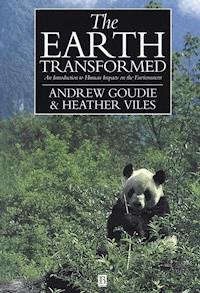
The Earth Transformed answers the need for a concise, non-technical introduction to the ways in which the natural environment has been and is being affected by human activities. It is simply and engagingly written, and illustrated with maps, diagrams, figures and photographs.
Among the subjects described and considered by the authors are desertification, deforestation, wetland management, biodiversity, climatic change, air pollution, the impact of cities on climate and hydrology, erosion, salinization, waste disposal, sea level rise, marine pollution, coral reef degradation and aquaculture.
The book is organized around 45 case studies taken from all parts of the globe and chosen for their intrinsic interest and representative nature. Further features of the book include guides to further reading, suggestions for debate and study, and a glossary of terms.
The book is aimed to meet the needs of students beginning courses on environmental science and geography.
Sie lesen das E-Book in den Legimi-Apps auf:
Seitenzahl: 451
Veröffentlichungsjahr: 2013
Ähnliche

















CONTENTS
Part I Introduction to the Developing Environmental Impact
1 Early Days
2 Developing Populations
3 Agricultural Revolutions
4 Urban and Industrial Revolutions
5 The Modern Scene
6 Understanding Environmental Transformations
Part II The Biosphere
1 Introduction
2 Fire
3 Desertification
4 Deforestation
5 Tropical Secondary Forest Formation
6 Grasslands and Heath Lands: The Human Role
7 Temperate Forests Under Stress
8 Urban Ecology
9 Wetlands: ‘The Kidneys of the Landscape’
10 Biodiversity and Extinctions
11 Introductions, Invasions and Explosions
12 Habitat Loss and Fragmentation
13 Extinctions in the Past
14 Biotechnology, Genetic Engineering and the Environment
15 Conclusions
Part III The Atmosphere
1 Introduction
2 Anthropogenic Climate Change: The Role of Aerosols
3 Anthropogenic Climate Change: The Role of Land Cover Changes
4 The Enhanced Greenhouse Effect and Global Warming
5 Urban Climates
6 Urban Air Pollution
7 Ozone Depletion and Ozone Pollution
8 Acid Deposition
9 Conclusion
Part IV The Waters
1 Introduction
2 River Regulation
3 Forests and River Flow
4 The Hydrological Response to Urbanization
5 Land Drainage
6 Water Pollution
7 Eutrophication
8 Thermal Pollution
9 Inter-Basin Water Transfers and the Death of the Aral Sea
10 Groundwater Depletion and Groundwater Rise
11 Conclusion
Part V The Land Surface
1 Introduction
2 Soil Erosion by Water
3 Wind Erosion and Dune Reactivation
4 River Channel Changes
5 Salinization
6 Accelerated Landslides
7 Ground Subsidence
8 Waste Disposal
9 Stone Decay in Urban Buildings
10 Conclusion
Part VI Oceans, Seas and Coasts
1 Introduction
2 Sea-Level Rise
3 Coastal Erosion
4 Coastal Flooding
5 Coastal and Marine Pollution
6 Coastal Dune Management
7 Coral Reef Degradation
8 Aquaculture and Coastal Wetlands
9 Conclusion
Part VII Conclusion
1 Introduction
2 The Complexity of the Human Impact
3 Towards a Sustainable Future
Glossary
References
Index
Copyright © Andrew Goudie and Heather Viles 1997
The right of Andrew Goudie and Heather Viles to be identified as authors of this work has been asserted in accordance with the Copyright, Designs and Patents Act 1988.
First published 1997
Reprinted 1998, 2000 and 2003
Blackwell Publishers Ltd
108 Cowley Road
Oxford OX4 1JF
UK
Blackwell Publishers Inc.
350 Main Street
Malden, Massachusetts 02148
USA
All rights reserved. Except for the quotation of short passages tor the purposes of criticism and review, no part of this publication may be reproduced, stored in a retrieval system, or transmitted, in any form or by any means, electronic, mechanical, photocopying, recording or otherwise, without the prior permission of the publisher.
Except in the United States of America, this book is sold subject to the condition that it shall not, by way of trade or otherwise, be lent, resold, hired out, or otherwise circulated without the publisher’s prior consent in any form of binding or cover other than that in which it is published and without a similar condition including this condition being imposed on the subsequent purchaser.
British Library Cataloguing in Publication Data
A CIP catalogue record for this book is available from the British Library.
Library of Congress Cataloging-in-Publication Data
Goudie, Andrew.
The earth transformed: an introduction to human impacts on the environment/by Andrew Goudie and Heather Viles.
p. cm.
Includes bibliographical references and index.
ISBN 0–631–19464–9. —ISBN 0–631–19465–7 (pbk. : alk. paper)
1. Nature—Effect of human beings on. I. Viles, Heather A.
II. Title.
GF75G677 1997
304.2′8—DC20
96–26798
CIP
Introduction to the Developing Environmental Impact
1 EARLY DAYS
In this book we explore the many ways in which humans have transformed the face of the Earth. We start by placing these transformations into an historical context and seeing how they have changed through time.
Human life probably first appeared on Earth during the early part of the Ice Age, some 3 million years ago. The oldest human remains have been found in eastern and southern Africa. For a very long time the numbers of humans on the planet were small, and even as recently as 10,000 years ago the global population was probably only about one-thousandth of its size today. Also, for much of that time humans had only modest technology and limited capacity to harness energy. These factors combined to keep the impact of humans on the environment relatively small. Nonetheless, early humans were not totally powerless. Their stone, bone and wood tool technology developed through time, improving their efficiency as hunters. They may have caused marked changes in the numbers of some species of animals and in some cases even their extinction (see part II, section 13). No less important was the deliberate use of fire (see part II, section 2), a technological development that may have been acquired some 1.4 million years ago. Fire may have enabled even small human groups to change the pattern of vegetation over large areas.
2 DEVELOPING POPULATIONS
There are at least three interpretations of global population trends over the last 3 million years (Whitmore et al., 1990). The first, described as the ‘arithmetic-exponential’ view, sees the history of global population as a two-stage phenomenon: the first stage is one of slow growth, while the second stage, related to the industrial revolution (see section 4 below), displays a staggering acceleration in growth rates. The second view, described as ‘logarithmic-logistic’, sees the last million or so years in terms of three revolutions – the tool, agricultural and industrial revolutions. In this view, humans have increased the carrying capacity of the Earth at least three times. There is also a third view, described as ‘arithmetic-logistic’, which sees the global population history over the last 12,000 years as a set of three cycles: the ‘primary cycle’, the ‘medieval cycle’ and the ‘modernization cycle’. These three alternative models are presented graphically in figure I.1.
Plate I.1 The Olduvai Gorge in Tanzania is one of a group of sites in the Rift Valley of East Africa where some of the earliest remains of humans and their stone tools have been found. (A. S. Goudie)
Plate I.2 A grass fire in the high grasslands of Swaziland, southern Africa. Fire was one of the first ways in which humans transformed their environment and was probably used deliberately in Africa over a million years ago. (A. S. Goudie)
3 AGRICULTURAL REVOLUTIONS
Until the beginning of the Holocene, about 10,000 years ago, humans were primarily hunters and gatherers. After that time, in various parts of the world, increasing numbers of them started to keep animals and grow plants. Domestication caused genetic changes in plants and animals as people tried to breed more useful, better-tasting types. Domestication also meant that human populations could produce more reliable supplies of food from a much smaller area than hunter–gatherers (table I.1). This in turn created a more solid and secure foundation for cultural advance, and allowed a great increase in population density. This phase of development is often called the first agricultural revolution.
As the Holocene progressed, many other technological developments occurred with increasing rapidity. All of them served to increase the power of humans to modify the surface of the Earth. One highly important development, with rapid and early effects on environment, was irrigation. This was introduced in the Nile Valley and Middle East over 5,000 years ago. At around the same time the plough was first used, disturbing the soil as never before. Animals were used increasingly to pull ploughs and carts, to lift water and to carry produce. Altogether the introduction of intensive cultivation and intensive pastoralism (the use of land for keeping animals) had a profound effect on many environments in many parts of the world.
Figure I.1 Three interpretations of global population trends over the millennia: (a) the arithmetic-exponential; (b) the logarithmic-logistic; (c) the arithmetic-logistic
Source: Whitmore et al. (1990), figure 2.1.
A further significant evelopment in human cultural and technological life was the mining of ores and the smelting of metals, begun around 6,000 years ago. Metal artefacts gave humans greater power to alter the environment. The smelting process required large quantities of wood which caused local deforestation.
4 URBAN AND INDUSTRIAL REVOLUTIONS
The processes of urbanization and industrialization are two other fundamental developments that have major environmental implications. Even in ancient times, some cities evolved with considerable populations. Nineveh (the Assyrian capital) may have had a population of 700,000, Augustan Rome may have had a population of around 1 million, and Carthage (on the North African coast), at its fall in 146 BC, had 700,000 inhabitants. Such cities would have exercised a considerable influence on their environs, but this influence was never as extensive as that of cities in the last few centuries. The modern era, especially since the late seventeenth century, has witnessed the transformation of culture and technology through the development of major industries (table I.2). This ‘industrial revolution’, like the agricultural revolution, has reduced the space required to sustain each individual and has seen resources utilized more intensively.
Part of this industrial and economic transformation was the development of successful ocean-going ships in the sixteenth and seventeenth centuries. As a result, during this time countries in very different parts of the world became increasingly interconnected. Among other things, this gave humans the power to introduce plants and animals to parts of the world where they had not previously been. The steam engine was invented in the late eighteenth century and the internal combustion engine in the late nineteenth century: both these innovations massively increased human need for and access to energy, and lessened dependence on animals, wind and water.
Table I.1Five stages of economic development
Source: Adapted from Simmons (1993), pp. 2–3.
Economic stageDates and characteristicsHunting–gathering and early agricultureDomestication first fully established in south-western Asia around 7500 BCE; hunter–gatherers persisted in diminishing numbers until today. Hunter–gatherers generally manipulate the environment less than later cultures, and adapt closely to environmental conditions.Riverine civilizationsGreat irrigation-based economies lasting from c.4000 BC to 1st century AD in places such as the Nile Valley and Mesopotamia. Technology developed to attempt to free civilizations from some of the constraints of a dry season.Agricultural empiresFrom 500 BC to around 1800 AD a number of city-dominated empires existed, often affecting large areas of the globe. Technology (e.g. terracing and selective breeding) developed to help overcome environmental barriers to increased production.The Atlantic–industrial eraFrom c.1800 AD to today a belt of cities from Chicago to Beirut, and around the Asian shores to Tokyo, form an economic core area based primarily on fossil fuel use. Societies have increasingly divorced themselves from the natural environment, through air conditioning for example. These societies have also had major impacts on the environment.The Pacific–global eraSince the 1960s there has been a shifting emphasis to the Pacific Basin as the primary focus of the global economy, accompanied by globalization of communications and the growth of multinational corporations.Plate I.3 A simple irrigation system in use in the drier portions of Pakistan. Such irrigation was probably introduced in the Old World drylands around 5,000–6,000 years ago. (A. S. Goudie)
5 THE MODERN SCENE
Modern science and modern medicine have compounded the effects of the urban and industrial revolutions, leading to accelerating population increase even in nonindustrial societies. Urbanization has gone on speedily, and it is now recognized that large cities have their own environmental problems, and produce a multitude of environmental effects. If present trends continue, many cities in the less developed countries will become unimaginably large and crowded. For instance, it is projected that by the year 2000 Mexico City will have more than 30 million people – roughly three times the present population of the New York metropolitan area. Calcutta, Greater Bombay, Greater Cairo, Jakarta and Seoul are each expected to be in the 15–20 million range by that time. In all, around 400 cities will have passed the million mark by the end of the twentieth century, and UN estimates indicate that by then over 3,000 million people will live in cities, compared with around 1,400 million people in 1970.
Modern science, technology and industry have also been applied to agriculture. In recent decades some spectacular progress has been made. Examples include the use of fertilizers and the selective breeding of plants and animals. Biotechnology has, however, immense potential to cause environmental change (see part II, section 14).
Plate I.4 A limestone pavement developed on the Carboniferous limestone of north-west England. Although they were formed in glacial times by glacial abrasion, they may be exposed at the surface today because of soil erosion produced by forest clearance since the Mesolithic. (A. S. Goudie)
We can recognize certain trends in human manipulation of the environment during the modern era. First, the number of ways in which humans are affecting the environment is growing rapidly. For example, nearly all the powerful pesticides post-date the Second World War. The same applies to the increasing construction of nuclear reactors, to the use of jet aircraft and to many aspects of biotechnology. Secondly, environmental issues that once affected only particular local areas have become regional or even global problems. An instance of this is the appearance of substances such as DDT (a major pesticide), lead and sulphates at the North and South Poles, far removed from the industrial societies that produced them. Thirdly, the complexity, magnitude and frequency of impacts are probably increasing. For instance, a massive modern dam like that at Aswan in Egypt has a very different impact from a small Roman dam. Finally, a general increase in per capita consumption and environmental impact is compounding the effects of rapidly expanding populations. Energy resources are being developed at an ever-increasing rate, giving humans enormous power to transform the environment. One measure of this is world commercial energy consumption, which trebled in size between the 1950s and 1980.
Table I.2Energy, technology and environmental impact time line
Plate I.5 The power of humans to transform the land’s surface in the modern era is illustrated by the size of the giant open-cast uranium mine at Rössing, Namibia. Modern technology allows humans to harness energy resources as never before. (A. S. Goudie)
The importance of the harnessing of energy can be clearly seen in the context of world agriculture. At the beginning of the twentieth century, more or less throughout the world, farmers relied upon domestic animals to provide both pulling power and fertilizer. They were largely selfsufficient in energy. However, in many areas the situation has now changed. Fossil fuels are extensively used to carry out such tasks as pumping (or, in many cases, mining) water, propelling tractors and manufacturing synthetic fertilizers (which in many cases cause pollution). The world’s tractor fleet has quadrupled since 1950 and as much as two-thirds of the world’s cropland is being ploughed and compacted by increasingly large tractors.
Above all, as a result of the huge expansion of environmental transformation it is now possible to talk about global environmental change. There are two aspects of this (Turner, Kasperson et al., 1990): ‘systemic’ global change and ‘cumulative’ global change. Systemic global change refers to changes operating at the global scale and includes, for example, global changes in climate brought about by atmospheric pollution, e.g. the greenhouse effect (see part III). Cumulative global change refers to the snowballing effect of local changes, which add up to produce change on a worldwide scale, or change which affects a significant part of a specific global resource, e.g. acidrain or soil erosion (see parts III and V). The two types of change are closely linked. For example, the burning of vegetation can lead to systemic global change through processes such as carbon dioxide release and albedo modification, and to cumulative global change through its impact on soil erosion and biodiversity (table I.3).
Table I.3Systemic and cumulative global environmental changes
Source: Turner, Clark et al. (1990), table 1.
Type of changeCharacteristicExamplesSystemicDirect impact on globally functioning system(a) Industrial and land-use emissions of ‘greenhouse’ gases(b) Industrial and consumer emissions of ozone-depleting gases(c) Land cover changes in albedoCumulativeImpact through worldwide distribution of change(a) Groundwater pollution and depletion(b) Species depletion/genetic alteration (biodiversity)Impact through magnitude of change (share of global resource)(a) Deforestation(b) Industrial toxic pollutants(c) Soil depletion on prime agricultural landsFigure I.2BP) and 100 per cent for 1985. They then estimated the dates by which each component had reached successive quartiles (that is, 25, 50 and 75 per cent) of its total change at 1985. They believe that about half of the components have changed more in the single generation since 1950 than in the whole of human history before that date.
Human activities are now causing environmental transformation on the local, regional, continental and planetary scales. The following examples both give an indication of what is currently being achieved and provide a sample of some of the issues we cover in this book.
Large areas of temperate forest have been cleared in the past few centuries. Now farmers and foresters are removing forests from the humid tropics at rates of around 11 million hectares (ha) per year. This is exposing soils to intense and erosive rainfall and increasing rates of sediment yield by an average of six times. The world’s rivers are being dammed by around 800 major new structures each year, transforming downstream sediment loads. Huge reservoirs held behind dams as high as 300 metres are generating seismic hazards and catastrophic slope failures. Some of the world’s largest lakes, most notably the Aral Sea in the former Soviet Union, are becoming desiccated because the water is being taken for irrigation use and transferred to other water basins at a nearcontinental scale. Fluids, both water and hydrocarbons (e.g. oil and gas) are being withdrawn from beneath cities and farmlands, leading to subsidence of up to 8–9 metres. Recreational vehicles and trampling feet are damaging many popular tourist areas. Development on tundra areas is disturbing the thermal equilibrium of permafrost, leading to more and more instances of thermokarst. Coastlines are being ‘protected’ and ‘reclaimed’ by the use of large engineering structures, often without due thought for the possible consequences. We are pumping at least 500 million tonnes of dissolved material into rivers and oceans around the world each year. We are acidifying precipitation to the extent that some of it has the pH of vinegar or stomach fluid, thereby altering rates of mineral release and rock weathering.
Figure I.2 Percentage change (from assumed zero human impact at 10,000 BP) of selected human impacts on the environment
These human impacts are having great direct and indirect effects on vegetation: table I.4 shows the amounts of vegetation (in terms of net primary production) used, dominated or lost by humans.
We shall return to these and other issues in subsequent sections. In this book we have chosen to focus on specific environmental issues as they affect the biosphere (part II), atmosphere (part III), surface waters (part IV), land surface (part V), and oceans, seas and coasts (part VI). However, you will notice through all of these sections that a range of important human activities play key roles and can have a range of different impacts on many sectors of the environment.
Even in the modern world economy, hunting and gathering activities still have an important effect on the environment, largely through the biological impacts of fishing and the shooting of game. These activities are becoming increasingly large-scale and mechanized. Agriculture, aquaculture and other forms of food production now occupy vast areas of the Earth’s surface and have a wide variety of environmental effects, including soil erosion, nutrient depletion, changes in species divesity and genetic changes to crops and animals. Forestry and quarrying, as extractive industries, are creating whole new landscapes and releasing large amounts of sediment in parts of the globe ranging from the humid tropics to the Arctic. Heavy industries (such as oil refining and chemical manufacture), power generation plants (from coal-fired to nuclear), and light and high-technology industries have many different environmental impacts and contribute to pollution of land, water and air on the local and regional scales.
Transport and urbanization have, perhaps, some of the most dramatic local impacts on the environment. They create whole new landscapes dominated by concrete, add to pollution, and affect plant and animal distributions and the circulation and distribution of water. Tourism, which is now a booming global industry, also has considerable impacts on the environment. In recent years there has been much interest in the notion of ‘ecotourism’, or tourism which attempts to minimize environmental damage.
One of the consequences of all these different human interactions with the environment is the production of waste. This itself has had major environmental effects. There are problems of waste disposal and waste management. Big issues like nuclear waste disposal have potentially long-term environmental implications. So do less contentious matters, such as disposing of domestic and industrial waste on landfill sites.
Human societies do not always run smoothly. War, civil strife and smaller-scale disruptions such as vandalism and crime have their own environmental consequences. Indeed, some wars are partly motivated by disputes over environmental resources, for example over water supplies. Recent conflicts in the Arabian Gulf, Bosnia and Afghanistan have had both short-term and long-term environmental consequences, including pollution and soil erosion. In the 1960s and 1970s the Vietnam War had widely publicized effects on the mangrove vegetation of the Mekong Delta. The use of defoliant chemicals there has had long-term impacts on biodiversity from which the environment is only just recovering. Even without war, political systems can impose additional stress on the environment. The apartheid system in pre-1994 South Africa, for example, forcibly distributed population and wealth in a highly unfair way, leading to huge environmental pressures on marginal land. The planned socialist economics of the former Soviet Union and many East European states appear now to have had particularly damaging environmental impacts. And capitalist enterprise, which now dominates the global economy, has often had a tendency to plunder and despoil the environment.
These many negative environmental impacts have generated in response a longterm, and growing, focus on conservation and improving human management of the environment. Conservation and management themselves have environmental impacts, as in the creation of nature reserves; there may also be less desirable impacts where management schemes go wrong. The ideas of sustainable development are the most recent attempt to combine resource exploitation with conservation and a concern for the environmental future. As our scientific understanding of how the environment works has advanced, we have gained a better view of how serious our human impacts can be. On the other hand, we have also learnt that there is much reason for hope. The environmental future is not all doom and gloom, as we stress in part VII of this book.
6 UNDERSTANDING ENVIRONMENTAL TRANSFORMATIONS
We have already shown in this chapter that human impacts on environmental processes have had a long and complex history, and now take on many complex and interlinked forms. The environment itself is also not a static, simple entity, but has a complicated history of its own. We now realize that the environment changes naturally, over a range of different time-scales, as a response to a number of natural ‘forcing factors’, such as the varying position of the Earth within its orbit around the sun. On shorter time-spans, we know that the environment can work in abrupt and challenging ways, producing what are called ‘natural hazards’ such as volcanic eruptions, earthquakes, floods and hurricanes. So, putting together human and natural factors influencing the environment to explain any single environmental transformation can be a hugely difficult task. It is important to realize that there is still a lot of scientific uncertainty and debate over the causes and consequences of many of the environmental issues we look at in this book.
Understanding the role of human activities in environmental transformations is not a completely hopeless task, however. There are several useful concepts which we can adopt to help us untangle what is going on. First, it is useful to think of the environment (of which, of course, we are a part) as being a series of interlocked systems. These systems are affected by a whole series of stresses (which can be human or natural in origin). The stresses produce some changes in the system, or responses: these are what we see as environmental transformations or environmental issues. Because the systems are interlocked, stresses on one system may produce linked effects on other systems. Some of the systems are more able to resist stresses than others, and so some can be stressed greatly before they show any response. Others are more sensitive to stresses.
As an example, to clarify the ideas presented above, we could look at a drainage basin (or watershed, as it is known in the USA). Drainage basins are primarily hydrological systems, with interlinked vegetation communities. Cutting down trees (a stress) will produce a range of responses: soil erosion, increased flooding and changes in the way water is distributed (hydrological pathways). The severity of these outcomes will depend on the climate and topography of the area. Normally, a mixture of natural and human-induced stresses will affect the environment together, complicating the picture. One way of understanding such multi-causal situations is to identify different types of stresses or causal factors. A useful framework, which has been used in various ways in the following sections of this book, is to split causal factors into three types: that is, ‘predisposing’, ‘inciting’ and ‘contributing’ factors. Predisposing factors are those features of the natural or human environment which make a system vulnerable to stress; inciting factors are those stresses that trigger off a change in the system; and contributing factors are the whole range of additional stresses which make the response more noticeable and acute. Let us apply this framework to the case of a drainage basin. The predisposing factors which may make it vulnerable to change following tree-cutting would be the topography and climate, and perhaps also past forest management practices. The inciting factor would be the tree-cutting itself. The contributing factors could be the health of the trees; the season when the trees were felled; the weather at the time; and, over a longer time-span, what vegetation grows in place of the trees.
The concepts of stresses, responses and different types of causal factors are very useful in trying to understand how humans are influencing their environment. Such understanding is vital in any attempts to solve or manage the resultant environmental problems. However, to arrive at solutions it is also necessary to have a deeper understanding of the human societies involved in such environmental issues, as many of our subsequent examples illustrate. For example, just knowing how tree-cutting can produce soil erosion and hydrological changes within a drainage basin does not mean that we can solve the problem. We need also to know why people are cutting down the trees. Before we can effect any great changes, we need more understanding of the economic conditions, technological capability, cultural organization and political systems of the people involved.
FURTHER READING
Freedman, B., 1995, Environmental Ecology, 2nd edn. San Diego: Academic Press.
An enormously impressive and wide-ranging study with a strong ecological emphasis.
Mannion, A. M., 1995, Agriculture and Environmental Change. London: Wiley.
A new and comprehensive study of the important role that agriculture plays in land transformation.
Meyer, W. B., 1996, Human Impact on the Earth. Cambridge: Cambridge University Press.
A good point of entry to the literature that brims over with thought-provoking epigrams.
Middleton, N. J., 1995, The Global Casino. London: Edward Arnold.
An introductory text, by a geographer, which is well illustrated and clearly written.
Ponting, C., 1991, A Green History of the World. London: Penguin.
An engaging and informative treatment of how humans have transformed the earth through time.
Simmons, I. G., 1996, Changing the Face of the Earth: Culture, Environment and History, 2nd edn. Oxford: Blackwell.
A characteristically amusing and perceptive review of many facets of the role of humans in transforming the earth, from an essentially historical perspective.
KEY TERMS AND CONCEPTS
agricultural revolution
biosphere
global environmental change
Holocene
hunter–gatherer
industrial revolution
predisposing, inciting and contributing factors
stresses and responses
systems
POINTS FOR REVIEW
How much environmental change was achieved in prehistoric times and how much in the last three centuries?
To what extent are environmental changes the result of both natural and human-induced stresses?
What do you understand by the phrases ‘global environmental change’ and ‘sustainability’?
The Biosphere
Lesen Sie weiter in der vollständigen Ausgabe!
Lesen Sie weiter in der vollständigen Ausgabe!
Lesen Sie weiter in der vollständigen Ausgabe!
Lesen Sie weiter in der vollständigen Ausgabe!
Lesen Sie weiter in der vollständigen Ausgabe!
Lesen Sie weiter in der vollständigen Ausgabe!
Lesen Sie weiter in der vollständigen Ausgabe!
Lesen Sie weiter in der vollständigen Ausgabe!




