


4,99 €
Mehr erfahren.
- Herausgeber: Ken Everett
- Kategorie: Gesellschafts- und Liebesromane
- Sprache: Englisch
Twelve-year-old Adam mourns the death of his mother. He is angry and alone, with only the books on his shelf for company. But those books have begun to whisper to him in the darkness, and as he takes refuge in his imagination, he finds reality and fantasy have begun to meld. Adam is violently propelled into a land that is a strange reflection of his own world, populated by heroes and monsters. Less
The story of a young boy named Adam who is struggling with the death of his mother and his father's remarriage to Violet and the two have another child who they name Tommie. As Adam tries to adjust to this new family situation, he hears his books whispering and he often faints. He is soon lured into another world hidden in a crevice in the sunken garden of the family's new home. As he explores this new fantasy world, Adam has many adventures and lives out his own fairy tale.
An imaginative tribute to the journey we all must take through the end of innocence into adulthood, Any adult who can remember the moment when childhood began to fade, and for every adult who is about to face this moment. The End of Innocence is a story of hope for those who have lost and for those who will lose. The End of Innocence into adulthood and beyond is about grief and loss, loyalty and love, and the redeeming power of stories. It's a story that reminds us of the enduring power of stories in our lives.
Das E-Book können Sie in Legimi-Apps oder einer beliebigen App lesen, die das folgende Format unterstützen:
Veröffentlichungsjahr: 2022
Ähnliche



















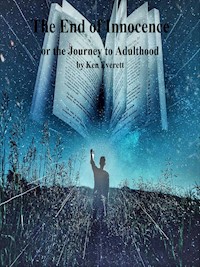
The End of Innocence
or the Journey to Adulthood
by Ken Everett
Summary
The book follows the story of a young boy named Adam who is struggling with the death of his mother and his father's remarriage yo Violet and the two have another child who they name Tommie. As Adam tries to adjust to this new family situation, he hears his books whispering and he often faints. He is soon lured into another world hidden in a crevice in the sunken garden of the family's new home. As he explores this new fantasy world, Adam has many adventures and lives out his own fairy tale.
An imaginative tribute to the journey we all must take through the end of innocence into adulthood, Any adult who can remember the moment when childhood began to fade, and for every adult who is about to face this moment. The End of Innocence is a story of hope for those who have lost and for those who will lose. The End of Innocence into adulthood and beyond is about grief and loss, loyalty and love, and the redeeming power of stories. It's a story that reminds us of the enduring power of stories in our lives.
Characters
* Adam – The twelve year old protagonist. He loves books and stories contained in them. After the death of his mother and his father's remarriage, Adam is magically transported to another world and seeks out King Joseph and his Book of Lost Things.
* Adam's mother – She dies early in the novel and serves as inspiration for Adam to enter the "other world".
* Adam's father – His wife (Adam's mother) dies at the beginning of the novel. He later marries Violet and they have another child named Tommie.
* Violet – Adam's stepmother. She was the director of the "not-so-hospital" where Adam's mother died.
* Tommie – Adam's half brother, son of Violet VIOLET.
* Dr Atwood – Adam's psychiatrist.
* The Dishonest Man – The antagonist of the story. He seduces Adam into the other world and is Adam's protector and enemy at the same time.
* Joseph Redford – Violet's uncle, the king of the other world.
* Emma – Joseph's "adopted" sister.
* The Lumberjack
* Lobo & the Loups - Loups originated when a young woman wearing a red cloak seduced a wolf. Her child was the first Loup and is now called Lobo. There are many wolves that have started turning into humans. Some have almost human faces, walk on two legs, and wear human clothing. However, Lobo is the most progressive and leader of all; his dream is to overthrow King Joseph and take his place.
* Raymond the Mercenary
* Michael
* The Shulocks
* Dorthy and the seven gnomes
Chapter 1
Of all that was found and all that was lost
ONCE UPON – for that is how all stories should begin – there was a boy who lost his mother.
In fact, he had lost her a long time ago.
The sickness that was killing her was a creeping, cowardly thing, a sickness that was eating away at her from the inside, slowly consuming the light within her, so that with each passing day her eyes grew a little less bright and her skin a little more pale.
And as she was taken away from him piece by piece, the boy became more and more afraid that he would eventually lose her completely. He wanted her to stay. He had no brothers and no sisters, and while he loved his father, one would say he loved his mother more. He couldn't bear to think of life without her.
The boy, whose name was Adam, did everything he could to keep his mother alive. he prayed He was trying to be good so she wouldn't be punished for his mistakes. He fumbled around the house as quietly as possible, keeping his voice low when playing war games with his toy mercenaries. He created a routine, and he tried to stick to that routine as closely as possible, partly because he believed that his mother's fate was related to the actions he performed. He always got out of bed by putting his left foot on the floor first, then his right. He always counted to twenty while brushing his teeth and always stopped when he was done. He always touched the bathroom faucets and the door handles a certain number of times: odd numbers were bad,
If he bumped his head against something, he would bump it a second time to keep the numbers even, and sometimes he had to keep doing it because his head seemed to hit the wall, ruining his count, or his hair glittered on the other hand when he didn't want to, until his skull ached from the exertion and made him dizzy and nauseous. For a whole year, during his mother's worst illness, he carried the same items from his bedroom to the kitchen first thing in the morning and back in the evening last: a small copy of Grimm's chosen fairy tales and a dog-eared magnet comic, the book, which can be placed perfectly in the middle of the comic, and both lie with the edges at the corner of the rug on his bedroom floor at night or on the seat of his favorite kitchen chair in the morning. In this way
Every day after school he would sit by her bed, sometimes talking to her when she felt strong enough, but sometimes just watching her sleep, counting each labored, gasping breath that came out, and forcing her to close with him stay. He often brought a book to read, and when his mother was awake and her head wasn't too sore, she would ask him to read to her. She had books of her own—romances and mysteries and thick, black-clad novels with tiny letters—but she preferred him to read her much older tales: myths and legends and fairy tales, tales of castles and adventures and dangerous, talking beasts. Adam didn't disagree. Though no longer a child by the age of twelve, he retained a fondness for these stories,
Before she got sick, Adam's mother often told him that stories were alive. They didn't live like humans or even dogs or cats.
Humans were alive whether you noticed them or not, while dogs tended to trick you into noticing them if they decided you weren't paying them enough attention. Cats, on the other hand, were very good at pretending there were no humans at all when it suited them, but that was another matter entirely.
But stories were different: they came alive through being told. Without a human voice to read them aloud, or a pair of large eyes following them under a blanket by the light of a flashlight, they had no real existence in our world. They were like seeds in a bird's beak waiting to fall to earth, or the notes of a song laid out on a sheet of paper longing for an instrument to bring their music to life. They rested, hoping for a chance to surface. As soon as someone started reading them, they could start to change. They could take root in the imagination and transform the reader. Stories wanted to be read, Adam's mother whispered.
They needed it. That's why they forced themselves out of their world into ours. They wanted us to give them life.
These were the things his mother told Adam before the disease struck her. She often held a book in her hand as she spoke, and she ran her fingertips affectionately over the cover, as she sometimes touched Adam's face or his father's when he said or did something that reminded her how much she cared for him. The sound of his mother's voice was like a song to Adam, constantly revealing new improvisations or previously unheard subtleties. As he got older and music became more important to him (although never quite as important as books), he came to see his mother's voice less as a song and more as a kind of symphony that could vary familiar themes and melodies endlessly to suit her whims and moods changed.
Over the years, reading a book became a lonely experience for Adam until his mother's illness brought them both back to his early childhood, albeit with the roles reversed. Despite this, often before she fell ill, he would quietly step into the room where his mother was reading and greet her with a smile (which always returned), before sitting nearby and immersing himself in his own book, though both they were lost in their own individual worlds, they shared the same space and time. And Adam could tell, by looking at her face as she read, whether or not the story that was in the book lived in her, and she lived in it, and he would remember all she told him about stories and tales and that told had power they wield over us,
Adam would always remember the day his mother died. He was at school learning – or not learning – how to scan a poem, his head filled with dactyls and pentameters, names like those of strange dinosaurs that inhabited a lost prehistoric landscape. The Headmaster opened the classroom door and approached the English master, Mr. Benjamin (or Big Ben, as his students called him because of his size and his habit of pulling his old pocket watch from the folds of his waistcoat and proclaiming: in deep, sad Toning the slow passage of time to his wayward students). The headmaster whispered to Mr.
Benjamin, and Mr. Benjamin nodded solemnly. Turning to face the class, his eyes found Adam's and his voice was lower than usual when he spoke. He called Adam's name and told him he was excused and to pack his bag and follow the Headmaster. Then Adam knew what had happened. He knew before the headmaster took him to the school nurse's office. He knew before the nurse appeared, a cup of tea in hand for the boy to drink. He knew it before the Headmaster stood over him, still stern in appearance but clearly trying to be gentle with the grieving boy. He knew it before the cup touched his lips and the words were spoken and the tea burned his mouth and reminded him he was still alive,
Even the endlessly repeated routines hadn't been enough to keep her alive. He later wondered if he hadn't gotten any of these right, if he had somehow miscounted that morning, or if there was one action he could have added to the many that could have changed things. It didn't matter now. She was gone. He should have stayed at home. He had always worried about her at school because when he was away from her he had no control over her existence. The routines didn't work at school. They were more difficult to do because the school had its own rules and its own routines. Adam had tried using them as substitutes, but they weren't the same. Now his mother had paid the price.
Only then, ashamed of his failure, did Adam begin to cry.
The days that followed were a tumult of neighbors and relatives, of tall, strange men rubbing his hair and handing him a shilling, and tall women in dark dresses cradling Adam to their chests as they wept and filled his senses with the smell of perfume and mothballs. He sat awake late into the night, crammed into a corner of the living room while the adults exchanged stories about a mother he'd never known, a strange creature with a history entirely separate from his own: a child who wouldn't cry when her older sister died because she refused to believe that someone she cared about so much could go away forever and never come back; a young girl who ran away from home for a day, because her father, in a fit of impatience because of a little sin she had committed, told her he was going to hand her over to the gypsies; a beautiful woman in a bright red dress who was stolen from under the nose of another man by Adam's father; a vision in white on her wedding day, sticking her thumb in a thorn of a violet and leaving the bloodstain on her dress for all to see.
And when he finally fell asleep, Adam dreamed that he was part of those stories, a participant in every stage of his mother's life. He was no longer a child listening to stories from another time. Instead, he was a witness to them all.
Adam saw his mother in the funeral home for the last time before the coffin was closed. She looked different and yet the same. She was more like her old self, the mother who existed before the disease came. She wore makeup like she did to church on Sundays or when she and Adam's father went out to dinner or to the movies. She was lying in her favorite blue dress, her hands clasped in front of her stomach. A rosary was entwined in her fingers, but her rings had been removed. Her lips were very pale. Adam stood over her and touched his fingers to her hand. She felt cold and damp.
His father appeared next to him. They were the only ones left in the room.
Everyone else had gone outside. A car was waiting to take Adam and his father to church. It was big and black. The man who drove it wore a peaked cap and never smiled.
"You can kiss her goodbye, son," his father said. Adam looked up at him. His father's eyes were moist and rimmed red. His father had cried that first day when Adam came home from school and he had held him in his arms and promised him everything would be fine, but he hadn't cried again until now. Adam watched as a large tear rose and slowly, almost embarrassed, ran down his cheek. He turned back to his mother. He leaned into the coffin and kissed her face. She smelled of chemicals and something else, something Adam didn't want to think about. He could taste it on her lips.
"Goodbye Mom," he whispered. His eyes burned. He wanted to do something, but he didn't know what.
His father put a hand on Adam's shoulder, then lowered himself and kissed Adam's mother gently on the mouth. He pressed the side of his face against hers and whispered something Adam couldn't hear. Then they left her, and when the coffin reappeared, carried by the undertaker and his assistants, it was closed and the only sign of Adam's mother lying in it was the little metal plate on the lid, bearing her name and dates of birth Death.
They left her alone in the church that night. If he could, Adam would have stayed with her. He wondered if she was lonely, if she knew where she was, if she was already in heaven, or if she wasn't until the priest spoke the last words and the coffin was placed in the ground. He didn't like to think about her all alone in there, sealed with wood and brass and nails, but he couldn't talk to his father about it. His father wouldn't understand, and it wouldn't change anything anyway. He couldn't stay in the church alone, so instead he went to his room and tried to imagine what it must be like for her. He drew the curtains on his window and closed the bedroom door to keep it as dark as possible, then climbed under his bed.
The bed was low and there was very little space underneath. It took up a corner of the room, so Adam pushed himself over until he felt his left hand touch the wall, then he closed his eyes tightly and lay very still. After a while he tried to raise his head. It bumped hard against the slats that supported its mattress. He pushed against it, but they were pinned down. He tried to raise the bed by pushing up with his hands, but it was too heavy. He smelled dust and his chamber pot. He started coughing. His eyes watered. He decided to get out from under the bed, but it had been easier to shuffle into his current position than pull himself out. He sneezed and his head hit the bottom of his bed painfully. He panicked. His bare feet found footing on the wooden floor. He reached up and pulled himself along the slats until he was close enough to the edge of the bed to squeeze out. He got up, leaned against the wall and took a deep breath.
Such was death: trapped in a small space with a great weight that held you for all eternity.
His mother was buried on a January morning. The ground was hard and all the mourners wore gloves and cloaks. The coffin looked too small when they lowered it into the dirt. His mother had always seemed tall in life. Death had made her small.
In the weeks that followed, Adam tried to lose himself in books, as his memories of his mother were inextricably linked to books and reading.
Her books, deemed "suitable," were passed on to him, and he found himself trying to read novels he didn't understand and poems that didn't quite rhyme. He sometimes asked his father about it, but Adam's father seemed to have little interest in books. He had always spent his time at home with his head buried in newspapers, little wisps of pipe smoke rising over the pages like signals being sent by Indians. He was obsessed with the comings and goings of the modern world, more than ever now that Hitler's armies were roaming Europe and the threat of attacks on his own country was becoming more real.
Adam's mother once said that his father used to read a lot of books but had gotten used to losing himself in stories. Now he preferred his newspapers, with their long columns of print, each letter carefully laid out by hand to create something that would lose its relevance once it hit the newsstands, the news in it already old and dying when they were read, quickly overtaken by events in the world beyond.
The stories in books hate the stories in newspapers, Adam's mother would say. Newspaper articles were like freshly caught fish that only deserved attention as long as they stayed fresh, which wasn't very long at all. They were like the street urchins hawking the evening's editions, all yelling and haunting, while stories—real stories, properly made up stories—were like strict but helpful librarians in a well-stocked library. Newspaper articles were as insubstantial as smoke, as long-lived as mayflies. They did not take root, but instead were like weeds that crawled over the ground and stole the sunlight from more meritorious tales. The mind of Adam's father was always occupied by shrill competing voices, each one falling silent,
And so it was left to Adam to keep his mother's books, and he added them to those that had been bought for him. They were the tales of knights and mercenaries, of dragons and sea creatures, folk tales and fairy tales, for these were the tales Adam's mother loved when she was a girl and which he in turn read to her when the disease took hold and she lowered her voice a whisper and her breath on the scraping of old sandpaper on rotten wood, until finally the exertion was too much for her and she stopped breathing. After her death, he tried to avoid these old stories because they were too closely related to his mother to enjoy, but the stories were not easily denied and they began to call out to Adam.
These stories were very old, as old as humans, and they survived because they were really very powerful. These were the stories that lingered in the mind long after the books that contained them were thrown aside. They were both an escape from reality and an alternate reality themselves. They were so old and so strange that they had found a kind of existence independent of the sides they occupied. The world of the old fairy tales coexisted with ours, as Adam's mother once told him, but sometimes the wall separating the two became so thin and brittle that the two worlds began to merge.
That's when the trouble started.
That's when the bad things came.
That's when the dishonest began to appear to Adam.
Chapter 2
From Violet and Dr. Atwood and the importance of details
IT WAS AN ODD THING, but shortly after his mother died, Adam recalled feeling an almost relieved feeling. There was no other word for it, and Adam felt bad about it. His mother was gone and she would never come back. It didn't matter what the priest said in his sermon: that Adam's mother was in a better, happier place now and her pain was at an end. It didn't help when he told Adam that his mother would always be with him, even if he couldn't see her. An invisible mother could not take long walks with you on summer evenings, drawing the names of trees and flowers from her seemingly infinite knowledge of nature; or helping you with your homework, the familiar smell of her in your nostrils as she leans forward,
But then Adam remembered that his mother hadn't been able to do any of that these past few months. The drugs the doctors gave her made her dizzy and sick. She could not even concentrate on the simplest of tasks, much less take long walks. Sometimes, toward the end, Adam wasn't even sure if she knew who he was. She was starting to smell funny: not bad, just weird, like old clothes that hadn't been worn in a long time. At night she cried out in pain and Adam's father held her and tried to comfort her. When she was very ill, the doctor was called. Eventually she was too ill to stay in her own room and an ambulance came and took her to a hospital that wasn't a real hospital, because no one ever seemed to get well and no one ever went home. Instead of this,
The not quite hospital was far from their house, but Adam's father would visit him every other night after he got home from work and he and Adam had dinner together. Adam rode with him in her old Ford Eight at least twice a week, although the round trip gave him very little time to himself after he'd done his homework and eaten his dinner. It also made his father tired, and Adam wondered where he found the energy to get up every morning, make breakfast for Adam, see him off to school before he went to work, come home, make tea, Adam to help with all schoolwork that proved difficult hard, to visit Adam's mother, to go home again,
One night Adam woke up with a very dry throat and went downstairs to get some water. He heard snoring in the living room and looked in to find his father asleep in his chair, the paper falling around him and his head hanging unsupported over the edge of the chair. It was three in the morning. Adam wasn't sure what to do, but he ended up waking his father because he remembered how he himself had once awkwardly fallen asleep on a train on a long journey and had had a sore neck for days afterwards.
His father had looked a little surprised and a little annoyed when he woke up, but he got out of the chair and went upstairs to sleep. Still, Adam was sure it wasn't the first time he'd fallen asleep like this, fully clothed and away from his bed.
When Adam's mother died, it meant no more pain for her, but also no more long drives to and from the big yellow building where people disappeared into nowhere, no more sleeping in chairs, no more rushed dinners.
Instead, there was just the kind of silence that comes when someone takes away a watch to be fixed and after a while you become aware of their absence because their soft, soothing ticks have gone and you miss them so much.
But the sense of relief faded after only a few days, and then Adam felt guilty because he was glad they no longer had to do everything his mother's illness had asked of them, and over the months that followed, the guilt faded not. Instead, things only got worse and Adam started wishing his mother was still in the hospital. If she had been there, he would have visited her every day, even if he had gotten up earlier in the morning to do his homework, because now he couldn't bear to think about life without her.
School became more difficult for him. He walked away from his friends before summer came and its warm breezes scattered them like dandelion seeds.
There was talk that all the boys would be evacuated from London and sent to the country when school resumed in September, but Adam's father had promised him he would not be sent away. After all, his father had said, there were only two of them now and they had to stick together.
His father hired a lady, Mrs. Howard, to keep the house tidy and did some cooking and ironing. She was usually there when Adam got home from school, but Mrs. Howard was too busy to speak to him. She trained with the ARP, the Air Raid Precautions Wardens, and cared for her own husband and children, so she didn't have time to chat with Adam or ask him how his day was going.
Mrs. Howard left just after four and Adam's father did not return from work at the university until six at the earliest, sometimes even later. That meant Adam was stuck in the empty house with only the radio and his books for company. Sometimes he would sit in the bedroom his father and mother once shared. Her clothes were still in one of the closets, the dresses and skirts lined up so neatly that they almost looked human if you pinched them hard enough. Adam ran his fingers over them and made them swing, remembering that they had moved exactly as his mother had walked in them. Then he lay back on the left pillow, because that was the side his mother used to sleep on,
This new world was too painful to deal with. He had tried so hard. He had stuck to his routines. He had counted so accurately. He'd played by the rules, but life had cheated. This world was not like the world of his stories. In this world, good was rewarded and evil was punished. If you stayed on the trail and stayed out of the woods then you would be safe. If someone was sick, like the old king in one of the stories, then his sons could be sent out into the world to seek the cure, the water of life, and if only one of them was brave enough and true enough, then The life of the king could be saved. Adam had been brave. His mother had been even braver. In the end, courage wasn't enough. This was a world who were not rewarded. The more Adam thought about it, the more he didn't want to be part of such a world.
He still stuck to his routines, if not quite as strictly as before. He was content to touch the doorknobs and taps only twice, first with his left hand, then his right, just to keep the numbers even. He still tried to put his left foot first on the floor or on the stairs of the house in the morning, but it wasn't that difficult.
He wasn't sure what would happen now if he didn't play by his rules to some extent. He assumed it might concern his father. Perhaps sticking to his routine had saved his father's life, even if he hadn't entirely succeeded in saving his mother. Now that they were just the two of them, it was important not to take too many risks.
And that's when Violet walked into his life and the attacks began.
The first time was in Trafalgar Square when he and his father went down to feed the pigeons after Sunday lunch at the Popular Cafe in Piccadilly. His father said Popular would be closing soon, which saddened Adam as he thought it was great.
Adam's mother had been dead five months, three weeks, and four days. A woman had joined them for dinner at Popular that day. His father had introduced her to Adam as Violet. Violet was very thin, with long dark hair and bright red lips.
Her clothes looked expensive, and gold and diamonds glittered on her ears and neck. She claimed to eat very little, although she ate most of the chicken that afternoon and had plenty of room for pudding afterwards. She looked familiar to Adam, and it turned out that she was the administrator of the hospital where his mother had died. His father told Adam that Violet had taken very, very good care of his mother, although not well enough, Adam thought, to keep her from dying.
Violet tried to talk to Adam about school and his friends and what he liked to do with his evenings, but Adam barely managed to answer. He didn't like the way she looked at his father or called him by his first name. He didn't like the way she touched his hand when he said something funny or clever. He didn't even like the fact that his father initially tried to be witty and smart to her. It was not right.
Violet held onto his father's arm as they strolled out of the restaurant. Adam walked ahead of them and they seemed content to let him go. He wasn't sure what was going on, at least he told himself he was. Instead, he silently took a bag of seeds from his father when they reached Trafalgar Square and used it to draw the pigeons towards him. The pigeons obediently hopped toward this new food source, their feathers stained with the dirt and soot of the city, their eyes blank and stupid. His father and Violet were standing nearby, talking quietly to each other.
When they thought he wasn't looking, Adam saw them kiss briefly.
That's when it happened. One moment Adam's arm was outstretched, a thin line of semen spread across it and two rather heavy pigeons were pecking at his sleeve, and the next he was lying flat on the ground, his father's coat under his head and curious onlookers - and the odd pigeon - stared down at him, fat clouds shot up behind their heads like empty thought balloons. His father told him he had fainted and Adam assumed he must have been right, except now there were voices and whispers in his head where there hadn't been voices and whispers before and he had a fading memory of a wooded landscape and the howling of wolves. He heard Violet ask if there was anything she could do to help and Adam's father told her it was OK that he would take him home and put him to bed. His father called a cab to take her back to her car. before he left
That night, as Adam lay in his room, the sound of the books joined the whispers in his head. He had to drape his pillow over his ears to drown out the noise of their chatter while the oldest of the tales awoke from their night's sleep and began looking for places to grow.
Dr Atwood's office was in a terraced house on a tree-lined street in central London and it was very quiet. Expensive carpets covered the floors and the walls were decorated with pictures of ships at sea. An elderly secretary with very white hair sat behind a desk in the waiting room, sorting papers, typing letters, and taking phone calls. Adam was sitting on a large sofa nearby, his father next to him. A grandfather clock ticked in the corner. Adam and his father did not speak a word. Mostly it was because the room was so quiet that anything they said would have been overheard by the lady behind the desk, but Adam also got the feeling that his father was angry with him.
There had been two other attacks since Trafalgar Square, each longer than the last and each leaving stranger images in Adam's mind: a castle with banners flapping from the walls, a forest of trees bleeding red from their bark, and a half-illuminated figure, bent and wretched, moving waiting through the shadows of this strange world. Adam's father took him to her family doctor, Dr. Benson, brought, but Dr. Benson hadn't been able to find anything with Adam. He sent Adam to a specialist in a large hospital who illuminated Adam's eyes and examined his skull. He asked Adam some questions, then he asked Adam's father many more, some of them concerning Adam's mother and her death. Adam was then told to wait outside while they talked and when Adam's father came out,
Dr Atwood was a psychiatrist.
A buzzer sounded next to the secretary's desk and she nodded to Adam and his father. "He can go in now," she said.
"Let's go," Adam's father said.
"Aren't you coming in?" Adam asked.
Adam's father shook his head and Adam knew he was already with Dr. Atwood had spoken, perhaps on the phone.
"He wants to see you alone. Don't worry. I'll be here when you're done."
Adam followed the secretary into another room. It was much larger and grander than the waiting room, furnished with plush chairs and couches. The walls were lined with books, although they weren't books like the ones Adam was reading. When Adam arrived he thought he heard the books talking to each other.
He couldn't understand most of what they said, but they spoke very slowly, as if what they had to say was very important or the person they were talking to was very stupid. Some of the books seemed to be arguing with each other in blah, blah, blah tones, the way experts sometimes spoke on the radio when addressing one another, surrounded by other experts trying to impress them with their intelligence.
The books made Adam very uneasy.
A short man with gray hair and a gray beard sat behind an antique desk that looked too big for him. He wore rectangular glasses with a gold chain so he wouldn't lose them. A red and black bow tie was knotted tightly around his neck, and his suit was dark and baggy.
"Welcome," he said. "I'm Dr. Atwood. You must be Adam.”
Adam nods. Dr Atwood asked Adam to sit down, then flipped through the pages of a notebook on his desk, tugging at his beard as he read what was on it. When he was done, he looked up and asked Adam how he was doing. Adam said he was fine. Dr Atwood asked him if he was sure. Adam said he was reasonably sure. Dr Atwood said Adam's father was worried about him. He asked Adam if he missed his mother. Adam didn't answer. Dr Atwood told Adam that he was concerned about Adam's attacks and that they would try to figure out what was behind them together.
Dr Atwood gave Adam a box of pencils and asked him to draw a picture of a house. Adam took a pencil and carefully drew the walls and chimney, then put in some windows and a door before getting to work putting small curved slates on the roof. He was absorbed in the act of drawing on slate when Dr.
Atwood told him that was enough. Dr Atwood looked at the picture and then looked at Adam. He asked Adam if he hadn't thought of using colored pencils. Adam tells him that the drawing isn't finished yet and that he plans to color it red once the tiles are on the roof. Dr Atwood asked Adam, in the very slow way some of his books speak, why the slates were so important.
Adam wondered if Dr. Atwood was a real doctor. Doctors were considered very smart. Dr Atwood didn't seem particularly smart. Very slowly, Adam explained that without slate on the roof, the rain would penetrate. In their own way, they were as important as walls. Dr Atwood asked Adam if he was afraid of rain. Adam told him he doesn't like getting wet. It wasn't too bad outside, especially if you were dressed for it, but inside most people didn't dress for rain.
Dr Atwood looked a little confused.
Next he asked Adam to draw a tree. Again Adam took the pencil, carefully drew the branches and then added small leaves to each branch. He was on branch three when Dr. Atwood asked him to stop again. This time is Dr.
Atwood had the kind of look Adam's father sometimes had when he managed to finish the crossword puzzle in the Sunday paper. Without getting up and shouting “Aha!”. pointing his finger in the air like mad scientists did in cartoons, he couldn't have looked happier with himself.
Dr Atwood then asked Adam many questions about his home, his mother and father. He asked again about the power outages and if Adam could remember any of it. How was he feeling before they happened? Did he smell something strange before he passed out? Did his head hurt afterwards? Did his head hurt before? Does his head hurt now?
But he didn't ask Adam's most important question because Dr. Atwood chose to believe that the attacks caused Adam to pass out completely and that the boy could not remember anything before regaining consciousness. That wasn't true. Adam considered Dr. To tell Atwood about the strange landscapes he saw when the attacks came, but Dr. Atwood had already started asking about his mother again, and Adam didn't want to talk about his mother, any more, and certainly not to a stranger. Dr Atwood also asked about Violet and how Adam felt about her. Adam didn't know what to answer.
He didn't like Violet and he didn't like his father around her, but he wanted Dr. Not tell Atwood if he told Adam's father about it.
At the end of the session Adam was crying and he didn't even know why. In fact, he cried so much that his nose began to bleed, and the sight of the blood startled him. He started screaming and screaming. He fell to the ground and a white light flashed in his head as he began to tremble. He banged his fists on the carpet and heard the books clapping their disapproval as Dr. Atwood called for help and Adam's father burst in and then everything went dark for what seemed like seconds but was actually a very long time.
And Adam heard a woman's voice in the dark, and he thought it sounded like his mother. A figure approached, but it wasn't a woman. It was a man, a long-faced dishonest man, who finally emerged from the shadows of his world.
And he smiled.
Chapter 3
About the new house, the new child and the new king
THIS is how it happened.
Violet was pregnant. His father told Adam as they ate chips by the Thames, boats passed and the smell of oil and seaweed mingled in the air. It was November 1939. There were more police on the streets than before, and men in uniform everywhere. Sandbags were piled in front of the windows, and long lengths of barbed wire lay about like malicious feathers. The hunchbacked Anderson protects punctured gardens, and ditches had been dug in parks. White posters seemed to be hanging in every available seat: reminders of lighting restrictions, proclamations from the king, all the instructions for a country at war.
Most of the kids Adam knew were out of town now, cramming through train stations on their way to farms and unfamiliar towns with little brown luggage tags attached to their coats. Her absence made the city seem emptier and added to the sense of nervous anticipation that seemed to pervade everyone's life.
The bombers would be coming soon, and the city was shrouded in darkness at night to make their task more difficult. The blackout made the city so dark you could see the moon's craters and the sky was filled with stars.
On their way to the river, they saw more barrage balloons being inflated in Hyde Park. When these were fully inflated, they hung in the air, anchored to heavy steel cables. The cables would prevent the German bombers from flying low, meaning they would have to drop their payload from a higher altitude. That way the bombers wouldn't be as sure of hitting their targets.
The balloons were shaped like giant bombs. Adam's father said it was ironic, and Adam asked him what he meant. His father said it was just funny that something meant to protect the city from bombs and bombers should itself look like a bomb. Adam nods. He supposed it was strange. He thought of the men in the German bombers, the pilots trying to dodge the flak from below, a man crouched over the bomb sight as the city passed beneath him. He wondered if he had ever thought about the people in the houses and factories before he dropped the bombs. From the air, London would look like a model, with toy houses and miniature trees lining tiny streets.
Maybe that was the only way the bombs could be dropped: by pretending it wasn't real that nobody would burn and die if they exploded below.
Adam tried to imagine himself flying in a bomber – a British one, maybe a Wellington or a Whitley – over a German city, bombs at the ready. Would he be able to let go of the charge? After all, it was a war. The Germans were bad. Everyone knew that. They had started it. It was like a playground fight: when you started it was your own fault and you couldn't really complain about what happened afterwards.
Adam thought he would detonate the bombs, but he wouldn't consider the possibility that there might be people below. There would be only factories and shipyards, shapes in the dark, and everyone who worked there would be safely in bed when the bombs fell and their jobs blew up.
A thought occurred to him.
"Dad? If the Germans can't aim properly because of the balloons, their bombs could fall anywhere, right? I mean, they'll try to hit factories, right, but they won't make it, so they'll just walk them and hope for the best. You're not going to go home and come back another night just for the balloons."
Adam's father didn't answer for a moment or two.
"I don't think they care," he finally said. “They want people to lose their courage and their hope. If they blow up airplane factories or shipyards on the side, so much the better. That's how a certain type of bully works. He softens you up before he goes for the killer punch.”
He sighed. "We need to talk about something Adam, something important."
You just came from another session with Dr. Atwood, where Adam was again asked if he missed his mother. Of course he missed her. It was a stupid question. He missed her and was sad about it. He didn't need a doctor to tell him that. He had trouble understanding most of the time anyway, what Dr. Atwood said, partly because the doctor was using words Adam didn't understand, but mostly because his voice was now almost completely drowned out by the rumble of the books on his shelves.
The sounds of the books had become clearer and clearer to Adam. He understood that Dr. Atwood couldn't hear her the way he could, otherwise he couldn't have worked in his office without going insane. Sometimes when Dr.
Atwood asked a question the books would all say approved
"Hmm" in unison, like a male choir practicing a single note. If he said something they disapproved of, they murmured insults at him.
"Clown!"
"Charlatan!"
"Nonsense!"
"The man is an idiot."
A book with the name Jung engraved on the cover in gold letters became so angry that it fell off the shelf and lay on the carpet in anger. Dr Atwood looked quite surprised when it fell off. Adam was tempted to tell him what the book said, but he didn't think it was a very good idea to tell Dr. To let Atwood know he heard books speak. Adam had heard of people being "locked up" for being "wrong-headed." Adam didn't want to be put away.
Anyway, he didn't hear the books talking all the time now. It was only when he was upset or angry. Adam tried to stay calm, thinking about good things as much as possible, but it was hard at times, especially when he was with Dr.
Atwood or Violet.
Now he was sitting by the river, and his whole world would change again.
"You're going to have a little brother or sister," Adam's father said. "Violet is having a baby."
Adam stopped eating his chips. They tasted wrong. He could feel pressure building in his head and for a moment he thought he might fall off the bench and suffer another one of his attacks, but somehow he forced himself to stay upright.
"Will you marry Violet?" he asked.
"I suppose so," said his father. Adam had overheard Violet and his father discussing the subject last week when Violet came to visit and Adam was supposed to be in bed. Instead, he'd sat on the stairs and listened to them talk. He did sometimes, although he always went to bed when the talking stopped and he heard the smack of a kiss or Violet's low, throaty laugh. The last time he listened, Violet had been talking about "people" and how those "people" talked. She didn't like what they said. The subject of marriage came up, but Adam didn't hear any more because his father left the room to put the kettle on and Adam narrowly missed being seen on the stairs.
He thought his father might have suspected something because he came upstairs a few moments later to check on Adam. He kept his eyes closed and pretended to sleep, which seemed to satisfy his father, but Adam was too nervous to head back up the stairs.
"I just want you to know something, Adam," his father told him. "I love you and that will never change no matter who else we share our lives with. I loved your mother too and I will always love her, but being with Violet has helped me a lot these past few months. She's a nice person, Adam. She likes you. Try to give her a chance, don't you?"
Adam didn't answer. He swallowed hard. He'd always wanted a brother or sister, but not like this. He wanted it to be with his mother and father. That wasn't right. That wouldn't really be his brother or sister. It would come out of Violet. It wouldn't be the same.
His father put his arm around Adam's shoulders. "Well, do you have something to say?" he asked.
"I'd like to go home now," Adam said.
His father held his arm around Adam for a second or two more, then let go.
He seemed to sag slightly, as if someone had just let some air out of him.
"Good," he said sadly. "Then let's go home."
Six months later, Violet gave birth to a baby boy, and Adam and his father left the home Adam grew up in and went to live with Violet and Adam's new half-brother, Tommie. Violet lived in a large old house north west of London, three stories high with large gardens front and back and a forest surrounding it.
According to Adam's father, the house had been in their family for generations and was at least three times the size of their own house. Adam hadn't wanted to move at first, but his father had gently explained the reasons to him. It was closer to his new job and because of the war he would have to spend more and more time there. If they lived closer, he could see Adam more often and maybe even come home for lunch sometimes. His father also told Adam that the city was going to get more dangerous and that they would all be a little bit safer out here. The German planes were coming, and while Adam's father was certain Hitler would be defeated in the end, things were going to get a lot worse before they got better.
Adam wasn't quite sure what his father was doing now for a living. He knew that his father was very good at math and that until recently he had been a teacher at a major university. Then he left university and worked for the government in an old country house outside of town. Army barracks were nearby, and mercenaries guarded the gates leading to the house and patrolled the grounds. When Adam asked his father about his job, all he would usually tell him was that it was checking figures for the government. But the day they finally moved from their house to Violet's, his father seemed to feel that Adam still owed something.
"I know you like stories and books," his father said as they followed the moving van out of town. "I suppose you're wondering why I don't like her as much as you do. Well, I like stories, in a way, and that's part of my job. You know how sometimes a story seems to be about one thing, but it's actually about a completely different thing? There is a meaning hidden in there, and that meaning needs to be teased out?”
"Like Bible stories," Adam said. On Sundays, the priest would often explain the Bible story that was being read. Adam didn't always listen because the priest was really very boring, but it was surprising what the priest could see in stories that seemed plain to Adam. In fact, the priest seemed to like making them more complicated than they were, probably because it allowed him to speak longer. Adam didn't care much for the church. He was still angry at God for what happened to his mother and for bringing Violet and Tommie into his life.
"But some stories are not meant to be understood by anyone."
Adam's father continued. “They are only intended for a handful of people and so the meaning is very carefully hidden. This can be done with words or numbers, or sometimes both, but the purpose is the same. It is to prevent someone else who sees it from interpreting it. If you don't know the code, it means nothing.
“Well, the Germans use codes to send messages. We also. Some of them are very complicated and some of them appear to be very simple, although these are often the most complicated of all. Someone's gotta try to figure them out, and that's what I'm doing. I'm trying to understand the secret meanings of stories written by people who don't want me to understand them."
He turned to Adam and put a hand on his shoulder. "I trust you with this," he said. "You can't tell anyone what I'm doing."
He raised a finger to his lips. "Top secret, old boy."
Adam mimicked the gesture.
"Top secret," he repeated.
And they drove on.
Adam's bedroom was at the top of the house, in a small, low-ceilinged room that Violet had chosen for him because it was full of books and bookshelves. Adam's own books shared shelves with other books older or stranger than them. He made room for his books as best he could and eventually decided to organize the books on the shelves by size and color because they looked better that way. This kept his books confused with those that already existed, and so a book of fairy tales ended up sandwiched between a history of communism and an exploration of the final battles of the First World War. Adam had tried to read a bit from the book on Communism, mostly because he wasn't quite sure what Communism was (apart from the fact
He managed to read about three pages of it before losing interest, the talk of "workers' ownership of the means of production" and "the exploitation of the capitalists" almost putting him to sleep. The First World War story was a little better, if only for the many drawings of old tanks cut out of an illustrated magazine and pasted between different pages. There was also a boring textbook of French vocabulary and a book on the Roman Empire which contained some very interesting drawings and seemed to take great pleasure in describing the horrific things the Romans did to people and the other people did to the Romans in the return.
Adam's book of Greek myths was now the same size and color as a collection of poems nearby, and he sometimes pulled out the poems instead of the myths. Some of the poems weren't all that bad once he gave them a chance. One was about a kind of knight - except he was called 'Childe' in the poem - and his quest for a dark tower and the secret it held. However, the poem didn't seem to end properly. The knight reached the tower and, well, that was it. Adam wanted to know what was in the tower and what had happened to the knight now that he had reached it, but the poet obviously didn't care. Adam marveled at the type of people who wrote poetry.
Anyone could see that the poem didn't really get interesting until the knight reached the tower, but that's when the poet decided to write something else instead. Maybe he had wanted to come back to that and just forgotten about it, or maybe he hadn't thought of a monster for the tower that was impressive enough. Adam had a vision of the poet surrounded by scraps of paper with many ideas for creatures crossed out or scrawled on.
Werewolf.
dragon.
Really big dragon.
Witch.
Really big witch.
Little witch.
Adam attempted to give form to the animal at the heart of the poem, but found he could not. It was harder than it seemed because nothing really seemed to fit.
Instead, he could only conjure up a half-formed being, crouching in the web-shrouded corners of his imagination, where all the things he feared curled and slid on each other in the darkness.
Adam was aware of a change in space as he began filling the empty spaces on the shelves, the newer books looking and sounding uncomfortable next to these other works from the past. Their appearance was intimidating and they spoke to Adam in dusty, growling voices. The older books were bound in calfskin and leather, and some of them contained knowledge long forgotten or that was proven false as science and the process of discovery brought new truths to light. The books that contained this ancient knowledge had never reconciled themselves to this downgrading of their value. They were lower than stories now, for stories were supposed to be made up and untrue on some level, but these other books were born for greater things. Men and women had worked hard at their creation, filling it with the sum total of everything they knew and believed about the world. That they had been misguided and the assumptions they made now largely worthless was something the books could scarcely bear.
A great book that claimed that the end of the world would occur in 1783 based on close examination of the Bible had largely retired into madness and refused to believe today's date was after 1782 because that would happen to admit that its content was false and that its existence therefore had no purpose other than mere curiosity. A sparse work on the present civilizations of Mars, written by a man with a large telescope and an eye that could see the paths of canals where no canals had flowed, prattled on about how the Martians had retreated below the surface and now great built engines in secret.
But Adam also discovered books similar to his own. They were thick, illustrated volumes of fairy tales and folk tales, the colors still rich and full, and it was to these works that Adam turned his attention during those first days in his new home, lying on the windowsill and occasionally staring down at the forest beyond, as if expecting the wolves and witches and ogres of the stories below to suddenly appear, for the descriptions in the books matched the forests that bordered the house so closely that it was almost impossible to believe that they were not one and the same, an impression reinforced by the nature of the books,




