


0,49 €
Niedrigster Preis in 30 Tagen: 1,99 €
Niedrigster Preis in 30 Tagen: 1,99 €
Mehr erfahren.
- Herausgeber: Booksell-Verlag
- Kategorie: Geisteswissenschaft
- Sprache: Englisch
Thomas Keightley's "The Fairy Mythology" presents an exhaustive compendium of fairy lore, integrating a scholarly examination of the varied traditions surrounding fairies from multiple cultures, primarily European. Delving into folklore, Keightley's prose blends splendid narrative flair with rigorous academic inquiry, situating these vibrant myths within their historical contexts. The work contributes significantly to the genre of mythological studies, bridging the gap between popular myth and scholarly discourse, as it scrutinizes the allegorical implications of fairies in relation to societal values, human psychology, and nature. Thomas Keightley, a prominent figure in the 19th century's revival of interest in folklore and mythology, was deeply influenced by the romantic movement that sought authenticity in cultural expression. His extensive background as a historian and scholar shaped this work, enabling him to approach the subjects of myth and fairy tales with both enchanting enthusiasm and analytical rigor. Keightley's fascination with the oral traditions and their evolution speaks to his broader commitment to preserving cultural heritage through literature. For readers and scholars alike, "The Fairy Mythology" is an invaluable resource, enriching our understanding of folklore's enduring resonance in modern literature and culture. This book not only captivates through its compelling narrative but also invites deeper reflection on the intersection of myth and humanity, making it a must-read for anyone interested in the depths of cultural mythology. In this enriched edition, we have carefully created added value for your reading experience: - A succinct Introduction situates the work's timeless appeal and themes. - The Synopsis outlines the central plot, highlighting key developments without spoiling critical twists. - A detailed Historical Context immerses you in the era's events and influences that shaped the writing. - A thorough Analysis dissects symbols, motifs, and character arcs to unearth underlying meanings. - Reflection questions prompt you to engage personally with the work's messages, connecting them to modern life. - Hand‐picked Memorable Quotes shine a spotlight on moments of literary brilliance. - Interactive footnotes clarify unusual references, historical allusions, and archaic phrases for an effortless, more informed read.
Das E-Book können Sie in Legimi-Apps oder einer beliebigen App lesen, die das folgende Format unterstützen:
Veröffentlichungsjahr: 2019
Ähnliche

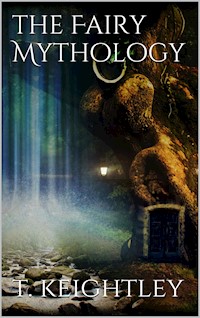


The Fairy Mythology
Table of Contents
Introduction
Across Europe’s borderlands of belief, this book maps the uneasy traffic between imagination and everyday life. Thomas Keightley’s The Fairy Mythology assembles a panoramic account of fairy lore, bringing together tales, customs, and explanations that circulated in different regions and periods. Rather than treating fairies as mere curiosities, the work takes them as cultural evidence: markers of how people interpret luck, danger, obligation, and the hidden life of places. Keightley balances narrative retellings with informed commentary, seeking patterns without erasing local texture. The result is a study that invites readers to listen closely to what stories disclose about the societies that tell them.
First published in 1828, during a period of vigorous interest in traditional narratives, The Fairy Mythology occupies an early place in English-language studies of folk belief and tale. It is a work of folklore and literary compilation, surveying material from various European countries rather than confining itself to a single nation or language. Keightley writes for general readers as well as the historically curious, presenting his findings with clarity and a steady tone. The book’s context is transitional: it predates later professional folklore systems, yet it already strives for comparison, documentation, and a careful separation of tale, belief, and commentary.
As a premise, the volume proposes that by gathering a wide array of fairy-related narratives and practices, one can see both local color and shared structures emerge. The reader moves through chapters that cluster material by region, encountering household spirits, helpful or hostile beings of field and forest, and presences tied to water, night, or boundary spaces. Episodes are relayed in brisk, accessible prose, followed by notes that weigh parallels and variations. The experience is part anthology and part guidebook: an invitation to enjoy story for its own sake while observing how motifs travel and meanings shift across borders.
Recurring concerns shape the book’s atmosphere: hospitality and trespass, gifts and obligations, work and idleness, luck and retribution, the safety of the home and the risks of the wild. Landscapes matter—mountain, moor, lake, and hearth appearing as stages on which human custom meets the imagined. By placing accounts from different countries adjacent to one another, the collection illuminates kinships without denying distinctness. It is less an argument for a single origin than a demonstration of resonance. Readers find not a doctrine of fairies, but a record of how communities describe the extraordinary within ordinary life and seasonal routine.
Keightley’s method combines selection, translation or paraphrase, and succinct annotation. He identifies types of beings and habits associated with them, traces comparable episodes from one locale to another, and occasionally comments on whether an account may derive from literary retellings. The structure rewards browsing as well as sustained reading, because each section can be approached as a self-contained dossier. Throughout, the tone remains measured: appreciative of wonder, yet attentive to consistency, provenance, and probable misunderstanding. The book thus models a disciplined curiosity, one that treats stories as evidence while preserving their texture as narratives meant to be told.
Read today, The Fairy Mythology offers more than antiquarian charm. It is a primary window onto how a nineteenth-century compiler organized, compared, and framed accounts of the supernatural, raising questions about collection, translation, and representation that remain vital. The book encourages readers to consider how ideas spread, what changes as they travel, and how description can both illuminate and distort. It also speaks to contemporary interests in cultural memory and the ethics of interpreting tradition. Without demanding prior expertise, it provides material for reflection on belief, storytelling, and the ways communities negotiate uncertainty, luck, and the unseen.
Approached as atlas and anthology, this work rewards patience and curiosity. Expect clear, unfussy prose; a steady accumulation of episodes; and thoughtful transitions that situate each vignette without overpowering it. The pace is deliberate, sustaining the mood of inquiry rather than spectacle. For general readers, it offers the pleasure of varied tales; for students and writers, a resource for comparative thinking and historical texture. Above all, The Fairy Mythology extends an invitation to linger where explanation and enchantment meet, and to notice how a continent’s stories make room for the marvelous within the habits of ordinary life.
Synopsis (Selection)
Thomas Keightley’s The Fairy Mythology is a nineteenth century compendium that surveys popular beliefs about fairies and related spirits across Europe. Aimed at collecting, classifying, and illustrating traditions, it arranges material largely by nation and region, and supports descriptions with translated tales, ballads, and anecdotes drawn from printed and oral sources. Keightley defines fairies broadly to include elves, dwarfs, goblins, household helpers, water spirits, and mountain beings. He describes common attributes such as invisibility, small or variable stature, fondness for music and dancing, and ambiguous dealings with humans. The work sets out to present evidence systematically rather than argue a theory, letting the examples demonstrate patterns.
An opening survey links medieval romance and classical antiquity to later folk belief, noting parallels between nymphs, satyrs, and water maidens and the fays of chivalric literature. Keightley outlines the vocabulary of elves and fays in different languages, traces the spread of names through translation and conquest, and observes how Christian writers reinterpreted older beings as minor spirits, demons, or souls in a middle state. He sketches typical incidents that recur across regions, such as fairy rings, loans of household tools, nighttime labors, food taboos, and the peril of accepting gifts. This preliminary framework prepares readers for the regional chapters that follow.
The Scandinavian section assembles accounts from Iceland, Norway, Denmark, and Sweden, distinguishing elves, trolls, and dwarfs while noting local terms and varieties. Keightley records tales of hill dwellers who entice humans with music, water spirits who lure or reward, and subterranean smiths who possess uncanny skill. Episodes involve dances on green mounds, exchanges of children, and conditions imposed on marriages with supernatural partners. He cites ballads and chronicles to illustrate beliefs in the Elle folk, the Näck, and the hidden people. Descriptions stress fixed habitats, aversion to iron or church bells, and the risk of time passing differently in the company of spirits.
Proceeding to German lands, the book surveys household and mining spirits, river beings, and forest sprites. Kobolds appear in domestic service, accepting milk and tidiness, yet turning malicious if affronted. Bergmännchen and similar mine guardians warn of danger or indicate rich veins. Town traditions of the Heinzelmännchen and regional legends of the capricious Rübezahl show the range from helpers to tricksters. Water dwellers comparable to nixies and undines attract fishermen and travelers with song. Keightley compiles these narratives with notes on sources and dialect names, emphasizing the persistence of ritual observances and the blending of Christian motifs with older practices.
Neighboring regions such as the Netherlands, Switzerland, and France supply cognate figures and literary elaborations. Dutch kabouters and kindred dwarfs inhabit hearth and field, performing nocturnal tasks under strict conditions. Swiss mountain spirits resemble German mine beings and alpine dwarfs, guarding passes and herds. In France, the learned tradition of fées links popular belief with romance heroines like Melusine, while Breton korrigans and Norman lutin reflect local customs and sacred sites. Keightley juxtaposes written romances with village anecdotes to show how courtly narratives and rural lore intersect, noting recurring restrictions on speech, secrecy, and the keeping of bargains with nonhuman partners.
The chapters on England present a spectrum from diminutive fairies to rustic hobgoblins. Keightley compiles evidence for Robin Goodfellow and Puck, describing their pranks and household service, and for boggarts, who haunt thresholds, barns, and beds. He distinguishes literary depictions in Shakespeare from reports of village belief, and records lore of Queen Mab, fairy rings, and offerings of cream. In the west, pixies lead travelers astray yet assist tidy cottages. Frequent motifs include the fairy midwife who must obey taboos, the lending and loss of implements, and the unreliability of fairy gifts that crumble when exposed to daylight or scrutiny.
Scottish materials emphasize the Seelie and Unseelie courts, brownies attached to farms, and solitary spirits such as kelpies. Ballads and stories recount intermarriage under conditions, the peril of speaking a forbidden name, and rescues at fairy mounds. On the Isle of Man, traditions of the little people coexist with taboos on naming and offerings at wells. Irish chapters describe the people of the sidhe, with accounts of raths and fairy paths, changelings substituted for infants, and protective rites using iron, fire, and blessing formulas. Figures like the pooka, cluricaune, and leprechaun exemplify trickery, solitary craft, and guarded treasure.
Supplementary sections collect notices from additional parts of Europe and compare recurring features. Keightley includes references to Slavic water maidens and household spirits where sources permit, and he summarizes Iberian parallels chiefly through secondary reports. Throughout, he notes explanations current among informants: fairies as a remnant of pagan deities, as fallen beings neither saved nor lost, or as the restless dead. Short excursuses treat names, festival times linked to appearances, and the relation between sacred sites and fairy dwellings. These comparative passages support the central arrangement by country while outlining the wider horizon of related beliefs and tale types.
In closing, the book presents a consolidated picture of European fairy belief as a living, variable tradition shaped by locality, language, and religion. By setting brief analyses beside translated narratives, Keightley allows traits and motifs to emerge: the exchange of gifts and service, the danger of broken conditions, the ambiguity of aid, and the constancy of places such as mounds, streams, and thresholds. The overall message is descriptive rather than speculative: to record and compare, rather than to romanticize or dismiss. The result is a reference that maps principal kinds of fairies and their dealings with humans across regions and sources.
Historical Context
Thomas Keightley’s The Fairy Mythology (first published in London in 1828 by John Murray) ranges across medieval and early modern Europe rather than a single narrative setting. Its materials cluster in Ireland, Scotland, England, Wales, Germany, Scandinavia, and the Romance lands, with time frames stretching from pre-Christian traditions to the eighteenth century. Written in the industrializing, reform-minded United Kingdom of the 1820s, and by an Anglo-Irish scholar formed in Dublin and London milieux, the book reflects both antiquarian curiosity and the period’s comparative scholarship. Keightley assembles chronicles, legal records, travel reports, and oral testimony to reconstruct local belief-worlds that modernization was rapidly transforming or effacing.
The Christianization of Northern and Western Europe (c. fifth to twelfth centuries) decisively reframed older cults and spirits. Key moments include Augustine’s mission to Kent in 597, Charlemagne’s campaigns in Saxony (772–804), the conversion of Norway under Olaf Tryggvason and Olaf Haraldsson around 995–1030, and the Althing’s decision for Christianity in Iceland in 1000. Clerical writers increasingly interpreted elves and land-spirits as lesser, often malign, beings. Keightley’s chapters demonstrate this reclassification, drawing on hagiography and homiletic literature to show how fairies were moralized as tempters or punished pagans, preserving fragments of pre-Christian cosmologies within a Christian moral frame.
The Reformation and Counter-Reformation (sixteenth–seventeenth centuries) intensified fears of demonology, dovetailing with Europe’s witch persecutions. Between c. 1450 and 1750, roughly 40,000–60,000 people were executed for witchcraft, with peaks c. 1580–1650; German territories and Scotland suffered particularly high rates. Statutes such as England’s 1563 and 1604 Witchcraft Acts and Scotland’s prosecutions under James VI, author of Daemonologie (1597), entwined folk spirits with diabolic narratives. Keightley tracks how testimonies about fairy midwives, changelings, and night-rides entered court records and demonological treatises, noting cases where informants insisted on encounters with the Good People rather than devils, thereby revealing a contested boundary between vernacular belief and confessional law.
Civil conflict and religious rigor in seventeenth-century Britain reshaped ritual calendars that anchored fairy lore. During the English Civil Wars (1642–1651) and Puritan ascendancy, ordinances in 1644 and 1647 curtailed Sunday recreations and festivals; maypoles were suppressed, and communal bonfires policed. With the 1660 Restoration some customs returned, but many parish authorities remained vigilant. Keightley’s accounts of May Eve dew-gathering, Beltane fires in the Highlands, and Halloween divinations situate fairy visitations within these calendrical rites. By enumerating customs tied to specific dates and regions, the book shows how political attempts to regulate festivity inadvertently displaced or privatized practices that sustained belief in household and landscape spirits.
The Norse expansion and North Atlantic settlement (c. 800–1100) generated sources crucial to northern fairy lore. Vikings established polities in Norway, Denmark, the Isles, and Iceland (settled c. 870–930), with the althing founded by 930 and conversion in 1000. Later Icelandic sagas and eddic materials (thirteenth century) preserved alfar, landvættir, and other spirits, while Scandinavian folk tradition maintained beings such as nisse or tomte and the huldra. Keightley’s Scandinavian sections synthesize antiquarian editions and contemporary rural reports from Jutland, Telemark, and Dalarna to show continuity between saga-era spirits and nineteenth-century household helpers, locating fairy economies in farmsteads, byres, and marginal lands.
Norman and Angevin expansions (eleventh–twelfth centuries) connected Insular and Continental narratives, infusing British lore with courtly motifs. The Norman Conquest of 1066 and Anglo-Norman lordship in Ireland after 1169–1171 (Strongbow and Henry II) facilitated the circulation of Breton lais and Arthurian materials; Marie de France’s lais (c. 1160–1190) feature supernatural lovers and fairy realms. Keightley mines romances and chronicles to trace how insular figures—Tuatha Dé Danann, banshees, and the sídhe—interacted with chivalric topoi like fairy mistress or enchanted forest. By situating tales in Cornwall, Wales, and Leinster, he links elite manuscript culture to enduring place-lore around raths, barrows, and green mounds.
Eighteenth- and early nineteenth-century social change heightened the urgency to collect vanishing traditions. Parliamentary Enclosure Acts (notably 1801) reordered English rural landscapes; Highland Clearances (c. 1780s–1850s) depopulated Gaelic districts; in Ireland, Penal Laws (from 1695) and their easing with Catholic Emancipation in 1829, followed by the Tithe War (1830–1836), marked confessional and agrarian strain. The Ordnance Survey of Ireland (from 1824) mapped and recorded place-names tied to fairy forts. Keightley’s 1828 compilation mirrors this milieu: by preserving Irish, Scottish, and German narratives of changelings, banshees, and brownie-like helpers, he documents beliefs imperiled by estate reorganization, migration, and state knowledge-gathering.
Keightley’s comparative method operates as a quiet social and political critique. By treating peasant testimony, parish custom, and women’s domestic lore as evidentiary, he resists confessional polemic that had equated vernacular spirits with heresy or crime, exposing how legal and ecclesiastical authorities criminalized customary knowledge. His focus on raths, wells, and commons highlights the moral economy threatened by enclosure and clearance, implicitly challenging elite remaking of land and time. The book registers class divides in the asymmetry between learned demonology and household belief, and it dignifies subaltern cosmologies across Ireland, the Highlands, and Scandinavia, arguing—through careful documentation—for the historical legitimacy of marginalized voices.
The Fairy Mythology
THE AUTHOR.
PREFACE.
A preface is to a book what a prologue is to a play—a usual, often agreeable, but by no means necessary precursor. It may therefore be altered or omitted at pleasure. I have at times exercised this right, and this is the third I have written for the present work.
In the first, after briefly stating what had given occasion to it, I gave the germs of the theory which I afterwards developed in the Tales and Popular Fictions. The second contained the following paragraph:—
"I never heard of any one who read it that was not pleased with it. It was translated into German as soon as it appeared, and was very favourably received. Goethe thought well of it. Dr. Jacob Grimm—perhaps the first authority on these matters in Europe—wrote me a letter commending it, and assuring me that even to him it offered something new; and I was one Christmas most agreeably surprised by the receipt of a letter from Vienna, from the celebrated orientalist, Jos Von Hammer, informing me that it had been the companion of a journey he had lately made to his native province of Styria, and had afforded much pleasure and information to himself and to some ladies of high rank and cultivated minds in that country. The initials at the end of the preface, he said, led him to suppose it was a work of mine. So far for the Continent. In this country, when I mention the name of Robert Southey as that of one who has more than once expressed his decided approbation of this performance, I am sure I shall have said quite enough to satisfy any one that the work is not devoid of merit."
I could now add many names of distinguished persons who have been pleased with this work and its pendent, the Tales and Popular Fictions. I shall only mention that of the late Mr. Douce, who, very shortly before his death, on the occasion of the publication of this last work, called on me to assure me that "it was many, many years indeed, since he had read a book which had yielded him so much delight."
The contents of the work which gave such pleasure to this learned antiquary are as follows:—
I. Introduction—Similarity of Arts and Customs—Similarity of Names—Origin of the Work—Imitation—Casual Coincidence—Milton—Dante. II. The Thousand and One Nights—Bedoween Audience around a Story-teller—Cleomades and Claremond—Enchanted Horses—Peter of Provence and the fair Maguelone. III. The Pleasant Nights—The Dancing Water, the Singing Apple, and the Beautiful Green Bird—The Three Little Birds—Lactantius—Ulysses and Sindbad. IV. The Shâh-Nâmeh—Roostem and Soohrâb—Conloch and Cuchullin—Macpherson's Ossian—Irish Antiquities. V. The Pentamerone—Tale of the Serpent—Hindoo Legend. VI. Jack the Giant-killer—The Brave Tailoring—Thor's Journey to Utgard—Ameen of Isfahan and the Ghool—The Lion and the Goat—The Lion and the Ass. VII. Whittington and his Cat—Danish Legends—Italian Stories—Persian Legend. VIII. The Edda—Sigurd and Brynhilda—Völund—Helgi—Holger Danske—Ogier le Danois—Toko—William Tell. IX. Peruonto—Peter the Fool—Emelyan the Fool—Conclusion. Appendix.
Never, I am convinced, did any one enter on a literary career with more reluctance than I did when I found it to be my only resource—fortune being gone, ill health and delicacy of constitution excluding me from the learned professions, want of interest from every thing else. As I journeyed to the metropolis, I might have sung with the page whom Don Quixote met going a-soldiering:
for of all arts and professions in this country, that of literature is the least respected and the worst remunerated. There is something actually degrading in the expression "an author by trade," which I have seen used even of Southey, and that by one who did not mean to disparage him in the slightest degree. My advice to those who may read these pages is to shun literature, if not already blest with competence.
One of my earliest literary friends in London was T. Crofton Croker, who was then engaged in collecting materials for the Fairy Legends of the South of Ireland. He of course applied to his friends for aid and information; and I, having most leisure, and, I may add, most knowledge, was able to give him the greatest amount of assistance. My inquiries on the subject led to the writing of the present work, which was succeeded by the Mythology of Ancient Greece and Italy, and the Tales and Popular Fictions; so that, in effect, if Mr. Croker had not planned the Fairy Legends, these works, be their value what it may, would in all probability never have been written.
Writing and reading about Fairies some may deem to be the mark of a trifling turn of mind. On this subject I have given my ideas in the Conclusion; here I will only remind such critics, that as soon as this work was completed, I commenced, and wrote in the space of a few weeks, my Outlines of History; and whatever the faults of that work may be, no one has ever reckoned among them want of vigour in either thought or expression. It was also necessary, in order to write this work and its pendent, to be able to read, perhaps, as many as eighteen or twenty different languages, dialects, and modes of orthography, and to employ different styles both in prose and verse. At all events, even if it were trifling, dulce est desipere in loco; and I shall never forget the happy hours it caused me, especially those spent over the black-letter pages of the French romances of chivalry, in the old reading-room of the British Museum.
Many years have elapsed since this work was first published. In that period much new matter has appeared in various works, especially in the valuable Deutsche Mythologie of Dr. Grimm. Hence it will be found to be greatly enlarged, particularly in the sections of England and France. I have also inserted much which want of space obliged me to omit in the former edition. In its present form, I am presumptuous enough to expect that it may live for many years, and be an authority on the subject of popular lore. The active industry of the Grimms, of Thiele, and others, had collected the popular traditions of various countries. I came then and gathered in the harvest, leaving little, I apprehend, but gleanings for future writers on this subject. The legends will probably fade fast away from the popular memory; it is not likely that any one will relate those which I have given over again; and it therefore seems more probable that this volume may in future be reprinted, with notes and additions. For human nature will ever remain unchanged; the love of gain and of material enjoyments, omnipotent as it appears to be at present, will never totally extinguish the higher and purer aspirations of mind; and there will always be those, however limited in number, who will desire to know how the former dwellers of earth thought, felt, and acted. For these mythology, as connected with religion and history, will always have attractions.
October, 1850.
Whatever errors have been discovered are corrected in this impression.
January, 1870. T. K.
THE FAIRY MYTHOLOGY
INTRODUCTION.
ORIGIN OF THE BELIEF IN FAIRIES.
According to a well-known law of our nature, effects suggest causes; and another law, perhaps equally general, impels us to ascribe to the actual and efficient cause the attribute of intelligence. The mind of the deepest philosopher is thus acted upon equally with that of the peasant or the savage; the only difference lies in the nature of the intelligent cause at which they respectively stop. The one pursues the chain of cause and effect, and traces out its various links till he arrives at the great intelligent cause of all, however he may designate him; the other, when unusual phenomena excite his attention, ascribes their production to the immediate agency of some of the inferior beings recognised by his legendary creed.
The action of this latter principle must forcibly strike the minds of those who disdain not to bestow a portion of their attention on the popular legends and traditions of different countries. Every extraordinary appearance is found to have its extraordinary cause assigned[1q]; a cause always connected with the history or religion, ancient or modern, of the country, and not unfrequently varying with a change of faith.[1]
The noises and eruptions of Ætna and Stromboli were, in ancient times, ascribed to Typhon or Vulcan, and at this day the popular belief connects them with the infernal regions. The sounds resembling the clanking of chains, hammering of iron, and blowing of bellows, once to be heard in the island of Barrie, were made by the fiends whom Merlin had set to work to frame the wall of brass to surround Caermarthen.[2] The marks which natural causes have impressed on the solid and unyielding granite rock were produced, according to the popular creed, by the contact of the hero, the saint, or the god: masses of stone, resembling domestic implements in form, were the toys, or the corresponding implements of the heroes and giants of old. Grecian imagination ascribed to the galaxy or milky way an origin in the teeming breast of the queen of heaven: marks appeared in the petals of flowers on the occasion of a youth's or a hero's untimely death: the rose derived its present hue from the blood of Venus, as she hurried barefoot through the woods and lawns; while the professors of Islâm, less fancifully, refer the origin of this flower to the moisture that exuded from the sacred person of their prophet. Under a purer form of religion, the cruciform stripes which mark the back and shoulders of the patient ass first appeared, according to the popular tradition, when the Son of God condescended to enter the Holy City, mounted on that animal; and a fish only to be found in the sea[3] stills bears the impress of the finger and thumb of the apostle, who drew him out of the waters of Lake Tiberias to take the tribute-money that lay in his mouth. The repetition of the voice among the hills is, in Norway and Sweden, ascribed to the Dwarfs mocking the human speaker, while the more elegant fancy of Greece gave birth to Echo, a nymph who pined for love, and who still fondly repeats the accents that she hears. The magic scenery occasionally presented on the waters of the Straits of Messina is produced by the power of the Fata Morgana; the gossamers that float through the haze of an autumnal morning, are woven by the ingenious dwarfs; the verdant circlets in the mead are traced beneath the light steps of the dancing elves; and St. Cuthbert forges and fashions the beads that bear his name, and lie scattered along the shore of Lindisfarne.[4]
In accordance with these laws, we find in most countries a popular belief in different classes of beings distinct from men, and from the higher orders of divinities. These beings are usually believed to inhabit, in the caverns of earth, or the depths of the waters, a region of their own. They generally excel mankind in power and in knowledge, and like them are subject to the inevitable laws of death, though after a more prolonged period of existence.
How these classes were first called into existence it is not easy to say; but if, as some assert, all the ancient systems of heathen religion were devised by philosophers for the instruction of rude tribes by appeals to their senses, we might suppose that the minds which peopled the skies with their thousands and tens of thousands of divinities gave birth also to the inhabitants of the field and flood, and that the numerous tales of their exploits and adventures are the production of poetic fiction or rude invention. It may further be observed, that not unfrequently a change of religious faith has invested with dark and malignant attributes beings once the objects of love, confidence, and veneration.[5]
It is not our intention in the following pages to treat of the awful or lovely deities of Olympus, Valhalla, or Merû. Our subject is less aspiring; and we confine ourselves to those beings who are our fellow-inhabitants of earth, whose manners we aim to describe, and whose deeds we propose to record. We write of Fairies, Fays, Elves, aut alio quo nomine gaudent.
ORIGIN OF THE WORD FAIRY.
Like every other word in extensive use, whose derivation is not historically certain, the word Fairy has obtained various and opposite etymons. Meyric Casaubon, and those who like him deduce everything from a classic source, however unlikely, derive Fairy from Φηρ, a Homeric name of the Centaurs;[6] or think that fée, whence Fairy, is the last syllable of nympha. Sir W. Ouseley derives it from the Hebrew פאר (peër), to adorn; Skinner, from the Anglo-Saxon aan, to fare, to go; others from Feres, companions, or think that Fairy-folk is quasi Fair-folk. Finally, it has been queried if it be not Celtic.[7]
But no theory is so plausible, or is supported by such names, as that which deduces the English Fairy from the Persian Peri. It is said that the Paynim foe, whom the warriors of the Cross encountered in Palestine, spoke only Arabic; the alphabet of which language, it is well known, possesses no p, and therefore organically substitutes an f in such foreign words as contain the former letter; consequently Peri became, in the mouth of an Arab, Feri, whence the crusaders and pilgrims, who carried back to Europe the marvellous tales of Asia, introduced into the West the Arabo-Persian word Fairy. It is further added, that the Morgain or Morgana, so celebrated in old romance, is Merjan Peri, equally celebrated all over the East.
All that is wanting to this so very plausible theory is something like proof, and some slight agreement with the ordinary rules of etymology. Had Feërie, or Fairy, originally signified the individual in the French and English, the only languages in which the word occurs, we might feel disposed to acquiesce in it. But they do not: and even if they did, how should we deduce from them the Italian Fata, and the Spanish Fada or Hada, (words which unquestionably stand for the same imaginary being,) unless on the principle by which Menage must have deduced Lutin from Lemur—the first letter being the same in both? As to the fair Merjan Peri (D'Herbelot calls her Merjan Banou[8]), we fancy a little too much importance has been attached to her. Her name, as far as we can learn, only occurs in the Cahermân Nâmeh, a Turkish romance, though perhaps translated from the Persian.
The foregoing etymologies, it is to be observed, are all the conjectures of English scholars; for the English is the only language in which the name of the individual, Fairy, has the canine letter to afford any foundation for them.
Leaving, then, these sports of fancy, we will discuss the true origin of the words used in the Romanic languages to express the being which we name Fairy of Romance. These are Faée, Fée, French; Fada, Provençal (whence Hada, Spanish); and Fata, Italian.
The root is evidently, we think, the Latin fatum. In the fourth century of our æra we find this word made plural, and even feminine, and used as the equivalent of Parcæ. On the reverse of a gold medal of the Emperor Diocletian are three female figures, with the legend Fatis victricibus; a cippus, found at Valencia in Spain, has on one of its sidesFatis Q. Fabius ex voto, and on the other, three female figures, with the attributes of the Mœræ or Parcæ.[9] In this last place the gender is uncertain, but the figures would lead us to suppose it feminine. On the other hand, Ausonius[10] has tres Charites, tria Fata; and Procopius[11] names a building at the Roman Forum τα τρια φατα, adding ουτω γαρ ῥωμαιοι τας μοιρας νενομικασι καλειν. The Fatæ or Fata, then, being persons, and their name coinciding so exactly with the modern terms, and it being observed that the Mœræ were, at the birth of Meleager, just as the Fées were at that of Ogier le Danois, and other heroes of romance and tale, their identity has been at once asserted, and this is now, we believe, the most prevalent theory. To this it may be added, that in Gervase of Tilbury, and other writers of the thirteenth century, the Fada or Fée seems to be regarded as a being different from human kind.[12]
On the other hand, in a passage presently to be quoted from a celebrated old romance, we shall meet a definition of the word Fée, which expressly asserts that such a being was nothing more than a woman skilled in magic; and such, on examination, we shall find to have been all the Fées of the romances of chivalry and of the popular tales; in effect, that fée is a participle, and the words dame or femme is to be understood.
In the middle ages there was in use a Latin verb, fatare,[13] derived from fatum or fata, and signifying to enchant. This verb was adopted by the Italian, Provençal[14] and Spanish languages; in French it became, according to the analogy of that tongue, faer, féer. Of this verb the past participle faé, fé; hence in the romances we continually meet with les chevaliers faés, les dames faées, Oberon la faé, le cheval étoit faé, la clef était fée, and such like. We have further, we think, demonstrated[15] that it was the practice of the Latin language to elide accented syllables, especially in the past participle of verbs of the first conjugation, and that this practice had been transmitted to the Italian, whence fatato-a would form fato-a, and una donna fatata might thus become una fata. Whether the same was the case in the Provençal we cannot affirm, as our knowledge of that dialect is very slight; but, judging from analogy, we would say it was, for in Spanish Hadada and Hada are synonymous. In the Neapolitan Pentamerone Fata and Maga are the same, and a Fata sends the heroine of it to a sister of hers, pure fatata.
Ariosto says of Medea—
The same poet, however, elsewhere says—
and,
which last, however, is not decisive. Bojardo also calls the water-nymphs Fate; and our old translators of the Classics named them fairies. From all this can only, we apprehend, be collected, that the ideas of the Italian poets, and others, were somewhat vague on the subject.
From the verb faer, féer, to enchant, illude, the French made a substantive faerie, féerie,[16] illusion, enchantment, the meaning of which was afterwards extended, particularly after it had been adopted into the English language.
We find the word Faerie, in fact, to be employed in four different senses, which we will now arrange and exemplify.
1. Illusion, enchantment.
Where we must observe, as Sir Walter Scott seems not to have been aware of it, that the four last substantives bear the same relation to each other as those in the two first verses do.
Mr. Ritson professes not to understand the meaning of faerie in this last passage. Mr. Ritson should, as Sir Hugh Evans says, have 'prayed his pible petter;' where, among other things that might have been of service to him, he would have learned that 'man walketh in a vain shew,' that 'all is vanity,' and that 'the fashion of this world passeth away;' and then he would have found no difficulty in comprehending the pious language of 'moral Gower,' in his allusion to the transitory and deceptive vanities of the world.
2. From the sense of illusion simply, the transition was easy to that of the land of illusions, the abode of the Faés, who produced them; and Faerie next came to signify the country of the Fays. Analogy also was here aiding; for as a Nonnerie was a place inhabited by Nonnes, a Jewerie a place inhabited by Jews, so a Faerie was naturally a place inhabited by Fays. Its termination, too, corresponded with a usual one in the names of countries: Tartarie, for instance, and 'the regne of Feminie.'
En effect, s'il me falloit retourner en faerie, je ne sçauroye ou prendre mon chemin.—Ogier le Dannoys.
3. From the country the appellation passed to the inhabitants in their collective capacity, and the Faerie now signified the people of Fairy-land.[17]
4. Lastly, the word came to signify the individual denizen of Fairy-land, and was equally applied to the full-sized fairy knights and ladies of romance, and to the pygmy elves that haunt the woods and dells. At what precise period it got this its last, and subsequently most usual sense, we are unable to say positively; but it was probably posterior to Chaucer, in whom it never occurs, and certainly anterior to Spenser, to whom, however, it seems chiefly indebted for its future general currency.[18] It was employed during the sixteenth century[19] for the Fays of romance, and also, especially by translators, for the Elves, as corresponding to the Latin Nympha.
They believed that king Arthur was not dead, but carried awaie by the Fairies into some pleasant place, where he should remaine for a time, and then returne again and reign in as great authority as ever.
Hollingshed, bk. v. c. 14. Printed 1577.
Thus we have endeavoured to trace out the origin, and mark the progress of the word Fairy, through its varying significations, and trust that the subject will now appear placed in a clear and intelligible light.
After the appearance of the Faerie Queene, all distinctions were confounded, the name and attributes of the real Fays or Fairies of romance were completely transferred to the little beings who, according to the popular belief, made 'the green sour ringlets whereof the ewe not bites.' The change thus operated by the poets established itself firmly among the people; a strong proof, if this idea be correct, of the power of the poetry of a nation in altering the phraseology of even the lowest classes[20] of its society.
Shakspeare must be regarded as a principal agent in this revolution; yet even he uses Fairy once in the proper sense of Fay; a sense it seems to have nearly lost, till it was again brought into use by the translators of the French Contes des Fées in the last century.
And Milton speaks
Yet he elsewhere mentions the
Finally, Randolph, in his Amyntas, employs it, for perhaps the last time, in its second sense, Fairy-land:
We must not here omit to mention that the Germans, along with the French romances, early adopted the name of the Fées. They called them Feen and Feinen.[21] In the Tristram of Gottfried von Strazburg we are told that Duke Gylan had a syren-like little dog,
Dez wart dem Herzoge gesandt
'Twas sent unto the duke, pardé,
Uz Avalun, der
Feinen
land,
From Avalun, the Fays' countrie,
Von einer Gottinne.—V. 1673.
By a gentle goddess.
In the old German romance of Isotte and Blanscheflur, the hunter who sees Isotte asleep says, I doubt
Dez sie menschlich sei,
If she human be,
Sie ist schöner denn eine
Feine
,
She is fairer than a Fay.
Von Fleische noch von Beine
Of flesh or bone, I say,
Kunte nit gewerden
Never could have birth
So schönes auf der erden.
A thing so fair on earth.
Our subject naturally divides itself into two principal branches, corresponding to the different classes of beings to which the name Fairy has been applied. The first, beings of the human race, but endowed with powers beyond those usually allotted to men, whom we shall term Fays, or Fairies of romance. The second, those little beings of the popular creeds, whose descent we propose to trace from the cunning and ingenious Duergar or dwarfs of northern mythology, and whom we shall denominate Elves or popular Fairies.
It cannot be expected that our classifications should vie in accuracy and determinateness with those of natural science. The human imagination, of which these beings are the offspring, works not, at least that we can discover, like nature, by fixed and invariable laws; and it would be hard indeed to exact from the Fairy historian the rigid distinction of classes and orders which we expect from the botanist or chemist. The various species so run into and are confounded with one another; the actions and attributes of one kind are so frequently ascribed to another, that scarcely have we begun to erect our system, when we find the foundation crumbling under our feet. Indeed it could not well be otherwise, when we recollect that all these beings once formed parts of ancient and exploded systems of religion, and that it is chiefly in the traditions of the peasantry that their memorial has been preserved.
We will now proceed to consider the Fairies of romance; and as they are indebted, though not for their name, yet perhaps for some of their attributes, to the Peries of Persia, we will commence with that country. We will thence pursue our course through Arabia, till we arrive at the middle-age romance of Europe, and the gorgeous realms of Fairy-land; and thence, casting a glance at the Faerie Queene, advance to the mountains and forests of the North, there to trace the origin of the light-hearted, night-tripping elves.
ORIENTAL ROMANCE.[22]
Sadee.
PERSIAN ROMANCE.
The pure and simple religion of ancient Persia, originating, it is said, with a pastoral and hunting race among the lofty hills of Aderbijân, or, as others think, in the elevated plains of Bactria, in a region where light appears in all its splendour, took as its fundamental principle the opposition between light and darkness, and viewed that opposition as a conflict. Light was happiness; and the people of Irân, the land of light, were the favourites of Heaven; while those of Turân, the gloomy region beyond the mountains to the north, were its enemies. In the realms of supernal light sits enthroned Ormuzd, the first-born of beings; around him are the six Amshaspands, the twenty-eight Izeds, and the countless myriads of Ferohers.[23] In the opposite kingdom of darkness Aherman is supreme, and his throne is encompassed by the six Arch-Deevs, and the numerous hosts of inferior Deevs. Between these rival powers ceaseless warfare prevails; but at the end the prince of darkness will be subdued, and peace and happiness prevail beneath the righteous sway of Ormuzd.
From this sublime system of religion probably arose the Peri-[24] or Fairy-system of modern Persia; and thus what was once taught by sages, and believed by monarchs, has shared the fate of everything human, and has sunk from its pristine rank to become the material and the machinery of poets and romancers. The wars waged by the fanatical successors of the Prophet, in which literature was confounded with idolatry, have deprived us of the means of judging of this system in its perfect form; and in what has been written respecting the Peries and their country since Persia has received the law of Mohammed, the admixture of the tenets and ideas of Islam is evidently perceptible. If, however, Orientalists be right in their interpretation of the name of Artaxerxes' queen, Parisatis, as Pari-zadeh[25] (Peri-born), the Peri must be coeval with the religion of Zoroaster.
The Peries and Deevs of the modern Persians answer to the good and evil Jinn of the Arabs, of whose origin and nature we shall presently give an account. The same Suleymans ruled over them as over the Jinn, and both alike were punished for disobedience. It is difficult to say which is the original; but when we recollect in how much higher a state of culture the Persians were than the Arabs, and how well this view accords with their ancient system of religion, we shall feel inclined to believe that the Arabs were the borrowers, and that by mingling with the Persian system ideas derived from the Jews, that one was formed by them which is now the common property of all Moslems.
In like manner we regard the mountains of Kâf, the abode alike of Jinn and of Peries and Deevs, as having belonged originally to Persian geography. The fullest account of it appears in the Persian romance of Hatim Taï,[26] the hero of which often visited its regions. From this it would seem that this mountain-range was regarded as, like that of the ancient Greek cosmology, surrounding the flat circular earth like a ring, or rather like the bulwarks of a ship, outside of which flowed the ocean; while some Arab authorities make it to lie beyond, and to enclose the ocean as well as the earth.[27] It is said to be composed of green chrysolite, the reflection of which gives its greenish tint to the sky. According to some, its height is two thousand English miles.
Jinnestân is the common appellation of the whole of this ideal region. Its respective empires were divided into many kingdoms, containing numerous provinces and cities. Thus in the Peri-realms we meet with the luxuriant province of Shad-u-kâm (Pleasure and Delight), with its magnificent capital Juherabâd (Jewel-city), whose two kings solicited the aid of Cahermân against the Deevs,[28] and also the stately Amberabâd (Amber-city), and others equally splendid. The metropolis of the Deev-empire is named Ahermanabâd (Aherman's city); and imagination has lavished its stores in the description of the enchanted castle, palace, and gallery of the Deev monarch, Arzshenk.
The Deevs and Peries wage incessant war with each other. Like mankind, they are subject to death, but after a much longer period of existence; and, though far superior to man in power, they partake of his sentiments and passions.
We are told that when the Deevs in their wars make prisoners of the Peries, they shut them up in iron cages, and hang them from the tops of the highest trees, exposed to every gaze and to every chilling blast. Here their companions visit them, and bring them the choicest odours to feed on; for the ethereal Peri lives on perfume, which has moreover the property of repelling the cruel Deevs, whose malignant nature is impatient of fragrance.[29]
When the Peries are unable to withstand their foes, they solicit the aid of some mortal hero. Enchanted arms and talismans enable him to cope with the gigantic Deevs, and he is conveyed to Jinnestân on the back of some strange and wonderful animal. His adventures in that country usually furnish a wide field for poetry and romance to expatiate in.
The most celebrated adventurer in Jinnestân was Tahmuras, surnamed Deev-bend (Deev-binder),[30] one of the ancient kings of Persia. The Peries sent him a splendid embassy, and the Deevs, who dreaded him, despatched another. Tahmuras, in doubt how to act, consults the wonderful bird Seemurgh,[31] who speaks all languages, and whose knowledge embraces futurity. She advises him to aid the Peries, warns him of the dangers he has to encounter, and discloses his proper line of action. She further offers to convey him to Jinnestân, and plucks some feathers from her breast, with which the Persian monarch adorns his helmet.
Mounted on the Seemurgh, and bracing on his arm the potent buckler of Jân-ibn-Jân,[32] Tahmuras crosses the abyss impassable to unaided mortality. The vizier Imlân, who had headed the Deev embassy, deserting his original friends, had gone over to Tahmuras, and through the magic arts of the Deev, and his own daring valour, the Persian hero defeats the Deev-king Arzshenk. He next vanquishes a Deev still more fierce, named Demrush, who dwelt in a gloomy cavern, surrounded by piles of wealth plundered from the neighbouring realms of Persia and India. Here Tahmuras finds a fair captive, the Peri Merjân,[33] whom Demrush had carried off, and whom her brothers, Dâl Peri and Milân Shâh Peri, had long sought in vain. He chains the Deev in the centre of the mountain, and at the suit of Merjân hastens to attack another powerful Deev named Houndkonz; but here, alas! fortune deserts him, and, maugre his talismans and enchanted arms, the gallant Tahmuras falls beneath his foe.
The great Deev-bend, or conqueror of Deevs, of the Shâh-Nâmeh[34] is the illustrious Roostem. In the third of his Seven Tables or adventures, on his way to relieve the Shâh Ky-Caoos, whom the artifice of a Deev had led to Mazenderân, where he was in danger of perishing, he encounters in the dark of the night a Deev named Asdeev, who stole on him in a dragon's form as he slept. Twice the hero's steed, Reksh, awoke him, but each time the Deev vanished, and Roostem was near slaying his good steed for giving him a false alarm. The third time he saw the Deev and slew him after a fearful combat. He then pursued his way to the cleft in the mountain in which abode the great Deev Sefeed, or White Deev. The seventh Table brought him to where lay an army of the Deev Sefeed's Deevs, commanded by Arzshenk, whose head he struck off, and put his troops to flight. At length he reached the gloomy cavern of the Deev Sefeed himself, whom he found asleep, and scorning the advantage he awoke him, and after a terrific combat deprived him also of life.
Many years after, when Ky-Khosroo sat on the throne, a wild ass of huge size, his skin like the sun, and a black stripe along his back, appeared among the royal herds and destroyed the horses. It was supposed to be the Deev Akvân, who was known to haunt an adjacent spring. Roostem went in quest of him; on the fourth day he found him and cast his noose at him, but the Deev vanished. He re-appeared; the hero shot at him, but he became again invisible. Roostem then let Reksh graze, and laid him to sleep by the fount. As he slept, Akvân came and flew up into the air with him; and when he awoke, he gave him his choice of being let fall on the mountains or the sea. Roostem secretly chose the latter, and to obtain it he pretended to have heard that he who was drowned never entered paradise. Akvân thereupon let him fall into the sea, from which he escaped, and returning to the fount, he there met and slew the Deev. Roostem's last encounter with Deevs was with Akvân's son, Berkhyas, and his army, when he went to deliver Peshen from the dry well in which he was confined by Afrasiâb. He slew him and two-thirds of his troops. Berkhyas is described as being a mountain in size, his face black, his body covered with hair, his neck like that of a dragon, two boar's tusks from his mouth, his eyes wells of blood, his hair bristling like needles, his height 140 ells, his breadth 17, pigeons nestling in his snaky locks. Akvân had had a head like an elephant.
In the Hindoo-Persian Bahar Danush (Garden of Knowledge) of Ynâyet-ûllah, written in India a.d. 1650,[35] we find the following tale of the Peries, which has a surprising resemblance to European legends hereafter to be noticed.[36]
The Peri-Wife.
The son of a merchant in a city of Hindostan, having been driven from his father's house on account of his undutiful conduct, assumed the garb of a Kalenderee or wandering Derweesh, and left his native town. On the first day of his travels, being overcome with fatigue before he reached any place of rest, he went off the high road and sat down at the foot of a tree by a piece of water: while he sat there, he saw at sunset four doves alight from a tree on the edge of the pond, and resuming their natural form (for they were Peries) take off their clothes and amuse themselves by bathing in the water. He immediately advanced softly, took up their garments, without being seen, and concealed them in the hollow of a tree, behind which he placed himself. The Peries when they came out of the water and missed their clothes were distressed beyond measure. They ran about on all sides looking for them, but in vain. At length, finding the young man and judging that he had possessed himself of them, they implored him to restore them. He would only consent on one condition, which was that one of them should become his wife. The Peries asserted that such a union was impossible between them whose bodies were formed of fire and a mortal who was composed of clay and water; but he persisted, and selected the one which was the youngest and handsomest. They were at last obliged to consent, and having endeavoured to console their sister, who shed copious floods of tears at the idea of parting with them and spending her days with one of the sons of Adam; and having received their garments, they took leave of her and flew away.
The young merchant then led home his fair bride and clad her magnificently; but he took care to bury her Peri-raiment in a secret place, that she might not be able to leave him. He made every effort to gain her affections, and at length succeeded in his object "she placed her foot in the path of regard, and her head on the carpet of affection." She bore him children, and gradually began to take pleasure in the society of his female relatives and neighbours. All doubts of her affection now vanished from his mind, and he became assured of her love and attachment.




