


1,99 €
Niedrigster Preis in 30 Tagen: 1,99 €
Niedrigster Preis in 30 Tagen: 1,99 €
Mehr erfahren.
- Herausgeber: DigiCat
- Kategorie: Geisteswissenschaft
- Sprache: Englisch
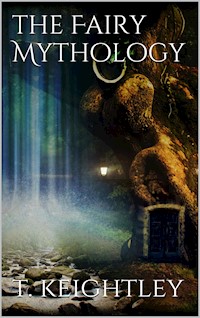
In "The Fairy Mythology," Thomas Keightley embarks on an extensive exploration of the rich tapestry of fairy lore, weaving together an array of stories, characterizations, and symbolic interpretations from various cultures. This seminal work delves into the origins, development, and regional variations of fairy tales, adopting a scholarly approach that is both meticulous and accessible. Keightley's literary style merges scholarly rigor with a narrative flair, drawing on folklore studies and mythological frameworks to offer readers a comprehensive understanding of these enchanting narratives and their cultural implications. Thomas Keightley, an Irish literary scholar of the 19th century, was deeply influenced by the burgeoning interest in folktales and mythology during his time. His background in literature and history, complemented by scholarly pursuits in the realms of folklore, shaped his curiosity about the fantastical elements of human culture. Writing during a period that witnessed a revival of interest in folk narratives, Keightley sought to demystify fairy myths, unfolding the complex interactions between folklore and societal values, thus illuminating the human psyche through these timeless tales. This book is an essential read for anyone interested in folklore, fairy tales, or cultural studies. Keightley's insightful examination invites readers to traverse the imaginative landscapes of mythological beings and explore the universal themes that underpin humanity's storytelling traditions. Scholars, storytellers, and lovers of fantasy alike will find themselves captivated by Keightley's rich tapestry of narratives that inspire reflection on the nature of belief and imagination. In this enriched edition, we have carefully created added value for your reading experience: - A comprehensive Introduction outlines these selected works' unifying features, themes, or stylistic evolutions. - A Historical Context section situates the works in their broader era—social currents, cultural trends, and key events that underpin their creation. - A concise Synopsis (Selection) offers an accessible overview of the included texts, helping readers navigate plotlines and main ideas without revealing critical twists. - A unified Analysis examines recurring motifs and stylistic hallmarks across the collection, tying the stories together while spotlighting the different work's strengths. - Reflection questions inspire deeper contemplation of the author's overarching message, inviting readers to draw connections among different texts and relate them to modern contexts. - Lastly, our hand‐picked Memorable Quotes distill pivotal lines and turning points, serving as touchstones for the collection's central themes.
Das E-Book können Sie in Legimi-Apps oder einer beliebigen App lesen, die das folgende Format unterstützen:
Veröffentlichungsjahr: 2022
Ähnliche


The Fairy Mythology
Table of Contents
Introduction
This single-author collection presents Thomas Keightley’s The Fairy Mythology in full, from preface and introductory essays to conclusion, appendix, and index. Conceived as a comparative study rather than a work of fiction, it assembles narratives and analyses that describe the forms, habits, and meanings of fairies and kindred beings across many countries. Keightley’s purpose is illustrative: to let stories, ballads, and recorded traditions show how belief takes shape, while framing them with historical and philological commentary. Readers will find both overarching discussions of origin and terminology and a wide itinerary through regions where the invisible world was thought to mingle with human life.
Keightley works across multiple genres and text types. The collection includes discursive chapters on the origin of the belief in fairies and on the word itself, surveys of Oriental, Persian, Arabian, and medieval romance, and concise notices on the Eddas, sagas, and specific classes such as the Alfar and the Duergar. These are interleaved with translated or paraphrased ballads, local legends, and anecdotal narratives—materials like the Green Children, the Luck of Eden Hall, and the legend of Melusina. The appendix adds illustrative tales and verses, dreams, and songs, extending the record of popular imagination while marking their relation to the themes explored earlier.
Across its regions, the book treats a coherent family of beings and motifs: household helpers and mischief-makers like nisses, brownies, and kobolds; subterranean peoples such as dwarfs and trolls; aerial and woodland elves; and water spirits including necks, nixes, and mermaids. Recurring situations—changeling exchanges, nocturnal dances, fairy banquets, luck-tokens, and bargains for labour—reveal how communities interpreted fortune, danger, and obligation. Keightley’s comparative method illuminates continuity and variation, showing how a Danish hill-man or a German kobold shares traits with British brownies, yet acquires local colours in law, landscape, and custom. Themes of boundary, reciprocity, and concealment bind the materials together.
Keightley writes with a steady antiquarian temper, pairing narrative example with measured exposition. He cites literary and historical sources, distinguishes between romance and folk testimony, and notes linguistic affinities without forcing conclusions beyond the evidence. The style is plain, descriptive, and attentive to the reader’s progress: an episode is presented, then set in context by remarks on variants and parallels, whether in Scandinavian sagas, German chronicles, or British balladry. This alternation of tale and commentary is a hallmark of the work, allowing the pleasures of story to stand while supporting a broader argument about classification, diffusion, and the life of tradition.
The arrangement leads the reader from foundations to variety. After essays on origins, words, and romance, the survey turns to the North—Eddas and sagas, elves, dwarfs, and the Scandinavian, Icelandic, and northern island traditions. It proceeds through German and Swiss materials, then to England and the Celtic countries, where episodes such as the Fairy Rade, the Phynnodderee, and the Tylwyth Teg stand beside English portents and pixy-labour. Brittany follows, before Southern Europe brings Greek, Italian, Spanish, and French lore. Eastern Europe contributes Finnic and Slavic figures, and a final section gathers African and Jewish examples, before conclusion, appendix, and index close the volume.
As a nineteenth-century synthesis, The Fairy Mythology has proved durable for its breadth and clarity. It bridges literary history and popular tradition by setting courtly allegory and learned romance—Spenser’s Faerie Queene among them—beside parochial records, chapbook anecdotes, and remembered local tales. The result is a vocabulary of types and situations that continues to assist comparative readers. While later scholarship has refined classifications and added fieldwork, Keightley’s careful selection and even-handed commentary remain valuable guides. The work has seen repeated publication and citation, serving students and general readers who seek compact access to a wide spectrum of European and related fairy lore.
Readers may approach this collection sequentially or by region and motif, pausing over particular classes—the kobolds and nisses of household labour, the nixes and mermaids of river and sea, or the shifting fortunes of changeling tales. The appended poems and narrative curiosities complement the main chapters by showing how such materials circulated in print and memory. Throughout, Keightley’s restraint and clarity encourage reflection rather than credulity or dismissal. This edition preserves the complete architecture of his project, so that the interplay of example and commentary can be followed from opening premise to closing summary, offering a faithful map to a many-country imagination.
Historical Context
Thomas Keightley’s The Fairy Mythology first appeared in 1828, amid Romantic Europe’s zeal for recovering national antiquities and the rise of comparative philology. Translators and antiquarians circulated ballads and sagas between London, Copenhagen, Berlin, and Paris, while new linguistic methods (Bopp 1816; Grimm 1822) encouraged orderly classification of vernacular belief. In the aftermath of the Napoleonic Wars and with expanding cheap print, readers welcomed panoramic surveys of popular tradition. An Irish-born scholar working in London, Keightley combined literary authorities with oral anecdotes, presenting fairies as a shared inheritance with local inflections. His preface and introduction stake a scholarly, yet accessible, claim for folklore as historical evidence.
Keightley’s sections on origins reflect two long processes: Christianization and language change. After the Norman Conquest (1066), Old French faerie entered English, overlaying older Germanic terms such as ælf and dvergr. Church reform and the consolidation of monarchies from the twelfth century onward reframed nature spirits as demons or illusions, a view sharpened during Reformation polemics. Legal records from witchcraft prosecutions (c. 1560–1700) in Scotland and Germany preserve testimony about fairy meetings, even as skeptics like Reginald Scot (1584) denied literal belief. By tracing words, rites, and prohibitions, Keightley situates fairy faith within Europe’s transition from localized ritual to confessional and legal uniformity.
The chapters on Middle-Age romance and Spenser chart how courtly literature reimagined the supernatural. From the Breton lais of the twelfth century and Chrétien de Troyes to the widespread Melusina legend of Lusignan, fairy figures mediated dynastic claims and chivalric ethics. With print’s spread after 1450, romance motifs circulated widely, culminating in Edmund Spenser’s Faerie Queene (1590, 1596), an Elizabethan allegory that moralized wonder and turned Fairy Land into a stage for virtue and rule. Keightley reads these works alongside folk materials to show how elite authors canonized, sanitized, or politicized older motifs that persisted in rural custom and tale.
The Eddas and Sagas drew Keightley to the medieval North, where Icelandic manuscripts—Snorri Sturluson’s Prose Edda (c. 1220) and the Poetic Edda—preserved alfar and dvergar lore. Their eighteenth- and early nineteenth‑century revival through Paul Henri Mallet (1755), Thomas Percy’s Northern Antiquities (1770), and learned Danes and Icelanders enabled English readers to meet Loki, the dwarfs, and enchanted blades like Tyrfing from the Hervarar saga. Keightley’s summaries reflect this philological access while noting Christian overlays after Scandinavia’s conversion around 1000. He treats Norse materials as a backbone for later Scandinavian ballads and prose legends, linking manuscripts, early prints, and living tradition.
Scandinavian chapters on elves, trolls, nisses, and water-spirits lean on nineteenth‑century ballad and tale collecting, such as Geijer and Afzelius’s Svenska folk-visor (1814–1818), and on Danish and Norwegian antiquarian notes. Lutheran parish life, agrarian rhythms, and forested or maritime settings furnished contexts for changelings, hill-folk craftsmen, and necks whose music compelled dancers. In the Northern Isles—Faroe, Shetland, and Orkney—Norse settlement and seafaring economies produced hybrid mermaid and seal‑people traditions that continued into the age of cod fisheries and whaling. Keightley treats these islands as liminal zones where medieval Norse cosmology and modern livelihoods kept supernatural etiquette publicly intelligible.
German and Swiss materials enter through the Romantic recovery led by the Brothers Grimm—Kinder‑ und Hausmärchen (1812–1815) and later Deutsche Mythologie (1835)—and through regional chronicles. Mining districts and guild towns supplied kobold and dwarf traditions tied to preindustrial labor: Hinzelmann haunted Hudemühlen (1584–1588); Hödeken and King Goldemar were noted by medieval or early modern clerics; the Heinzelmännchen of Cologne reflected urban craft memory. Swiss Alpine transhumance shaped legends of mountain dwarfs and helpful or punitive sprites. Keightley arranges these accounts to illustrate how work, settlement, and municipal record‑keeping stabilized narratives that would otherwise have vanished during nineteenth‑century bureaucratic reform and industrial change.
In the British Isles, Romantic antiquarianism overlapped with rapid social transformation. Macpherson’s Ossian (1760–1763), Scott’s Minstrelsy (1802–1803) and novels, and Crofton Croker’s Fairy Legends (1825–1828) primed audiences for brownies, pixies, boggarts, and leprechauns. Enclosures, industrialization, and the Highland Clearances (c. 1780–1850) disturbed Gaelic lifeworlds even as collectors rushed to preserve song and story. Welsh Tylwyth Teg lore, Manx Phynnodderee traditions, and English artifacts like the Luck of Eden Hall exemplified localized identities under national consolidation. Keightley’s balanced skepticism and sympathy appealed to urban readers, while his citations signaled participation in a learned network that would culminate in William Thoms’s coinage “folk‑lore” in 1846.
Keightley’s chapters on Oriental romance and on Jewish and African materials reflect Enlightenment and Romantic channels of transmission. Antoine Galland’s translation of the Arabian Nights (1704–1717) and British East India Company scholarship, from Sir William Jones onward, supplied peri, jinn, and narrative frames later popularized by Byron and Thomas Moore’s Lalla Rookh (1817). Jewish mazzikim entered via rabbinic literature and Haskalah compilations; African tales came through travelogues and missionary reports. These sources were filtered by orientalist expectations yet broadened comparative horizons. The book’s cross‑cultural method anticipated Victorian folklore studies (Folklore Society, 1878) and secured a receptive audience for systematic, historically grounded wonder.
Synopsis (Selection)
PREFACE
Keightley states a comparative, source-critical aim, collecting European and adjacent fairy lore with a historian’s restraint rather than a credulous antiquary’s zeal.
He outlines a sober method—philology, classical and medieval references, and living tradition—signaling a blend of analysis and anecdote that recurs throughout.
THE FAIRY MYTHOLOGY
A panoramic survey of fairy beings, motifs, and beliefs arranged by region and type, interleaving commentary with translated ballads and folk anecdotes.
The tone shifts between concise scholarship and vivid storytelling, tracing recurring patterns—taboos, gifts that sour, changelings, and perilous hospitality—across cultures.
Introduction and Origins (Introduction; Origin of the Belief in Fairies; Origin of the Word Fairy)
These essays propose fairies as a syncretic survival of pagan nature-spirits, ancestral shades, and literary elaborations, shaped by landscape and custom.
A philological sketch of ‘fairy’ and related terms anchors the critique of earlier authorities, establishing the collection’s rational, comparative frame.
Sources and Romance Traditions (Oriental Romance; Persian Romance; The Peri-Wife; Arabian Romance; Middle-Age Romance)
Keightley tracks how Eastern tale-cycles and courtly narratives—peris, jinn, enchanted marriages—flowed into medieval European romance.
The exemplum of the Peri-Wife and allied episodes illustrate otherworld unions, broken taboos, and moralized marvels, highlighting transmission routes and thematic overlap.
Fairy Land and Spenser's Faerie Queene
A brief cartography of the imagined ‘Fairy Land’ situates literary geographies alongside folk topography.
Spenser is read as an allegorist who repurposes fairy matter into moral and political romance, emblematic of literature’s reframing of belief.
Norse Lore: Eddas, Alfar, and Duergar (Eddas and Sagas; The Alfar; The Duergar; Loki and the Dwarf; Thorston and the Dwarf; The Dwarf-Sword Tirfing)
Drawing on saga material, Keightley sketches bright elves and subterranean dwarfs as fate-entangled craftsmen and bargainers at the edges of law and oath.
Exemplary tales stress wily contests, cursed artifacts, and exacting payments, with a grave, heroic tone distinct from later domestic fairy-lore.
Scandinavia: Elves (Elves; Sir Olof in the Elve-Dance; The Elf-woman and Sir Olof; The Young Swain and the Elves; Svend Faelling and the Elle-Maid; The Elle-Maids; Maid Vae; The Elle-Maid near Ebeltoft; Hans Puntleder)
Ballads and local tales portray night-dances, alluring elle-maids, and fatal invitations that test honor, prudence, and ritual caution.
Music, thresholds, and naming taboos recur, with a spare, plaintive mood and warnings against pride or curiosity.
Scandinavia: Dwarfs and Trolls (Dwarfs or Trolls; Sir Thynne; Proud Margaret; The Troll Wife; The Altar-Cup in Aagerup; Origin of Tiis Lake; A Farmer tricks a Troll; Skotte in the Fire; The Legend of Bodedys; Kallundborg Church; The Hill-Man invited to the Christening; The Troll turned Cat; Kirsten's-Hill; The Troll-Labour; The Hill-Smith; The Girl at the Troll-Dance; The Changeling; The Tile-Stove jumping over the Brook; Departure of the Trolls from Vendsyssel; Svend Faelling; The Dwarfs' Banquet)
Rough-hewn hill-folk bargain, borrow, and blunder through church-building legends, stolen children, and trickster farmers’ ruses.
Stories balance menace with rustic comedy and moral economy, culminating in ‘departures’ that hint at belief receding before modernity.
Scandinavia: Nisses (The Nis Removing; The Penitent Nis; The Nis and the Boy; The Nis Stealing Corn; The Nis and the Mare; The Nis Riding; The Nisses in Vosborg)
Household spirits enforce reciprocity, rewarding order and exacting comic or sharp reprisals for neglect or insult.
Stable-plaits, borrowed grain, and capricious rides frame a homely, pragmatic ethic within a genial yet exacting domestic sphere.
Scandinavia: Necks, Mermen, and Mermaids (The Power of the Harp; Duke Magnus and the Mermaid)
Water-spirits lure with music, offering aid or doom in exchanges that hinge on faith, naming, or baptismal power.
Tales move between lyric sorrow and moral parable, staging border-crossings where love, art, and theology collide.
Northern Islands: Iceland, Faroes, Shetland, Orkneys (Iceland; Feroes; Shetland; Gioga's Son; The Mermaid Wife; Orkneys)
Sea-framed variants feature selkies and trows entwined with fishing life, kinship oaths, and the recovery or loss of enchanted skins.
The tone is austere and weathered, with marriage-contracts to the otherworld testing fidelity and human craft.
Isle of Rügen (Adventures of John Dietrich; The Little Glass Shoe; The Wonderful Plough; The Lost Bell; The Black Dwarfs of Granitz)
Pomeranian legends follow subterranean courts, enchanted tools, and punitive gifts that calibrate labor, luck, and restraint.
Tight parables contrast wonder-working artifacts with community mores, as curiosity and greed meet measured recompense.
Germany: Dwarfs (The Hill-Man at the Dance; The Dwarf's Feast; The Friendly Dwarfs; Wedding Feast of the Little People; Smith Riechert; Dwarfs Stealing Corn; Journey of the Dwarfs over the Mountain; The Dwarfs' Borrowing Bread; The Changeling; The Dwarf Husband; Inge of Rantum)
Helpful yet secretive little people host feasts, borrow bread, and forge marvels, while changeling episodes test family piety and wit.
Etiquette at thresholds—returning loans, keeping times, and guarding sight—structures a social compact with the hidden folk.
Germany: Wild-Women (The Wild-Women; The Oldenburg Horn)
Forest maidens hover between nymph and housewife, bestowing boons when honored and withdrawing when vows or curiosity break.
The emblematic horn condenses themes of lineage, taboo, and the uneasy domestication of the wild.
Germany: Kobolds (Kobolds; Hinzelmann; Hödeken; King Goldemar; The Heinzelmänchen)
Named house-spirits attach to halls and cities, alternately industrious and dangerous depending on ritual civility.
Wry, cautionary episodes show generosity curdling under mockery, mapping a moral of proportion and respect.
Germany: Nixes (The Peasant and the Waterman; The Water-Smith; The Working Waterman; The Nix-Labour)
River-beings barter skilled labor for offerings, enforcing strict terms that mirror village contracts in watery form.
Work, oath, and debt define the encounters, with the ever-present risk of drowning as ultimate forfeiture.
Switzerland (Gertrude and Rosy; The Chamois-Hunter; The Dwarfs on the Tree; Curiosity Punished; The Rejected Gift; The Wonderful Little Pouch; Aid and Punishment; The Dwarf in Search of Lodging)
Alpine tales juxtapose hardy livelihoods with discreet dwarfs, where small courtesies invite aid and prying eyes invite loss.
Portable marvels—pouches, lodgings, and food—test gratitude, framing justice as measured and local.
Great Britain: England (The Green Children; The Fairy Banquet; The Fairy Horn; The Portunes; The Grant; The Luck of Eden Hall; The Fairy-Fair; The Fairies' Caldron; The Cauld Lad of Hilton; The Pixy-Labour; Pixy-Vengeance; Pixy-Gratitude; The Fairy-Thieves; The Boggart; Addlers and Menters; The Fary Nurseling; The Fary Labour; Ainsel)
English lore ranges from mysterious foundlings and luck-tokens to boggarts and pixies who alternately serve, steal, and spook households.
Tokens of fortune and perilous feasts encode community anxieties about provision, reputation, and keeping one’s word.
Scottish Lowlands (The Fairies' Nurse; The Fairy Rade; The Changeling; Departure of the Fairies; The Brownie)
Riding processions, midnight nursing, and farm brownies reveal a social compact with the unseen that unravels when mocked or named.
Austere, legalistic cadences stress formula and boundary, culminating in farewells to a vanishing folk.
Celts and Cymry: Ireland (Clever Tom and the Leprechaun; The Leprechaun in the Garden; The Three Leprechauns; The Little Shoe)
Quick, comic bouts of wits with leprechauns revolve around capture, distractions, and elusive hoards.
Shoemaking motifs and verbal fencing foreground craft, cunning, and the slipperiness of luck.
Scottish Highlands (The Fairy's Inquiry; The Young Man in the Shian; The Two Fiddlers; The Fairy-Labour; The Fairy borrowing Oatmeal; The Fairy-Gift; The Stolen Ox; The Stolen Lady; The Changeling; The Wounded Seal; The Brownies; The Urisk)
Highland narratives feature sidhe dwellings, second-sight musicians, and exchanges of labor and food amid abductions and recoveries.
Selkie tragedy and solitary helpers (brownies, urisk) reinforce themes of hospitality, taboo, and recompense in a stark landscape.
Isle of Man (The Fairy-Chapman; The Fairy-Banquet; The Fairies' Christening; The Fairy-Whipping; The Fairy-Hunt; The Fiddler and the Fairy; The Phynnodderee)
Manx tales fold fairies into market, church, and field, where bargains and slights have swift, ritualized consequences.
The Phynnodderee embodies helpful wildness, dramatizing the costs of offense and the value of discreet gratitude.
Wales (Tale of Elidurus; The Tylwyth Teg; The Spirit of the Van; Rhys at the Fairy-Dance; Gitto Bach; The Fairies Banished)
Encounters with the Tylwyth Teg emphasize time dilation, mountain lakes, and the peril of broken injunctions.
A gentle, elegiac tone frames social and spiritual tests resolved by naming, alms, or abstention.
Brittany (Lai D'ywenec; Lord Nann and the Korrigan; The Dance and Song of the Korred)
Breton lays and legends stage alluring korred who reward or ruin depending on kept promises and ritual respect.
Music and nocturnal dance entwine with Christian taboos, yielding stark fates for breach and fidelity.
Southern Europe: Greece, Italy, Spain (The Daughter of Peter De Cabinam; Origin of the House of Haro; La Infantine; Pepito el Corcovado)
Mediterranean variants recast fairies as nymphs, fate-women, and household spirits, often tied to lineage and civic folklore.
Spanish pieces balance foundation-myth gravitas with trickster comedy, where wit and decorum arbitrate fortune.
France: Legend of Melusina
A water-fairy bride founds a noble house under a conditional taboo, blending marvel with dynastic myth.
When secrecy fails, grandeur collapses, distilling themes of otherness, oath, and legitimacy.
Eastern Europe: Finns and Slavs (Vilas; Deer and Vila)
Nature maidens and woodland powers test hunters and wanderers through vows, restraint, and song-bound compacts.
The mood is austere and ceremonial, with obligations enforced by landscape and spirit-law.
Africans and Jews (Africans; Jews; The Broken Oaths; The Moohel; The Mazik-Ass)
Brief notices sketch spirits and moral tales adapted to local law and custom, from oath-breaking to troublesome familiars.
They foreground ethical injunctions and community discipline more than spectacle, rounding the comparative scope.
Conclusion
Keightley synthesizes cross-regional patterns, reading fairies as poetic survivals shaped by environment, rite, and narrative convention.
He anticipates their persistence in idiom and custom even as skeptical modernity advances.
Appendix (The Harvest Dinner; The Young Piper; The Soul Cages; Barry of Cairn Thierna; Aileen a Roon; Rousseau's Dream; Alexander Selkirk's Dream; A Moonlight Scene; Lines Written in a Lady's Album; To Amanda; Lines; A Farewell; Verses; Father Cuddy's Song; The Praises of Mazenderân)
A miscellany of ballads, dreams, and lyrical pieces extends the folkloric mood into song, romance, and reflective vignette.
Standouts like The Soul Cages and The Young Piper mix eerie tenderness with maritime and musical motifs, serving as imaginative codas to the study.
Index
A systematic guide to beings, places, and motifs supports the book’s taxonomic ambition.
Its cross-references underscore method—comparative, regional, and thematic—over anecdotal accumulation.




