


0,49 €
Niedrigster Preis in 30 Tagen: 1,99 €
Niedrigster Preis in 30 Tagen: 1,99 €
Mehr erfahren.
- Herausgeber: Booksell-Verlag
- Kategorie: Religion und Spiritualität
- Sprache: Englisch
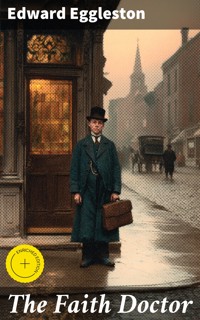
In "The Faith Doctor," Edward Eggleston crafts a compelling narrative that intertwines religious belief and medical science within the backdrop of late 19th-century America. The novel presents a thoughtful exploration of spirituality through the eyes of its protagonist, who grapples with the intersection of faith, healing, and human experience. Eggleston's literary style is characterized by vivid characterizations and a keen social critique that reflects his profound understanding of the cultural tensions of his time, wherein faith was often at odds with the burgeoning discipline of medicine. Edward Eggleston, a noted historian and novelist, was deeply influenced by his upbringing in a religious community as well as his studies in theology and the natural sciences. His diverse background allowed him to present a narrative that challenges the dichotomy between faith and empiricism, situating the tension within the evolving landscape of American thought. Eggleston's own experiences as a preacher and educator imbue the narrative with authenticity, as he explores the beliefs that shaped an entire society. Readers interested in the intersection of faith, medicine, and morality will find "The Faith Doctor" not only enlightening but also thought-provoking. Eggleston's skillful blending of storytelling with philosophical inquiry encourages deep reflection on the role of belief in the context of healing, making this work a significant read for those invested in understanding the complexities of faith in a modern world. In this enriched edition, we have carefully created added value for your reading experience: - A succinct Introduction situates the work's timeless appeal and themes. - The Synopsis outlines the central plot, highlighting key developments without spoiling critical twists. - A detailed Historical Context immerses you in the era's events and influences that shaped the writing. - A thorough Analysis dissects symbols, motifs, and character arcs to unearth underlying meanings. - Reflection questions prompt you to engage personally with the work's messages, connecting them to modern life. - Hand‐picked Memorable Quotes shine a spotlight on moments of literary brilliance. - Interactive footnotes clarify unusual references, historical allusions, and archaic phrases for an effortless, more informed read.
Das E-Book können Sie in Legimi-Apps oder einer beliebigen App lesen, die das folgende Format unterstützen:
Veröffentlichungsjahr: 2021
Ähnliche













The Faith Doctor
Table of Contents
Introduction
In a metropolis dazzled by progress yet magnetized by the promise of wonder, The Faith Doctor probes the uneasy border where scientific medicine meets the consolations of belief and asks what it costs a society when cure, conscience, and credibility collide.
Edward Eggleston’s The Faith Doctor is a realist social novel set in late nineteenth-century New York, published in the early 1890s amid the ferment of the Gilded Age. It belongs to a moment when American fiction scrutinized urban life, professional ambition, and the crosscurrents of religion and reform. Eggleston, an American novelist known for his clear-eyed depictions of social change, situates his story in a rapidly modernizing city whose clinics, parlors, and meeting halls become stages for contesting ideas. The book’s milieu places medicine, commerce, and moral inquiry side by side, offering readers a historically grounded portrait of belief under the pressure of modernity.
Without leaning on sensationalism, the novel follows a rising physician whose career unfolds alongside a public fascination with spiritual cures and persuasive personalities. His work places him in contact with patients, patrons, and seekers drawn to competing explanations for suffering and recovery. The plot’s early movements trace how professional ideals and social expectations intersect, how reputation forms, and how private loyalties are tested in the glare of public opinion. Readers encounter a narrative that privileges observation over melodrama, keeping the focus on character, motive, and social texture. The experience is thoughtful, measured, and quietly suspenseful in its moral stakes.
Eggleston’s voice blends accessible prose with a patient, investigative curiosity. He evokes the city’s rooms and rhythms—consulting spaces, fashionable drawing rooms, crowded halls—through concrete detail and a journalist’s eye for setting. Dialogue reveals social types and shifting allegiances without caricature, and the narration resists easy verdicts. The mood is lucid and urbane, with a restrained irony that never slides into cynicism. The book’s pacing favors cumulative insight: small choices gather weight, social rituals expose fault lines, and the reader is invited to weigh competing claims of conscience, efficacy, and care. It is realism attentive to both outer circumstance and inner conviction.
At its center lies a set of questions that still resonate: What counts as evidence when bodies and hopes are involved? Who gets to define authority in the healing arts? How do charisma, status, and need shape the acceptance of any remedy? The novel considers the professionalization of medicine alongside popular currents of religious practice, charting how trust is won, traded, or lost. It examines class and gender expectations within urban networks of philanthropy, publicity, and patronage, and it tracks the thin line between comfort and credulity. The theme is not dismissal but discernment, the search for ethical ground in a landscape of competing claims.
For contemporary readers, The Faith Doctor speaks to debates about expertise, wellness culture, and the circulation of persuasive narratives in a crowded marketplace of ideas. Its urban canvas shows how inequality and aspiration complicate health choices, how institutions cultivate legitimacy, and how individuals navigate uncertainty without the benefit of hindsight. The novel’s sympathy extends to doubt as well as conviction, modeling a careful attention to human motives and the pressures that bend them. It encourages readers to test arguments, to notice the allure of the quick cure, and to consider how communities balance skepticism with compassion.
Approached as historical fiction and as social inquiry, the book offers a layered, reflective reading experience: a story of professional identity under scrutiny, of private feeling entangled with public roles, and of a city trying to reconcile faith with the claims of science. Eggleston gives no easy answers, but he supplies a vivid context in which the questions can be honestly posed. For those drawn to nuanced character work and carefully observed social worlds, The Faith Doctor provides a steady, illuminating light—one that makes the past legible and, in doing so, clarifies enduring dilemmas about care, belief, and responsibility.
Synopsis
Set in Gilded Age New York, the novel follows a young, scientifically trained physician as he begins his practice amid the city’s extremes of luxury and need. Apprenticed in hospital wards and dispensaries, he confronts illnesses that medicine can only partially relieve and patients whose confidence shapes outcomes. The city’s drawing rooms praise “mind cure,” spiritual healing, and fashionable doctrines; the clinics require steady, measurable care. Between these worlds, he becomes curious about the role of hope, habit, and suggestion in recovery. The narrative opens with his arrival, early trials, and an ethical resolve to treat both the poor and the privileged without compromise.
Through a charity connection, he is introduced to a wealthy household whose influence eases his entry into society. There he meets a thoughtful young woman, admired for her independence, who is intrigued by new healing philosophies and skeptical of the profession’s rigidity. Conversations in parlors and reading circles reveal the appeal of metaphysical cures to people seeking control over nervous disorders and social anxieties. While he questions extravagant claims, he does not dismiss the comfort they offer. Accepting a few consultations among fashionable patients, he also keeps his hospital rounds, hoping to learn how belief interacts with rest, regimen, and careful diagnosis.
New York’s neighborhoods broaden his perspective. Tenement visits show exhaustion, malnutrition, and preventable disease; uptown addresses present ailments of strain, leisure, and reputation. In medical societies, colleagues debate nosology, placebos, and the ethics of suggestion. Meanwhile, newspapers promote a charismatic healer whose “thought cure” draws lines around the block. Following that figure’s public demonstrations, the physician studies case histories and listens to recovered patients, noting the mingling of sincerity, self-deception, and relief. He resolves to test what can be responsibly adopted—a calmer bedside manner, confidence without false promises—while maintaining verifiable practice. The contrast between spectacular claims and incremental remedies intensifies.
A turning case involves a patient whose symptoms resist drugs but yield to structured routines, reassurance, and the removal of fear. Improvement is rapid enough to attract attention, and society gossip names him “the faith doctor,” a title he does not seek. The label spreads, bringing more clients and unwanted scrutiny from both orthodox practitioners and enthusiasts of miracle cures. He explains that he prescribes rest, diet, and disciplined habits, not mystery. Yet letters, testimonials, and invitations accumulate, threatening to distort his work. The novel traces how a reputation formed by rumor can trap a conscientious practitioner within expectations he never claimed.
Parallel stories anchor the middle chapters. In the wards, he befriends immigrant families and learns how poverty complicates convalescence. In parlors, benefactors propose a fashionable sanitarium, urging him to lend his new notoriety. He hesitates, wary of turning suffering into spectacle. The young woman he admires navigates her own pressures—friends devoted to spiritual movements, relatives invested in status, and a genuine compassion for the city’s needy. Their conversations, at once cordial and candid, probe the difference between consoling words and durable help. A hint of mutual regard emerges, tempered by diverging obligations and the public noise surrounding his accidental fame.
A public emergency forces decisions. An accident and a cluster of nervous collapses draw crowds, reporters, and rival healers to the same doorstep. The physician must act quickly, organize care, and shield vulnerable patients from publicity. He resists calls to give theatrical assurances, focusing instead on steady measures that can be sustained after the spectacle passes. The episode heightens tensions with the celebrated healer, whose following expects dramatic proofs. It also tests the woman’s sympathies, as she weighs personal loyalties against what she witnesses. The aftermath leaves reputations unsettled, and the protagonist’s practice at once busier and more precarious.
Questions about method culminate in formal scrutiny. Colleagues and critics convene to examine results, expose imposture, and define ethical bounds for suggestion. The physician presents records, attributing recoveries to time, regimen, and the patient’s disciplined hope rather than supernatural agency. He urges attention to surroundings—air, diet, rest, and honest talk—as part of treatment. The inquiry neither crowns him nor discredits belief; it clarifies terms, separating humane encouragement from extravagant claims. Some observers acknowledge the mind’s influence without abandoning evidence; others cling to absolutes. This measured outcome reframes his reputation, shifting “faith” from mystery toward trust, character, and mutual responsibility.
With publicity reduced and expectations tempered, the narrative turns to choices about work and attachment. He refines his practice, balancing charity calls with a modest private office, and refuses commercial ventures that would trade integrity for income. The young woman faces decisions of her own, disentangling genuine conviction from social pressure. Secondary figures—benefactors, patients, and rivals—settle into new alignments as quick cures lose fashion and steadier habits take root. Without dramatizing outcomes, the story suggests a route toward companionship based on shared duty. The physician’s path becomes one of quiet endurance, measured success, and a reputation built on reliability.
Across its sequence, the novel portrays medicine as a human relation shaped by culture, economy, and belief. Its central message is not that faith substitutes for skill, but that hope, candor, and steadiness help skill to work. By contrasting crowded wards, ornate parlors, and sensational platforms, it surveys a city learning to value sober care over marvels. The title’s irony resolves into a practical lesson: a “faith doctor” is one who earns trust by refusing pretense, recognizing the mind’s role, and refusing to exploit it. The closing pages affirm service and restraint, leaving characters poised for durable commitments rather than triumphs.
Historical Context
Edward Eggleston’s The Faith Doctor (1891) unfolds in New York City during the late Gilded Age, when rapid urban growth, new technologies, and stark wealth disparities defined daily life. Elevated railways crossed Manhattan in the 1870s, electric lighting arrived with Edison’s Pearl Street Station in 1882, and the Brooklyn Bridge opened in 1883, binding boroughs and accelerating movement. Fifth Avenue mansions and fashionable resorts contrasted with overcrowded tenements on the Lower East Side. This time and place, steeped in both scientific optimism and religious ferment, supplied Eggleston with a social laboratory in which belief, medicine, and status intersected in parlors, clinics, and church halls.
The novel’s central preoccupation—faith healing—mirrors a robust late nineteenth-century landscape of spiritual therapeutics. Antecedents included Spiritualism, launched by the Fox sisters’ 1848 “rappings” in Hydesville, New York, and publicly contested by Margaret Fox’s 1888 confession. The Mind Cure tradition drew on Phineas P. Quimby (1802–1866) and flowered in the 1870s–1890s, while Mary Baker Eddy published Science and Health (1875) and founded the Church of Christ, Scientist (1879). By the late 1880s, Christian Science and related groups had congregations and lecture circuits in New York. The Faith Doctor dramatizes how such movements attracted urbane patients and patrons, probing the social authority of charisma versus clinical expertise.
At the same moment, American medicine was professionalizing and consolidating standards. The American Medical Association (founded 1847) pressed for licensure, and in the early 1890s New York shifted physician licensing to the State Board of Regents, phasing in mandatory examinations by the mid-decade. Germ theory, established by Pasteur and Koch in the 1860s–1880s, reshaped hospital practice at institutions such as Bellevue Hospital and Roosevelt Hospital (1871). Johns Hopkins opened its medical school in 1893 with rigorous laboratory training. Eggleston sets his characters at the fault line of this transition, where unlicensed healers and “regulars” compete for patients, reputation, and legal recognition amid contested definitions of cure.
High society culture in New York reached a performative zenith, symbolized by Ward McAllister’s vaunted “Four Hundred” (a term popularized in 1892 for Mrs. Caroline Astor’s accepted elite) and by the opulence of Vanderbilt mansions along Fifth Avenue. Delmonico’s restaurants hosted exclusive dinners, and seasonal migrations to Newport cemented class identity. This milieu provided not only clientele for fashionable cures but also settings in which belief and fashion mutually validated one another. The Faith Doctor situates healing as a social performance within salons and drawing rooms, revealing how status anxiety, reputation, and gossip could authenticate or destroy a healer’s claims as effectively as clinical outcomes.
Urban poverty and reform efforts formed the era’s counterpoint to elite display. New York’s Tenement House Acts (1867; 1879 “old law” requiring windows in bedrooms) attempted to mitigate squalor, while the Board of Health (reorganized 1866) targeted epidemics. Immigration shifted from Castle Garden (1855–1890) to Ellis Island (opened 1892), swelling crowded neighborhoods. Jacob Riis’s How the Other Half Lives (1890) exposed conditions to a middle-class audience. The Charity Organization Society of New York (1882), influenced by figures such as Josephine Shaw Lowell, promoted casework and the “deserving” poor. Eggleston’s narrative registers these debates, tracing how philanthropy, morality, and medical aid intertwined in choices about who received care and on what terms.
Women’s health and autonomy were central to the period’s social currents. Elizabeth Blackwell had earned an M.D. in 1849, and the Woman’s Medical College of the New York Infirmary (founded 1868) trained female physicians, yet mainstream practice still prescribed S. Weir Mitchell’s “rest cure” for nervous disorders in the 1870s–1880s. Meanwhile, organized suffrage gained new momentum with the formation of the National American Woman Suffrage Association (1890). Faith healing and mind-cure promised agency over the body without paternalistic oversight. In The Faith Doctor, women’s choices about treatment illuminate gendered power, showing why alternative therapeutics could seem emancipatory amid condescending diagnoses and constrained roles.
The media marketplace amplified therapeutic claims. Joseph Pulitzer’s New York World (acquired 1883) and other dailies fused sensationalism with aggressive advertising, while patent medicines—Lydia E. Pinkham’s Vegetable Compound (marketed from the 1870s), Kickapoo remedies, and countless tonics—flourished under minimal regulation until the Pure Food and Drug Act (1906). The Comstock Act (1873) and New York’s Society for the Suppression of Vice policed advertising and “obscenity,” yet medical charlatanism often evaded censure. Eggleston reflects this environment by showing how publicity constructs authority: a healer’s press, testimonials, and scandal columns could shape clinical reputations as decisively as outcomes, inviting readers to scrutinize credibility in a commodified health economy.
The Faith Doctor functions as a critique of Gilded Age credulity, laissez-faire regulation, and class-bound morality. By juxtaposing parlors of privilege with wards of need, Eggleston exposes how social rank insulated dubious healers while the poor navigated moralized charity and uneven medical access. The novel interrogates the failure of institutions—press, churches, and professional bodies—to protect the vulnerable from exploitation, and it questions patriarchal medical practices that diminished women’s agency. Its urban panorama indicts a culture that monetized suffering and reputation alike, arguing, in effect, for accountable standards in public health and for reforms that align scientific rigor with compassion rather than with fashion or profit.




