


0,49 €
Niedrigster Preis in 30 Tagen: 1,99 €
Niedrigster Preis in 30 Tagen: 1,99 €
Mehr erfahren.
- Herausgeber: Booksell-Verlag
- Kategorie: Lebensstil
- Sprache: Englisch
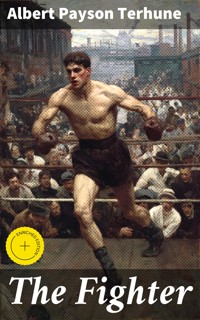
In "The Fighter," Albert Payson Terhune crafts a compelling narrative that explores the indomitable spirit of a boxer grappling with personal and societal challenges. Set against the backdrop of early 20th-century America, the novel is rich in vivid descriptions and dynamic dialogue, showcasing Terhune's deft handling of character development and plot pacing. The story encapsulates the era's cultural engagement with themes of masculinity, resilience, and the moral complexities of sport, making it a significant piece in the canon of American literature of its time, reflecting the struggles between aspiration and adversity faced by individuals in a rapidly changing society. Albert Payson Terhune, known for his love of dogs and outdoor adventure, infused his writing with the same vigor and enthusiasm that characterized his life. His background in journalism and his penchant for storytelling were instrumental in shaping "The Fighter," as the author sought to delve into the psychological dimensions of his protagonist. Terhune's experiences with various social classes also provided him with a unique perspective on the struggles faced by athletes, which resonates throughout the narrative. I highly recommend "The Fighter" to readers interested in classic American literature, sports narratives, and psychological explorations of self-worth. It not only offers an exciting storyline but also presents profound reflections on the human condition, making it a timeless read that remains relevant today. In this enriched edition, we have carefully created added value for your reading experience: - A succinct Introduction situates the work's timeless appeal and themes. - The Synopsis outlines the central plot, highlighting key developments without spoiling critical twists. - A detailed Historical Context immerses you in the era's events and influences that shaped the writing. - A thorough Analysis dissects symbols, motifs, and character arcs to unearth underlying meanings. - Reflection questions prompt you to engage personally with the work's messages, connecting them to modern life. - Hand‐picked Memorable Quotes shine a spotlight on moments of literary brilliance. - Interactive footnotes clarify unusual references, historical allusions, and archaic phrases for an effortless, more informed read.
Das E-Book können Sie in Legimi-Apps oder einer beliebigen App lesen, die das folgende Format unterstützen:
Veröffentlichungsjahr: 2022
Ähnliche


















The Fighter
Table of Contents
Introduction
In The Fighter, a single determined soul learns that strength is not a matter of force alone but of endurance harnessed to conscience, as escalating tests—physical, moral, and social—press that resolve to the edge and demand the courage to keep fighting without forfeiting the very values worth defending; set against pressures that refuse easy compromises and peopled by adversaries as relentless as circumstance itself, the struggle becomes as much about self-mastery as survival, and what emerges is a portrait of grit tested in arenas where victory has costs and defeat carries lessons that cannot be ignored.
Albert Payson Terhune (1872–1942) was an American author whose work reached large audiences in the early to mid-twentieth century, when brisk, accessible narratives thrived in a lively periodical and book market. The Fighter can be approached within that cultural landscape of popular fiction that prized clear stakes and decisive action. While specific settings and locales are not essential to this introduction, the book’s milieu reflects the era’s appetite for stories that move swiftly yet pause for moral reflection. As such, readers may expect an emphasis on tangible challenges, mounting pressure, and the testing of character under public as well as private scrutiny.
The premise unfolds with a central figure confronting escalating adversity that demands both stamina and judgment, inviting the reader into a narrative that balances momentum with moments of introspection. Terhune’s plainspoken, energetic style favors clean lines and purposeful scenes, keeping the focus on choice, consequence, and the steady ratcheting of tension. The mood blends urgency with earnestness: the story is suspenseful without cynicism, hopeful without sentimentality. Rather than relying on baroque twists, the book offers the pleasures of classical storytelling—clear goals, rising stakes, and meaningful reversals—delivered with an eye to the psychological toll of struggle as much as to its physical demands.
Endurance, integrity, and responsibility anchor the book’s thematic core. The title frames conflict as more than a contest of strength; it is an examination of what it means to persist without surrendering one’s compass. The narrative probes the ethics of ambition: when does drive become destructiveness, and what must be safeguarded when hard choices loom? It also considers community and reputation—how public perceptions can magnify pressure—and the difference between bravado and courage. By tracing the cost of perseverance, the book invites readers to weigh outcomes not only in wins and losses but in what remains of the self after the contest is done.
Character is revealed through trial: the protagonist’s path is shaped by tests that measure resilience while illuminating boundaries, temptations, and loyalties. Opponents are not merely obstacles but reflections of competing values—shortcuts versus discipline, spectacle versus substance, impulse versus restraint. The most consequential confrontations often occur within, where fear, pride, and fatigue threaten clarity. This inward focus does not slow the pace; rather, it sharpens the stakes of every outward decision. By foregrounding the interplay between external peril and internal resolve, the book builds a study of temperament under fire, showing how a life’s direction can pivot on a single, hard-won choice.
Viewed from today’s vantage, The Fighter resonates for readers navigating pressures that reward speed over care and victory over wisdom. Its questions—about how to hold fast to principle when incentives favor expedience, and how to measure success beyond applause—remain timely. The work also offers a window onto a period of American storytelling that celebrated fortitude and clarity of purpose, reflecting cultural ideals that still inform debates about ambition and accountability. In that sense, the book functions both as an absorbing narrative and as a conversation partner, prompting reflection on the balance between drive and duty in an era crowded with distractions.
Approached as a classic tale of character under strain, The Fighter promises a lean, focused experience: rapid developments, lucid prose, and stakes that intensify without straying into spectacle for its own sake. It invites readers to invest in a contest that matters because it clarifies who the central figure is—and who they are willing to become—without requiring foreknowledge or revealing outcomes. This introduction offers a doorway rather than a roadmap, pointing toward a story that tests limits and honors consequence. For those drawn to narratives where resolve meets conscience, the book provides a compelling, thought-provoking journey.
Synopsis
Albert Payson Terhune’s The Fighter follows a determined protagonist whose defining trait is an unyielding will to push against the odds. The story opens in a bustling American city at the turn of the twentieth century, where class divisions, political patronage, and rapid growth create constant friction. From the outset, the central character is shown as someone who has learned to endure hard knocks and keep moving, whether on the street, at work, or in private trials. This foundation establishes the book’s central idea: a life shaped by resistance to pressure, and the cost of meeting each challenge head-on without surrender.
Early chapters trace the hero’s beginnings in modest circumstances, emphasizing apprenticeships, small jobs, and the practical education gained by observing people in power. He discovers that institutions rely on habit and compromise, and he recognizes the gap between official ideals and daily reality. These experiences draw him toward a public arena where the stakes are higher and the consequences more visible. Terhune presents the city as a character in itself—loud, vibrant, and unforgiving—where reputation can break or build overnight. The hero’s skills develop not through sudden brilliance, but through persistence, attention to detail, and a readiness to absorb blows without losing direction.
An inciting event thrusts the protagonist into conflict with an entrenched organization, bringing his personal code into direct tension with expediency. What begins as a small disagreement expands into a broader struggle over influence and fairness. He must decide whether to accept quiet advancement within a flawed system or confront the practices that keep it entrenched. Early efforts earn him modest successes and visible pushback, revealing the machinery that sustains those in charge. Terhune keeps the focus on practical steps and incremental gains, showing how one public stand leads to a chain of consequences that bind the hero deeper into the fight.
As the scope of the contest widens, key relationships take shape. A seasoned ally offers guidance rooted in long experience, urging caution while respecting the hero’s resolve. A principled love interest challenges him to balance ambition with accountability, sharpening his sense of duty beyond personal achievement. A rival, ambitious and polished, embodies the system’s allure: power without visible cost. Their competing visions—pragmatic survival, principled reform, and opportunistic ascent—frame the choices ahead. These connections humanize the struggle, clarifying what the protagonist risks losing even as he reaches for broader influence and a more just outcome in the public arena.
The first major turning point arrives with the exposure of a practice that has long passed as normal. Bringing it into daylight forces the city to confront what it would rather ignore. The protagonist’s decision to act triggers formal challenges, rumors, and tests of loyalty. Some supporters drift away; others step forward quietly. Terhune presents the repercussions matter-of-factly, emphasizing process and consequence over sensational detail. The episode reshapes the battleground, narrowing the hero’s options and committing him to a course that cannot be recast as mere misunderstanding. From here, the fight involves not only policy but also personal credibility.
Midway through, pressure intensifies. Public attacks escalate, financial leverage is applied, and physical intimidation hints at the stakes. The hero’s endurance is tested, but he adapts by shifting strategy from direct confrontation to coalition-building. Neighborhood voices, overlooked by decision-makers, provide energy and evidence that broaden the issue beyond a single grievance. While some figures seek compromise, the protagonist insists on specific reforms that can be verified. Terhune maintains a brisk sequence of events, linking hearings, meetings, and street-level organizing to show how momentum is built step by step, even as the opposition refines its methods to undermine confidence and sow doubt.
A sharp setback follows—part personal, part strategic—that forces reassessment. A trusted figure’s wavering, or a misread alliance, exposes vulnerabilities in the hero’s approach. Instead of abandoning the effort, he reorganizes, clarifies the message, and tightens the plan. The narrative underscores preparation: gathering documents, verifying claims, and anticipating procedural maneuvers designed to stall or discredit him. Small victories restore morale, but Terhune keeps the outcome uncertain. The stage is set for a decisive test that will either validate the reform effort or reassert the status quo, with the protagonist’s own reputation now inseparable from the cause he advances.
The climactic sequence brings the conflicting forces into direct, public confrontation. Proceedings are tense, rules are contested, and the margin for error shrinks. The hero faces moments of doubt, countered by the quiet conviction that consistency, not spectacle, wins durable change. Evidence and testimony carry weight, but so does the audience’s sense of fairness shaped by what it has witnessed. Terhune emphasizes pacing and clarity, allowing events to unfold without revealing their ultimate resolution. The contest feels both institutional and personal, a measure of how far the protagonist has come and how much remains at stake if he falters at this final threshold.
In the aftermath, the narrative considers impact rather than triumphalism. Consequences fall unevenly: some reforms take root, others face resistance; relationships evolve under new realities. The book’s message is clear without being didactic: progress is won through steadiness, integrity, and the willingness to endure pressure without bending principle beyond recognition. The protagonist emerges defined less by a single victory than by the record of fights chosen and the manner of fighting them. Terhune closes by reaffirming the value of persistence within imperfect systems, suggesting that the true measure of a fighter lies in purpose, patience, and accountability over time.
Historical Context
Albert Payson Terhune’s The Fighter unfolds in the urban Northeast of the 1910s, a world of smoky gymnasiums, athletic clubs, and cramped tenement districts that fed the prize ring with hopeful contenders. The implied geography is the New York–New Jersey corridor, where Manhattan’s Madison Square Garden and smaller across-the-river clubs in Jersey City and Hoboken drew crowds. The era is the Progressive Era, when reformers battled urban vice even as mass entertainment blossomed. Streetcar lines, expanding newspapers, and a torrent of new immigrants created dense neighborhoods and eager audiences. Within this setting, the ring becomes a path of social mobility and a crucible for reputation, honor, and survival.
Between 1911 and 1920, New York’s legal stance toward boxing oscillated sharply, shaping the sport’s economics and venues. The Frawley Law (1911), signed by Governor John Alden Dix, legalized ten-round, no-decision bouts under club auspices and created a regulatory commission, bringing fights back into public view. Anti-vice pressure spiked after ring fatalities and moral campaigns, leading to repeal in 1917 under Governor Charles S. Whitman. With major arenas shuttered, promoters often drifted to more permissive locales across the Hudson. The Walker Law (1920), sponsored by Senator James J. Walker and signed by Governor Al Smith, restored regulated prizefighting. The novel’s career arcs mirror these legal crosscurrents and their precarious economics.
Boxing in the 1910s was inseparable from the racial politics ignited by Jack Johnson’s reign as world heavyweight champion (1908–1915). Johnson’s defeat of James J. Jeffries on 4 July 1910 in Reno, Nevada, provoked nationwide riots; the federal Sims Act (1912) soon banned interstate transport of prizefight films. Johnson’s Mann Act prosecution (1913) and subsequent exile further politicized the ring. In April 1915, Jess Willard won the title in Havana, a result cast by many as a restoration of racial order. The novel’s portrayal of promoters, crowds, and press echoes this climate, showing how fighters were marketed through anxieties about race, masculinity, and national prestige.
The explosion of mass media made fighters into celebrities and scandals into commodities. New York’s titanic press—Joseph Pulitzer’s World and William Randolph Hearst’s Journal—built sports pages that turned training camps into serialized drama. Newsreels magnified the spectacle until the Sims Act (1912) restricted interstate fight films; municipal censors in cities like New York and Chicago enforced bans. Terhune’s long newsroom experience in the 1890s–1910s gave him a reporter’s eye for promotion, rumor, and the city desk’s power over reputations. In the novel, headlines, gossip columns, and posters become weapons, mapping how publicity could vault a challenger forward—or bury him under scandal.
Urban politics in the period were saturated with graft and gambling, conditions that touched every commercial sport. Under Tammany Hall’s long shadow, police protection and political favors brokered access to venues and audiences. The Herman Rosenthal murder (16 July 1912) exposed a web of police-corruption tied to gambling; Lieutenant Charles Becker was convicted and executed in 1915 after prosecution by District Attorney Charles S. Whitman. Such revelations mirrored the public’s suspicion that back-room money shaped outcomes—from the booking of fights to alleged fixes. The novel’s managers and patrons navigate these hidden economies, revealing how a boxer’s fate could depend less on skill than on who controlled the purse and the permit.
Progressive Era moral reform was the decisive force shaping the ring’s rules, venues, and everyday risks. Clergy-led coalitions, the Anti-Saloon League (founded 1893), and civic groups linked prizefighting to saloons, gambling, and street violence. Reformers leveraged sensational incidents—ring deaths like heavyweight prospect Luther McCarty’s collapse and death on 24 May 1913 in Calgary—to demand bans or strict oversight. In New York, the Frawley Law (1911) used ten-round, no-decision limits, medical exams, and licensing to blunt charges of brutality; its repeal in 1917 reflected renewed moral fervor amid wartime anxieties. The Walker Law (1920) restored the sport under a reinvigorated New York State Athletic Commission, with physician presence, glove standards, and promoter accountability. Parallel campaigns attacked vice districts and saloon culture, culminating in national Prohibition after ratification of the Eighteenth Amendment (1919) and the Volstead Act (1920). Because clubs and training quarters often adjoined saloons, these campaigns reconfigured the sport’s social geography, pushing it toward more formal, state-supervised venues. For working-class and immigrant neighborhoods—Irish, Italian, and Jewish communities on the Lower East Side, in Hell’s Kitchen, and across Hudson County—boxing remained a ladder of upward mobility, even as regulation raised entry costs and empowered licensed managers. The novel’s world reflects these contradictions: reform cleans the sport’s surface while preserving the economic leverage of promoters and political gatekeepers. Fighters struggle with weigh-ins, medicals, and purse splits, yet still face dangerous match-making and rumors of fixes. By embedding its plot within licensing boards, police raids, and moral campaigns, the book dramatizes how Progressive reform simultaneously protected athletes and entrenched new hierarchies of power.
War and public health crises also frame the period. Europe went to war in 1914; the United States entered on 6 April 1917 after two years of neutrality and a domestic preparedness movement symbolized by the Plattsburgh training camps (1915–1916). Military trainers used boxing to build fitness and fighting spirit; future champion Gene Tunney served as a Marine. In 1918, the influenza pandemic closed or restricted indoor gatherings, disrupting cards and training halls across American cities. The novel’s anxious tempo—opportunities closing, careers advancing or collapsing overnight—mirrors this volatility, as patriotic duty, mobilization, and disease abridge the precarious livelihoods of club fighters and promoters alike.
As social and political critique, the book exposes the monetization of risk in an economy where working-class bodies generate profits while managers and politicians arbitrate access. It indicts graft—permits traded for favors, purses shaved by promoters—and a press that sensationalizes scandal while moralists posture. By tracking a fighter’s climb through clubs buffeted by the Frawley repeal (1917) and moral campaigns, it critiques reforms that police spectacle yet leave structural inequities intact. The narrative also implicates racialized marketing and class prejudice that shape who is cheered, matched, or publicized. In staging resistance to fixes and exploitation, it argues for transparent regulation and dignity within a modern mass culture.
The Fighter
CHAPTER ICALEB CONOVER WINS
The red-haired man was fighting.
He had always been fighting. The square jaw, the bull neck proclaimed him of the battling breed; even before one had scope to note the alert, light eyes, the tight mouth, the short, broad hands with their stubby strength of finger.
In prize ring, in mediaeval battlefield, in ’longshore tavern, Caleb Conover would have slugged his way to supremacy. In business he won as readily—and by like methods. His was not only the force but also the supreme craft of the fighter. Therefore he was president, instead of bouncer, in the offices of the C. G. & X. Railroad.
It was not railroad business that engrossed Conover as he sat at his desk one day in early spring: tearing open a ceaseless series of telegrams, scribbling replies, ringing now and then for a messenger to whom he gave a curt order.
Telegrams and messages ceased. In the lull, Conover jumped to his feet and began to walk back and forth. His big hands were clenched, his head thrust forward, his whole muscle-bound body tense.
Then began a violent ringing from the long-distance telephone in the far corner of the room. Conover picked up the receiver, grunted a question, then listened. For nearly five minutes he stood thus, the receiver at his ear, his broad, freckled face impassive save for a growing fire in the pale, alert eyes. A grunt of dismissal and the receiver was hung on its hook.
Conover crossed the room, threw himself into a big creaking chair, cocked his feet on the window sill, drew out and lighted a fat cigar. The tenseness was gone. His whole heavy body was relaxed. He smoked mechanically and let his gaze rove with dull inertness over the blank wall across the street. He was resting as hard as he had fought.
A clerk timidly opened the door leading from the outer offices.
“Mr. Caine, sir,” ventured the employee, “He says he—”
“Send him in,” vouchsafed Conover without turning his head.
His eyes were still fixed in unseeing comfort on the wall, when his guest entered. Nor did he shift his glance without visible reluctance. The newcomer seemingly was used to his host’s lack of cordiality. For, favoring Conover with a slight nod, he deposited his hat, gloves and stick on the table and lighted a cigarette, before speaking.
Conover surveyed the well-groomed figure of his visitor with an air of disparaging appraisal that reached its climax as he noted the cigarette.
“Here!” he suggested, “Throw away that paper link between fire and a fool, and smoke real tobacco. Try one of these cigars if you want to. They’ll fit your mouth a lot better. Why does a grown man smoke a—?”
“This grown man,” replied Caine, unruffled, “has a way of doing what he chooses. I came to see if you were ready to go to your execution.”
“Execution, eh?” grinned Conover. “Well, it’s just on the books that there may be a little executin’ done, up there. But I won’t be the gent with his head on the block. Besides, you’re an hour early.”
“I know I am. It’s an ideal day for work. So I haven’t done any. I left the office ahead of time and came to see if I could lure you into a walk before we go to the Club. You don’t seem much worried over the outcome.”
“Why should I be? I’ll win. I always win.[1q]”
“Conover,” said Caine, observing his friend with the condescendingly interested air of a visitor at the Zoo, “If I had your sublime conceit I’d be President of the United States or the richest man in America, or some other such odious personage whose shoes we all secretly fear we may some day fill.”
“President? Richest man?” repeated Conover, mildly attracted by the dual idea. “Give me time and I’ll likely be both. I’ve made a little start on the second already, to-day.”
“Won another fight?” queried Caine.
“Yes, a big one. The biggest yet, by far.”
“Nothing to do with Steeloid[1], I suppose!” suggested the visitor, a note of real concern peering through his customary air of amused calm.
“All about Steeloid,” returned Conover. “The Independent Steeloid Company is incorp’rated at last. Cap’talized at—”
“The Independent! That means a slump in our U. S. Steeloid! You call that winning a fight? I thought—”
“You’d be better off, Caine, if you’d leave the thinkin’ part of these things to me. Thinkin’ is my game. Not yours. You talk about ‘our’ U. S. Steeloid. You seem to forget I swing seventy-two per cent. of the stock and you own just what I let you in on.”
“Never mind all that,” interposed Caine. “If the Independents are banded together, they’ll make things warm for us.”
“Not enough to cause any hurry call for electric fans, I guess,” chuckled Conover. “If you’ll stop ‘thinkin’’ a minute or two an’ listen to me, I’ll try to explain. An’ maybe I can hammer into your head a few of the million things you don’t know about finance. Here’s the idea. I built up the Steeloid Trust, didn’t I? And Blacarda and his crowd who had been running a bunch of measly third-rate Steeloid companies, set up a squeal because I could undersell ’em.”
“Go on,” urged Caine. “I know all that. You needn’t take a running start with your lesson in high finance. We’ll take it for granted that I read at least the newspaper I own and that I know Blacarda has been trying to organize the independent companies against you. What next?”
“Well, they’re organized. Only Blacarda didn’t do it. A high-souled philanthropic geezer that worked through agents, jumped in an’ combined all the independent companies against us an’ got ’em to give him full voting power on all their stock. Put themselves into his hands entirely, you see, for the fight against my Steeloid Trust. Then this noble hearted trust buster incorporated the Independents. The deal went through to-day. I got final word on it just now. The Independents are organized. The votes on every share of their stock is in the control of one man.”
“But he’ll—”
“An’ that ‘one man,’” resumed the Fighter, “happens to be Caleb Conover.”
“But,” gasped the dumbfounded Caine, “I don’t understand.”
“Caine,” protested Conover, gently, “if all the things you don’t understand about finance was to be placed end to end—like they say in the Sunday ‘features’ of your paper,—they’d reach from here to Blacarda’s chances of swingin’ the Independent Steeloid Company. An’ that’s a long sight farther than twice around the world. What I’m gettin’ at is this: I went to work on the quiet an’ formed that Independent Combine. Then I gave it to myself as a present. It is now part of my U. S. Steeloid Company. Or will be as soon as I can strangle the Legislature kick that Blacarda’s sure to put up.”
“I see now,” said Caine, slipping back into his armor of habitual calm, “and I take off my hat to you. Conover, you missed your calling when you failed to go into the safe breaking profession.”
“There’s more money in business,” replied Conover simply. “But now maybe you won’t lay awake nights worryin’ over your Steeloid stock. If it was worth 170 2-5 this morning it’ll be quoted at 250 before the month is out.”
“I don’t wonder you aren’t afraid of this afternoon’s ordeal,” observed Caine, “But Blacarda is on the Board of Governors.”
“So are you, for that matter,” said Conover, “and I guess the vote of the man who’s made rich by Steeloid will pair off with the vote of the man who’s broke by it.”
“I hope,” corrected Caine, “you don’t think it’s because of my Steeloid holdings that I’m backing you in this. I do it because it amuses me to see the gyrations of the under dog. A sporting instinct, I suppose.”
“If you’re pickin’ me for the under dog,”—began Conover, but broke off to stare in disgust at the other’s upraised hand.
Caine was lifting his cigarette to his lips. Conover watched the lazily graceful gesture with more than his wonted contempt.
“Say, Caine,” he interrupted, “why in thunder do you make your nails look like a pink skatin’ rink?”
“If you mean, why do I have them manicured,” answered Caine, coolly, “it is absolutely none of your business.”
“Now I s’pose that’s what you’d call a snub,” ruminated Conover, “But it don’t answer the question. Pink nails all shined up like that may look first rate on a girl. But for a man thirty years old—with a mustache—Say, why do you do it?”
“Why do you wear a necktie?” countered Caine, “I admit it is a surpassingly ugly one. But why wear one at all? It doesn’t keep you warm. It has no use.”
“Clo’es don’t make a man,” stammered Conover, rather discomfited at the riposte, “But there’s no use creatin’ a disturbance by goin’ round without ’em. As for my necktie, it shows I ain’t a day laborer for one thing.”
“Well-groomed hands are just as certain a sign manual of another sort,” finished Caine.
“I don’t quite get your meanin’. If—”
“As a failure you would have been a success, Conover,” interrupted Caine, “But as a success you are in some ways a lamentable failure. To paraphrase your own inspired words, if all the things you don’t know about social usage were placed end to end—”
“They’d cover a mighty long list of measly useless information. What do I care for such rot?”
“That’s what you’re called on to explain this afternoon before the Governors of the Arareek Country Club,” finished Caine rising. “Are you ready?”
“No, I’m going to stop at Desirée’s for a few minutes, first. I want to tell her about my winnin’ out against the Blacarda crowd. She knows Blacarda.”
“Does she know finance?”
“As well as she knows Blacarda, I guess. An’ neither of ’em enough to be ’specially int’rested. But she likes to hear about things I’ve done. I’ll just drop ’round there on my way. Join you later at the Club.”
“I’ll walk as far as her door with you, if you like,” suggested Caine, gathering up his hat and stick. “Then I’ll go on and see what I can do with the Governors before the meeting. But I don’t look forward to coercing many of them into sanity. They bear a pitifully strong family resemblance to the late lamented Bourbons. They ‘learn nothing, forget nothing’ and—”
“And they go your Bourbon gang one better,” supplemented Conover, “by never havin’ known anything to start with. Maybe I can give ’em an idea or two, though, before we’re done. I used to boss Dago section hands, you know.”
“You’ll find this job rather more difficult, I fancy. A garlick-haloed section hand is a lamb compared to some of our hardshell club governors. Why do you want to stay in the Club, anyhow? It seems to me—”
“In the first place because I won’t quit. Prov’dence loves a bulldog, but He hates a quitter. In the second place I want to feel I’ve as much right in that crowd as I have in Kerrigan’s saloon. I’ve made my way. This Steeloid shuffle ought to put me somewhere in the million class. An’ there’s more to come. Lots of it. I’m a railroad pres’dent, too. The C. G. & X. is a punk little one-horse railroad; but some day I’ll make it cover this whole State. The road was on it last legs when I got hold of it, and I’m making it what I choose to. Now, as a man with all that cash,—and a railroad president, to boot,—why ain’t I entitled to line up with the other big bugs of Granite? Tell me that. They don’t want me, maybe? Well, I’ll make ’em want me, before I’m done. Till then, they’ll take me whether they want me or not. Ain’t that sound logic?”
“As sound as a dynamite cartridge,” laughed Caine, “You’re a paradox! No, ‘paradox’ isn’t a fighting word, so don’t scowl. You have the Midas-gift of making everything you touch turn to solid cash, and making two dollars grow where one mortgage blank formerly bloomed. You have the secret of power. And, with it all, you stoop to crawl under the canvas into the Social Circus. Feet of clay!”
Caleb glanced furtively at his broad, shining boots, then, disdaining the allusion as past his discernment, answered:
“It’s my own game and I play it as I plan to. In one year from now you’ll see folks askin’ me to the same houses where you’ve been invited ever since your great grandfather held down the job of ‘First Land-owner’ here, in the Revolution. See if I don’t.”
“Did you ever chance to read Longfellow’s poem about the Rabbi—Ben Levi—who ‘took the Kingdom of Heaven by violence?’” queried Caine.
“I don’t read rhymes. Life’s too short. What happened to him?”
“He didn’t have a particularly pleasant time of it, as I remember. In fact, I believe the angels joined in a symphonic clamor for his expulsion. Not unlike the very worthy governors of the Arareek Country Club.”
“H’m!” sniffed Conover in high contempt. “If the Rabbi person had took the trouble of postin’ himself on those angels’ pasts, he might a’ got front-row seat in the choir instead of bein’ throwed out.”
“So that’s the line you’re going to take with the governors? I’m glad I decided to be there. It ought to prove amusing. But you don’t seem to realize that even if you win, you won’t be exactly beloved by them, in future.”
“I’m not expectin’ a loving cup with a round-robin of their names on it. Not just at first, anyhow. So don’t waste any worry on me. The Club’s only the first step, anyhow. The real fun’s liable to come when I take another.”
“Festina lente!” counseled Caine, “People have a way of forgetting a man is nouveau riche[2] as long as he remembers it. But they remember it as soon as he forgets it. Is it discreet to ask what Miss Shevlin thinks of all this? Is she in sympathy with your social antics—I mean ‘ambitions?’”
“I don’t know. I never asked her. I never thought to. But if I did, she’d stand for it. You see, not bein’ as old and as wise as some of the Granite folks, she’s fallen into the habit of thinkin’ I’m just about all right. It’s kind of nice to have someone feel that way about you.”
“You seem to return the compliment. I don’t blame you. It isn’t every man who finds himself guardian to an exquisite bit of animated Sevres china. I’m lying back to watch for the time when some scared youth comes to ask your leave to marry her.”
“What’s that?” snarled Conover, stopping and glowering up at the tall, clean-cut figure at his side.
“Don’t get excited,” laughed Caine. “You can’t expect as lovely and lovable a girl as Desirée Shevlin to live and die an old maid. If you’re so opposed to this imaginary suitor I’ve conjured up, why not marry her yourself?”
“Marry? That kid? Me?” sputtered Conover, “Why I’m past thirty an’—an’ she ain’t twenty yet. Besides I’m a daddy to her. If I hear of you or anyone else queerin’ that kid’s fondness for me by any such fool talk, I’ll—”
“Her father was wise in appointing you her guardian,” mocked Caine. “In the absence of man-eating blood-hounds or a regiment of cavalry, you’re an ideal Dragon. I remember old Shevlin. A first rate contractor and ward politician; but the last sort of man to have such a daughter. As for Billy, now—he’s the model of his father. A tougher little chap and a greater contrast to his sister could hardly be imagined.”
“She takes after her mother,” explained Conover, puffing mightily at a recalcitrant cigar; “Mother was French. Came of good people, I hear. Named her girl Desirée. French name. Kind of pretty name, too. Died when Billy was born. I s’pose that’s why the boy was named for his dad, instead of being called Pe-air or Juseppy or some other furren trademark. That’s why he’s tough too. Desirée was brought up. Billy’s bringing himself up. Same as I did. It’s the best trainin’ a boy can have. So I let him go his own gait, an’ I pay for the windows he smashes.”
“How did Old Man Shevlin happen to leave you guardian of the two children? Hadn’t he any relatives?”
“None but the aunt the kids live with. I s’pose he liked me an’ thought I’d give the girl a fair show. An’ I have. Convent school, music an’ furren lingoes an’ all that rot. An’ she’s worth it.”
“How about Billy?”
“That’s no concern of mine. He gets his clothes an’ grub an’ goes to public school. It’s all any boy’s got a right to ask.”
“Contractors are like plumbers in being rich past all dreams of avarice, aren’t they? One always gets that idea. The Shevlins will probably be as rich as cream—”
“They’ll have what they need,” vouchsafed Conover.
“Then you’re doing all this on the money that Shevlin left?”
“Sure! You don’t s’pose I’d waste my own cash on ’em?”
“What a clumsy liar you are!” observed Caine admiringly. “There! There! In this case ‘liar’ is no more a fighting word than ‘paradox.’ Don’t get red.”
“What are you drivin’ at?” demanded Conover.
“Only this: The wills and some other documents filed at the Hall of Records, are copied by our men and kept on file in our office. I happened to be going over one of the books the other day and I ran across a copy of old Shevlin’s will. There was a Certificate of Effects with it. He left just $1,100, or, to be accurate, $1,098.73.”
“Well?” challenged Conover.
“Well,” echoed Caine, “The rent of the house where Miss Shevlin lives, her two servants, and her food must come to several times that sum each year. To say nothing of the expenses and the support of the aunt, who lives with her. None of those are on the free list. You’re an awfully white chap, Conover. You went up about fifty points in my admiration when I read that will. Now don’t look as if I’d caught you stealing sheep. It’s no affair of mine. And as she doesn’t seem to know, I’m not going to be the cheerful idiot to point out to her the resemblance between her father’s $1,100 and the Widow’s Cruse. It’s pleasure enough to me, as a student of my fellow animals, to know that a pirate like you can really once in your life give something for nothing. There’s the house. Don’t forget you’re due at the Club in fifty minutes.”
Conover, red, confused, angry, mumbled a word of goodbye and ran up the steps of a pretty cottage that stood in its own grounds just off the street they were traversing.
Caine watched the Fighter’s bulky form vanish within the doorway. Then he lighted a fresh cigarette and strolled on.
“I wonder,” he ruminated, “what his growing list of financial victims would say if they knew that Brute Conover worships as ideally and reverently as a Galahad at the shrine of a little flower-faced nineteen-year old girl? But,” he added, in dismissing the quaint theme, “no one of them all would be half so surprised to know it as Conover himself!”
CHAPTER IITHE GIRL
Conover lounged back and forth in the pretty little reception room of Desirée Shevlin’s house, halting now and then to glance with puzzled approval at some item of its furnishings. The room—the whole house—was to him a mystery. Contentedly devoid of taste though he was, the man dimly realized the charm of the place and the dainty perfection of its appointment. That Desirée had accomplished this in no way astonished him. For he believed her quite capable of any minor miracle. But in it all he took a pride that had voiced itself once in the comment:
“I don’t see how you could make a room look so nice without a single tidy or even a bow fastened up anywhere. But why did you get those dull old tiles for your mantel? I wouldn’t a’ kicked at payin’ for the best marble.”
To-day, Conover gave less than usual homage to the apartment. He was agog to tell its owner his wonderful tidings, and he chafed at her delay in appearing. At last she came—the one person on earth who could have kept Caleb Conover waiting; without paying, by sharp reproof, for the delay.
“I’m sorry I was so long,” she began as she brushed the curtains aside and hurried in, “But Billy and I couldn’t agree on the joys of tubbing. I’d hate to hate anything as much as he hates his bath. Now you’ve had some good luck! Glorious, scrumptious good luck! I can tell by the way your mustache is all chewed. You only chew it when you’re excited. And you are only excited when something good has happened. Isn’t it clever of me to know that? I ought to write it up: ‘Facial Fur as a Bliss Barometer.’ How—Oh, I didn’t mean to be silly when you’re bursting with news. Please be good and tell me. Is it anything about Steeloid?”
“It’s all about Steeloid,” he answered. “I’ve won out—I’ve made my pile.”
She caught both his hands in hers, with a gesture almost awkward in its happy impulsiveness.
“Oh, I’m so glad! So glad!” she cried. “Tell me!”
Boyishly, bluntly, eagerly, Conover repeated his story.
His florid face was alight, enthusiasm wellnigh choking him. She heard him out with an excitement almost as great as his own. As he finished she clapped her hands with a little laugh of utter delight.
“Oh, splendid!” she exclaimed. “No one but you would ever have thought of it. It’s—” her flush of pleasure yielding momentarily to a look of troubled query—“It’s perfectly—honest, of course?”
“It’s business[2q],” he replied.
“That’s the same thing, I suppose,” she said, much relieved, “And you’re rich?”
“A million anyway. And you’ll—”
“Hell!”
Both turned at the wonder-inspired, sulphurous monosyllable. Desirée jerked the curtain aside, revealing a stocky small boy, very red of face. He was clutching a blue bath robe about him and had no apparent aim in life save to escape from the situation into which his involuntary expletive had betrayed him.
“Now don’t go callin’ me down, Dey,” he pleaded. “I just happened to be going past—I was on the way to take my bath, all right—on the level I was—an’ I heard Mr. Conover say about havin’ a million. An’—an’—I spoke without thinkin’.”
He had been edging toward the stair-foot as he talked. Now, finding the lower step behind him, he fled upward on pattering desperate feet.
“Poor Billy!” laughed Desirée, “He’s an awfully good little chap. But he will listen. I can’t break him of it.”
“Maybe I could,” hazarded Conover.
“You’d break his neck and his heart at the same time. Leave him to me. Nothing but kindness does any good where he is concerned.”
“Ever try a bale-stick?” suggested Caleb.
“That will do!” she reproved. “Now, I want to hear more about Steeloid. Poor Mr. Blacarda! It’s pretty hagorous[4] for him, isn’t it?”
“If ‘hagorous’ means he’s got it in the neck, it is.”
“‘Hagorous’” explained Desirée, loftily, “means anything horrid. I know, because I made it up. It’s such a comfort to make up words. Because then, you see, you can give them meanings as you go along. It saves a lot of bother. Did you ever try it?”
“No,” said Conover, apologetically. “I’m afraid I never did. Maybe I could, though, if it’d make a hit with you. But you were talkin’ about Blacarda. You ain’t wastin’ sympathy on him, are you?”
“I’m sorry for anyone that gets the worst of it. But—”
“But no sorrier for Blacarda than you would be for anybody else?”
“Of course not. Why?”
“He comes here a lot. Twice I’ve met him here. Is he stuck on you?”
“I think he is.”
“I guess most people are,” sighed Caleb. “I don’t blame him; so long as you don’t care about him. You don’t, do you?” he finished anxiously.
“He’s very handsome,” she observed demurely.
“Is he?”
“Well—pretty handsome.”
“Is he?”
“He’s—I’ve heard girls say so.”
“H’m! Nice crimson lips, red cheeks, oily curled hair and eyes like a couple of ginger snaps!”
“No,” corrected Desirée, judicially, “More like chocolate pies. There’s something very sweet and melting about them. And, besides, you mustn’t run him down. He’s very nice to me. Last night he asked me to marry him. What do you think of that? Honestly, he did.”
“The measly he-doll! I wish I’d broke him a year ago instead of waiting for the Steeloid scrap. What’d you say when he asked you?”
“Your face gets such a curious shade of magenta when you are angry, Caleb,” mused Desirée, observing him critically, her head on one side. “But it doesn’t match your hair a little bit. There, I didn’t mean to tease you. Yes, I did mean it, too, but I’m sorry. I told him I couldn’t marry him, of course.”
“Good work!” approved Caleb, “What’d he say then?”
“He—he asked if I’d try and look on him as a brother—‘a dear brother,’ and—”
She broke off with a reminiscent laugh.
“Well, what did you say?”
“I’m afraid I was a little rude. But I didn’t mean to be. I’d heard a smothered giggle from over in the corner. So I told him if I’d really had any use for a brother—a ‘dear brother,’—I could reach right behind the divan and get one. He stalked over to the divan. And sure enough there, behind the cushions, was Billy, all wudged up in a little heap. He—”
“All—what?” asked the perplexed Conover, pausing in the midst of a Homeric guffaw.
“‘Wudged.’ All wudged up—like this—” crumpling her ten fingers into a white, compact little bunch. “Mr. Blacarda was very angry. He went away.”
She joined for an instant in Conover’s laughter; then checked herself with a stamp of her foot.
“Stop!” she ordered. “I’m a little beast to behave so. He—cared for me. He asked me to marry him. There ought to be something sacred in all that. And here I am making fun of him. Caleb, please say something to make me more ashamed.”
“You’re all right, girl!” chuckled Caleb in huge delight. “Poor pink-an’-white Blacarda! You were—”
“I wasn’t! I ought to be whipped for telling you. But—but somehow, I seem to tell you everything. Honestly, I wouldn’t tell anyone else. Honestly! You know that, don’t you?”
“I know you’re the whitest, brightest, jolliest kid that ever happened,” returned Conover, “but you needn’t bother about Blacarda. I won’t tell. Now I’ve got to get out.”
“Aren’t you going to take me for a walk or a drive or anything? It’s such a gorgeous day, and it’s so early. Almost as early as it ever gets to be.”
“I can’t, worse luck!” said he. “I’ve got a measly appointment at the Arareek[3]. An’ besides—say, little girl, I don’t know about walking or driving with you any more.”
“Caleb!”
“Listen, till I explain. Now that Mrs. Hawarden’s took such a fancy to you an’ took you up an’ chap’roned you to places where I’d be chased out with a broom—an’ all that—well, you get invited to big folks’ houses. That’s how you met Blacarda, wasn’t it? He travels with the gold-shirt crowd. Now, that crowd don’t care about me. They will, some day. But they don’t, yet. An’ if you’re seen around with a rank outsider like me—it’ll—it may kind of make ’em think you’re the same sort I am. An’ that’ll be liable to queer you with ’em. An—”
“Caleb Conover!”
He stopped, thoroughly uncomfortable, yet vaguely glad of having eased his mind of its worry for her prospects. She was frowning up at him with all the menacing ferocity of an Angora kitten.
“Caleb Conover!” she repeated, in stern rebuke. “Aren’t you ashamed? Aren’t you ashamed? Say you are! Now go and stand in the corner. If I ever hear you talk that way about yourself again—why Caleb! We’re chums, you and I. Don’t you know that I’d rather have you than all those people put together? Now talk very fast about something else, or I won’t get my temper back again. What’s your appointment about?”
“At the Arareek?” he asked, falling in, as ever, with her lightning change of mood. “Oh, nothing much. It’s a meeting of the Board of Governors. There’s a man in the Club who got in by influence, before they realized just what sort of a punk feller he was. An’ now they’ve called a meeting to see about kickin’ him out. There’s to be a vote on it. An’ he’s to appear before ’em to-day to defend himself. Not quite reg’lar in Club by-laws, Caine tells me. But that’s what’s to be done. They say: ‘his business methods bring disrepoote on the Club.’ That’s the sp’cific charge I b’lieve.”
“But what have you got to do with all that?”
“Nothin’—Except I’m the shrinkin’ victim.”
“You! Is it—a joke?”
“Not on me. I’ll fix it all right. Don’t you worry now. I wouldn’t a’ told you about it if I hadn’t known I’d win out.”
“You’re sure?”
“Of course I am. What chance has that bunch of mutton-heads against anyone with man’s size brains in his skull? Sure, I’ll win. Now, don’t look like that, Dey. It breaks me all up to have you blue. I tell you it’ll be all right.”
“Who are the Governors?”




