


6,99 €
Mehr erfahren.
- Herausgeber: Hay Press
- Kategorie: Gesellschafts- und Liebesromane
- Sprache: Englisch
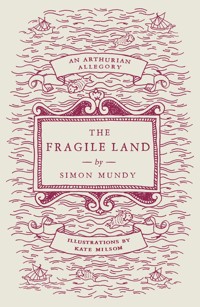
Stories surrounding the legendary King Arthur have been told since time immemorial, and every generation has a new take on the tale. The Fragile Land approaches the legend from a radical angle, setting it firmly in the post-Roman world of late fifth-century Europe, when the language of Britannia was still Brythonic and the Saxons had not yet superimposed their own place names. The Fragile Land chronicles the crucial years of Arthur's life, from the age of fifteen into his early thirties, as he comes to the fore as elected Overlord, empowered to confront the Barbarian threat and to keep the factious leaders of the island's kingdoms in some sort of political alliance. Enhanced by a beautifully illustrated map by the artist Kate Milsom, Simon Mundy's cunningly woven tale of an island in unrest draws subtle parallels with contemporary cultural disputes and casts the legend in a whole new light.
Das E-Book können Sie in Legimi-Apps oder einer beliebigen App lesen, die das folgende Format unterstützen:
Seitenzahl: 791
Veröffentlichungsjahr: 2023
Ähnliche



















TheFragile Land
simon mundy
hay press
hay press
an imprint of
Renard Press Ltd
124 City Road
London EC1V 2NX
United Kingdom
020 8050 2928
www.haypress.co.uk
The Fragile Land first published by Hay Press in 2023
Text © Simon Mundy, 2023Illustration © Kate Milsom, 2023
Cover illustration by Kate MilsomCover design by Will Dady
Simon Mundy asserts his moral right to be identified as the author of this work in accordance with the Copyright, Designs and Patents Act 1988.
This is a work of fiction. Any resemblance to actual persons, living or dead, is purely coincidental.
Renard Press is proud to be a climate positive publisher, removing more carbon from the air than we emit and planting a small forest. For more information see renardpress.com/eco.
All rights reserved. This publication may not be reproduced, used to train artificial intelligence systems or models, stored in a retrieval system or transmitted, in any form or by any means – electronic, mechanical, photocopying, recording or otherwise – without the prior permission of the publisher.
EU Authorised Representative: Easy Access System Europe – Mustamäe tee 50, 10621 Tallinn, Estonia, [email protected].
Contents
A Note about Names
Places and their Modern Equivalents
The Territories of Britannia
Other Territories mentioned
Characters
Book One
Book Two
Book Three
the fragile land
A Note About Names
This story is set in late fifth-century Britain, at a time when the Romans were still remembered, but only by people over seventy. However, the cultural battle between Roman and indigenous language and lifestyles was not yet settled, especially between the emerging Church and temporal rulers. Both felt under threat, too, from the raids by Germanic and Nordic migrants. Deciding on names of people and places therefore causes problems. Saxon and mediaeval English names had not yet been invented. The indigenous names have, for the most part, been lost, though we have clues on old memorial stones. The Romans gave territories and towns names which have survived, and I have used them for kingdoms and settlements. I suspect that, only sixty or so years after the official departure of the legions, they would still have been widely used. I have settled on the spellings I feel most comfortable with from the many variations available.
Modern Welsh I have raided at times and, to make the point that this book is not in the post-fifteenth-century English or earlier French traditions of Arthurian romances, in many cases I have used a Welsh version – so Myrddin, not Merlin. Arthur is an anachronism, and I have treated it as such. I have also used the Welsh for the three old kingdoms that were combined to form Tudor Radnorshire: Elfael, Gwythernion and Malienydd. As far as we know, they had no precise Roman allocation or loyalties to any of the named indigenous peoples, being mountain kingdoms on the borders of the Silures, Cornovii and Ordovices. They are central to the story as I tell it, though.
Welsh is a modern variety of one of the main branches of the Celtic languages labelled today Brythonic, and I have used that name to characterise the vernacular of the time. I have also used Britannia instead of Britain and Britannian instead of British, the latter being a hybrid English word coined by James VI of Scotland when he gained the English throne in 1603 and was trying to invent a joint identity, which has never quite worked. The Romans initially meant the whole island when they said Britannia, but in time they came to think of it as the territory south of the Antonine and then Hadrian’s walls that they controlled. I have referred to all the peoples who were not from the old empire as Barbarians, as the Romano-Britannians would have done, with the exception of the Hibernians (Irish), who were always in a special category, along with those north of the Firth of Forth that we now label Picts.
The site of the battle of Mons Badonicus has been fought over by historians and Arthurian enthusiasts for many decades. I have placed it at the modern village of Baydon, on the Wiltshire–Berkshire border, which makes reasonable strategic as well as historical sense in terms of the story, without any pretence to archaeological accuracy. It is in a landscape so full of ancient resonance, from the Neolithic onwards, that anything is possible.
places And Their Modern Equivalents
Alabum: Llandovery
Aquae Sulis: Bath
Badonicus, Baydun: Baydon
Bremetennacum: Ribchester
Burdigala: Bordeaux
Calleva: Silchester
Calcaria: Tadcaster
Camulodunum: Colchester
Canovium: Caerhun
Cataractonium: Catterick
Cicutio: Brecon
Condate Riedonum: Rennes
Corinium: Cirencester
Cunetio: Mildenhall (Wiltshire)
Deva: Chester
Dubris: Dover
Dunedin: Edinburgh
Durobrivae: Rochester
Ebvracum: York
Glevum: Gloucester
Isca: Exeter
Isca Siluris: Caerleon
Isurium: Aldborough (Yorkshire)
Lavobrinta: Forden Gaer (Shropshire)
Letocetum: Wall
Lindinis: Ilchester
Lindum: Lincoln
Londinium: London
Luentium: Dolaucothi/Pumsaint
Magnis: Kenchester
Mamucium: Manchester
Massilia: Marseille
Mediolanum: Whitchurch (Shropshire)
Moridunum: Carmarthen
Noviomagus: Chichester
Olicana: Ilkley
Pennocrucium: Penkridge
Petuaria: Brough
Ratae: Leicester
Sabrina, Savrina: River Severn
Segontium: Caernarfon
Tamara Ostia: Plymouth
Tamesis: River Thames
Treverorum: Trier
Vectis: Isle of Wight
Venta Belgarum: Winchester
Venta Siluris: Caerwent
Verlucio: Heddington Wick (Wiltshire)
Verulamium: St Albans
Viroconium: Wroxeter
The Territories Of Britannia
Alt Clut
Atrebata
Belga
Brigantia
Cantiacia
Carvetia
Catuvellaunia
Coritania
Cornovia
Deceangelia
Demetia
Dobunnia
Durotriga
Dumnonia
Elfael
Gwythernion
Icenia
Malienydd
Manavia
Novantia
Ordovicia
Parisia
Siluria
Trinovantia
Votadina
other Territories mentioned
Angeln
Aquitania
Armorica
Caledonia
Gall
Hibernia
Characters
Aelle, a Barbarian agent
Alban, a saint of Catuvellaunia
Ambrosius Aurealianus, Overlord of Britannia
Antonius, Bishop of Viroconium
Arcarix, Prince of Deceangelia
Arthur, Overload, ‘Tygern Fawr’ of Britannia
Badoc, King of Siluria
Bedr, steward and student of Myrddin
Branwen, Princess of Elfael
Budig, Prince of Armorica
Caerwen, Queen of Cornovia
Caldoros, King of Dumnonia
Candidianos, King of Dobunnia
Caradoc, Prince of Elfael
Catacus, King of Atrebata
Ceretic, King of Alt Clut, father of Cynwyd
Clovis, King of the Franks
Corbalengus, King of Ordovicia
Cunegnus, King of Cornovia
Cunogeterix, ancient chieftain
Cunorix, King of Catuvellaunia
Cynwyd, King of Alt Clut
Doldavix, adviser to Cunegnus
Dubricius, Bishop of Isca Silures
Eldadus, King of Atrebata, father of Catacus
Evan, soldier of Arthur’s guard
Flaminius, merchant of the Belgae
Geraint, Prince of Elfael (later, Arthur)
Glyn ap Erfil, messenger
Gorlois, King of Dumnonia
Gwain, steward and captain to Arthur
Gwenan, lover of Arthur
Gwidellius, Bishop of Londinium
Gwynafir, Princess of Burdigala
Heol, King of Armorica
Idriseg, King of Elfael
Maglicus, father of Myrddin
Mandubrac, King of Catuvellaunia
Medraut, son of Morganwy
Meg, wife of an innkeeper in Elfael
Megeterix, King of Deceangelia
Meurig, boy of Olicana
Modlen, scribe to Arthur
Morganwy, student and ward of Myrddin
Myrddin, adviser to Arthur
Olwen, Princess of Gwythernion
Padrig, Bishop of Hibernia
Peredoc, enforcer
Seona, servant and lover of Myrddin
Sioned, woman of Segontium
Slesvig, Barbarian warlord
Tegernacus, King of Coritania
Uther Pendraeg, Overlord of Britannia, Arthur’s father
Vortebelos, King of Brigantia
Vortigern, Overlord of Britannia
Vorteporix, King of Demetia
Wermund, Barbarian warlord
Ygraen, Queen of Dumnonia, Arthur’s mother
Book One
The Year of Discoveryad 473
I
It was one of those mornings which is hardly a morning. The mist had rolled over the hill behind – but rolled seemed too active a word for it. Instead the moisture sat pointlessly around the trees and drenched the new wooden bridge across the brook, making it just as slippery as the stepping stones had always been. It wasn’t raining, but it would be soon. The sheep, penned for lambing, looked mucky and indifferent – but then, they always did. There was no world to watch from any of the watching points. The patient cloud locked them into the head of the valley as securely as the bastion gate. Only the stream was full of noise. The boy picked his way through the mud and wrapped a cloak, quite new and thick-threaded, about him. Even though the early spring day was not particularly cold, the drizzle made it feel miserable enough. He carried nothing with him; he would need both hands for the journey back.
The road, such as it was, pitched sharply outside the last gate. It settled down after it had crossed the stream, to the side from where enough trees had been cleared to make meadows. But that was a while away, and the boy slithered on the uneven wet stones, cursing the lack of grip on the worn soles of his boots. By the time he had reached flatter ground he was below the cloud line, and the mist had concentrated into gentle rain. It dripped from the ends of the boy’s hair, finding a way through the cloak and into the matted wool shirt. There was a mile or two to go before it was going to get any better. He was tempted to cut further into the shelter of the trees, but it was a longer path that way, and it didn’t look much drier, anyway. He told himself and a couple of uninterested pigeons that he would rather have had the snow and crisp morning of the winter just ended than this stuff, but the truth was he would have preferred not to have had mornings at all.
After a mile the road veered away from the water and climbed a little, following now the side of a loose stone hillock that was dwarfed by the majestic slopes of the main valley but big enough to screen home from the rest of the hills. On a clear day, which this was not, you could get a good, close view of the surrounding country. There was a forward lookout near the summit, and a path to it which hid in the cover of the trees for as long as possible. This morning, though, there was nothing to see and no one to man the guard post. The boy had the road to himself. The woods thickened on one side; on the other they alternated with irregular fields – few and far between (there were only three houses to pass), but enough to make him feel that he was more out in the open and a little less safe. There had never been any trouble as long as he could remember, but nobody else seemed to think that was very long. So he kept alert as he walked, more for something to think about that wasn’t wet than out of fear.
The road dipped again into the tree cover and meandered towards a ford over the big river that flowed out of the hills to the west. It was not a big river by the standards of the world, but it was as big as the boy had seen, and was too great to wade through alone at that time of year. An oak had been felled across it just upstream from the ford and a handrail of woven saplings joined along it to give some purchase on slippery days like this. The boy thought about taking the bridge at a run, but then thought better of it.
Halfway across he paused. He thought his eye had caught something in the water just below, lodged against the rocks where the current leapt and eddied at its fiercest. It had shone – strange on a morning without sun – but now that he looked closely there was nothing much to be seen: a stuck branch and a shred of cloth. A trick of the light and the water. He pressed on.
Beyond the scurrying river he had to climb again, this time higher and harder, and the road could not choose its own way, but had to work as best it could round boulders and through cliffs three times the height of a man. The noise of the river followed him for a while, sometimes close, sometimes far below and just keeping him company in the distance. Then it was lost and the road broke into the open above the trees. He was on a hill unlike the others, with their rolling slopes and long, high summits that formed a ring around him in all directions. This hill stood almost in the centre of the ring, and though it was smaller, it was impressive in its isolation. On one side it broke away nearly sheer to the valley floor; on the other it tailed back sharply until it met the closest giant in the outer ring and formed a bar, with only a narrow coll wide enough for a road to pass between them. It was a perfect defensive gate provided by nature for the valley. But the boy was already inside the defences, as he had been for as long as he could remember and, he supposed, all the time before. He lumbered up the steep bank on the southern side, just a local path now, and approached the village that perched against the top of the hill, rock at its back, ramparts surrounding the rest. They were old, he knew, though they had been rebuilt within his lifetime. Exactly why he did not know.
At the main gate he waved to the man on duty. He should have identified himself and stopped for an inspection, but there was no real need. The gatekeeper was his father’s cousin, and apart from the usual annoying comment about how much he had grown, so much that it was hard to recognise him – one day he’d get an arrow in his chest if he kept on like that – the boy was let through without too much of an inquisition. Sometimes he felt that the whole world must be made up of his father’s cousins, and they all thought they were funny.
The village was up and working, but only just. In the forge there was the beginnings of a good fire, and the smell of baking lingered in the air. He was suddenly hungry, his stomach reminding him that he had just trudged four miles in the drizzle. The feeling worsened as he walked the length of the one significant street to the end, where the temple church stood on its mound. The boy turned right, still climbing a little. He should have turned right again, through the final palisade fence to the hall, but his stomach was driving his legs now, and he was carried past the gate, past three more houses to the inn. Outside it a man stood on a ladder painting red a wooden harp that hung from a hook above the door.
He didn’t bother to look up as the boy approached, but spoke anyway. ‘Morning, Geraint. Bit early for you to be up here, isn’t it? Where’s the rest, then?’
‘I’ve come on my own. Father’s sent me to fetch someone and take him back with me.’
‘Who would that be, then?’
‘Not sure, exactly. Someone I was to ask for at the hall. They’d know who I was after.’
‘Hall’s back there. What are you doing over here?’
‘Well, I thought…’
‘You thought you’d come and cadge some breakfast off me before you went asking,’ the man said, putting down his painting cloth and climbing down, wiping his hands on the skirt of his tunic. ‘Well, it’s an excuse for me too. Come on, lad, we might as well find out if Meg’s feeling generous.’ He stopped at the foot of the ladder and clapped the boy on the back. ‘Good God, you’ve grown. Bigger than your father now, aren’t you? Don’t look much like him, either, come to think of it, but then that’s an advantage in itself.’
He steered the boy inside and shouted through to where Meg was already preparing slabs of bread and meat and honey and pouring out mugs of weak breakfast ale. She was a young woman, and at nineteen was only five years older than the boy himself and at least ten years, probably fifteen, younger than the innkeeper. Her long straw hair was pulled back and braided, and she had her work clothes on, but she was still lovely, with mild grey-green eyes and the walk of a natural athlete. To the boy she was just older, though, and he barely noticed the perfection of her as she slapped plates and mugs down on the long trestle table that filled the centre of the room.
‘Geraint, you stop him shouting like that,’ she admonished, cuffing her husband as he sat. ‘I saw you coming up the lane before he even stopped pretending to work on that sign. Good to see you, boy. How’s Branwen?’
‘All right, I suppose.’
‘Full of the news, aren’t you? Tell her I asked, will you. Tell her to get herself over here a bit more, too. I could do with someone sensible to talk to – not just this old fish.’
‘Love you too,’ grinned the older man, ‘and you watch, young man. You’ll get better treatment than I do, just because she misses your sister.’
The boy muttered into his mug and wolfed down the food. ‘Can’t be long,’ he said, without enthusiasm. ‘I’d better find this man for Father. He told me he wanted us back by midday if we could make it.’
Meg stood behind him and put her arms round his neck. ‘You can wait long enough to dry off and finish this lot. I’ll take this and get the water off it.’ She unfastened the brooch that held his cloak and hung it on a peg beside the fire.
Half an hour later the boy emerged from the inn feeling that the morning was better than he had thought. The cloud was clearing and the drizzle had eased so there was barely a spot hanging on the breeze. From the front of the inn he strolled over to look at the view from the top of the rampart which ran from the grounds of the temple church round the end of the village to his right. He clambered up the wooden steps to the platform that rested on the earth barrier, a battlement in the length of the log barricade. In the distance the ring of hills barred the view to the west. On the crest straight ahead twin burial mounds broke the skyline, great barrows of kings who had ruled a thousand years before the Romans came. He could see below him the wide clearing in the forest, a perfect oval, and at its centre the pair of massive stones which stood for their dead kings facing the setting sun. Closer, but still on the valley floor, he could pick out the road and see the square remnants of the fort the Romans had made for themselves – built in a day, the story went, though he didn’t believe it. There was still a decent building or two, but they held sheep now, not legionaries, and the brambles had taken over where the efficient imperial defenders had lodged hundreds of years before.
The boy was dreaming of the legions his grandfather still talked of proudly, as if he had served under the emperors. It was just possible, the boy thought, though he couldn’t quite see his grandfather in one of those toga things that he had seen in paintings in the old house that faced the fort on the other side of the road. And he certainly didn’t believe his grandfather when he pretended that he had reached as far as Rome itself before his emperor lost his campaign and the legion had broken up. It was unimaginable.
The boy felt a touch on his shoulder and heard a voice beside him. ‘Are you the one they call Geraint?’
‘Yes,’ he answered. He thought of turning to see who had spoken, but somehow the hand held him still.
‘Do you know those barrows?’
‘I often look at them when I come here – I don’t know why,’ he said.
The voice that replied was soft and deep, old enough to be fatherly but young enough, the boy felt, that he could laugh with him easily and often. ‘I do. You’re looking at your ancestors.’
‘How do you know?’
‘Just one of those things.’
The boy felt the pressure leave his shoulder and he turned at last. ‘Who are you?’ he asked.
‘I’m the man you’ve been sent here to fetch, and we’d better start back soon, before the weather changes its mind.’
Looking at the man was a disappointment after hearing his voice. He was middling in every way. Not short, not tall. Not dark, not fair. A bit rounder than a warrior would have been, but not enough to be like most of the farmers around. He had not shaved recently, but the beard did not look deliberate, and there seemed to be a bald patch underneath his chin which matched the small patch on the crown of his head. His cloak was hard to categorise. It wasn’t made from the coarse wool used for a soldier, nor the fine weave of a woman’s gown, but it was of superb material, light and full at the same time, almost plaid except that the greens and reds and browns of countless shades mingled in patterns that never quite allowed the eye to decide whether they were triangles or squares or stripes. At the shoulder a brooch was pinned, and it was unlike anything the boy had seen: a lion’s head in white stone so cleverly carved that the eyes could have been alive.
‘Do you like it?’ the man asked. He was smiling, and his eyes were somehow different from the rest of him. They had the same feel about them as the lion’s – warm and immensely strong, though they were grey-blue and had such kindness and depth that the boy felt immediately confident.
‘It’s extraordinary.’
‘It is indeed. I had it made for me. A friend modelled for it. I’ll tell you the story some time, when we know each other a bit better.’
The boy tried again, ‘what should I call you?’
‘We’ll come to that later, when we get home. Come on.’ He led off at a surprisingly brisk pace and the boy scuttled after him.
Once they were clear of the village and into the woods again, they relaxed to more of a stroll as the man asked his companion about himself – what life had been like as he grew up, what he remembered of his mother (which wasn’t much), how his studies were going: especially his studies. The boy realised as they came to the river that he had been talking all about himself for well over a mile without getting anything in return except an encouraging ‘well, well’ or another question, yet he had an overwhelming sense that he had known the man all his life without ever remembering having met him. That, though, was true of a lot of Father’s friends. They turned up out of the distant past, Father treated them as though they had never been away, then they disappeared again as quickly as they had appeared. None had taken the keen notice him that this man did, though, and the boy wondered if he was really interested or just passing the time on a long, damp walk. He also wondered why he had never called him Geraint since that first question in the village.
At the tree bridge Geraint stepped aside to let the older man go across first.
‘No, after you. I’m sure you have a trick for not slipping off this thing which I should copy, if I’ve got any sense. I’m one of those people who’ll trip over a blade of grass if you give me half a chance.’
Geraint laughed and stepped on to the log. Halfway across he stopped, just as he had on the way out, convinced again that something in the river had flashed. This time he was sure it wasn’t just a trick of light, and he realised that it was unlikely to have been before either. It had been even wetter on the outward walk and the grim grey cloud had hidden the sun completely.
‘What is it? Why have you stopped?’ his companion called from the riverbank.
‘I thought I saw something in the river. Twice.’
‘And it’s not a fish?’
‘I don’t think so. It seemed too still for that.’
‘Well, let’s have a look. But for heaven’s sake, boy, don’t jiggle that rope as I come across. I’m quite damp enough without a swim this morning.’ He started to follow Geraint on to the bridge.
They stood together on the tree trunk, peering down into the water. In the pool below them, close in to the far bank, a light seemed to shine. It was impossible to say whether the light came from within or whether it was just a trick of the morning.
‘You’re right,’ said the man, ‘there is something down there. Let’s take a look, shall we?’
They crossed the final length of wood and gingerly lowered themselves down the bank to the water’s edge. A small ledge of rock reached out into the fast-running stream, and it was in the lee of this that they could see the light in the water.
‘You lean over, boy. You’re young enough for such manoeuvres. I’ll hang on to your ankles.’
The boy lay stomach down on the rock. The water of the pool was moving just enough to stop him seeing clearly what lay beneath, except for the dull blue-green light which came from deep in its centre.
‘There’s definitely something there,’ he said. ‘I can’t make out what it is, though.’
‘Well, don’t talk about it all day. Fish it up here.’
Geraint rolled up the sleeve of his tunic and plunged his arm into the water. It was ice-cold, and his fingers began to go numb after only a few seconds. It was also far deeper than it looked, and until his arm was immersed almost to the shoulder he could find nothing. The light diffused as his hand searched, so that he had to feel round in ever-decreasing circles to make sure he wasn’t missing anything. Just as he thought his fingers were going to drop off with cold and he was on the point of giving up, he touched something hard – not rock, though: too shaped and regular for that.
‘I’ve got it, I think,’ he said.
‘Get it out, then, boy, get it out.’
‘I’m trying. My hand’s so cold I can hardly get a grip on it.’
‘No giving up now. Forget the cold. Come on.’
The boy forced his fingers to close round the object and pulled. Nothing happened. Whatever it was, it was stuck fast in the riverbed.
‘It won’t move,’ he said.
‘Don’t give up so soon.’
He tried again, wondering silently whether his curiosity was worth all this trouble, a freezing arm and a wet tunic.
‘Oh, yes. It is. It very definitely is,’ said the man, kneeling to hold his ankles.
Geraint looked round sharply. He had said nothing, only thought the question. ‘Why did you say that?’ he asked.
‘I’m sorry. Getting ahead of myself. Now concentrate. Give it a good pull.’
He did. Still his strength was resisted, but he felt a slight shift, as though the mud was loosening its grip reluctantly. This time he could move the object sideways, but it didn’t want to rise.
‘It’s coming, I think.’
‘About time. My knees can’t take much more of this.’
‘What about my arm?’ he asked.
‘Quite so.’
Geraint pulled his arm from the water and flicked it dry before sticking his blue fingers under his tunic to try to get some warm blood back into them. Once he could feel the tips again through the pins and needles, he inched a little further forward on the rock and plunged his hand back in again. This time he felt the round top of the object straight away, and pulled firmly. It eased out smoothly but slowly, the riverbed unhappy to let it go. In a moment his hand broke the water’s surface, and they were greeted by the sight of the roundel of a hilt.
‘What have you got?’
‘I think it’s part of a sword. It feels too big for a knife. But there’s not room enough in the water for a long one – it’s probably broken.’
‘Keep it coming, lad. Keep it coming.’
He transferred the hilt to the warm dry fingers of his right hand and lifted through the water. Suddenly, in a shower of droplets which sparkled in their own right, the sword leapt free and into the air, as if it were a live fish and Geraint no longer needed to do the work. For a moment he held it where it was, hanging it the air above the pool, then slowly drew it towards him and rolled over on to his back. As he did so the pool seemed to sigh beneath him. Glancing back, he could see that where there had been light before, there was now darkness just as intense, far blacker than the other water.
‘It’s amazing,’ he whispered. And it was.
He was holding a short sword, of the sort worn by Roman soldiers in the time of the legions, its hilt made of a metal he had never seen before, with the lightness and brilliance of silver but with far more strength. Five rings of this bound a central core, surmounted by the roundel which he had first held when he had reached into the water. This too was made of the same sparkling metal, but set into it on one side was a medallion of amber, so clear and flawless it could almost have been orange glass, except that deep within it a delicate line of black traced the letter ‘C’. The other side was flat and white, not marble but exquisite ivory. Into it, very small, was carved a relief which was hard to make out at first, but when he looked close enough the boy could see that it was a lion’s head and that he had seen it before that morning.
‘Is this yours?’ he asked his companion with awe.
‘Mine? No. It’s yours now. You found it. But maybe that suggests it is right that we should be together when you did.’
‘It looks Roman, but there’s not a mark on it. Surely if it had been in the water for so many years there would be some rust by now, or something coming loose?’
‘Perhaps on most swords, but not this,’ said the man. ‘It could have settled down there quite recently.’
The boy shook his head. ‘How? It was lodged too firmly for that. There hasn’t been a Roman legion anywhere near here for generations. And I can’t see anybody just leaving it there if they dropped it.’
‘Perhaps you’re right,’ the old man shrugged. ‘Is there a clue anywhere? Look on the blade.’
They peered at the sturdy blade. For most of its short length it was plain, but high up there seemed to be some lettering inscribed.
‘Can you read?’ asked the man.
The boy looked at him with disgust. ‘Of course I can. I don’t know why, but they made me, Caradoc and Branwen learn, even though nobody else is bothering and Father can only just about read his own name in Britannian. He hasn’t a clue about Latin.’
‘So what does it say?’
The boy ran his finger across the fine writing, as if it would bring it to life, even though the blade was washed clean by the pure stream water. Strangely the lettering did seem to stand out more clearly for a moment and grow to a dark red, somewhere between blood and wine.
‘Per Gloria Dei,’ he read haltingly. He felt the inscription lead his finger round the edge of the sword and across its other face, ‘Et Vita Constantinus.’
‘Excellent,’ announced his companion. ‘Splendid. Know what it means?’
‘That’s easy,’ said the boy with confidence. ‘For the Glory of God and the Life of Constantine.’
‘You’d better keep it safe, then. Or it had better keep you safe. It’s hard to know which way round it will be. Let’s get off this stone and back to the hall. I’m hungry, wet and cold, and there’s a lot of talking to be done.’ The man jumped back on to the path and strode off, leaving the astonished boy wondering what he was meant to do with the sword. After a moment he clambered back up the bank and scurried after him.
‘Who do you think Constantine was?’ he asked when he had caught up and fallen in alongside. ‘A centurion? It’s too good for a centurion, though. Maybe he was Pro-Consul in the service of one of the emperors the legions proclaimed here.’
‘You mean Carausias and Allectus? It’s probably not old enough for that, do you think?’
‘He must have been Roman.’
‘We’re all Roman, thanks to Caracalla. Or we were until Magnus fell out with Theodosius and his son lost interest in us. All our own fault, as usual.’
The boy glazed over, sensing that his companion was about to lapse into a history lesson – or politics, which was even worse. Then he brightened. ‘Could it even have been Emperor Constantine himself?’
‘Now you’re letting your imagination run away, aren’t you.’
‘Why not? It’s fine enough.’
The man with the lion brooch shrugged. ‘True.’
‘Anyway, we at least know whose it was.’
‘Is,’ the old man corrected him.
‘Sorry?’ Geraint looked baffled.
The man stopped and asked to see the sword. As he held it there was a change in the quality of the wind, as though the air about the sword was singing under its breath. Geraint stood transfixed, watching the man run his hand across the blade, the colours in his cloak gently turning a golden brown to match the amber in the hilt. He talked to the sword itself, not the boy. ‘Constantine is very much with us. And though you have the stamp of the empire I think we’ll find that it is Britannia’s Constantine who makes use of us and we have to protect again, don’t you?’
With concentration he held the sword against his body, pointing to the ground so that the ivory lion of the hilt rested against the brooch at his shoulder. Above them the cloud broke and a shaft of sunlight shot through, turning the tree bridge and its pool below them suddenly gold. The sword’s amber shone with it, intensely, as though responding to the sun, and Geraint watched fascinated as the pattern of the dark ‘C’ within it moved, dissolved and reformed as the letter ‘A’.
The moment passed and the cloud covered the sun again. Geraint was given the sword back.
‘Have a look at the inscription now,’ he was told.
One side was the same – ‘Per Gloria Dei’ – but the other now read ‘Et Vita Arturus’, and its red tint seemed lighter and richer than before.
Geraint was now as frightened as he was intrigued. ‘Who’s Arturus?’ he whispered.
‘Is that what it says now? I thought so. Excellent news. Come on, young man. Home. There’s some explaining to be done.’
II
The mist still hung around the hilltop as the boy and the man passed through the bastion gate and made their way across the yard. On the threshold of the timber hall, water dripping from its thatched roof, a small welcoming party had gathered: a young woman of perhaps eighteen, a boy of about Geraint’s own age or a little more and an older man.
‘We’re back, Father,’ Geraint called.
‘I can see that. And enough time you’ve taken about it.’ A spare and sprightly little man in his middle years, his hair greying at the sides, stepped forward to greet them. He grinned. ‘And I can see why. You’re no thinner, Myrddin. It’s quite a climb for a man in your condition.’
‘If that’s your idea of a greeting, Idriseg, then I’m turning for home now. How did you end up in such a godforsaken spot, anyway?’
The two men grasped each other by the arms as old comrades. ‘Nothing godforsaken about this spot, my friend. God-protected, more like. And where’s this home you’re threatening to walk back to? I’ve heard of you living all over the country.’
‘True enough, old man,’ grunted Myrddin. ‘I suppose I’ll have to put up with your jokes for a night or two.’
‘Quite right. Let’s go in and get some ale into you. It’s only my own stuff, but it’s quite drinkable.’
Idriseg led the way over the stone step and through into the darkness of the hall. ‘You and the boy found each other without difficulty, then.’
Myrddin smiled. ‘I found him. And then the sword found him, so I knew I was right. You’ve done a good job, Idriseg. He’s turned out well.’
‘That he has. It’s almost frightening at times. How like his father he’s becoming – but a better temper, a much better temper. What do you mean, the sword found him?’
‘What I said. But as to meaning, you’ll have to wait until I do all the telling.’
‘Do you know the most irritating thing about having a sage for a friend, Myrddin? Constantly having to wander round wondering what the hell you’re talking about. Sit down there in front of the fire and Branwen will sort some food out for you.’
Myrddin and Idriseg sat themselves at the long table in front of the fire that was blazing in the centre of the room, radiating heat through the paved floor. Idriseg sat with his back to the fire; Myrddin gazed into it. Other men came into the hall to greet the new arrival, but Idriseg nodded them away and with an understanding bow they withdrew again. Geraint and the other boy hovered behind him, not knowing whether to join their elders at the table or find something else to do now that the job of delivery was done. But Geraint was intrigued and troubled too. He now knew the name of the extraordinary man he had guided from the village, but knowing his name was Myrddin didn’t tell him much. He was itching to show off the new sword and tell everybody in the camp about the wonders of its discovery, but Myrddin had confiscated it from him as they approached the bastion, telling him the time was not right. Another of those irritating enigmatic remarks. And there was all that stuff from his father about looking like his father more and more. That was quite simply baffling. Geraint decided he might as well sit down and demand some answers. As his sister Branwen put bread, cold meat and fruit curd in front of their guest, Geraint started to slide on to the bench next to him. But Idriseg caught his eye.
‘You’ve done your job for now, and done it well, Geraint. Go and help the watch or something. Both of you,’ he added, looking at the other boy. ‘My old friend and I have important matters to discuss.’
‘Politics?’ asked Geraint.
‘Politics and old times.’
‘And future ones,’ murmured Myrddin.
Idriseg took Geraint’s wrist. ‘We’ll call for you later. There are things for you to know, but Myrddin and I need to catch up for a while. He’s come a long way and I’ve been out of action up here for too long.’
Geraint nodded and untangled his legs from the bench. ‘Caradoc and I’ll do some work in the armoury,’ he said, winking at the other boy, who grinned and followed him out of the hall.
Myrddin waited silently for a moment while Branwen finished setting his place with a jug of the camp’s best ale, spiced with apple and mulled over the fire. He sipped the warm drink and tore off a hunk of bread, spreading the dark-purple fruit curd on liberally. ‘You do well for yourself up here,’ he said.
Idriseg shrugged. ‘It’s not exactly Corinium, but we manage. The winter’s been hard, though, and I’m hoping things stay quiet enough again this year to get some proper planting done. I need to get round the district a bit more often as well. I get the reports, of course, and there doesn’t seem to be too much of an immediate problem, but you never know. To be frank, Myrddin, I’m feeling a bit cut off in these hills, and I hope you’re coming to tell me I can pull my weight a bit more. If I don’t I can see that some of the younger men are going to start getting restless. They expect me to be making more of a mark in the province. They’re a bit sick of people asking where they come from and who their leader is and then everybody looking blank when they tell them.’
‘I can see that. I’m sorry.’
‘It’s not your fault.’
‘It is, my old friend, it very much is. But if I’m right things are going to get a lot worse before they get better, and if we’re to have any hope of holding this island together in any sort of civilised way then what you have been doing all these years will be beyond price.’
‘I hope you’re right,’ Idriseg said, staring at Myrddin as if trying to read his mind, but it was futile as usual. ‘So when do we tell him?’
‘And what?’
‘And what and how do we break it to the others?’
‘That’s up to you,’ Myrddin said. ‘You’ve watched him grow up, and you can judge the reaction of both boys and the rest of your men better than I can.’
‘You flatter me, Myrddin. First, though, tell me the situation. I’ve had no real news for nearly a year.’
***
The afternoon was well established by the time Idriseg and Myrddin emerged into the weak sunlight. Idriseg looked preoccupied. Myrddin kept him company as he made his way slowly to where the two boys were idling by the well, peeling willow sticks for baskets. They had been at it for an hour or more, and had stripped a good pile. They had also run out of conversation. Caradoc brightened as his father approached, sensing that they would not have to do much more.
‘Finished, Father?’
‘I know more about the world than I did this morning, if that’s what you mean, but I’m not sure I wouldn’t have rather stayed ignorant. Myrddin never was good at glad tidings, were you, man?’
Myrddin grunted. ‘Hardly my fault. I only do what I have to.’
‘True enough. Don’t take it to heart. Geraint. Caradoc. We need to talk to you now. And it had better not be here. The camp has ears in its soil, and I don’t want this spread about until Myrddin’s ready to go – which won’t be till tomorrow at the earliest. We’d better walk for a while.’
The boys put away their knives and threw down the last of the willow with relief. They strode after Idriseg and Myrddin through the gate and turned left, past the bastion, where Idriseg waved to the sentry and called out that they were off up the hill for an hour or two and only to look for them if they weren’t back by sunset. They walked in near silence for ten minutes as the path climbed sideways along the hill, still in the woods but increasingly with glimpses out across the valley. Geraint was beginning to think that he had done quite enough walking for the day. He couldn’t see why it was necessary to climb to the summit of their home hill just to talk.
‘Because gossip can be dangerous when only half the story is heard, and because you need to know before others do,’ said Myrddin as they paused for breath. Not for the first time that day Geraint stared at him incredulously, wondering how his thoughts had been read so easily. He glanced across at Idriseg, who was grinning, and at Caradoc, who just looked baffled – but that wasn’t unusual.
Idriseg laughed. ‘I don’t know why we bother to talk to you, Myrddin, when you know what we’re thinking anyway.’
His companion swatted a nettle. ‘Not always,’ he said, ‘and if the only voice I heard was my own life would be even duller. Come on.’
They broke cover above the tree line and within a few minutes could pause and look out across the valley. The vast royal compound that Idriseg dismissively called his camp was hidden, but Geraint could see across to the village in the fort from where he had collected Myrddin that morning, and beyond that to the remnants of the Roman camp and the bigger but abandoned fort on the hill beyond. The bowl of his world was laid out for him to see and feel at home with. There was another world beyond the ridges, and the road that he could make out, threading between the Roman camp and the village, led to it, but neither he nor Caradoc had travelled to see it, and he realised that they had never even climbed higher up the hill to find a better vantage point. Idriseg discouraged exploring, pointing out that anybody they could see from the top could also see them and watch them return to the camp. Why they should, or why it mattered if they did, had been questions that earned a clout more often than an explanation.
Myrddin led them on until they reached the summit itself, however, and they could see not only beyond the ridges to the north, beyond the wooded flank of their own hill where the hall now lay wreathed in the beginnings of the evening mist, but behind them to the south, the range of still greater hills that marched in barren disarray to the horizon, where two great peaks could just be made out, like a pair of dark-blue fingers poking at the gathering cloud.
‘We’re not quite there yet,’ chivvied Myrddin, and led them along the crest of the hill. He stopped at a small mound, barely noticeable until you were close up against it. Geraint threw himself down on its mossy grass, though, and looked about him. Weirdly he realised that he could see further in all directions.
Myrddin prodded him with his foot. ‘That’s Cunogeterix of Cornovia you’re lying on,’ he mentioned mildly, ‘but I don’t suppose he’ll mind too much since it’s you. He was a nice man. Died too young, though. Totally unnecessary.’
Geraint jumped up nervously. ‘Sorry.’
‘Oh, I shouldn’t be. He’s been there for three hundred years, now and you’re more polite than most of the sheep that wander over the top of him. Sit down and take a look around you. It will tell you why he was laid to rest here – or at least, it should do, if you’re thinking straight.’
Geraint sat down gingerly and stared at the ground beneath him. The thought of sitting comfortably on the old warrior’s bones was complicated. On the one hand he felt embarrassed and irreverent. On the other there was a feeling of contentment, as though he and Cunogeterix shared more than a spot of ground.
Caradoc flopped down beside him and closed his eyes. ‘It’s a long way for a talk,’ he muttered. ‘It had better be a good one.’
His father growled above him. ‘You’re lucky to be here with us three, lad. You keep quiet.’
‘No, Idriseg, he has a point,’ said Myrddin. ‘I’ve been waiting for this moment for so long I’m afraid I’m enjoying the suspense more than I have any right to. Geraint, wake up and look about you. Tell me what you see.’
Geraint lifted his head and let his eyes take in the landscape, the folding hills which on three sides seemed to stand like ordered ramparts to the horizon. He could see at least five great hill forts, two abandoned, but three with thin veins of smoke rising and bending eastwards in the wind. Most of the rest was forest, but here and there irregular fields had been cleared and laid out in the valleys, where there was water and the woods could close around them again, protecting them from jealous eyes.
‘I see my father’s kingdom,’ he said.
‘Kind of you, son,’ said Idriseg, ‘but you see much further than that. To the north I rule nothing beyond the stream below the great fort. To the west, it is true. All the land you can see lies within my boundary, but only because the clouds are gathering in the far valley and you cannot see over them. But to the south I reach nowhere near the peaks, only to this side of the mountains that look so black in this light. And the east? Fifty, sixty years ago I could have been sure that, even if I did not exactly rule there, the people were my cousins. But not now. The plains are another country now. I hold these hills and the forest on the other side for ten miles or so, to where the main road north cuts through. After that everything’s changing. And from what Myrddin told me earlier, not changing for the better – though it was never much good in my lifetime, if truth be told. That’s why I try to keep us quiet in the hills. Being noticed in the wider world is not a policy for peace these days.’
‘He’s right, Geraint,’ Myrddin added quietly.
‘So what’s that got to do with me?’
‘Look again,’ said Myrddin, ‘especially towards the dangerous east. You have to save it, then you have to rule it.’
The boy peered at the land to the east. After the forest he could see occasional hills sprouting from the plain. One range was short but high; another seemed to have a huge cliff on its western end; then in the far distance a line of an escarpment could just be made out, so far away that it was hard to tell whether it was land or cloud.
‘That’s ridiculous. It’s nothing to do with me. My place is here with my father, and with Caradoc, who’ll rule after him.’
‘You’re right about Caradoc,’ said Myrddin, ‘but nothing else.’
‘Well, I suppose that’s something,’ murmured Caradoc, still with his eyes shut, ‘and it won’t be the first time Geraint’s got everything else wrong.’
Myrddin moved close to where the boys rested on the mound of Cunogeterix, and rested his staff on its summit. ‘Maybe not,’ he said, ‘but that’s the last time you will call your brother Geraint – at least in private.’
Caradoc sat up sharply and shouted. ‘Why the hell not? That’s his name.’
Myrddin stood his ground. ‘No, my boy, it’s not.’
Idriseg interposed. ‘I think you’d better stop leading them on, my friend, and just tell them, now, don’t you? We haven’t got long before the sun goes down, and you’ve barely begun.’
‘I’m sorry. You’re right. I have lived with the story so long now it’s hard to let it go – and even harder to know where to start.’
Myrddin grasped his staff and put his right hand on Geraint’s shoulder. ‘First of all – and it’s a long all – you are Caradoc’s foster-brother, not his blood brother. Idriseg has been a father to you and will be, destiny willing, for many years to come. He is not your real father, though, for your father is dead, and has been for nearly two years. Your mother, I’m sorry to say, has been dead for far longer than that; in fact, she lived for only a few months after you were born. How she died comes later in the story.’
Geraint stood and faced Idriseg, his face pulled between fury and tears. ‘Why didn’t you tell me this before? How could you? How could you let me grow up thinking you were my father when he was alive all the time?’
Idriseg reached out. ‘I—’
‘Don’t blame him.’ There was command in Myrddin’s voice for the first time, and the staff in his left hand seemed to quiver against the burial mound. ‘He told you nothing because he was bound on oath.’
‘Whose oath, and why?’
‘An oath to me, to your father and, more importantly, to the Council of Kings. And why? Because it was – and is – dangerous. Had it become known, even within this little kingdom, who you really are, you would not be here now to berate us. I’m sorry, my boy, but it had to be this way, however painful it is for you now. Believe me, this pain is better than the pain of death. The man on whom you and I are standing can tell you that. Here. Take my staff for a moment.’
Geraint reached across and slowly wound his fingers round the head of Myrddin’s staff. For a moment he just felt self-conscious and looked down to the ground to avoid Caradoc. But then, as his eyes moved to the foot of the staff, he realised he could see beneath it – beneath the grass to the hidden stone chamber, and then within that too. A man lay there, still dressed in a dark cloak, green once, perhaps, and around him lay his sword, shield and the ornaments his horse would have worn. Across his chest rested a torque of beaten gold, and as the boy stood astonished, the figure below him seemed to raise his arm in greeting and relief. Geraint cried out in terror and dropped the staff, stepping back and grasping Idriseg’s forearm hard in fear.
‘Who am I?’ he whispered.
Idriseg gently took his hand. ‘What did you see?’
‘I don’t know,’ he said.
Myrddin led the boy off the tomb. ‘You saw him salute you. And he was right. Your name is Arthur, and you must get used to it, for that is how you will be known soon – not quite yet, but soon.’
The boy was still shaking. ‘The sword. It changed to read Arturus.’
Myrddin smiled. ‘It did indeed. You see, my boy, the world around you knows who you are, even if the people do not.’
Caradoc, the only one among them who had felt and seen nothing unusual, and who was trying to work out whether he was pleased or disappointed that Geraint was not his real brother, turned to face his father. ‘What’s so special about being called Arthur? It doesn’t sound like a proper Brythonic name, or even Roman – more like something the Barbarians would dream up. Geraint’s done up to now. If he’s going to stay part of the family I don’t see why I can’t carry on calling him what he always been called.’
Arthur stepped forward towards him. ‘You can if you want. I don’t understand any of this any more than you do.’ He turned to Idriseg. ‘I’m cold, I’m frightened and I want to go home. I wish I’d never met this man today, Father.’
Idriseg put an arm round his shoulders. ‘You met him a long way before today, lad – well before you knew me. He brought you from your mother. It was a long and difficult journey, as he’ll tell you soon, and it is these hills and forests that have protected you since. In the great world Arthur is a name they have been waiting for – and it’s a name many will hope is never discovered. Myrddin, he’s right about it getting cold – if you haven’t any more spiritual reasons for staying up here, I think we can tell the boys all they need to know for the moment on the way down.’
‘You go on with the boys. You’ve had enough of my business for one day, and you can tell the story as well as I can. I’ll have plenty of time with Arthur from now on. I’ll stay here for a while. I have to gauge the weather and come to some decisions. Tell the sentry to expect me an hour after dark.’
Geraint frowned. ‘But how will you see your way back?’
Myrddin smiled. ‘I expect the moon will show me.’
‘Come on,’ urged Idriseg. ‘I need mead and a fire.’ He held each of his sons by the elbow and led them off the hilltop, back down towards the woods and home. For a few moments they walked in silence. Once Caradoc looked back, and in the gathering dusk he could just make out the shape of Myrddin standing rigid behind the barrow, his staff raised to the evening star.
The story Idriseg, King of Elfael, told Caradoc and Arthur as they filed down the hillside that evening – and well into the night – was both extraordinary and fascinating. It was so far out of their experience, encompassed as it was by the forests and hills of their father’s kingdom, that it was near impossible for them to comprehend that they were at the centre of it.
Idriseg began ninety years before, when Magnus Maximus had marched his locally recruited legion out of Segontium to claim the Western Roman Empire for Britannia – telling how he had conquered or allied with Armorica, defeated Gratian and fought his way to and over the Alps before losing finally in Istria to Theodosius, Emperor in Constantinople. He told them (for they had forgotten from their lessons) how the death of Theodosius twelve years later had left both empires in the hands of regents and how Stilicho, Regent in the West for the boy emperor Honorius, had lost control of Gaul to the Barbarians, leaving Britannia isolated and increasingly vulnerable. Determined that the Roman age should not disintegrate because of court politics and military inefficiency, Britannian troops had rallied round another strong usurper, as they had done successively for over a hundred years – ever since Constantine the Great himself had been proclaimed Emperor in Ebvracum and brought unity for the last time. The new Britannian general had called himself Constantine III in emulation, and had nearly wrested Gaul back from the Vandals and Sueri, but had failed ultimately. In the mean time Britannia had been left even more exposed to attack along the flat east coast. The forts, many of whose best troops had left with Constantine, were inadequate. When the civitates – the provincial authorities – of Britannia had appealed to the Emperor himself, the letter had arrived just as Rome had fallen to Alaric and his Visigoths. The ancient city had not been the capital for decades, but its fall was enough to convince Honorius that Britannia was a province he could never defend again. His reply enraged the Britannian leaders, and they had thrown out the last of the Roman officials, taking over the administration with their own magistrates. And when Constantine III was killed the next year, the sixteenth of Honorius’s reign, they had finally given up hope of remaining part of the political empire. Only the Christian Church, relatively new in their lives but still imperial, seemed to link them now to the glory days of Constantine the Great’s Rome. Even that was changing in Britannia, rejecting the trappings of Roman splendour as out of keeping with the age once Rome itself was Barbarian, and opting instead for the self-sufficiency and humility advocated by the monk Palagius, himself Britannian (though his followers had had to bring his doctrine back from Carthage and beyond).
You cannot simply overthrow three hundred and fifty years of imperial authority and expect the world to be the same, however. It was not only the Roman magistrates who found themselves removed from power. The people themselves rebelled – not only against Rome, but also against the comfortable elite among their own leaders, who had built their magnificent villas and temples on the back of the fields and minerals of Britannia. There was a new order, a new religion and no place for gilt statues, erotic wall paintings and gladiator shows. The great houses could not be maintained without servants or slaves and, with no Roman officials to force them to work, those who had been without freedom just melted away into the countryside, carving out their own smallholdings. Within five years the aristocracy found their coins and silver plate useless, their villas cold and impossible to maintain, their farms unmanageable.




